Walden 7 reflects Ricardo Bofill’s visions for a better urban living
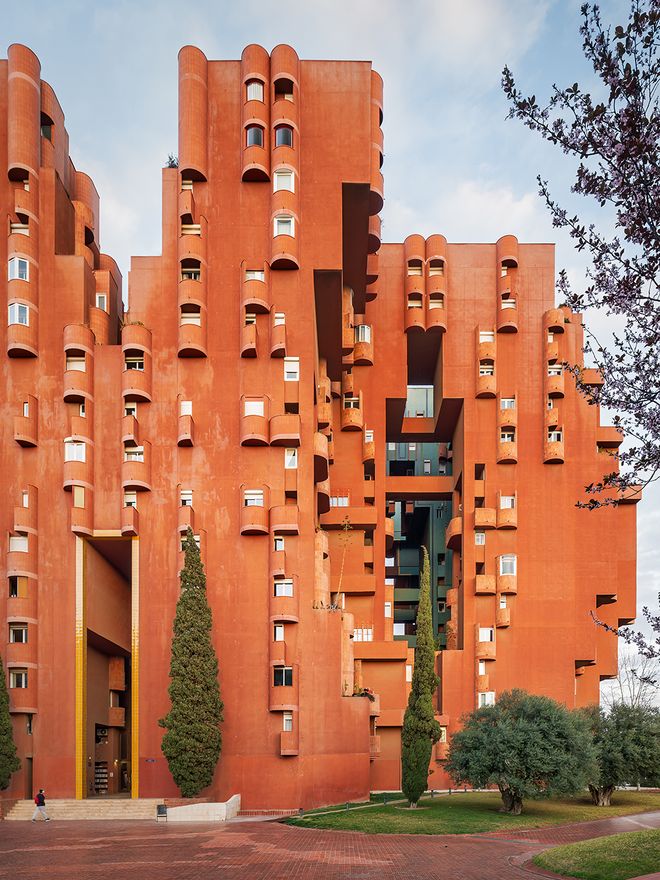
Ricardo Bofill’s Walden 7 was built in Sant Just Desvern, a small town close to Barcelona in 1975.
SPANISH ARCHITECT Ricardo Bofill, who passed away in early 2022, became known for his visionary buildings that redefined the concepts of urban living. One of his masterpieces is the gigantic apartment complex named Walden 7.
This project was supposed to be more than just a housing complex, or a peculiar series of superposed apartments. Instead, the architect wanted to create a community with shared spaces and gardens, a place where private and public spaces mix, and the daily life of its residents is improved.
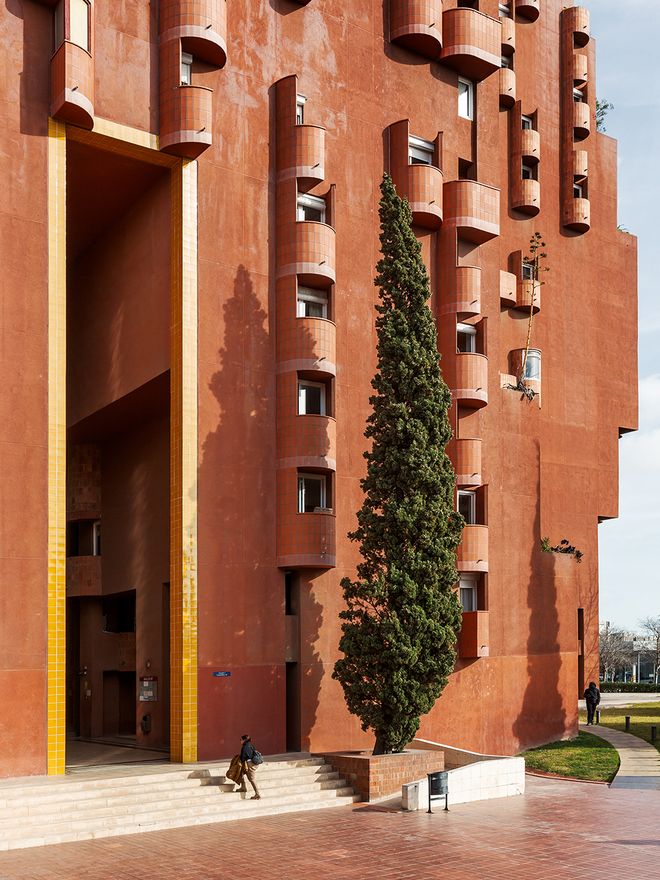
Ricardo Bofill envisioned Walden 7 to be a new model for urban living.
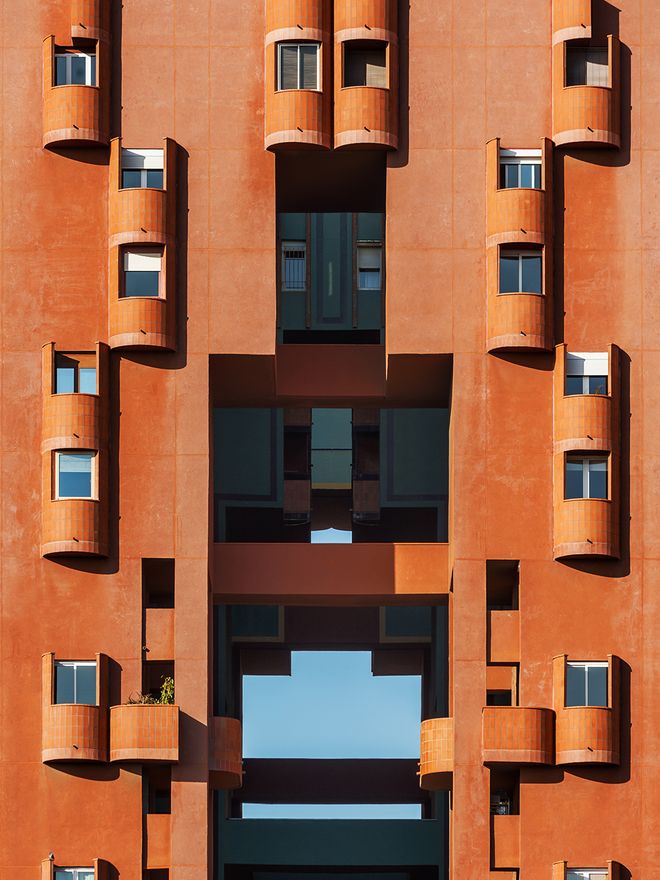
Walden 7 consists of 18 towers, 5 courtyards, and 446 residences.
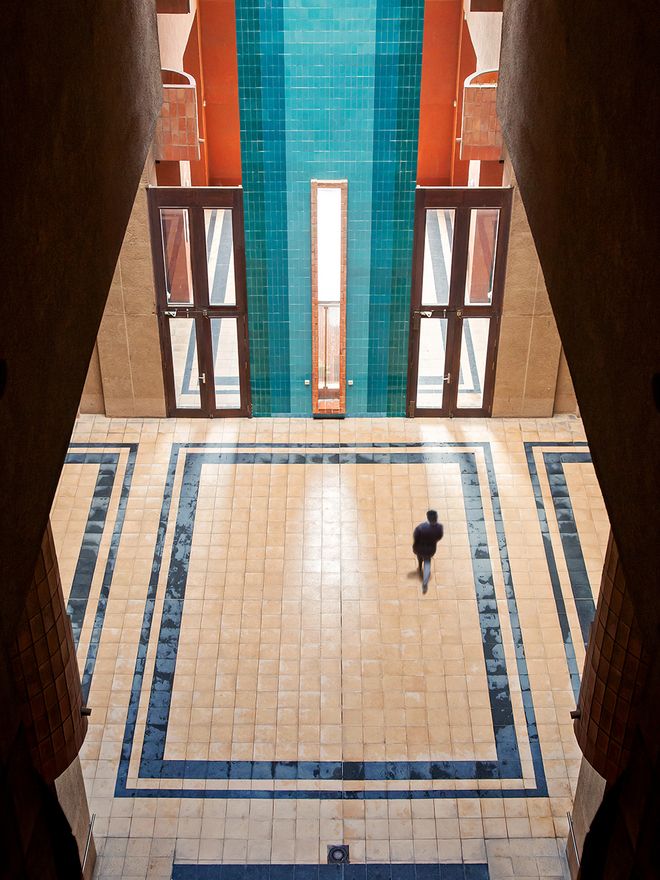
To contrast the warm red exterior, the interior surfaces are painted blue, purple, and yellow.
The result is a colossal building with 446 apartments, each formed by one or more cells, as the architect called them, looking onto the exterior and one of the courtyards. To connect them, there is a labyrinthian system of bridges and balconies – the best way to imagine it is to picture a practical version of the Dutch artist M. C. Escher’s Relativity (1953), a place that seems to defy the laws and conventions by which our usual world is ruled.
The cherries on top: swimming pools on the roof create yet another communal space for the residents to enjoy.
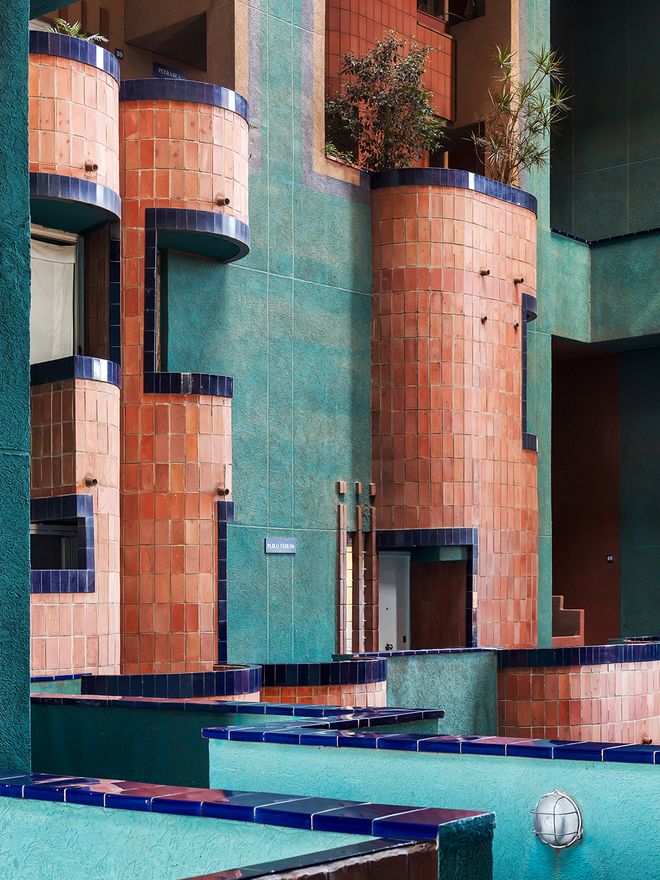
Excluding a few exceptions, each apartment faces both the inner courtyard as well as the exterior of the building.
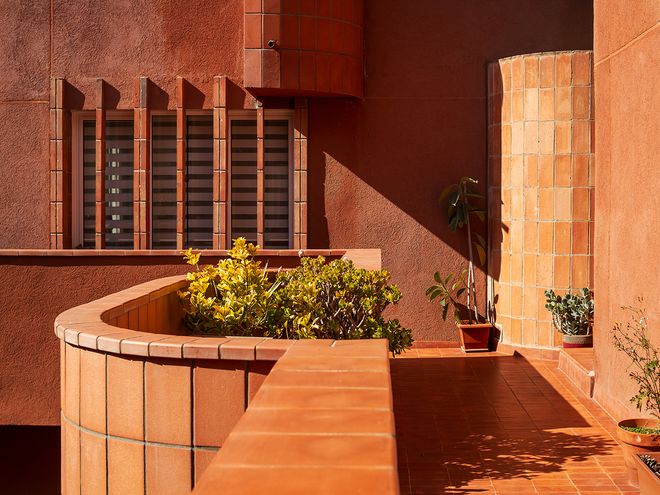
Originally, the whole exterior facade was covered with red tiles, which were later removed and replaced with red paint. Some of the original tiles can still be seen in the balconies.
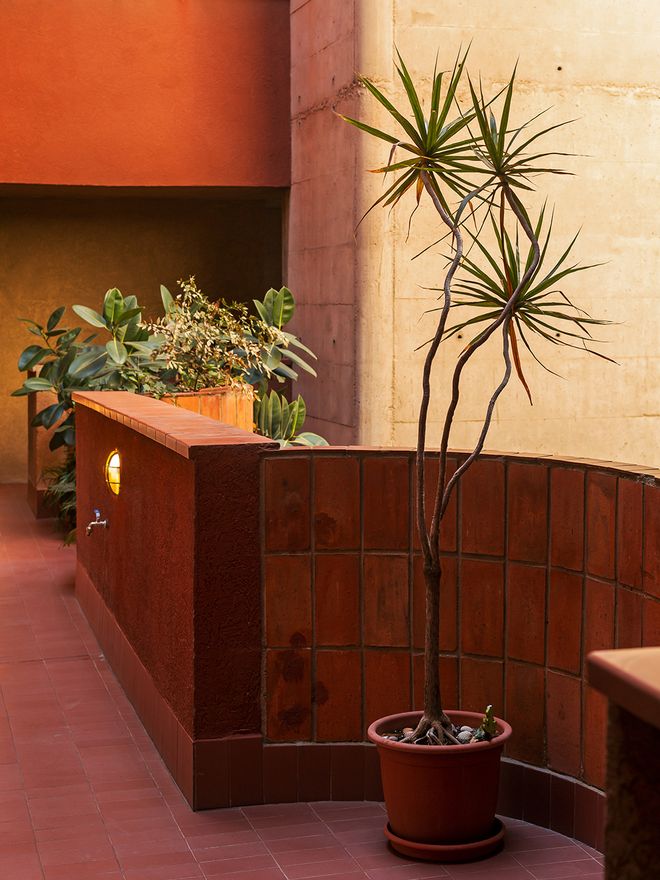
Bofill had an idea of enabling interaction between residents and improving their quality of life through bridges, communal areas, and gardens.
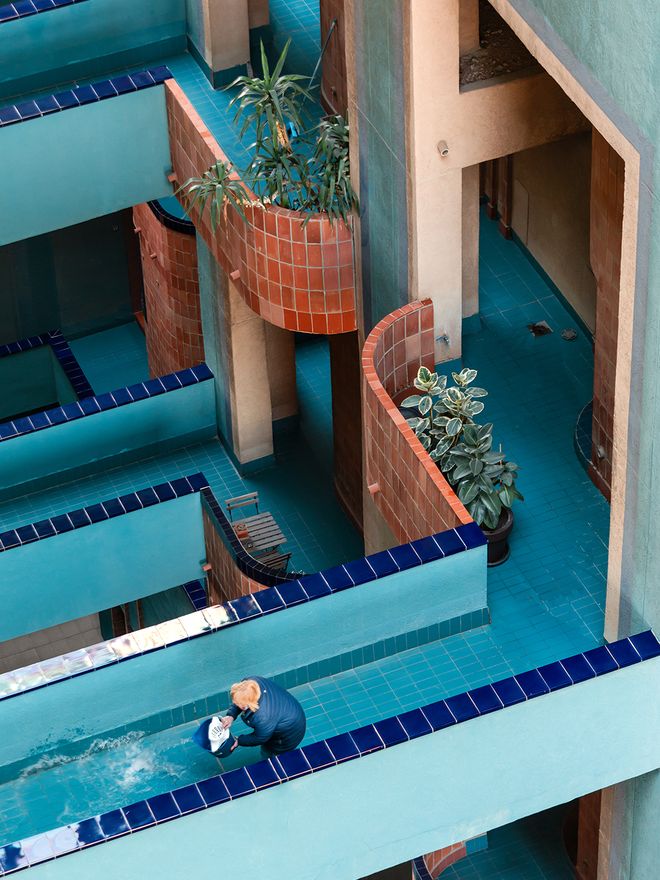
The open-air aisles are named after different philosophers, poets, scientists, and political activists.
Each of the cells is a 30 square-meter space with its own unique entrance and thought for a single person to inhabit. Originally each had the essentials that one would expect in a living space: a kitchenette, a toilet, a bath, a table, and various cupboards. These cells didn’t have conventional rooms but instead walls and curtains to separate spaces and, if needed, add privacy.
Apartments range from single-cell studios to four-module dwellings, each arranged in its own unique way.
What if two or more people wanted to live together at Walden 7? This was also thought of. Several cells can be, and have been, united horizontally or vertically to create bigger spaces. Thanks to this flexibility, apartments range from single-cell studios to four-module dwellings, each arranged in its own unique way.
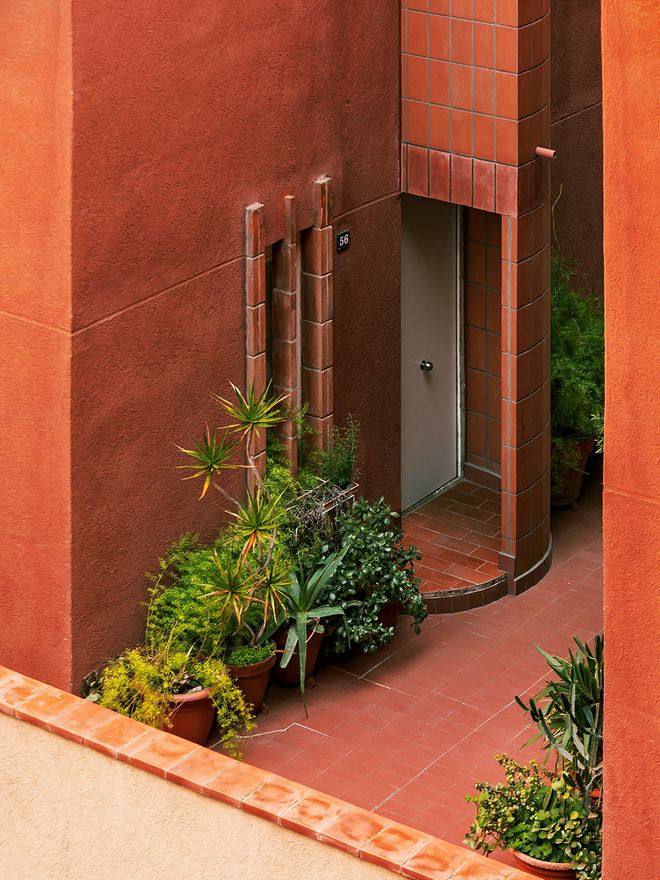
Each living unit has a separate entrance, and the location of the entrance door ensures visual privacy for each of its inhabitants.
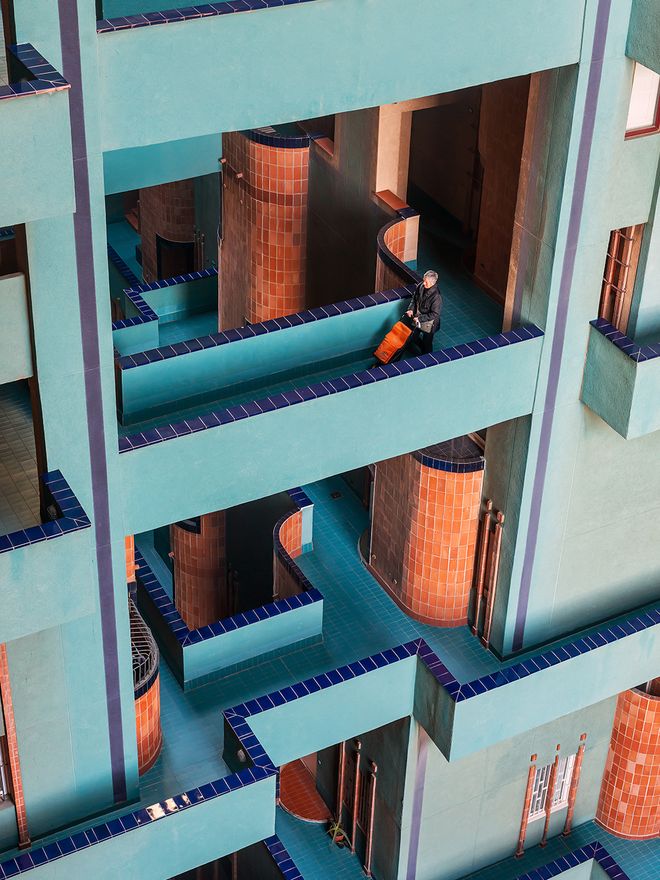
The apartments and different areas are connected by a series of bridges and stairs that give a playful, maze-like feeling to the building’s interior.
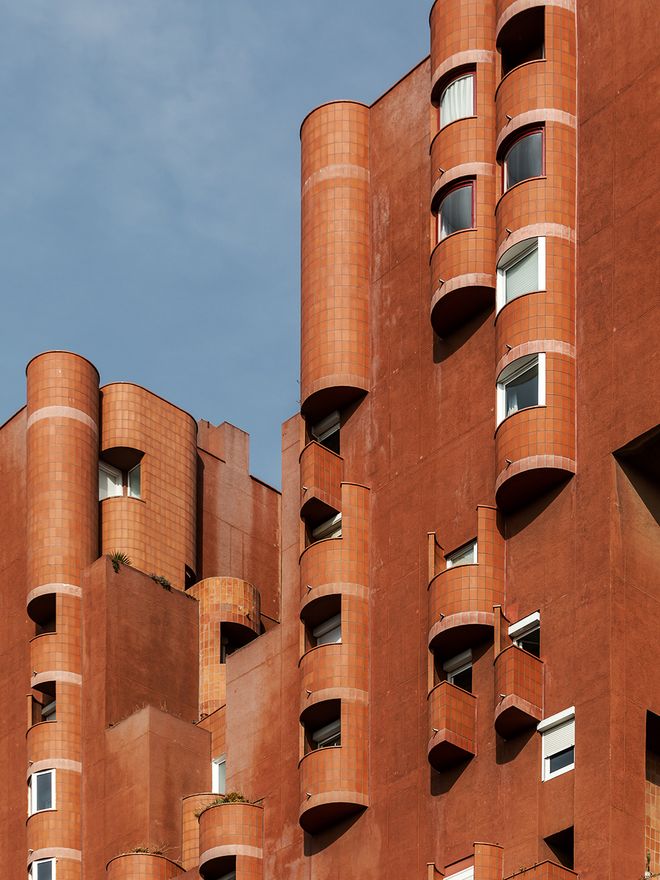
With its gigantic size and facade full of balconies, Walden 7 is without a doubt the most recognized building in Sant Just Desvern, a quiet town next to Barcelona.
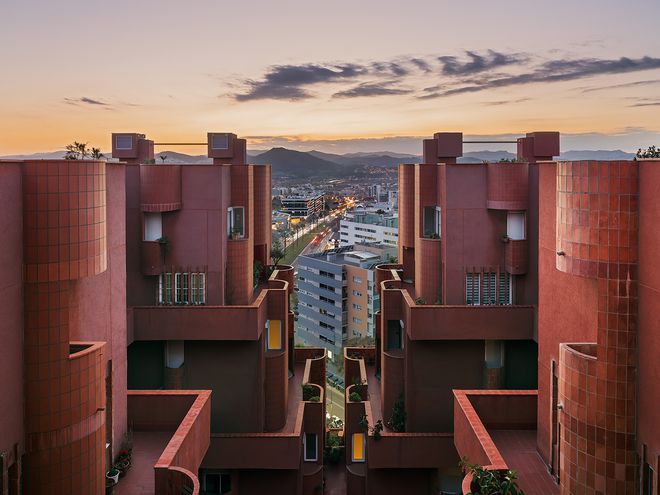
Walden 7 not only features living units but also public spaces shared by all its residents, such as gardened courtyards and rooftop pools.
What Walden 7 is today is not quite what Bofill envisioned. The original project was formed by several groups of apartments, facilities, and public spaces, resembling an anthill or a small town. What ended up being built was only the first phase of the architect’s vision, so we will never know the impact the project would have had if finished.
Nevertheless, its unconventional structure has inspired countless other housing complexes and questioned the way we live in cities.
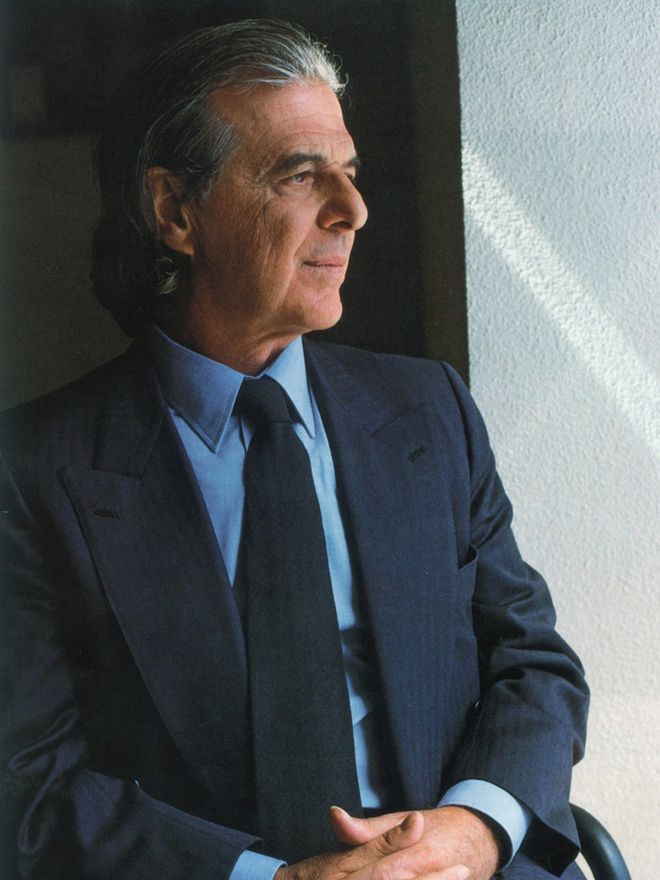
Architect Ricardo Bofill (1939–2022). Image courtesy of Ricardo Bofill Taller de Arquitectura.
More about Walden 7 and Ricardo Bofill
Ricardo Bofill (1939–2022) was the founder and chairman of Taller de Arquitectura. Throughout his career, he led more than 1000 projects in over 50 countries, ranging from private housing to urban design. Some of his most remarkable works internationally include Paribas Marché Saint Honoré (Paris), Platinum Tower (Beirut), and 77 West Wacker Drive (Chicago).
Walden 7 was built in 1975 in what used to be a concrete factory on the outskirts of Sant Just Desvern, a town very close to Barcelona. Also located in the same lot is La Fábrica (The Factory), the complex that houses Taller de Arquitectura’s offices and the Bofill family home.
The building’s name comes from two different books: B. F. Skinner’sWalden Two (1948) and Henry David Thoreau’sWalden (1854). Thoreau’s work inspired Skinner to name the utopian community where Walden Two takes place, as well as the four other communities mentioned in the book, numbering up to Walden 6.
Walden 7 has a close architectural sibling: La Muralla Roja, a breathtaking apartment complex built on the coast of Spain a few years earlier.
See also:
• Ricardo Bofill’s La Muralla Roja – a cinematographic dream house in coastal Spain >
Text: Irene de Mas Castanyer Images: Pol Viladoms
Published on 31 Mar, 2022