This is a carousel of product images. Use the thumbnails or swipe to change the displayed image, and activate an image to open it full screen.
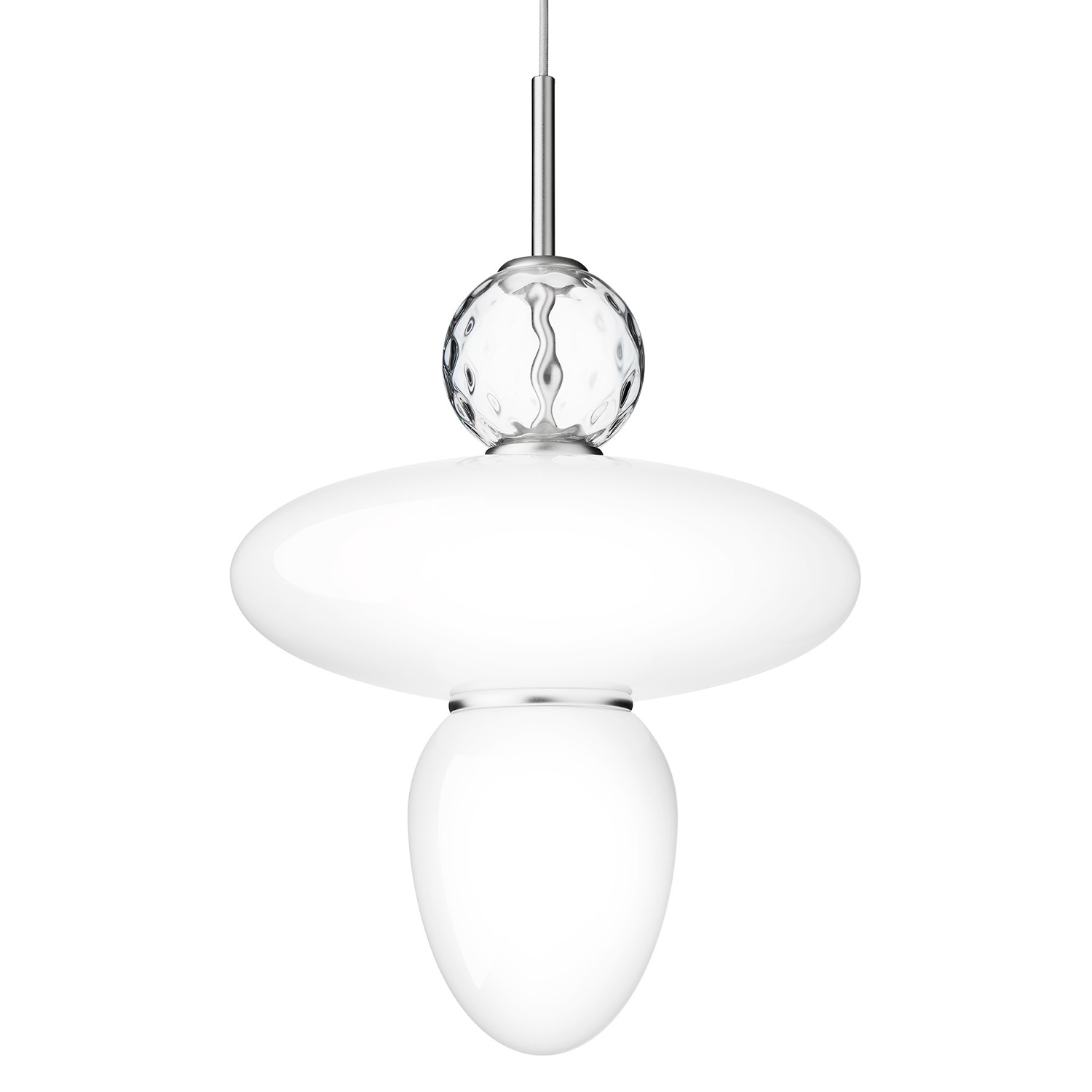
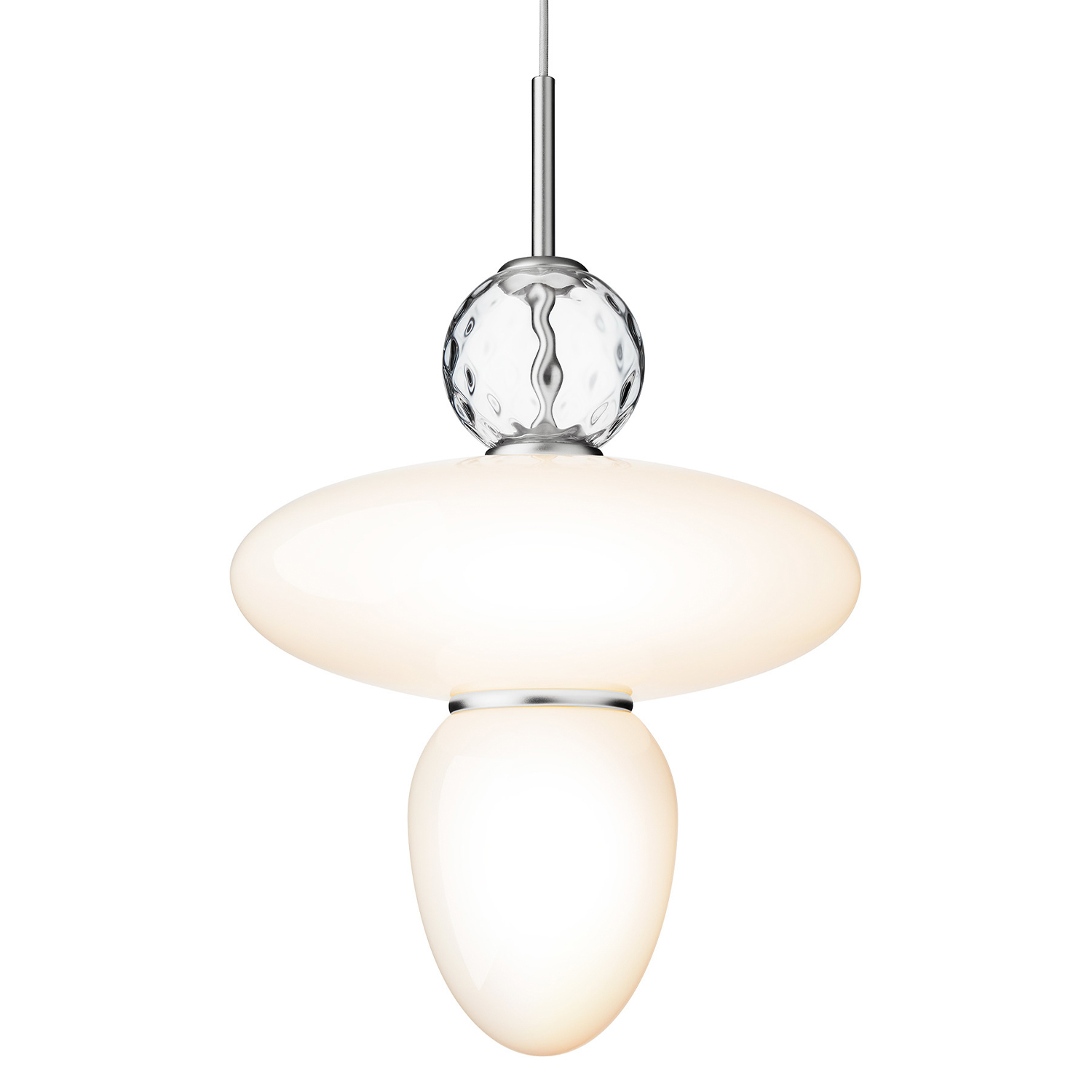
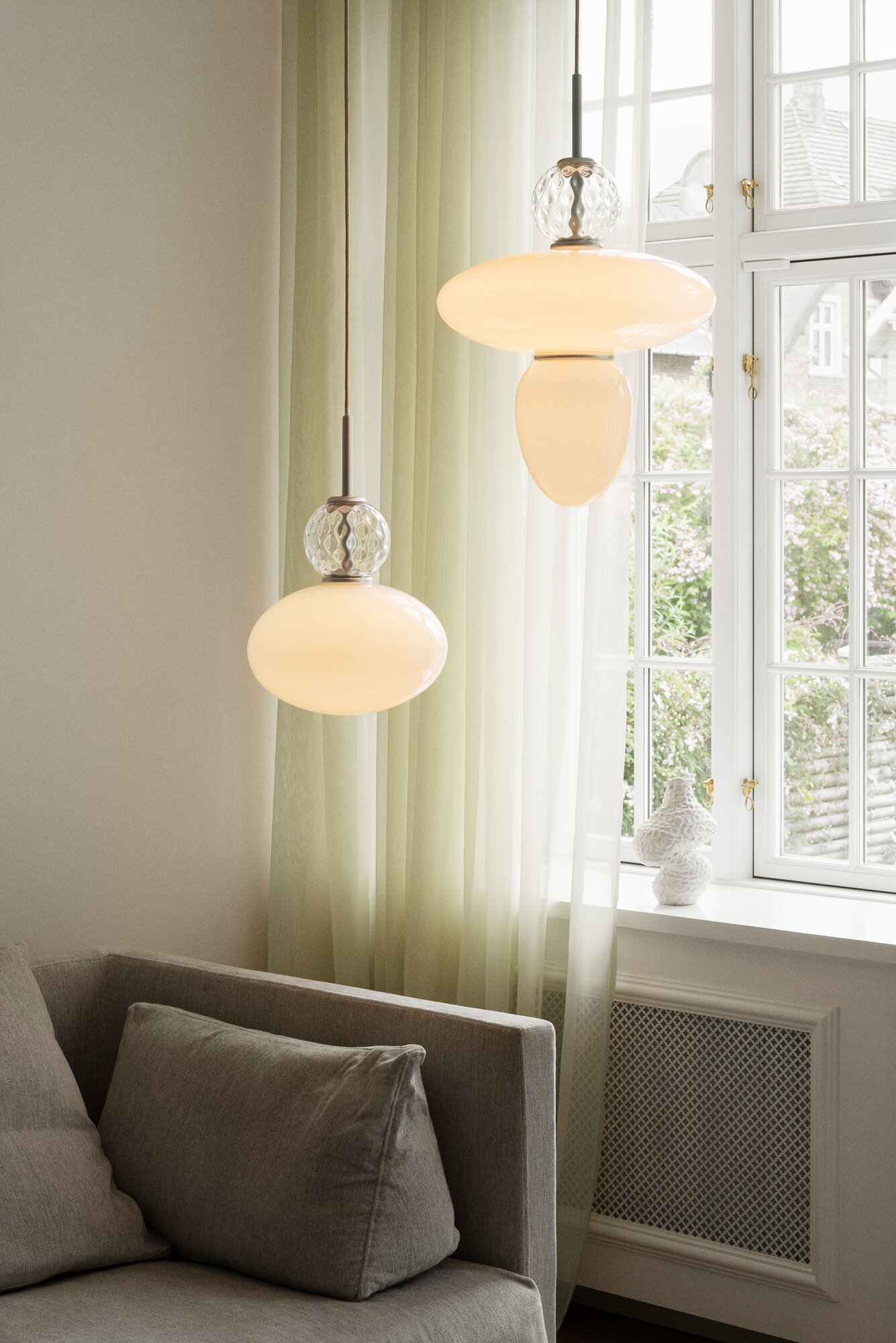


Rizzatto 43 pendant, satin silver - opal white
Description
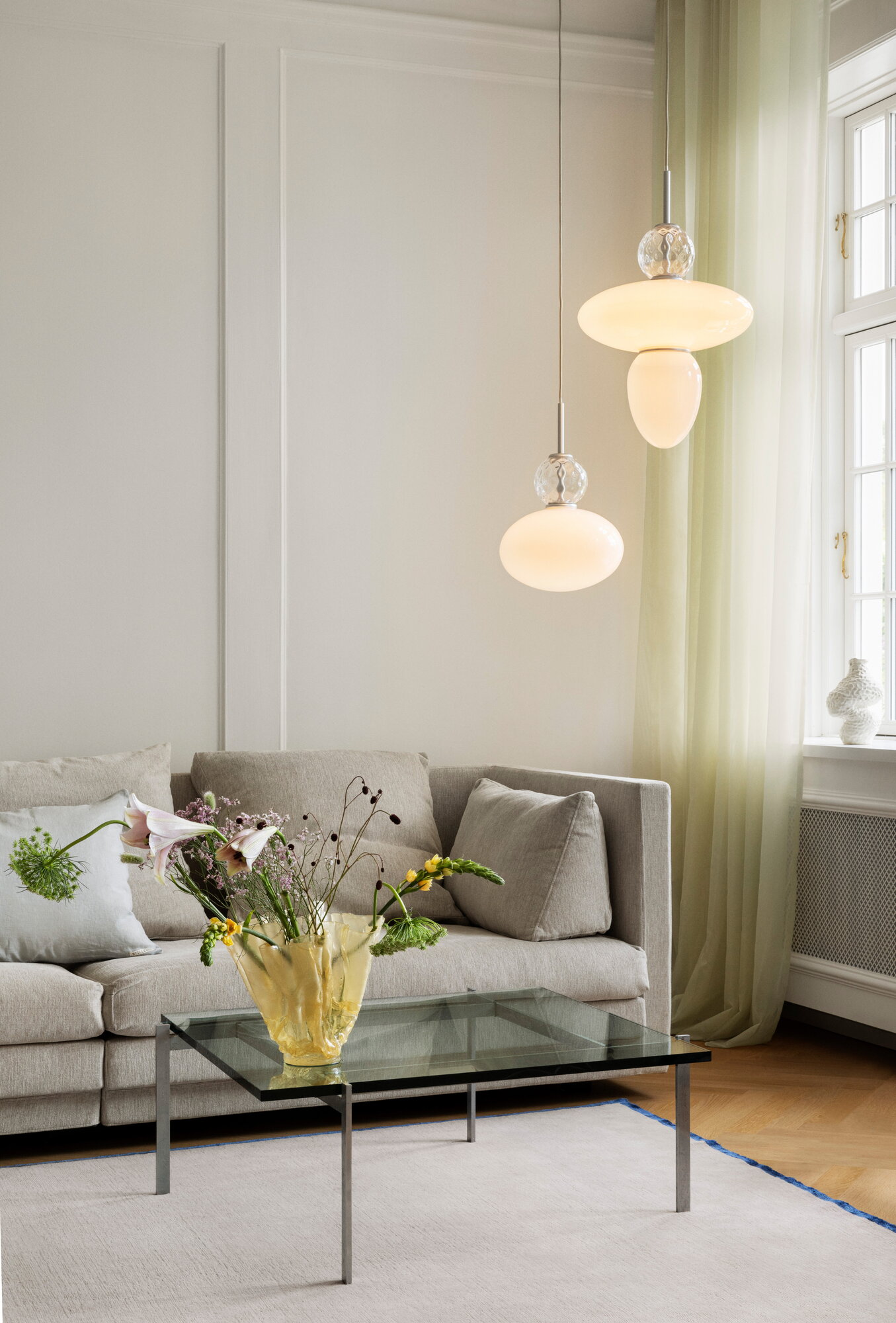
Nuura's Rizzatto pendant lamp is a modern interpretation of a chandelier, designed by the renowned Italian designer Paolo Rizzatto. The design combines silver-colored aluminum, textured glass typical of Nuura and two mouth-blown domes in opal-white glass.
Rizzatto has revealed that his source of inspiration for the Rizzatto collection was Oskar Schlemmer’s avant-garde ballet called the Triadisches Ballett. Schlemmer was a painter, sculptor, designer and choreographer associated with the Bauhaus school, and he designed not only the choreography of the ballet but also the costumes – one can see clear references to the abstract, geometric costumes in the shapes of the Rizzatto luminaires.
- Width: 15.75 in (40 cm)
- Diameter: 15.75 in (40 cm)
- Shade diameter: 15.75 in (40 cm)
- Height: 24.49 in (62.2 cm)
- Cable length: 157.48 in (400 cm)
- Material Anodised aluminum, mouth-blown glass
- Colour Silver, white
- Bulb base E26
- Light source Max 40W (not included)
- IP rating 20
- Protection class I
- Voltage 120 V
- Certifications and labels cETLus
- Cable colour Silver
- Cable material Textile
- Weight 9.39 lbs (4.26 kg)
- Canopy Included (diameter: 5.71 x 0 in (14.5 x cm, cm), height: 2.9 cm)
- Ceiling plug No
- Dimmable Yes
- Notes Can be fitted with an aligned dimmer. In this case, please use a dimmable light bulb.
- Product ID: NU3073004
Paolo Rizzatto (b. 1941) is an Italian designer, who graduated in Architecture from Milan Polytechnic in 1965. Besides architecture, Rizzatto has worked with interior and product design, and freelanced for numerous different brands, such as Artemide and Kartell. He is also one of the founders of the Italian lighting brand Luceplan. Rizzatto has been awarded five times with the prestigious Compasso d’oro, and his designs can be found from the collections of New York’s MoMA, London’s Victoria and Albert Museum and Paris’ Musée des Arts Décoratifs, to mention a few.
Ideas and inspiration
This is a carousel. Use Next and Previous buttons to navigate.