At home with Dima & Guy: A Berlin apartment built on contrast
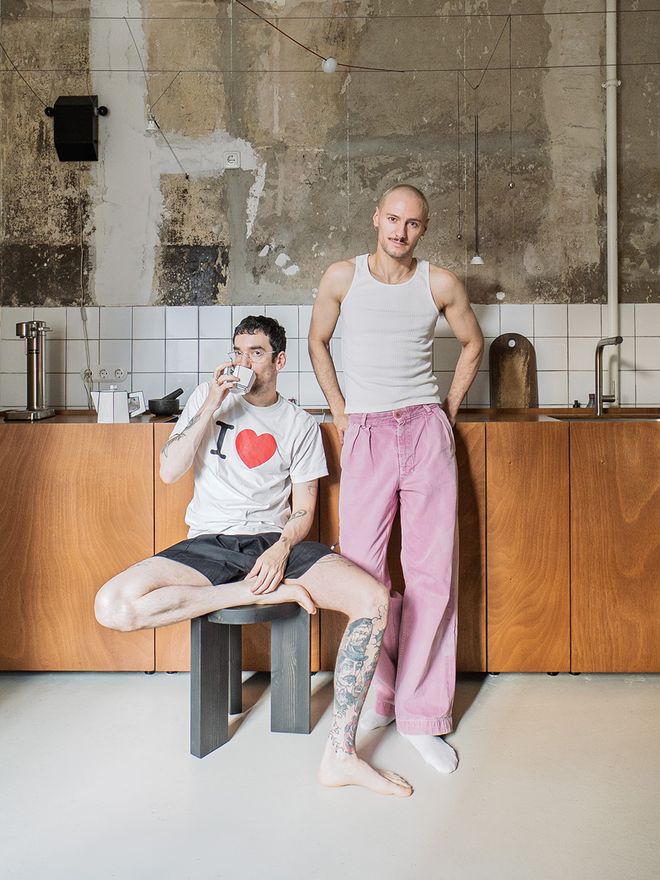
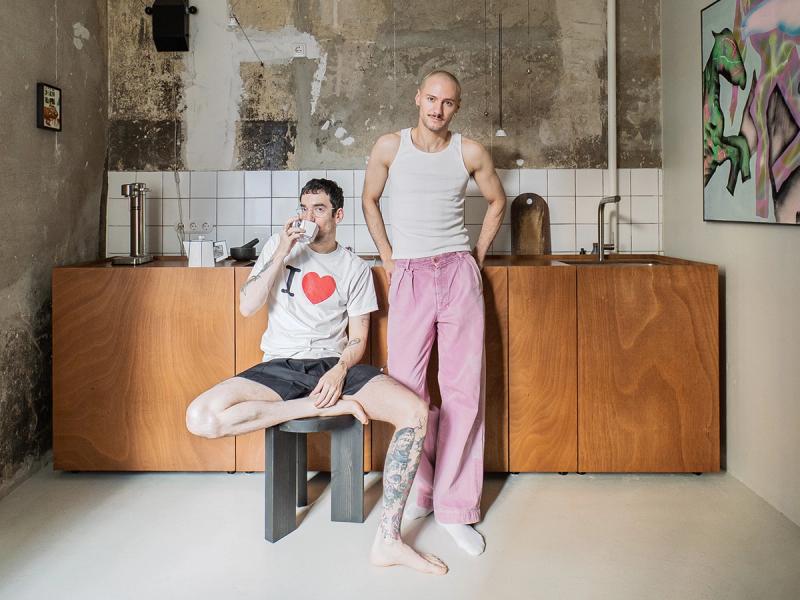
Guy (left) and Dima run the popular Instagram account The Berlin Chapters.
Hi Dima & Guy! Could you introduce yourselves to Design Stories readers?
Dima: “Hi! We are a couple living in Kreuzberg, Berlin. We’ve been together for five years and both work in design, I work in packaging and Guy in digital product design.”
Guy: “Our home has gradually become another creative project for us. What started as simply finding a place to live turned into a much bigger process of renovating, experimenting and learning as we went. Along the way, we started sharing that process on Instagram (their account is called The Berlin Chapters).”
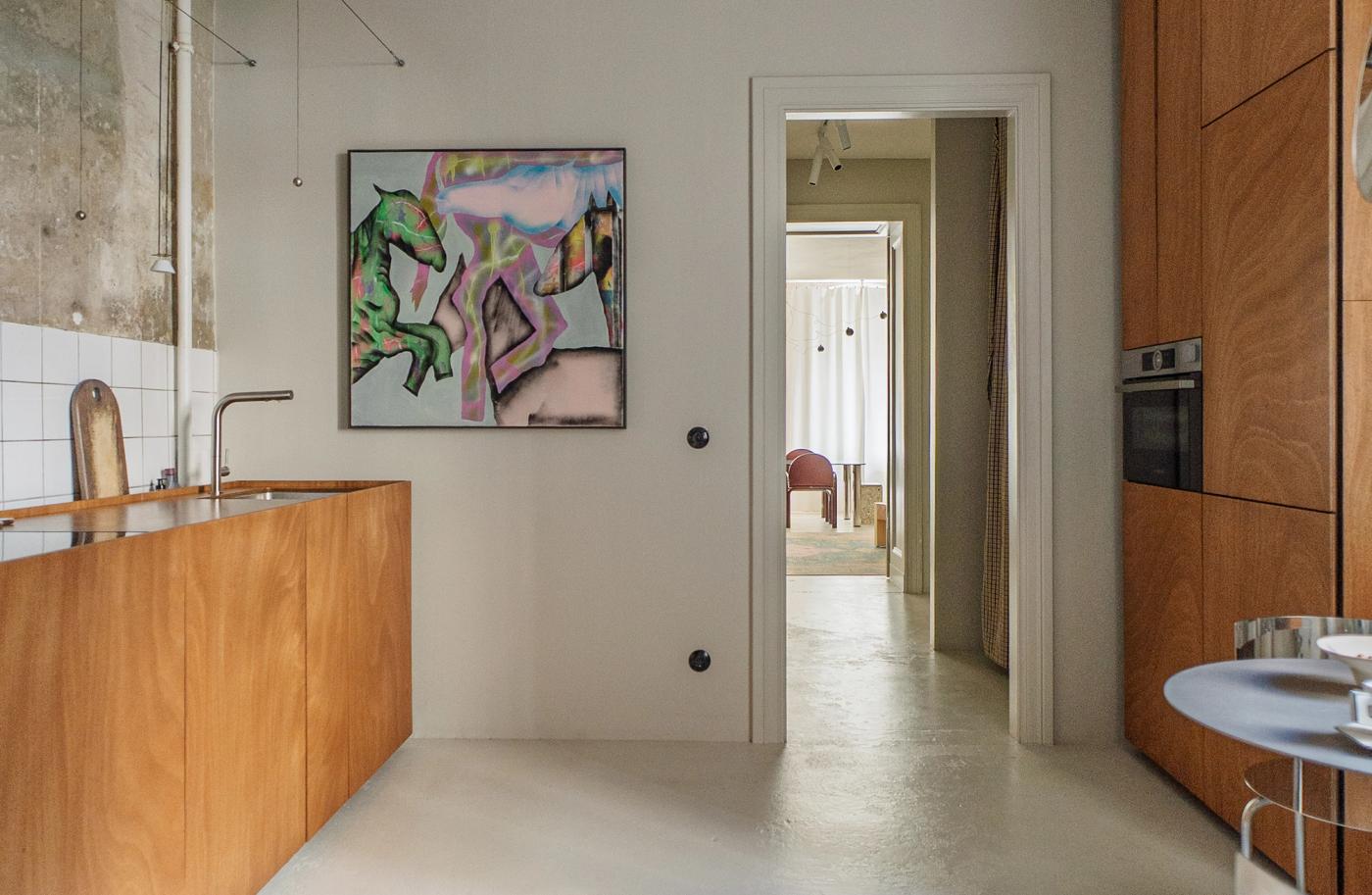
The duo’s DIY kitchen renovation went viral, and it’s easy to see why. The kitchen fits perfectly into their raw, characterful home in Berlin.
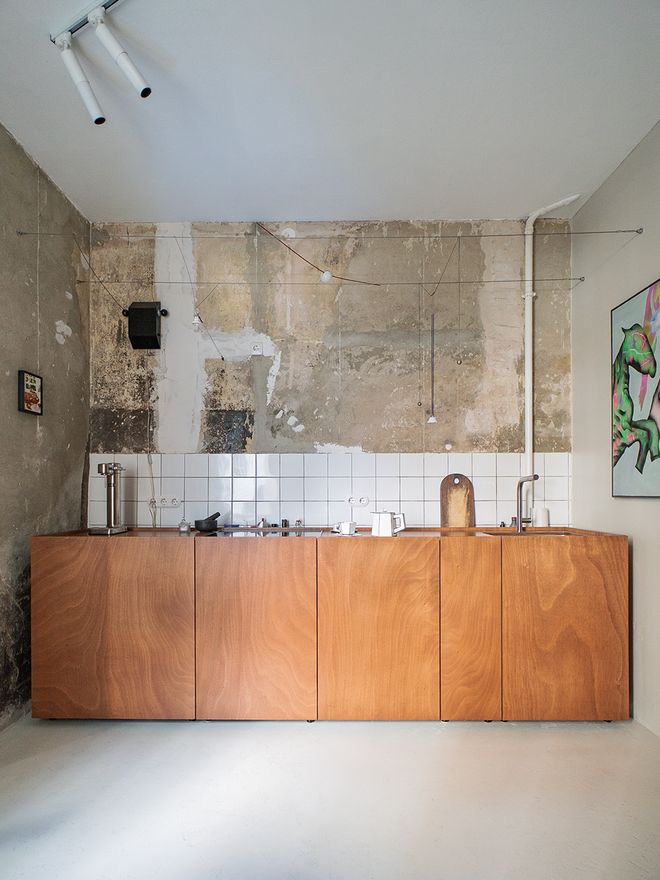
Some of the walls have been left raw, revealing their original surface.
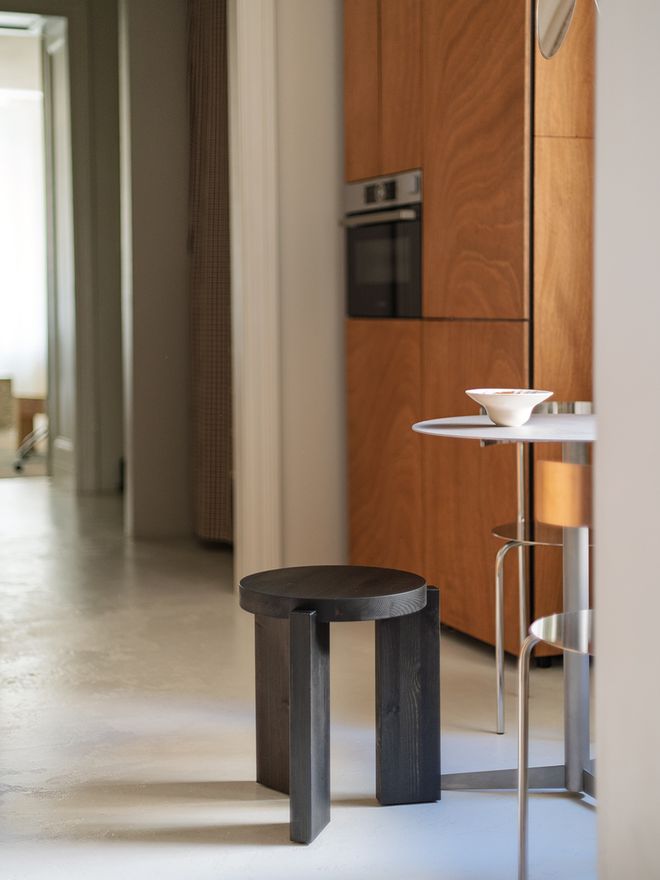
The Vaarnii 001 stool feels right at home in the space.
How did you find your current home in Berlin, and what do you love most about it?
Dima: “The story of finding this apartment is actually quite personal. At the time, Guy and I were still living separately, and I was coming out of a major transition in my life. Before finding this place, I had lived in two shared flats, and at some point I realized that I had to finally face the challenge of finding a place of my own. I was genuinely scared of going through that process.
I think I threw myself into the search with so much enthusiasm that, with a fair amount of luck, I found the apartment and signed the contract within just three weeks. For Berlin, that felt almost unbelievable.
Guy joined me here a little later, and it eventually became our first home together.
What I loved immediately was the sense of privacy. There are no residential neighbors on our floor, so when you come up the stairs and enter the apartment, it almost feels as if you are arriving at your own little house.
I was also immediately drawn to the fact that the apartment hadn’t been renovated. Rather than seeing that as a disadvantage, I saw it as a kind of blank canvas. It meant we could really make the space our own.”
How has your home’s interior evolved over time?
Dima: “At the beginning, there was almost nothing. Instead of a proper kitchen, we had metal storage shelves and camping-grade appliances. There was an ugly blue-painted wall in the bedroom, and apart from the bathroom, there was no proper flooring anywhere in the apartment.
So almost everything we did initially felt like a huge step forward. But rather than simply replacing everything and trying to make the apartment feel completely new, we became increasingly interested in the things that were already there, asking ourselves whether some of them were actually worth preserving.”
Guy: “In the kitchen, for example, there was an old decorative painted pattern on the walls – the kind of treatment that was once used instead of wallpaper. In some places it had disappeared over time, but in others it was still beautifully intact. Rather than covering it up, we decided to keep it and even emphasize it.”
Dima: “That gradually became an important part of our approach to the whole interior: looking at what already existed and asking how we could work with it. We like placing something old, raw or imperfect next to something more refined and intentional. That contrast often makes both elements more interesting.”
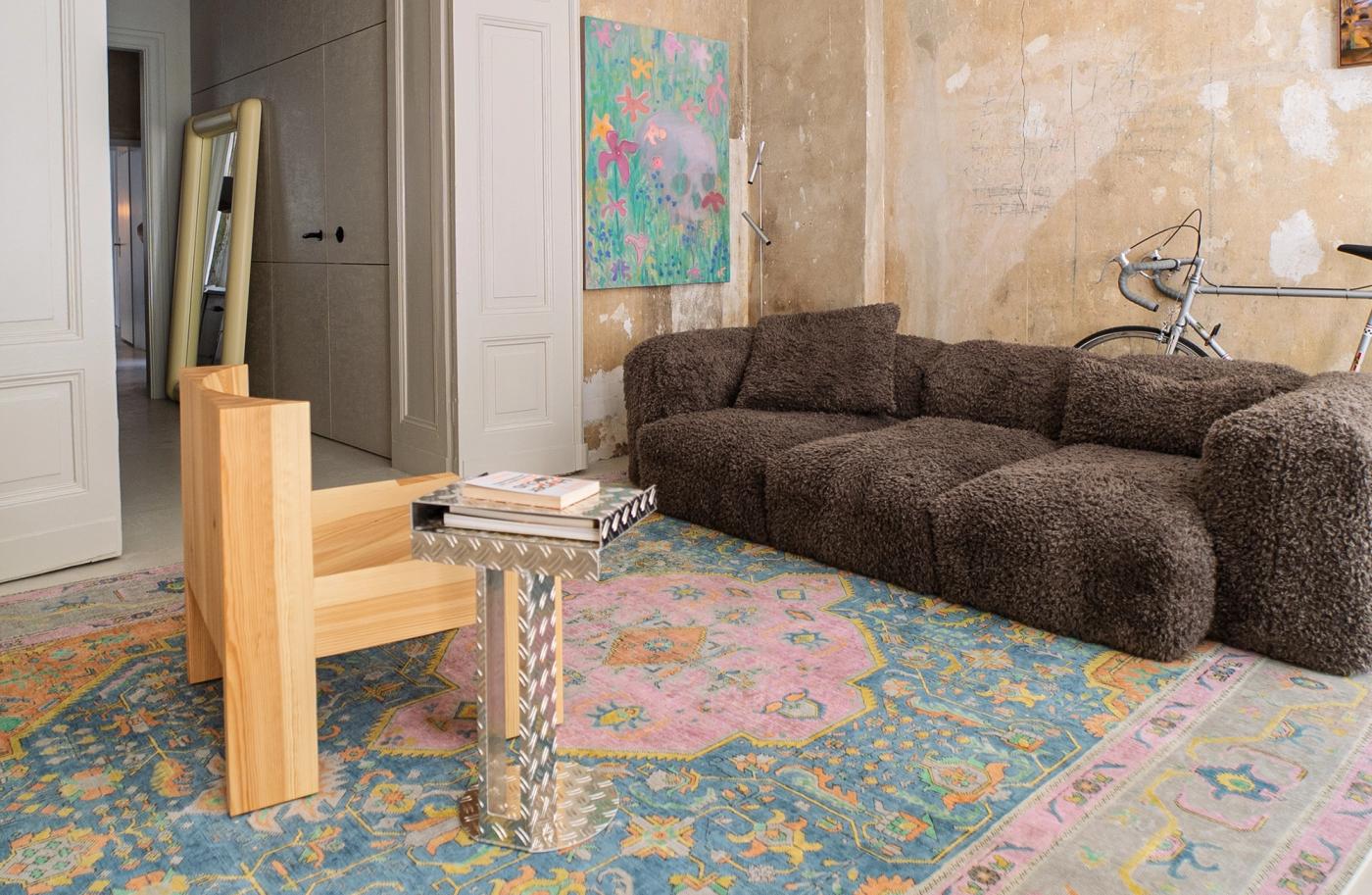
The sculptural 005 lounge chair pairs beautifully with the fluffy sofa.
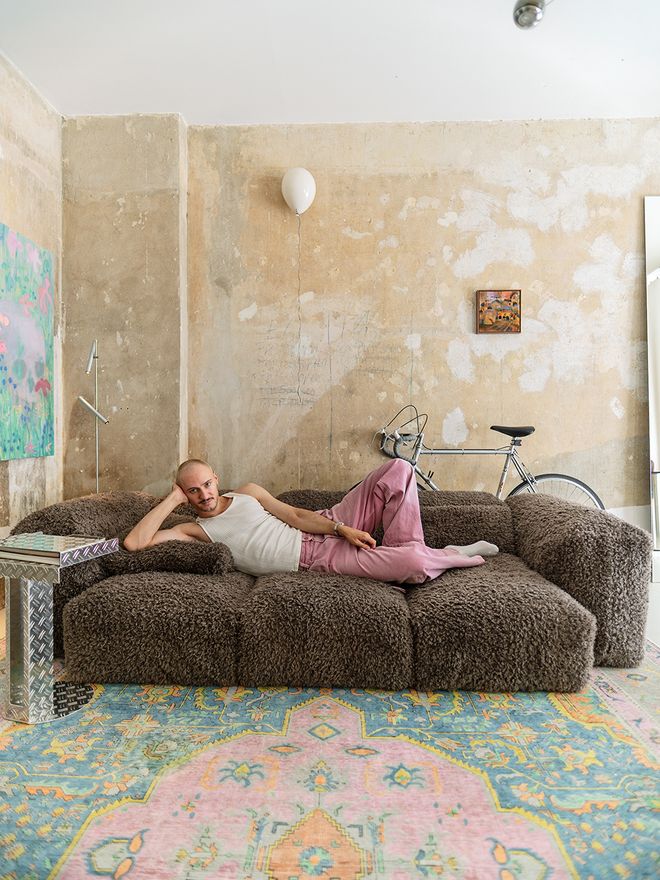
Dima works in packaging design. Even the bicycle looks like part of the décor.
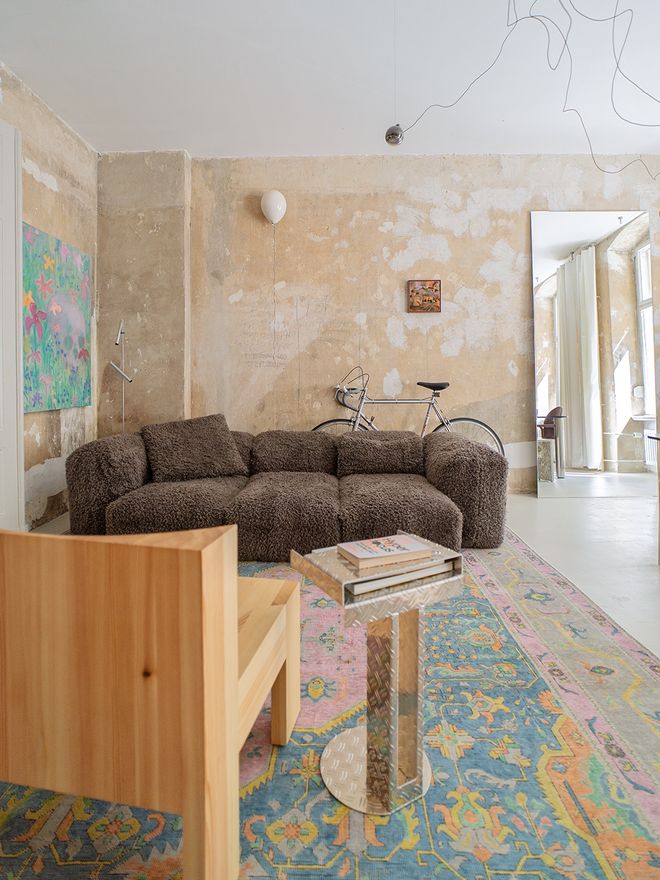
“The Vaarnii chair’s shape and material create a strong contrast with the softness of the sofa,” Dima says.
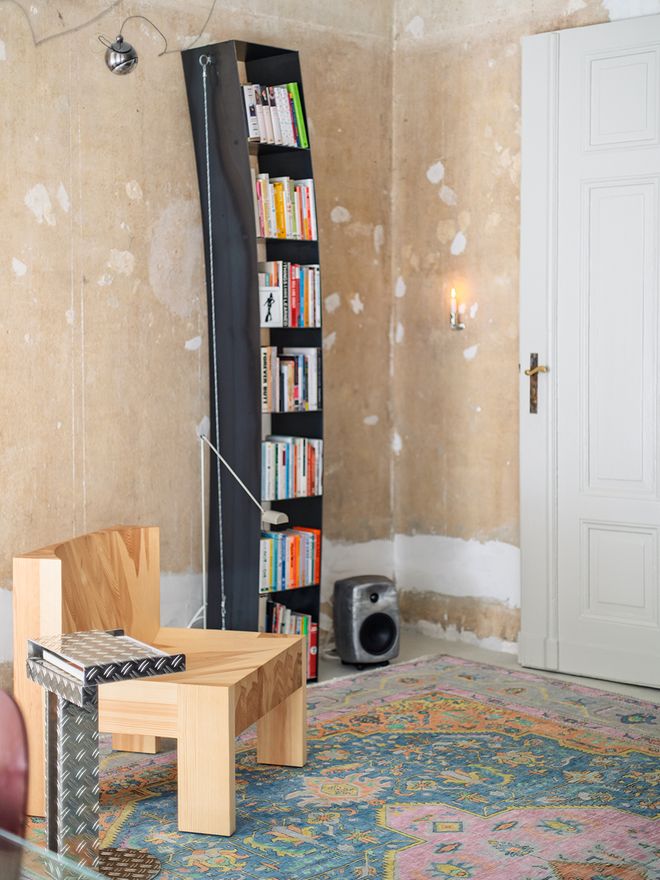
The Vaarnii 005 lounge chair was designed by Fredrik Paulsen.
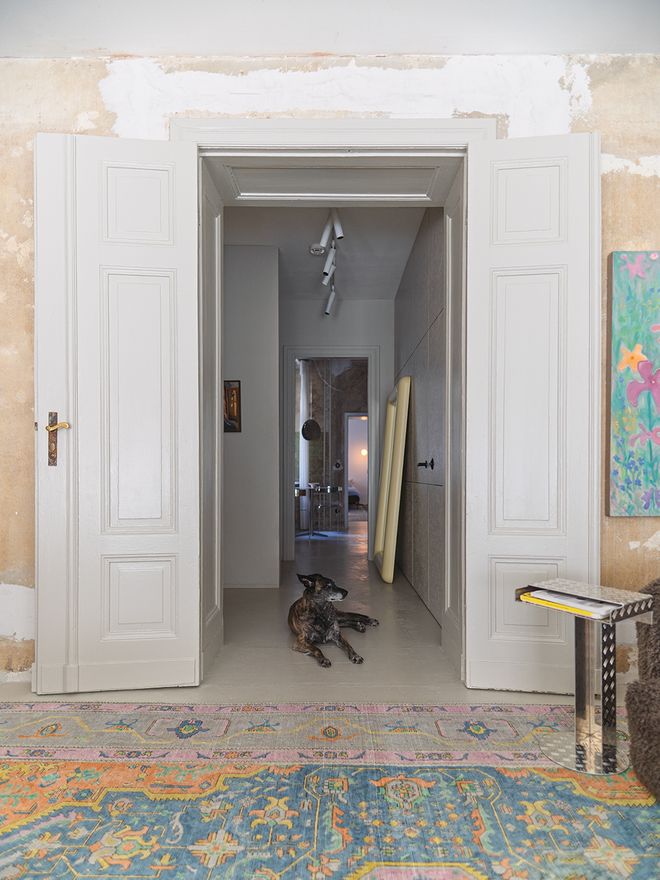
Frecha the dog completes the household.
Do you share the same taste in interior design, or does it differ? How do you find common ground when your tastes don’t quite align?
Guy: “Our tastes definitely differ, although I think we’ve become much better at appreciating those differences over time.
I’m more focused on curation, smaller details and objects, and I tend to like a bit of quirkiness. Dima is more interested in the space as a whole, its proportions, architecture and how the larger elements relate to each other.”
Dima: “We also used to disagree more strongly. I used to be much more drawn to black, for example. In my previous apartment in Riga, I had glossy black doors, some black walls and black bathroom fixtures. Guy was absolutely against bringing that much black into our home.”
Guy: “But I think that's also how we've found common ground. We don’t necessarily have to have the same taste. We can have different instincts and then find something that works for both of us. And actually, when it comes to furniture and accessories, we’re often surprisingly aligned.”
Dima: “I think the differences have become part of the process rather than something we need to resolve.”
“We’d describe the mood of our home as eclectic, somewhat theatrical, and playful.”
How do Vaarnii’s pieces fit into your home? What makes them special?
Dima: “What we really appreciate about Vaarnii is how unapologetically raw their use of material is. It helped us emphasize the differences between the materials already present in our home, rather than trying to make everything match.
For example, we have a very soft, fluffy sofa, and we wanted to place something next to it that was more geometric and sculptural, but still warm. The Vaarnii 005 lounge chair did exactly that. Its shape and material create a strong contrast with the softness of the sofa, while still feeling warm and inviting.”
Guy: “I think that’s what makes it work so well here. It doesn’t try to blend into everything around it. It has a very strong character of its own, but somehow still feels completely at home in the apartment.”
How does Finnish design, like Vaarnii, fit into Berlin’s urban surroundings and your own style?
Guy: “I think Finnish design is appreciated and valued in Berlin, but it’s not necessarily wildly adopted. So it still feels a little bit exotic here, which we like.”
Dima: “There is something about the directness of Finnish design that works particularly well for us. We like things that have a strong material presence and don’t try too hard to be polished. That’s quite compatible with the way we approach our apartment.”
Guy: “And I think that’s also why Vaarnii feels natural in our home. It brings something distinctly Finnish into a very Berlin setting, without feeling out of place.”
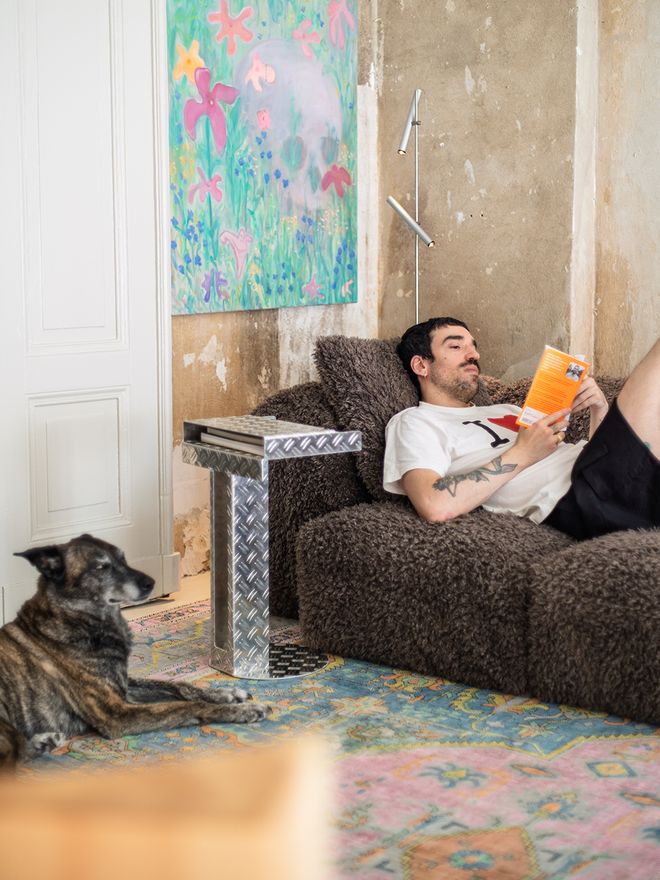
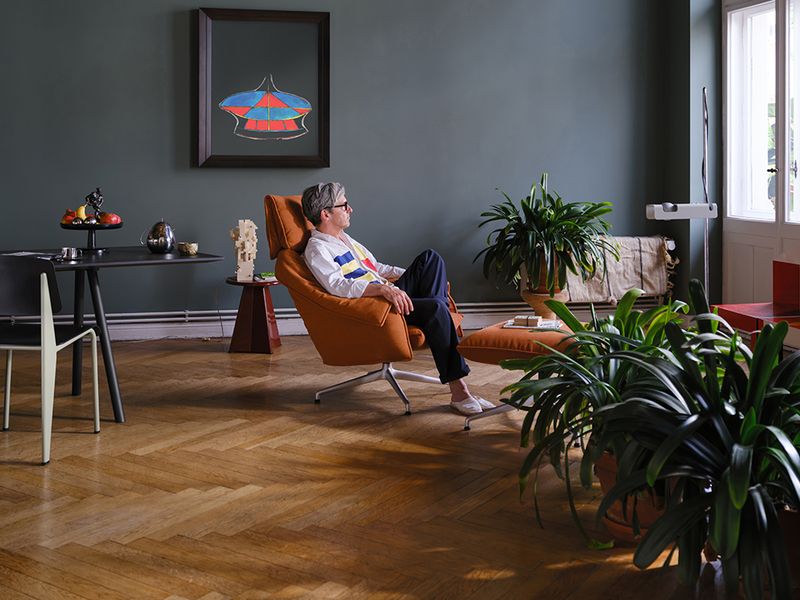
Guy unwinds with a good book.
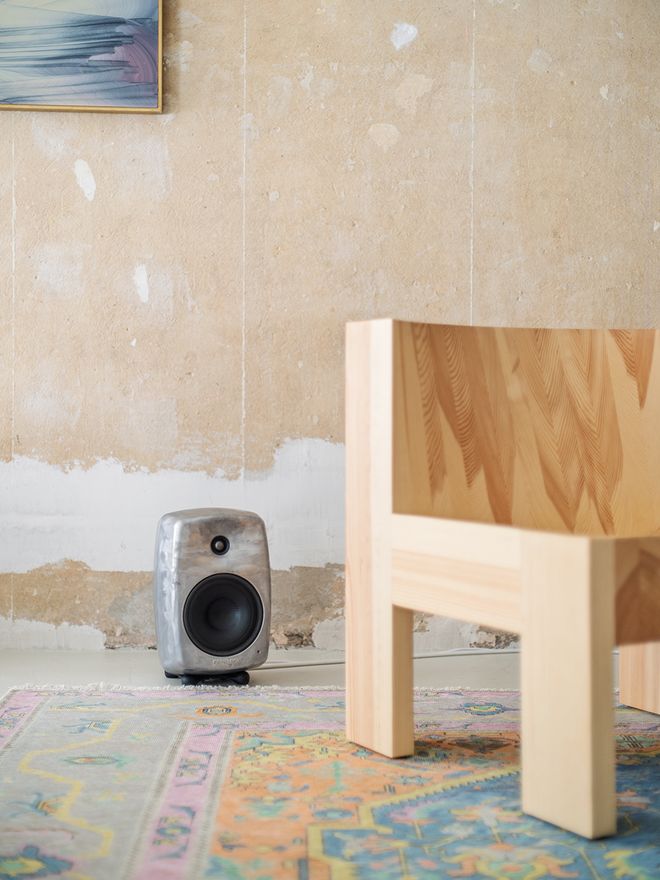
Over time, pine develops a beautiful patina. The G Four active speaker is by Genelec.
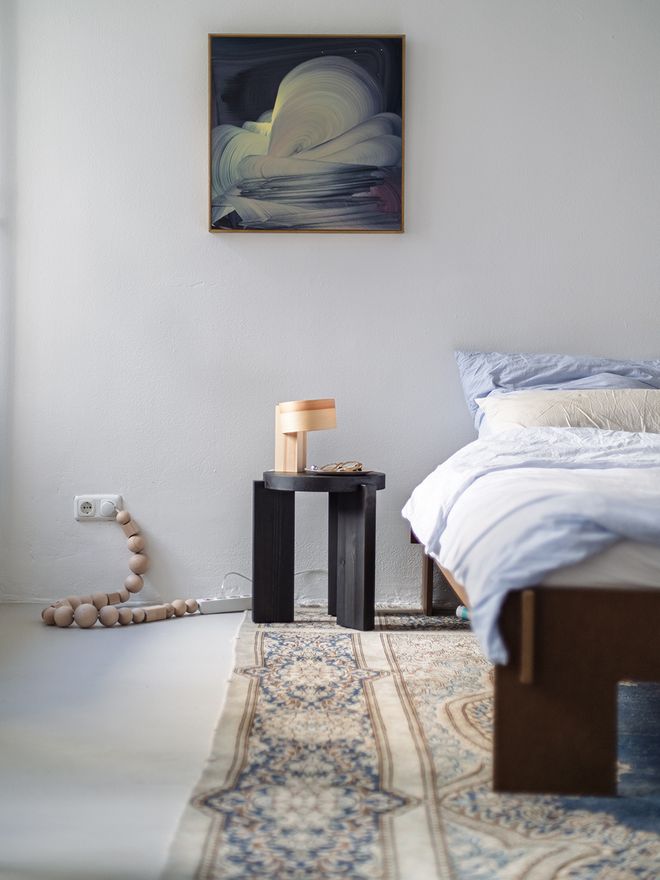
The black finish highlights the unique character of the pine.
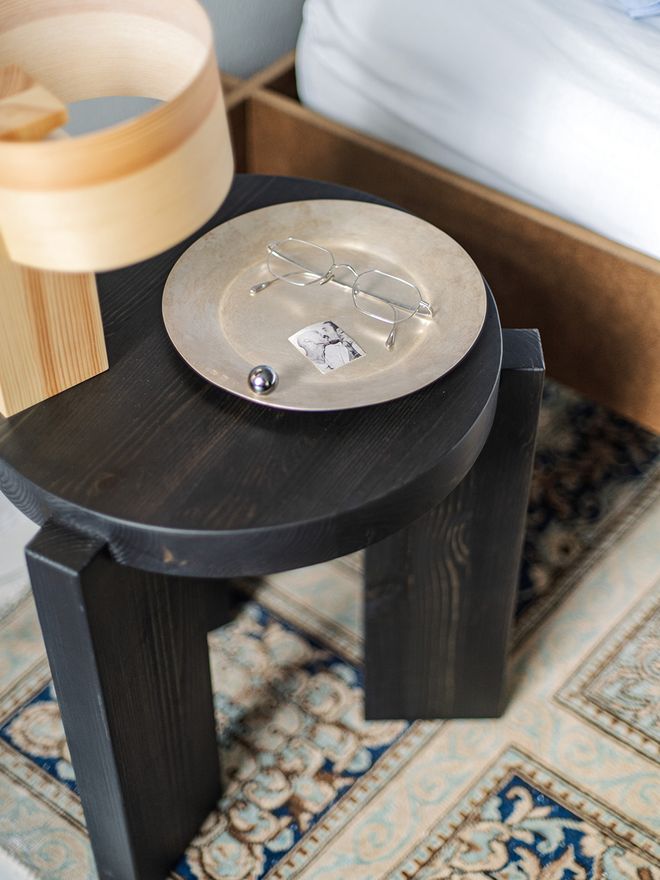
The 018 Hoop table lamp was designed by John Tree.
You already have over 80K followers on Instagram. What kind of community have you built, and what do you love most about it?
Dima: “I think people really appreciated what we’ve done with the apartment, and the kitchen in particular. To us, it feels like a testament to the fact that DIY can be relatable and achievable while still being thoughtful and design-driven.
DIY sometimes has a reputation for being less sophisticated, or for not necessarily having the highest standards of quality or taste. And maybe that’s true of some of what you see in the mainstream. But we want to show that there is another route: that with enough effort, thought and elaboration, you can make things yourself and still achieve something interesting and unexpected.”
Guy: “I think that’s probably what resonates with the people who follow us. We want to show that good design can be approachable. A home doesn’t have to be perfect or highly polished, and it certainly doesn’t need to feel out of touch or unattainable.”
Dima: “And I think the community we’ve built reflects that. People aren’t just interested in the finished apartment, they’re interested in how we got there, what we made ourselves, and the decisions and experiments along the way.”
See also:
• All products by Vaarnii >
• New arrivals at Finnish Design Shop >
Published on 24 Sep, 2026