An old house with an old soul – visiting Marie Michielssen and Axel Van Den Bossche
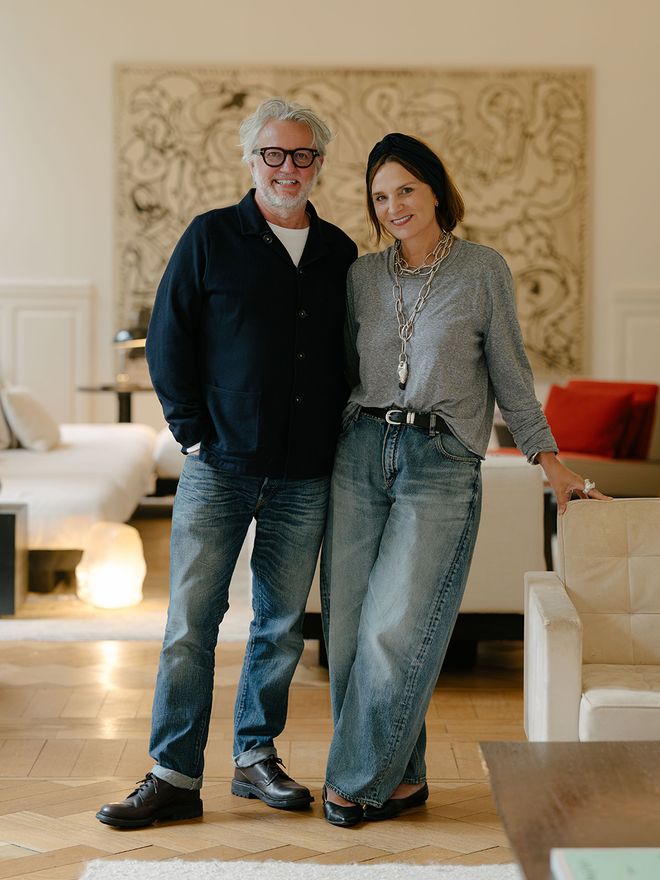
Almost eight years ago, Axel Van Den Bossche and Marie Michielssen swapped village life for a castle in the middle of Antwerp.
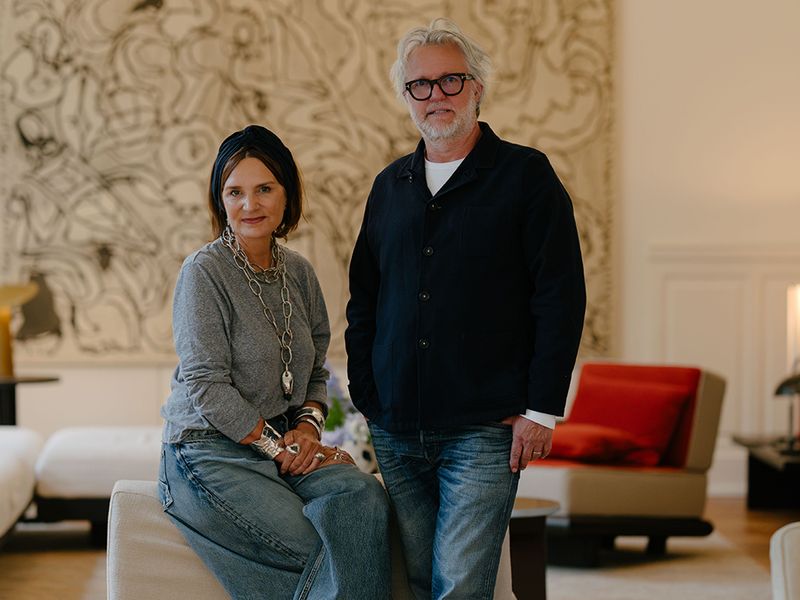
THE SKY OVER ANTWERP is gray, and it looks as if it could start raining any minute. Inside Marie Michielssen and Axel Van Den Bossche’s home, though, you forget the dreary weather almost immediately. Part of that is the magnificent house. Most of it is Marie herself, who talks with an energy that seems to light up every room she walks into.
From the street, you would never guess what lies behind the entrance. A narrow door opens onto a hallway painted deep black, with black marble underfoot. Then the space opens into sunlit rooms with high ceilings, and wherever your eye lands, there is art or design.
So come in and take your time. There is a lot to see.
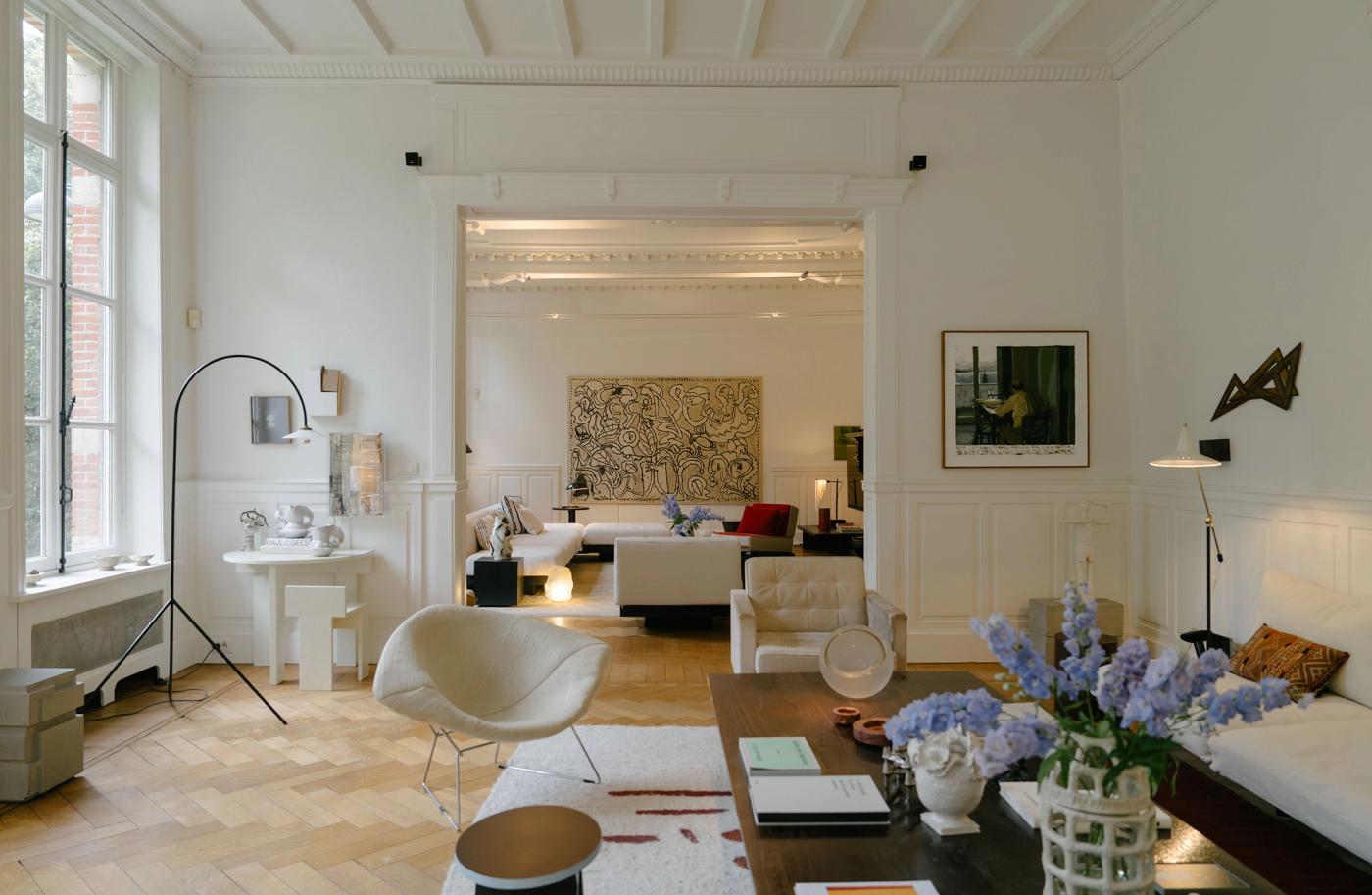
The big windows keep the rooms bright, even on a gray day.
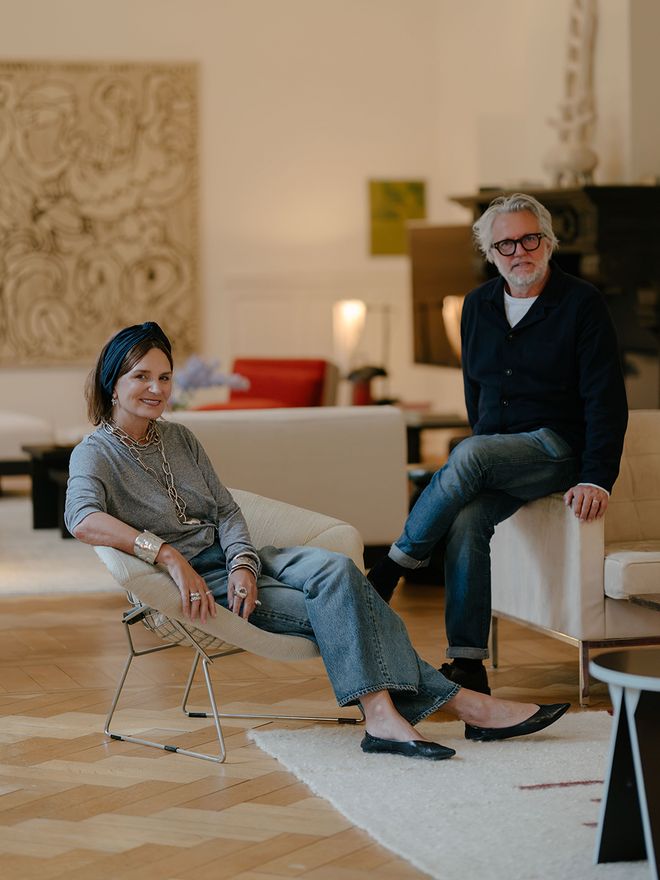
Marie and Axel’s home also serves as an office, where they welcome guests and business partners.
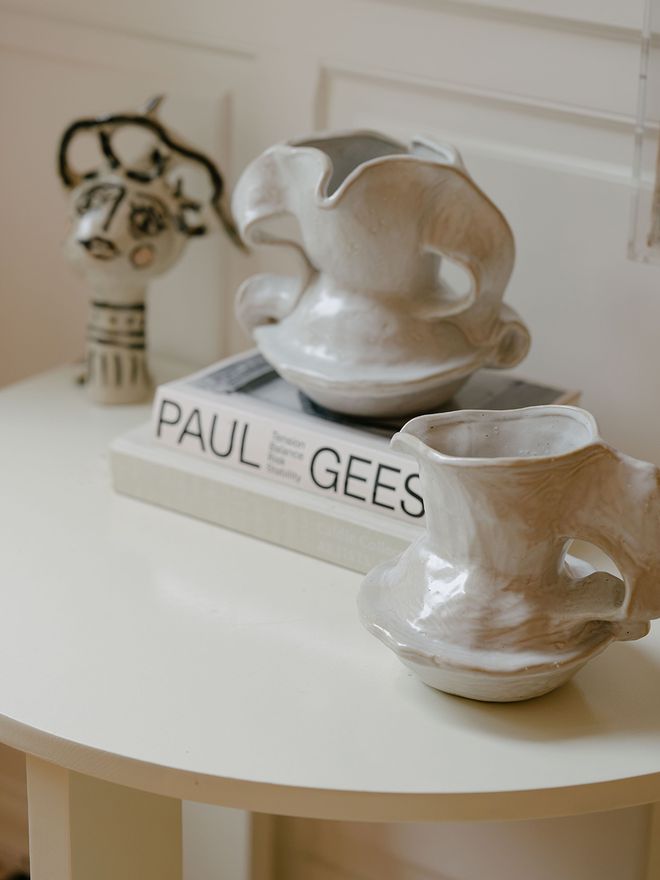
The couple shares a love of art, and it finds its way onto every table and shelf.
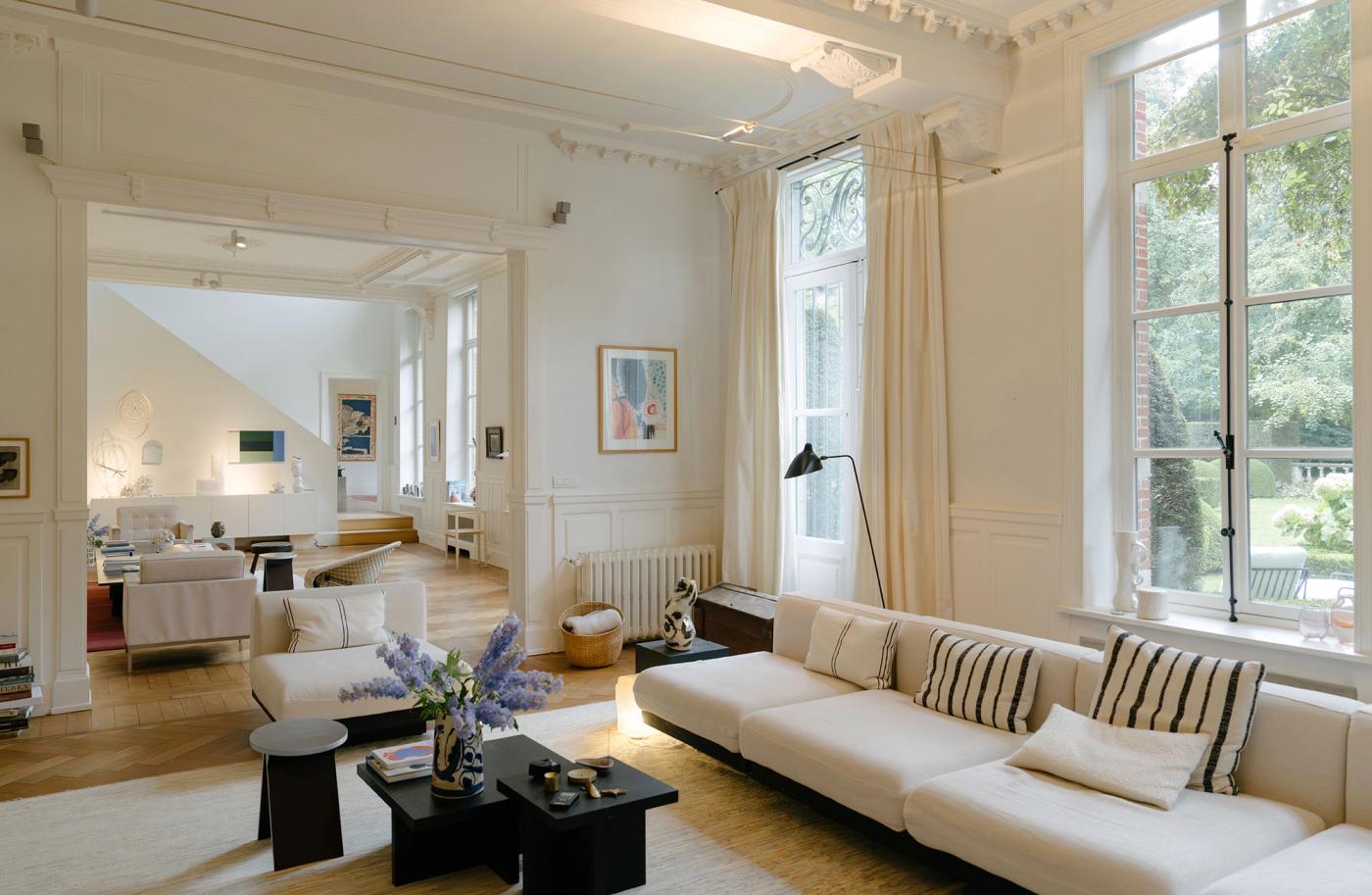
They sees themselves as the latest guardians of a house that has stood for centuries. The Sophia vase in the foreground is one of Marie's designs.
Castle in the middle of the city
Before moving here, Marie and Axel lived for many years in Brasschaat, a village outside Antwerp. Their hearts, though, were always in the city: its restaurants and museums, and the pleasure of cycling past beautiful houses and art in the street. At the same time, Marie loves nature, which is hard to find in the middle of a city.
The search for the right place went on for a long time, until almost eight years ago, they came across this castle by chance. “We fell in love immediately,” Marie tells.
Marie and Axel’s apartment is one of six in the castle, a 400-square-metre home spread over three floors. The building dates back to the second half of the 16th century, when Antwerp was a key trading centre in Europe, and over the centuries many creative people have called it home.
“We are only passengers in a house like this,” Marie says. To her, living here means looking after the house, and the residents stand shoulder to shoulder to keep it intact and beautiful.
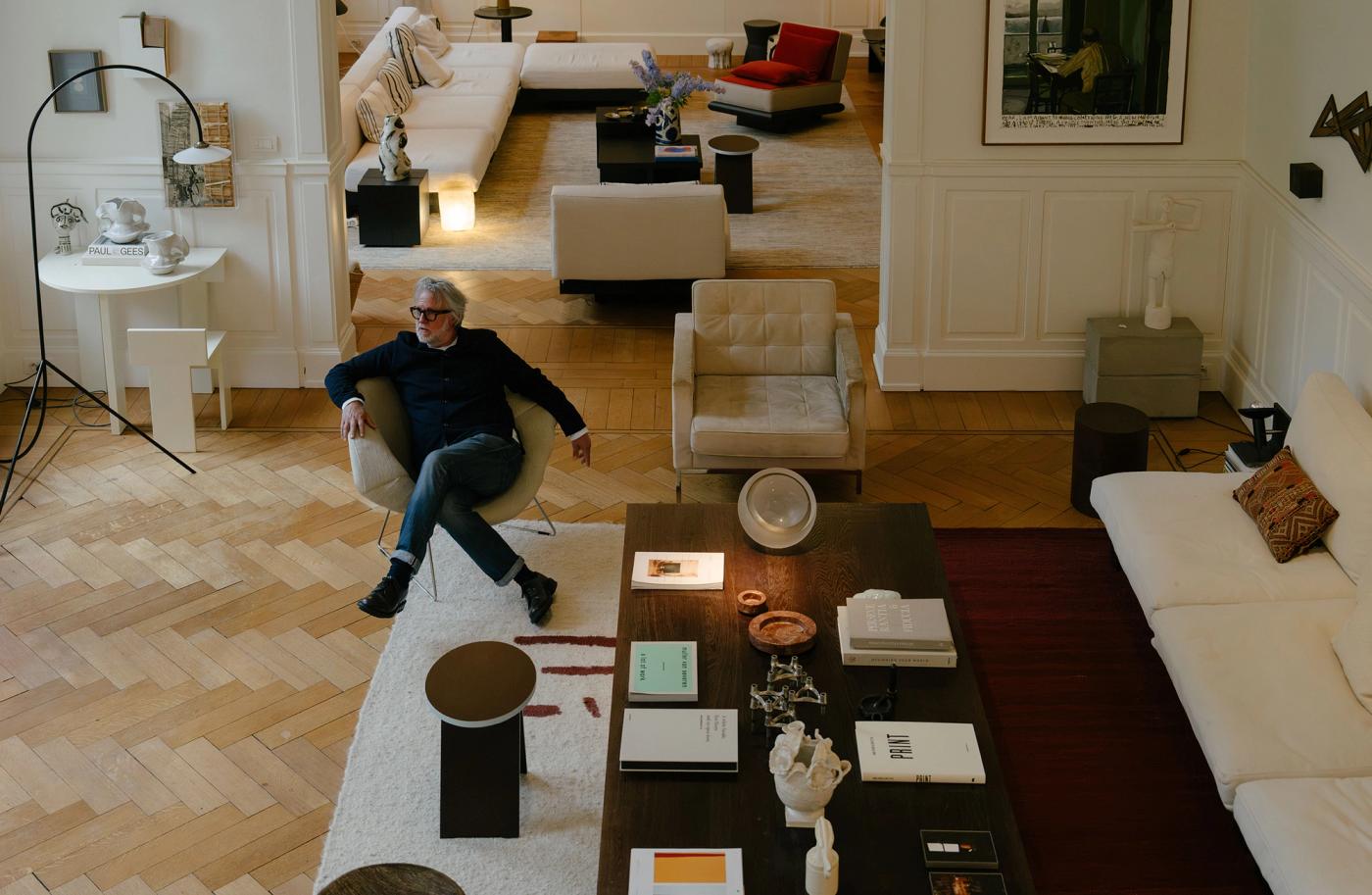
Herringbone floors, panelled walls, sunlit rooms with space to spare, and centuries of history layered into the details. What’s not to fall in love with?
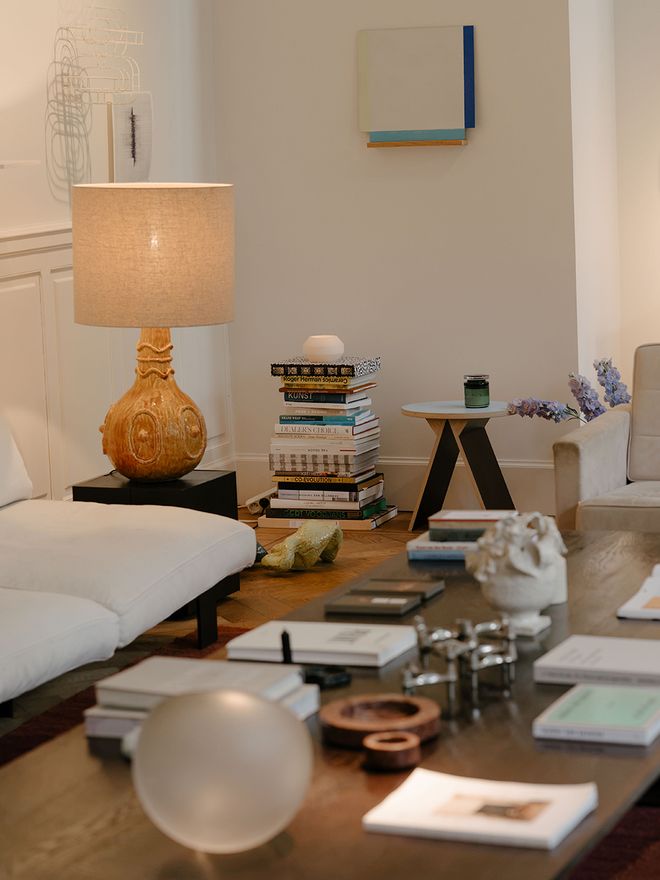
The house is full of details, many of them shaped by Marie’s own hands. One of her own table lamps, called Georgia, glows among stacks of books.
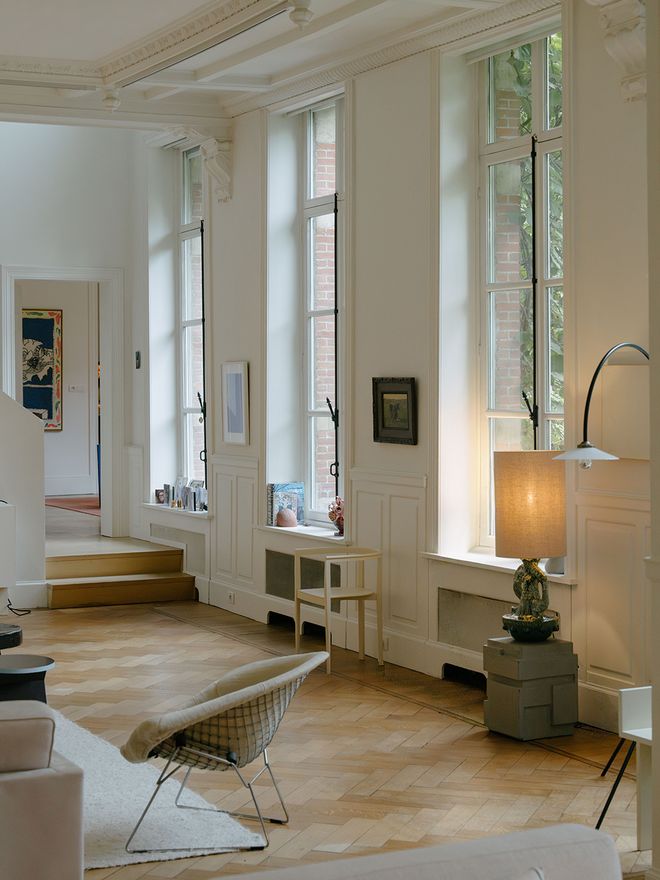
Marie and Axel like to mix old and new. “When the proportions are good, it's beautiful,” Marie explains. “It doesn’t matter whether something is modern or old.”
What Marie loves about old houses is the handwork. The ceilings are full of detail, and when she talks about them, she reaches for the Dutch word ambacht, craftsmanship.
“I make everything with my hands, so it goes very well together,” she explains. “When something stays beautiful through the ages, it was well done. Beautiful things stay.” The house has a soul, and Marie feels it goes very well with hers.
And what about the nature she was looking for? Well, it turned out to be right behind the house.
In the private garden stands one of the oldest trees in Antwerp, and beyond it lies a leafy public park, open to everyone. Some days, Marie takes her coffee out here before heading back to the atelier.
It is also only from the garden that the castle comes into full view. From the street, it stays hidden, and Marie likes it that way. “The jewel is at the back,” she says. “People don’t have to see that you live in a castle. You just have to enjoy it.”
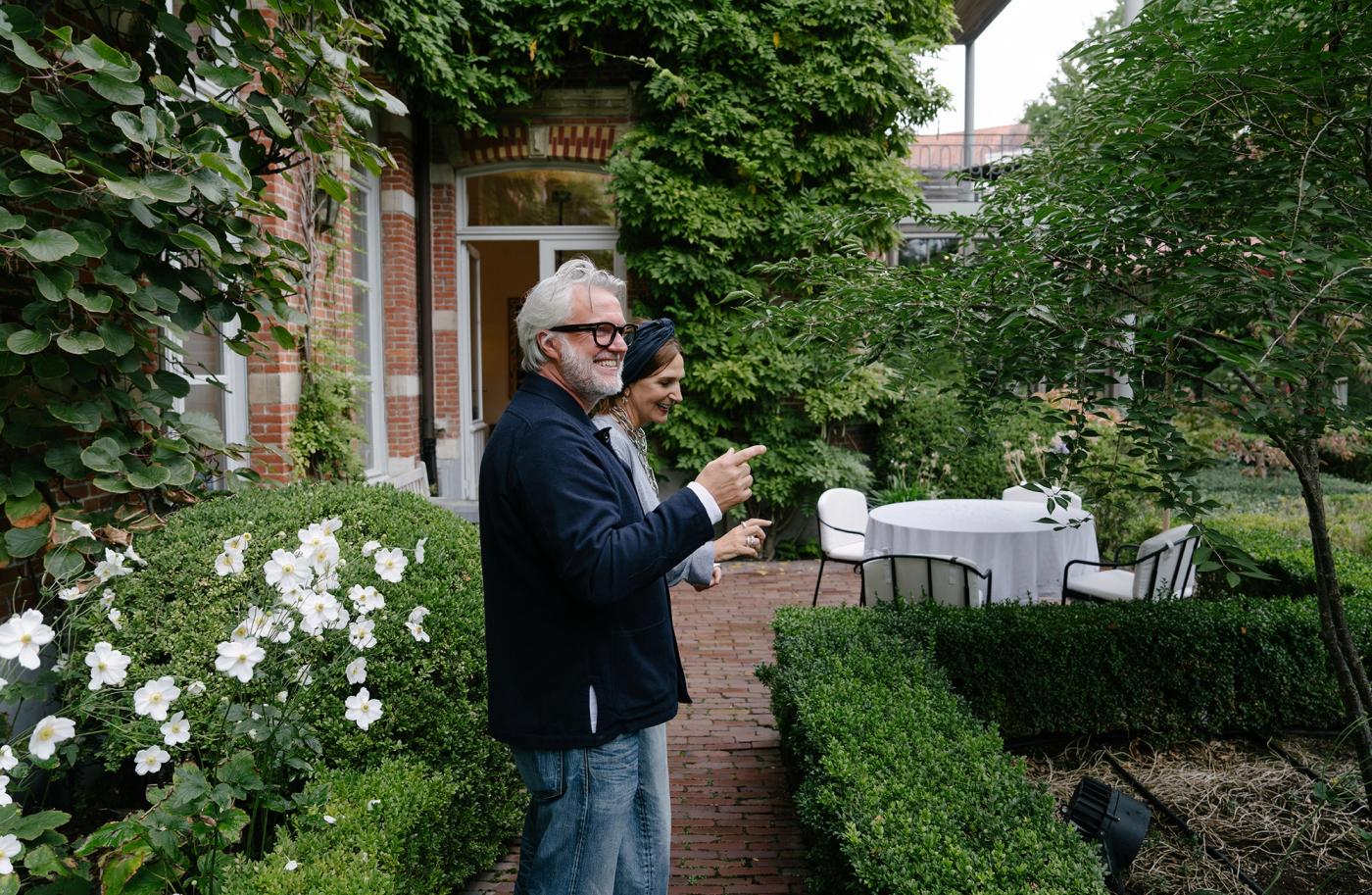
Marie had wished for nature in the city. It turned out to be closer than she had dared to hope.
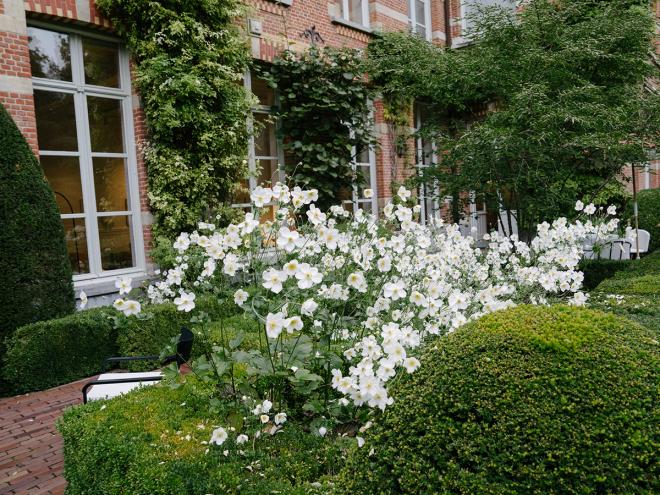
From the garden, the castle’s red brick finally comes into view.
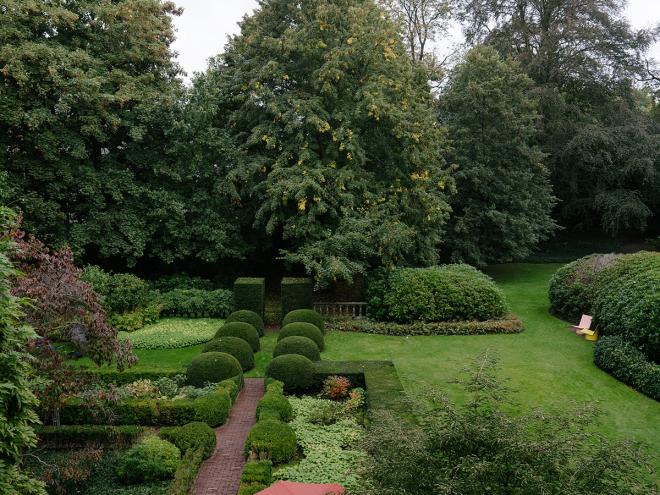
Somewhere among these trees stands one of the oldest in Antwerp.
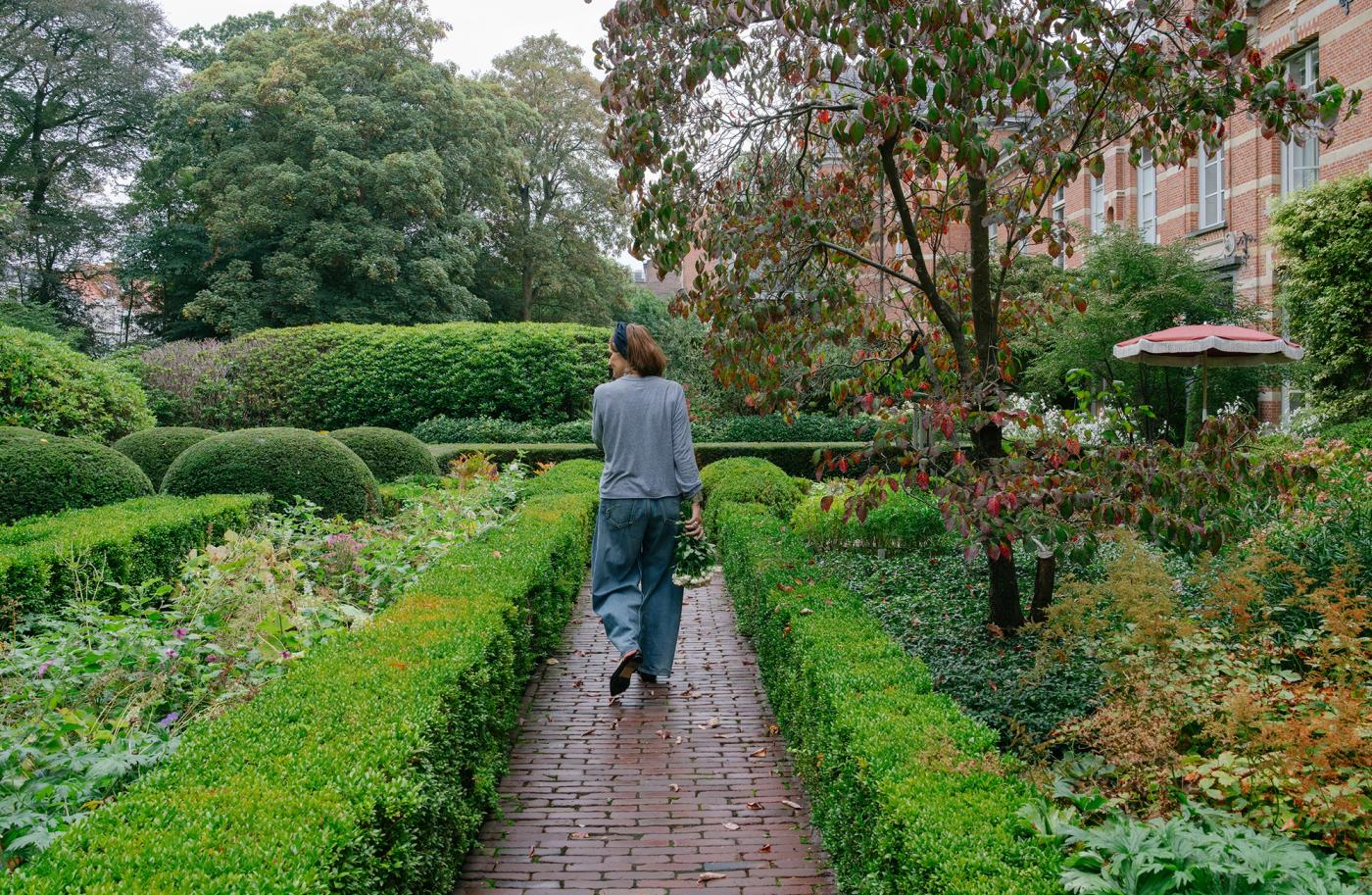
The garden is where Marie gathers flowers, and inspiration, too. The color of a bloom or the shape of a leaf can find its way into her next design.
Home made for living
Wherever your eye lands in this house, it finds art or design. Well-known names hang next to work by young artists, and Marie’s own vases and bowls turn up in almost every room.
Axel is drawn to larger, more expensive pieces, while Marie is just as happy buying something small from a student or an artist who is just starting. “It's good to combine young and old, famous and not famous,” she says. Whatever they buy, though, one rule applies: they both have to love it, because they both have to look at it.
“It changes constantly, but it stays home.”
Even so, the home never feels like a gallery. “It’s not a showroom. We live here,” Marie says. To her, a home should be cozy, and you should be able to see the people who live in it.
It is also a home that never stands still. A new piece Marie has made might stand in the kitchen for half a year before she decides whether it works. Some prototypes never make it into a Serax collection but stay at home, and some find their way into one later. She and Axel might soon change the sofas, too. “It changes constantly,” Marie says, “but it stays home.”
What doesn’t change is Marie’s belief in surrounding yourself with beauty, and not only in objects. “You find beauty in a conversation, but you also find it in a chair or a tablecloth. It gives something soft to the world.”
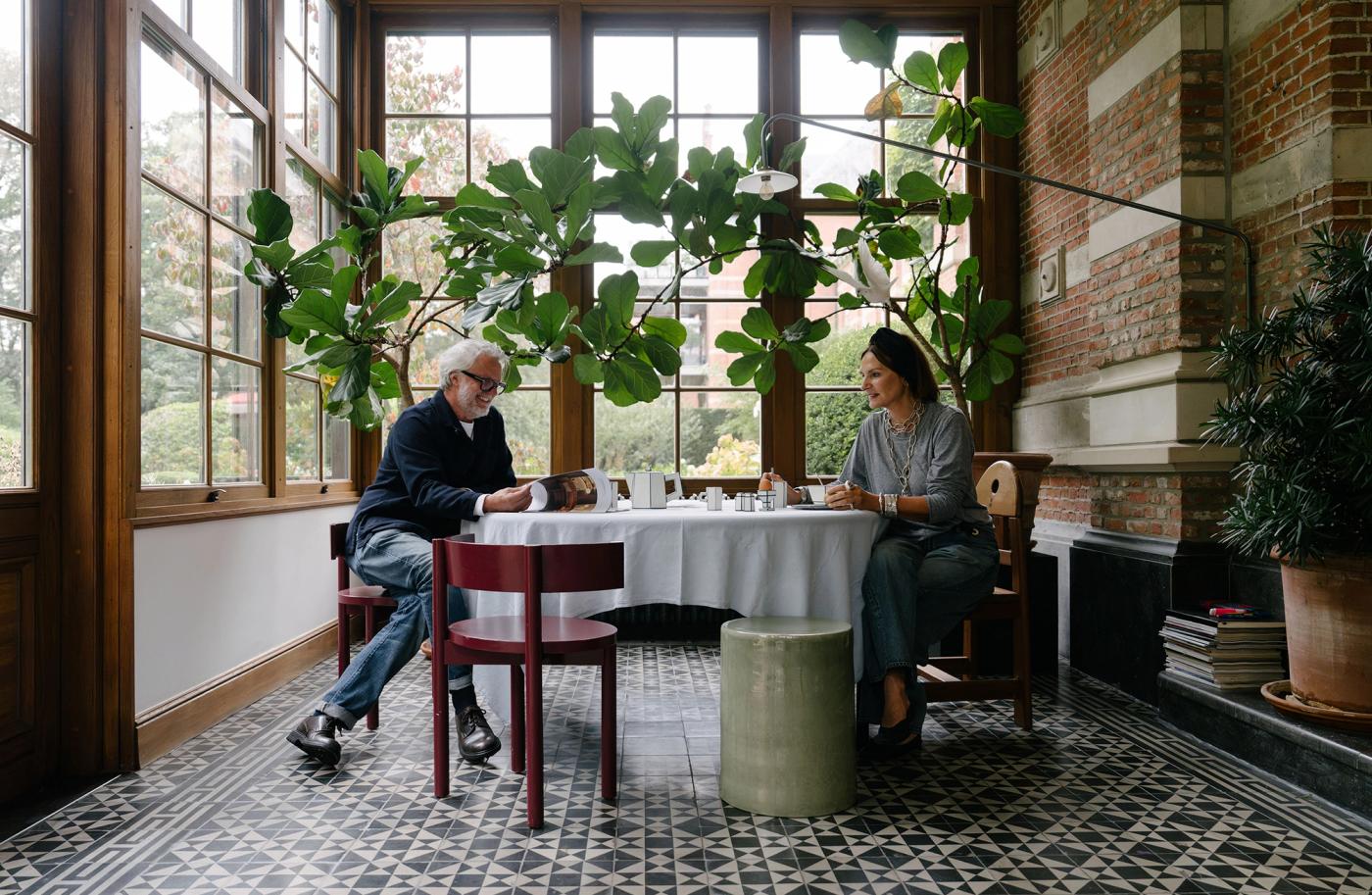
Marie has always loved round tables, where family and guests can gather over good food and each other’s company. The versatile green Pawn side table is designed by Marie.
Table for every voice
When you ask Marie about her favorite place at home, the list is long. There is her bedroom, big enough to retreat to on a tired evening, and in winter, the bath. Then there is the round kitchen table, which means a great deal to her, especially when the children come home.
Marie has always loved round tables. At a square or rectangular one, conversations split off at either end, and not everyone can hear each other. “There is always someone at the table who is a little bit quiet and someone who is funny, and everybody should be able to enjoy it,” she explains. At a round table, everyone can see and talk to each other.
So she designed one herself to replace the square table they used to have. It was her first table, and she named it Virginia, after the author Virginia Woolf.
Most of all, though, there is her atelier, the small room next to the kitchen where she works every day. But before we step inside, let’s go back to where it all began.
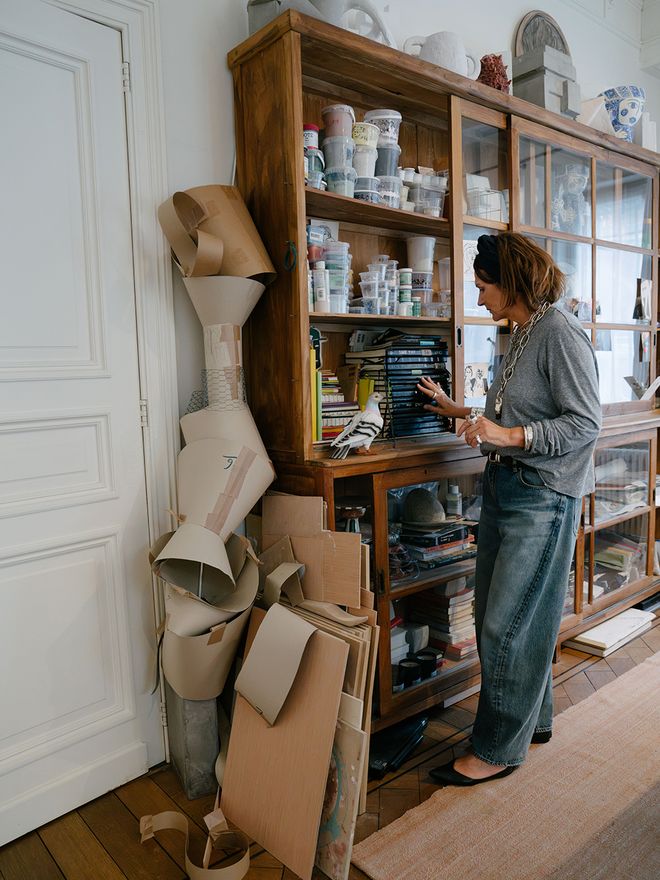
The girl who once built houses for her dolls still spends her days making things, now in an atelier of her own.
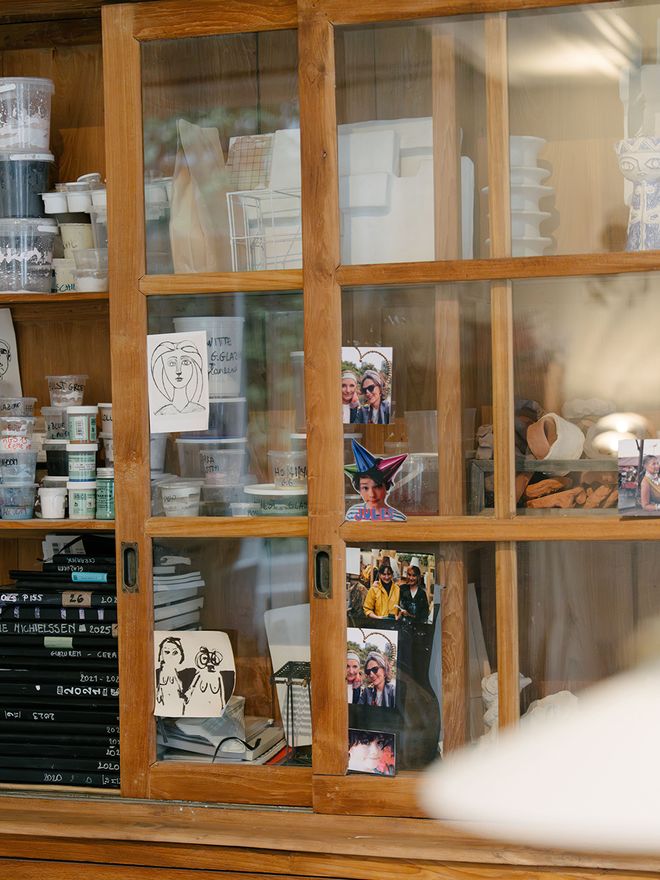
Years of sketchbooks, marked with dates, share the shelves with family photos and drawings. In Marie’s studio, work and life are never far apart.
It all started with pots
Making things has been part of Marie’s life for as long as she can remember. As a small girl, she built houses for her dolls and sewed their dresses, creating little worlds of her own to escape into.
Another thing that has stayed with her since childhood is a piece of advice from her mother. Marie grew up as one of four sisters, and their mother told the girls they could marry any man they wanted, as long as they kept on working and earned their own money. “It’s just one sentence, but it has kept me going,” Marie says.
At the age of 24, Marie had to stand on her own feet. She was working as a graphic designer when a friend asked if she could make some pots. She had no money, so she drove around in her little car buying old strawberry pots from farmers who no longer needed them. In her small kitchen, she cleaned them, painted them, and decorated them with stencils. Her sisters came to help, and eventually she ran an atelier with five women painting and printing her pots.
Selling to shops one by one was exhausting, so Marie went looking for a wholesaler and found Serax. Fittingly, the company had grown out of a flowerpot business run by Axel’s mother. Axel and his brother Serge founded Serax in 1986, and this year the design brand celebrates its 40th anniversary.
At Serax, Marie’s pots sold out immediately. Demand grew so fast that production eventually moved to Vietnam, where Marie taught a hundred women to paint. Over the years, her work has grown far beyond pots, and today she designs tableware and lamps for Serax alongside her vessels and bowls.
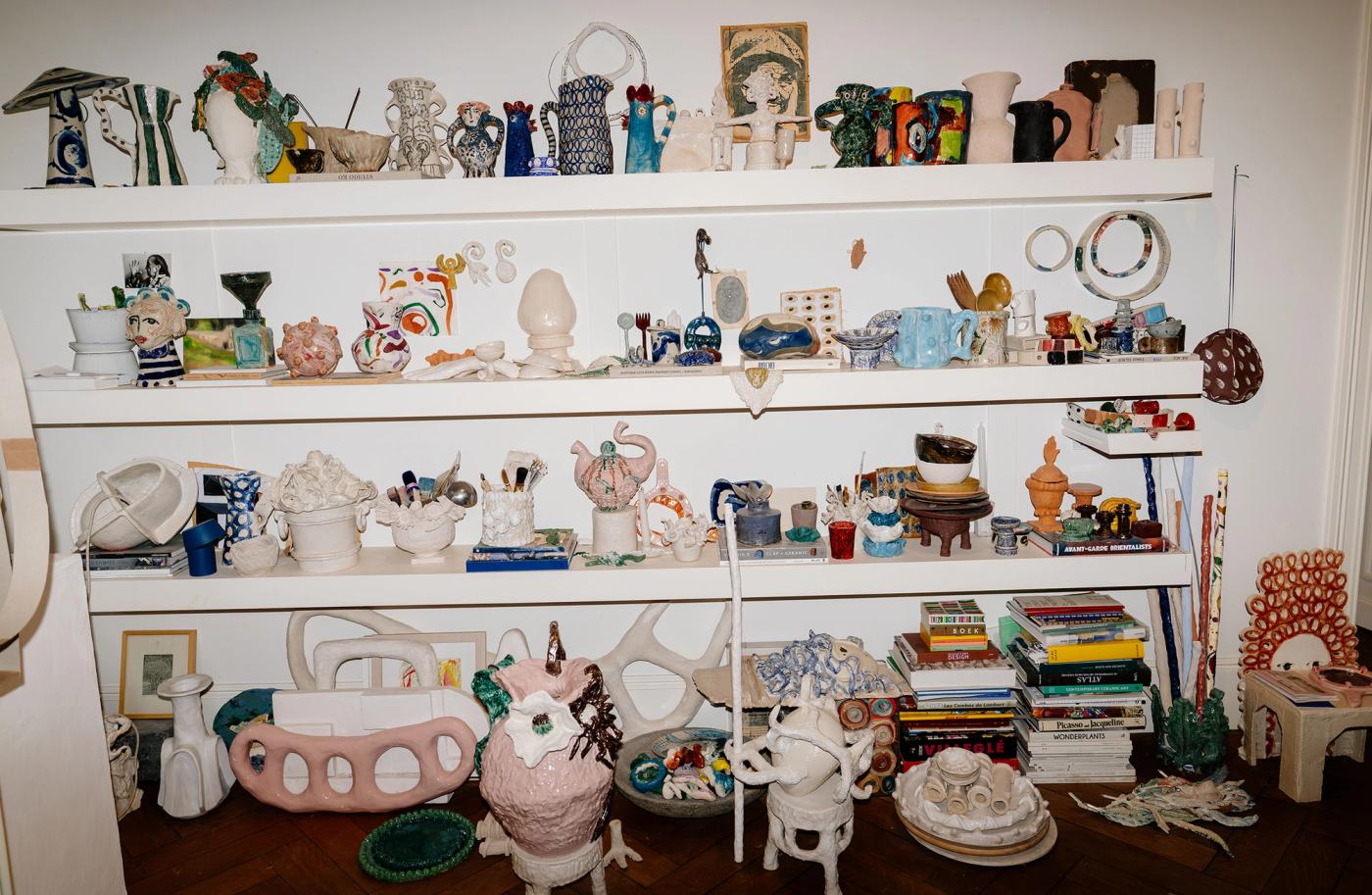
Marie’s favorite material is earth. “It comes from Mother Earth. From nothing, you can make a vase. That still astonishes me,” she says.
Where things take shape
Marie never wanted a big studio but a cozy atelier, with beauty around her. The old house gives her that. Her atelier sits right next to the kitchen, and that is no accident. She designs objects for the home, so she wants to feel the house around her while she works. “I feel the house, and I feel what it needs,” she explains.
For someone so intuitive, her days are remarkably disciplined. She starts at nine with a coffee and no breakfast, eats lunch at twelve and works until six. After dinner, she sometimes leafs through her art books, so the atelier's location has a practical advantage, too. If an idea comes to her in the evening, she can walk straight in and start working.
Many of her designs begin with something their home is missing. Axel might mention that they could use new lamps or pots, and Marie takes it from there. Often she turns to old pottery and asks herself what new element she could bring to it. The shapes begin to form in her head long before she sits down to work.
Marie’s sketchbooks are where those ideas first land. She draws constantly and has filled a great many drawing books over the years, but they are more than an archive. Sometimes she leafs back through old pages and finds that an idea she once dismissed suddenly feels right. “You keep evolving, so you see them differently,” she explains.
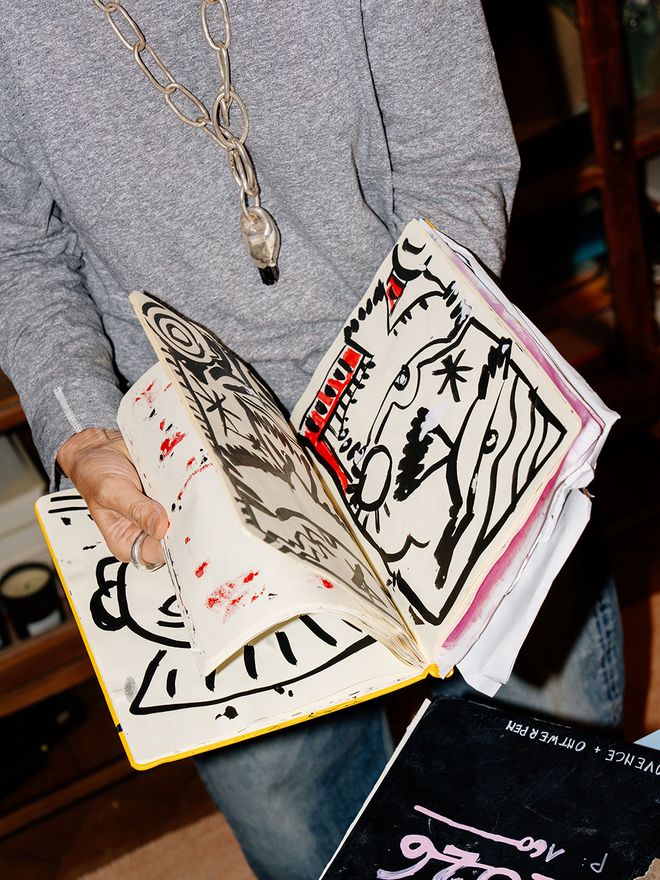
Everything starts with a drawing.
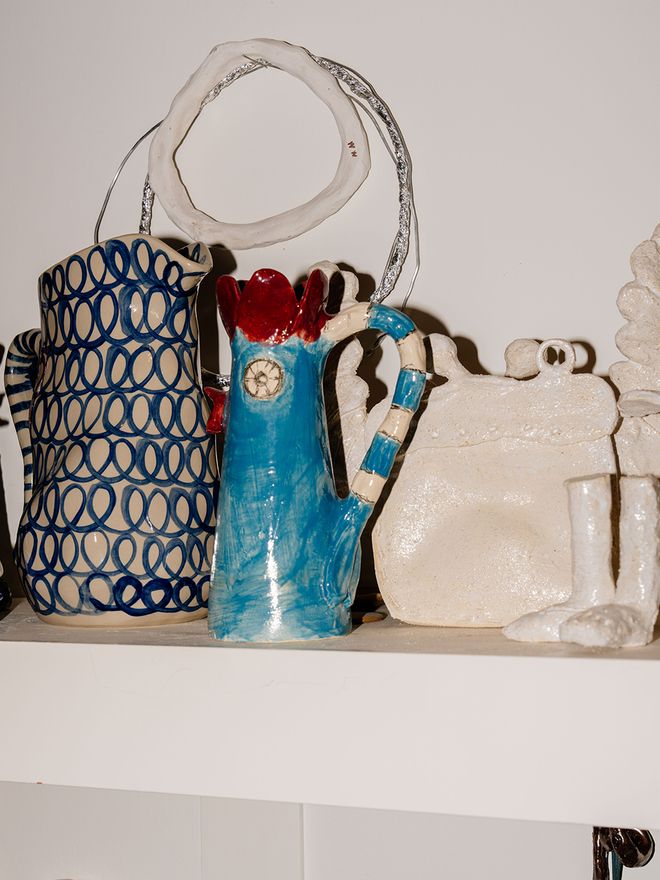
After that, Marie lets her hands take over. “My mind leads my hands, my hands lead my mind, and it all comes from my belly.” The jug with blue patterns is Charly, designed by Marie for Serax.
Then the making begins, always by hand. Everything Marie has seen and gathered over the years flows into the work, and thinking and doing become one and the same. Working this way keeps her close to her intuition, and she wants that closeness to show in the finished piece. My mind leads my hands, my hands lead my mind, and it all comes from my belly,” she says. “You have to feel my hand in my products.”
It is the same quality she looks for in other people’s work: the care and time someone has put into an object. “You notice when something hasn’t been made quick, quick, quick.”
For Marie, making things is about more than the finished objects. She is convinced that working with your hands is good for the mind, whether you're digging in the garden or shaping clay.
She also hopes children will keep learning to express themselves with paper and pencil. Technology has its place, she says, but right now everything is tipping too far the other way. “We need a balance,” she sums up.
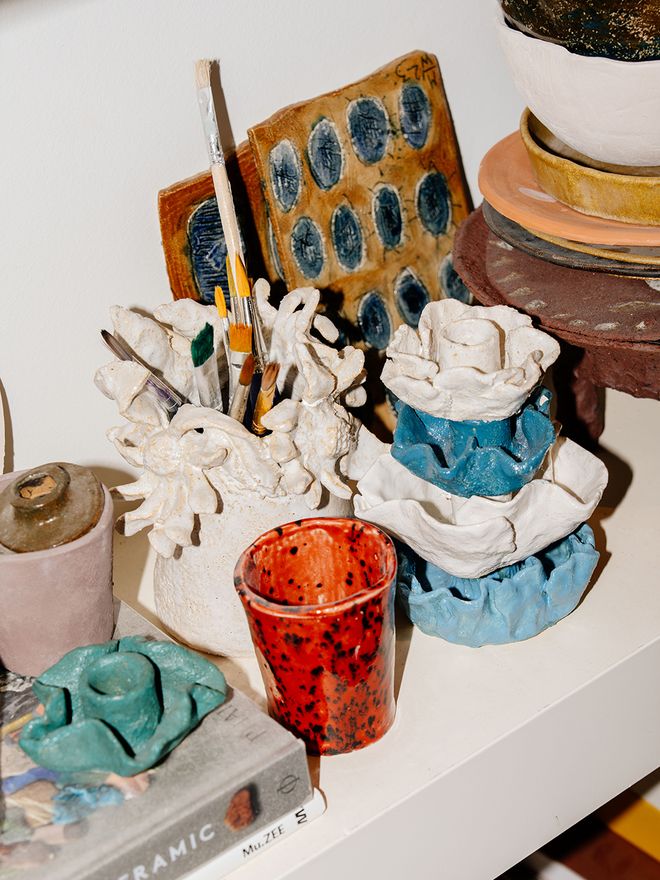
Brushes, glazes and ceramics crowd the atelier’s surfaces. Nothing here has been made quickly.
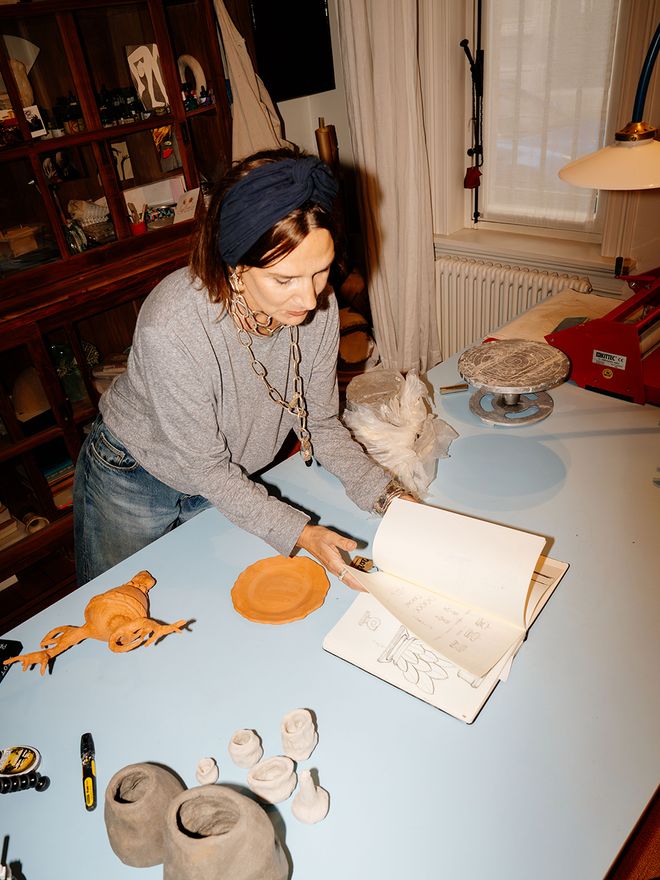
For Marie, shaping clay is good for the mind. In her studio, the results gather on every surface.
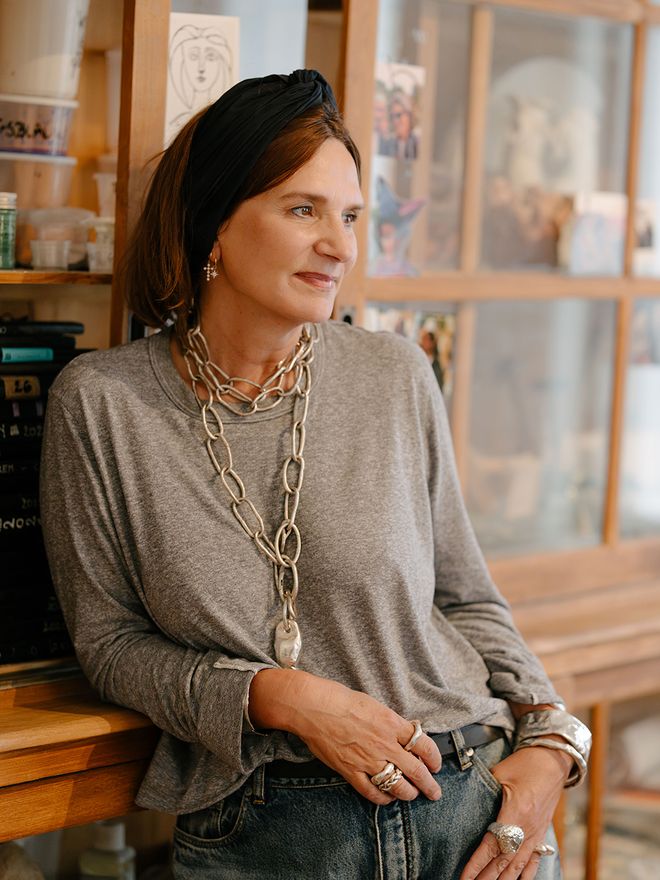
Decades on, she is still following her mother's advice: keep on working.
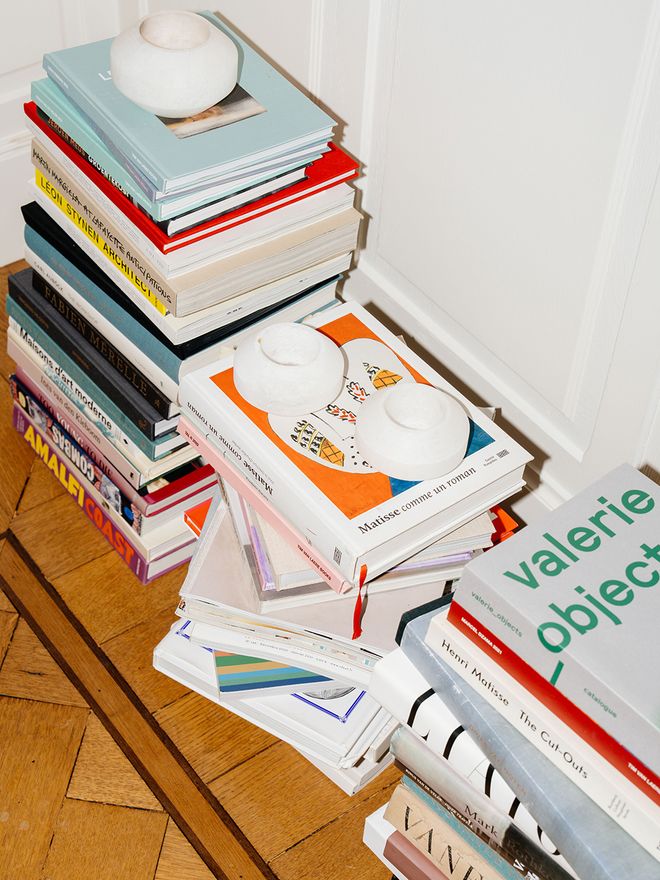
Her curiosity has never faded, and it keeps her work moving forward.
Finding her own voice
Thirty years ago, Marie was one of very few female designers in a field dominated by men. In the early days, most of the people working at Serax were men, too. Today, most of them are women, and Marie sees it as a change for the better – and not only for the company.
“It’s so important that we women support each other, so that we can fly and make our own decisions.”
Finding her own voice took time. As a young woman, Marie was shy and introverted, and she admits she lost a lot of time thinking she couldn’t do things. What changed it was work, and a great deal of inner work too. “You have to push yourself and believe in yourself, and stop caring what other people think.”
Now a grandmother, Marie wants to show that women over sixty have a great deal to give. “We have always worked for someone else. Now we look after ourselves, and that’s when we become interesting,” she says. As you grow older, she adds, many things slip away. “But when you can create, you can always make something new.”
Her children have never really thought of what she does as a job. All they have ever seen is their mother loving her work, and that is also her advice to others. “Enjoy your job and do it with your heart and soul. Then everything turns out all right.”
See also:
• All designs by Marie Michielssen >
• All products by Serax >
Production: Design Stories
Published on 8 Oct, 2026