Inside Achille Castiglioni’s studio, where design still feels like play
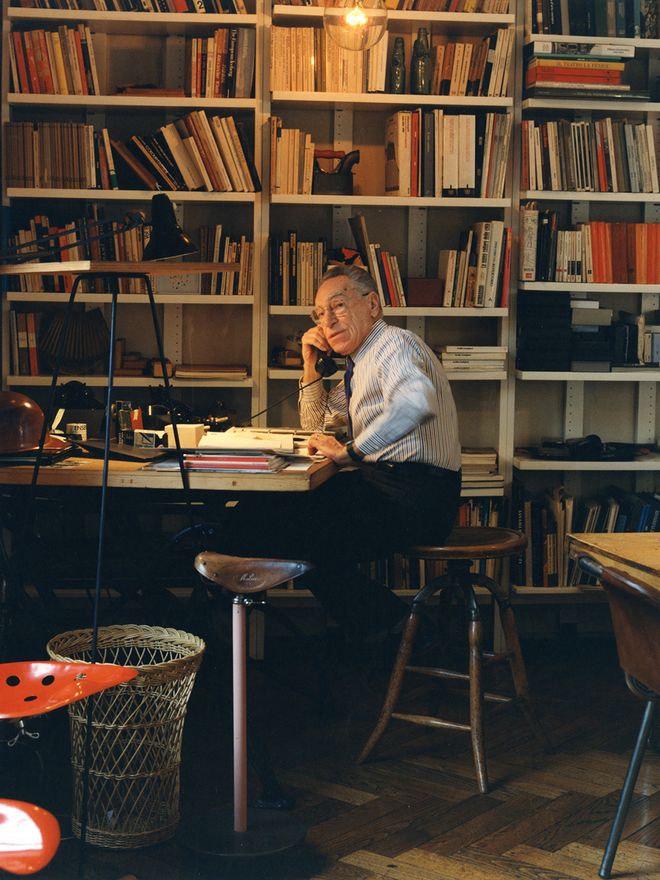
Archive photo of designer Achille Castiglioni in his studio in Milan. Photo: Gianluca Widmer
Who: Achille Castiglioni
Italian architect and designer (1918–2002), born and died in Milan.
Trained at the Politecnico di Milano; worked closely with his brother Pier Giacomo for two decades, first alongside a third brother, Livio.
Known for icons like the Arco floor lamp, the Toio and Taccia lamps, and the Mezzadro and Sella stools.
One of the 20th century’s most influential industrial designers. Won a record eight Compasso d’Oro awards, plus a Special Mention in 1989 for lifetime achievement.
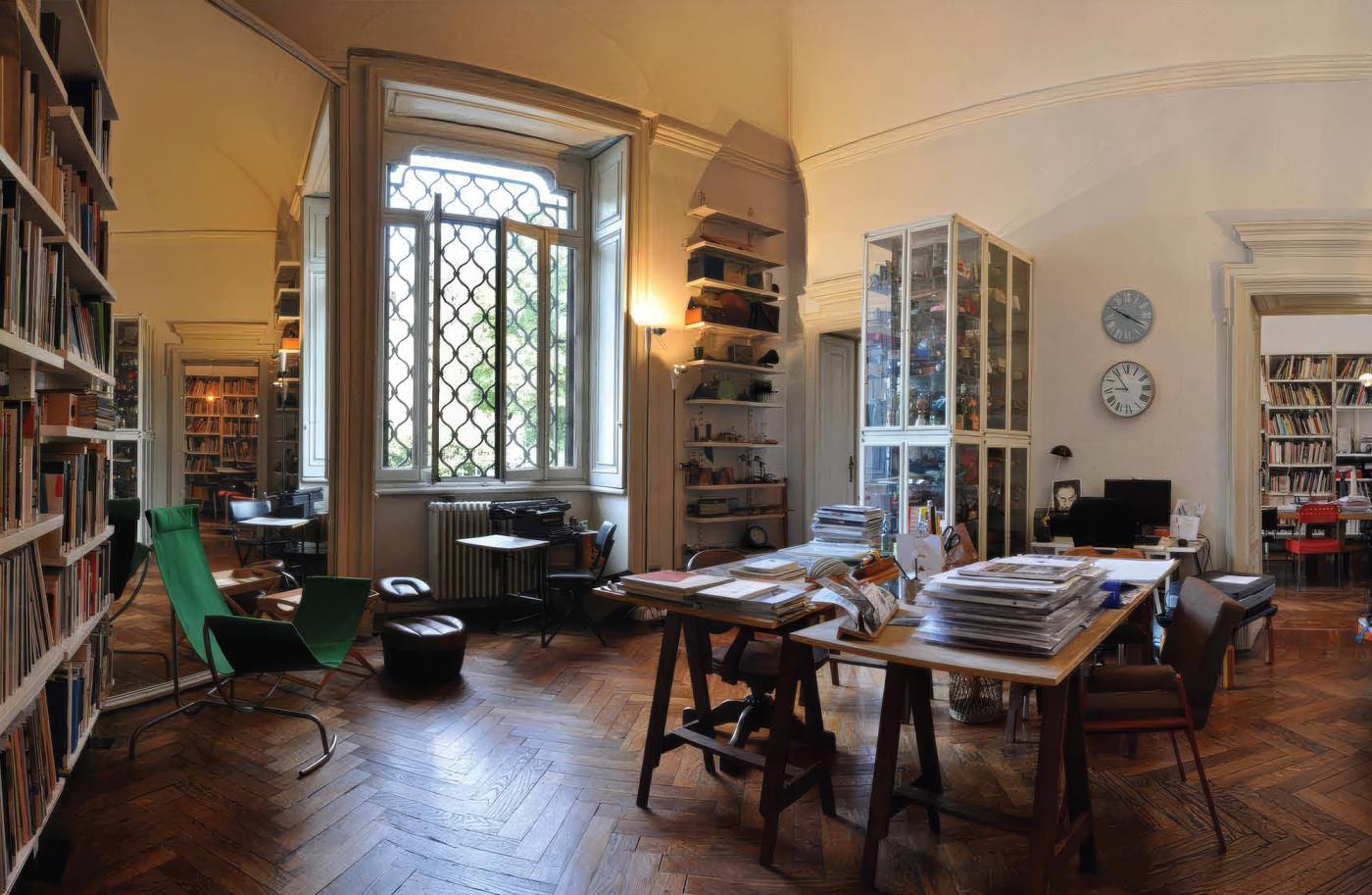
Castiglioni’s studio at Piazza Castello 27 can only be visited by reservation, with a guided tour. Archive photo: Achille Castiglioni Foundation
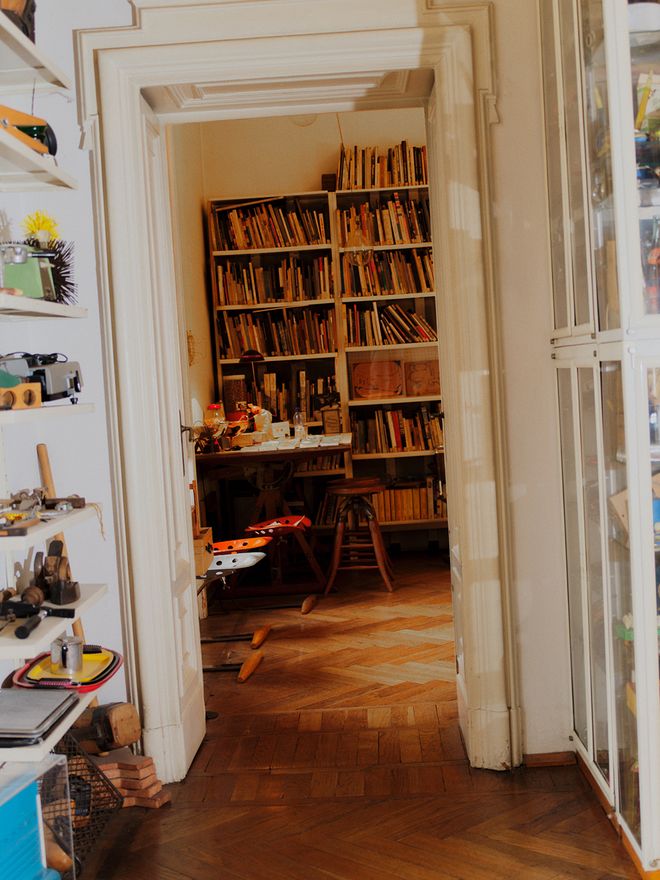
Every room in the studio is packed with things to see, brimming with visual stimuli for any design lover.
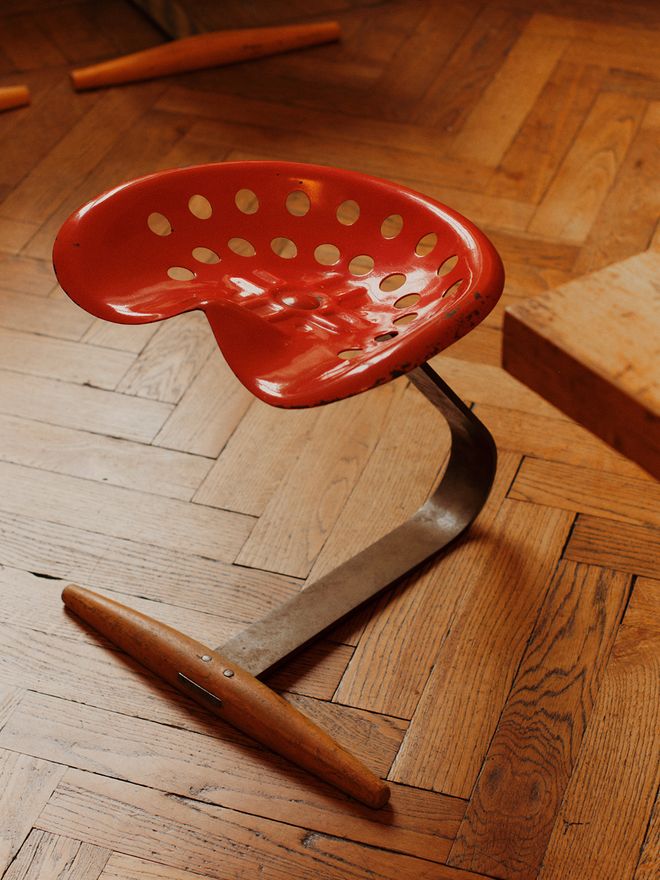
The Mezzadro stool was designed all the way back in 1957, and Zanotta put it into production in 1970.
TUCKED BEHIND an unassuming door on Milan’s Piazza Castello is a studio that time never quite caught up with. Prototypes sit exactly where designer Achille Castiglioni (1918–2002) left them, drafting tools still hang on the walls, and shelves are lined with the odd, everyday objects he loved to collect.
We spoke with his daughter, Giovanna Castiglioni, who has spent years turning this space into a living museum, about growing up around genius, the secret behind the most iconic lamps, and why the studio still feels, in her words, like Achille never left.
If you’re planning a trip to Milan, add the Achille Castiglioni Foundation to your list, it’s more than worth the detour!
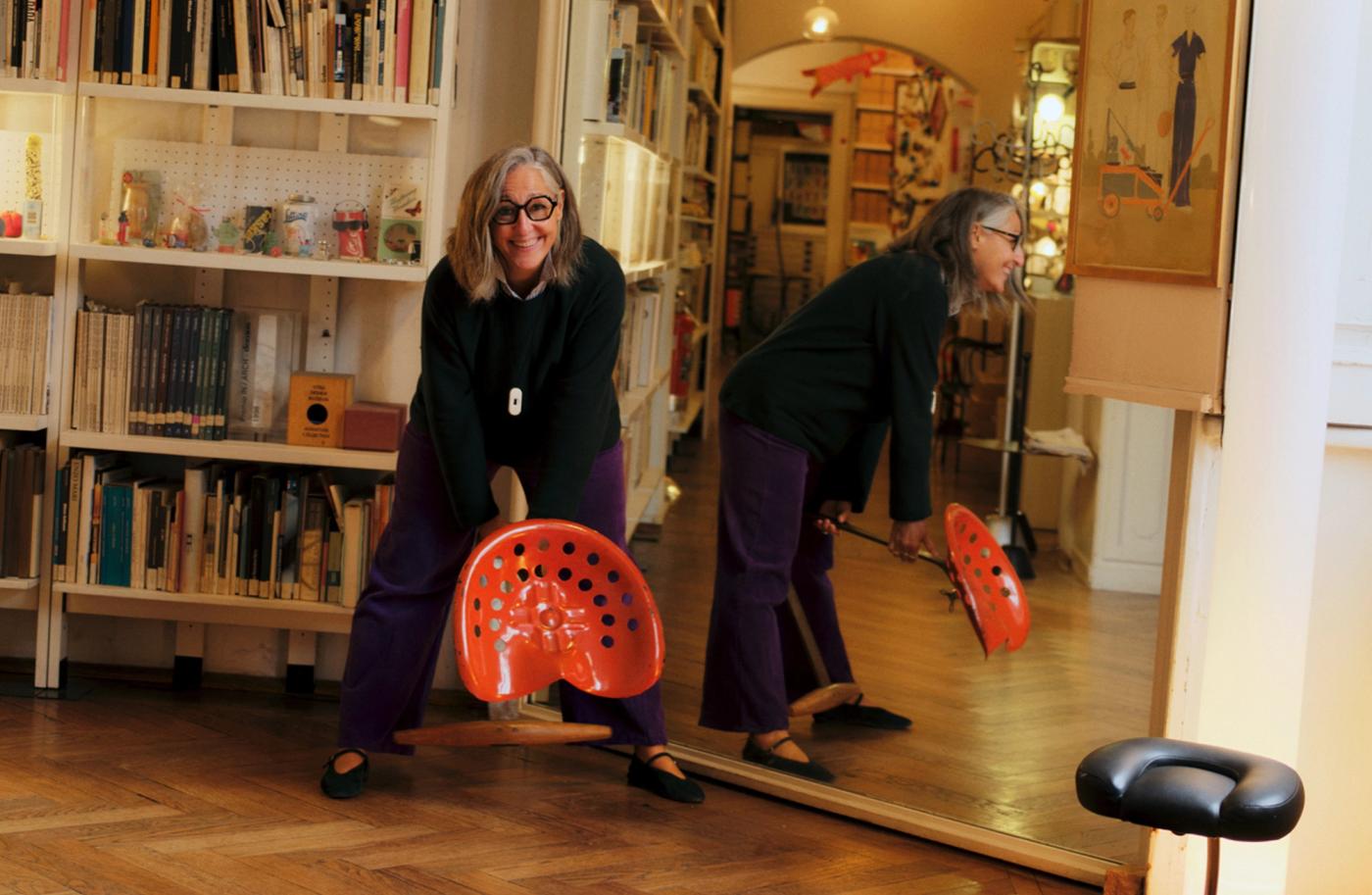
Giovanna Castiglioni, daughter of Achille Castiglioni and curator of the Achille Castiglioni Foundation, in her father’s studio on Piazza Castello.
Hello Giovanna! You studied geology before becoming curator of your father’s studio. What prompted you to change direction?
“My mother, Irma, asked me to try taking over the studio and, together with my brother Carlo, turn it into a museum. There’s certainly deep respect behind it, for the work my father Achille did, and a real desire to keep promoting it through new projects.
Over the years, I’ve prepared to offer every visitor to the Achille Castiglioni Foundation a personal experience, and I’m delighted to be here for the public now.”
What does this space in Piazza Castello in Milan mean to you personally, beyond its historical value?
“It’s a place that’s still alive: full of memories, projects, and ideas, along with the anonymous objects Achille collected, and that we keep trying to add to, even now.
Keeping an archive alive means never letting it fossilize, and never turning it into something purely commemorative. It’s open to everyone, so people can experience the objects firsthand and feel connected to what’s in the studio.”
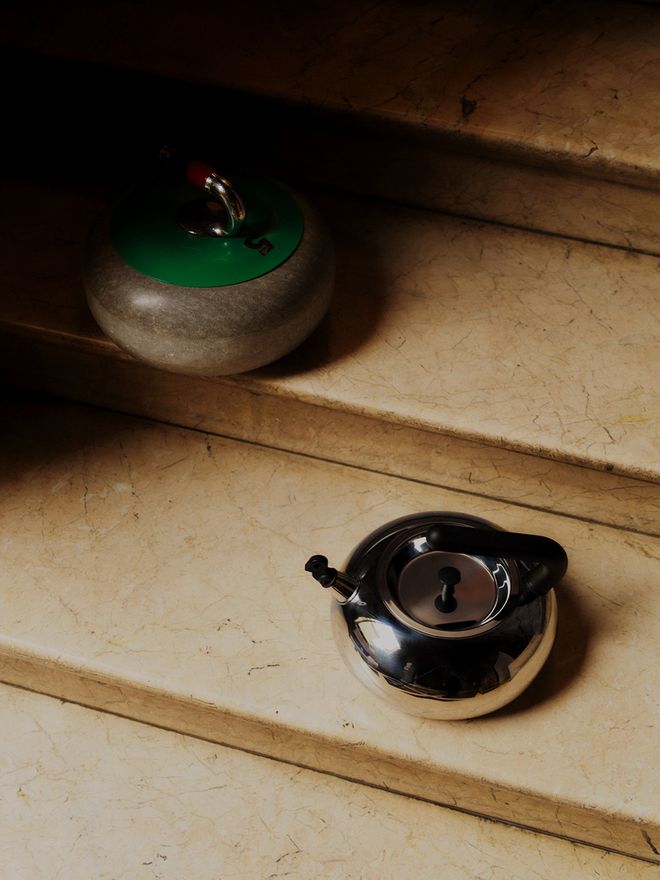
Alessi’s Bulbul kettle boasts an unusual oval shape and handle that you may recognize from winter sports: the design was inspired by curling stones.
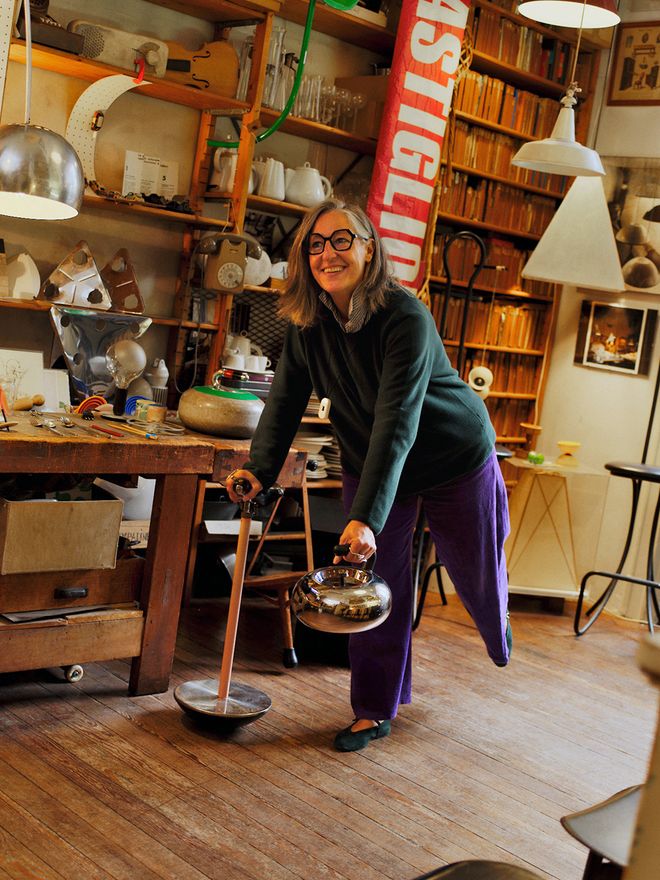
The Bulbul is a great example of the legendary designer’s ability to translate an object’s qualities and functions into something entirely different.
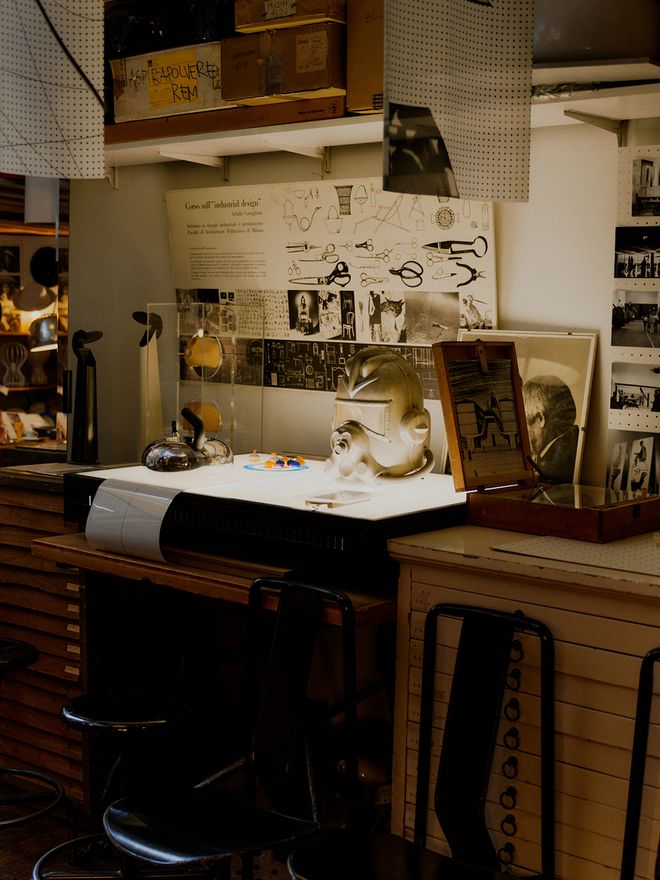
Although Castiglioni is best known for his lighting designs, he also worked as a teacher and industrial designer throughout his career.
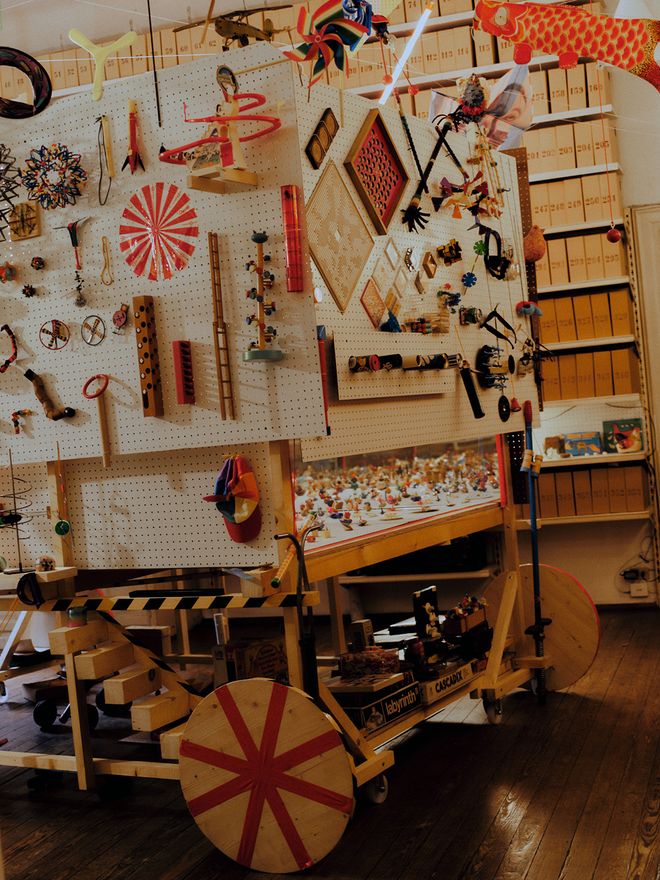
Toys and playfulness were at the heart of Castiglioni’s design work. The studio also hosts rotating exhibitions.
The studio consists of four rooms: one full of prototypes, one with drawing tools, one with everyday objects collected by your father, and a meeting room. Which is your favorite room and why?
“The prototype room is my favorite, because it’s the ‘hands-on' room. Today, more than ever, it’s important to show that working this way is still possible, thanks to technology, new materials, experimentation, and, of course, the much-talked-about AI. It feels like Achille is still there in the studio, working.”
Some of his most beloved lamps (Arco, Taccia, Snoopy, etc.) are named after both your father and your uncle, Pier Giacomo. Since Pier Giacomo passed away before you were born, what have you learned, from family stories or the archive, about how they worked together?
“A couple who knew how to divide the work, each bringing their own working style to the table and finding harmony despite their differences.
I’ve asked people who knew Pier Giacomo to tell me about him, and I’m happy to share my own relationship with the third brother, Livio, too. I knew him until I was seven. It was a short but intense relationship, because my uncle was extremely friendly and dynamic.
The three Castiglioni brothers were, without question, a wonderful team of designers who deeply loved their work as architects and designers.”
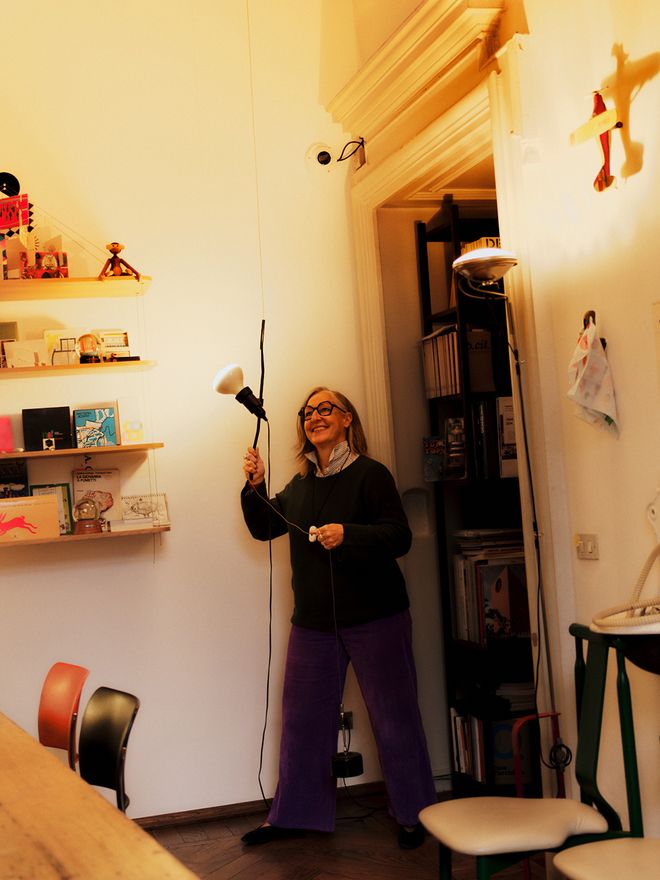
Giovanna is holding the Parentesi lamp, which is suspended between the ceiling and floor with a steel cable. Like a floor lamp, it plugs into a regular outlet.
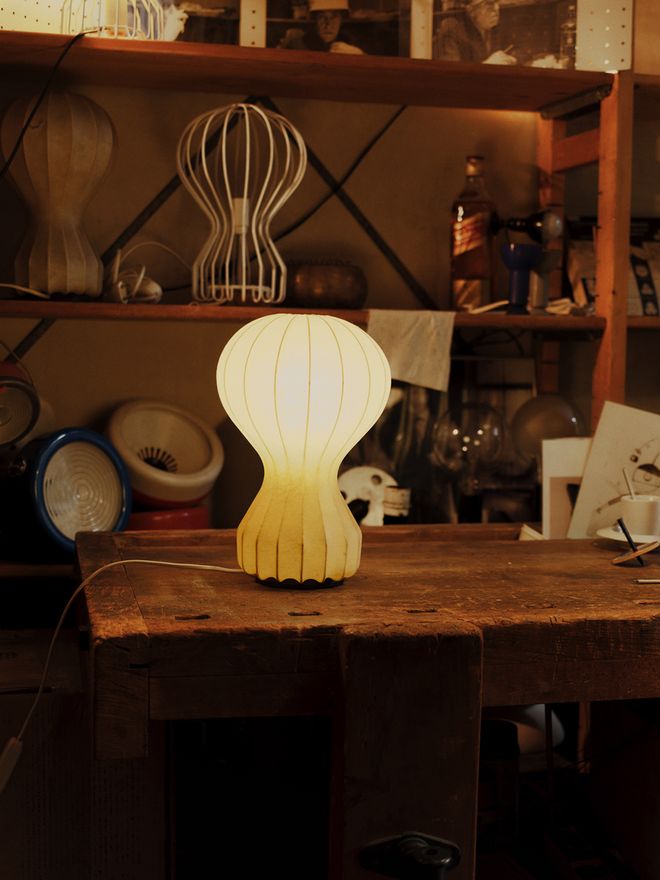
The Gatto table lamp, made by Flos, is a classic by Achille and Pier Giacomo Castiglioni from 1960. Gatto means “cat” in Italian.
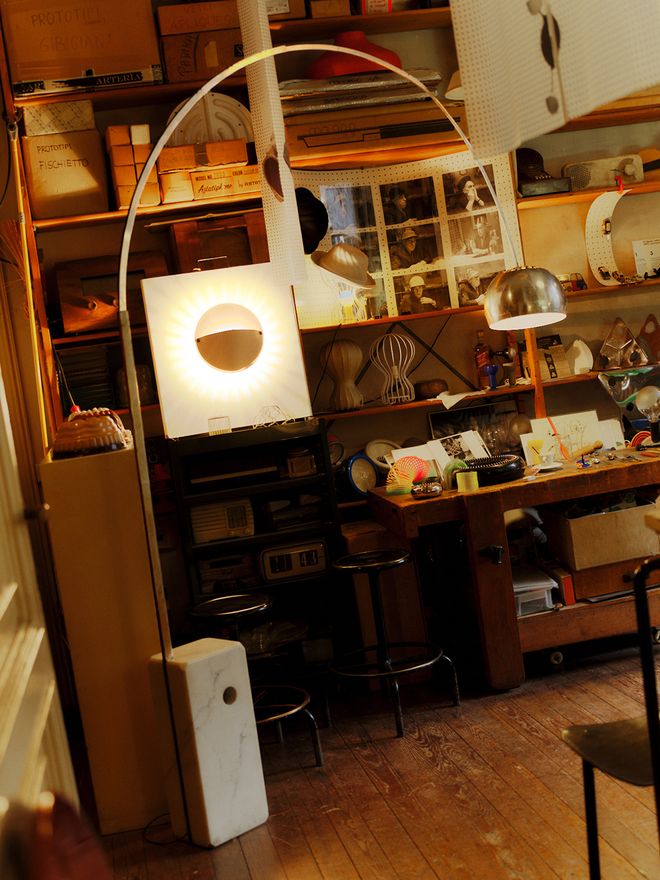
The famous Arco lamp from 1962 is a design icon that has made appearances in films like Diamonds Are Forever and The Italian Job.
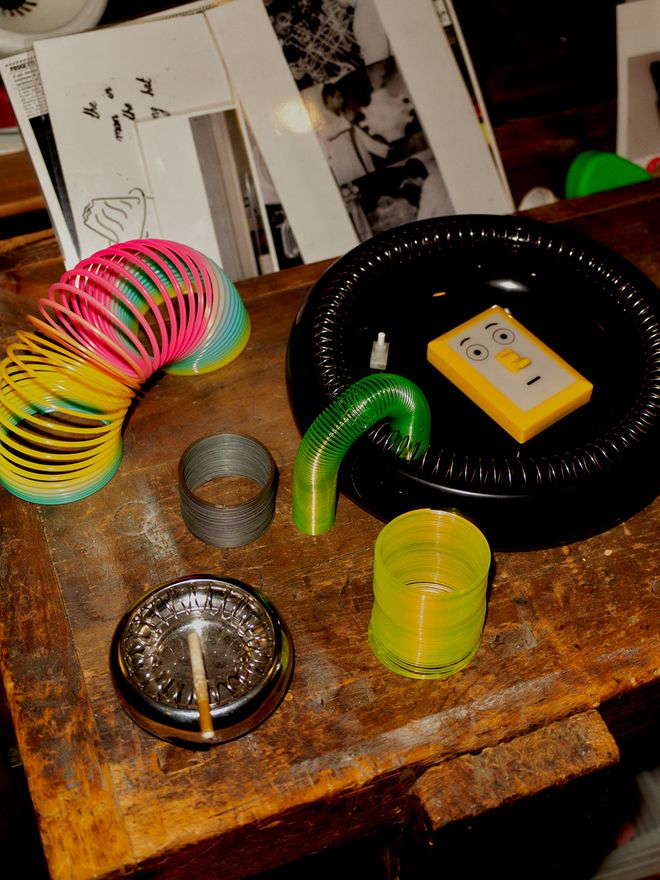
The studio is full of colorful, playful objects you just want to pick up and play with. They also served as a source of inspiration for Castiglioni.
The Parentesi lamp appears in some photos of the studio. What is it’s story?
“It started with a pencil sketch by Pio Manzù, a brilliant young designer who died in 1969, before he and my father ever had the chance to meet.
His widow showed my father Pio’s drawings, and one caught his eye right away: a simple, glowing tube that could rise, fall, and rotate. My father saw its potential immediately and worked closely with Flos’s technicians to bring it to life.
Fifty years later, Parentesi is still one of the bestsellers.”
Do you have any lamps designed by your father at home?
“My dad designed the Giovi lamp for me in 1982, and it’s on the stairs of my house, which is actually still my parents’ house, where I live. It keeps me company every time I come home, and it’s a ray of sunshine for anyone who visits.
I also have many of Achille’s lamps around my home. I love light, and I’ve placed them all so function comes before form. They all give off beautiful light: Gibigiana is on my bedside table, Frisbi is in the kitchen, and Luminator and Stylos are in the dining room.”
“If I had to choose one favorite lamp, I would say Giovi, because it has a smiling face and a bright sun.”
Sometimes people talk about a “Castiglioni Method,” the idea that form should always follow function and that everyday objects can teach us a lot about good design. How would you describe it in your own words?
“I think even today, new generations of designers can still follow this method: one built on curiosity, ideally with few filters or prejudices, the way children play with toys. A spinning top becomes a coffee spoon, a spring becomes a wax tray, a curling stone becomes a kettle, a film reel becomes the base of a lamp…”
Decades later, Castiglioni’s lamps still appear fresh and modern, not dated. What do you think is the secret?
“They were designed for function first and to shed light beyond stylistic choices. They remain timeless, or evergreen, because they haven’t compromised on marketing and don’t follow the fashions of historical moments.”
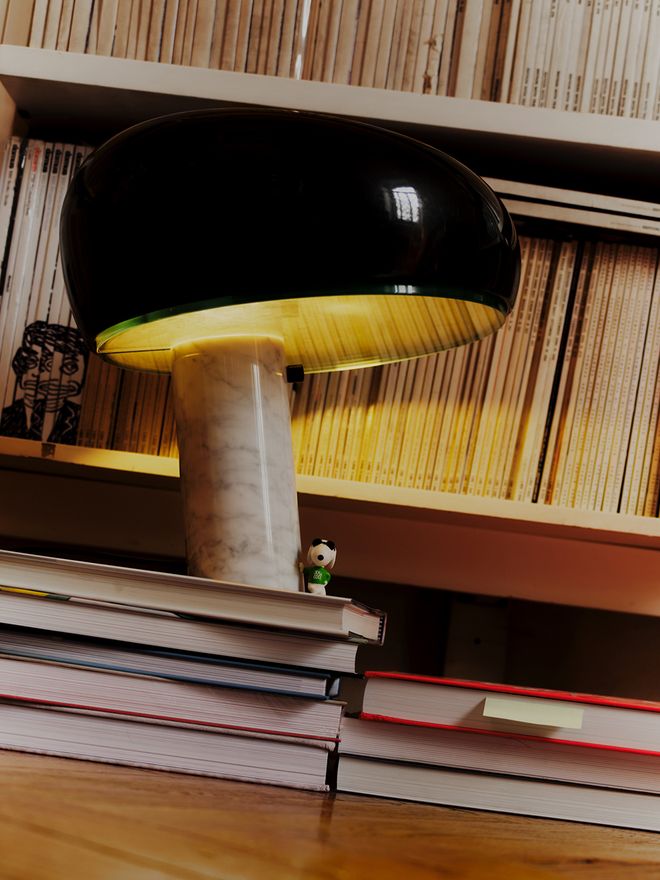
The cheerful Snoopy table lamp was named after Snoopy the dog from the Peanuts because the reflector has a distinctive beagle-like silhouette.
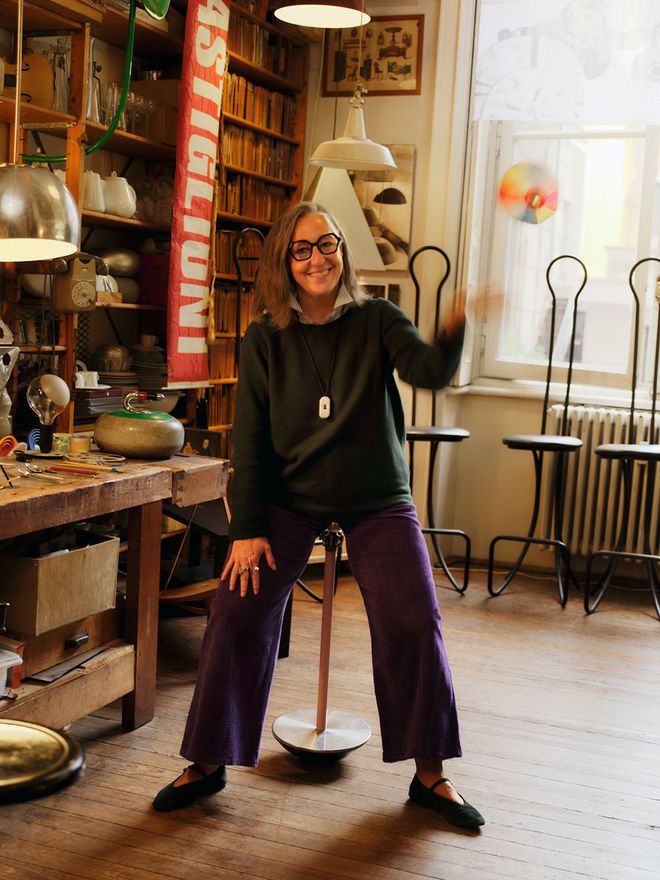
Giovanna Castiglioni warmly welcomes everyone interested in her father’s career and work. Ciao, a presto!
Lastly, what are the foundation’s plans for the fall and winter?
“Until February 16, 2027, we have an exhibition tracing the design dialogue between Achille Castiglioni and Bruno Munari. After that, we could imagine a design dialogue with some of today’s designers. Stay tuned!
I’m also hoping to organize an exhibition on Castiglioni’s projects for a historic company, but for now, everything’s still up in the air... keep your fingers crossed for us!”
See also:
• All designs by Achille Castiglioni >
• All designs by Achille and Pier Giacomo Castiglioni >
Featured designs may not be available worldwide.
Published on 22 Sep, 2026