Max Lamb lets the Min Chair do the talking
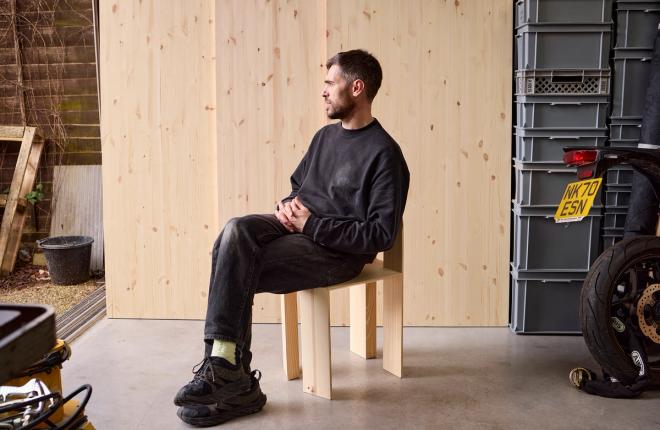
Max Lamb on the Min Chair, now part of Swedish brand Hem’s collection.
ARCHITECTURAL, FUNDAMENTAL and primitive, the Min Chair is a bold pine design by Max Lamb for Hem. Defined by its repeated diagonal angle and distinctive silhouette, it rethinks the idea of a standard chair.
The design is an exercise in material efficiency. Developed as a self-built product, the chair is constructed from a minimal number of cuts. The result is a chair with strong character made from remarkably little material.
“I like the idea that a physical object can tell the story of its own making. It means I don’t have to speak; I can just make more,” Max Lamb says.
We visit his London studio as he works on the chair.
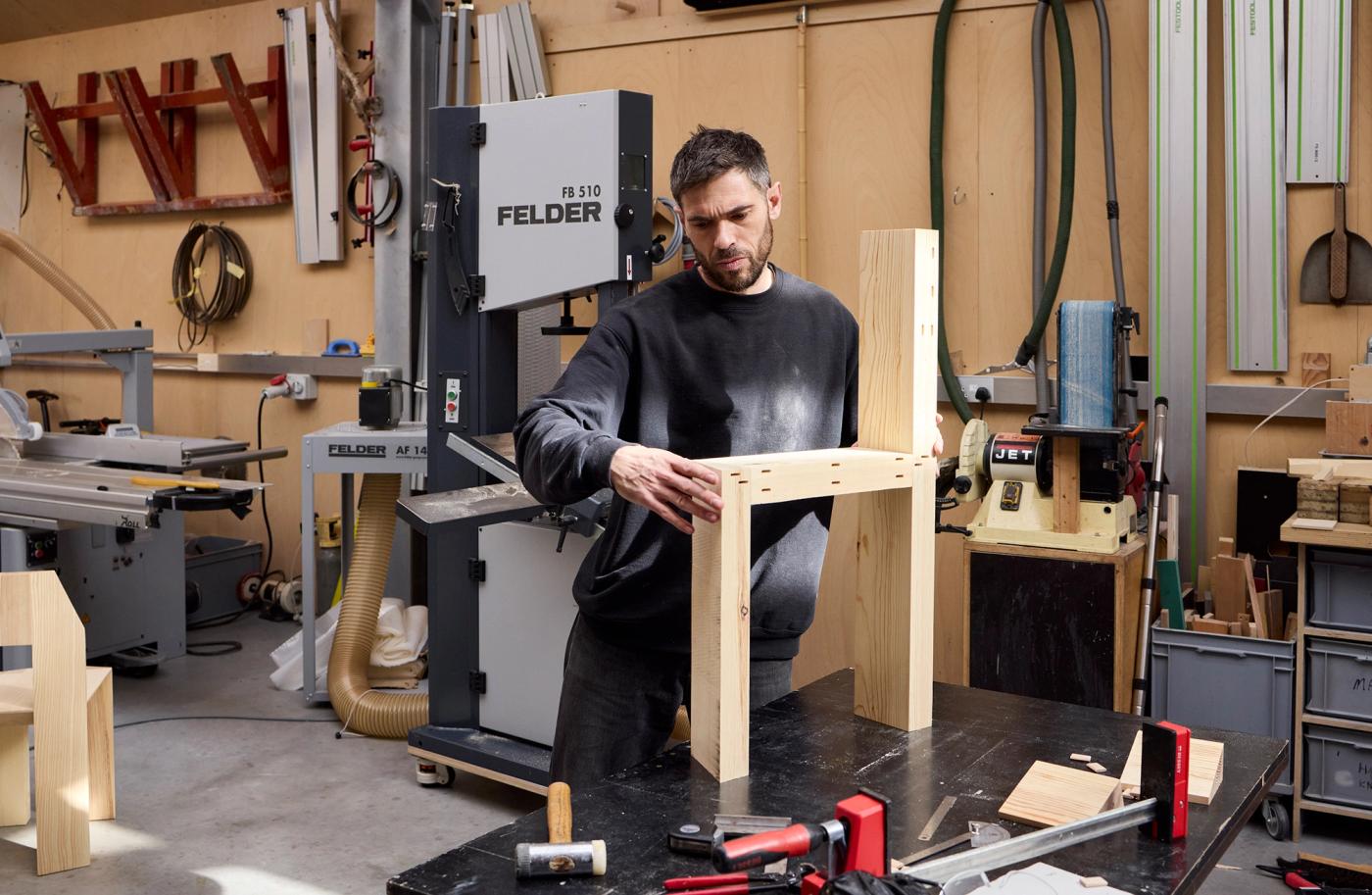
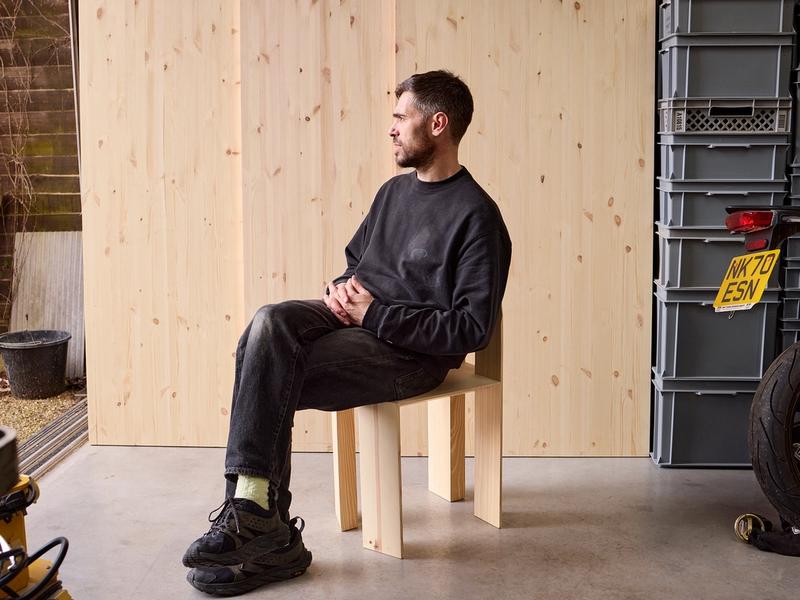
Max Lamb’s studio is based in London.
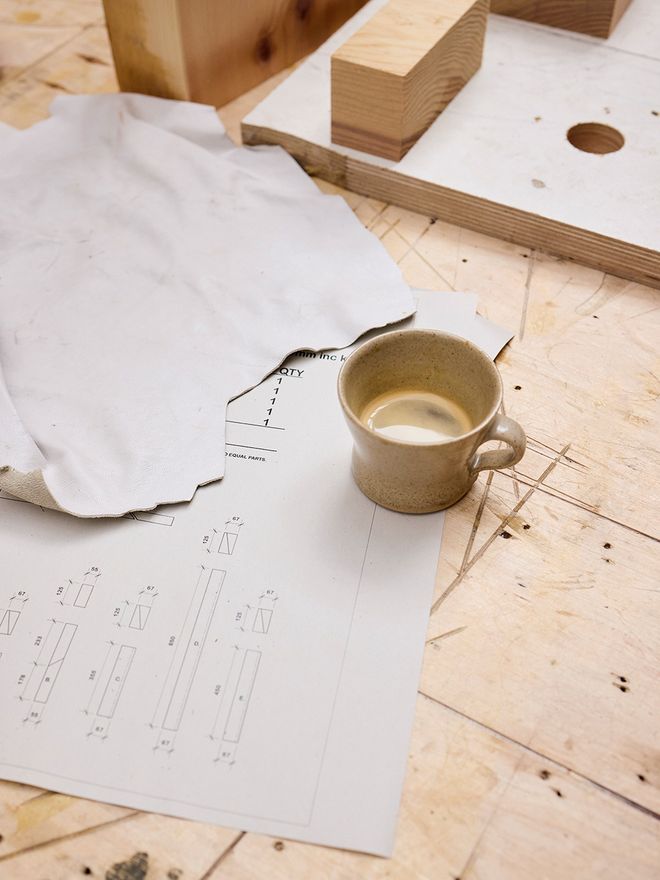
Made with as little material as possible, this pine chair doesn’t compromise on character.
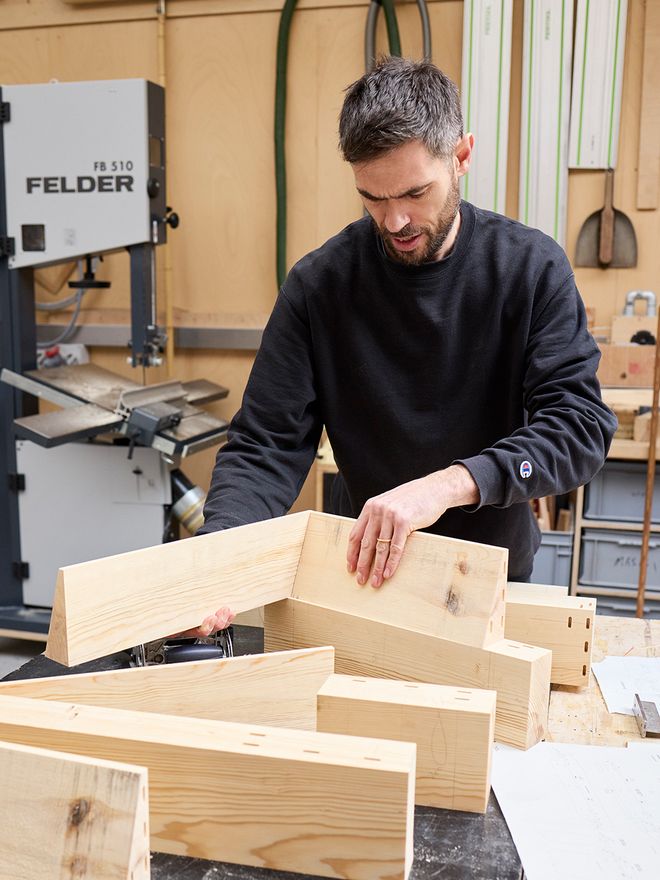
The Min Chair’s recognizable silhouette is formed from three diagonally split pine posts.
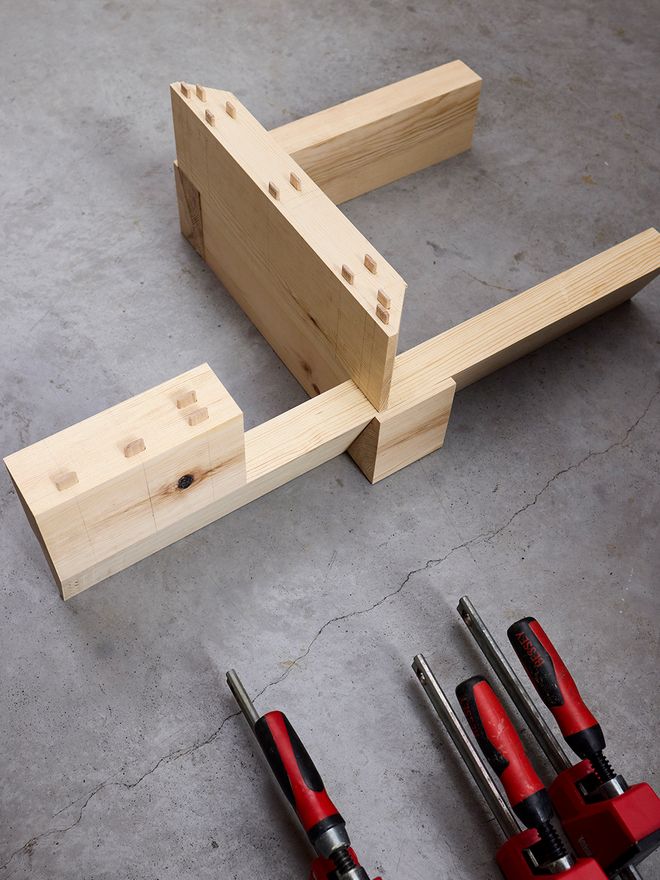
One post forms the front legs, another the back legs and backrest, while the third becomes the seat.
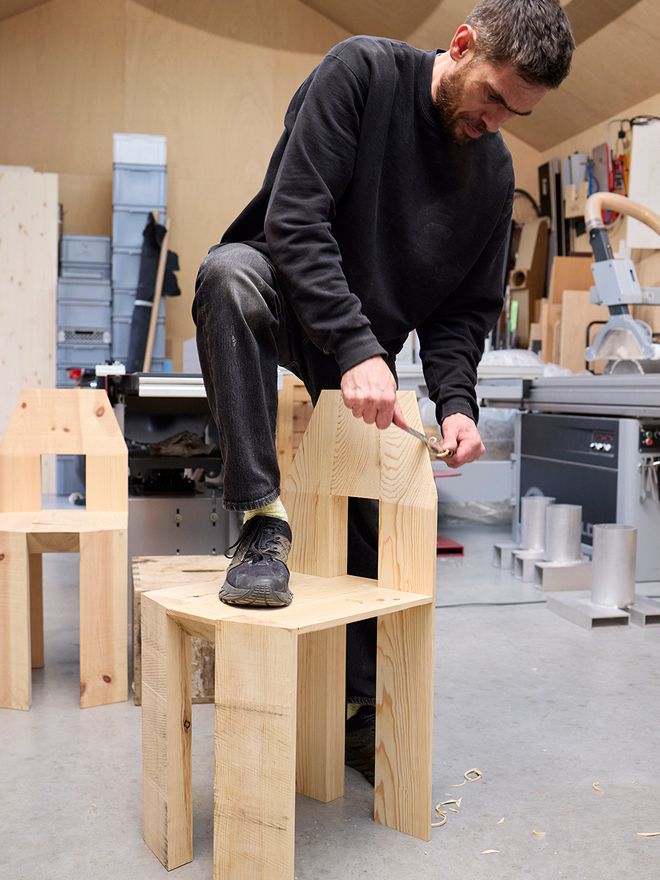
Max hand-finishes one of the chair’s prototypes.
Max Lamb is demonstrating how to cut a length of wood for the camera. He talks through each stage thoroughly and thoughtfully, stopping regularly to make sure the photographer and I are keeping up. As Max goes through the motions of making the Min Chair, he allows his inner monologue to become audible: confident, relaxed and meticulous.
His studio is a corrugated aluminum-clad building on the edge of his property in Harrow, London. Designed in collaboration with architecture studio Matheson Whiteley, it is stacked with tools and materials: bales of freshly dyed wool hanging from the rafters, polystyrene forms in various stages of assemblage piled to one side, lengths of bamboo leaning against a wall, tools suspended neatly above workbenches.
Outside the workshop is a corridor of floor-to-ceiling cabinetry, a large hand-painted table that doubles as desk and lunch station, and a tiny but joyous bathroom clad in Max’s curvaceous Working Tiles.
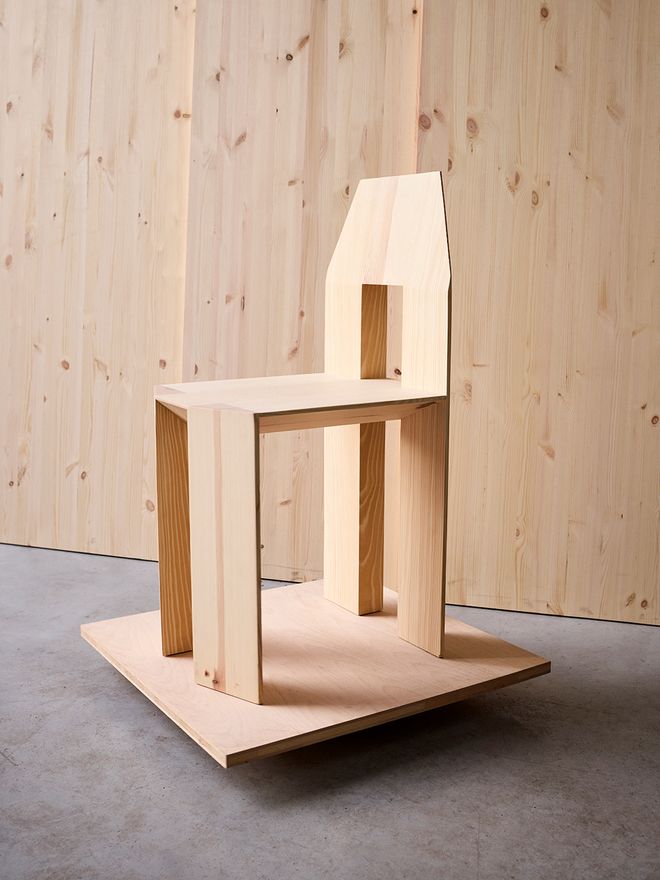
The pine chair develops a beautiful patina over time.
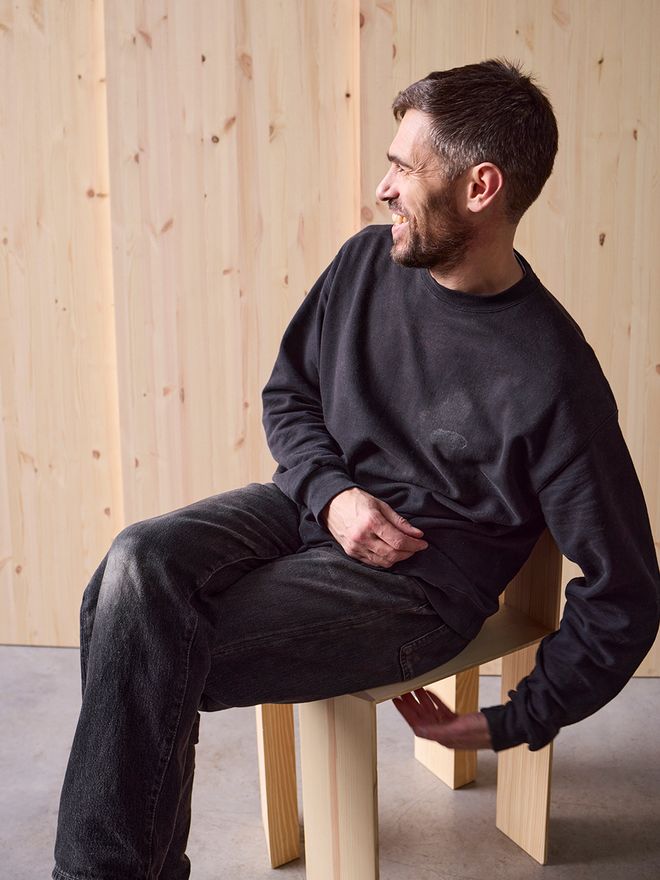
Max is happier making than talking about it.
AS WE SIT down to talk, now without the comfort of his making props, Max issues the caveat I’ve heard before: “I don’t like doing interviews. I don’t like talking about my work.” Many designers say the same, but Max truly means it.
Max articulates through making. He leaves it all in the object. When the time comes to discuss his work, he often feels it is unnecessary, since everything has already been said in three dimensions.
From a critic’s perspective, the readability of Max’s work is one of its most compelling qualities. His objects allow the user to trace the decisions behind their construction, following the contortions of his thinking through form, material and assembly.
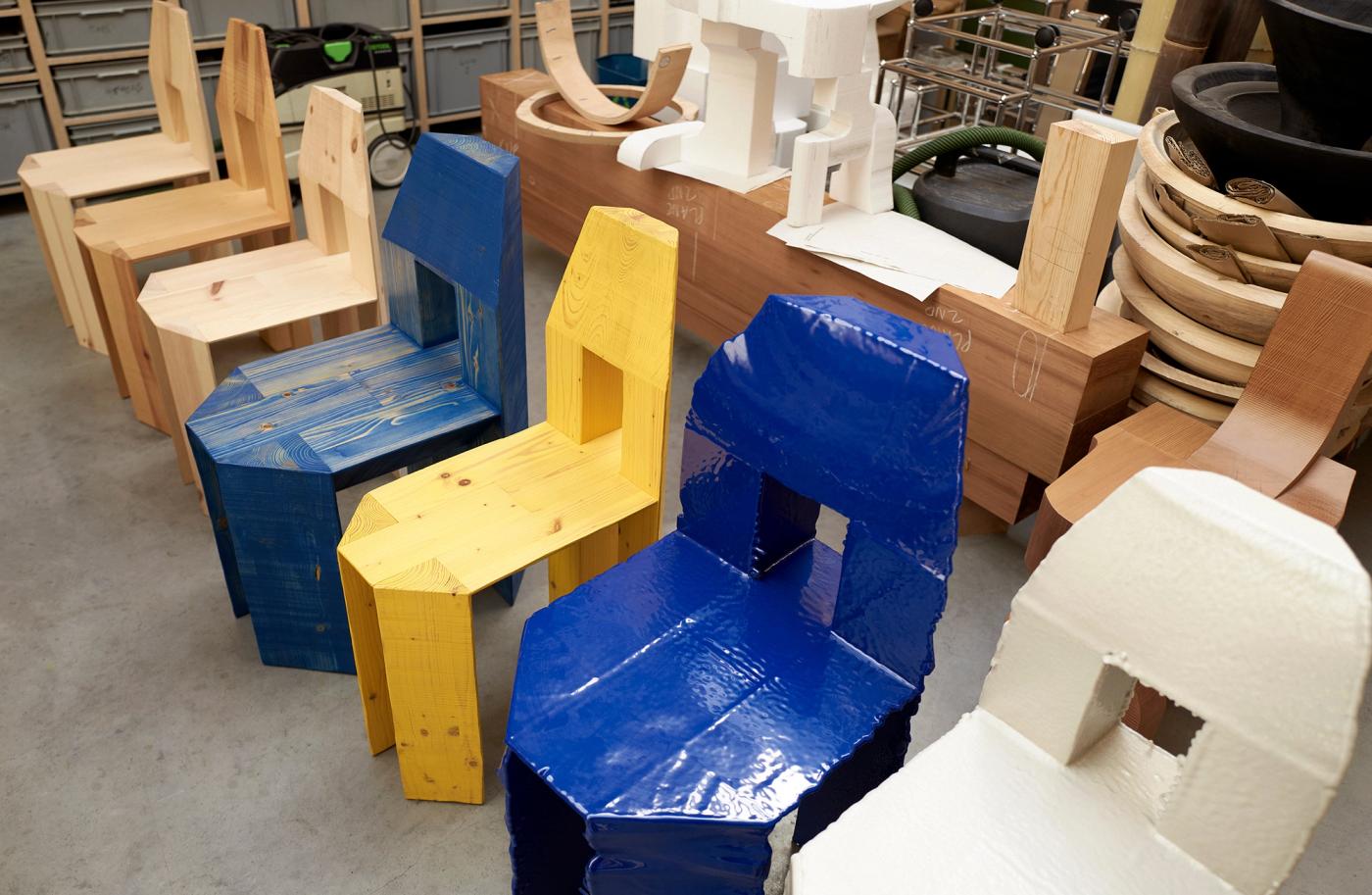
The evolution of the chair: Economy Chairs in a row.
THE WORK MAX is currently engaged in is the latest evolution of a long-running series called Economy Chairs. It began in 2020 as a lockdown project in which he set himself a manufacturing challenge: to make as many chairs as possible in the shortest amount of time, relying only on his own labor.
In this sense, the Economy Chair is typically Max Lamb: self-initiated, solitary and physically demanding: a test of endurance, production and problem-solving. The final form, however essential it may appear, is almost secondary to the mental and physical act of making itself.
“When I begin making, I don’t know what the actual physical thing is going to be. My fingers do what my brain is asking. The process might begin with a vision, but it doesn’t begin with a design.”
The vision for the first Economy Chair began with polystyrene, a material Max has used throughout his career. To make it go further, he cut and joined lengths diagonally, discovering that by carefully placing acute angles he could maximize the surface area and transform a relatively small amount of material into something far greater than the sum of its parts.
The first Economy Chair project saw Max make sixty chairs in three days. But the technique was too compelling to abandon there, and he continued to evolve the series across different scales (the Premium Economy Chair, for example) and materials.
When fashion house Bottega Veneta asked Max to produce 421 chairs for its Spring 2026 Milan runway show within just four weeks, it was the Economy Chair he returned to. “A commission only a madman would accept,” as Max puts it, before adding, “I said yes.”
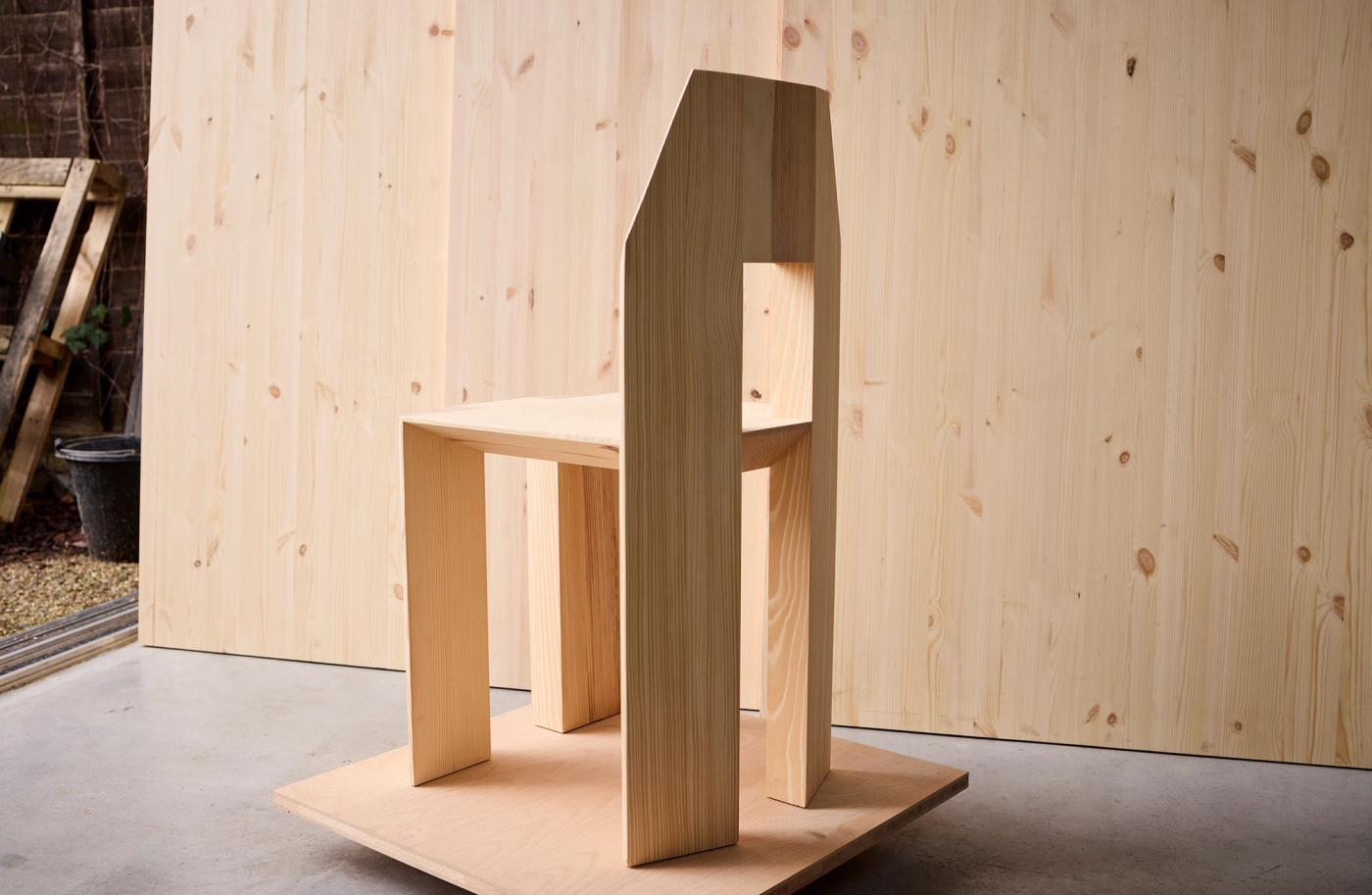
The pine grain adds a sense of lightness to the Min Chair’s otherwise architectural look.
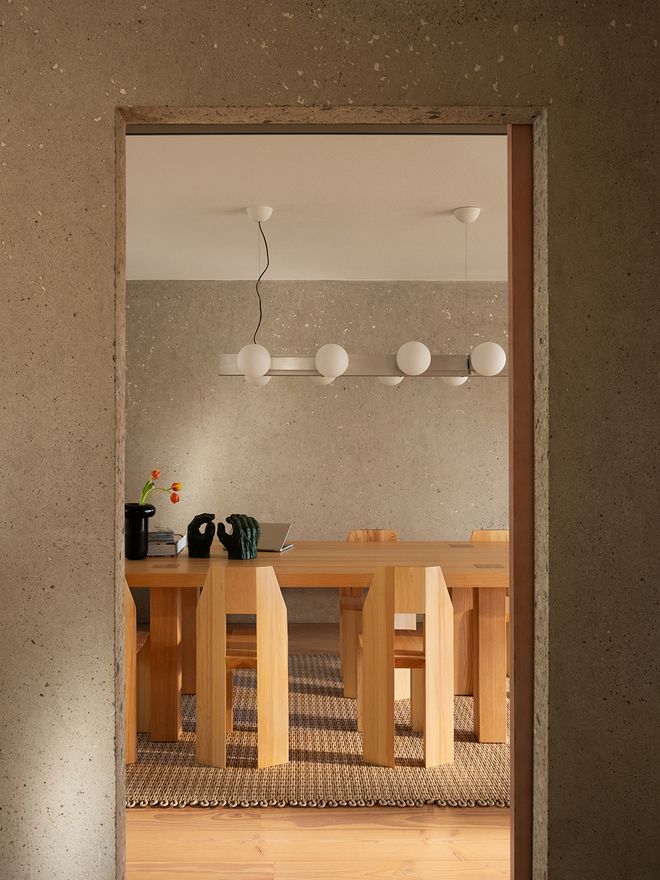
The Min Chair stands up to daily use, whether at the dining table or the desk. Photo: Erik Lefvander
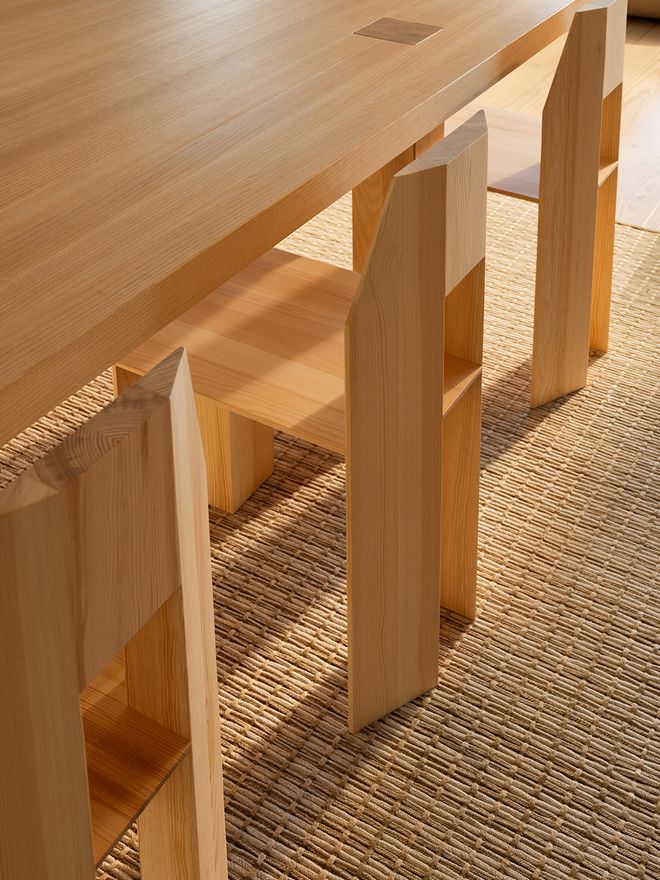
Max Lamb also made the chairs for the audience at a Bottega Veneta fashion show. Photo: Erik Lefvander
PERHAPS IT WAS inevitable that the efficiency of the chair’s construction, combined with its growing status as a signature Max Lamb design, would eventually lead to a mass-produced version.
After seeing a pine iteration in Max’s workshop, Hem founder Petrus Palmér invited Max to adapt the chair for factory production. The resulting pine chair is called Min, as in minimum, and follows the same principles as its predecessors, with subtle adjustments to scale and construction.
The Min Chair is the sixth variation of the Economy Chair, and the first to be available outside private commissions. Max’s approach to making, whether for gallery works or mass production, remains unchanged.
“My decision-making doesn’t change depending on whether an object is a production piece or a one-off piece. Even the Min Chair, something ultimately designed for a company to take on, I felt I had to prototype myself, just to get the scales and proportions right. My work requires a certain sensitivity, so I am constantly in the workshop trying to understand scale and proportion.”
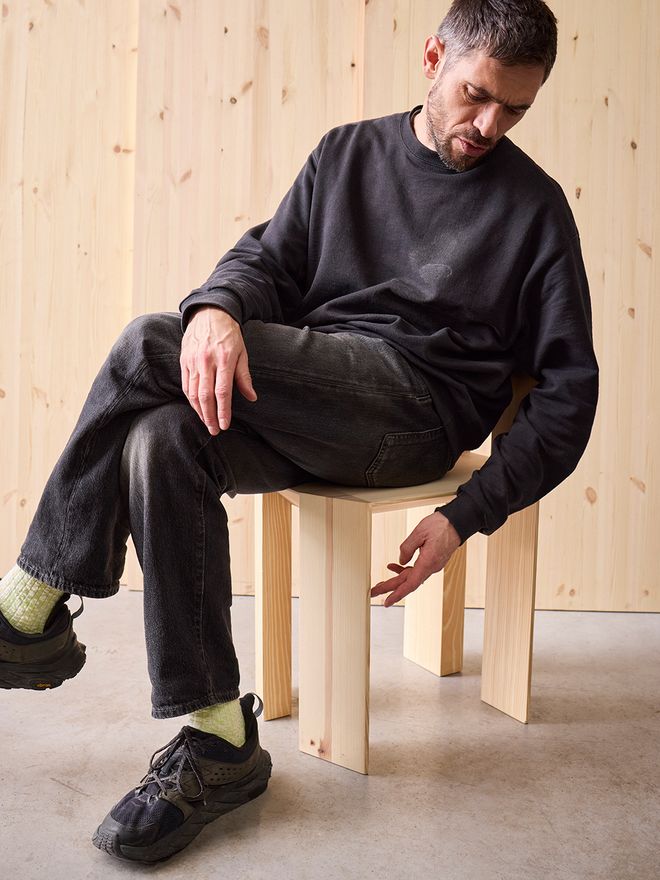
Max Lamb is pleased with how the Min Chair has evolved.
BEFORE WE FINISH, Max briefly mentions a number of new projects already underway: another collaboration with Acne Studios, new work in Japan, further commissions already in production.
But before the conversation can settle on specifics, he is pulled back into the workshop for a final round of photographs before the light disappears. And so the perpetual motion of the practice begins again.
See also:
• All designs by Max Lamb >
• All products by Hem >
Published on 13 Oct, 2026