Visiting Serban Ionescu’s whimsical home and atelier
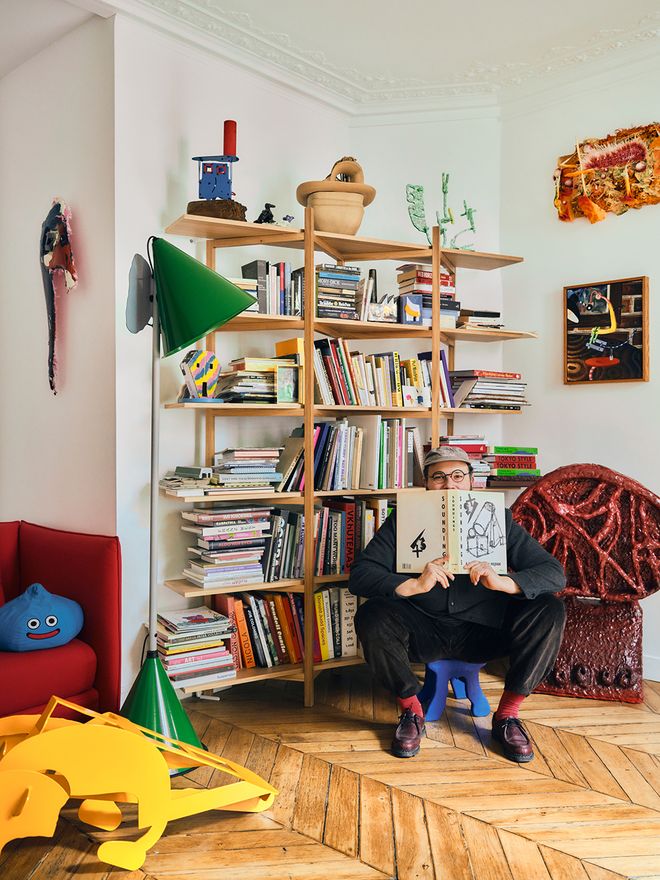
Serban Ionescu’s multidisciplinary practice spans sculpture, painting, design, and architecture.
Hi Serban! You recently moved to Paris. How did that come about?
“Hi! We’ve been on this kind of nomadic trajectory ever since the pandemic and since becoming parents. We were in Brooklyn – my wife is a filmmaker – and during the pandemic, we ended up in Toronto for what we thought would be a few months. Then I did a residency in Brussels, and we just fell in love with the European lifestyle.
After our second daughter was born, we felt like our Brooklyn loft had reached its full potential. So, we started thinking seriously about relocating. I’m from Romania, and my wife is from Paris, so we had the flexibility to move around.”
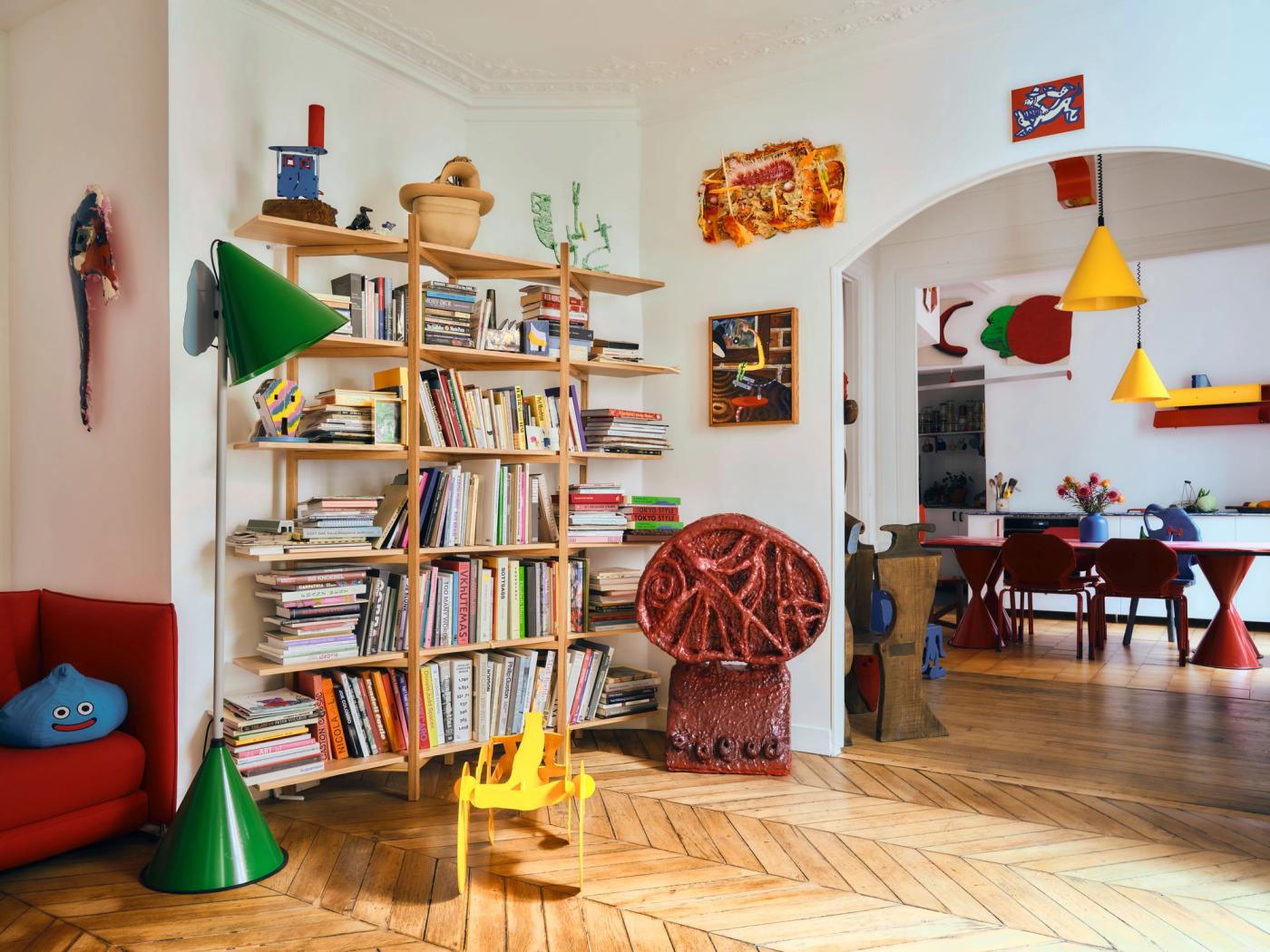
“The house is in constant flux. It’s full of art, friends, objects that move around,” Ionescu says.
And how did you find the house?
“A friend told us to check listings that had no photos, just take a leap. It sounded crazy, but I was on this mission to find something very specific: a house with a garden and a small atelier out back. Everyone laughed. But then I came across this place. No photos, but it had everything we wanted. It felt like a small miracle. And now I’m trying to slowly transform it: revamp the garden, build up the studio, and make it a place that can grow with us.”
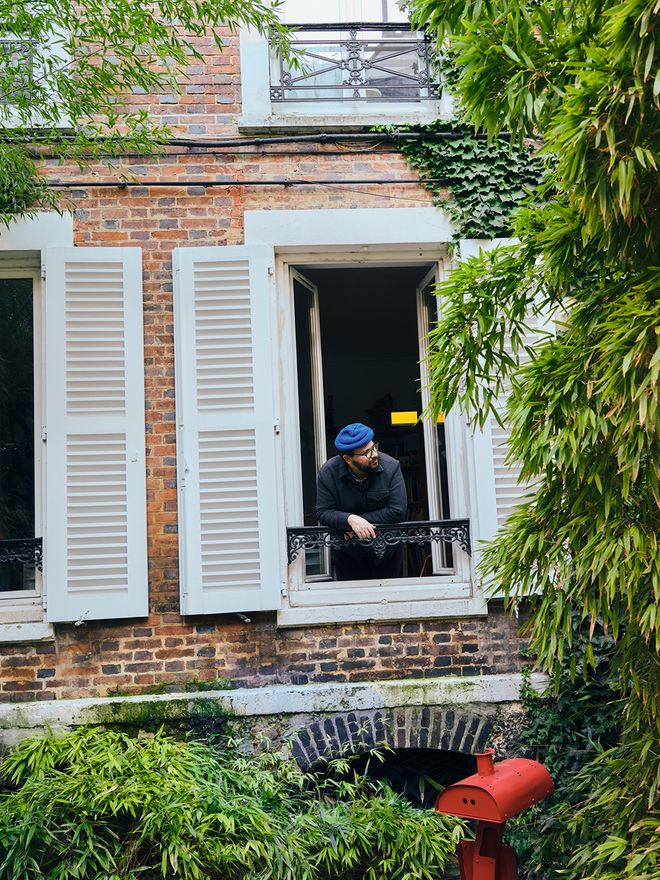
Born in Romania and raised in New York, Ionescu is now based in Paris.
What has it been like since you moved in?
“The house is in constant flux. It’s full of art, friends, objects that move around. One day a chair is in the kitchen, the next it’s outside in the garden. It’s kind of a living organism. There’s no sense of stasis, and I love that. It reflects how I work, nothing is too precious, everything is part of an ongoing process.”
And your studio is on the property too?
“Literally two seconds away. I’ve had studios an hour away, half an hour, ten minutes… I always found that I needed to be closer. This is probably the closest I’ll ever get, and it’s both amazing and a bit dangerous. Sometimes the line between home and work disappears completely, but that’s also kind of beautiful. I drop the kids off, walk home slowly, try to carve out small rituals. It helps.”
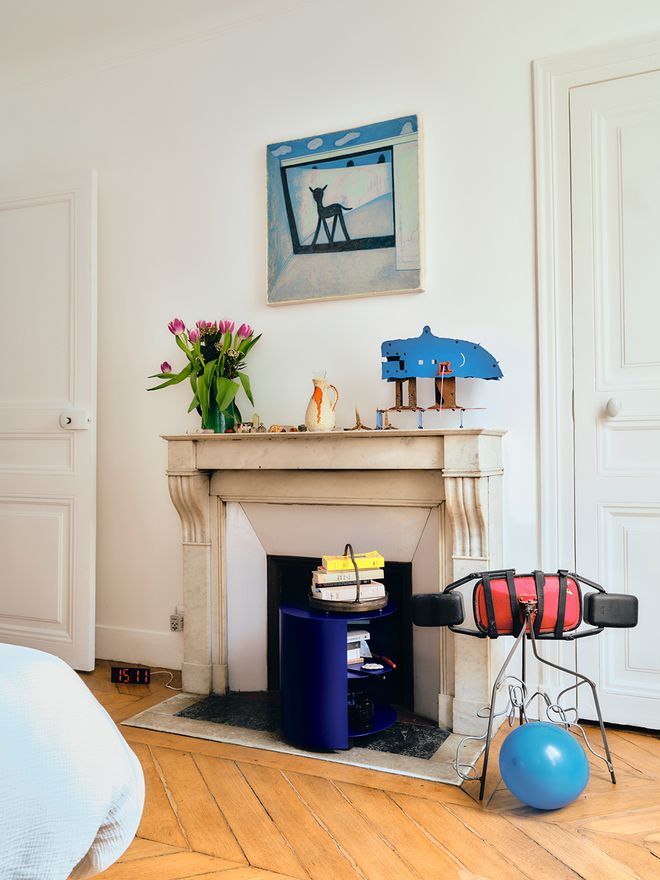
Hem’s ultramarine blue Hide side table is surprisingly versatile in its simplicity.
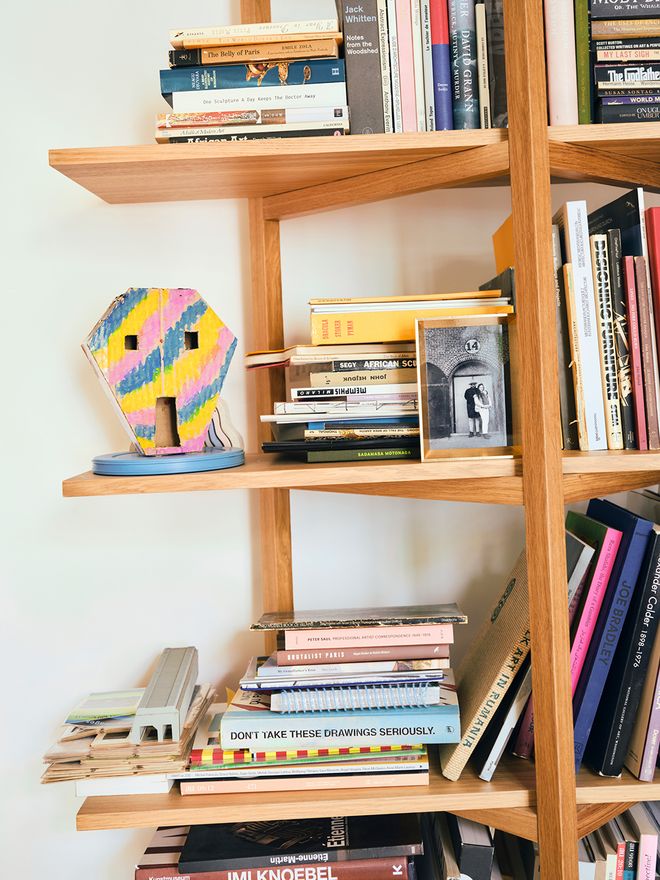
The oak Zig Zag shelf provides a stylish setting for books, decorative objects, and art.
Is your home designed intentionally or more intuitively?
“It’s very intuitive. The home is kind of my sandbox. It’s where things start. The first pieces of furniture I ever made were for my apartment in Brooklyn. There was no gallery pressure, no judgment, it was just me making what I needed. A chair. A table. That freedom gave birth to a whole new body of work.”
“The house is an arena. Anything can happen here. I think the best work is made with very little effort and pressure.”
Your work is often described as bold and maximalist?
“I think that’s a surface read. I think of myself as a minimalist, maybe a “maximally minimal” kind of person. There’s a lot of complexity, but it’s built from very few elements. I try to simplify, to strip things back. Lately, I’ve been writing in my journal, over and over: simplify, simplify. Not less, necessarily, but more clarity. Fewer moves, more impact.”
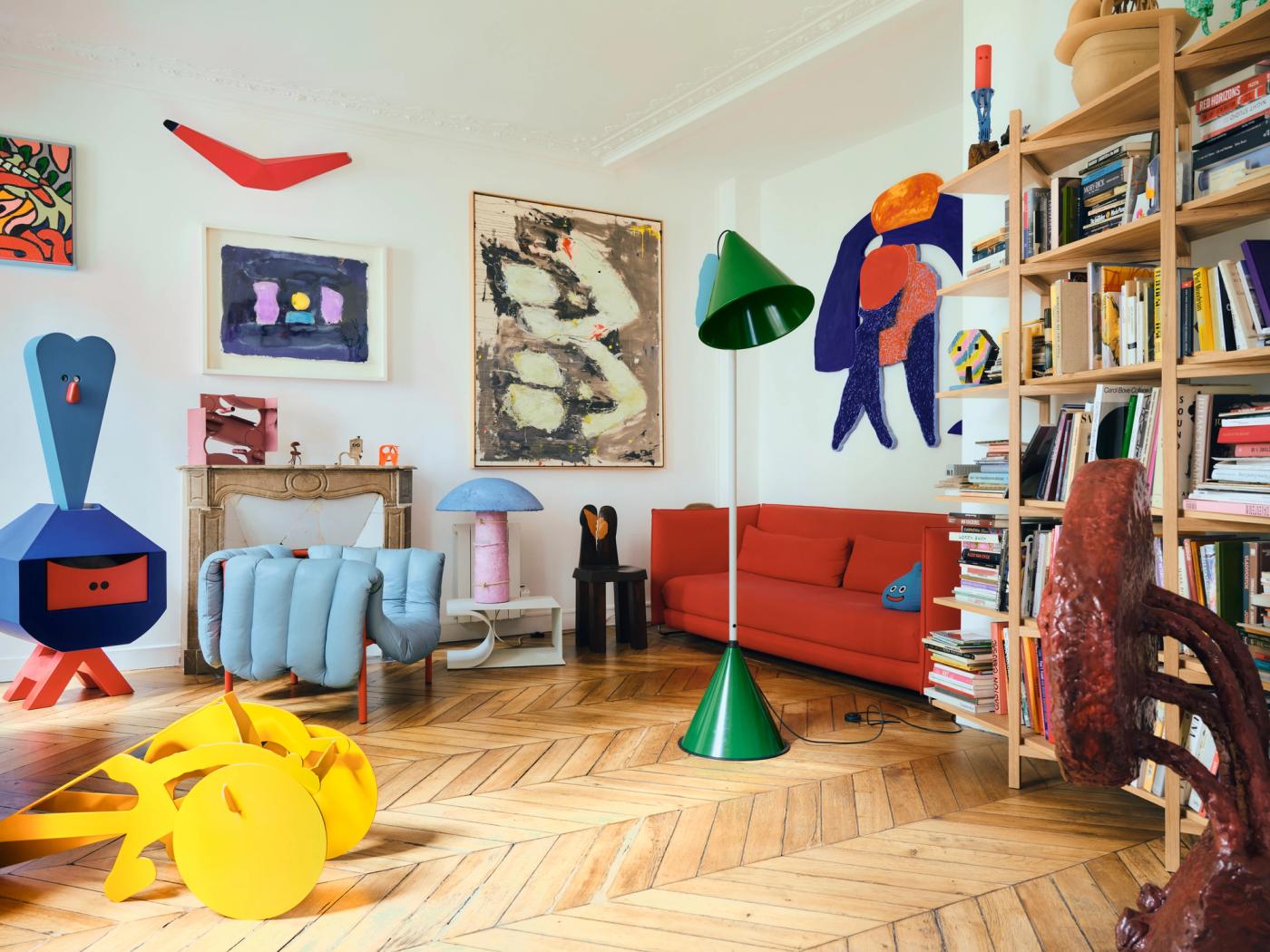
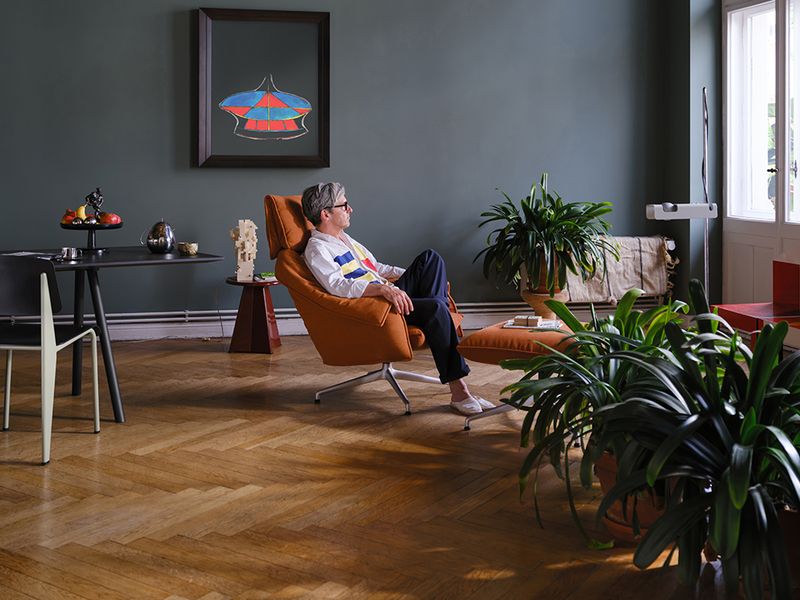
The Puffy lounge chair was designed by Faye Toogood. The red-framed version is available to order through Finnish Design Shop’s customer service.
Let’s talk about cultural influence. You were born in Romania, raised in New York, and now you live in Paris. How have these places influenced your work?
“Romania feels like a dream. My family left when I was 10, during communism. That contrast with New York’s chaos and possibility sharpened my instincts. I embraced that roughness. Romania gave me narrative, mystery, folklore. Paris is a city of ornament, history, pastel colors and decorative traditions. Everywhere you look, there’s beauty, there’s detail. And being surrounded by so much external beauty makes me want to go inward. Maybe it’s also turning 40. I’m thinking more about essence, not excess. Paris came at a perfect time.”
Does your family influence the space?
“All the time. My kids are six and three, and they’ve grown up in this colorful, changing environment. My older daughter is starting to “get it” now, she’ll comment on pieces, move things around. And my wife is very involved too. She’s more into mid-century; I’m more postmodern chaos. It’s a constant dialogue. She gives me a lot of freedom, and I try to return that. It’s a collaboration, in a way.”
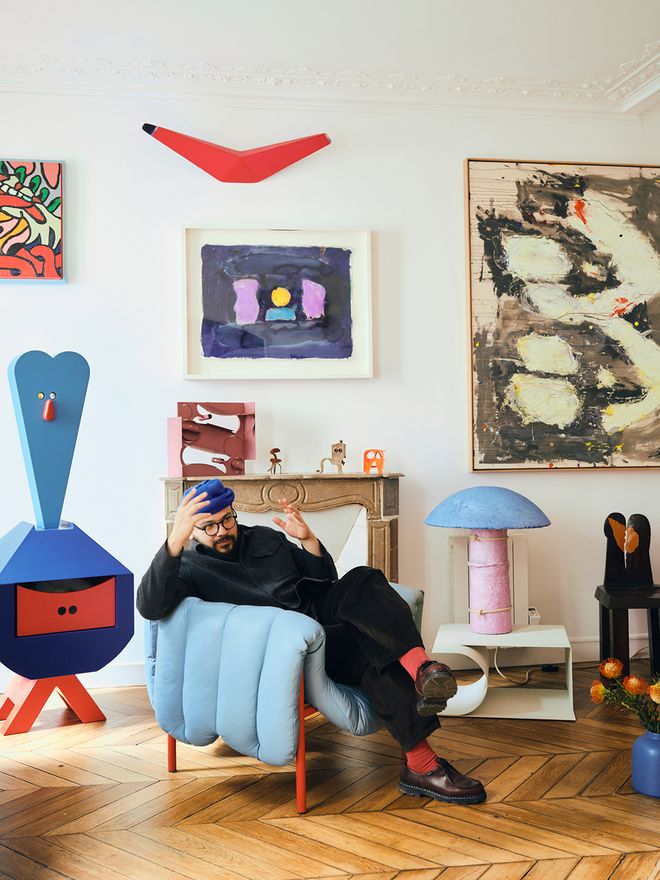
Ionescu’s intuitive approach blends anthropomorphic and abstract elements across scales.
What’s one of the strangest objects you own?
“I have this wooden puppet. He’s not in the photos, unfortunately. I found him years ago at a sideshow in the south of France. He was with us in Brooklyn, there when both my daughters were born, and now he lives in our Paris bathroom. We call him Pinocchio. He’s not creepy, at least to us, but he has a presence. My brother-in-law won’t go near him.”
If you could have any architect, living or dead, design your dream house, who would it be?
“That’s impossible! I’ve always made my own spaces. But okay, Marcel Breuer comes to mind. I stayed in a house of his in the Hamptons once. Also, John Hejduk, his Wall House would be a dream to live in. I love Eileen Gray. And Smiljan Radić, the Chilean architect. His work is amazing. I also really admire Fujimori, the Japanese architect, his treehouses are like little dreams.”
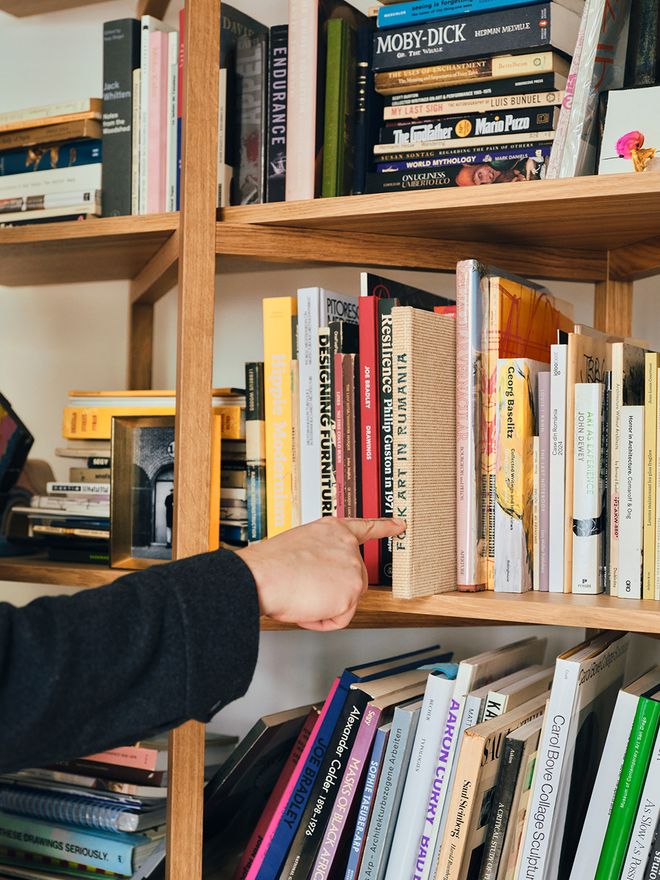
The Zig Zag shelf is filled with books on every subject imaginable.
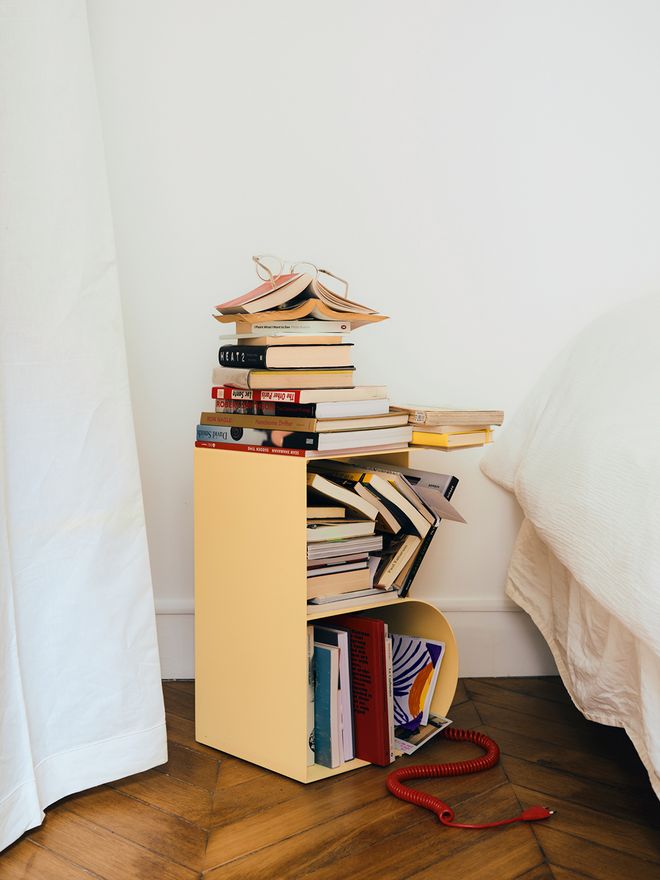
Hem’s Glyph Beta side table serves as a home for books and other everyday essentials.
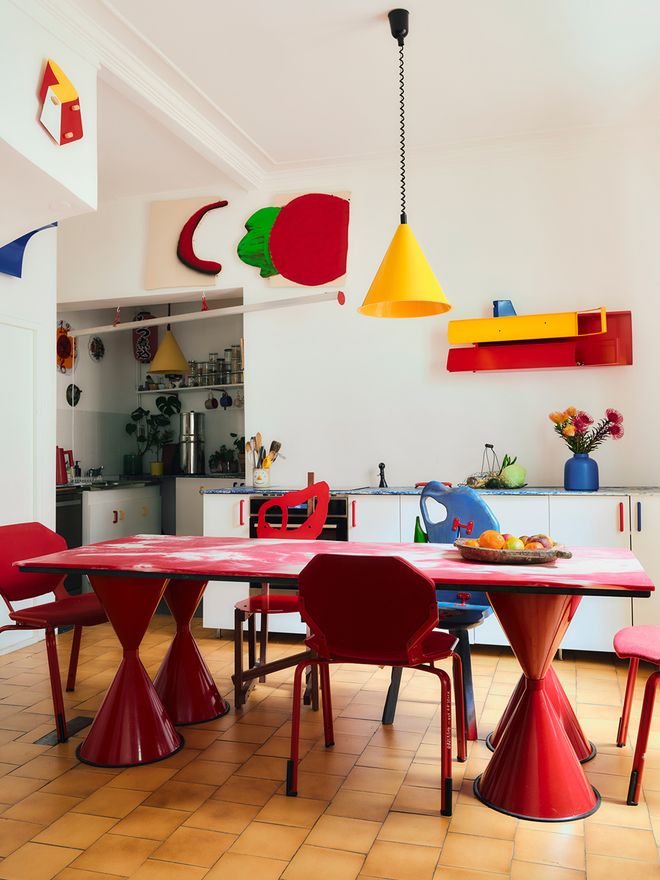
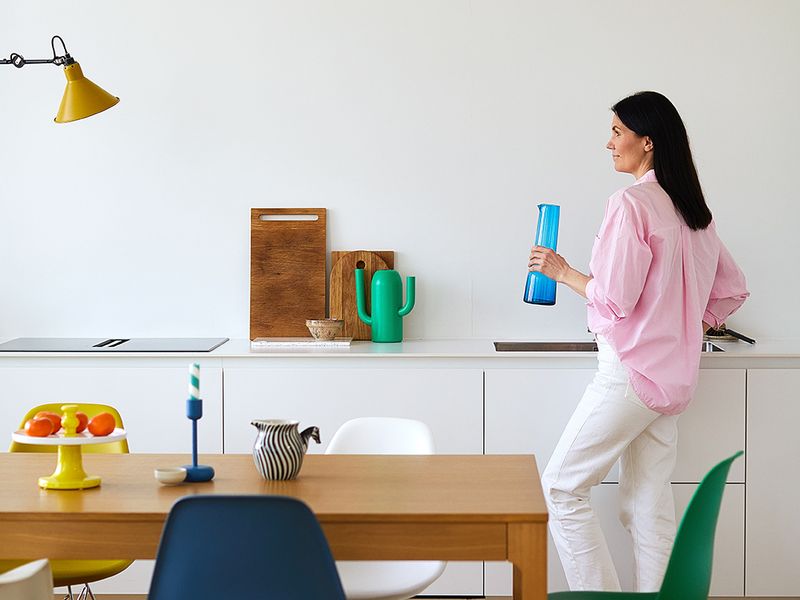
In the kitchen, unusual shapes and bold primary colors take center stage.
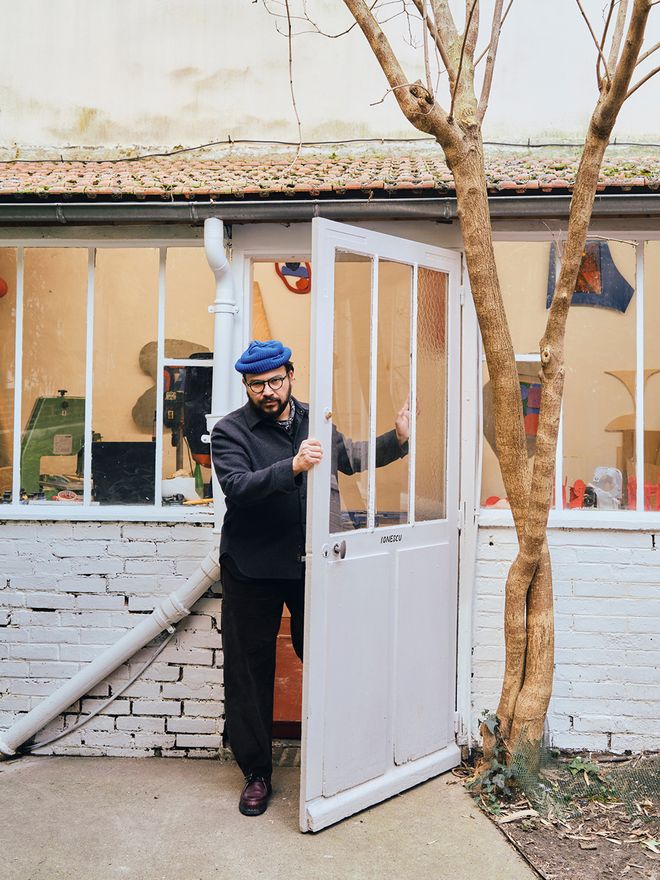
Ionescu’s work is defined by bold lines, vibrant color, and playful, shifting forms.
Last question. What’s been on your mind lately?
“How to surprise myself. How to stay excited and consistent without falling into routine. I draw a lot, and I’m constantly generating ideas. So, I’ve had to create little internal games, roadblocks, limits, to keep things sharp. I think a lot about time, too. Not just real-world time, but that strange time it takes for a house to feel like home. For a sculpture to arrive. For a phase of life to unfold.”
So much of that is about honoring your own phases. Taste evolves.
“Would you eat the same meal every day? Of course not. And looking back at past choices can be funny, revealing. It’s a timeline. That evolution makes life exciting.”
Except your puppet. He stays forever.
“Of course. That’s the magic of objects. They impose something on us too, not just the other way around.”
See also:
Published on 28 Apr, 2026