This is a carousel of product images. Use the thumbnails or swipe to change the displayed image, and activate an image to open it full screen.
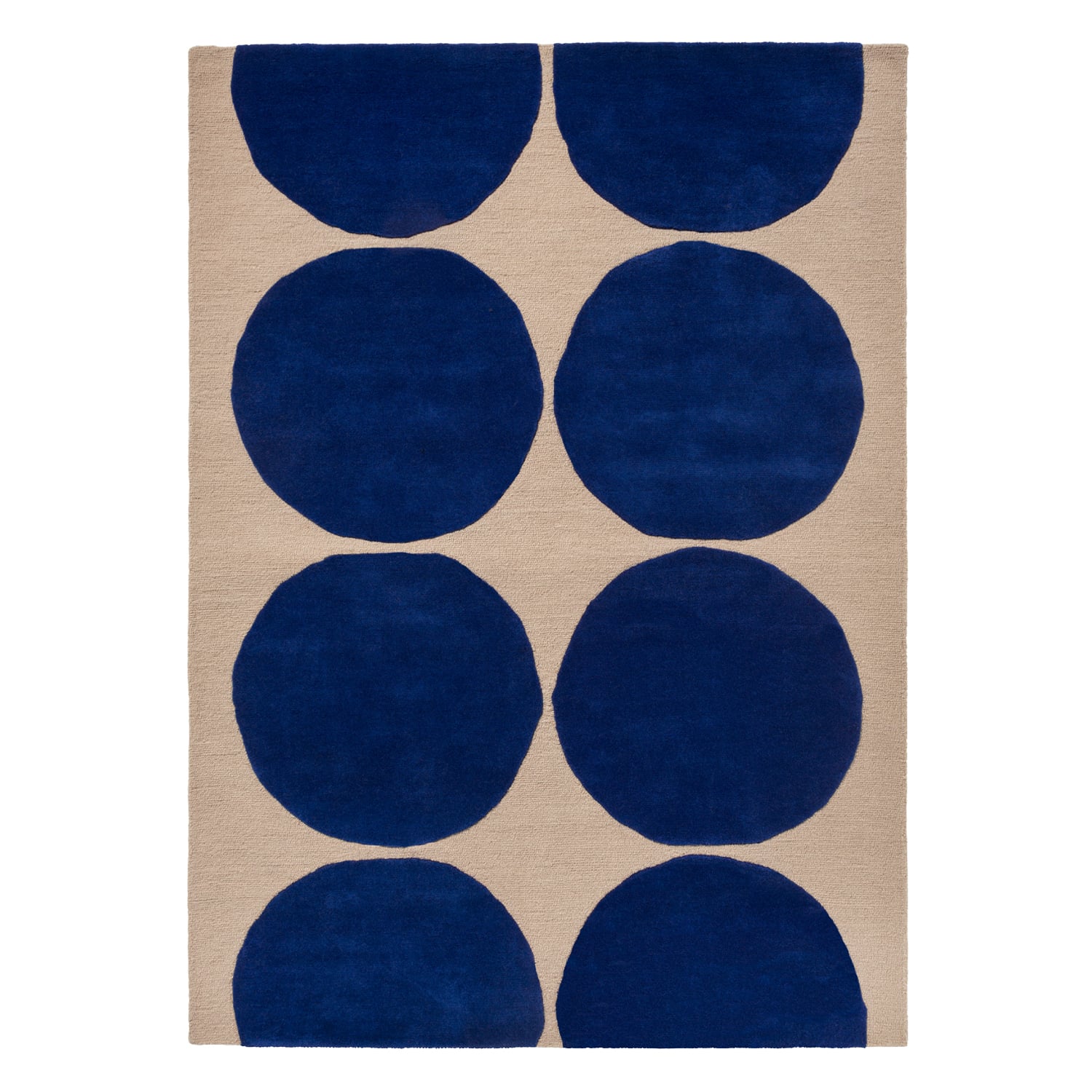
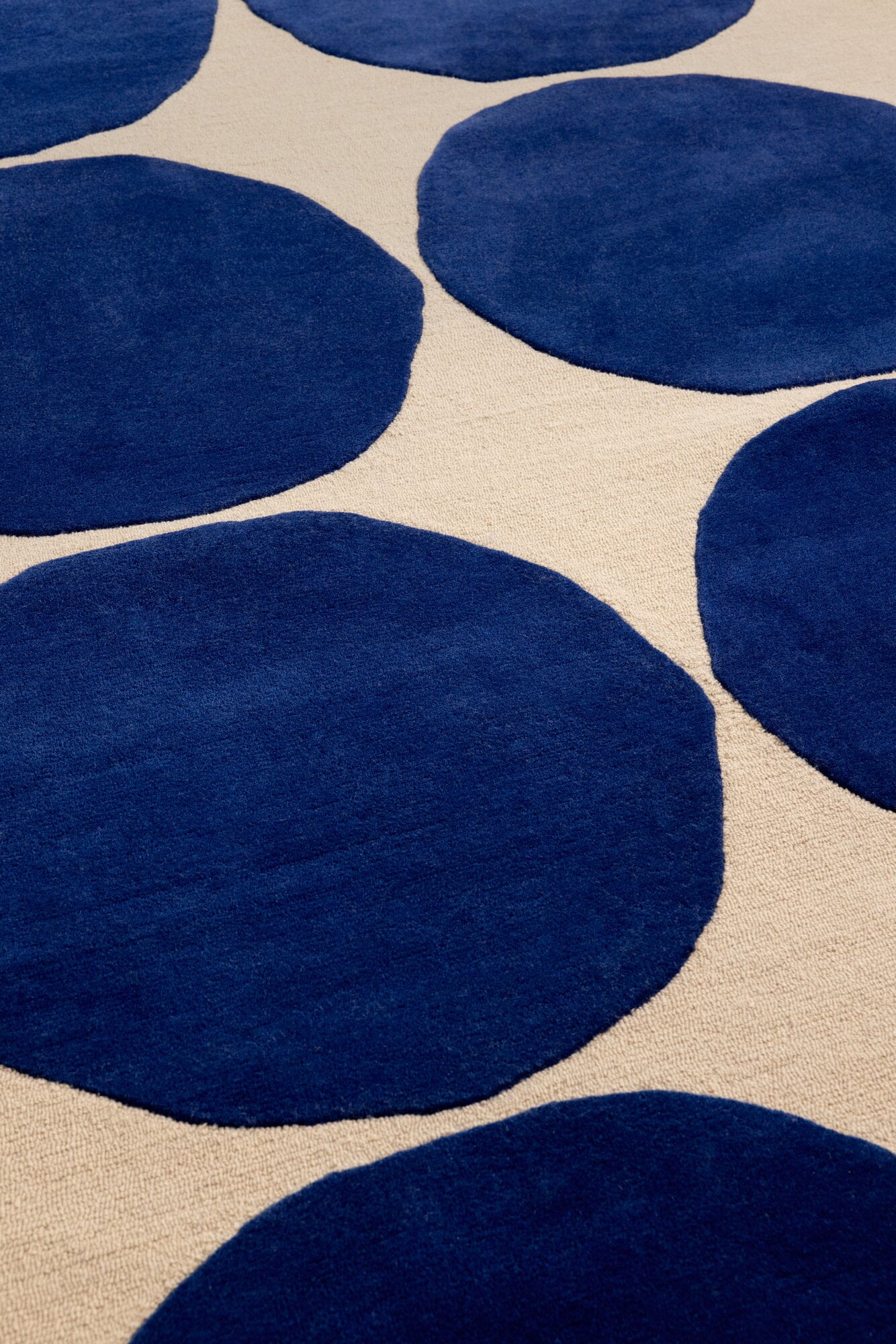
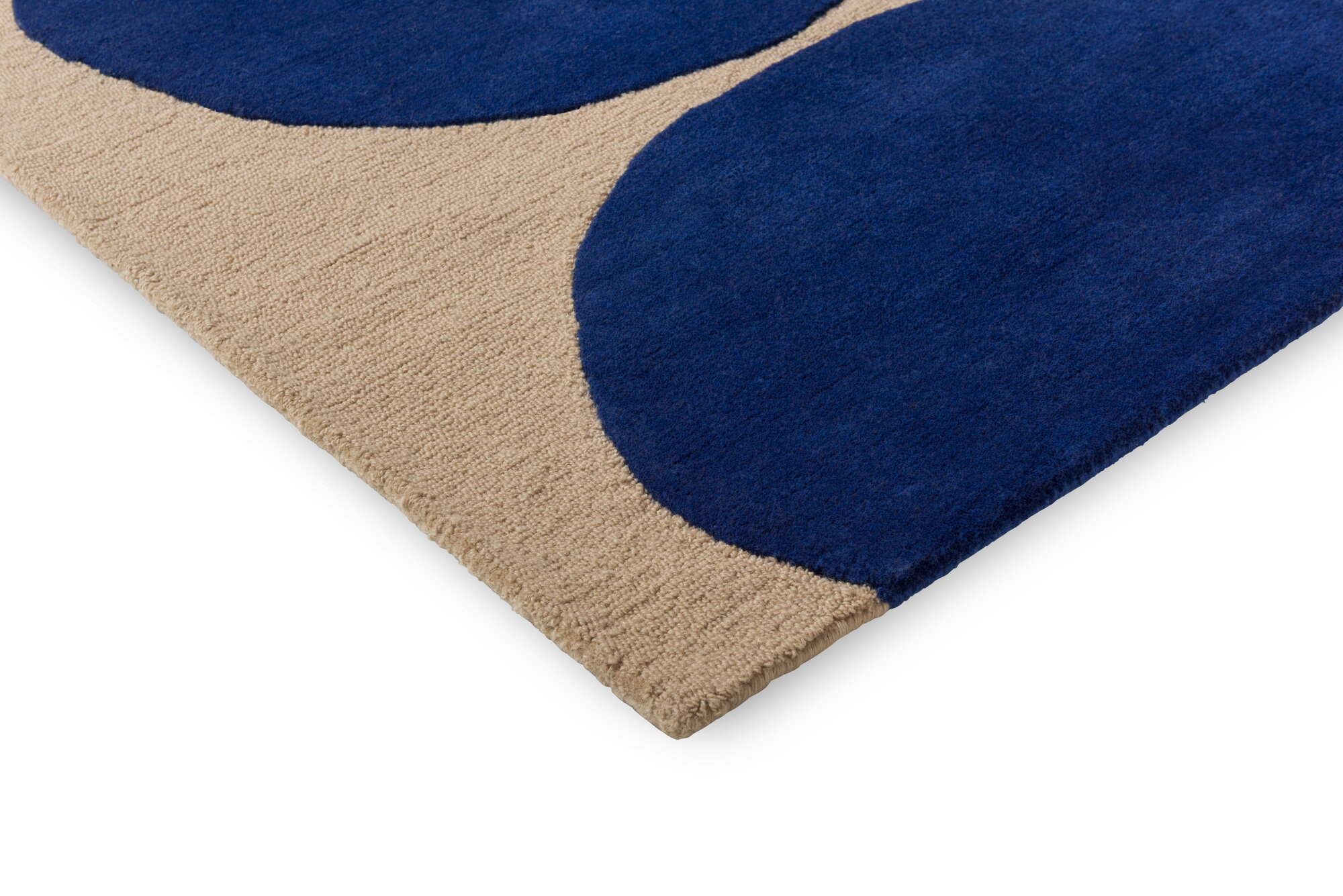
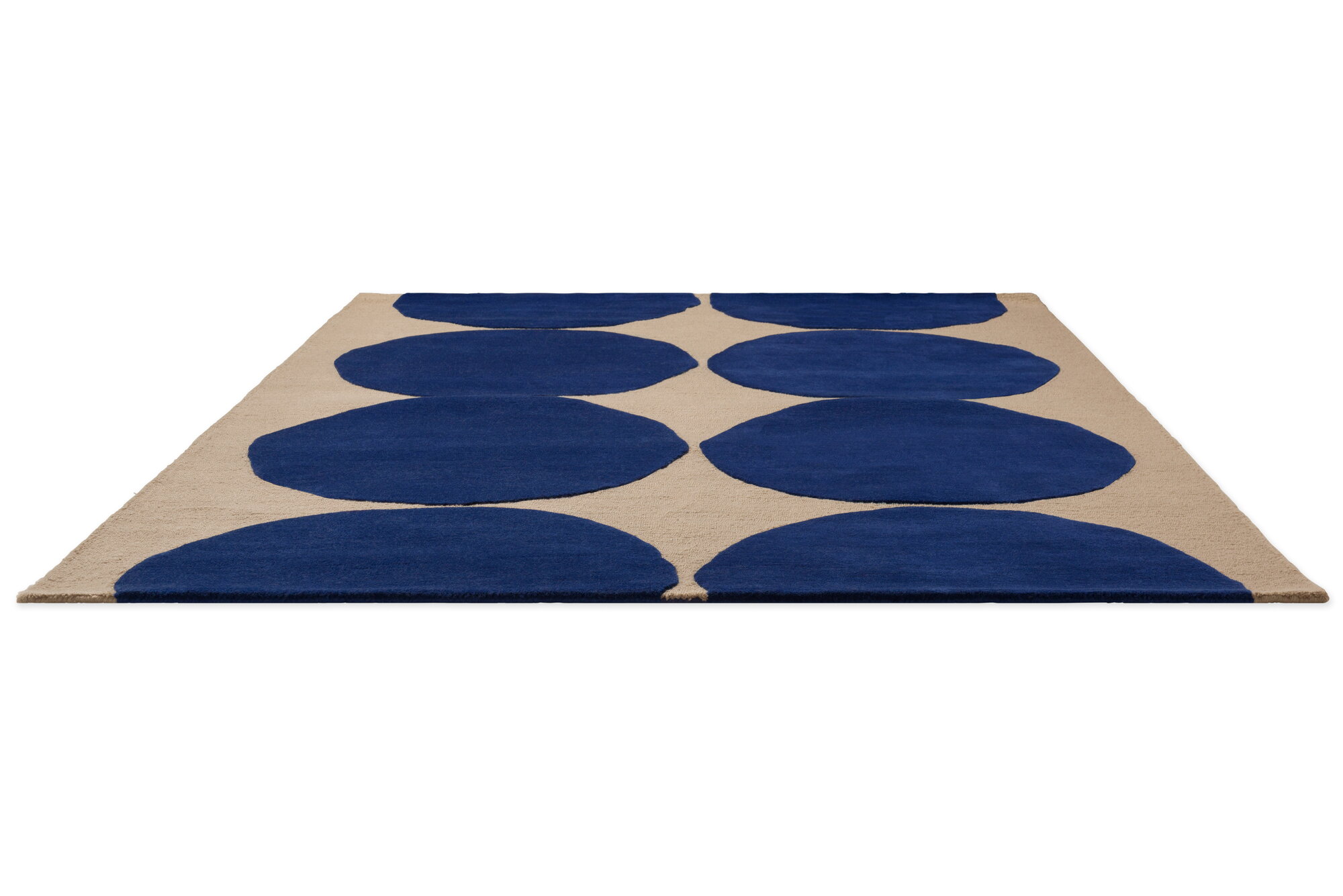
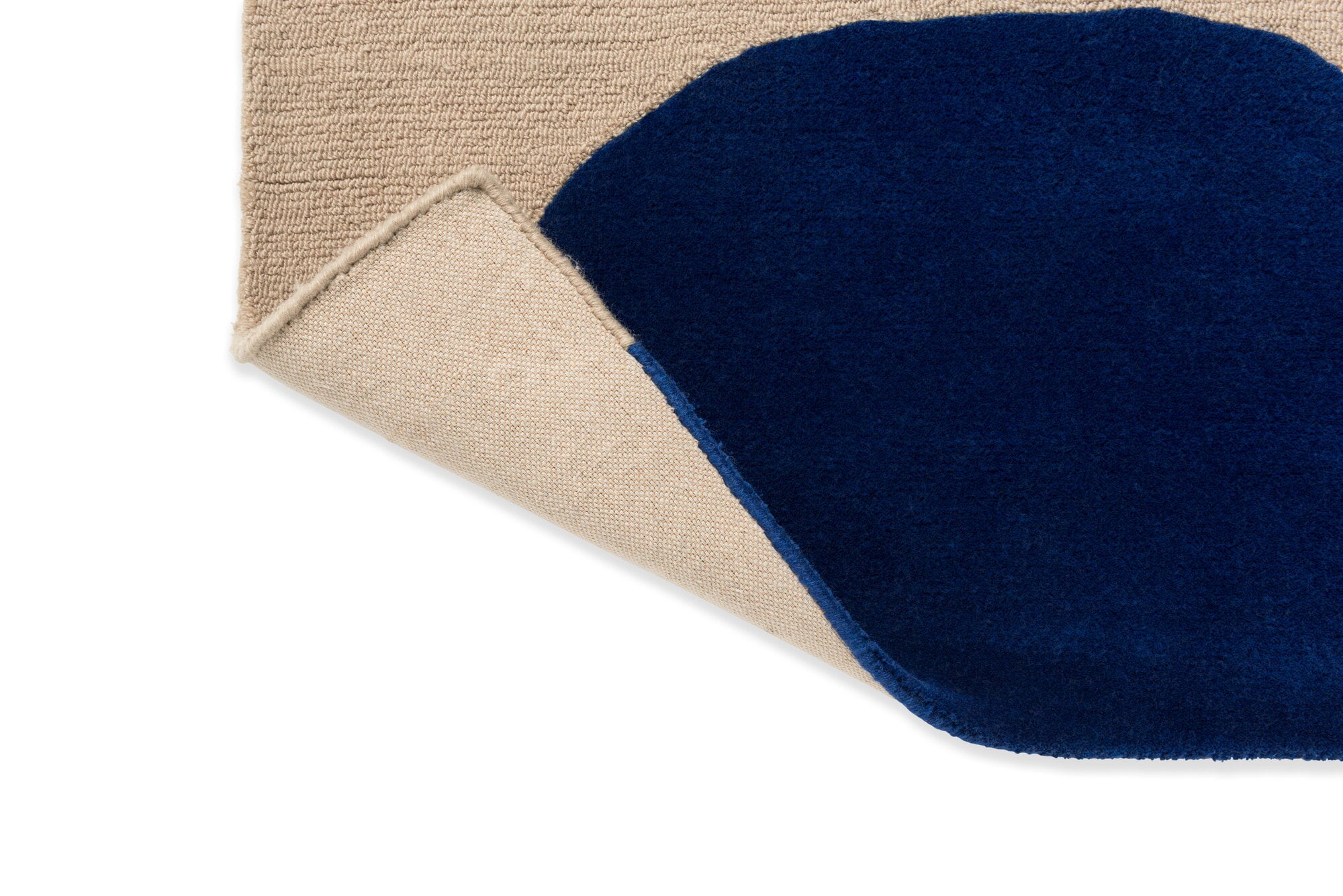
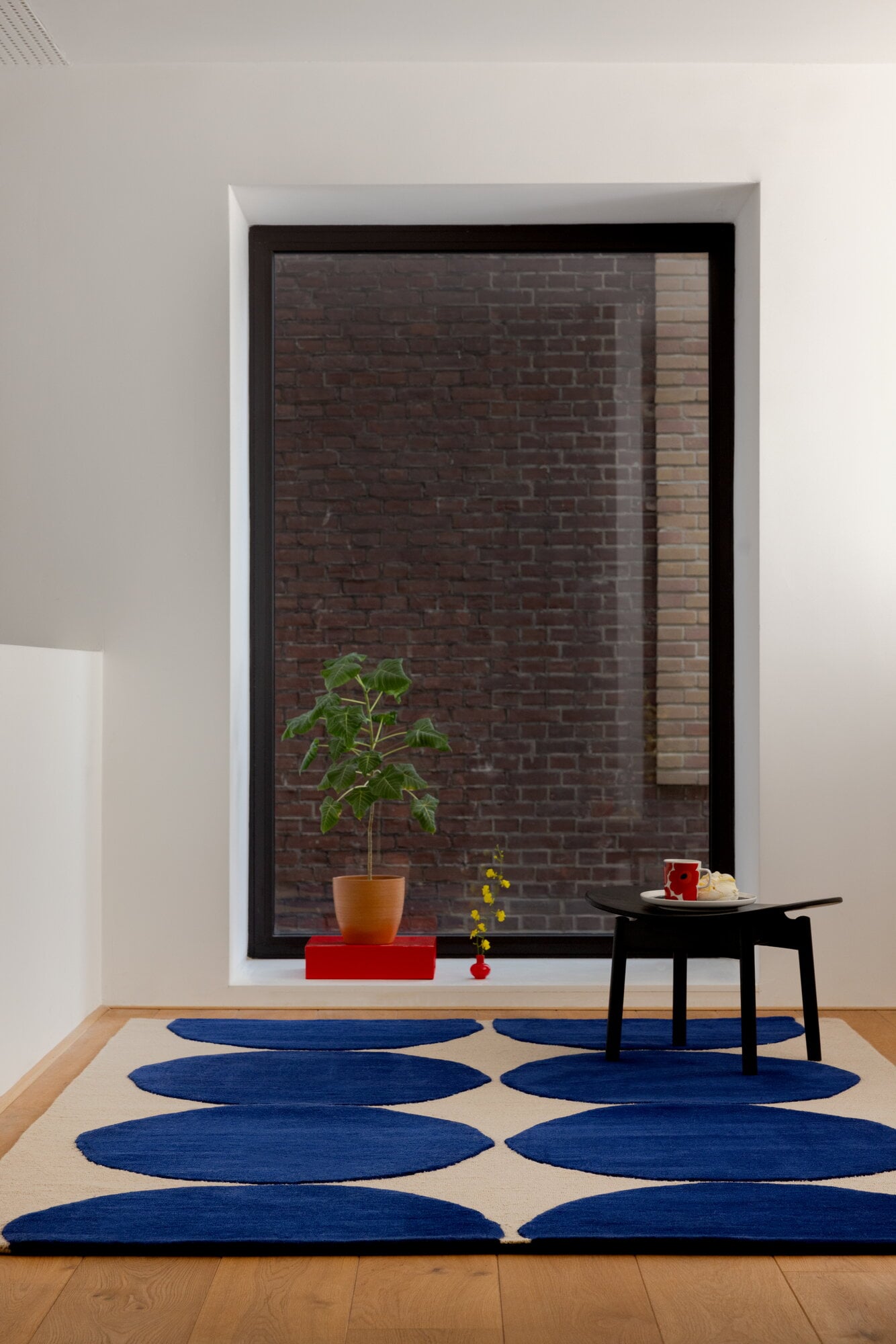
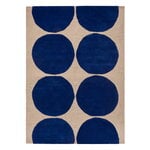
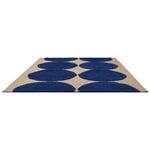
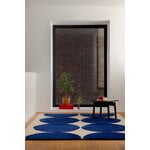
Isot Kivet rug, blue
Description
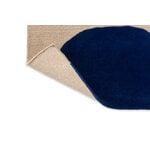
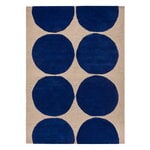
The Isot Kivet rug, inspired by Maija Isola's iconic Marimekko design from 1956, stands as a testament to timeless charm and bold aesthetics. Crafted with a three-dimensional combination of cut and loop pile, it features the nature-inspired Isot Kivet pattern, Finnish for "big stones". Legend has it that the inspiration for Maija Isola's iconic design was sparked by the large, rough-edged stones scattered across the land where her atelier was built. She creatively cut circles from paper to bring this distinctive motif to life.
Created in collaboration with esteemed Dutch rugmaker Brink & Campman, this Marimekko rug has a playful yet sophisticated appearance that makes it an ideal complement to modern, minimalist, and Scandinavian-style spaces. Meticulously hand-tufted from the finest New Zealand wool, this rug showcases a serene colour palette of blue and natural white shades. Place the rug in the bedroom or living room – and jump from stone to stone!
- Length: 0 cm
- Width: 0 cm
- Yarn height: 1.2 cm
- Material 100% New Zealand wool, packing: cotton, latex
- Colour Blue, natural white
- Weight 0 kg
-
Care instructions
Gentle vacuuming. Use clean lukewarm water to dab the stain with a clean towel.
Dry cleaning if needed. - Product ID: BCA132508-170X240

Textile designer and artist Maija Isola (1927–2001) is arguably Marimekko's best-known pattern designer and one of the international trailblazers of Finnish textile design. Having designed over 500 prints, Isola created timeless classics with her bold use of colour and large-scale patterns, the most famous being Unikko, launched in 1964.
Isola's work brings together artistic freedom, international influences and vibrant, daring patterns.
Maija Isola – bold reformer of Finnish textile design
Maija Isola is one of the most central names in Finnish textile art. She drew her first prints for Marimekko's predecessor, Printex Oy, in 1949 and served as Marimekko's chief designer of fabrics until 1987.
Isola was an exceptionally prolific and versatile designer: her print production comprises over 500 designs. Her work spanned everything from powerful floral patterns and abstract compositions to ornamental and folk-art-inspired motifs.
The rebellious Unikko
Maija Isola's best-known print is Unikko. Unikko was launched in 1964, despite the fact that Marimekko's founder Armi Ratia had expressly forbidden the design of floral prints. Isola paid no heed to the ban, however, and designed a series of magnificent floral prints, the beloved Unikko among them. Today Unikko is undoubtedly more popular than ever, and a vast array of Unikko-themed products and colourways is available.
In the 1960s, Marimekko's prints also gained international attention, and Isola's bold use of colour and large-scale patterns defined a new direction for Finnish textile design.
A cosmopolitan artist
Maija Isola drew inspiration for her fabric designs from traditional folk art as well as modern visual art, nature and her travels around the world. She lived and worked for long stretches in France and Africa, among other places, which was reflected in the rhythm and colour palette of her prints. Alongside textile design, Isola also worked as a visual artist.
In the 1980s, Isola began designing fabrics in collaboration with her daughter Kristina Isola. Together they created fresh floral prints, bold abstract patterns and ornamental designs that became Marimekko classics. After Maija Isola's death in 2001, Kristina Isola continued her mother's work by designing new colourways for Maija Isola's prints.
Who: Maija Isola
- Finnish textile artist and pattern designer (1927–2001).
- Worked as Marimekko's chief designer from 1949 to 1987.
- Designed over 500 printed patterns.
- A key figure in the international breakthrough of Finnish textile design.
- Notable works: Unikko (1964), Kaivo (1965), Melooni (1963), Lokki (1961), Kivet (1956), Mansikkavuoret (1969).
Read more in Design Stories
View all products
This product does not yet have a sustainability rating.
Learn more.
Ideas and inspiration
This is a carousel. Use Next and Previous buttons to navigate.