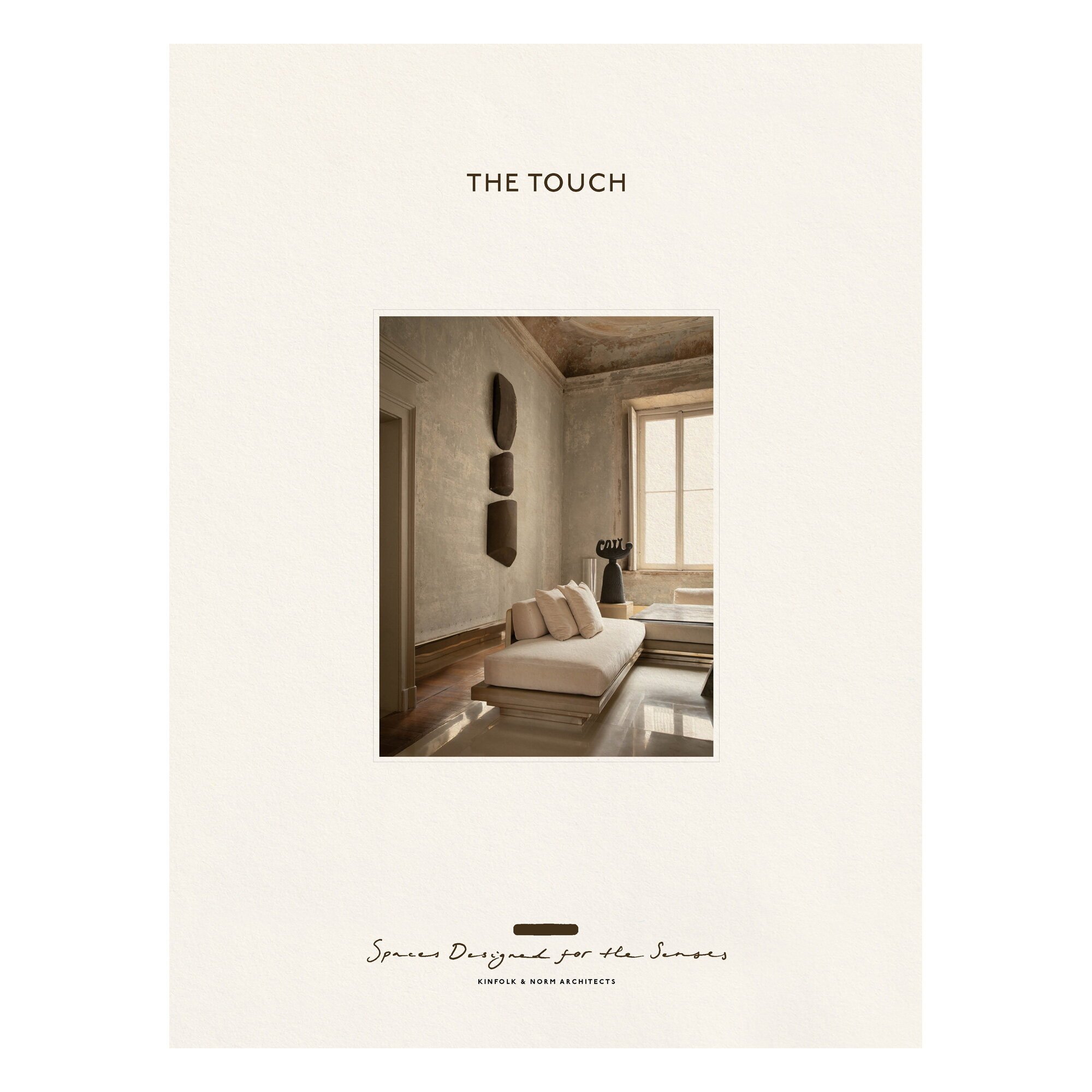
The Touch: Spaces Designed for the Senses introduces the reader to the world of human-centered design by exploring its most essential elements: light, materials, colors, nature and community. The book presents a total of 25 homes, hotels, museums and other spaces around the world where haptic design is used to awaken the senses and create a more powerful experience. The book explores, for example, how the materials of a Danish showroom invite to touch rather than take a photo, or how the sound of trickling water in a ryokan in Kyoto creates a calming atmosphere. Created in collaboration between Nathan Williams of Kinfolk and Jonas Bjerre-Poulsen of Norm Architects, this book offers inspiration in the form of photographs and essays as well as practical tips.
The Touch: Spaces Designed for the Senses (New Edition)
Description
The Touch: Spaces Designed for the Senses introduces the reader to the world of human-centered design by exploring its most essential elements: light, materials, colors, nature and community. The book presents a total of 25 homes, hotels, museums and other spaces around the world where haptic design is used to awaken the senses and create a more powerful experience. The book explores, for example, how the materials of a Danish showroom invite to touch rather than take a photo, or how the sound of trickling water in a ryokan in Kyoto creates a calming atmosphere. Created in collaboration between Nathan Williams of Kinfolk and Jonas Bjerre-Poulsen of Norm Architects, this book offers inspiration in the form of photographs and essays as well as practical tips.
- Author Gestalten, Kinfolk & Norm Architects
- Language English
- Publication year 2025
- Binding Hardcover, stitch bound
- Pages 288
- Size 9.65 x 11.81 in (24,5 x 30 cm)
- Weight 4.85 lbs (2.2 kg)
- ISBN 9783967041842
- Product ID: GS9783967041842
The Product Sustainability Framework, our criteria of sustainable design, helps you find the most sustainable products in our selection. Read below which sustainability criteria this product has met.
-
Equal opportunities for all employees
-
Commitment to UN Global Compact, fair compensation for all employees
-
Corporate responsibility requirements defined and communicated for suppliers
-
Systematic work for improved inclusion and well-being in the workplace
-
Transparent supply chain
-
Suppliers' compliance to a code of conduct ensured
-
Direct suppliers audited and certified
-
Compliance to the UN Guiding Principles on Business and Human Rights ensured in the supply chain
-
Support for community involvement in the supply chain
-
Fair and resource-wise water-use in production
-
No incineration or landfilling of returned items
-
No use of endangered species as materials
-
No direct environmental emissions or waste (excl. GHGs) from production
-
The sustainability of direct suppliers' production is addressed and monitored
-
Production and material sourcing that respect biodiversity, animal rights, and natural ecosystems
-
Material-efficient and ecological packaging
-
Positive impact on nature’s well-being through operations that regenerate natural ecosystems
-
No potentially harmful chemicals used in own production
-
Company's direct greenhouse gas emissions identified and commitment to reduction
-
Product's carbon impact identified and commitment to reduction
-
Guidance on energy- and eco-efficient use of the product
-
Contribution to climate initiatives beyond the brand’s direct operations
-
Low-carbon or compensated transportation
-
Carbon footprint of the product calculated and goals set to reduce it
-
Carbon neutral or carbon negative product
-
100 % renewable energy in own production and operations
-
Sustainable and long-lasting material choices
-
No harmful or hazardous substances
-
Responsible raw material sourcing and production
-
Materials suited for circularity: monomaterials, recyclable finishings, renewable or recycled contents etc.
-
Ecological materials: natural, biodegradable, recyclable or recycled contents
-
Outstanding materials in terms of innovativeness, responsibility, sustainability and circularity: local production or sourcing, 100 % recycled content, C2C-certification etc.
-
High aesthetic quality promoting long-term use of the product
-
Technically durable product design and material choices
-
Design for enduring life-long quality
-
Design and support for product maintenance, repair and upgradability
-
Innovative circular design solutions: circular service system, resale platform, remanufacturing, collection of used products, etc.