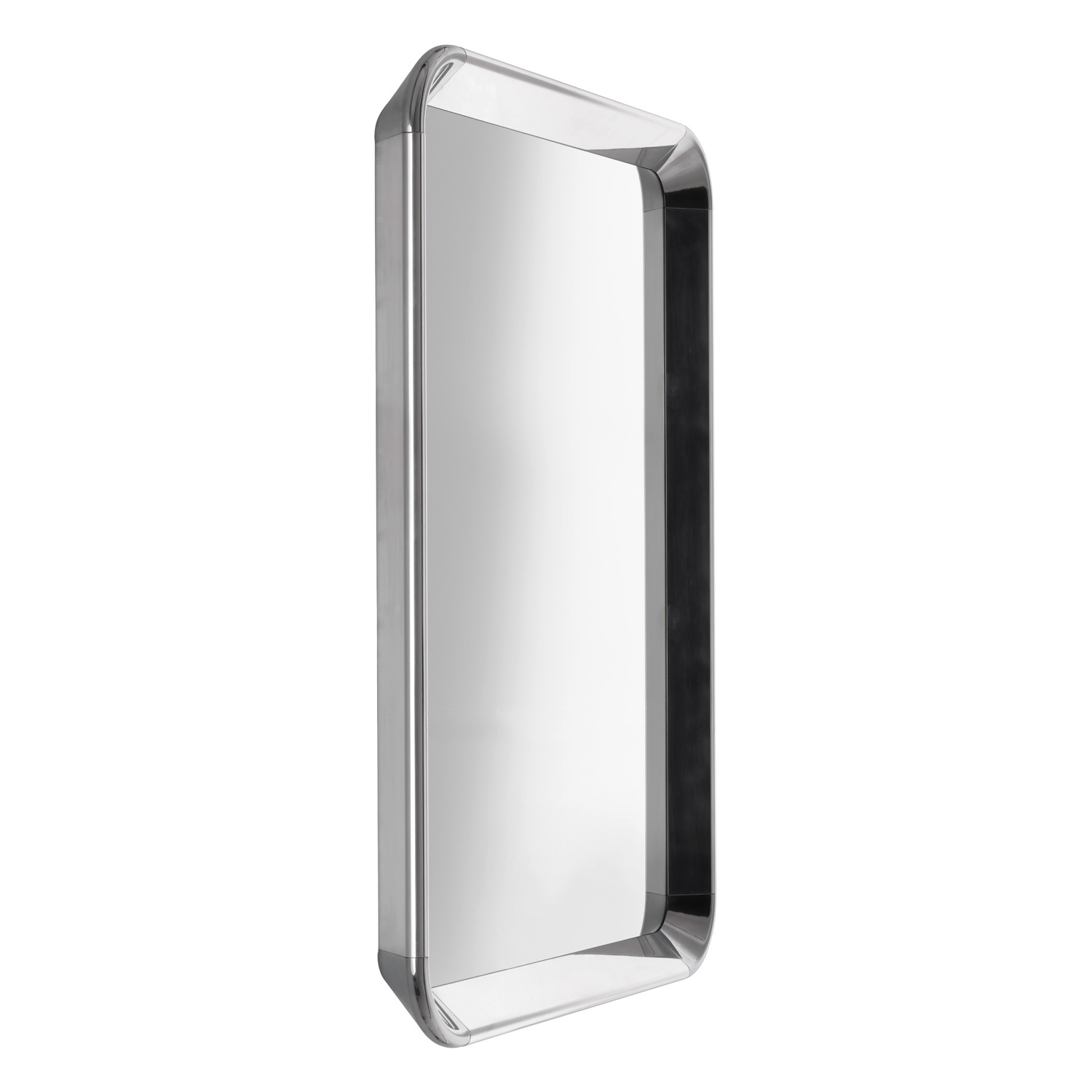
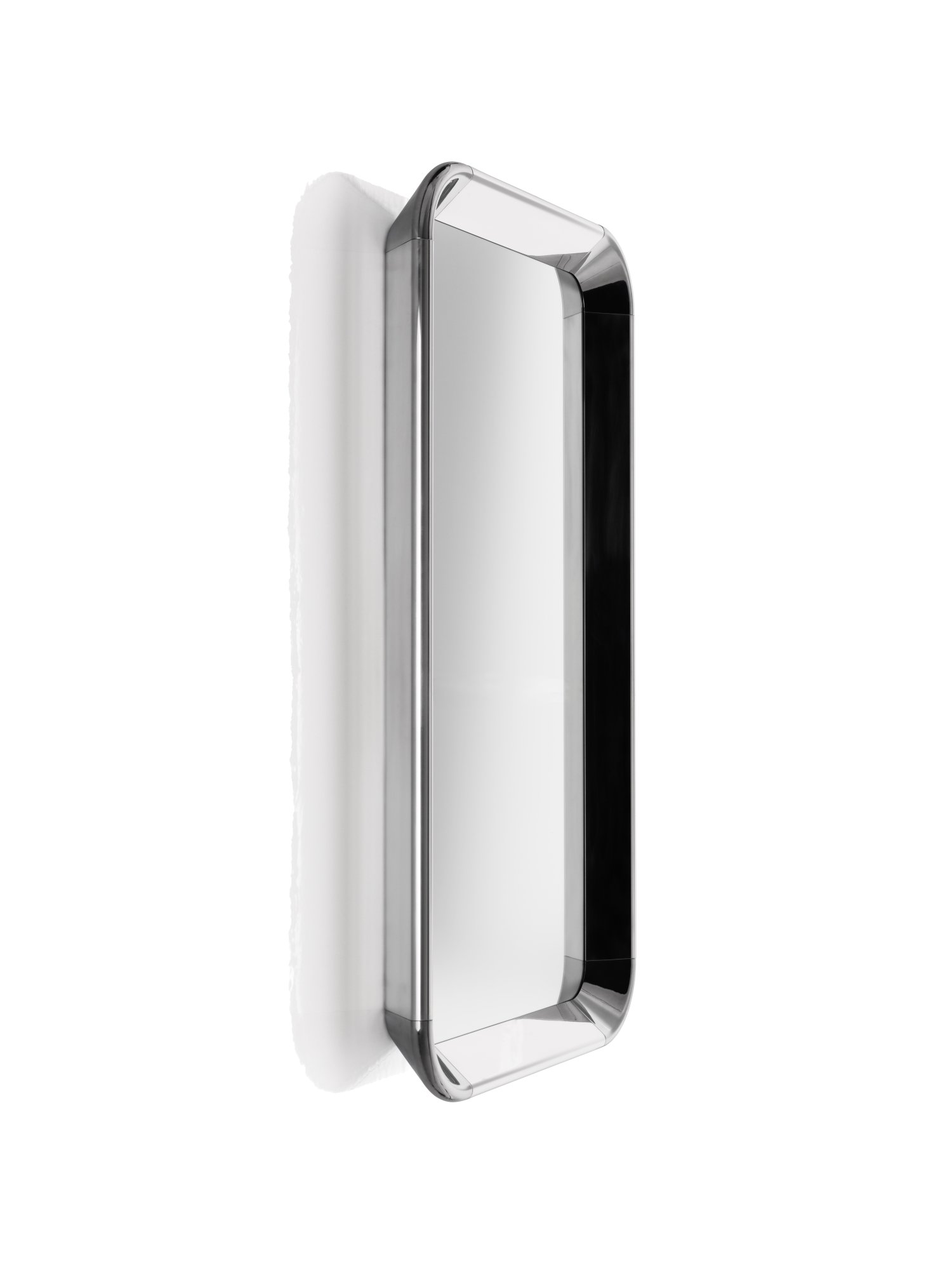
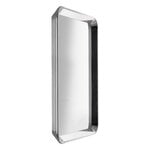
Magis' Déjà-vu is an aluminium-framed mirror that can be either mounted straight on the wall or left standing on the floor. The versatile mirror was designed by Japanese Naoto Fukasawa, whose work is characterised by playfulness and a new way of looking at things and people: the design of the Déjà-vu mirror can be seen as a tray or a plate with a shiny surface, depending on the viewer. Whatever you see in the shape of the reflector, one thing is for sure: Déjà-vu surely will capture the eye in every space!
This is a carousel. Use Next and Previous buttons to navigate, or select a thumbnail to jump to a slide.
Déjà-vu mirror, 73 x 137 cm
Magis
Description
Magis' Déjà-vu is an aluminium-framed mirror that can be either mounted straight on the wall or left standing on the floor. The versatile mirror was designed by Japanese Naoto Fukasawa, whose work is characterised by playfulness and a new way of looking at things and people: the design of the Déjà-vu mirror can be seen as a tray or a plate with a shiny surface, depending on the viewer. Whatever you see in the shape of the reflector, one thing is for sure: Déjà-vu surely will capture the eye in every space!
- Width: 28.74 in (73 cm)
- Depth: 4.13 in (10.5 cm)
- Height: 53.94 in (137 cm)
- Material Polished aluminium, mirror with protective back film
- Colour Polished aluminium
- Weight 46.3 lbs (21 kg)
-
Notes
Supplied with brackets for wall hanging.
There might be small marks or irregularities visible on the surface as technical results of the nature of natural aluminium and its brushing and polishing by hand. - Care instructions Maintenance regularly with specific cleaning products for aluminium.
- Product ID: MGAC802

Naoto Fukasawa (b. 1956) is a Japanese designer known for his refined and quietly innovative approach to industrial design. He graduated from Tama Art University in 1980 and worked as a designer at Seiko-Epson until 1988. In 1989, Fukasawa moved to the United States to join the design firm ID two (now known as IDEO) in San Francisco.
After eight years abroad, he returned to Japan and founded his own Tokyo-based studio, Naoto Fukasawa Design, in early 2003. That same year, he launched his own brand, ±0, focused on creating simple, functional everyday objects. In addition to his design work, Fukasawa teaches product design at both Musashino Art University and Tama Art University.
The Product Sustainability Framework, our criteria of sustainable design, helps you find the most sustainable products in our selection. Read below which sustainability criteria this product has met.
-
Equal opportunities for all employees
-
Commitment to UN Global Compact, fair compensation for all employees
-
Corporate responsibility requirements defined and communicated for suppliers
-
Systematic work for improved inclusion and well-being in the workplace
-
Transparent supply chain
-
Suppliers' compliance to a code of conduct ensured
-
Direct suppliers audited and certified
-
Compliance to the UN Guiding Principles on Business and Human Rights ensured in the supply chain
-
Support for community involvement in the supply chain
-
Fair and resource-wise water-use in production
-
No incineration or landfilling of returned items
-
No use of endangered species as materials
-
No direct environmental emissions or waste (excl. GHGs) from production
-
The sustainability of direct suppliers' production is addressed and monitored
-
Production and material sourcing that respect biodiversity, animal rights, and natural ecosystems
-
Material-efficient and ecological packaging
-
Positive impact on nature’s well-being through operations that regenerate natural ecosystems
-
No potentially harmful chemicals used in own production
-
Company's direct greenhouse gas emissions identified and commitment to reduction
-
Product's carbon impact identified and commitment to reduction
-
Guidance on energy- and eco-efficient use of the product
-
Contribution to climate initiatives beyond the brand’s direct operations
-
Low-carbon or compensated transportation
-
Carbon footprint of the product calculated and goals set to reduce it
-
100 % renewable energy in own production and operations
-
Carbon neutral or carbon negative product
-
Sustainable and long-lasting material choices
-
No harmful or hazardous substances
-
Responsible raw material sourcing and production
-
Materials suited for circularity: monomaterials, recyclable finishings, renewable or recycled contents etc.
-
Ecological materials: natural, biodegradable, recyclable or recycled contents
-
Outstanding materials in terms of innovativeness, responsibility, sustainability and circularity: local production or sourcing, 100 % recycled content, C2C-certification etc.
-
High aesthetic quality promoting long-term use of the product
-
Technically durable product design and material choices
-
Design for enduring life-long quality
-
Design and support for product maintenance, repair and upgradability
-
Innovative circular design solutions: circular service system, resale platform, remanufacturing, collection of used products, etc.