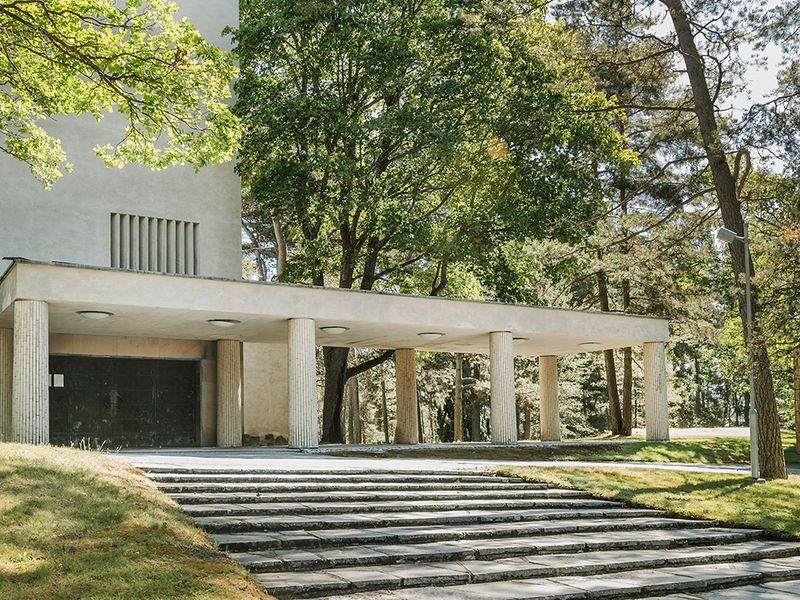
Villa Ervi is a one of a kind oasis designed by Aarne Ervi, located in the middle of Helsinki
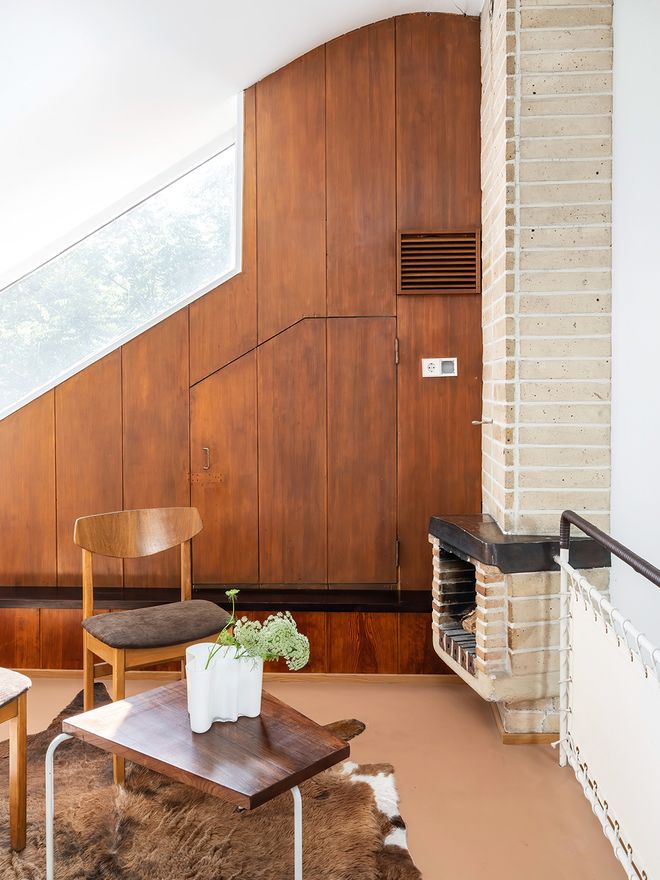
Villa Ervi, completed in 1951, is a unique work of art by architect Aarne Ervi.
Architect: Aarne Ervi
Location: Kuusisaari, Helsinki
Completed: 1951
Gross area: living 222 m2, office 323 m2
AARNE ERVI designed Villa Ervi as his family's apartment and as a studio and office for himself. The building, completed in 1951, is an oeuvre – every bit as unique and insightful as its creator. The work of the respected architect was an indelible part of his private life, making the apartment itself both private and public at the same time: Villa Ervi and its modernist innovations were widely presented in the Finnish magazines Arkkitehti and Kaunis Koti shortly after its completion.
Dubbed a masterpiece of technology and nature, Villa Ervi still makes an unforgettable impression even today.
Villa Ervi's timeless design language and charismatic details have stood the test of time better than perhaps even the architect himself dared to hope – the building, which has been dubbed a masterpiece of technology and nature, still makes an unforgettable impression even today.
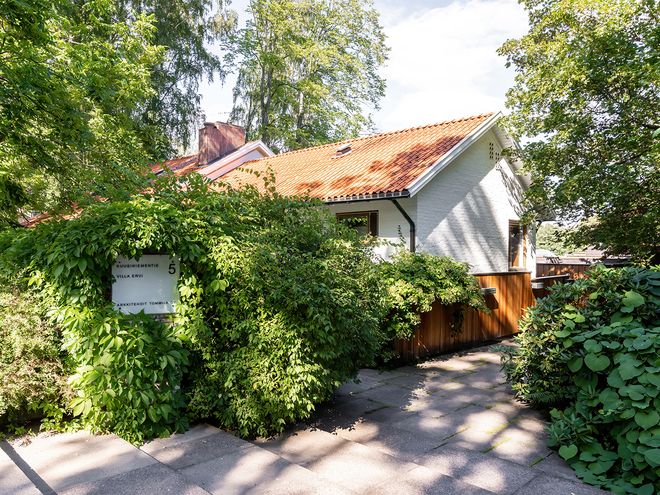
Villa Ervi is located on the Kuusisaari island in Helsinki, Finland.
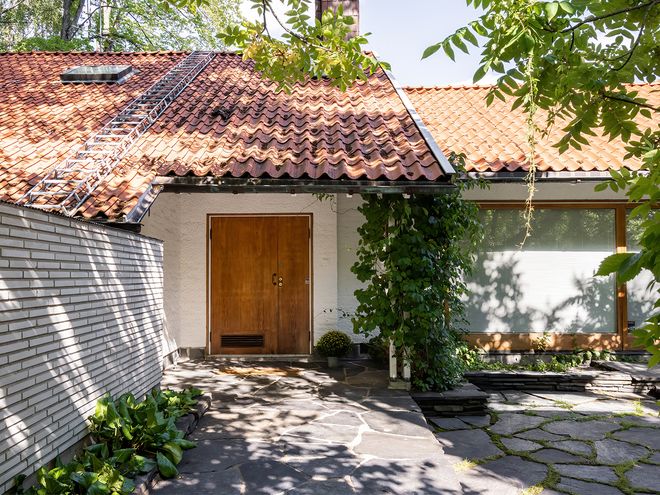
The clay brick roof, slate-covered stone base, and natural stone tiling add intriguing layers to the neutral façade of the two-story building.
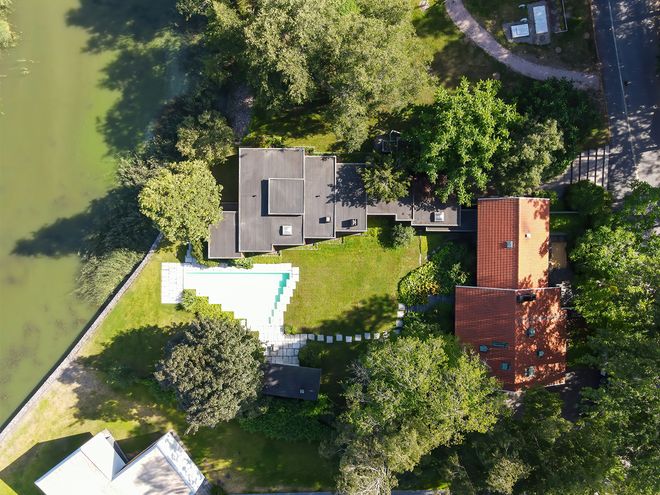
Carefully placed buildings demarcate the garden, turning it into an intimate retreat that rises above all things ordinary.
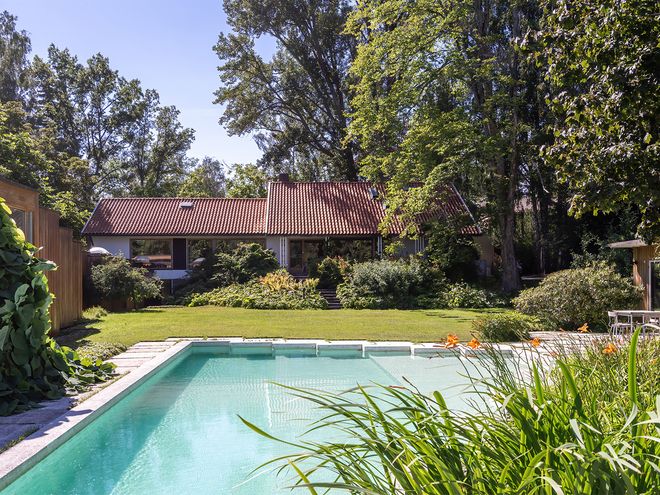
The flourishing garden is also quite experiential in itself, underlining the building's deep connection with nature. Among the trees and plants planted by Ervi on the plot are what is known to be Finland's largest Japanese maple and numerous, abundantly blooming alpine roses.
The earliest drafts of Villa Ervi are from 1939, and they already show a strong modernist and functionalist spirit, for which Alvar Aalto acted as a trendsetter in Finland. Aarne Ervi worked in Alvar Aalto's office between 1935 and 1937, and Ervi is known to have said that that time influenced his way of thinking and shaped his ideals. Villa Ervi’s early plans carried references to the look of both the Riihitie residence of Alvar and Aino Aalto and Villa Mairea, one of their most celebrated works.
The earliest drafts of Villa Ervi are from 1939, and they already show a strong modernist and functionalist spirit.
Architect Helvi Mether-Borgström, who was the head of Ervi's office, and interior architect Lasse Ollinkari, who designed fixed parts of the interior – such as the apartment's spectacular staircase and the small open fireplace in the upstairs lounge area – were also involved in the design of Villa Ervi. The luminaires were ordered from Paavo Tynell and the interior textiles from textile artist Liisa Suvanto, and Artek.
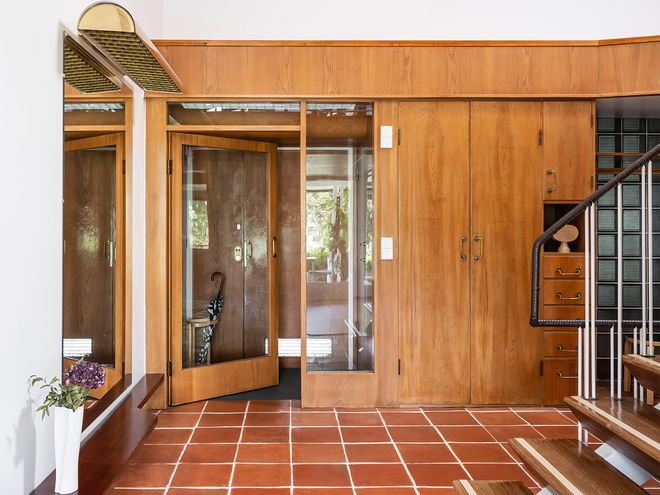
The exquisite foyer welcomes visitors.
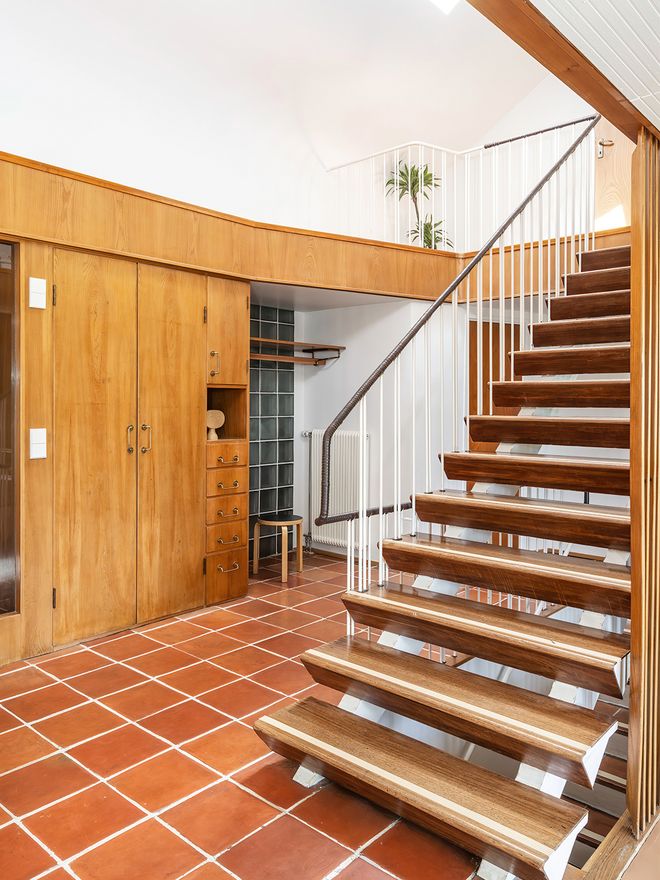
The original cabinetry with beautifully patinated brass pulls is made of oak. Italian handmade tiles were used for the floor.
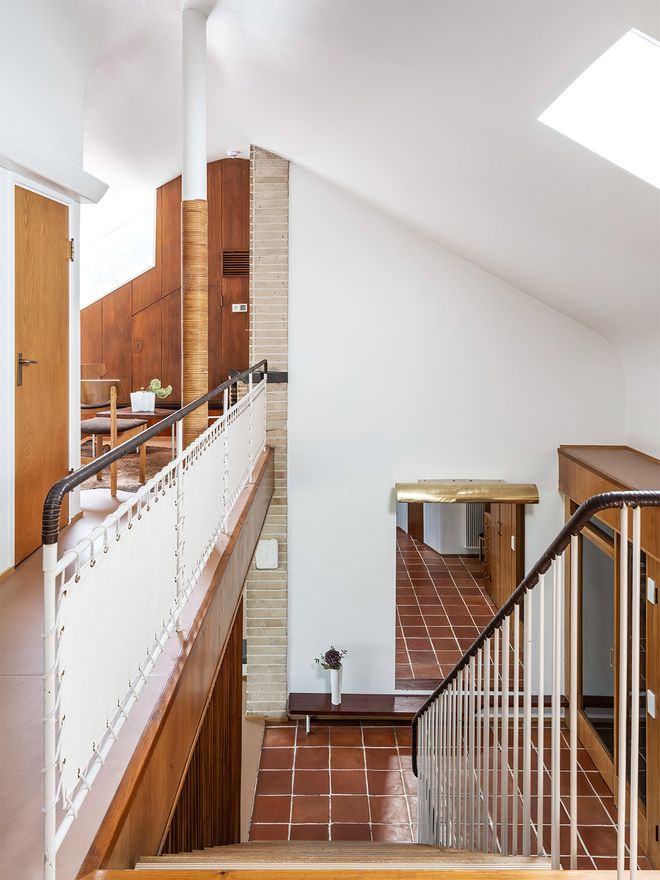
Aarne Ervi's ability to create a story rather than just a space is unparalleled.
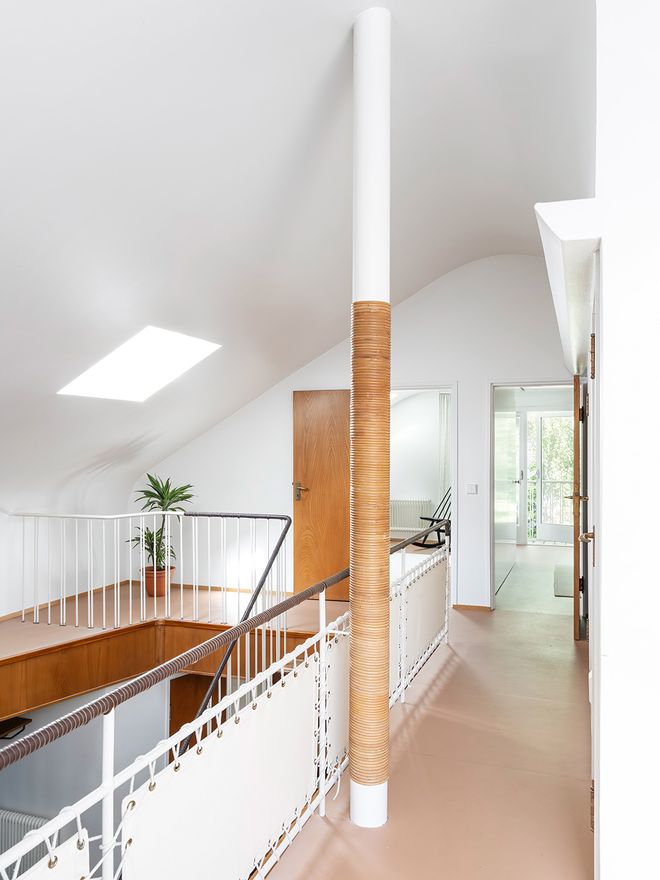
The natural light flooding in from the skylights and the gently curved ceiling emphasize the airy and open mood of the upper floor rooms.
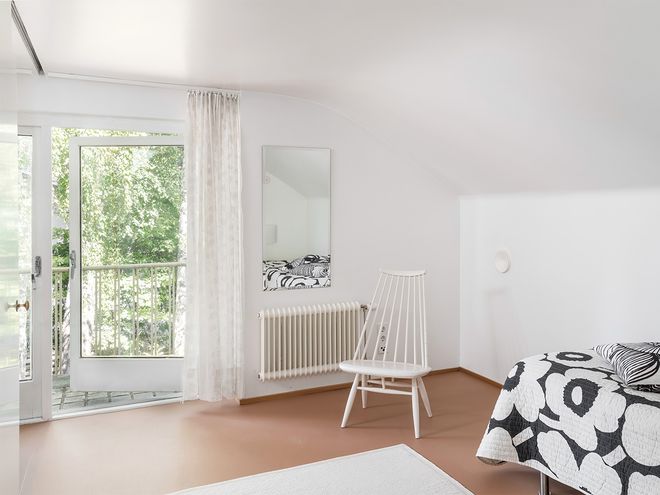
The connection to nature is ever present also upstairs. The balcony opens onto Villa Ervi's abundant garden.
The central features of Villa Ervi are a deep connection with nature and an unmatched relationship between indoor and outdoor spaces. The two-story main building's low-key facade appears quite neutral when viewed from the street – hidden among lush vegetation, the gable-roofed building stands unbothered and almost closed off.
The central features of Villa Ervi are a deep connection with nature and an unmatched relationship between indoor and outdoor spaces.
However, the high entrance hall gives an unapologetically arresting first impression. From the lobby, the apartment effortlessly unravels into a smoothly flowing series of interconnected spaces, which blend with the sensational maritime landscape seeping in through the wide window surfaces.
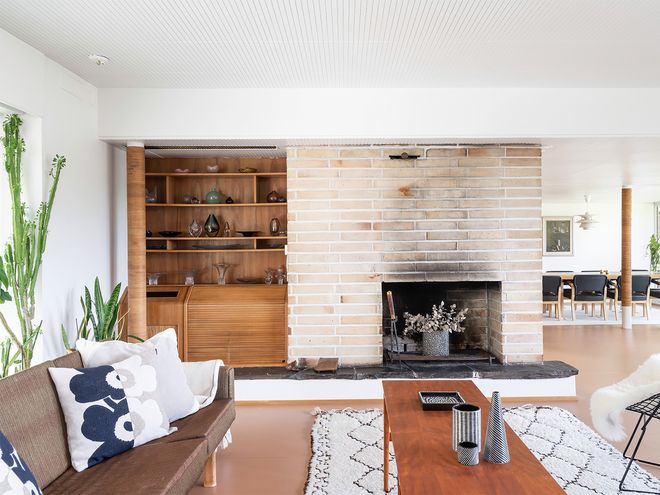
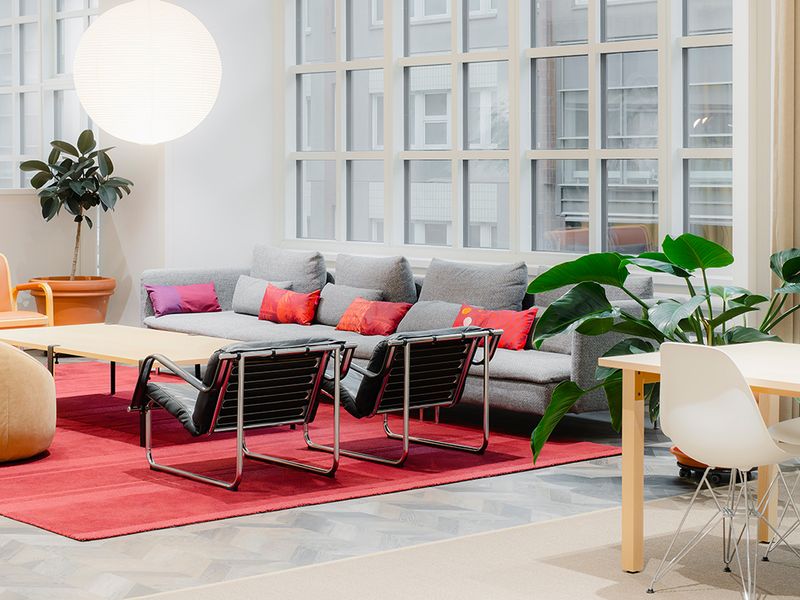
A traditional open fireplace creates an atmospheric focal point in the living room. The Unikko-patterned cushion covers are from Marimekko.
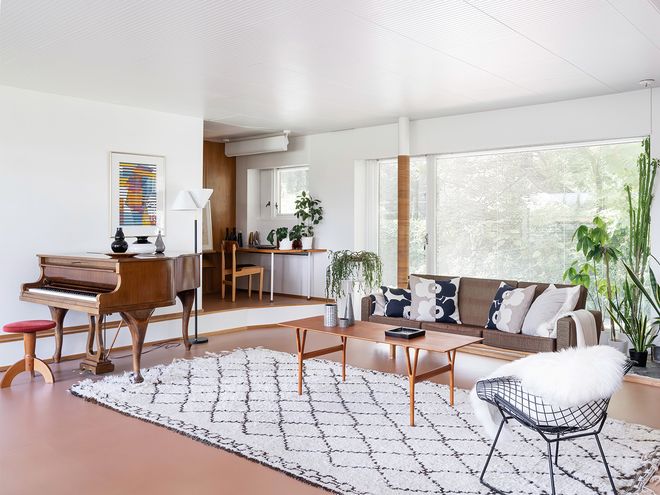
The living room features a separate nook – perfect for working or studying. The A810 floor lamp is part of Artek's selection.
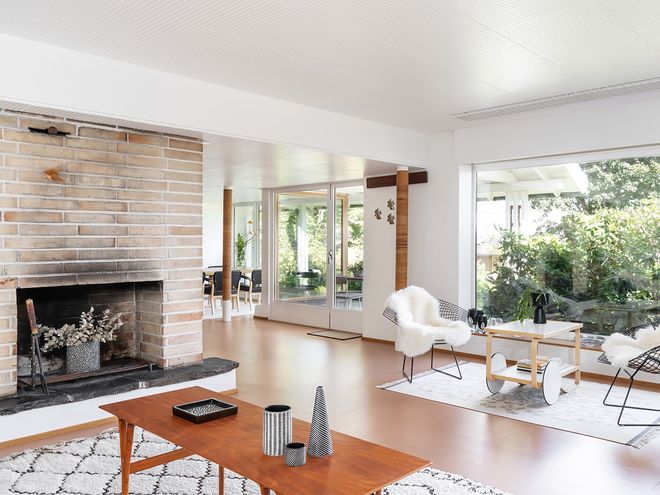
The large windows coax the lush garden landscape and the sea view into the interior. The Tea Trolley 901 is by Artek.
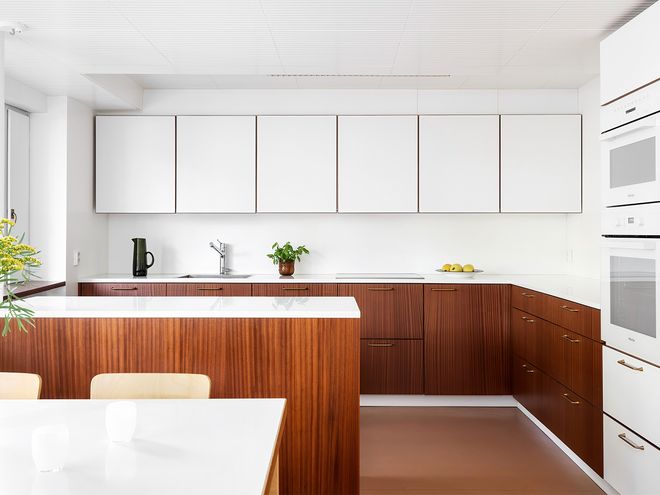
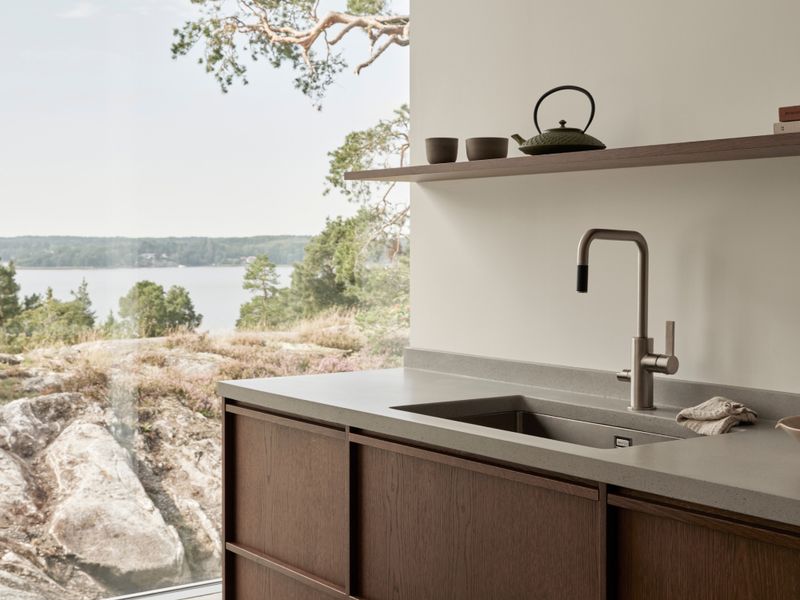
The modern kitchen cabinets made of Sapele mahogany still speak the same language as the rest of the building.
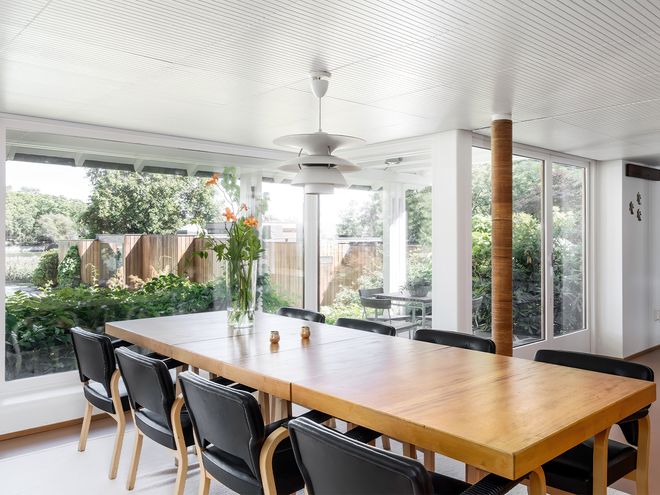
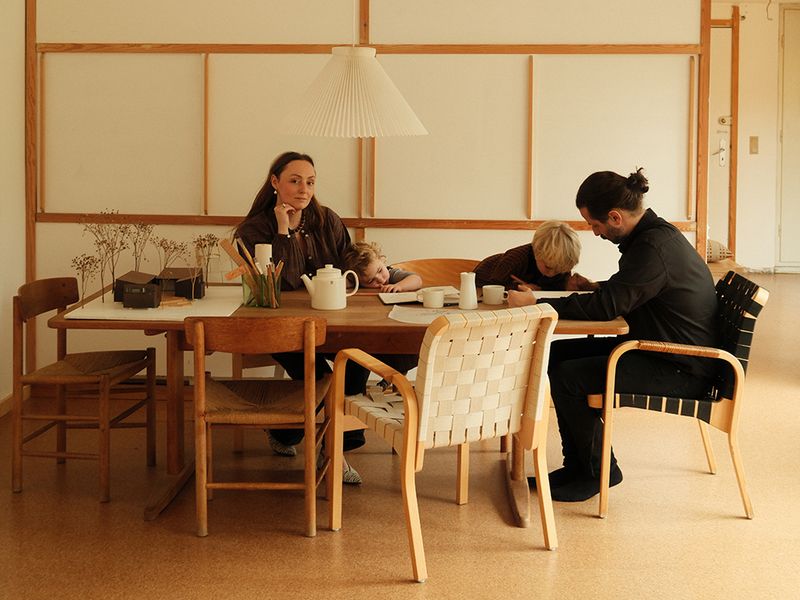
The dining area subtly intertwines with the sheltered patio. The PH 5-4 1/2 pendant is part of Louis Poulsen's range.
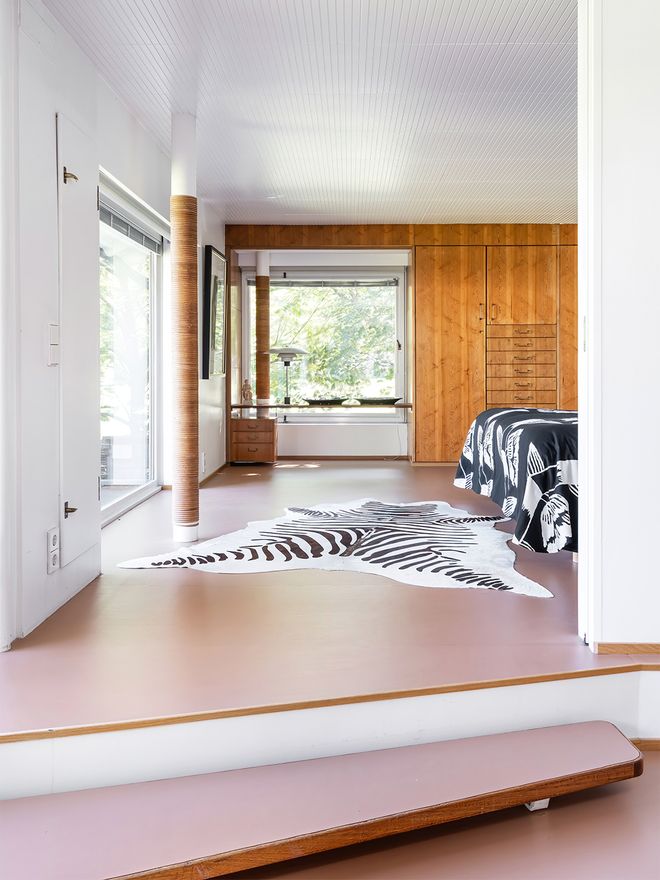
The bedroom overlooking the seascape is connected to the living room. If necessary, the space can be shut off and calmed down with the help of a sliding door. The soft blush hue of the linoleum floor brings cheerful energy to the space.
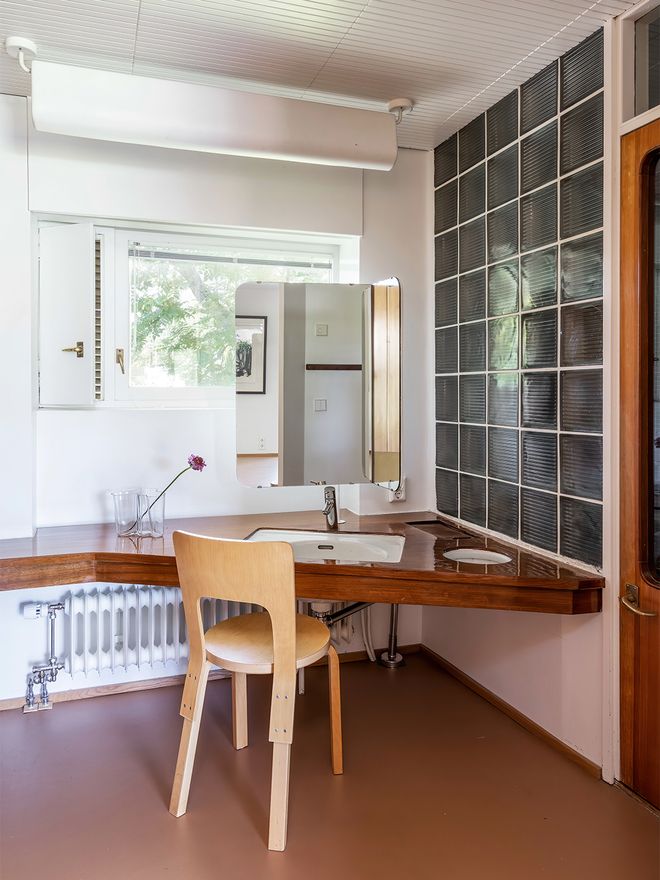
There is no shortage of delightful details in the washing facilities either. A design by Alvar Aalto, chair 66 is part of Artek's range.
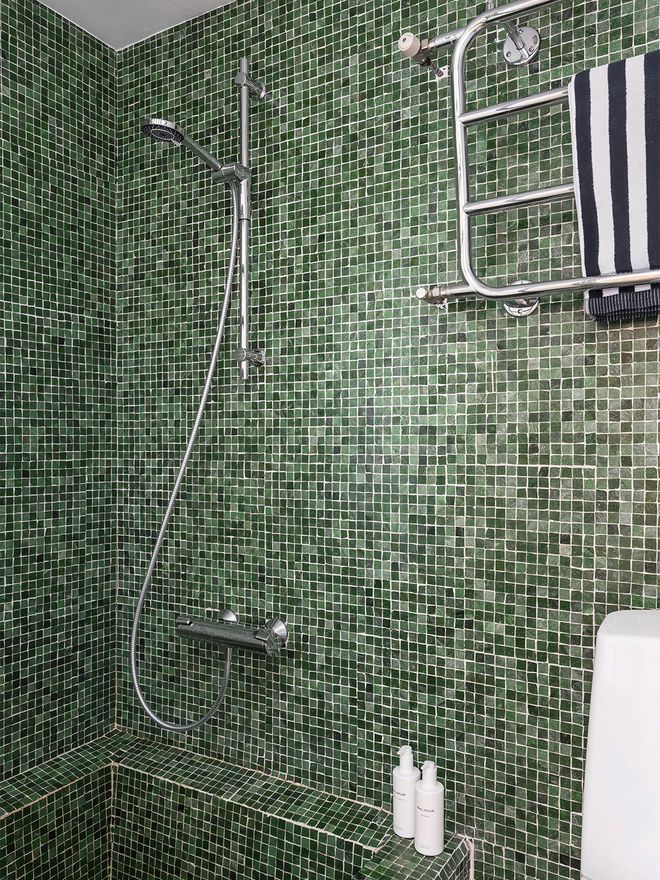
The deep green mosaic tiling in the bathroom looks exquisite – and quite contemporary.
Large windows invite nature to be part of the interior, and several doors leading to the garden offer the opportunity to pop outside while cooking in the kitchen or socializing in the living room. Ervi valued the presence of nature and felt that natural elements indoors played a significant factor in creating a comfortable space – as Ervi and his family inhabited the apartment, some of the windows served as "flower windows", by which generous green plants were grown.
Aarne Ervi possessed a unique ability to create emotion and stories within a space with the help of details.
Carefully considered materials are part of Villa Ervi's undeniable charm, and fortunately, renovations have also been carried out to match the original elements. The original oak cupboards in the bedroom and hall and the columns covered with leather cords are archetype examples of Ervi's unique ability to create emotion and stories within a space with the help of details.
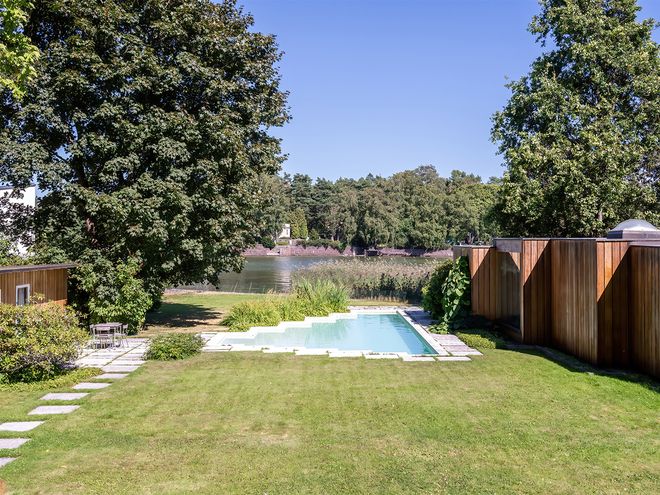
The office building (on the right) was completed in 1962. At the same time, a sauna building and a swimming pool drawing inspiration from the shape of the office wing were also built in the courtyard.
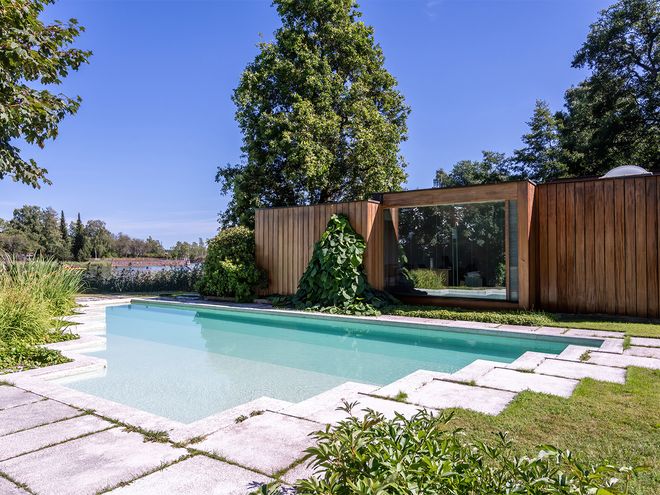
The facade of the office building is made of Oregon pine. The wide boards are attached to each other with copper strips.
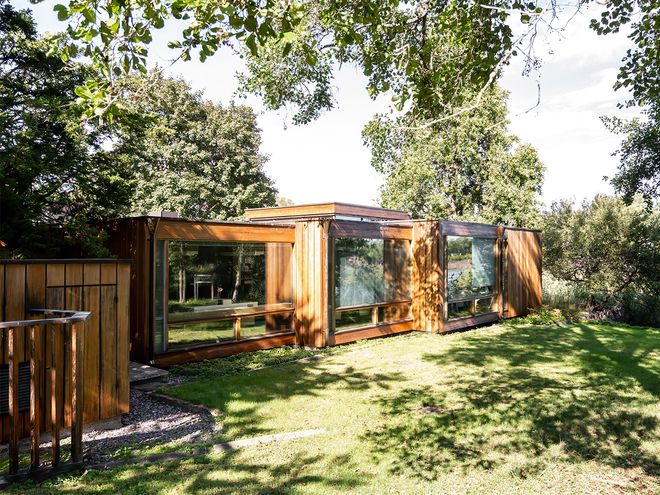
The design language of the office building carries subtle Japanese influences.
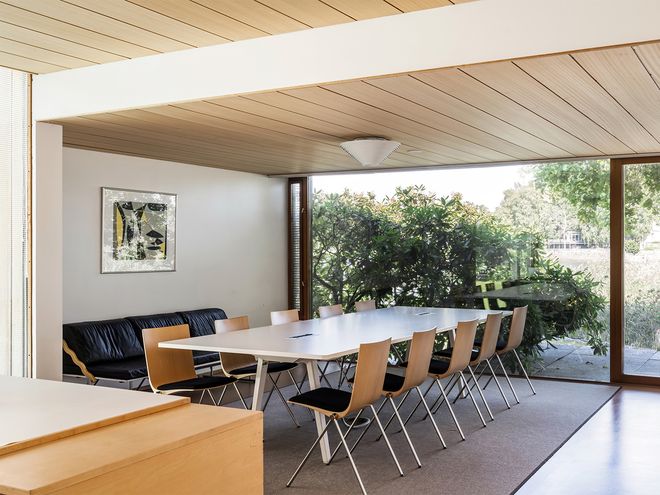
The cozy and bright office wing offers a unique setting for working and creative projects.
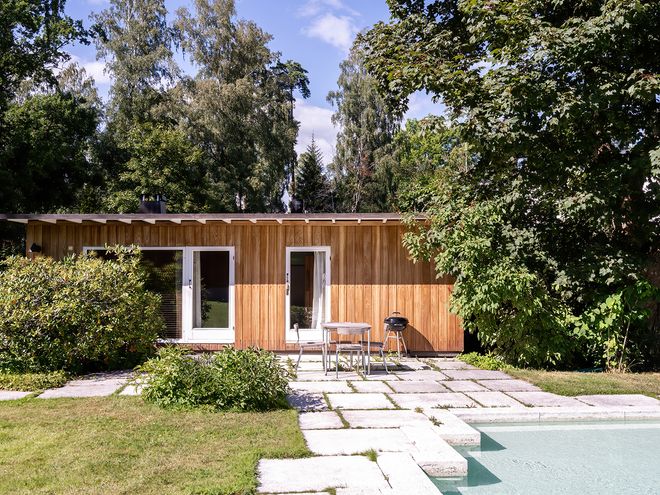
The facade of the sauna building, renovated in 1995, is made of original, beautifully patinated iroko wood.
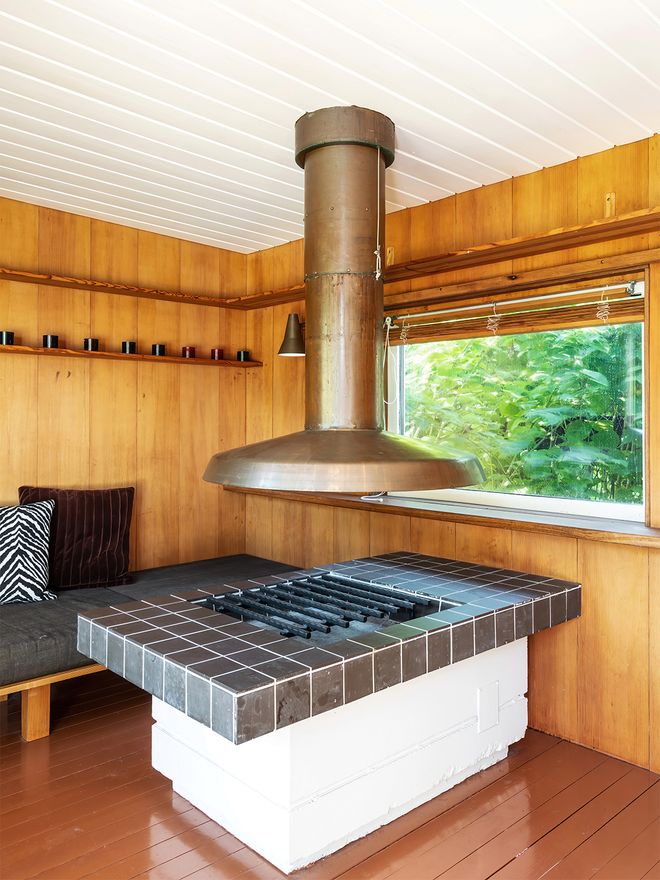
The most eye-catching detail of the sauna building's lounge area is the large, copper-coated hood.
The separate office building, completed in 1962, does not stand pale next to the main building – quite on the contrary. The façade, covered with wide slats made of Douglas fir, i.e. Oregon pine, is completely sui generis – unparalleled. The sophisticated building demarcates the garden like a fence, turning the yard into an intimate haven for taking in the stunning landscape.
In connection with the construction of the office wing, Ervi also built a new sauna building in the garden together with a unique swimming pool, the design language of which reflects the staggered wall surface of the office building. In 1995, the sauna was dismantled and modernized, but by preserving as much of the original elements as possible.
Source: Aarne Ervi – Tilaa ihmiselle (Museum of Finnish Architecture 2010). Edited by Eriika Johansson, Juhana Lahti and Kristiina Paatero.
See also:
• Villa Koivikko designed by Aarne Ervi represents 1950s architecture at its best >
Text: Mira Ahola Images: Anna Brandt
The article was updated on 1 March, 2024.
Published on 26 Oct, 2022