Making a Marimekko Tiiliskivi wool throw as good as new in a few simple steps
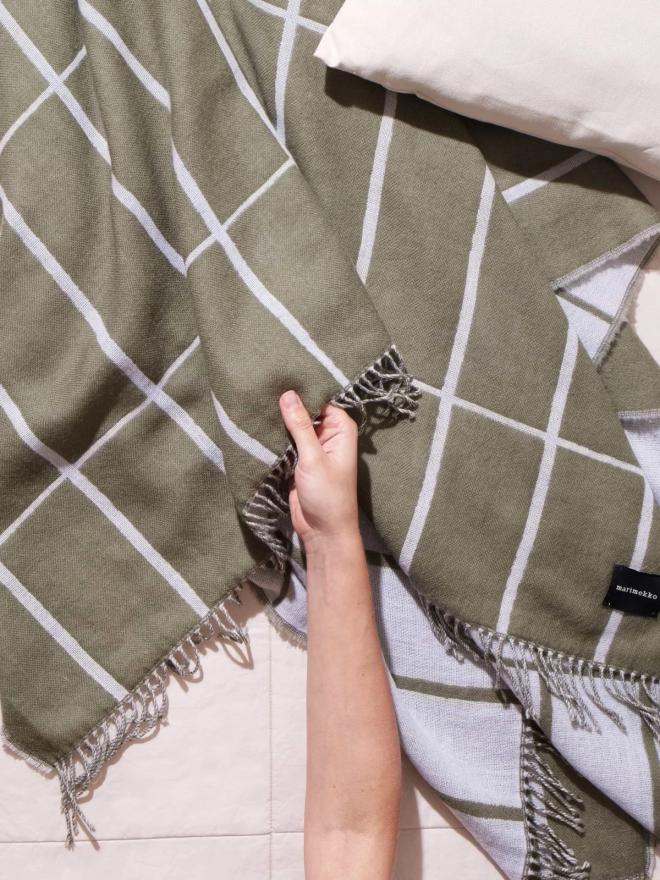
One of the hallmarks of a high quality textile is ease of maintenance to keep it looking its best.
“WITH THE LAZY SUMMER months behind me, in the autumn I’m more in the mood for things that require extra care and attention. Maintaining a wool throw that became linted over the years does take a little time, but the end result is more than worth it. It’s also a good opportunity to do some relaxing handiwork after a busy day. A manual task like brushing a fabric and removing lint is a pleasant way to take your mind off more complicated things, as well as allowing you to thoroughly enjoy the feel of quality material.
This beloved Marimekko pure wool Tiiliskivi throw has been used for a few years now, and it’s become a bit scruffy and worn-looking, with lint balls in many places.
“The throw looks like new again, and is as airy, light and smooth as when it was bought.”
Maintaining wool may sound laborious, but it requires no more than a few purpose-made items. This Marimekko throw now looks like new again, and is as airy, light and smooth as when it was bought.”
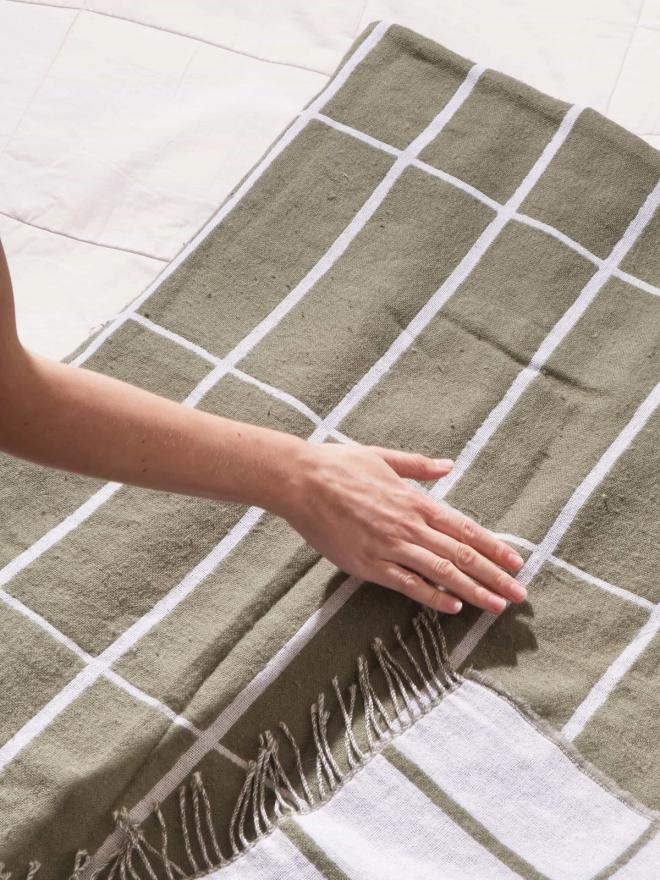
The Marimekko all-wool Tiiliskivi throw had become linted over time, and the colors had dulled.
For DIY care of wool textiles, you’ll need:
Spray bottle
Steamery clothes steamer or an iron
Ironing board
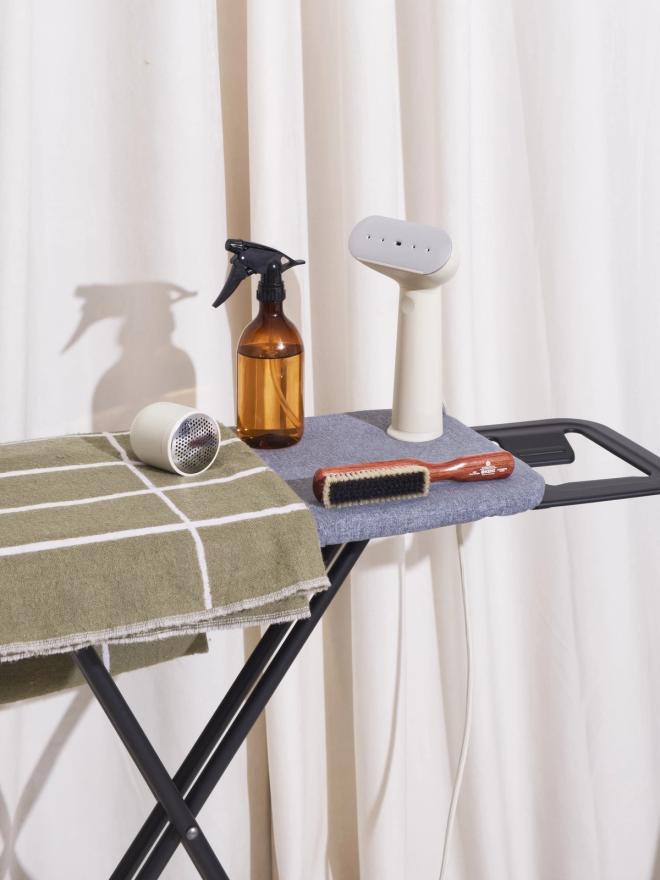
For thorough care of wool fabrics, use a soft Kent clothes brush, a spray bottle, and a Steamery lint cutter and steamer. You’ll also need these for regular care.
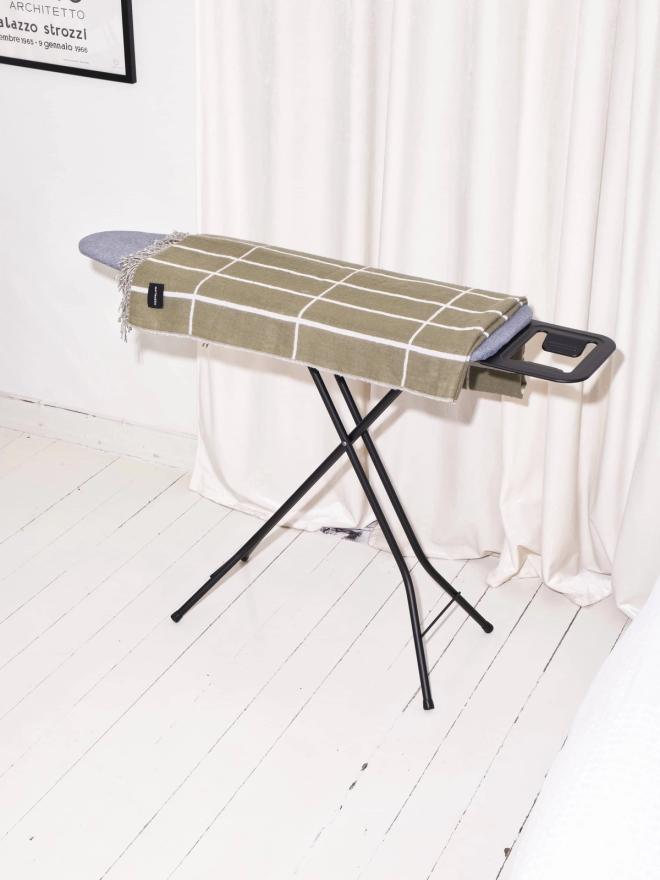
Brushing is easiest on an ironing board, as the textile won’t slip and the board has just the right amount of give.
1. Brushing
Lay the fabric flat on the ironing board. You’ll be working on it section by section. Hold the area to be brushed in place and brush briskly with the other hand, applying pressure. This will smooth out the matted surface and remove looser lint and hairs.
You should always start by brushing a wool fabric with a clothes brush, as this is the gentlest option – and with a mixed fiber fabric containing mohair, for example, it’s often all the treatment you’ll need. A brush with soft natural bristles won’t wear down the surface, so you can use it even every day without fear of doing damage.
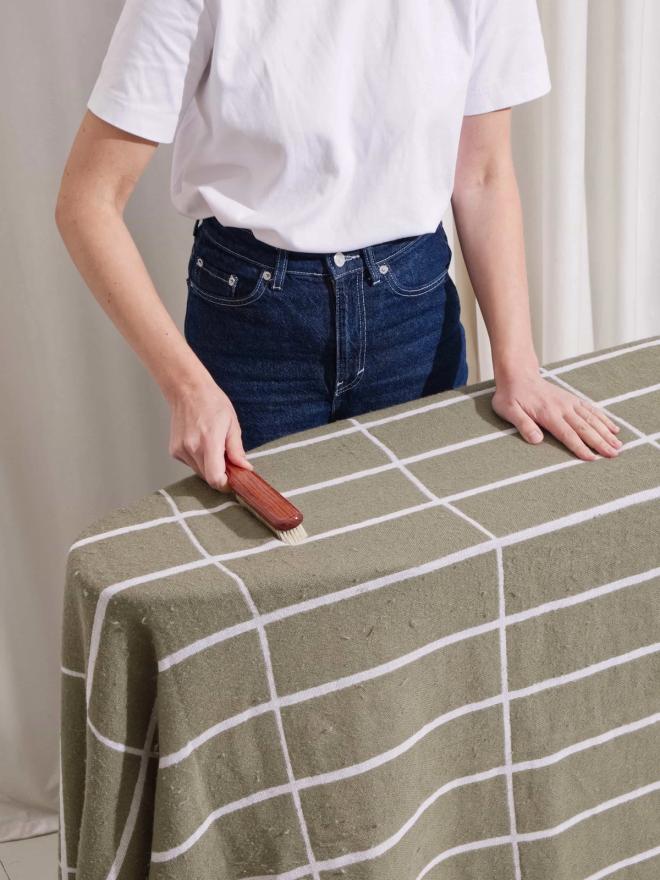
With a soft brush, the textile can be brushed once a week or so and aired outside. This keeps it fresh with minimum effort, allowing less frequent and more thorough care.
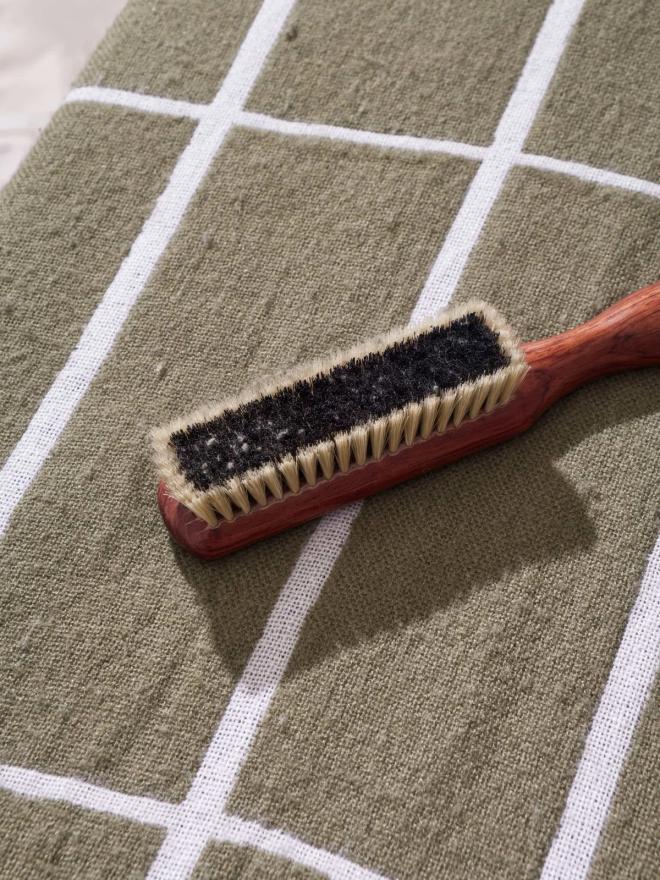
Some of the lint balls came off with just a Kent clothes brush. The brush should be cleaned after use with a comb designed for this purpose.
2. Removing lint
Lint balls are a problem, since the longer they’re left on the surface of the textile the harder they are to remove. And often, a clothes brush alone will not do the trick.
For many household textiles, Steamery’s lint cutter is better than a lint comb or stone, as it won’t scratch the surface and is easier to use on larger areas. Using it is a breeze: simply press and move it slowly over the linted areas. Natural light is best for working in.
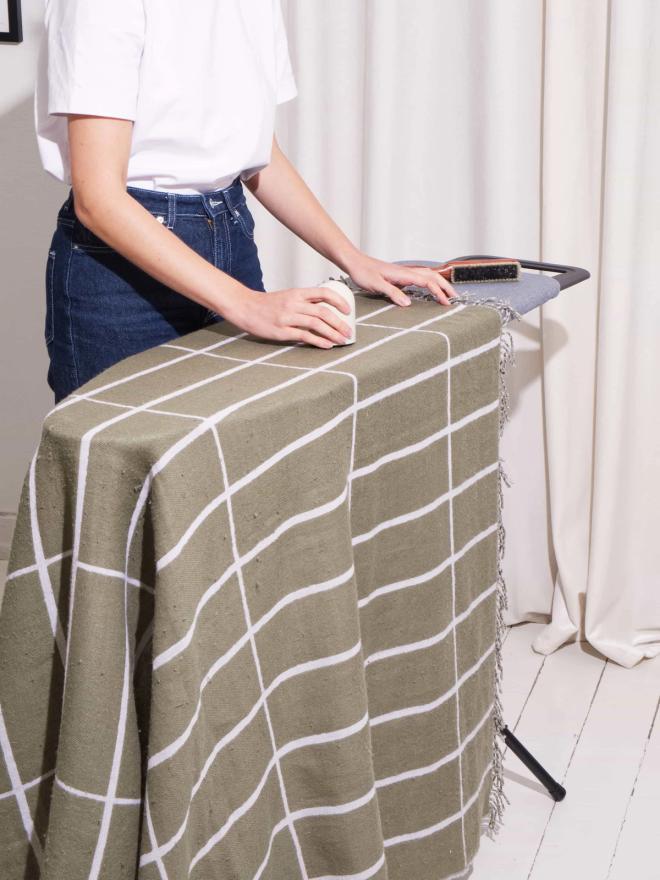
Remember to empty out the lint from the container in the Steamery lint cutter as needed.
3. Brushing with water
The final brushing is also done in sections, using a little water in a spray bottle. Spray the surface lightly as you go, first brushing in the opposite direction to the direction the fibers naturally lie in and then the other way. By using water, you will at the same time be giving the fabric a very gentle wash, thus removing stains as well as any lint, dust and hairs. This will give the fabric a new lease of life, freshening up its colors and giving a beautiful shine.
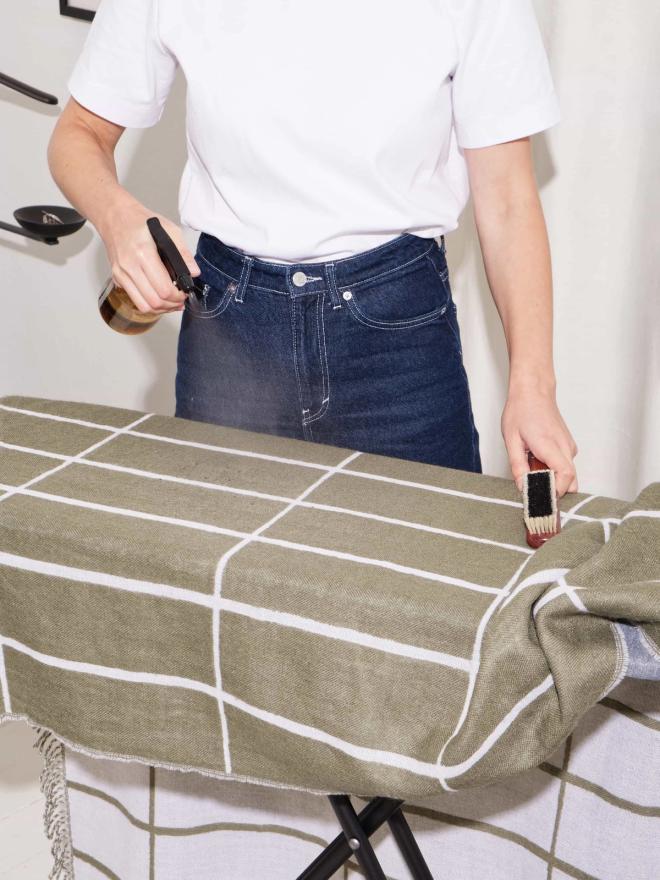
Thanks to the oils it contains, wool naturally repels dirt. Spills or stains can usually be removed with water alone. This should be done without delay, however.
4. Ironing or steaming
Finally, iron out the wrinkles. Steamery’s steamer can be used both like a normal steamer or horizontally, like an iron. For very thick, plush wool textiles, light steaming is usually enough.
The surface of this smooth-woven Tiiliskivi wool throw was fluffier than I wanted it to be after its makeover, so I left it on the ironing board and went over it with the Steamery steamer. For this step, you’ll need to slightly dampen the fabric. Finally, lay it to dry over a clothes rack or outdoors.
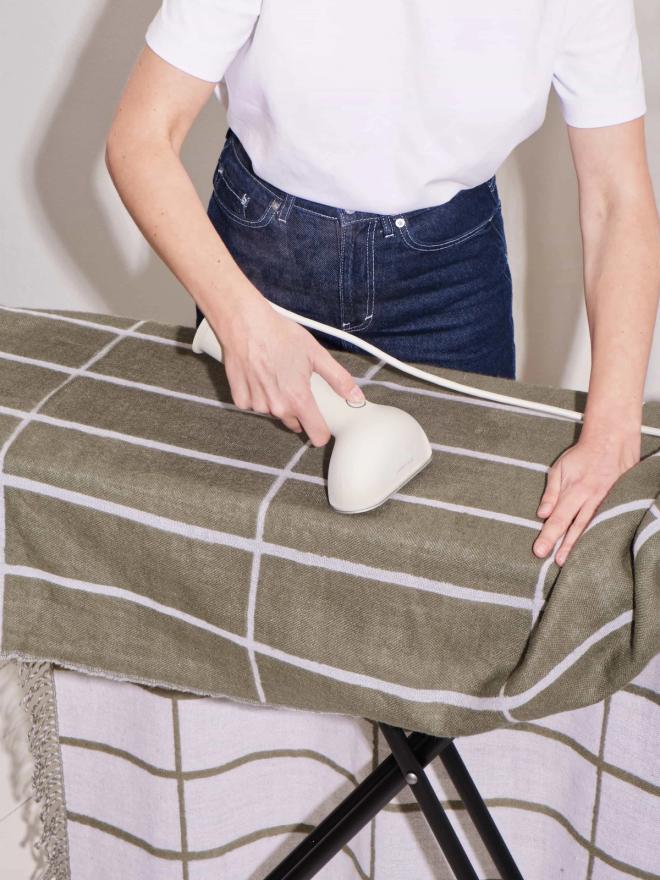
The nozzle of the Steamery steamer heats up to more or less the same temperature as an iron will on the lowest setting, which is ideal for wool.
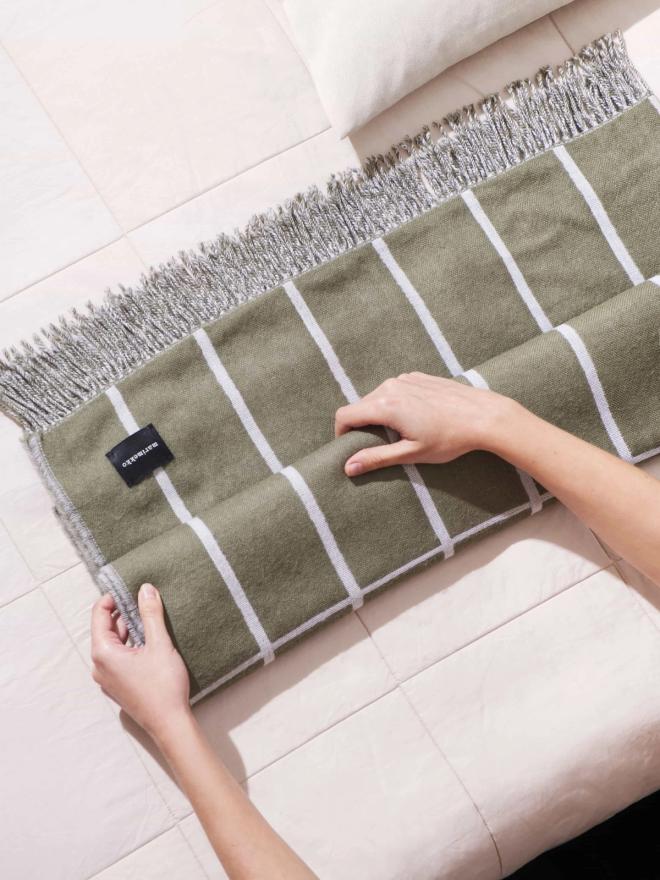
If the textile is to be folded, this should only be done when it is completely dry to avoid leaving permanent creases.
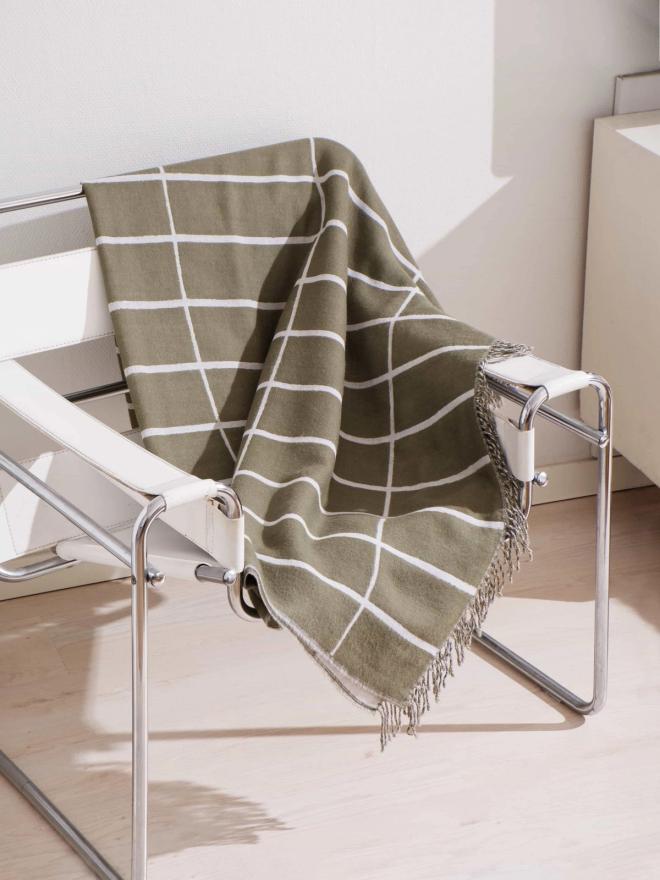
The throw now looks like new again – airy, light and smooth, with its beautiful shine back.
WITH ANY HOME TEXTILE, in addition to appearance it’s important to give some thought to other properties too. Is it a problem for you if it sheds a lot of fibers, or if the material or the color shows up dirt and pet hairs? Should it be easy to maintain, and even washable?
Thinking about these things before you buy can help in narrowing down the options to find the material that’s just right for you, without requiring any more effort to maintain than you’re willing to put in.
See also:
• All throws and bed covers >
• All pre-owned throws at Franckly >
Published on 4 Oct, 2022