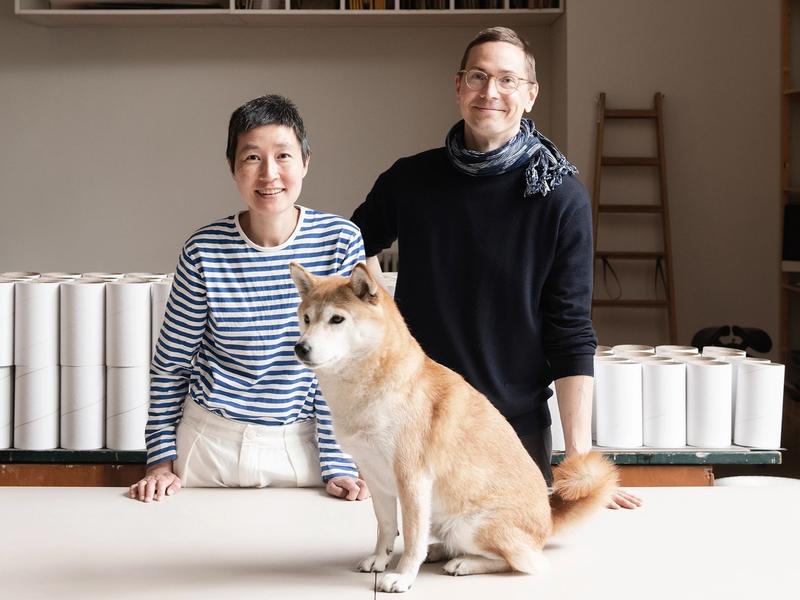
Gustav Winsth reshapes steel with Muuto’s Pleat Mirror
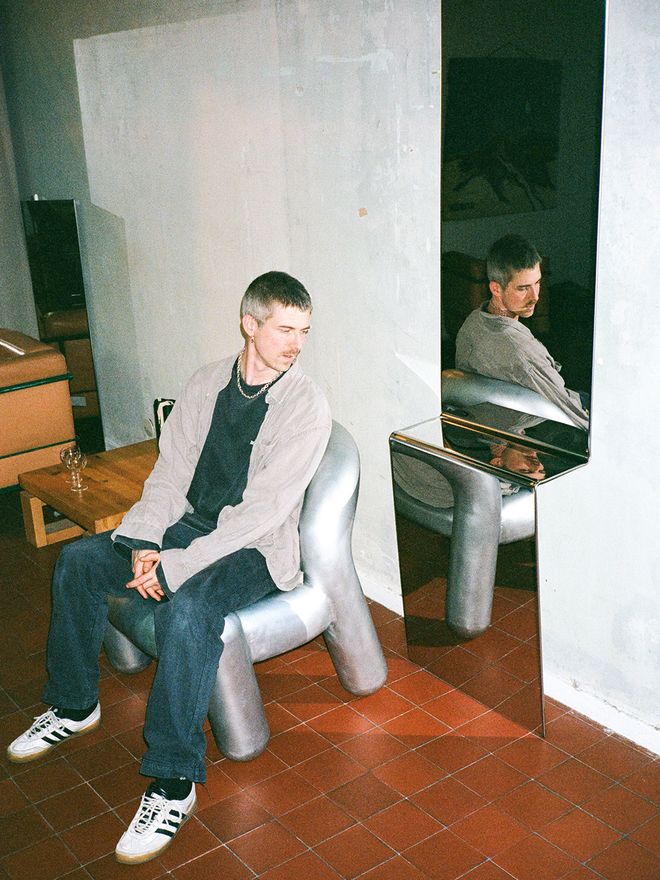
Gustav Winsth brings a fresh, experimental edge to Scandinavian design.
INSPIRED BY his exploration of how steel can be shaped beyond its expected rigidity, Stockholm-based designer Gustav Winsth’s Pleat Mirror is a study in structure and reflection.
Crafted in folded steel, the design moves between functional object and sculptural presence, translating his background in engineering and digital modelling into a mirror that shifts light and perspective.
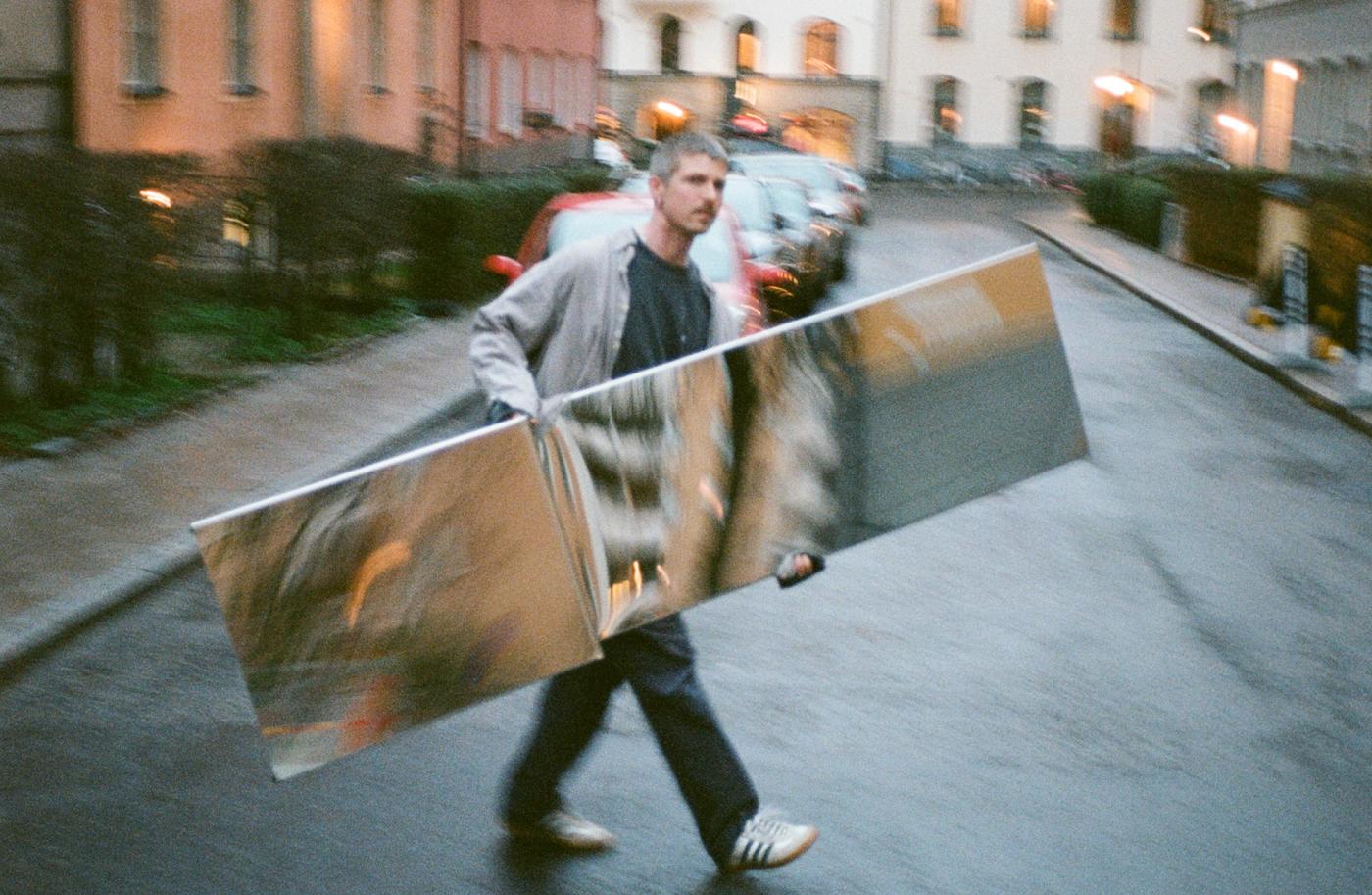
Winsth moves between digital tools and hands-on making with ease.
In his studio, where VR tools meet hands-on fabrication, Winsth’s process balances precision with experimentation, reflecting a new direction in Scandinavian design shaped by both technology and craft.
Trained first as a mechanical engineer in product development and design, Winsth was searching for a deeper creative outlet. That search led him to Beckmans College of Design, where he shifted toward furniture design.
During his studies, several projects were picked up for production, which led him to start his own studio. After graduating in 2021, he focused fully on his practice, as recognition through Ung Svensk Form opened further opportunities. “I didn’t initially plan to start my own studio so quickly,” Winsth says. “But when projects started moving into production, it felt natural to continue.”
While many designers move away from technical constraints, Winsth leans into them. His engineering background is embedded in his design language.
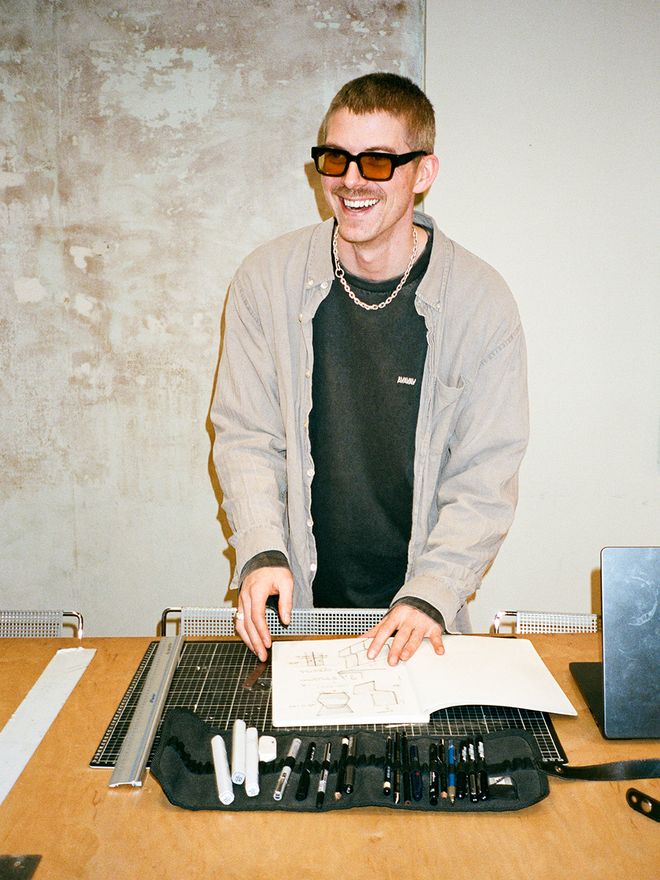
Winsth’s work plays with contrasts.
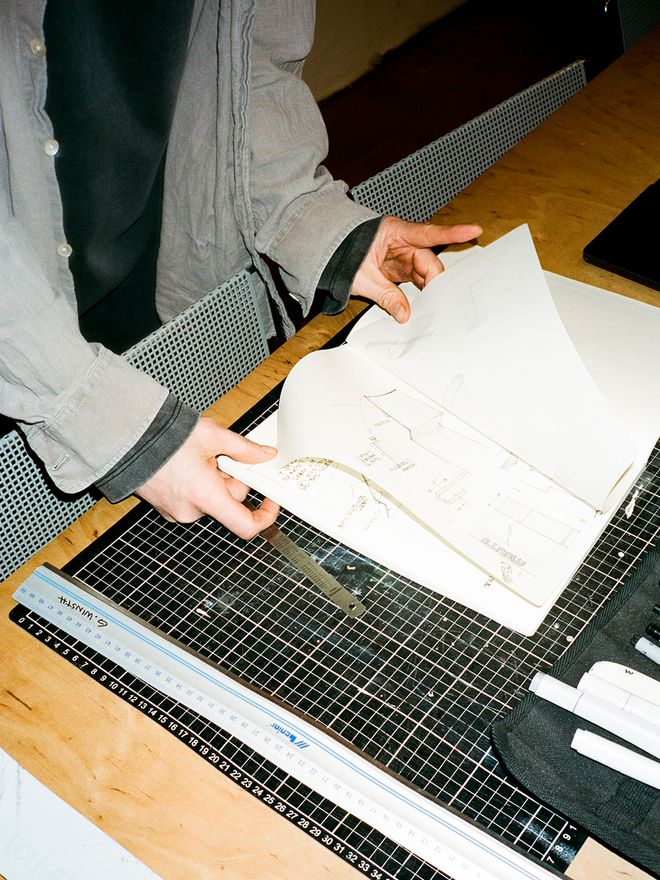
The sketchbook reveals the early stages of Pleat Mirror.
“I love being in the workshop. I rarely just send drawings and wait. I want to be part of how things are made. That’s where inspiration happens.”

Every part of Pleat Mirror is thought through, even how it meets the wall.
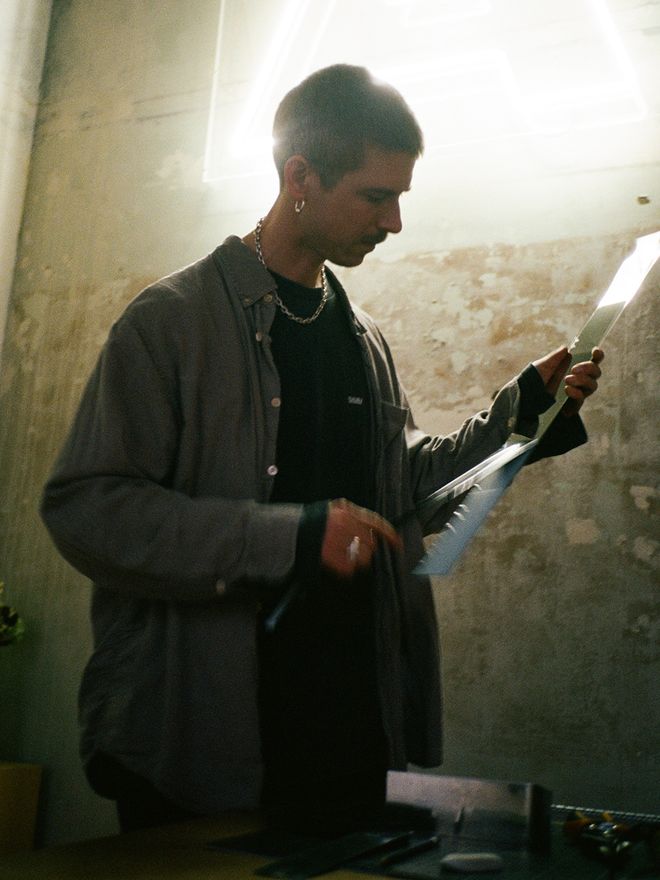
The Pleat Mirror’s brackets ensure a stable wall installation.
Pleat Mirror began almost accidentally. During a visit to a metal workshop, Winsth noticed what appeared to be broken shards of mirror scattered across a table. They were not glass, but polished stainless steel, so reflective they were nearly indistinguishable from traditional mirrors.
Originally, Pleat Mirror existed as a single finished prototype – the only piece refined enough to be photographed and presented. Those early images later led to the mirror winning the Residence Stora Formpris and catching Muuto’s attention, confirming the idea’s potential and supporting the move into production.
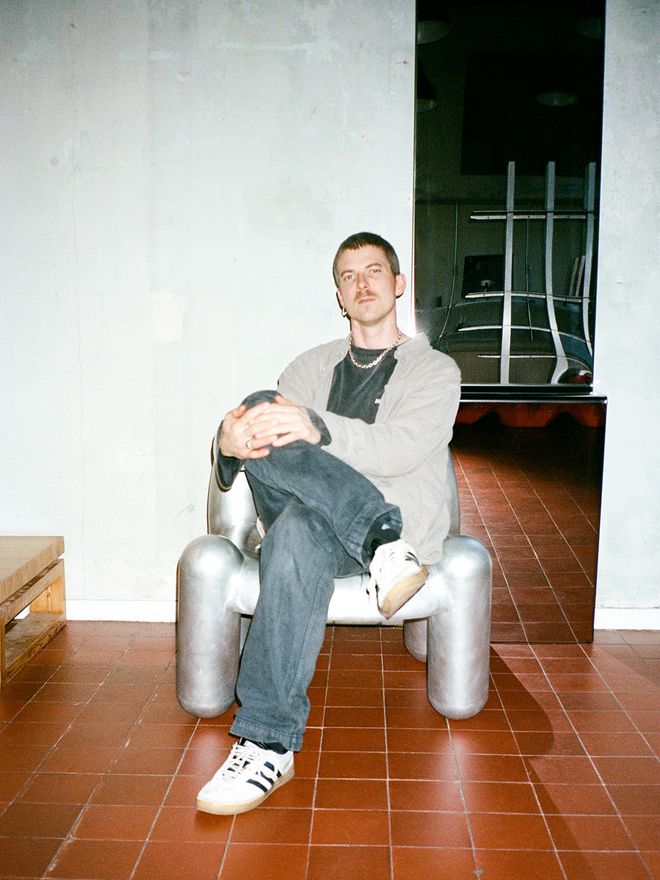
The Pleat Mirror for Muuto turns a rigid material into a fluid, architectural form.
At first glance, Pleat Mirror appears deceptively simple: a tall sheet of stainless steel folded into a sharp pleat. But its construction is anything but straightforward. The metal is first folded along its long edges to strengthen the structure before being bent to form the mirror’s shape.
Because the sheet is manipulated in multiple directions, the steel stretches unpredictably, producing subtle distortions in the corners. Winsth tested numerous bending tools and techniques before arriving at a solution that balanced control with acceptance.
“In the end, it was about controlling the morphing, making sure it stayed within the folds and didn’t affect the mirror surface,” he says. “That distortion gives it character. It’s just the reality of bending steel, and I chose to work with it rather than against it.”
That shift in perspective transformed the piece. What began as a functional mirror gradually took on a more architectural presence – almost like a portal – while still remaining practical. Extending from the floor upward, it captures reflections of both wall and ground, becoming part of the room’s structure rather than an applied accessory.
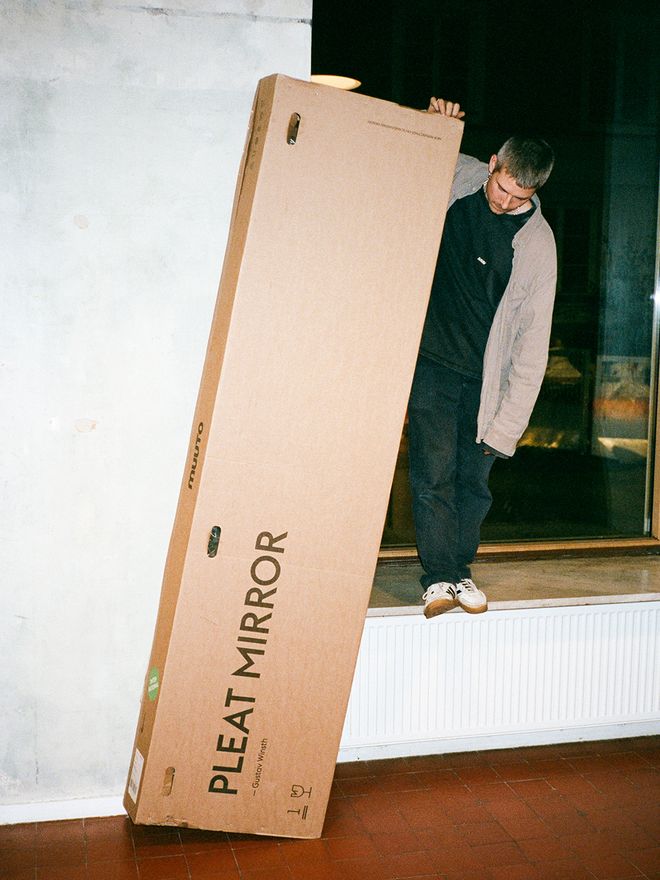
The Pleat Mirror brings an architectural presence to any space.
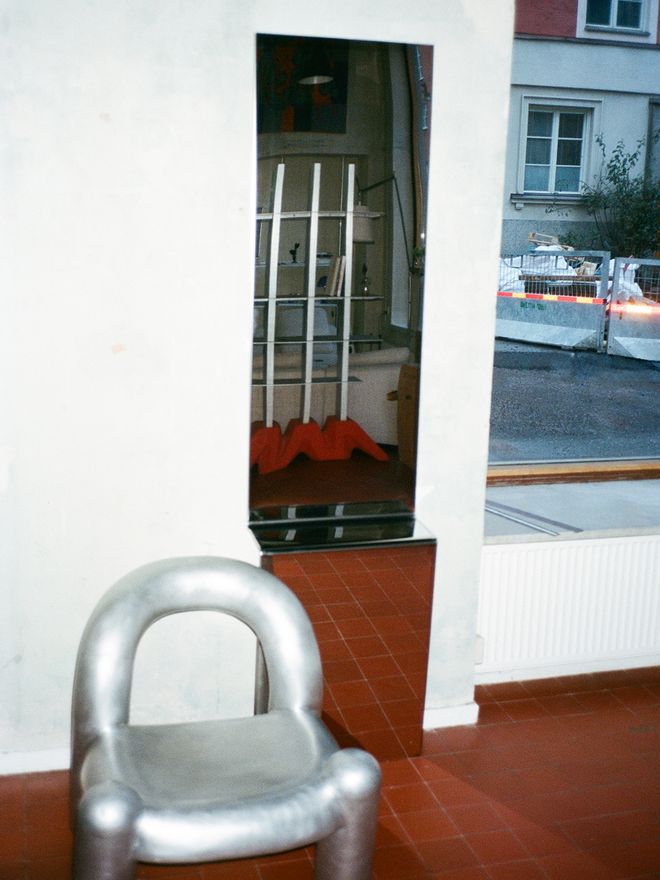
The steel mirror offers a fresh, bold take on the classic full-length mirror.
“Scale was key. By extending from the floor, it becomes part of the room’s architecture rather than just an object applied to it. It functions as a mirror, but the fold introduces a spatial quality that shifts the focus beyond pure utility,” he explains.
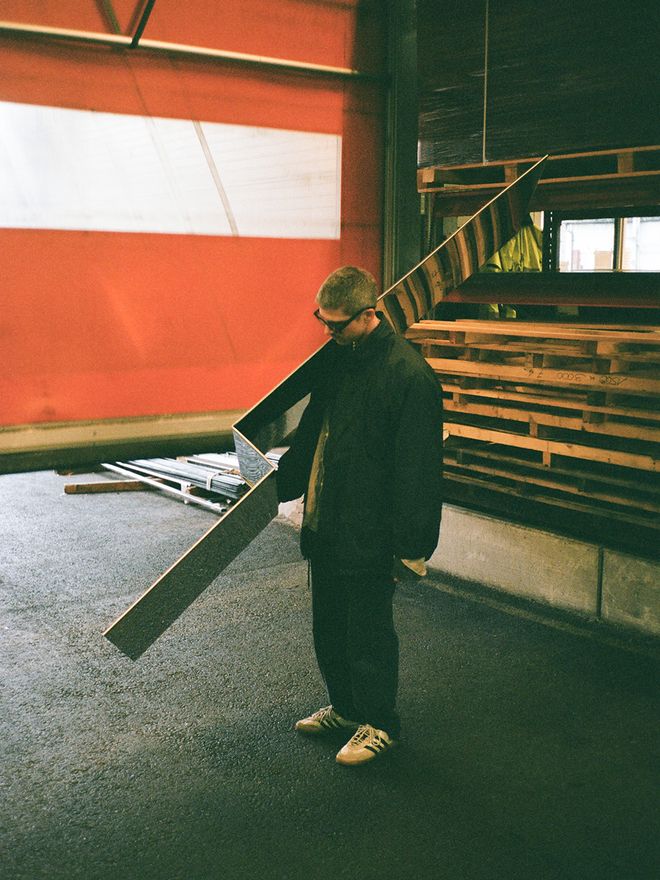
The mirror is bent from a single sheet of steel.

Winsth often works hands-on in the workshop, refining his ideas through making.
Despite his love for workshops and physical production, Winsth works just as fluently in digital space. He has used CAD software since his teenage years and moves rapidly from sketch to 3D modelling. More recently, he has integrated VR tools such as Gravity Sketch into his workflow.
“In VR, I can design in space. I can place objects in real environments and understand scale instantly,” he explains.
With camera-enabled headsets, he overlays virtual objects into physical rooms, testing proportions and mounting solutions before fabricating prototypes. For Pleat Mirror, this meant refining technical details and presenting variations without producing unnecessary material.
“It’s more efficient. I can produce endless digital iterations at full scale and place them directly in a room, instead of 3D printing small models or building full-size prototypes,” he reflects. During meetings, the focus stays on the object itself: clients can walk around a virtual piece, adjust materials in real time and understand its presence before it exists physically.
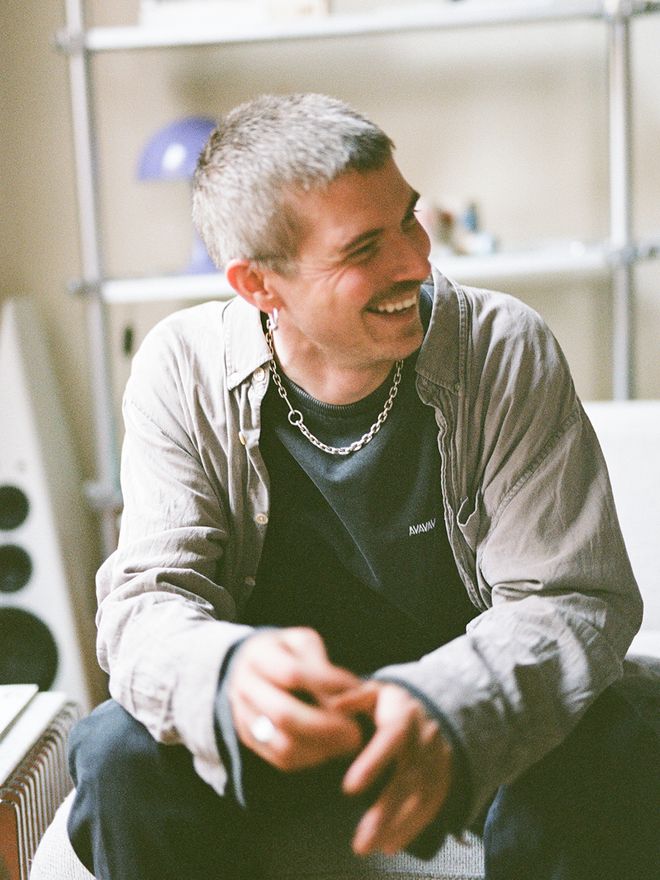
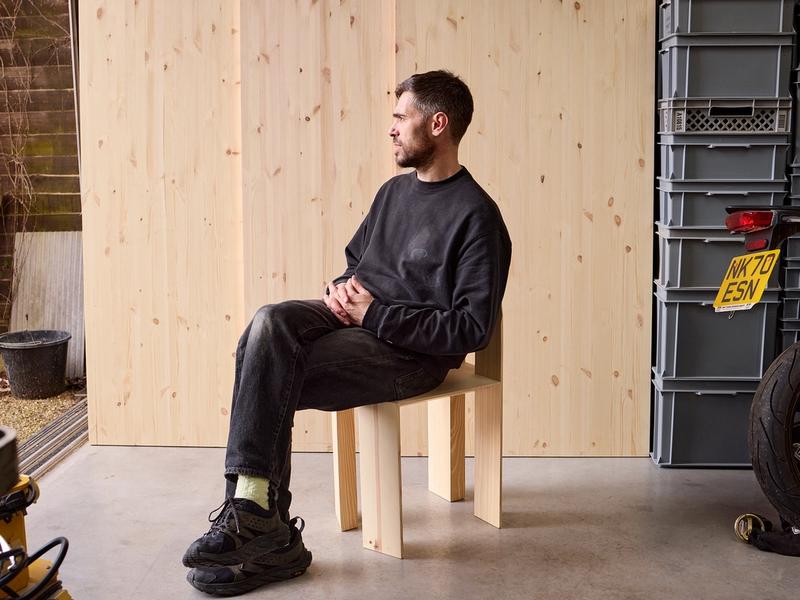
Gustav Winsth moves seamlessly between digital tools and physical production in his design process.
Winsth’s way of working moves fluidly between digital modelling and physical testing. He iterates quickly, adjusting details in CAD or VR before refining them in the workshop. At the same time, every decision is anchored in technical knowledge and an understanding of manufacturing. Pleat Mirror reflects that approach. It is made from a single sheet of steel, with the mirror’s size set so two can be cut from one sheet without waste, then bent and refined until the proportions felt right.
“I want my designs to have presence. They should feel inevitable, like they couldn’t exist in any other way.”
Describing his aesthetic as “loud,” he creates objects that demand attention, casting light on production methods as design elements. While such statement pieces challenge conventional commercial boundaries, he remains committed to design that provokes and engages.
See also:
• The Pleat Mirror by Gustav Winsth >
• All products by Muuto >
Published on 8 Apr, 2026