What will the office of the future be like? “A social pit stop”, says the expert
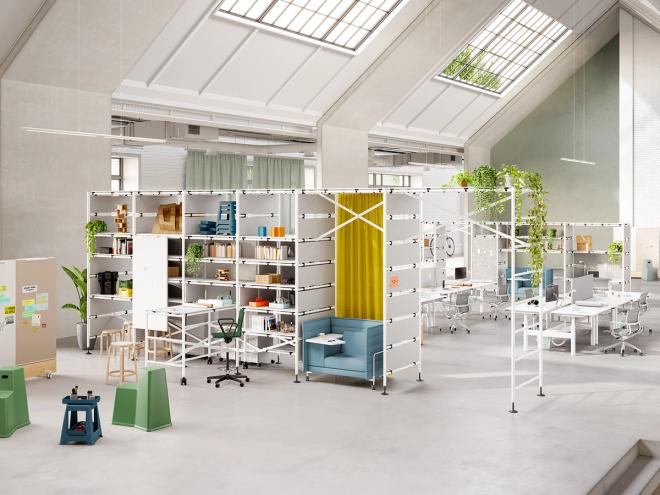
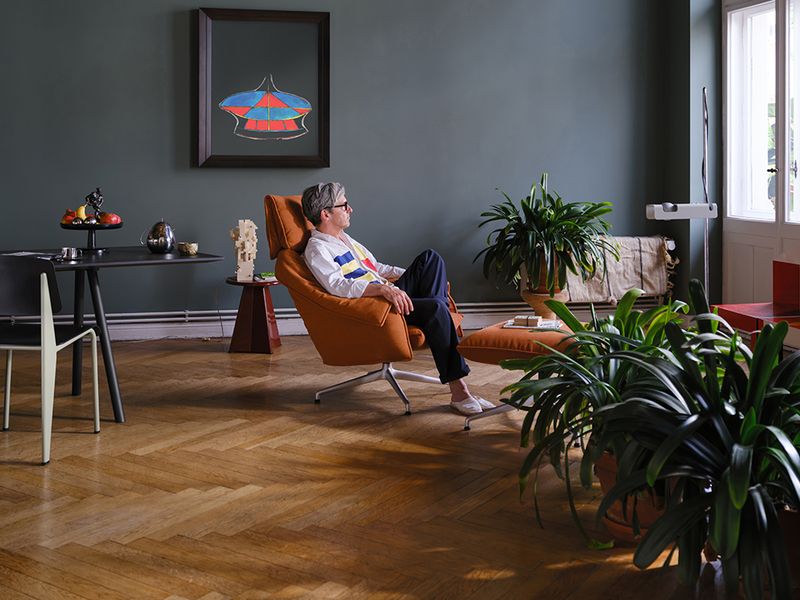
Employers hope to make offices more engaging and to utilize their potential in maintaining a sense of community. Featured, products from Vitra's Comma collection.
“THE OFFICE CAN BE SEEN AS A STAGE where the corporate culture comes alive,” Service Designer Virve Penttilä says. “During the last few years, the office has gained more of a strategic role. They have a significant effect on how we work, and are a key part of both the customer and employee experience.”
Penttilä, who has studied the management and design of work environments extensively, says that management should set goals for how the company wants to be seen and what its facilities empower its employees to do. A functional and pleasant office space is therefore an important factor in attracting new talent, but also key for retaining current employees.
And how could employers lure those accustomed to remote work back into the office?
“You will not get people to come back to the office by simply adding a plant wall or some decorative pillows that match the company logo, but rather by really taking into account the changed needs that are relevant for today’s workforce. The facilities must truly foster face-to-face collaboration,” Penttilä says.
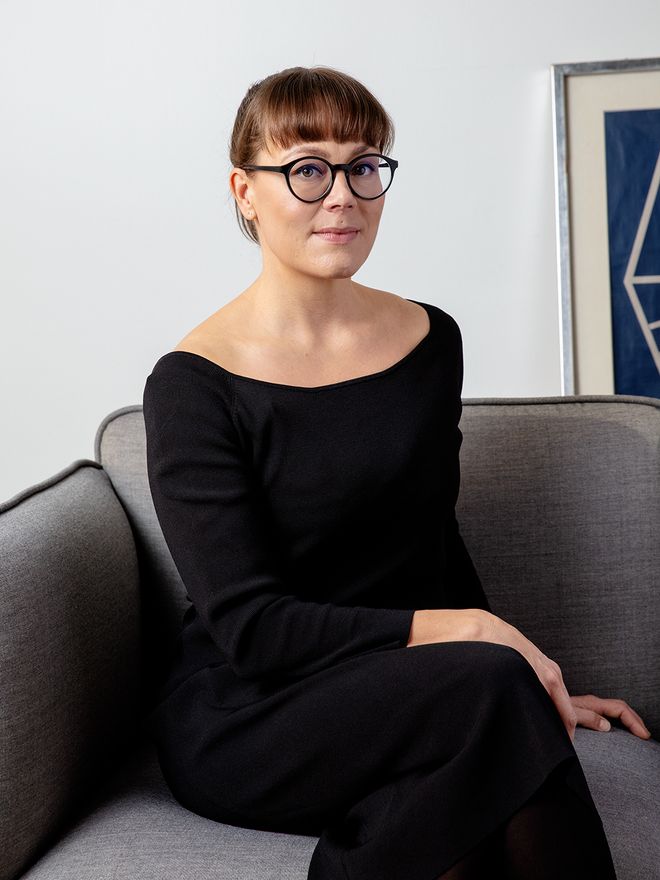
Virve Penttilä works as a Service Designer. She is specialized in user-oriented development of physical environments and creation of operational models that support the use of facilities. Image: Emma Suominen
Above all, the office of the future should promote genuine encounters and creating something new. Due to social distancing and the remote work associated with it, spontaneous exchange of ideas and brainstorming may have decreased, as we have mostly been in contact with our colleagues in the context of pre-arranged meetings.
According to Penttilä, smart office design can help bridge this gap and offer optimal conditions for unplanned encounters, collaboration and coming up with new ideas together.
“The office of the future is a social pit stop that offers everyone a chance for genuine encounters – even for people who would not interact with others in situations such as team sharing or joint projects.”
Smart office design can offer optimal conditions for unplanned encounters, collaboration and coming up with new ideas together.
The now-widespread hybrid work also creates new requirements for the modern working environment. “Prior to the pandemic, we used to need a lot of workstations, a few conference rooms and a shared breakroom, but now, our needs are more multi-faceted,” says Penttilä.
The offices of the future, on the other hand, will be equipped with video conferencing rooms that are ergonomic, have flattering lighting, good acoustics, and facilitate screen sharing. Many expert companies also build studios for broadcasting webinars. Space for the new functions can be found especially in areas previously reserved for workstations.
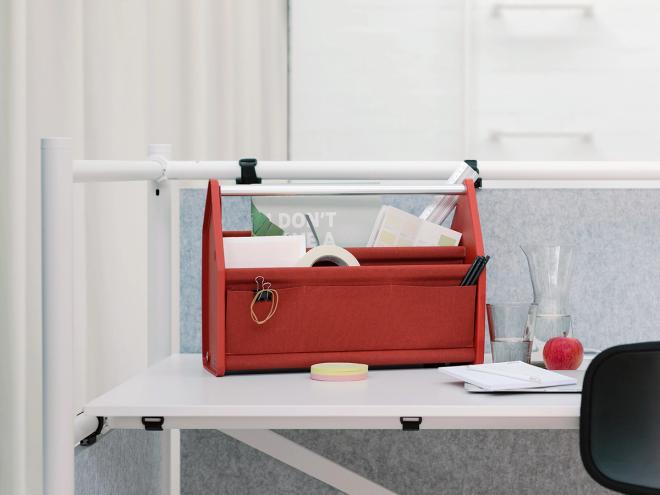
Hot desking means that several employees can use the same workstation. In this case, you can store your belongings in Vitra's Locker Box.
In Penttilä’s opinion, the next step in designing offices should be to shift our focus towards making hybrid meetings more equal for all. How could we create a feeling of equal presence without forcing those who participate on location to glue their eyes to their laptops or sidelining those joining in remotely?
“We must strive to find high-quality, seamless communication solutions that correspond to our needs,” Penttilä says.
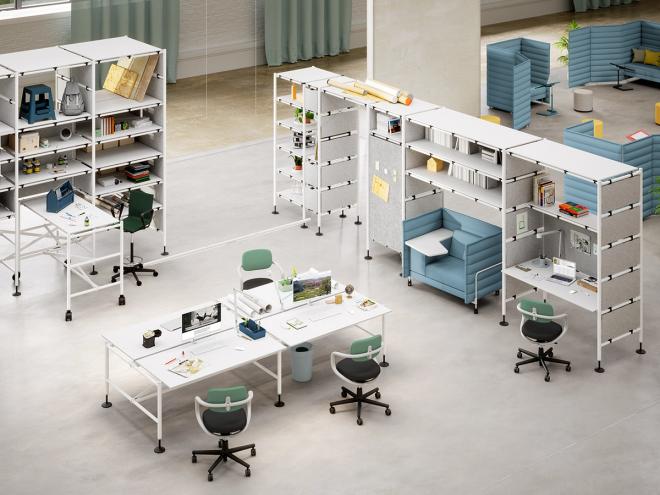
The Comma product family is sustainably designed. The modules’ modifiability guarantees a long useful life, and the recyclable parts of the products are all sustainably manufactured.
CUTTING-EDGE FURNITURE MANUFACTURERS are developing solutions that are well-suited for the office of the future. Vitra, a company known for its high-quality home and office product portfolio, created the Club Office concept, which it first implemented at its own headquarters in the spring of 2021 in order to create a working space fit for the new normal.
• Read also: Vitra Club Office presents a new concept and collection for the post-Covid office >
As the name suggests, Club Office draws inspiration from various leisure clubs that like-minded members can join to promote issues of mutual interest. The office is also a sort of a club space where the company's identity, values and culture become visible. In the club space, members – the company's employees, customers and partners – can encounter each other naturally in a relaxed environment.
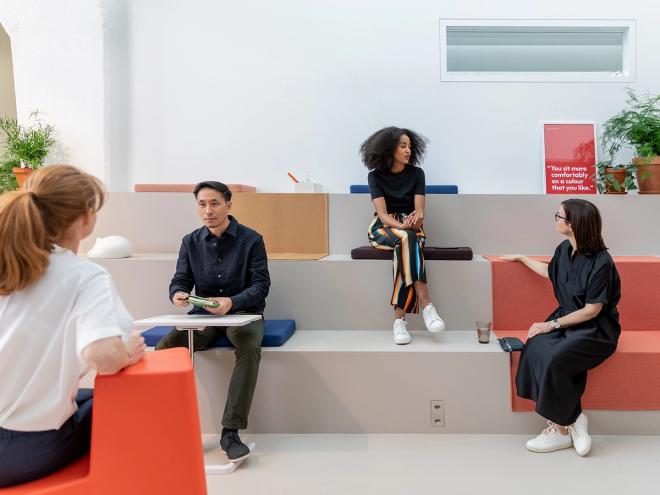
Vitra’s Club Office space offers the company’s employees and stakeholders diverse opportunities for collaborative work.
Like each company, each Club Office is unique, but offices designed in accordance with the concept all share one thing: they all divide spaces into public, semi-public and private. In the public space of Vitra’s very own Club Office, the company’s stakeholders can meet each other spontaneously, brainstorm, or simply spend time together. The semi-public spaces are used for meetings and workshops planned ahead of time, while the private spaces are designed for work that requires uninterrupted concentration.
At Vitra, Club Office also acts as a sandbox for testing out new products. The latest new thing are the modules of the Comma product family that allow employees to transform the office spaces according to their changing needs.
“We cannot predict the exact future of the office. But in the last two years, we have learned that we have to adjust quickly to new situations. The Club Office and Comma are synergetic when it comes to implementing changes quickly and rapidly,” Vitra’s Chief Design Officer Christian Grosen explains when asked about the background for creating the new product family.
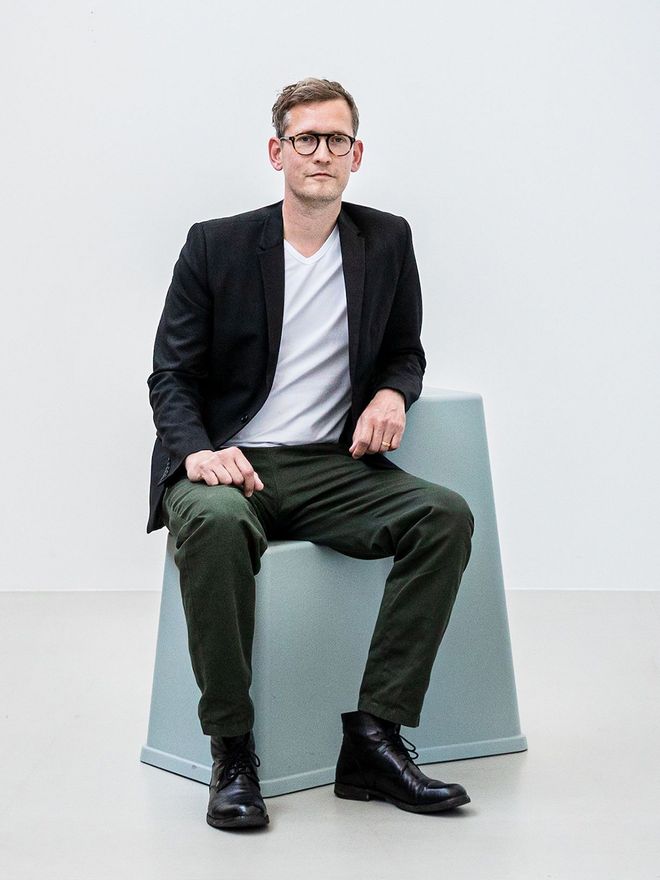
Christian Grosen is Vitra's Chief Design Officer. The seat is called Stool-Tool and designed by Konstantin Grcic.
The brand-new Comma product family consists of six different modules that are inspired by traditional scaffolding. Made of simple steel pipes and exposed connecting parts, the elements, shelves, tabletops and acoustic partitions are easy to assemble, take apart and transform into individual workstations, shared spaces for organizing meetings or workshops, or even telephone booths.
The collection allows users to decide how they want to use the office instead of the office dictating what they can do.
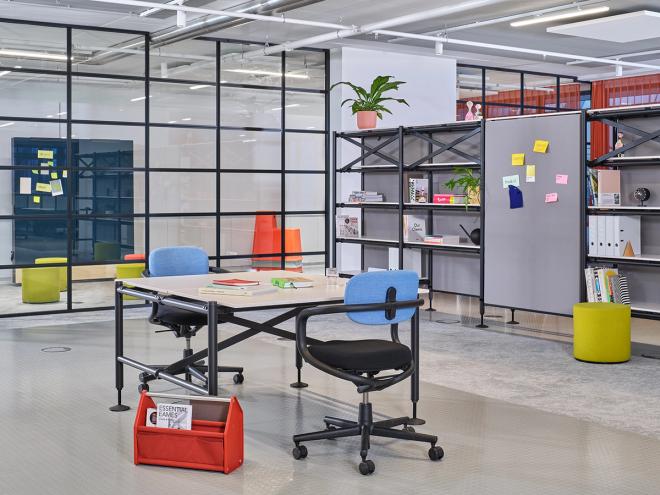
Vitra's flexible Comma office furniture can be adapted to the needs of employees.
At Vitra’s Club Office, the Comma product family is used in the private part of the office. It allows teams to make changes to the existing space as projects progress from joint design workshops to more quiet brainwork.
“Since moving into the Club and and the new Comma environment, we have become noticeably more productive. We are faster, with more direct paths of communication. And when one project is finished, the team comes together for the next project and adapts the Comma configuration for the new needs”, Christian Grosen says.
See also:
• More office furniture >
• All products from Vitra >
Text: Kaisa Mikkola Images: Vitra
The article was updated on 29 January, 2025.
Published on 29 Jan, 2025