This is a carousel of product images. Use the thumbnails or swipe to change the displayed image, and activate an image to open it full screen.
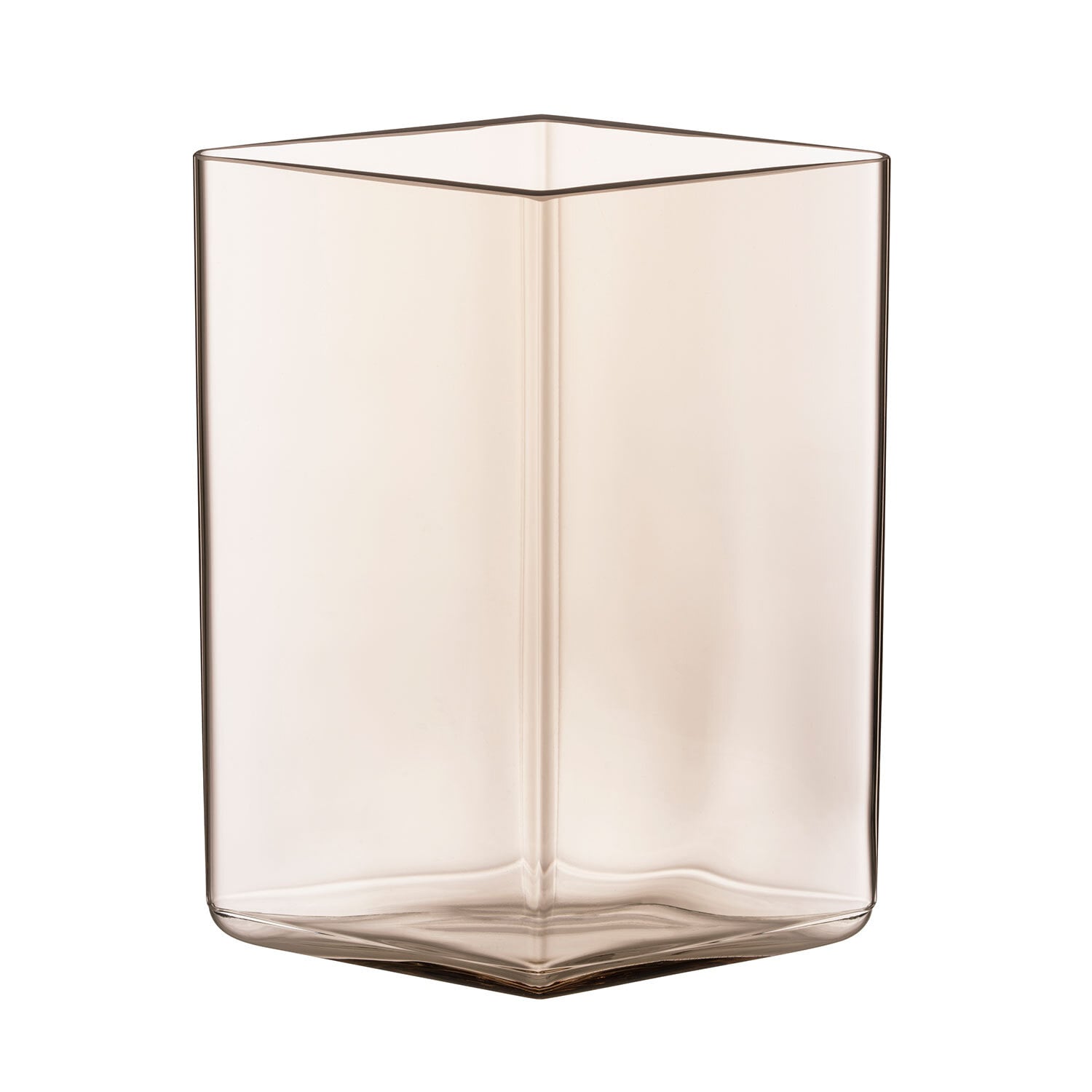
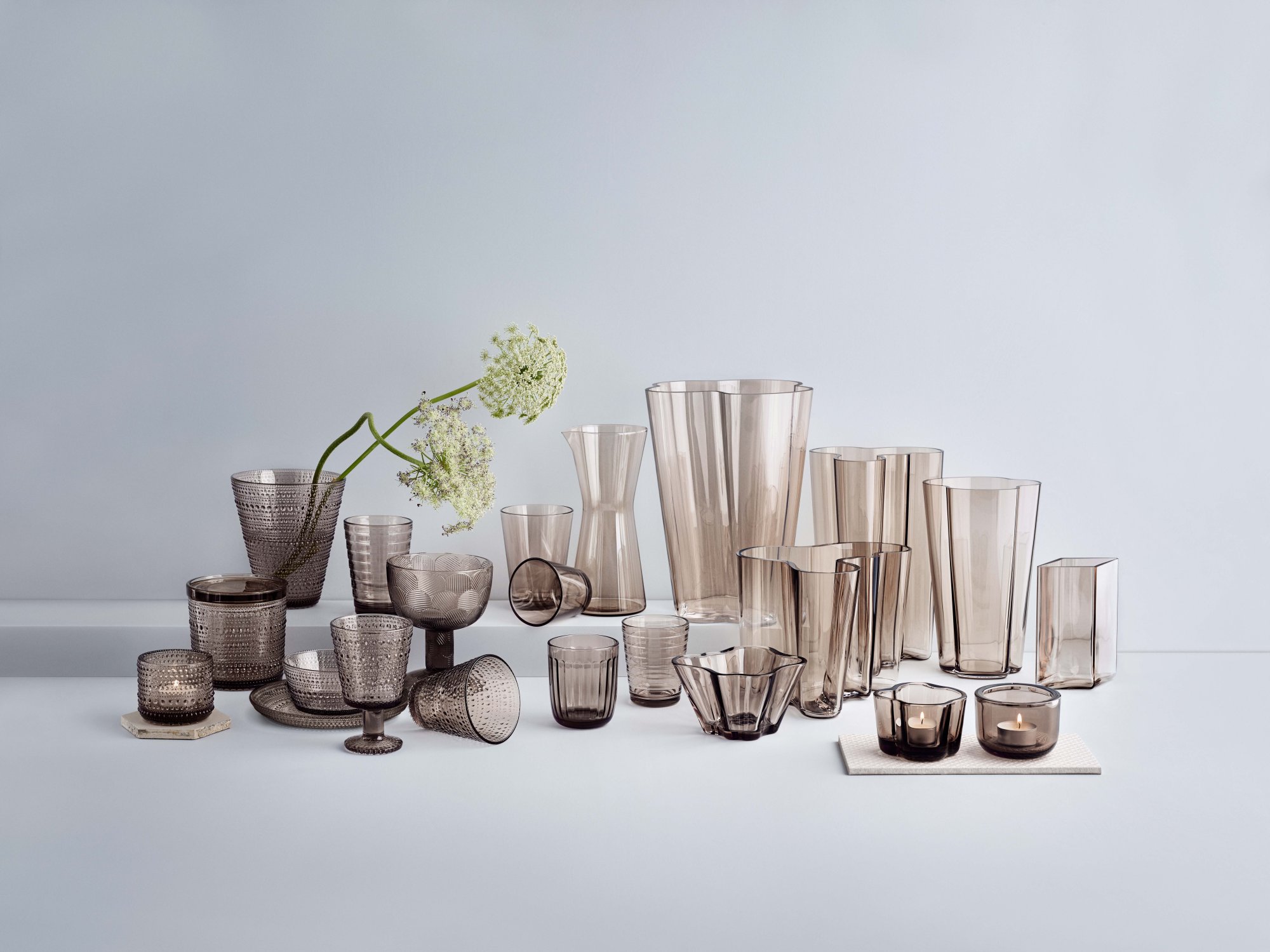
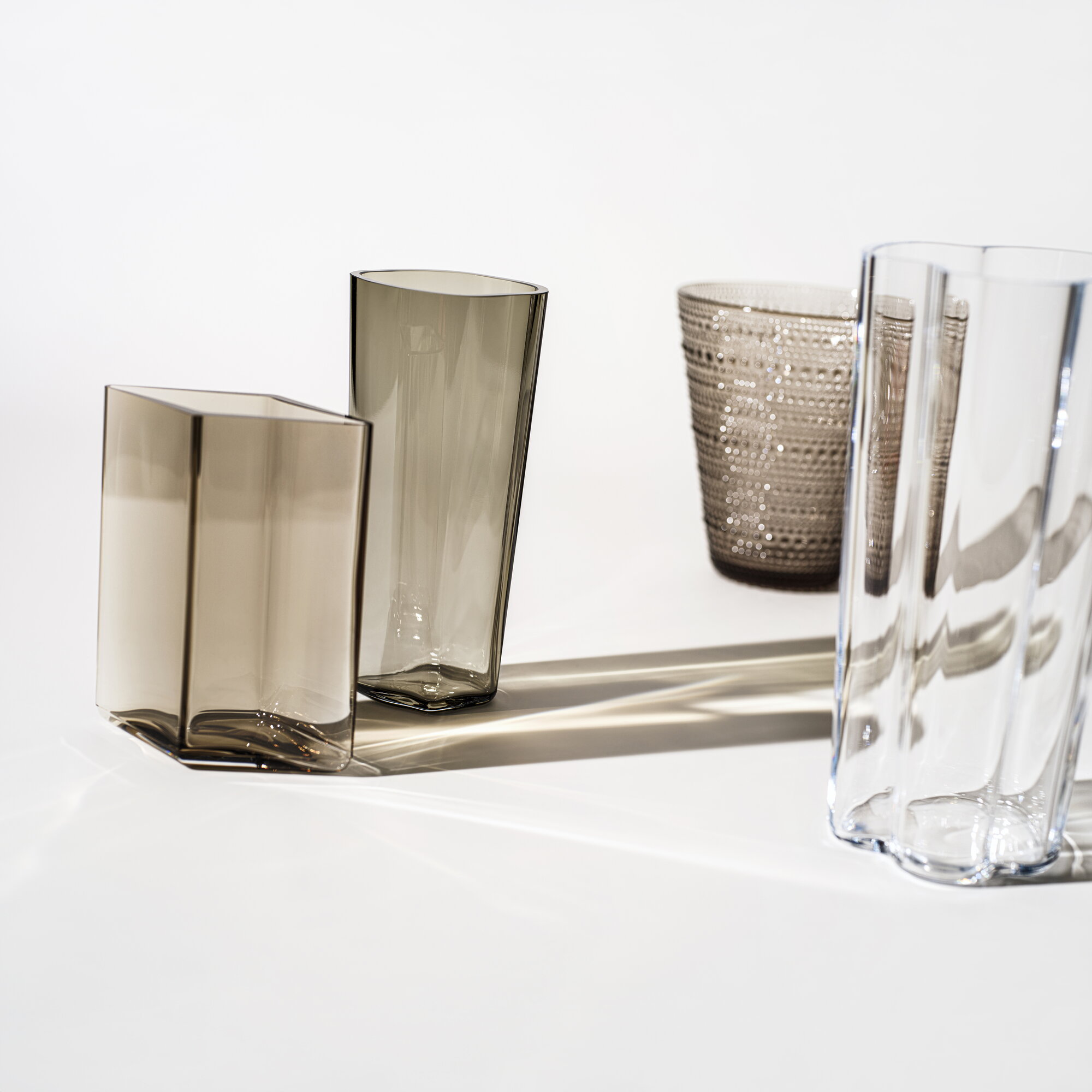
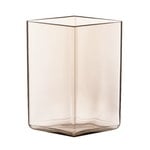
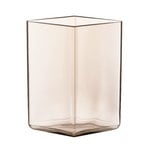
Ruutu vase, 115 x 140 mm, linen
Description
The French brothers Ronan and Erwan Bouroullec designed the Ruutu vases for Iittala. Each Ruutu piece is unique: they are mouth-blown into a steel mold and then polished by hand. The difficult shape of the vase requires 24 hours of production and seven skillfull professionals.
- Width: 4.53 in (11.5 cm)
- Height: 5.51 in (14 cm)
- Material Glass
- Colour Linen
- Weight 1.01 lbs (0.46 kg)
- Care instructions Wash by hand
- Product ID: II1052180

The French brothers Ronan (b. 1971) and Erwan Bouroullec (b. 1976) are among the most famous names in contemporary design. The duo founded their shared studio in Paris in 1999, and their wide-ranging body of work extends from furniture and lighting to textiles, ceramics and spatial design.
The Bouroullecs’ design is characterized by a pared-back design language, a subtle use of materials and an interest in the relationships between space, objects and people. They have collaborated with brands such as Vitra, HAY, Flos and Magis.
Ronan & Erwan Bouroullec – reformers of French design
Ronan and Erwan Bouroullec are French designer brothers working in Paris, whose collaboration has shaped the field of international design since the late 1990s. Ronan studied at the École Nationale Supérieure des Arts Décoratifs in Paris, while Erwan studied at the École Nationale Supérieure des Arts et Métiers in Cergy-Pontoise.
The brothers began working together in 1998. The following year, they founded their shared studio in Paris, which operates in close interaction with both industry and the cultural field.
Spatiality as a starting point
The Bouroullecs’ design brings together clean lines, a subtle handling of materials and an interest in how objects structure the interaction between people. The brothers’ work is not limited to individual products; it is marked by a strong spatial way of thinking.
The Bouroullecs are known especially for their long collaboration with the Swiss Vitra, for whose collection they have designed numerous office and home furnishings. They have also collaborated with HAY, Flos, Magis and Kartell, among others.
Success around the world
The Bouroullecs’ work has been widely seen in international exhibitions, and it belongs to the collections of the MoMA in New York, the Center Pompidou in Paris and the Art Institute of Chicago, among others. Their work has been honored with several international awards, such as the London Design Medal in 2014 and the Compasso d’Oro in 2022.
In 2023, the brothers moved to working independently, but their shared body of work still forms one of the most significant in contemporary design.
Who: Ronan & Erwan Bouroullec
- French designer brothers Ronan (b. 1971) and Erwan (b. 1976), originally from Quimper in Brittany.
- Founded their shared studio in Paris in 1999.
- Design products, furniture, spatial solutions and architecture, and undertake art projects.
- Among the most famous names in contemporary European design.
- Notable products: Palissade outdoor furniture (HAY), the Steelwood and Oficina chairs (Magis), the Slow Chair and Belleville chairs (Vitra), Kaari shelves (Artek).
Design Stories: Read more and find inspiration
View all productsThe Product Sustainability Framework, our criteria of sustainable design, helps you find the most sustainable products in our selection. Read below which sustainability criteria this product has met.
-
 Equal opportunities for all employees
 -
Commitment to UN Global Compact, fair compensation for all employees
-
Corporate responsibility requirements defined and communicated for suppliers
-
Systematic work for improved inclusion and well-being in the workplace
-
Transparent supply chain
-
Suppliers' compliance to a code of conduct ensured
-
Compliance to the UN Guiding Principles on Business and Human Rights ensured in the supply chain
-
Support for community involvement in the supply chain
-
Direct suppliers audited and certified
-
Fair and resource-wise water-use in production
-
No incineration or landfilling of returned items
-
No use of endangered species as materials
-
No direct environmental emissions or waste (excl. GHGs) from production
-
The sustainability of direct suppliers' production is addressed and monitored
-
Material-efficient and ecological packaging
-
Positive impact on nature’s well-being through operations that regenerate natural ecosystems
-
Production and material sourcing that respect biodiversity, animal rights, and natural ecosystems
-
No potentially harmful chemicals used in own production
-
Company's direct greenhouse gas emissions identified and commitment to reduction
-
Product's carbon impact identified and commitment to reduction
-
Guidance on energy- and eco-efficient use of the product
-
Contribution to climate initiatives beyond the brand’s direct operations
-
Low-carbon or compensated transportation
-
Carbon footprint of the product calculated and goals set to reduce it
-
100 % renewable energy in own production and operations
-
Carbon neutral or carbon negative product
-
Sustainable and long-lasting material choices
-
No harmful or hazardous substances
-
Responsible raw material sourcing and production
-
Ecological materials: natural, biodegradable, recyclable or recycled contents
-
Materials suited for circularity: monomaterials, recyclable finishings, renewable or recycled contents etc.
-
Outstanding materials in terms of innovativeness, responsibility, sustainability and circularity: local production or sourcing, 100 % recycled content, C2C-certification etc.
-
High aesthetic quality promoting long-term use of the product
-
Technically durable product design and material choices
-
Design for enduring life-long quality
-
Design and support for product maintenance, repair and upgradability
-
Innovative circular design solutions: circular service system, resale platform, remanufacturing, collection of used products, etc.
Ideas and inspiration
This is a carousel. Use Next and Previous buttons to navigate.