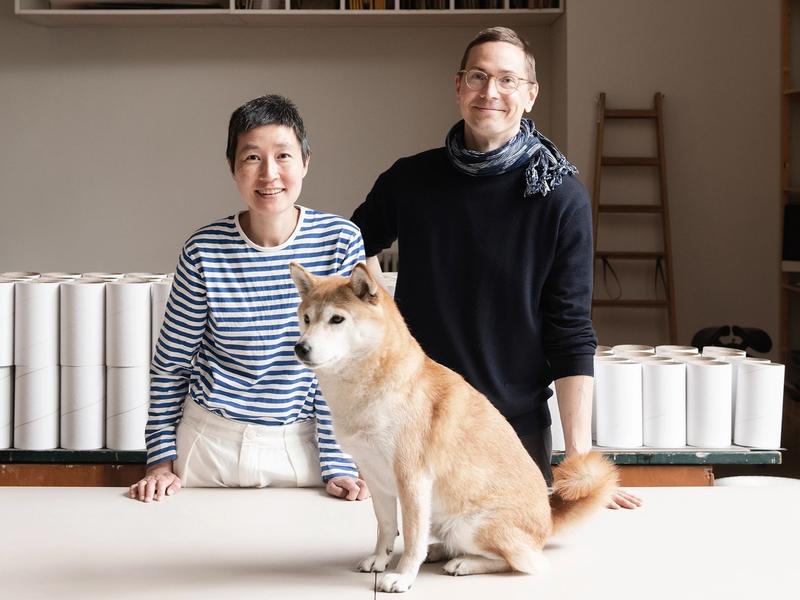
A new cabin in a familiar spot: Inside the Puotila family’s summer retreat on Lake Saimaa
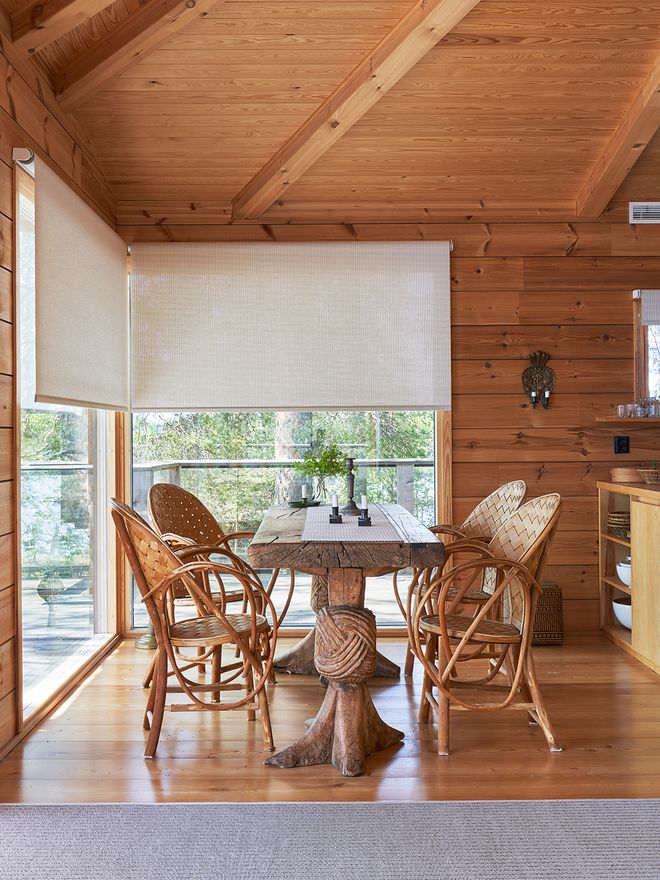
The dining area and kitchen sit naturally on one side of the square-plan cabin. The old table and classic slatted chairs have been part of the cabin's furnishings for almost as long as anyone can remember. The paper yarn rug and roller blinds are by Woodnotes.
THE PUOTILA FAMILY has had their summer retreat on the shores of Lake Saimaa for decades, since the 1950s. Nestled in the lake district of southeastern Finland, Saimaa is the largest lake in the country and one of the largest in Europe. The family’s island hideaway tucks away at the southern tip of a rocky outcrop, sheltered by lichen-covered boulders, old pines, and aspens.
The house blends seamlessly into its surroundings, sitting right at the water's edge. The layered, nuanced landscape has been kept as untouched as possible, because it's precisely the beauty of the lake and the naturalness of the environment that make cottage life here so good. Days are spent savoring simple routines and the slow passage of time.
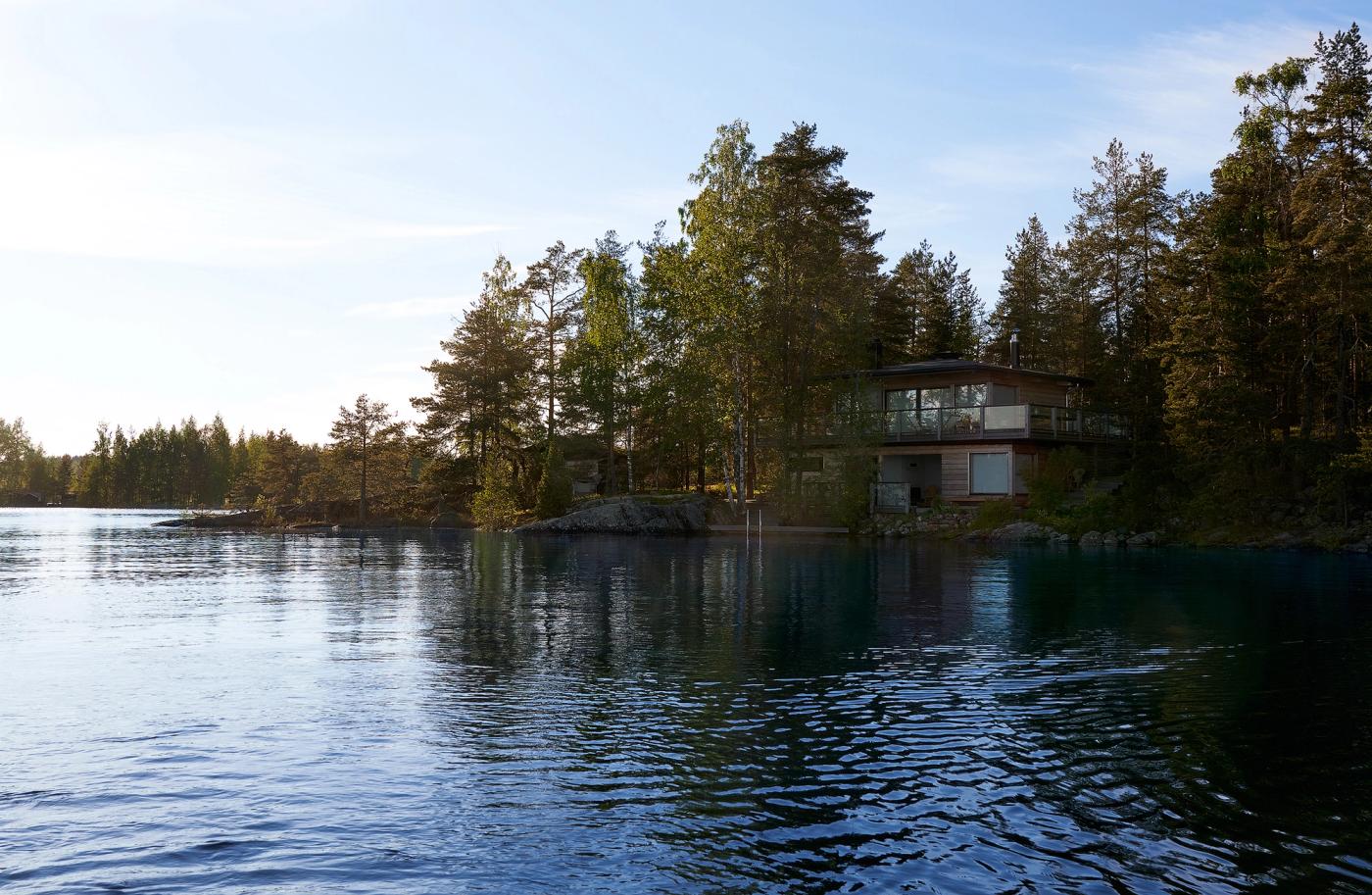
The new building could be placed right at the water's edge because it was built in exactly the same spot as the old one. The cabin will be left to weather and silver with time.
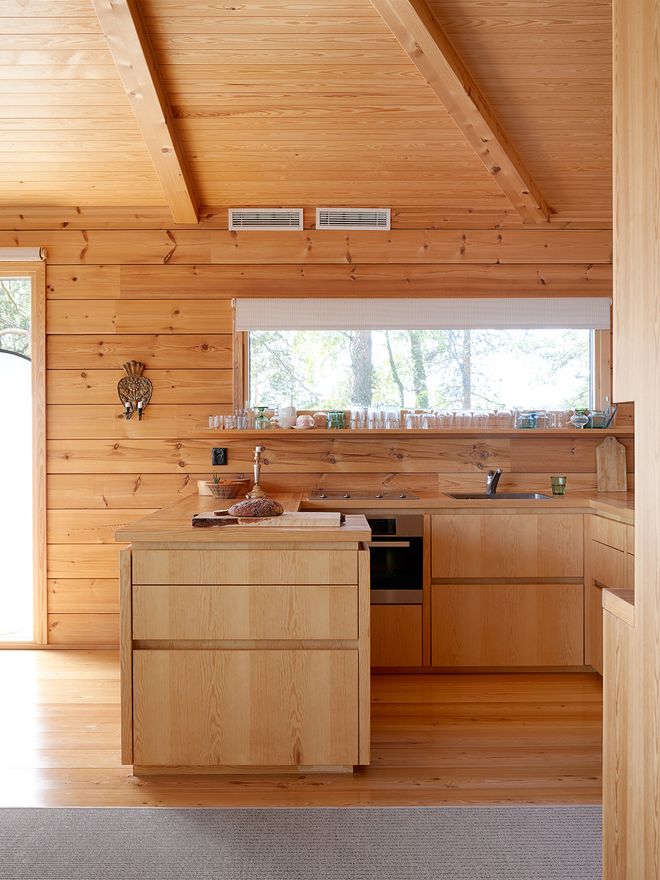
Some of the custom-built kitchen cabinets belonged to the old cabin. Supplemented with a few additional pieces, rearranged, and serviced, they now form a compact and functional whole.
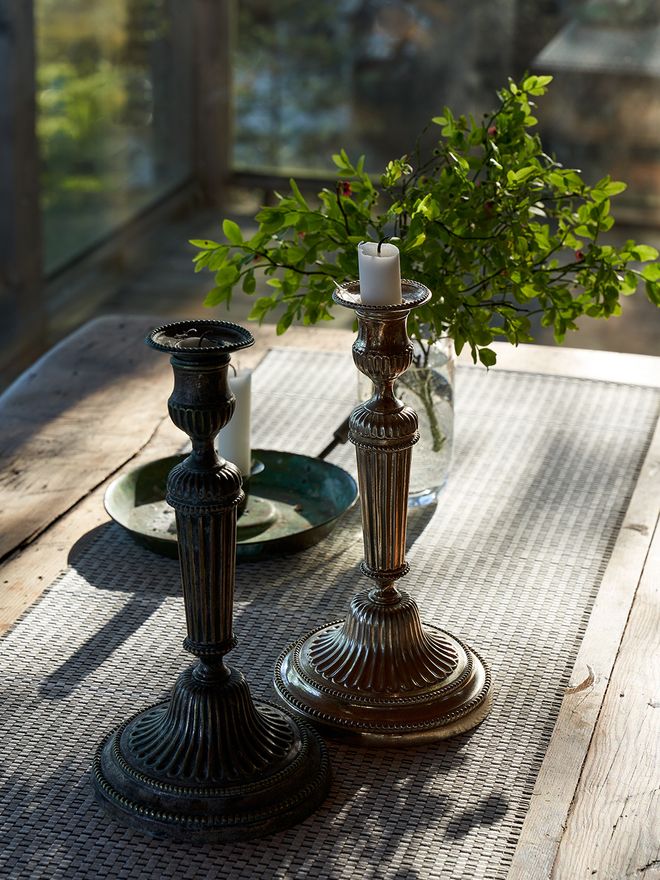
The best and most meaningful pieces from the old cabin were brought into the new interior.
Life on the island has always revolved around shared activity: tackling projects big and small, swimming, stoking the sauna, fishing, and boating. In good weather, everything happens outside, and the main house, guesthouse, and a couple of traditional storage buildings serve mainly as sleeping quarters and shelter on rainy days for what has grown into a considerable gathering: a family now spanning four generations.
Out here, the basics take center stage, and in the best possible way.
The contrast between city life and island life is intentional, and kept wide. The living conditions on the island are deliberately simple. Heating the sauna is meant to take time, and food cooked over an open fire is almost always the best meal of the day. Time at the cottage is its own kind of luxury.
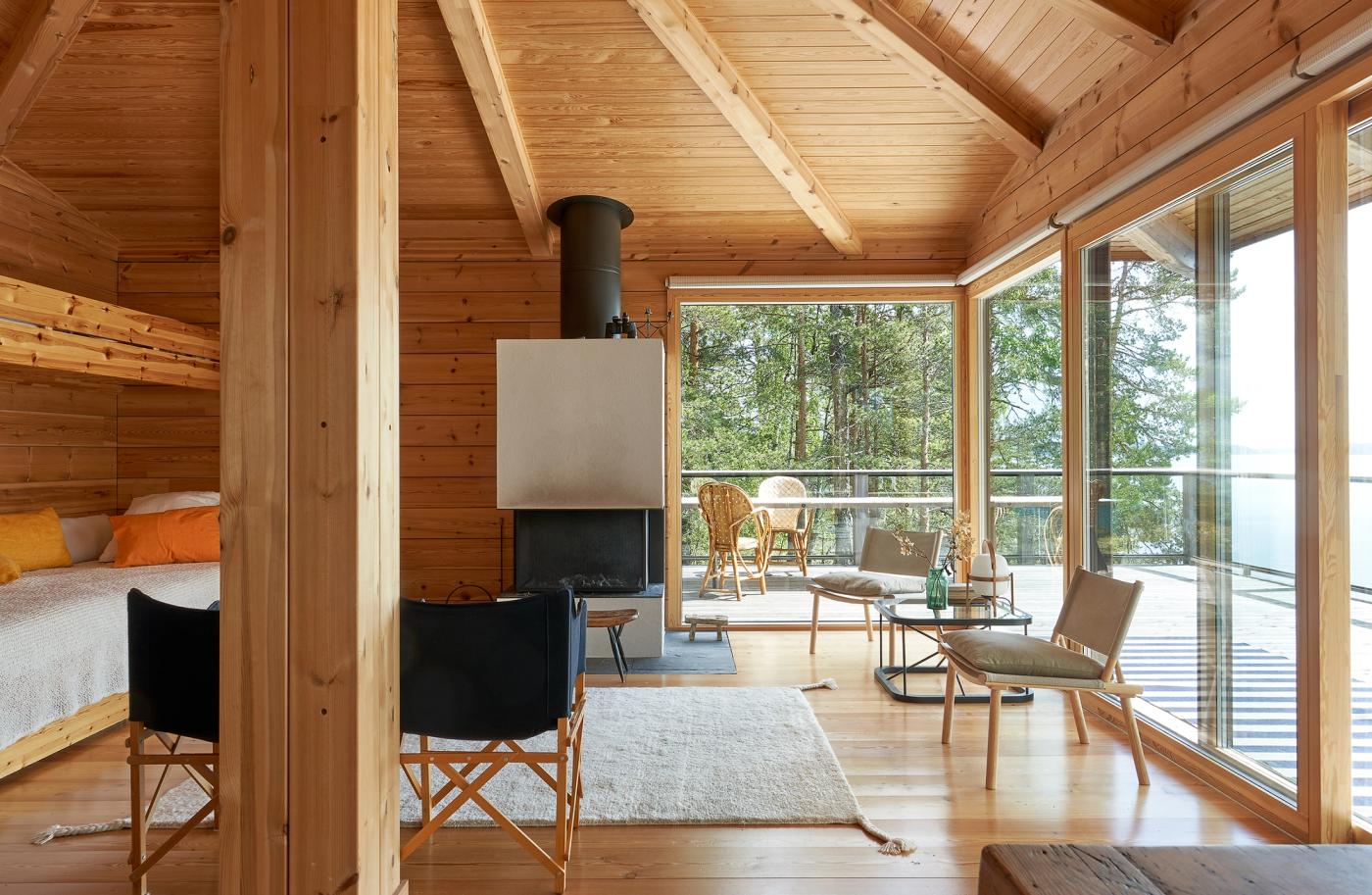
The exposed hip roof structure creates a striking architectural element in the space. A continuous row of windows wraps around the lake-facing sides of the cabin, while the back remains solid and sheltered. Soft Uni wool rug, Woodnotes.
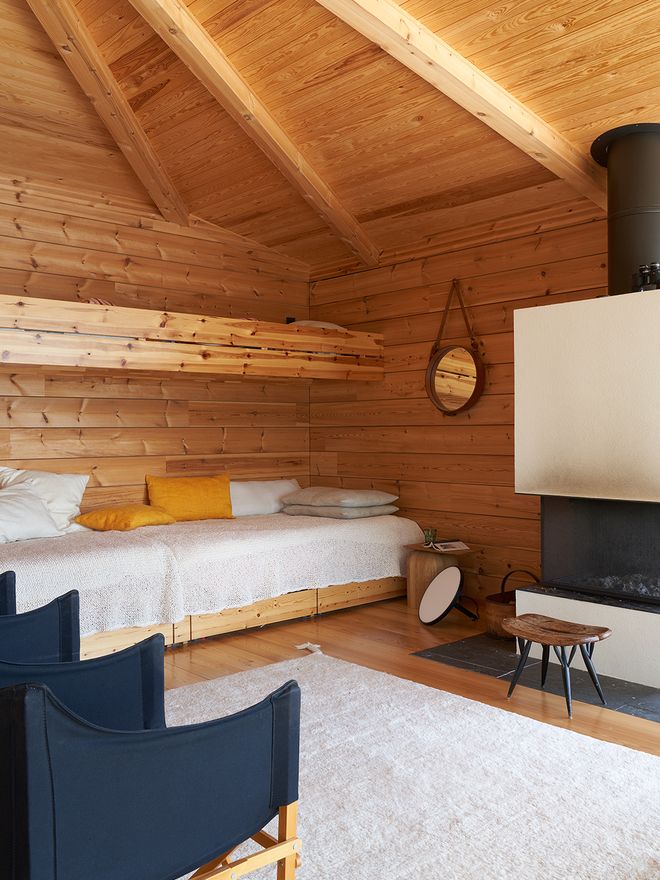
The wide, built-in bunk beds were placed along the solid back wall of the cabin. During the day, Woodnotes Seaborn knits made from paper yarn are spread over the beds as covers, along with a pile of pillows.
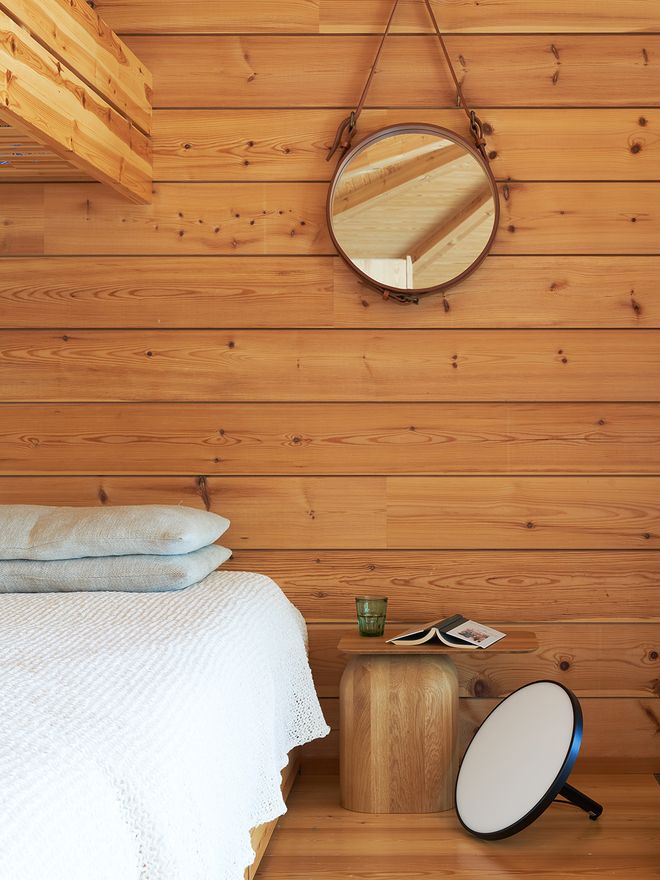
The cabin's built-in furnishings are complemented by a few carefully chosen pieces. The April table is from the Nikari collection, and the floor lamp is by De Padova.
Ritva Puotila, known as the creative force behind Woodnotes and its beautifully restrained products – most often woven from paper yarn – purchased the island plot together with her husband when their sons were still young. Interior architect Pauli Puotila designed the just-under-60-square-meter log cabin and placed it right at the water’s edge, as was still possible to do at the time.
He hit on the idea of siting the building at the most awkward, unpromising spot on the property: over a cleft between steep shoreline rocks. The gap beneath the house became a natural home for a small sauna, while the cabin and its porches bridged the two rocky outcroppings like a architectural passage between them.
A sense of timelessness and an honest feeling for materials have always defined the mood of the place.
About ten years ago, the cabin was due for a thorough renovation, particularly the sauna level. After years of turning over plans and possibilities, the family came to feel it was wiser to build an entirely new structure in the same spot, as the lower level had proven too difficult to repair.
The cabin's proven form, exceptional location, and original concept were preserved. The roofline changed, though, from a gabled profile to a hipped roof that echoes the beautiful roof structure of the guesthouse already on the island.
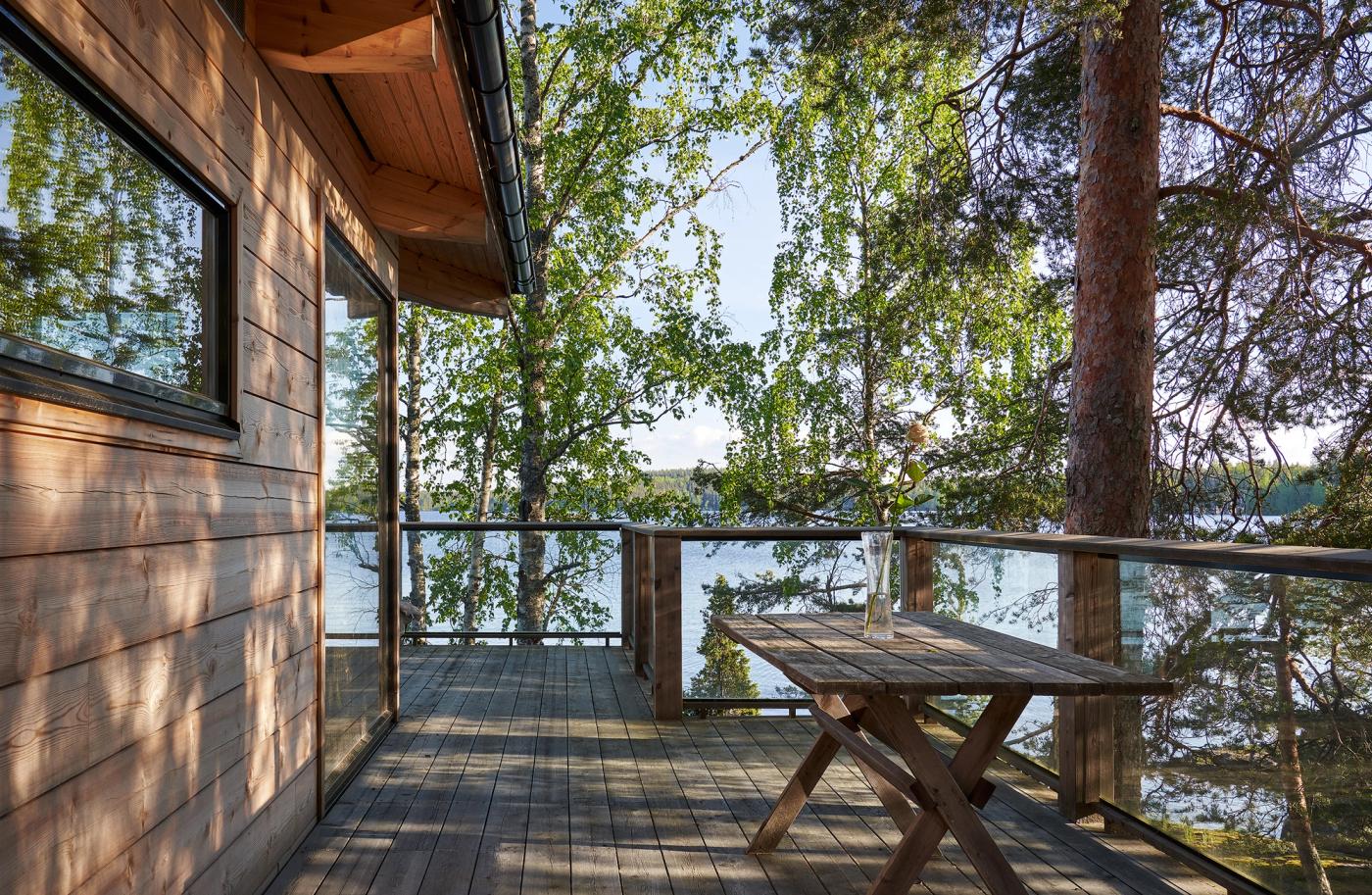
The upper terrace opens up to sweeping views over Lake Saimaa.
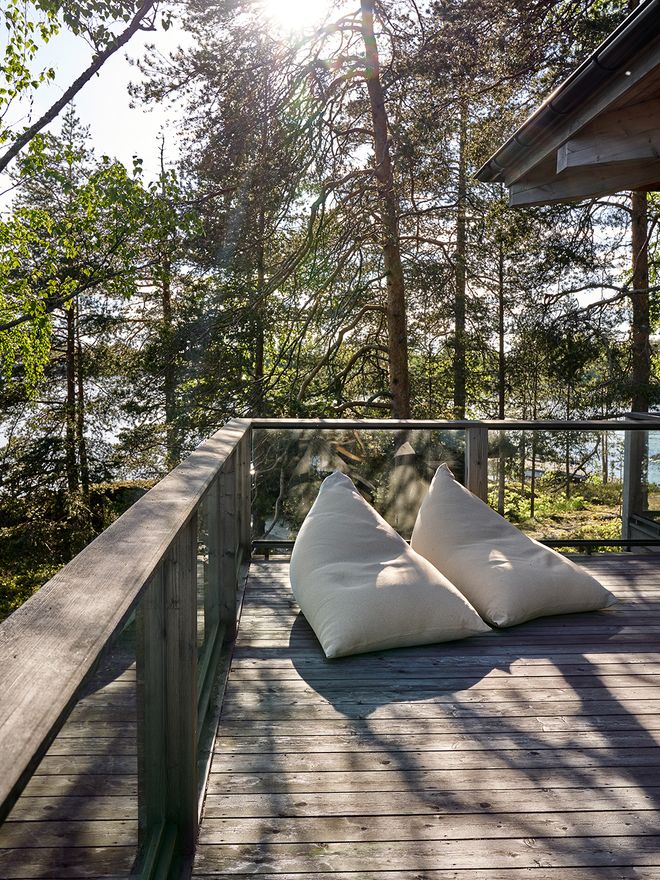
Woodnotes My bean bag chairs are also available in an outdoor version.
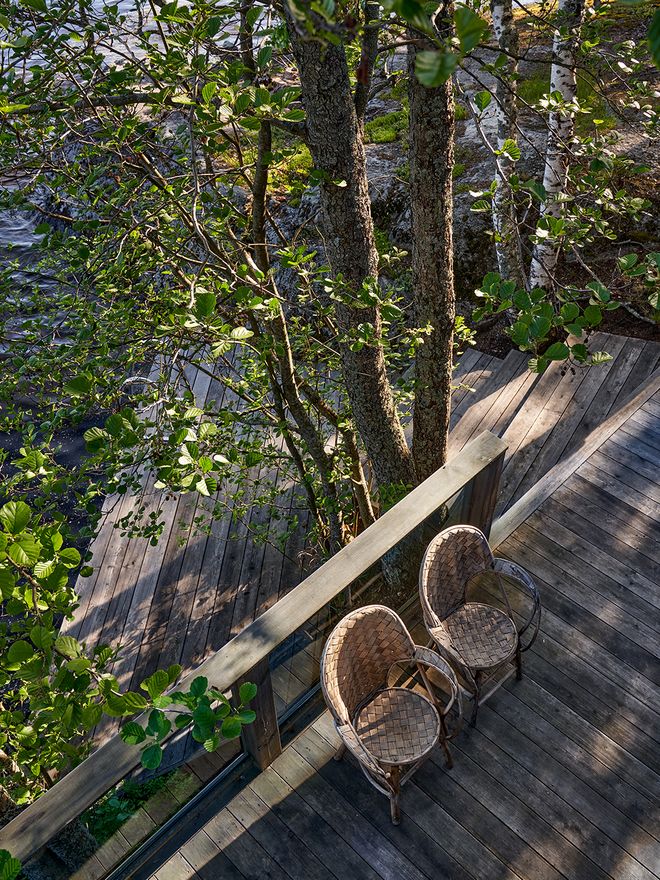
The lower-level terrace extends out to a dock, making it easy to take a morning swim or cool off between sauna rounds.
Ritva Puotila's son and Woodnotes co-founder Mikko Puotila took the lead on the construction project. Design and building professionals brought the new main cabin to life based on the family's sketches, incorporating more modern technology than the original structure had.
The new version preserved everything that had worked well in the old cabin while addressing a handful of practical shortcomings identified over years of use.
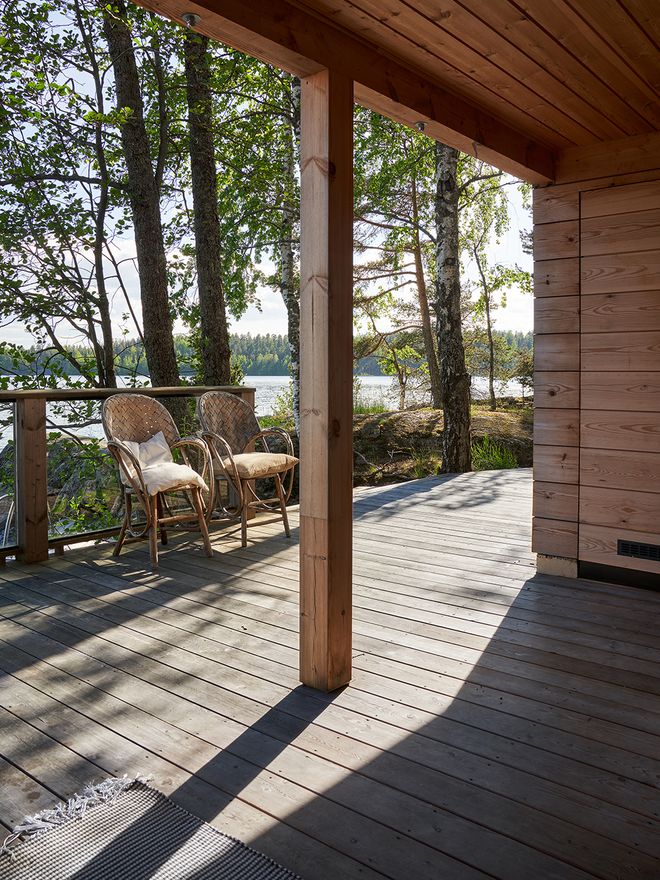
The terraces now wrap around the entire cabin and also make it easier to move around the rocky terrain.
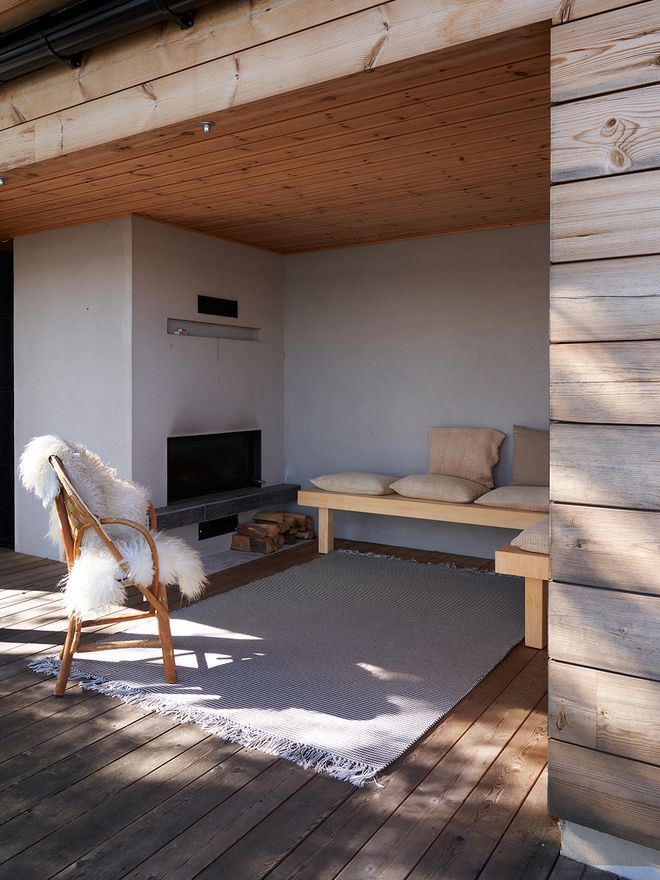
As part of the renovation, an outdoor fireplace area with built-in benches was added next to the lower-level sauna, sheltered by the upper terrace. The outdoor-suitable rug is from the Woodnotes collection.
Heating the sauna is meant to take time, and food cooked over an open fire is almost always the best meal of the day.
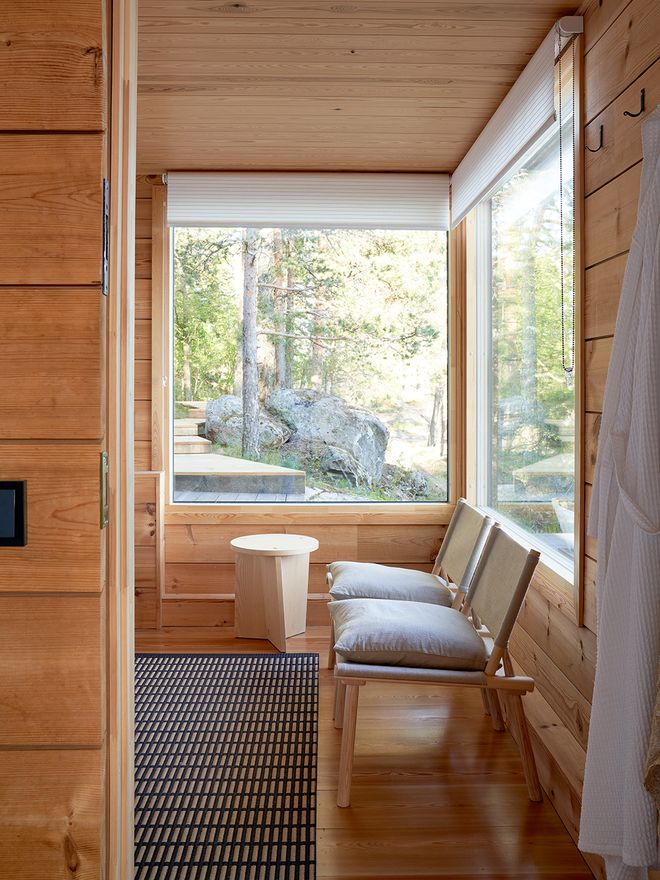
In the opposite corner of the sauna is a changing room or small chamber that can also be used for sleeping. The New York rug is a Woodnotes classic, the chairs and small table are by Nikari, and the protective roller blinds are by Woodnotes.
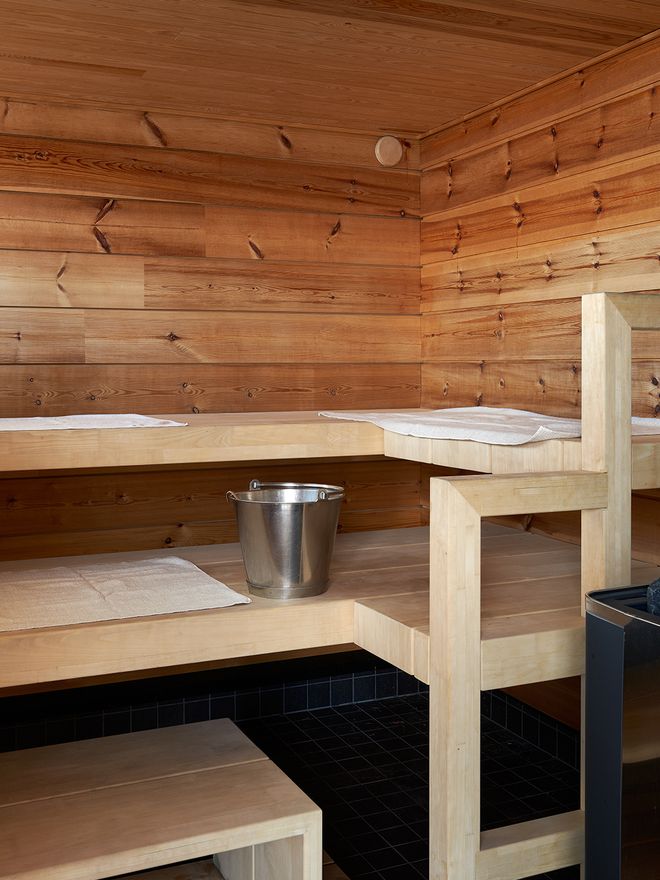
The benches of the spacious sauna look out over Lake Saimaa. The benches were made by Rintala Meuble.
Moving the fireplace to an exterior wall freed up space in the kitchen and, more importantly, opened it up – even though the square footage is barely larger than before. A floor-to-ceiling row of windows brings the landscape into the room in a way it never quite did previously. The built-in bunks on two levels were recreated almost exactly as they were in the old cabin: good things stand the test of time, and there's little reason to fix what isn't broken.
Now it’s the Puotila brothers’ children and grandchildren who get to experience the thrill of those nights in the cabin’s generously sized bunk beds, tucked in alongside siblings and cousins.
See also:
This article was originally published in Asun magazine, issue 3/2022.
Published on 11 Jun, 2026