This is a carousel of product images. Use the thumbnails or swipe to change the displayed image, and activate an image to open it full screen.
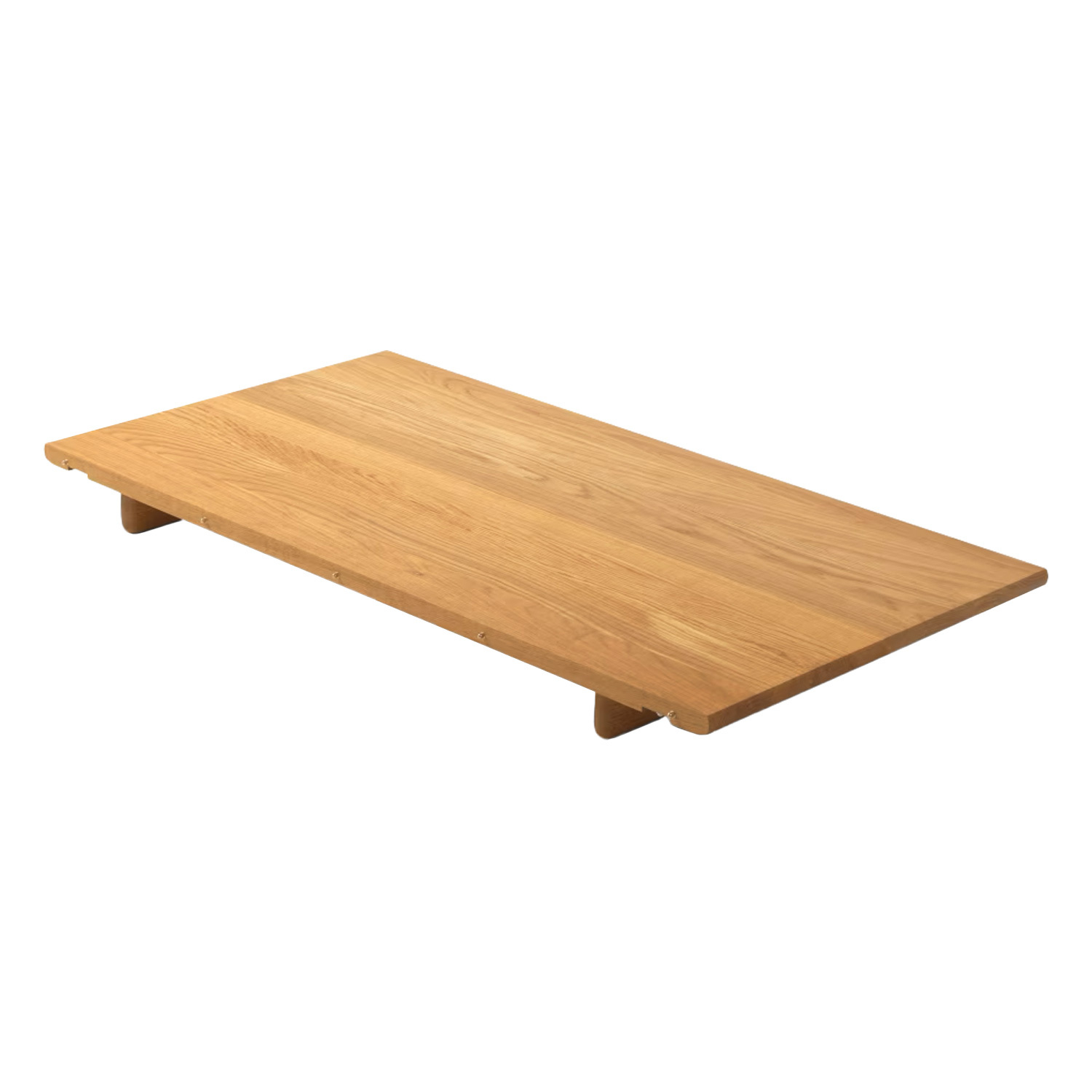
CH338 & CH339 extension leaf, oiled oak
Description
What’s better than a dinner party with friends? A dinner party with even more friends, of course! This extension leaf is designed for Carl Hansen & Søn’s CH338 and CH339 dining tables. You can easily add more people around the table with the extension leaves – the table can be fitted with one or two extension leaves. The extension leaf is made of solid wood and measures 115 x 60 cm.
- Length: 60 cm
- Width: 115 cm
- Colour Oiled oak
- Material Oiled solid oak
- Weight 16.4 kg
-
Care instructions
Wipe with a soft cloth soaked in warm water. Avoid using detergents or chemicals.
We recommend that you oil your tabletop regularly, all depending on the position and use of the furniture. - Product ID: CHS-CH338I-020-102

Hans J. Wegner (1914–2007) was a world-renowned Danish designer, celebrated above all for his exceptional chairs. Perhaps the most iconic of them is the Wishbone Chair, produced by Carl Hansen & Søn, which has remained in continuous production since 1950.
Wegner is also remembered as a pioneer of Danish modernism and as one of the leading figures of the golden age of Nordic design.
Hans J. Wegner – designer of 500 chairs
Hans Jørgensen Wegner was a Danish furniture designer whose organic and elegant lines played a pivotal role in bringing Danish wooden furniture to global prominence in the 1950s.
Wegner had a remarkable ability to unite functionality and aesthetics – many of his designs carry a sense of playfulness, while others are almost poetically beautiful. Meticulously crafted joinery, organic forms and the thoughtful combination of materials such as solid wood, veneer and paper cord give his work a timeless appeal that still feels relevant today.
A lifelong love of wood
Born in Tønder in southern Denmark, Wegner developed an early fascination with woodcarving and often visited museums in search of inspiration for his creations. This passion led him to train as a cabinetmaker in the 1930s under master craftsman H. F. Stahlberg. In 1936, he chose to further his studies in design – and the rest is history.
Wood remained Wegner’s material of choice throughout his career, often taking centre stage in his chair designs.
Ergonomics first
For Wegner, ergonomics was one of the most essential aspects of chair design – after all, a chair is something the human body interacts with for extended periods. Over the course of his long career, he designed around 500 different chairs, each combining beauty and function in its own distinctive way. Many of them are now highly sought-after design classics.
Among them is the CH24 Wishbone Chair from 1949, whose Y-shaped backrest and paper cord seat have made it one of the most recognisable chairs of the 20th century.
International awards and recognition
Throughout his career, Wegner received numerous prestigious awards, including the Lunning Prize and the Grand Prix at the Milan Triennale in 1951, the Prince Eugen Medal in 1961 and the C.F. Hansen Medal in 1980.
His furniture is also part of the collections of major museums, including the Museum of Modern Art in New York.
Who: Hans J. Wegner
- Danish furniture designer (1914–2007).
- Designed around 500 chairs during his career.
- A key figure in the international breakthrough of Danish modernism in the 1950s.
- Wood was his most important and beloved material.
- Notable works: Wishbone Chair, Shell Chair, Nesting Tables, Opala lamps (Carl Hansen & Søn), Wegner lounge chairs (Fredericia).
Read more in Design Stories
View all productsThe Product Sustainability Framework, our criteria of sustainable design, helps you find the most sustainable products in our selection. Read below which sustainability criteria this product has met.
-
 Equal opportunities for all employees
 -
Commitment to UN Global Compact, fair compensation for all employees
-
Corporate responsibility requirements defined and communicated for suppliers
-
Systematic work for improved inclusion and well-being in the workplace
-
Transparent supply chain
-
Suppliers' compliance to a code of conduct ensured
-
Compliance to the UN Guiding Principles on Business and Human Rights ensured in the supply chain
-
Support for community involvement in the supply chain
-
Direct suppliers audited and certified
-
Fair and resource-wise water-use in production
-
No incineration or landfilling of returned items
-
No use of endangered species as materials
-
No direct environmental emissions or waste (excl. GHGs) from production
-
Material-efficient and ecological packaging
-
Positive impact on nature’s well-being through operations that regenerate natural ecosystems
-
No potentially harmful chemicals used in own production
-
The sustainability of direct suppliers' production is addressed and monitored
-
Production and material sourcing that respect biodiversity, animal rights, and natural ecosystems
-
Company's direct greenhouse gas emissions identified and commitment to reduction
-
Product's carbon impact identified and commitment to reduction
-
Guidance on energy- and eco-efficient use of the product
-
Contribution to climate initiatives beyond the brand’s direct operations
-
Low-carbon or compensated transportation
-
100 % renewable energy in own production and operations
-
Carbon footprint of the product calculated and goals set to reduce it
-
Carbon neutral or carbon negative product
-
Sustainable and long-lasting material choices
-
No harmful or hazardous substances
-
Responsible raw material sourcing and production
-
Materials suited for circularity: monomaterials, recyclable finishings, renewable or recycled contents etc.
-
Ecological materials: natural, biodegradable, recyclable or recycled contents
-
Outstanding materials in terms of innovativeness, responsibility, sustainability and circularity: local production or sourcing, 100 % recycled content, C2C-certification etc.
-
High aesthetic quality promoting long-term use of the product
-
Technically durable product design and material choices
-
Design for enduring life-long quality
-
Design and support for product maintenance, repair and upgradability
-
Innovative circular design solutions: circular service system, resale platform, remanufacturing, collection of used products, etc.
Ideas and inspiration
This is a carousel. Use Next and Previous buttons to navigate.