This is a carousel of product images. Use the thumbnails or swipe to change the displayed image, and activate an image to open it full screen.
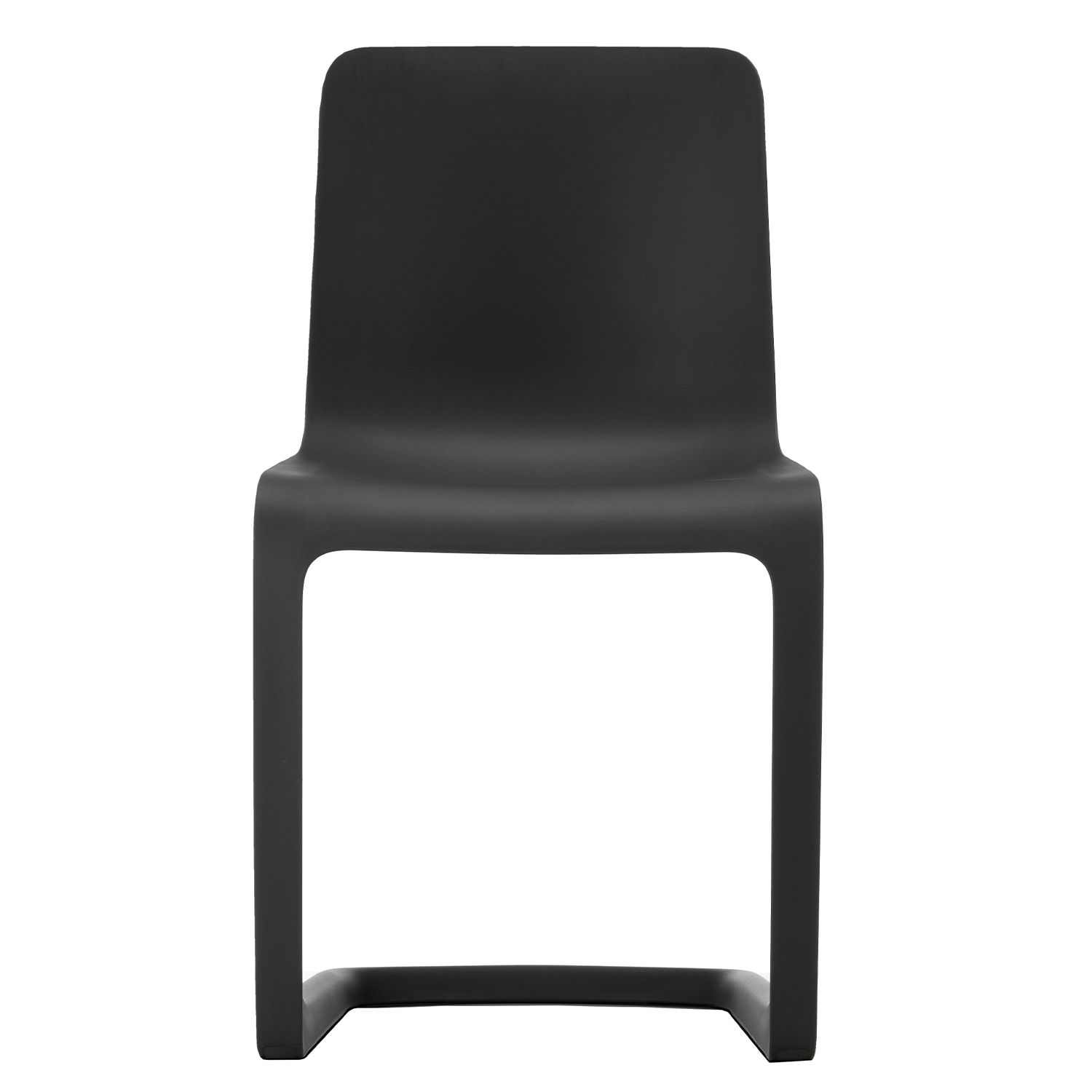
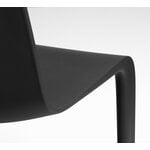
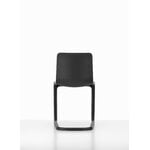
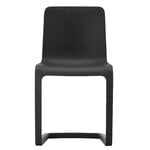
EVO-C chair, graphite grey
Description
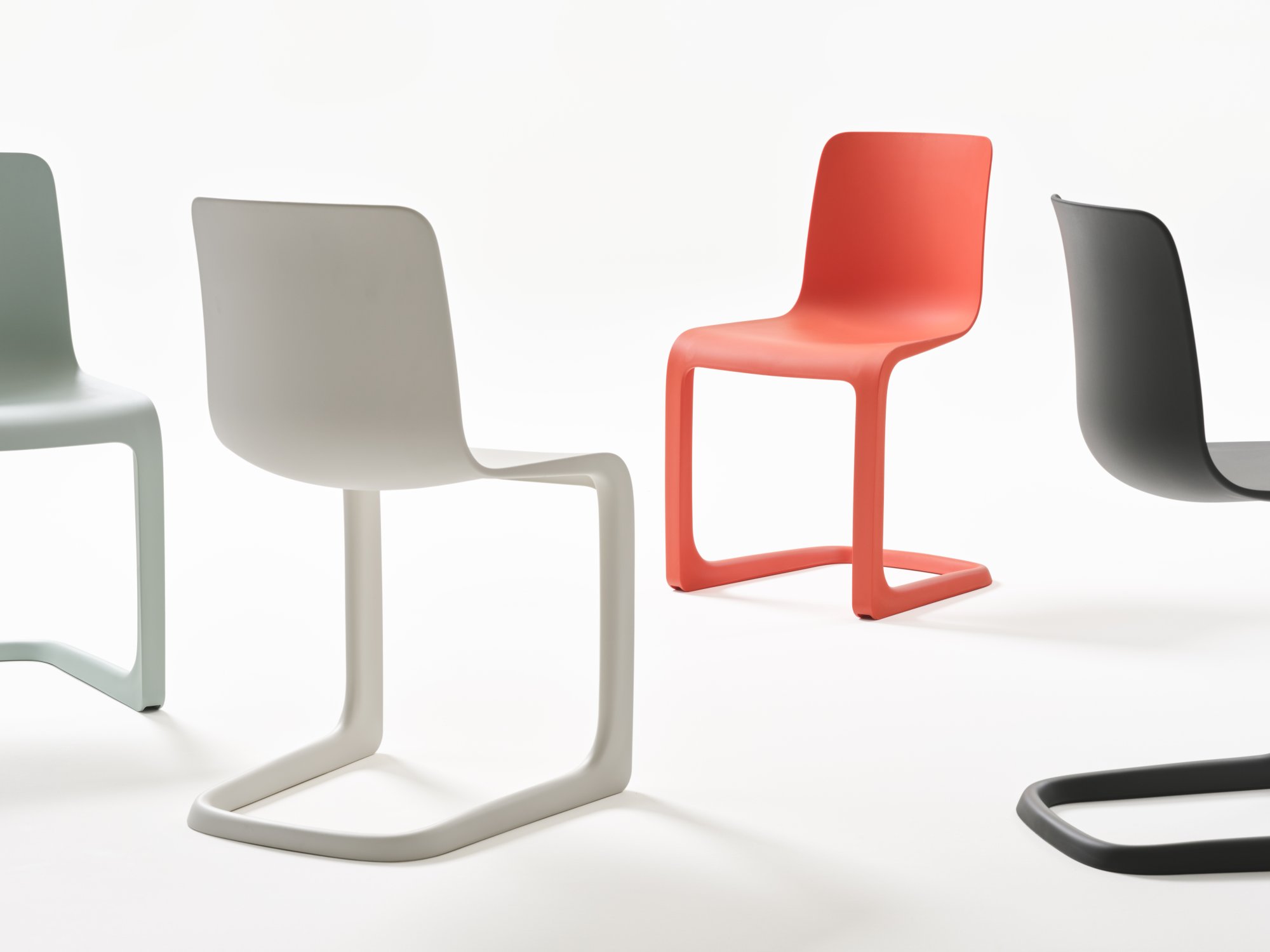
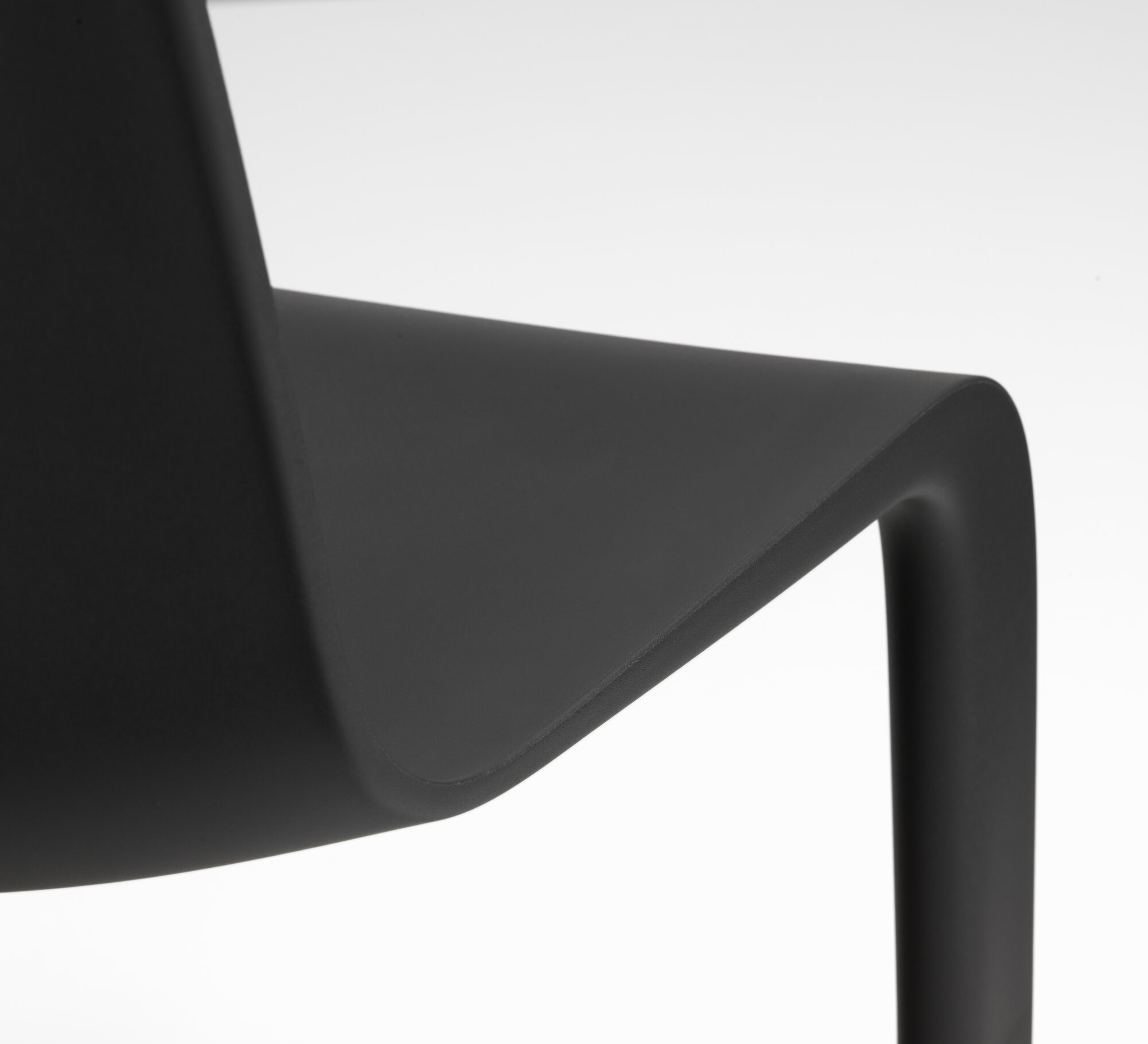
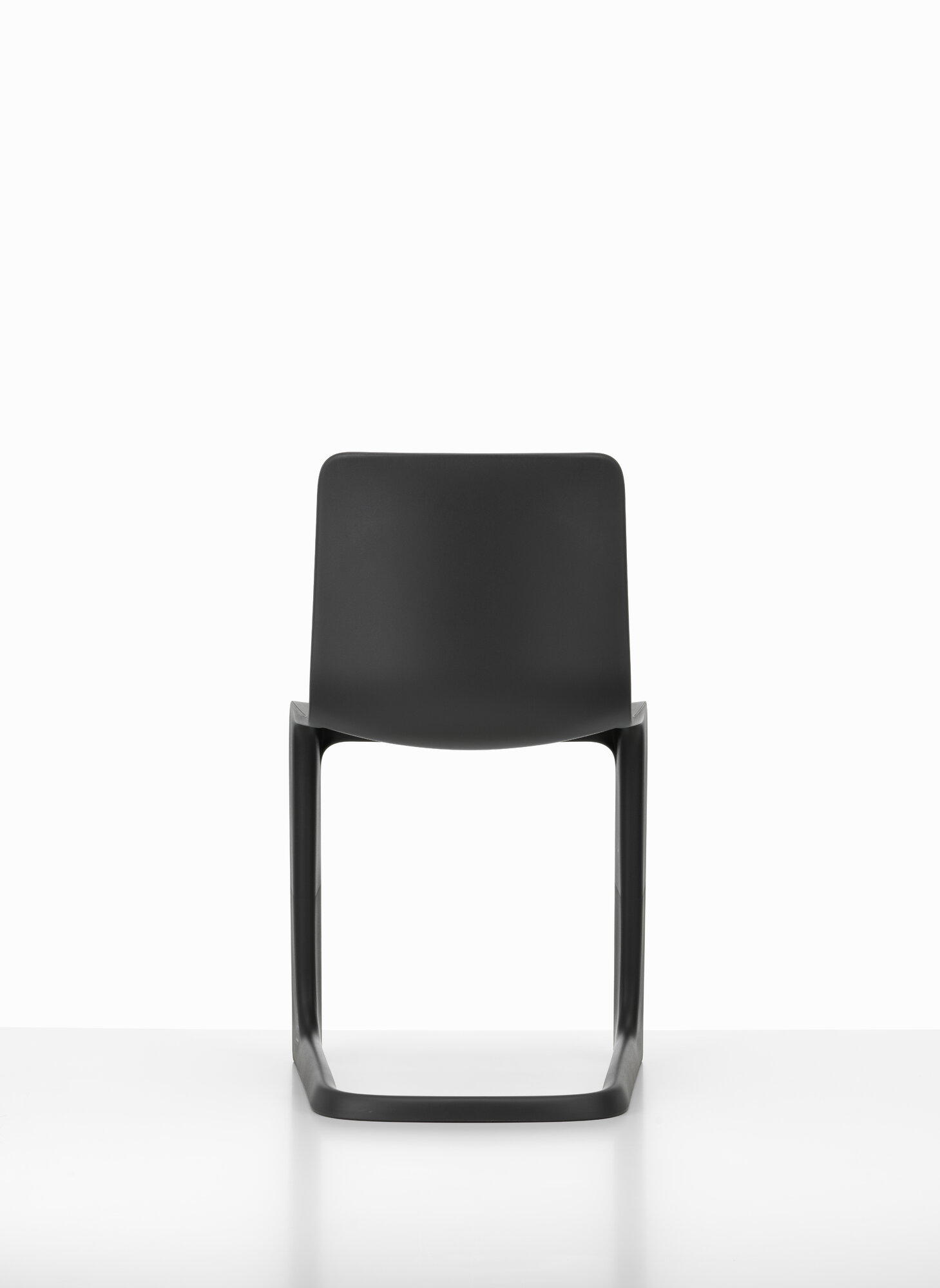
The Vitra EVO-C is a plastic chair designed by Jasper Morrison in 2020, whose sleek expression represents the supernormal design that is typical of Morrison, stripped of all unnecessary details. The chair is a fresh interpretation of the classic cantilever chair: it seamlessly combines the L-shaped leg structure, familiar from metal-framed chairs, with an ergonomic seat that flexes comfortably when sat on. EVO-C is made of only one material, polypropylene, and is therefore 100% recyclable.
- Width: 46.5 cm
- Depth: 51 cm
- Height: 81.5 cm
- Seat height: 44 cm
- Colour Graphite grey
- Material Dyed-through polypropylene
- Product ID: AK44047800-54

British designer Jasper Morrison (b. 1959) is one of the most successful industrial designers of his generation. He is known for his aesthetic and subtly humorous style, often characterised by a pursuit of refined simplicity and everyday functionality.
After studying at Kingston Polytechnic and the Royal College of Art in London, Morrison opened his own design studio in London in 1986. Today, he also has studios in Paris and Tokyo.
Jasper Morrison – in pursuit of the extraordinary ordinary
British designer Jasper Morrison is best known for his understated and refined design language. His philosophy can be summed up in a single idea: “objects should never shout”. Rather than demanding attention, Morrison’s designs quietly enhance everyday life through clarity, functionality and balance.
From tableware to tram systems
Morrison studied at Ravensbourne, Kingston Polytechnic (BA 1982), the Royal College of Art in London (MA 1985) and Berlin University of the Arts. Over the course of his career, he has designed everything from tableware to tram systems, collaborating with brands such as Alessi, Vitra, Nikari, Flos, Fredericia and Iittala.
Morrison also serves as lead designer for Swiss company Punkt., where he helped develop the minimalist MP01 and MP02 mobile phones.
Super Normal
Morrison’s work can be found in the collections of institutions including the Museum of Modern Art in New York and London’s Victoria and Albert Museum. He has received numerous accolades, among them the Compasso d’Oro, the Good Design Award and several iF Product Design Awards. In 2001, he was awarded the prestigious Royal Designer for Industry title in the UK.
In 2006, Morrison curated the Super Normal exhibition together with Naoto Fukasawa. The exhibition showcased 200 anonymous everyday objects free from branding or visual excess, celebrating quiet usefulness and timeless appeal. Since then, the term “super normal” has become closely associated with Morrison’s design philosophy.
Who: Jasper Morrison
- British product and furniture designer (b. 1959).
- Studied at Kingston Polytechnic Design School and the Royal College of Art in London.
- Works internationally across furniture, lighting, electronics and everyday objects.
- Known for minimalist forms, restrained aesthetics and a design philosophy rooted in usability.
- Notable designs include the Air Chair for Magis, the Glo-Ball lighting collection for Flos, the All Plastic Chair for Vitra and the December chair for Nikari.
Read more in Design Stories
Would you like to read more about Jasper Morrison and his work? Discover our books:
View all products5

Based on 1 reviews
-
A
Anonym | Verified Customer
Remscheid, Germany

2 years ago
The Product Sustainability Framework, our criteria of sustainable design, helps you find the most sustainable products in our selection. Read below which sustainability criteria this product has met.
-
 Equal opportunities for all employees
 -
Commitment to UN Global Compact, fair compensation for all employees
-
Corporate responsibility requirements defined and communicated for suppliers
-
Systematic work for improved inclusion and well-being in the workplace
-
Transparent supply chain
-
Suppliers' compliance to a code of conduct ensured
-
Compliance to the UN Guiding Principles on Business and Human Rights ensured in the supply chain
-
Direct suppliers audited and certified
-
Support for community involvement in the supply chain
-
Fair and resource-wise water-use in production
-
No incineration or landfilling of returned items
-
No use of endangered species as materials
-
No direct environmental emissions or waste (excl. GHGs) from production
-
Production and material sourcing that respect biodiversity, animal rights, and natural ecosystems
-
Material-efficient and ecological packaging
-
No potentially harmful chemicals used in own production
-
The sustainability of direct suppliers' production is addressed and monitored
-
Positive impact on nature’s well-being through operations that regenerate natural ecosystems
-
Company's direct greenhouse gas emissions identified and commitment to reduction
-
Product's carbon impact identified and commitment to reduction
-
Guidance on energy- and eco-efficient use of the product
-
Contribution to climate initiatives beyond the brand’s direct operations
-
100 % renewable energy in own production and operations
-
Low-carbon or compensated transportation
-
Carbon footprint of the product calculated and goals set to reduce it
-
Carbon neutral or carbon negative product
-
Sustainable and long-lasting material choices
-
No harmful or hazardous substances
-
Responsible raw material sourcing and production
-
Materials suited for circularity: monomaterials, recyclable finishings, renewable or recycled contents etc.
-
Ecological materials: natural, biodegradable, recyclable or recycled contents
-
Outstanding materials in terms of innovativeness, responsibility, sustainability and circularity: local production or sourcing, 100 % recycled content, C2C-certification etc.
-
High aesthetic quality promoting long-term use of the product
-
Technically durable product design and material choices
-
Design for enduring life-long quality
-
Design and support for product maintenance, repair and upgradability
-
Innovative circular design solutions: circular service system, resale platform, remanufacturing, collection of used products, etc.
Ideas and inspiration
This is a carousel. Use Next and Previous buttons to navigate.