Mantis Lamp at 75: Still perfectly poised
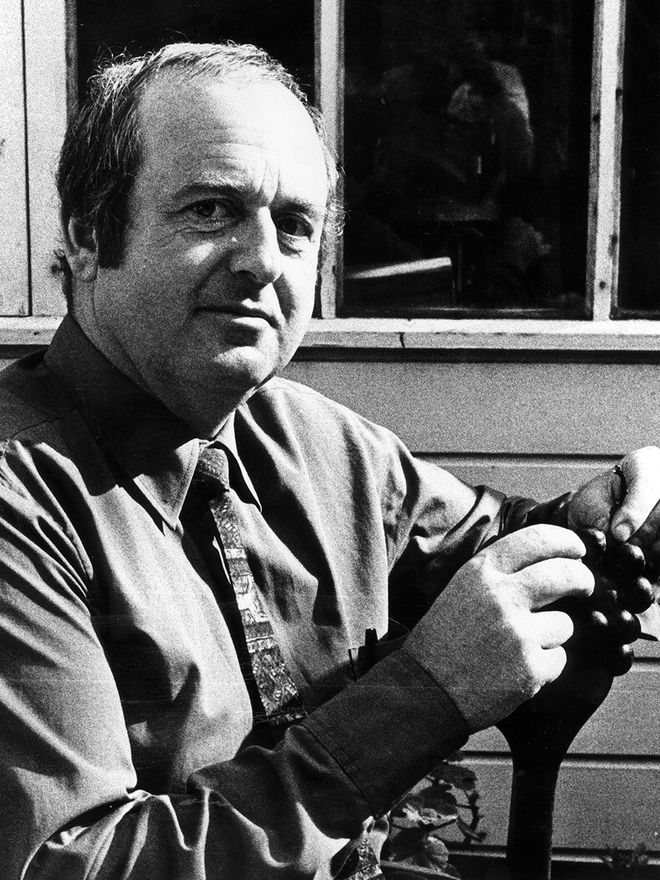
Bernard Schottlander was a German-born sculptor and designer.
Who: Bernard Schottlander
Bernard Schottlander (1924–1999) was a German-born British designer and sculptor. Born in Mainz, he arrived in Leeds as a Jewish refugee in 1939.
He worked as a welder during the war, then studied sculpture at Leeds College of Art and in London. His welding background shaped his work heavily.
A great admirer of Alexander Calder, he created the Mantis lamp series in 1951. He described himself as a designer for interiors and a sculptor for exteriors.
In 1963 he chose to focus solely on sculpture, and his public works can be found in cities including Toronto, Warwick, Milton Keynes and Tübingen. His archive is held at the University of Brighton Design Archives.
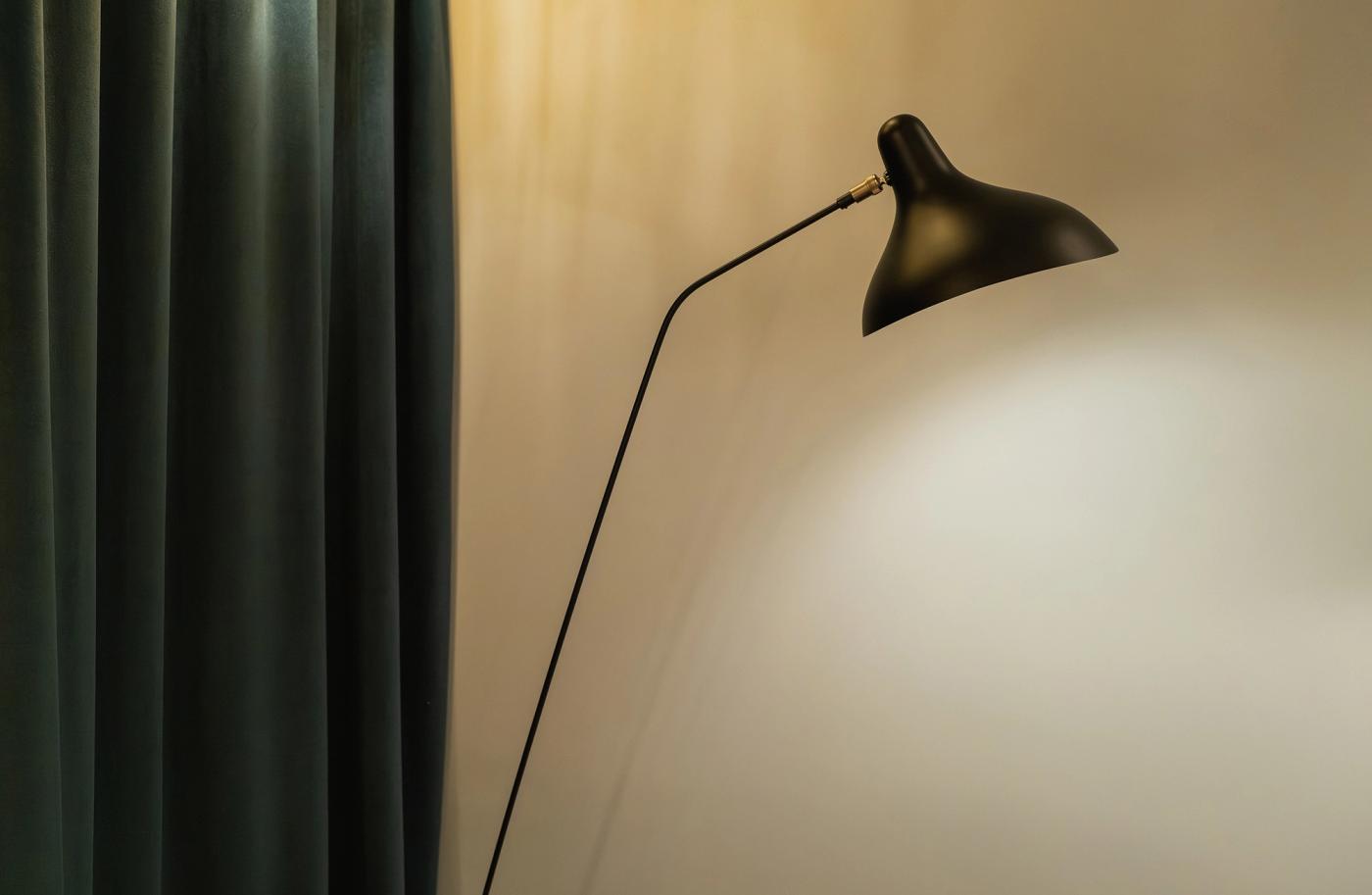
The Mantis lamp series was designed in 1951.
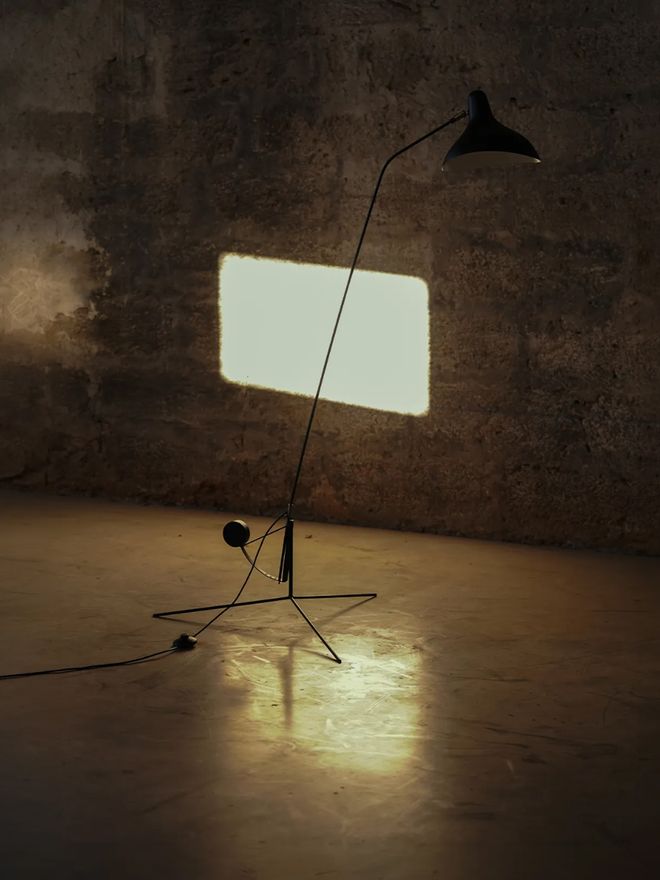
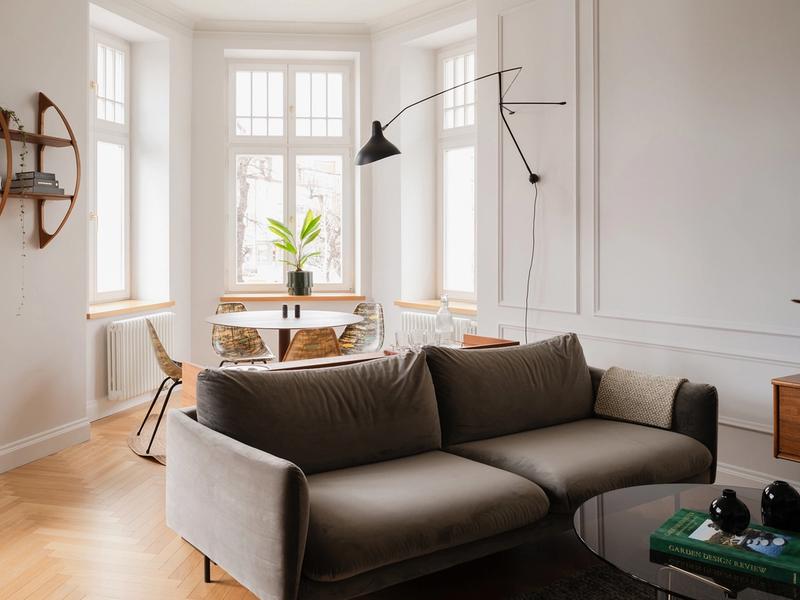
The Mantis BS1 floor lamp rests on a sleek tripod base, with a thin counterweighted leg that tilts and rotates.
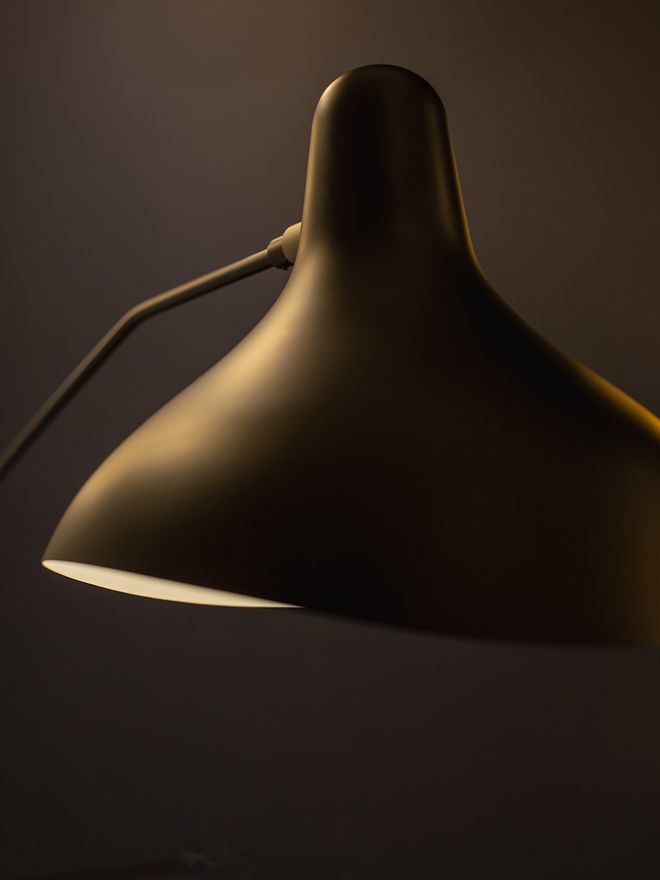
Each Mantis shade is spun from aluminum, with a sculptor’s eye giving the form a helical movement.
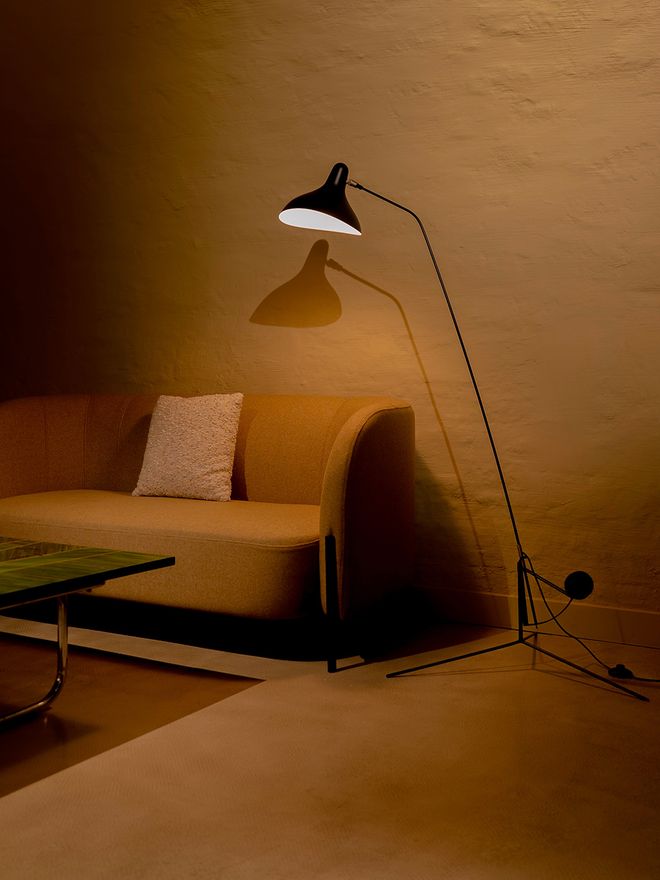
The Mantis BS1-BL floor lamp can be tilted and locked into four different angles.
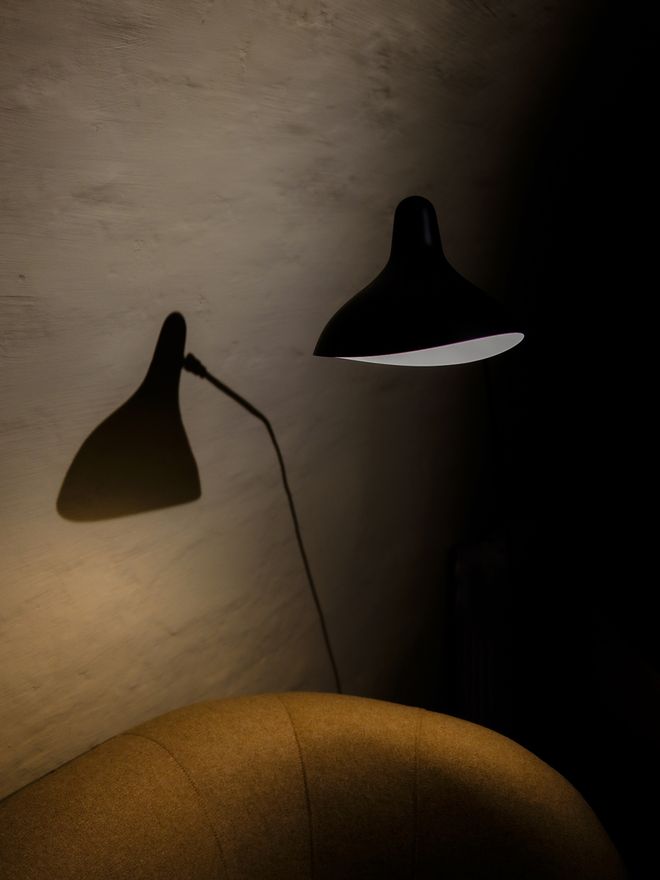
The elegant metal shade gives it a unique, soft expression.
WHEN BERNARD SCHOTTLANDER designed the Mantis lamp collection in England in 1951, he was thinking less about lighting than about movement.
Schottlander was not only a designer but also a sculptor and an engineer. He greatly admired the American sculptor Alexander Calder (1898–1976) and the kinetic grace of his mobiles. His idea was a sculpture brought to life through motion.

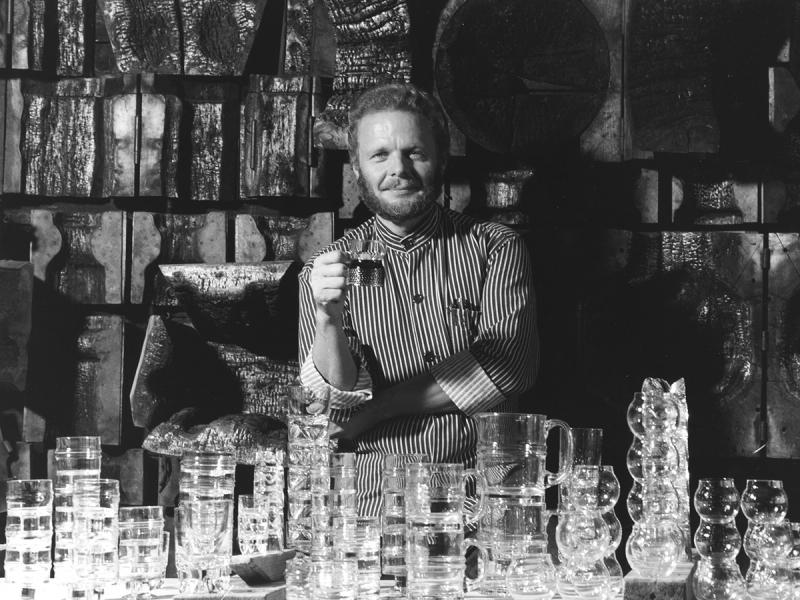
Schottlander at work, a welder and sculptor whose skills shaped the Mantis collection.
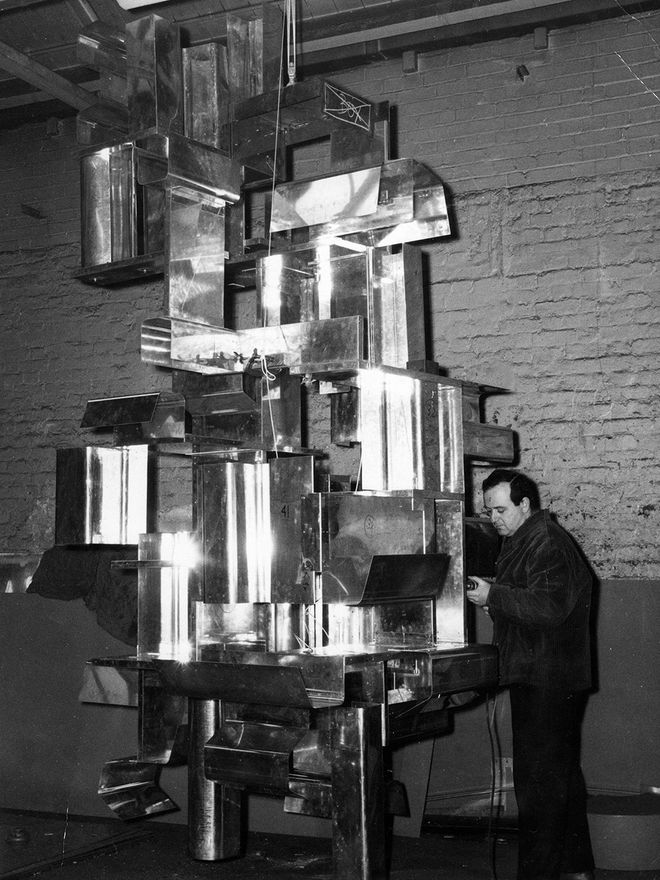
Later in his career, Schottlander concentrated on sculpture, creating large-scale works for public spaces.
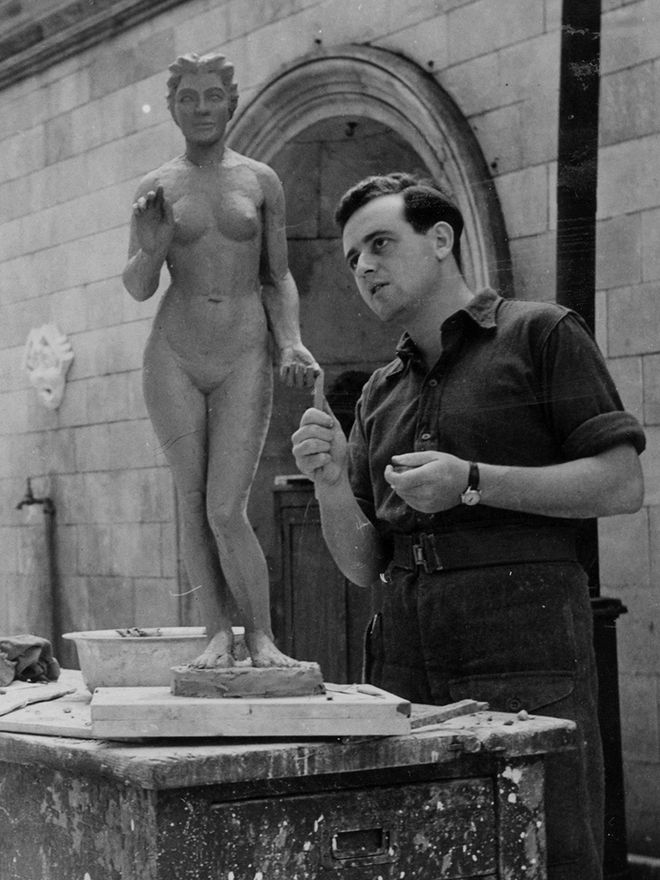
Schottlander studied sculpture at Leeds College of Art and later in London.
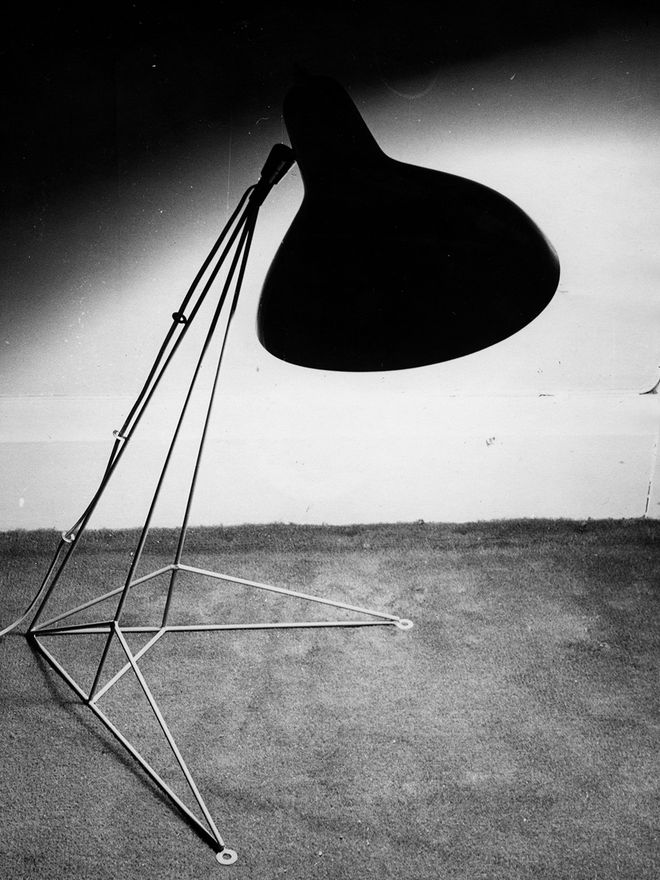
An archival image of the Mantis lamp, designed by Bernard Schottlander in 1951.
A welder with a sculptor’s eye
Born in Germany in 1924, Schottlander moved to England at the age of 15 to work. He took a job as a welder in a factory and studied sculpture at Leeds College of Art at the same time.
That combination of technical know-how and artistic training left its mark on everything he made. In Mantis you can see it in the counterbalanced structure, the precisely bent thin metal rods and the sculptural shades.
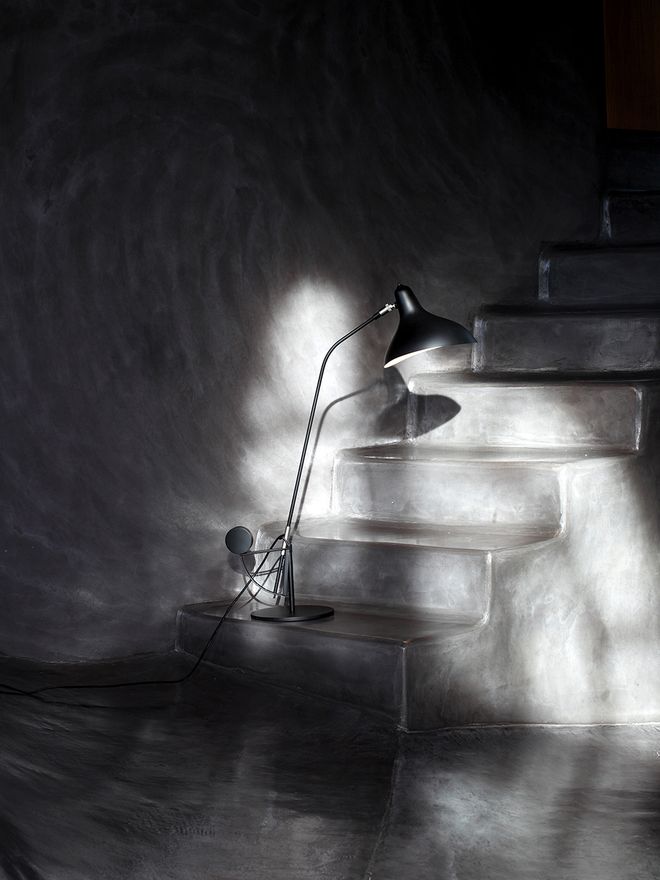
The Mantis BS3 table lamp echoes the same form, just on a smaller scale.
The collection grew into a family of four silhouettes: the BS1 floor lamp, the BS2 and BS5 wall lights, and the BS3 table lamp. The BS2 and BS5 also come in smaller Mini versions.
Schottlander devised a clever system of counterweights and paired it with strong, flexible metal rods, so each lamp moves with ease and holds its position.
Schottlander brought a sculptor’s eye to the Mantis shade and gave the form a gentle helical movement.
The shade is a small feat of its own. It is spun from aluminum, a metalworker’s technique, but Schottlander brought a sculptor’s eye to it and gave the form a gentle helical movement.
On the BS1 floor lamp, the thin, counterweighted leg rotates 360 degrees and can be tilted and locked into four different angles, and it rests on a sleek tripod base. The asymmetrical shade recalls the stance of a praying mantis, and the name suits it well.
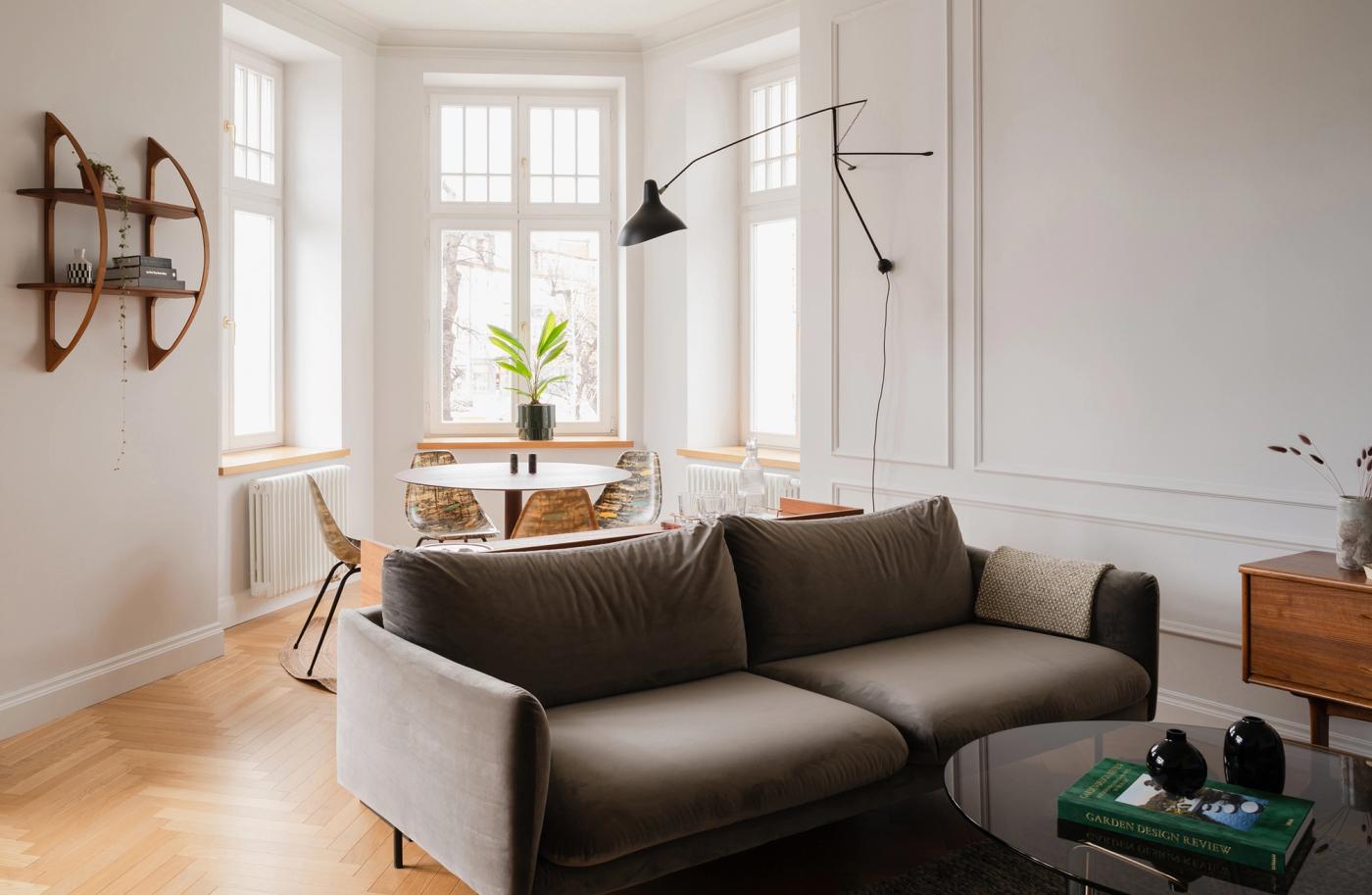
The Mantis BS2 wall light can also be positioned over a dining table.
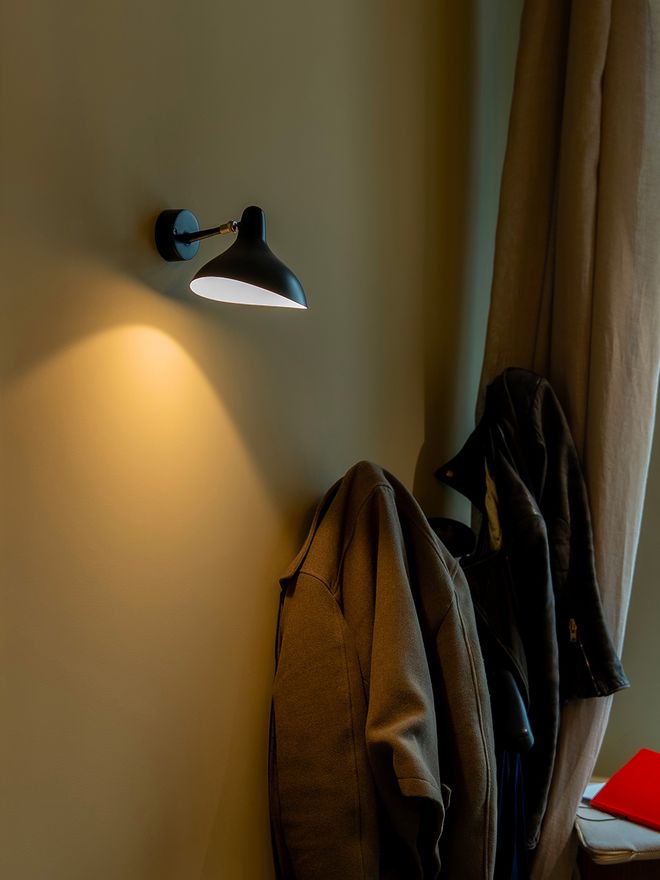
The Mantis BS5 wall light works equally well as a reading light or to add a soft, ambient glow.
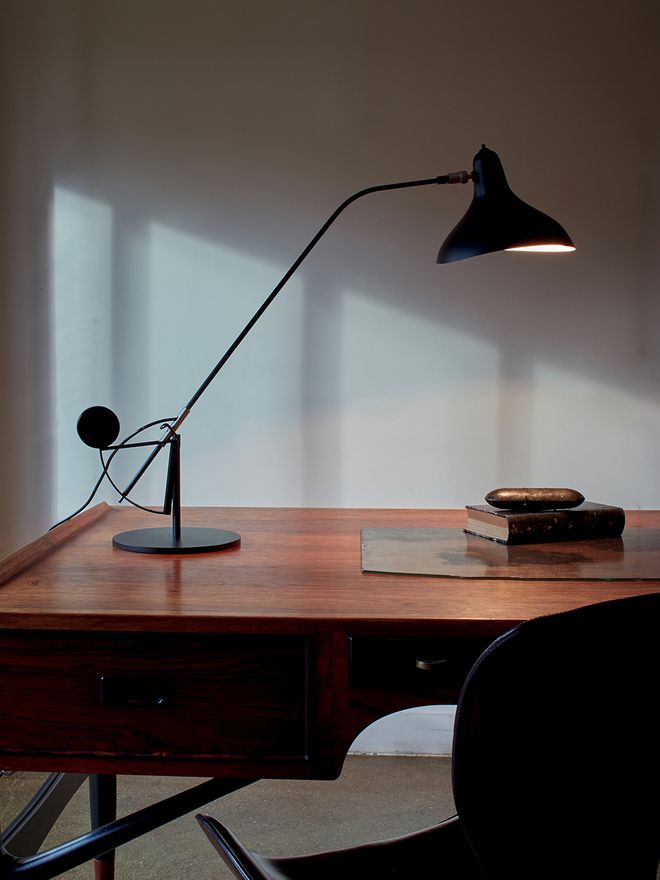
The Mantis lamp’s intriguing design language hasn’t aged a day.
Still looking forward
Today Mantis is relaunched by the French brand DCWéditions, which specializes in bringing back classics of modern design.
The brand’s catalog also includes Bernard-Albin Gras’s Lampe Gras collection and the Here Comes the Sun pendants by Bertrand Balas. What these pieces share is a subtle balance between functional details and visually compelling shapes.
That balance may be why Mantis has aged so gracefully. The silhouette is graphic and light, with no decoration to date it, and it moves easily between settings, from a book-lined living room to a raw concrete space.
Seventy-five years on, it is still one of the most interesting shapes in lighting.
See also:
• All designs by Bernard Schottlander >
• All products by DCWéditions >
Photos: DCWéditions, Akurat, Stephan Lanez and Archives Julia Schottlander
Featured designs may not be available worldwide.
Published on 2 Nov, 2026