How Timo Sarpaneva became a master of glass
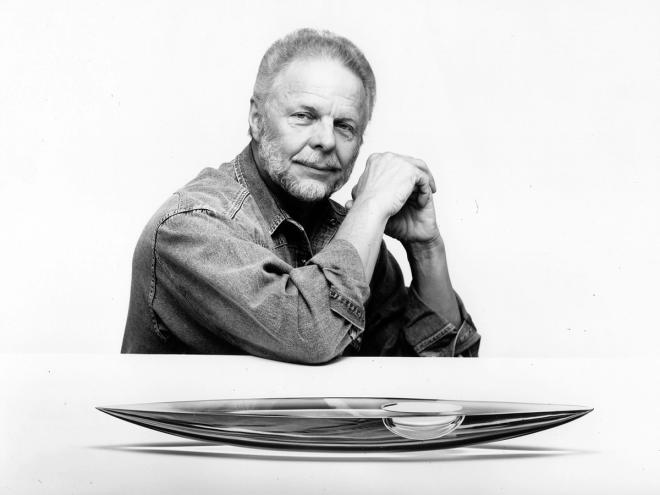
Timo Sarpaneva was one of the great reformers of Finnish design, and one of the designers who brought Finnish design to international attention in the 1950s and 1960s. Photo: Markku Luhtala
Who: Timo Sarpaneva
Finnish designer and professor (1926–2006).
Worked with the Iittala glass factory in southern Finland for nearly 50 years and designed the company’s iconic i logo.
His design language is defined by material experiments, sculptural expression, and forms drawn from nature.
Honors: Grand Prix at the Milan Triennale in 1954, the Lunning Prize in 1956, the Pro Finlandia Medal in 1958, the title of professor in 1976, and an honorary doctorate from the University of Art and Design Helsinki in 1993.
Best-known designs: Festivo candleholders, Tsaikka glasses, the Sarpaneva cast iron pot, and the art glass pieces Orkidea and Claritas.
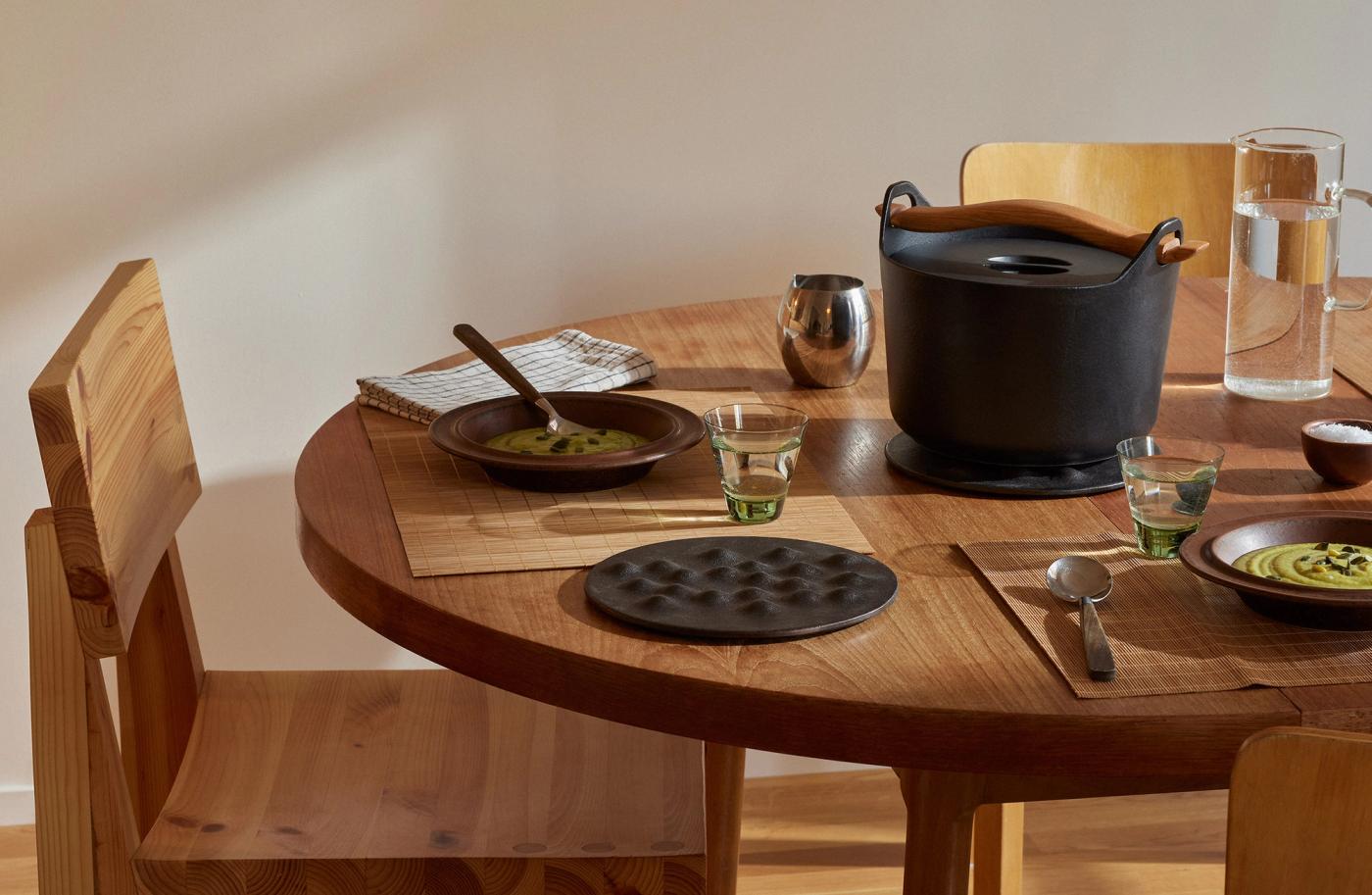
The Sarpaneva pot is one of the designer’s best-known products, and its popularity shows no signs of fading. Here it’s paired with the Kumpu trivet by Pidät. Photo: Pidät
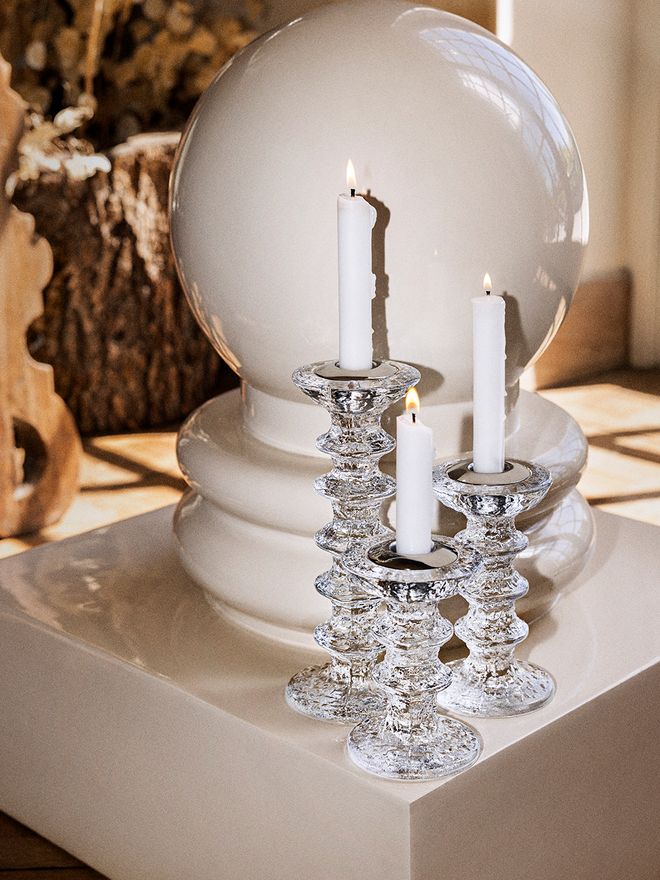
Designed by Timo Sarpaneva in 1966, the Festivo candleholder is a classic many people know by heart. Photo: Iittala
A BLACK COMPANY CAR was waiting at the railway station. Timo Sarpaneva climbed into the back seat with his portfolio, and the driver set off toward the Riihimäki glassworks, north of Helsinki. The 1950s were just beginning, and Sarpaneva was still a broke, newly graduated graphic designer. The invitation had come after he placed second in the factory’s design competition with a greenish vase.
The young artist was shown into the office of industrial counselor Roope Kolehmainen. Kolehmainen sat behind his vast desk, smiling with satisfaction as Sarpaneva spread his sketches out in front of him.
“What kind of salary would I get?” Sarpaneva asked. Kolehmainen gave him a sour look. “We’re not going to talk about money. We’re going to make you famous!”
Sarpaneva turned the offer down and gathered up his things. He walked back to the train station in pouring rain. Timo Sarpaneva’s wife Marjatta Sarpaneva still laughs when she tells the story. “That was Timo’s first encounter with the Finnish glass industry,” she says.
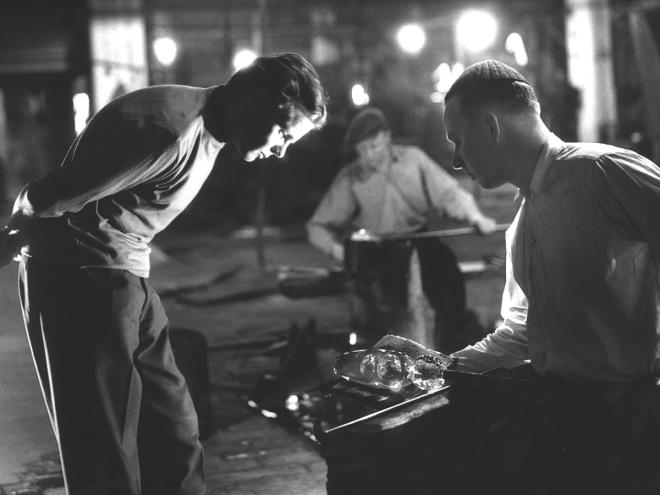
Designer Timo Sarpaneva and glassblower Helge Nieminen in 1953.
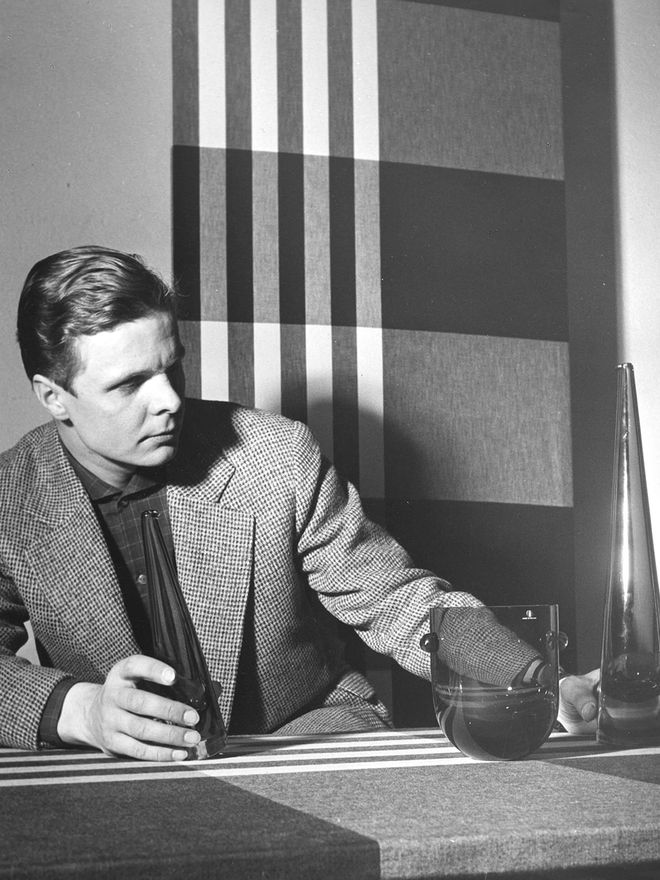
Sarpaneva worked as an artist and art director at the Pori Cotton Mill, a Finnish textile manufacturer, from 1955 to 1965.
Timo Sarpaneva never did go to Riihimäki. A couple of years later, though, he became a designer at the Iittala glass factory in southern Finland. After the war, Iittala had decided to invest in art glass, bringing designers into the company and setting up art glass workshops. Sarpaneva had very little experience with the material and all the more enthusiasm for it. The factory manager, Håkan Söderström, let the restless young designer try things, take his time, and experiment freely.
“Håkan had real vision. It was almost as if he knew that bold decisions would pay off one day,” Marjatta Sarpaneva says.
It didn’t take long for the results to show. Timo Sarpaneva became fascinated by the stick-air and steam blowing technique, used to trap a bubble of air inside the glass, which the factory had already been using. Master glassblower Einari Salo taught him how it was done.
The experiments produced magnificent works of glass, among them the Kajakki, Kyynel and Orkidea sculptures, which went on to win international acclaim.
Sarpaneva also designed clean-lined glass for everyday use. In 1956 he started making the i-collection together with the factory workers. A general strike was underway in Finland at the time, so the prototypes were made in secret. The first collection included drinking glasses, bowls and bottle-shaped pitchers, and it was presented that same year in the exhibition hall of the Stockmann department store in Helsinki. Working from Sarpaneva’s plans, factory chemist Keijo Laitinen developed colors for the glass that shifted through different shades of gray.
For the collection, Sarpaneva also designed the red-and-white i logo, which later came to mark other products from the glass factory as well.
• Read also: Visiting the Iittala glass factory >
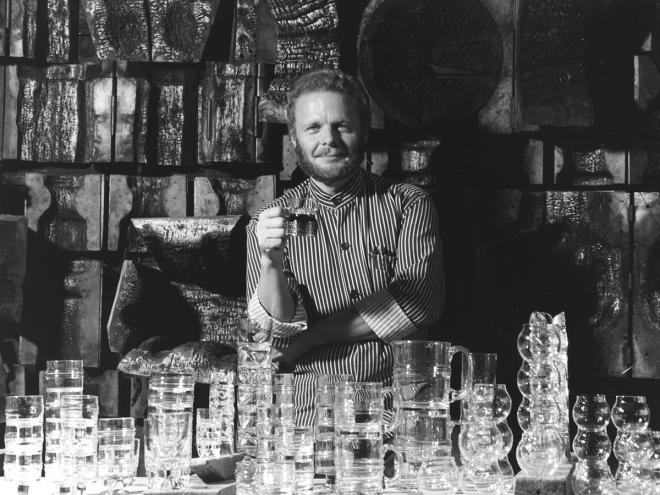
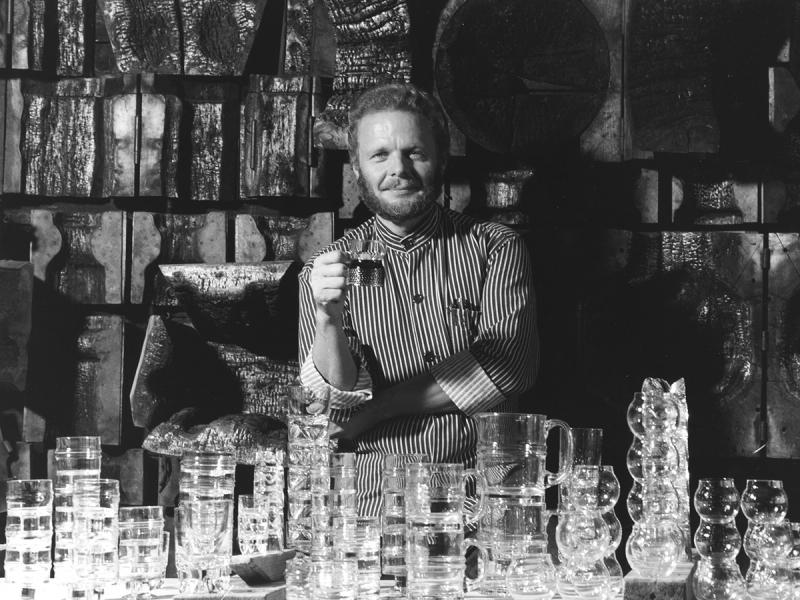
Timo Sarpaneva with the iconic Tsaikka glass in his hand. In front of him, Pisararengas and Aroma glasses.
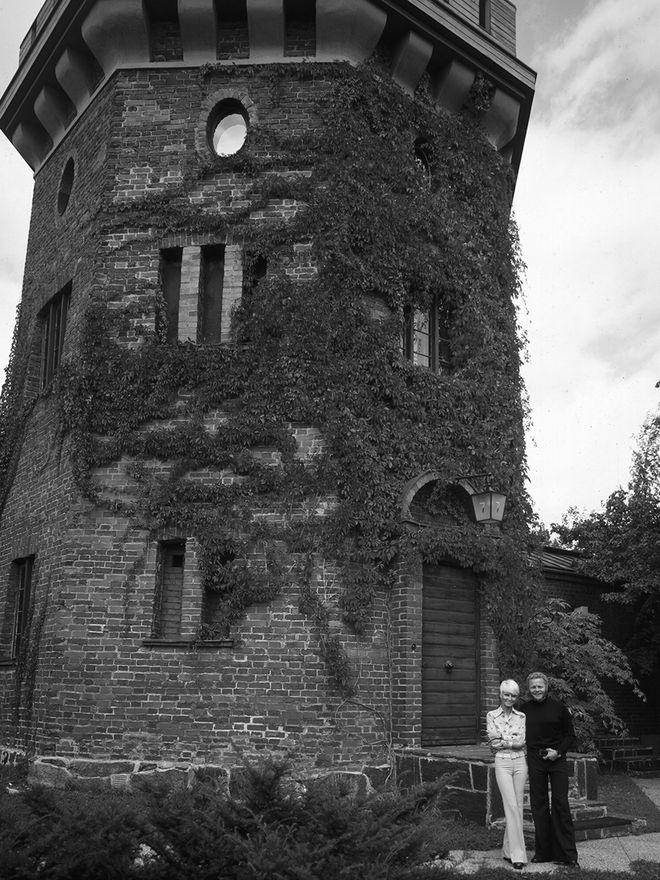
Marjatta and Timo Sarpaneva outside their tower-house home in Munkkiniemi, a Helsinki neighborhood, in the 1970s.
MARJATTA SARPANEVA met Timo Sarpaneva in 1960. She fell for his warmth and his adventurer’s spirit.
“With Timo, you never knew what was waiting around the next corner. He wasn’t fearful or timid, and it showed in everything he did. He threw himself into his work and kept looking for new paths through art.”
Over his career Sarpaneva designed all kinds of things, from cast iron pots to cotton fabrics, but glass was his greatest passion and the Iittala glass factory his home.
“Timo had a good rapport with the factory staff, and he spent a lot of time there. He was happiest in the glass hut, inspired by the blowing. Work wasn’t work to him. He lived it.”
Marjatta Sarpaneva remembers the day she was taken to see the factory. The Iittala glass factory today is bright and almost clinical, but in the 1960s you could still hear the roar of the fire. There were few machines, and most of the work was done by hand.
“It was like a mountain troll’s cave: dark, hot and blackened. The glass furnaces had no hatches at all. They blasted out scorching air all day long, and the workers were soaked in sweat.”
On that same visit, Marjatta Sarpaneva also met Reino Löflund, who over the years became Timo Sarpaneva’s closest colleague at the glass factory.
Sarpaneva did sketch his pieces, but he left a great deal to whatever happened in the glass hut once the craftsmen began working the material. As he saw it, glass had to be given the chance to correct the designer’s plans. Nothing is ever achieved by force, he once said, not with people and not with glass. What mattered most was the relationship with the people, that the chemistry worked.
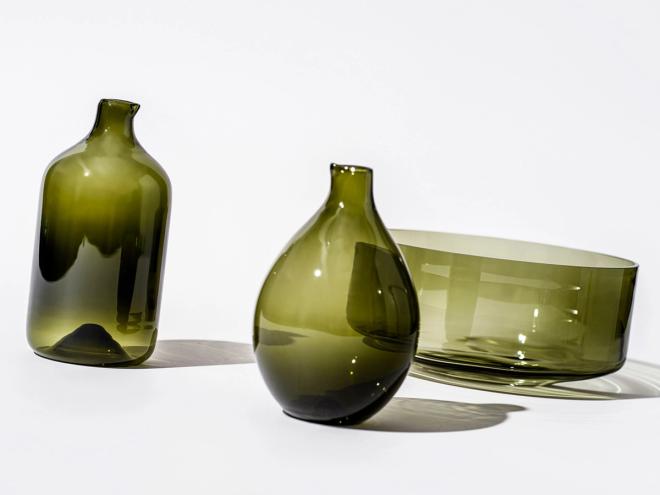
The Bird Bottles were originally in production at Iittala between 1957 and 1968. A new limited edition has been made in honor of their visionary designer. Photo: Iittala
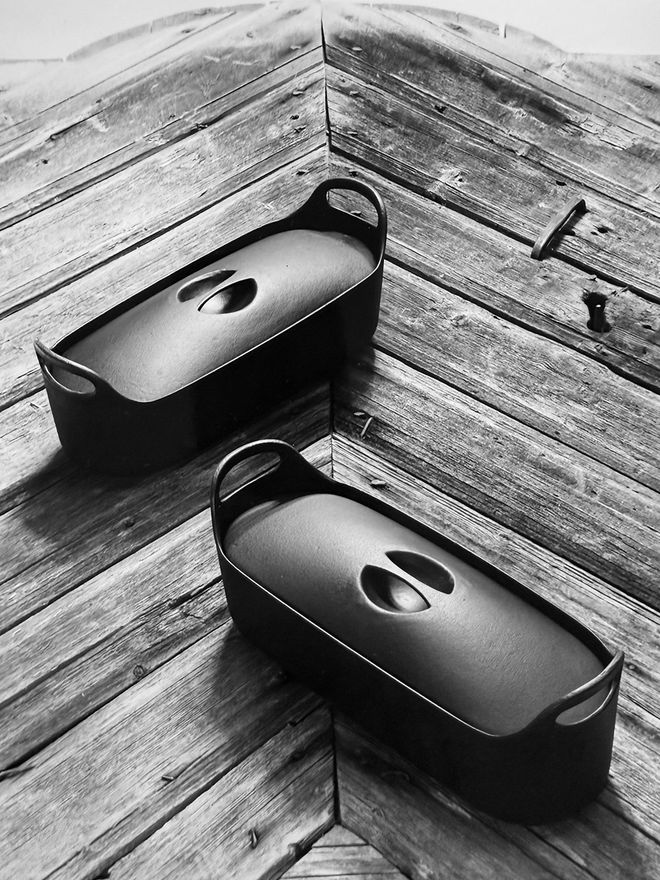
The first pieces in the cast iron series reached the market in 1960. Photo: Otso Pietinen
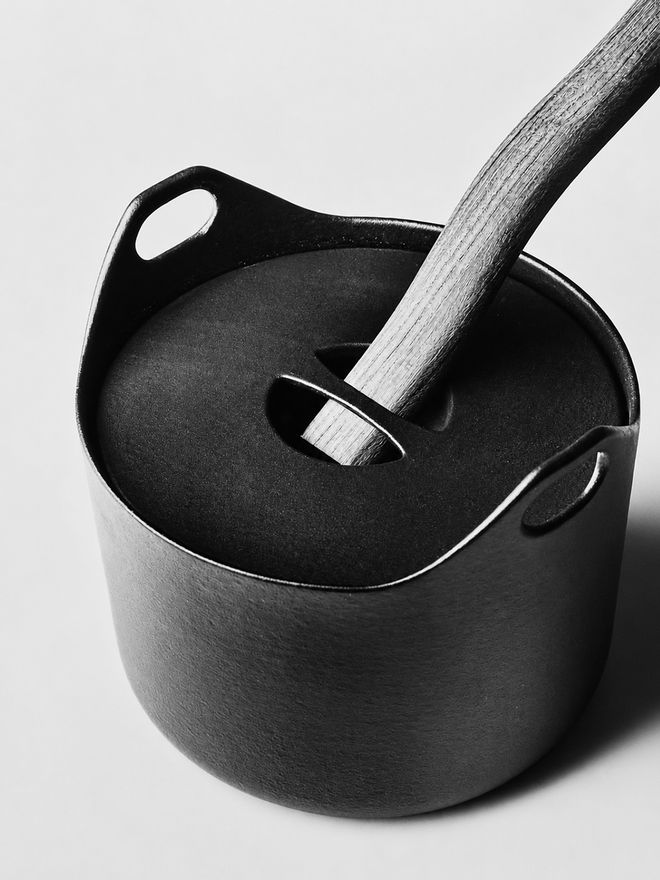
The Sarpaneva pot, with its wooden handle, won a silver medal at the Milan Triennale in 1960. Photo: Otso Pietinen
One groundbreaking technique came to light in the mid-1960s, when Sarpaneva and Löflund lined up saw blades side by side inside a cylindrical wooden mold. The idea was to see what kind of mark they would leave in the glass. The experiment failed: no pattern appeared. Löflund sent one of the test pieces to Sarpaneva in Helsinki.
The glass had burned onto the wooden mold, and a knot in the wood had pressed a rough, ice-like texture into its side. Sarpaneva put the new method to work in his Finlandia series, and the surface later became one of Iittala’s signatures.
Timo Sarpaneva kept making glass art all the way to the turn of the millennium, and his final sculptures were created on Murano, the glassmaking island in Venice. Even those pieces came out of techniques no one had tried before.

The year 2026 marks 100 years since Timo Sarpaneva’s birth. The Finnish Glass Museum in Riihimäki is celebrating with a themed exhibition, open until December 31, 2026.
SARPANEVA DIED in 2006. In Marjatta Sarpaneva’s view, Finnish design has never given enough credit to the skilled workers on the factory floor.
“In a way it’s a terrible injustice, because they were central to getting things where they once were,” she says, referring to the golden age of Finnish design.
Every single craftsman mattered. The glassblower Helge Nieminen, for instance, blew most of Timo Sarpaneva’s Orkidea sculptures. Marjatta Sarpaneva points out that skills like the stick-air technique were exactly why the works found an audience abroad: nothing comparable was known outside Finland.
“Skilled professionals and one-of-a-kind techniques are the bedrock the whole success of Finnish design rests on. It has just been forgotten under all the fuss.”
See also:
• Products designed by Timo Sarpaneva >
• All Iittala products >
Photos: Sarpaneva Design
This story was originally published in the Avotakka magazine. It also draws on Markku Tasala’s book Lasintekijöiden tarinoita Iittalasta (Glassmakers' Stories from Iittala).
Published on 28 Oct, 2026