PAN Treetop Cabins, inspired by the Moomins, erected in Finnskogen, Norway
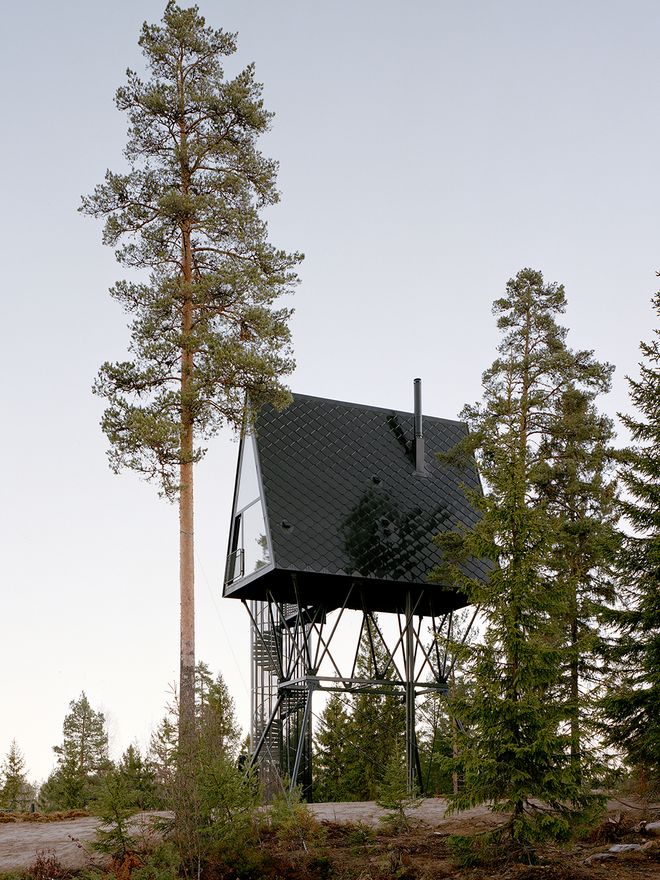
PAN Treetop Cabins provide an eight-meter-high vantage point over forest life.
A SUPRISING SIGHT awaits visitors deep in the Gjesåsen forest in Norway: two tower-like cabins, resting on six-metre-high steel frames, rise between the trees. The PAN-tretopphytter (PAN Treetop Cabin) project was not easy, even for an experienced architect.
“When the clients asked me to develop the PAN project in their forest, I had to use a long time to reflect on the task, theme and commission. There was a big will to try to develop something unique for the forest that could relate to the beautiful landscape and its colours, from the rocks to the small plants and big trees”, explains Espen Surnevik, a professor at the Oslo School of Architecture and Design.

Espen Surnevik works as an architect and professor in Oslo.
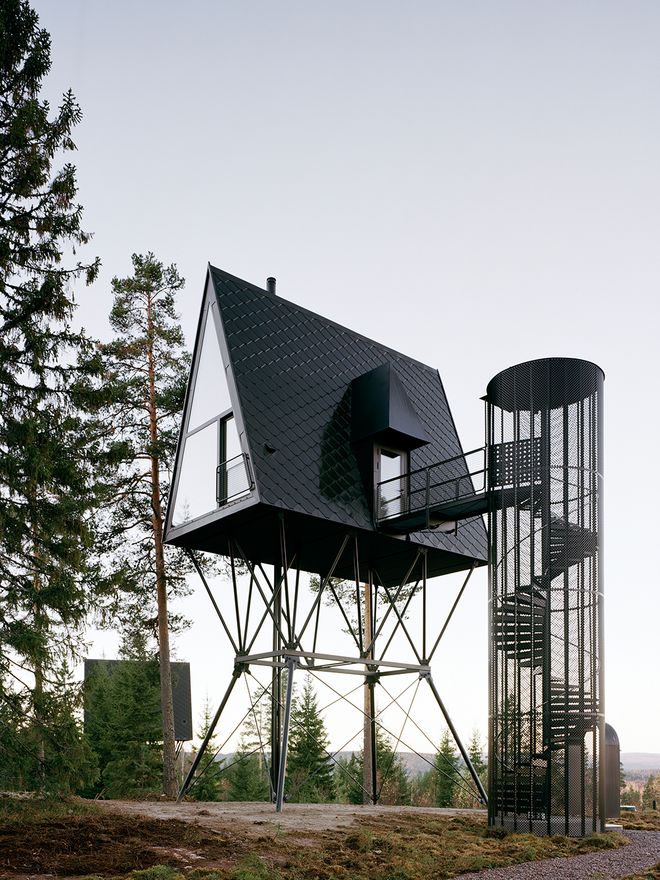
The cabin is entered by climbing a spiral staircase and crossing a bridge high in the trees. Espen Surnevik likens arrival at the cabins to the theme of ritualistic journeys familiar from the Moomin stories.
“There was a big will to try to develop something unique for the forest.”
Owned by the entrepreneur couple Kristian Rostad and Christine Mowinckel, the rental cabins are located in the Finnskogen forest near the Swedish border, a couple of hours from Oslo. Finnskogen was named after the so-called 'forest Finns', who moved into the area centuries ago to clear forest land and farm.
“The particular history of the area, where people from Finland immigrated in the sixteenth century and settled, has created a pan-Nordic culture with mixed traditions that are very strong and interesting”, says Surnevik.
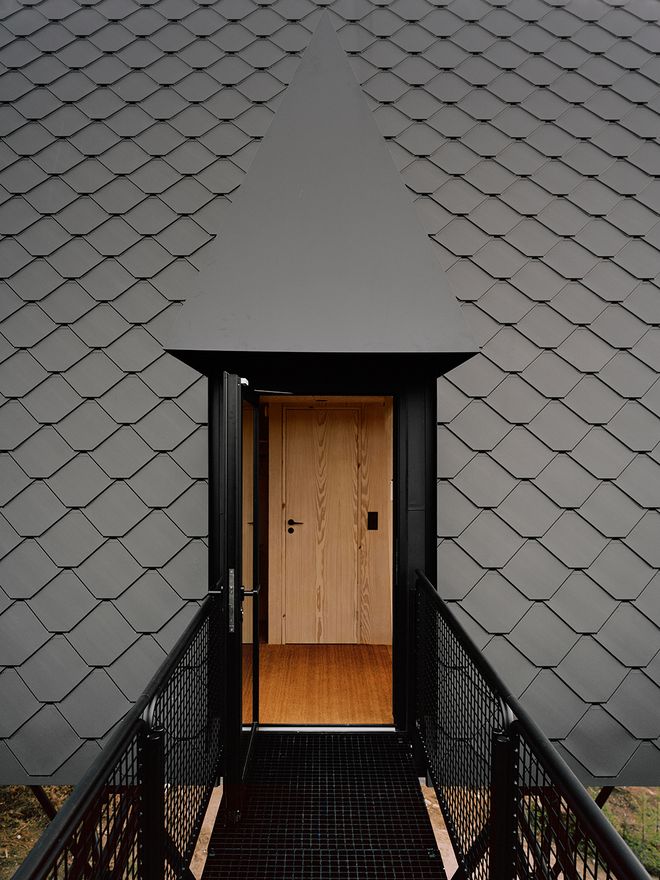
Oxidized to become black, the zinc panels on the roof resemble the surface of a pine cone.
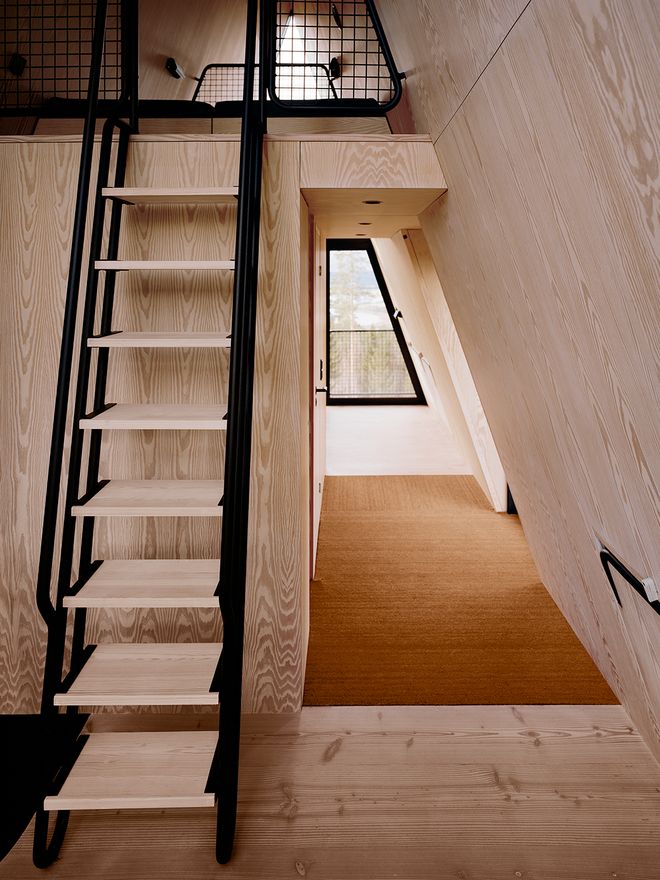
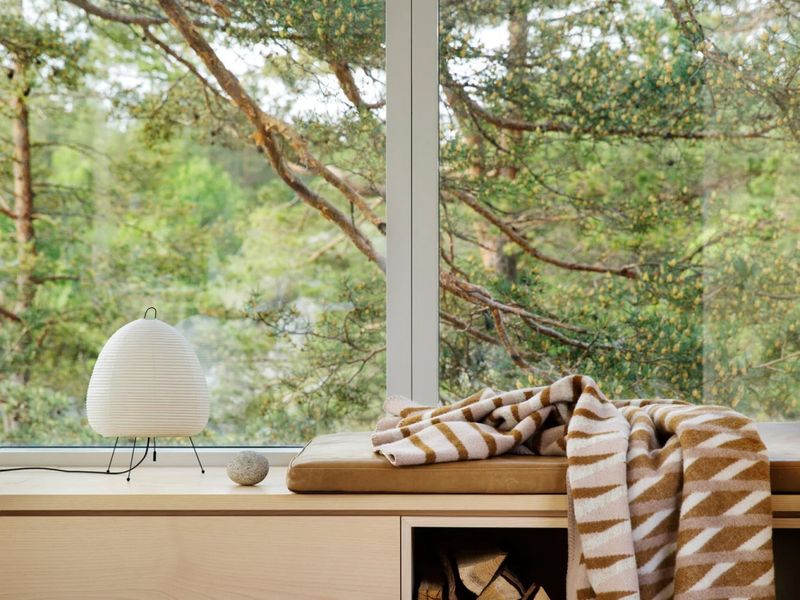
To counterbalance the metal exterior surfaces, the interior is almost entirely clad in pine. The colors of the wool textiles were sourced from the forest.
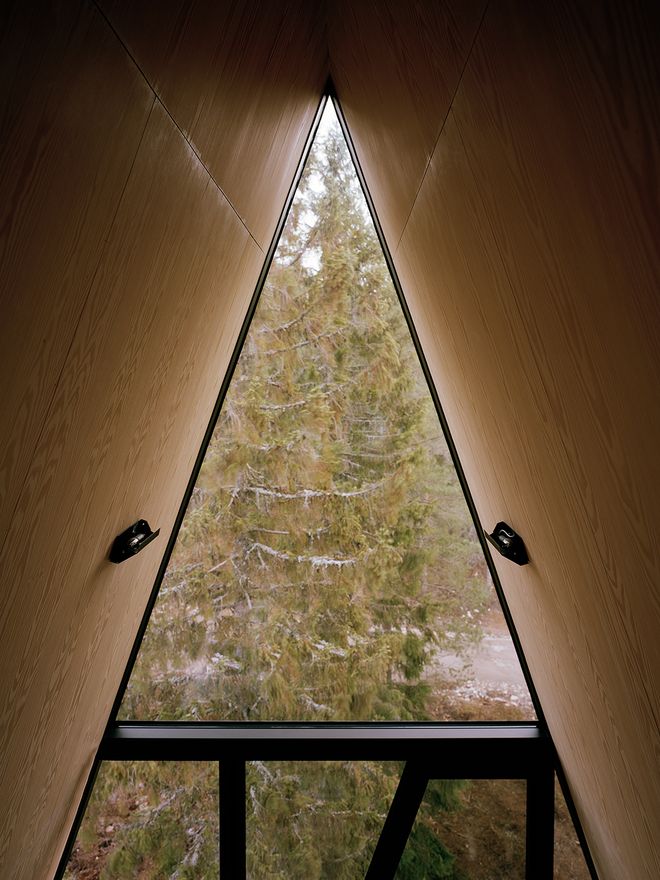
The windows covering the entire end wall create an interior ambience and light that varies with the season.
Surnevik refers to Tove Jansson's Moomin books as one of the key inspirations behind the project. He describes the world of Jansson's books as an entire mythology built around the Nordic relationship with nature. Surnevik believes that Jansson took the feelings we have when encountering the ruggedness of Nordic nature, and clothed them in words and pictures.
“For me, it represents a genuine feeling of how the Nordic individual relates to the long distances between settlements in rural Scandinavia, the loneliness, the dark winters, and the cold climate”, comments Surnevik.
• Read also: The most beautiful house on the island >
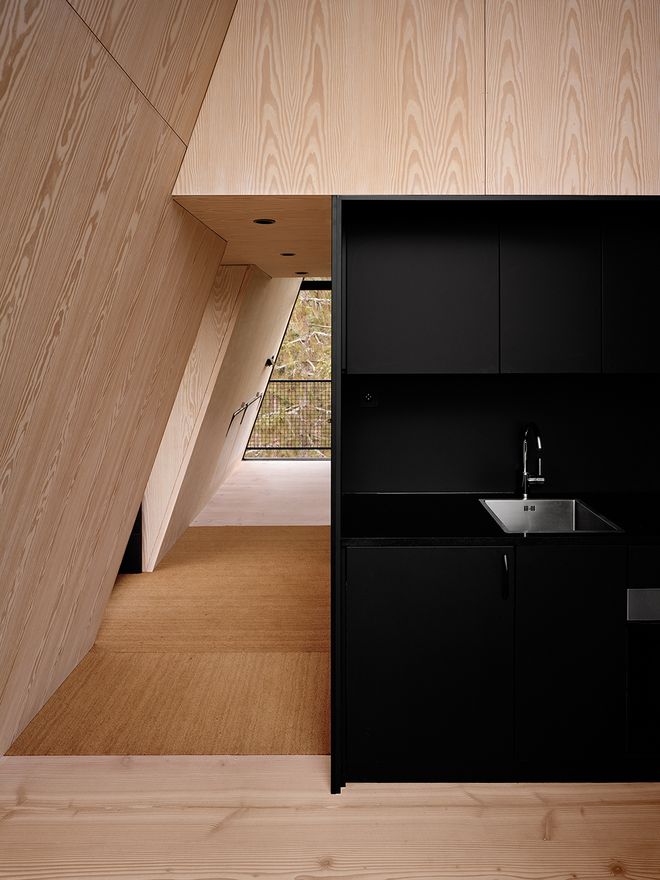
The PAN Treetop Cabins are connected to the electricity and water supply. Each is fitted with a small, modern kitchen.
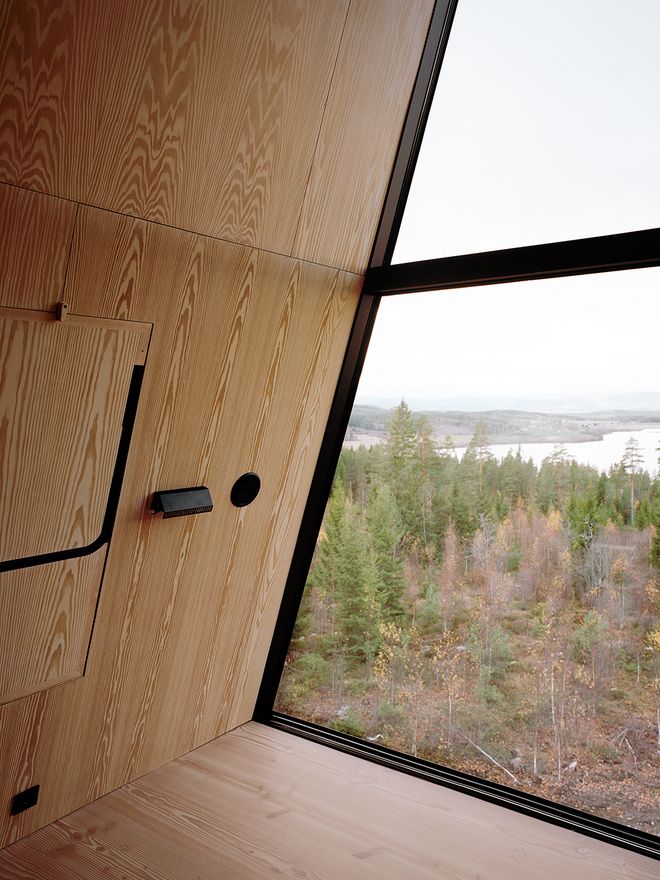
Up to six people can sleep in the cabins due to the additional fold-away beds.
The triangular shape has enabled the creation of a space, which is both atmospherically narrow and monumentally high.
The architecture of the PAN Treetop Cabins combines lookout towers for spotting forest fires with A-framed lodges common to North America in particular. Firmly anchored in the bedrock, the cabins are reached via spiral staircases on their sides. Their triangular shape has enabled the creation of a space which is both atmospherically narrow and monumentally high.
• Read also: A chapel on the island of Kemiö >
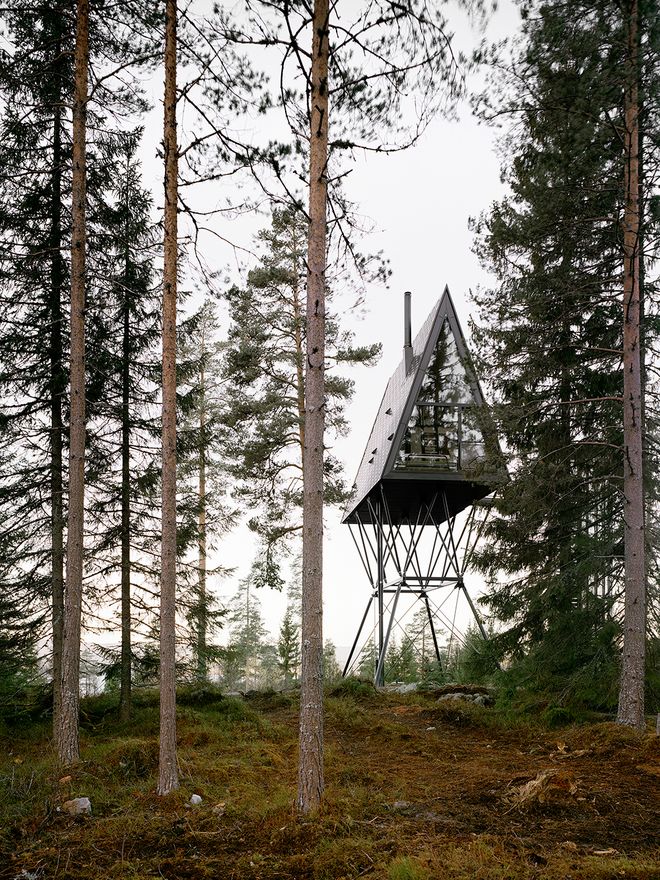
Reminiscent of a lookout tower, the buildings' metal structure differentiates them from the landscape. However, they blend in with the dark forest shades when viewed from further away.
The materials were selected to create both a natural feel and differentiation from the surrounding wilderness: unlike most summer cabins, PAN Treetop Cabins are made from metal rather than wood. Matte metal with a black finish highlights the sculpture-like form of the cabins and maximises their energy efficiency, since the dark surface absorbs sunlight effectively. Natural materials predominate in the interiors: the frames are made cozy and warm by pine walls and floors, and textiles made from local sheep's wool.
The mezzanine area for sleeping overlooks coniferous forest and an expanse of lake, with the sleeping space being supplemented by pull-down beds that can be opened when needed. These 40-square-metre cabins also have a bathroom, kitchen and atmospheric fireplace. Within the cabins, the forest is always present due to the large windows at the ends of the structures.
PAN Tretopphytter, Joger Hansens Veg 2280, 2280 Gjesåsen, Norway
www.panhytter.no
See also:
• Gestalten’s Cabin Fever book >
• All architecture books >
Text: Nora Uotila Images: Rasmus Norlander, portrait by Anne Bråtveit
Published on 14 Mar, 2019