This is a carousel of product images. Use the thumbnails or swipe to change the displayed image, and activate an image to open it full screen.
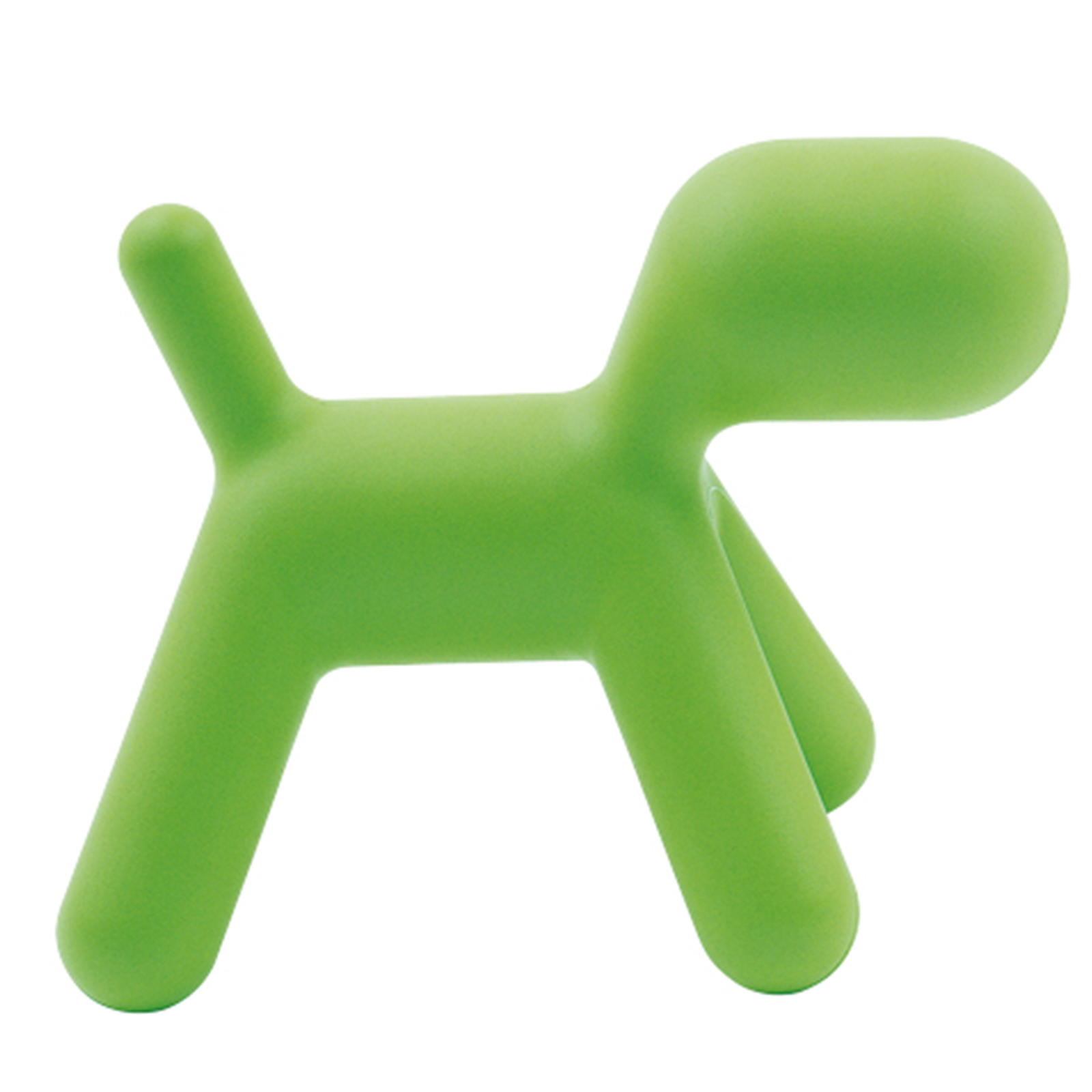
Puppy, L, green
Description
Puppy, designed by Eero Aarnio for Magis, is 100% classic Aarnio – precise and functional but far from straight-faced. Shaped like a small dog, Puppy is a sculpture, a toy as well as a small stool, whatever your imagination wants it to be. Besides the children's room, Puppy brings joy in other rooms of the house, too. Puppy is part of Magis' Me Too collection consisting of furniture and accessories that inspire children's imagination and creativity. Made of durable polyethylene, Puppy is suitable also for outdoor plays.
- Length: 69.5 cm
- Width: 42 cm
- Height: 55.5 cm
- Seat height: 37.5 cm
- Material Polyethylene
- Colour Green
- Product ID: MGMT54-1360C

Eero Aarnio (born 1932) is a Finnish designer and honorary professor, widely regarded as one of the great innovators and trailblazers of modern furniture design. Over the course of his career, Aarnio has experimented with a wide range of materials, including plastic, fibreglass and foam. From these materials, he created some of the most iconic pieces in Finnish furniture design, such as the Ball Chair (1962), the Bubble Chair (1968) and the Pastil Chair (1968).
Eero Aarnio – a colourful pioneer of modern design
Eero Aarnio is one of the most internationally recognised names in Finnish design and one of its boldest visionaries.
Graduating from the Institute of Industrial Arts in Helsinki in 1957, Aarnio is known for his fearless forms, innovative use of new materials and a strong visual identity. His design blends technical experimentation with a sense of joy, resulting in objects that are both functional and sculptural.
Joyful futurism
In the 1960s, Eero Aarnio began experimenting with new materials, particularly fibreglass and plastic, which enabled entirely new kinds of furniture design – giving rise to classics such as the Ball Chair, Bubble Chair and Pastil. Aarnio is also known for his lighting designs, including the Double Bubble collection.
Aarnio is equally skilled in working with more traditional materials, as demonstrated by the wooden Rocket bar stool. His versatile command of materials has been a defining element throughout his long career.
A playful master of Finnish design
Aarnio’s work is characterised by curiosity and a desire to explore the new, resulting in designs that radiate positivity and good humour – perhaps most clearly seen in playful pieces like the Puppy and Kisu figures.
Aarnio’s work has been exhibited in museums and galleries around the world, including the Victoria and Albert Museum in London, MoMA in New York, the Vitra Design Museum in Weil am Rhein and the Centre Georges Pompidou in Paris. He has received numerous prestigious design awards, such as the Compasso d’Oro and the Red Dot Design Award.
Who: Eero Aarnio
- Finnish designer (born 1932).
- Education: Institute of Industrial Arts, Helsinki (1957).
- Founded his own design studio in 1962.
- His design language is defined by playfulness, bold colours and innovative materials, particularly plastic.
- Notable designs: Ball Chair, Bubble Chair, Pastil (Eero Aarnio Originals), Rocket stool (Artek), Puppy (Magis).
Read more on Design Stories
- Eero Aarnio, iconic designer and father of the Ball Chair: “Apply yourself and believe in yourself” >
Ideas and inspiration
This is a carousel. Use Next and Previous buttons to navigate.