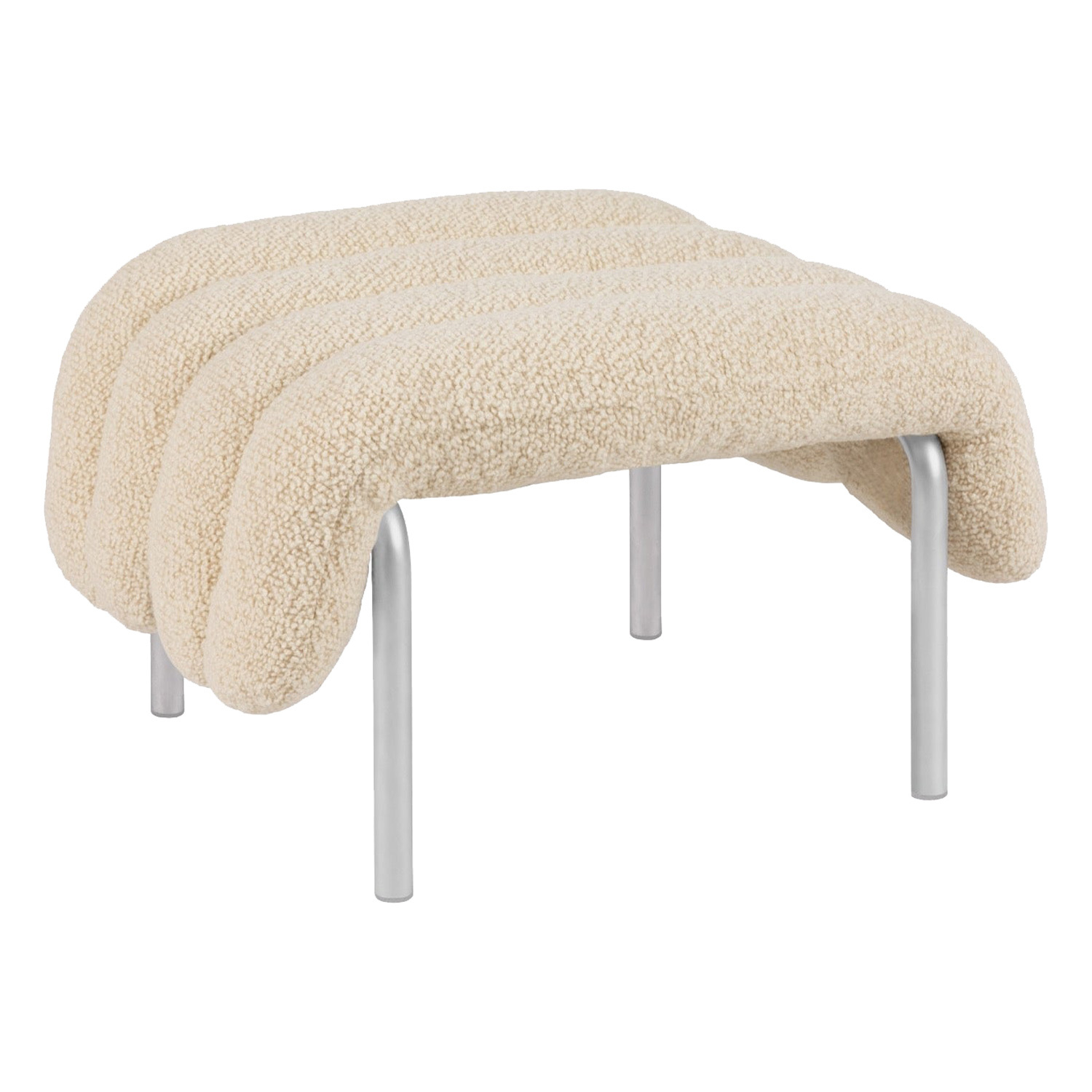
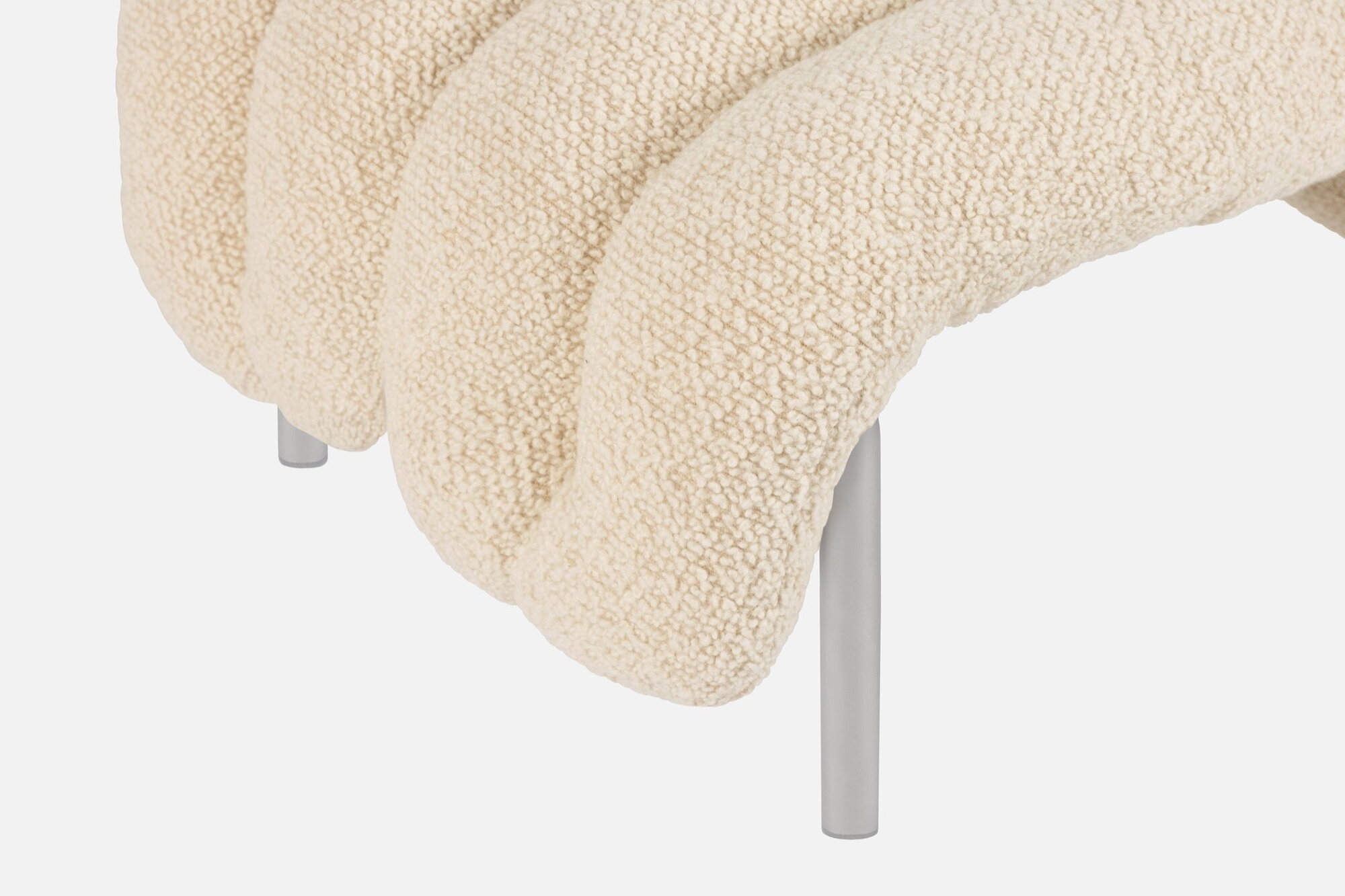
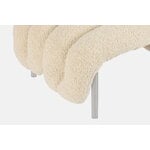
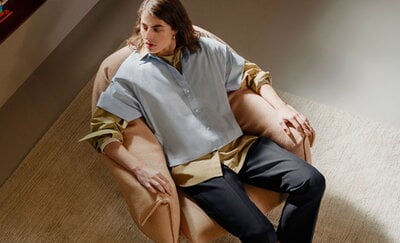
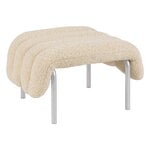
The Puffy ottoman by Hem charms with a delightful contrast of forms and materials. Designed by Faye Toogood, Puffy consists of a streamlined, tubular steel frame and a plump, detachable bouclé upholstery that rests freely on the frame. The playful appearance of the Puffy ottoman adds a relaxed touch to a living room or lobby, and its airy design easily blends into any kind of decor, minimalist or maximalist. Available in a range of colour and upholstery options.
This is a carousel. Use Next and Previous buttons to navigate, or select a thumbnail to jump to a slide.
Puffy ottoman, eggshell boucle - stainless steel
Hem
Description
The Puffy ottoman by Hem charms with a delightful contrast of forms and materials. Designed by Faye Toogood, Puffy consists of a streamlined, tubular steel frame and a plump, detachable bouclé upholstery that rests freely on the frame. The playful appearance of the Puffy ottoman adds a relaxed touch to a living room or lobby, and its airy design easily blends into any kind of decor, minimalist or maximalist. Available in a range of colour and upholstery options.
- Width: 67 cm
- Depth: 58 cm
- Height: 42 cm
- Colour Eggshell, stainless steel
- Frame material Sand blasted stainless steel
- Seat cushion 50% PU foam, 50% ball fiber
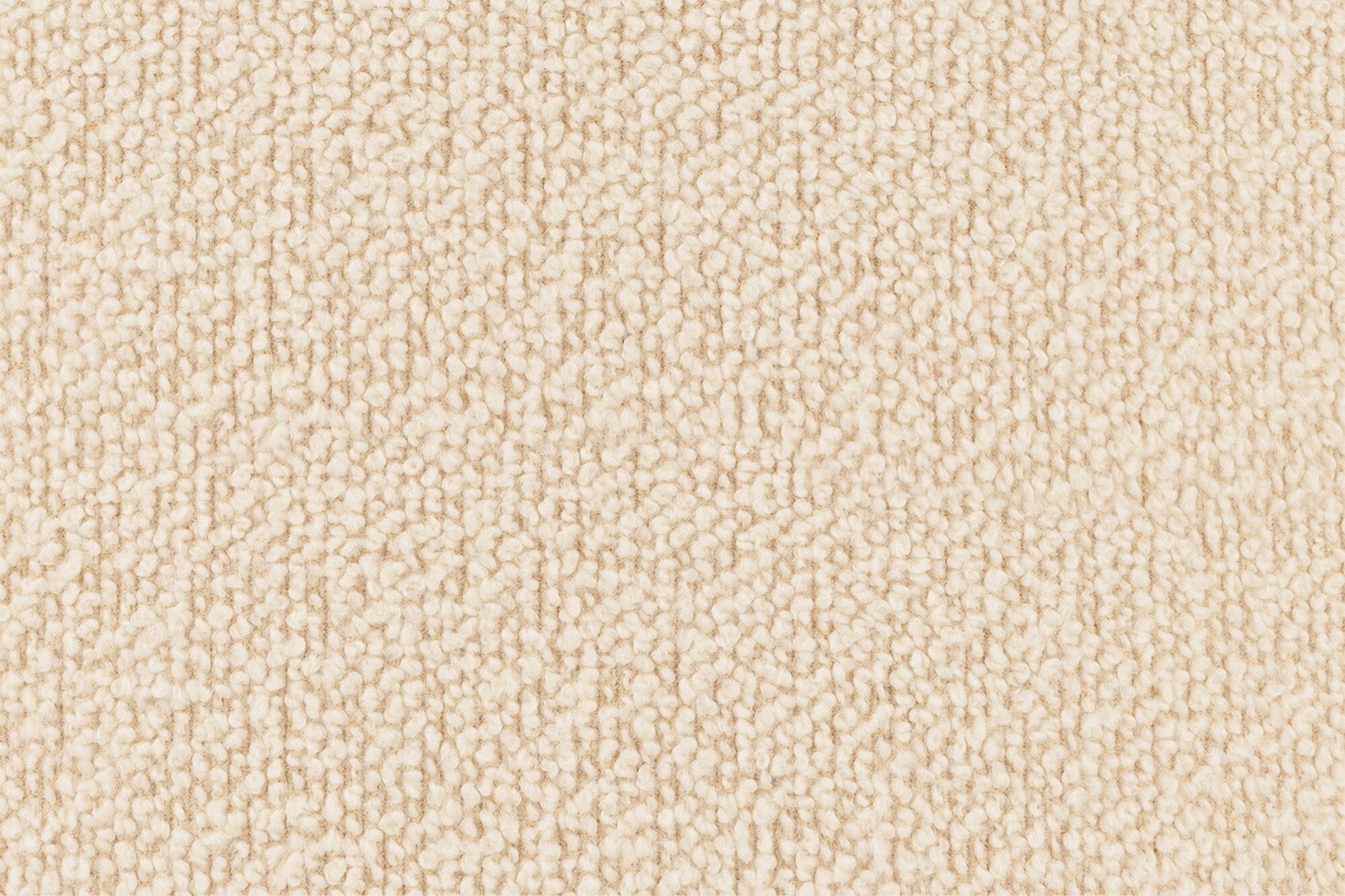
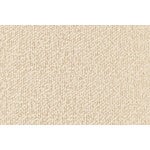
- Upholstery fabric Bute Storr Eggshell: 97 % pure new wool, 3% nylon
- Abrasion resistance 65,000 Martindale
- Lightfastness 5
- Product ID: HE20301

Faye Toogood is a British artist and designer whose work ranges from sculptures and fine art to furniture and fashion design. Toogood founded her own studio in London in 2008. Her works have been included in permanent collections of many museums, including the Philadelphia Museum of Art, Corning Museum of Glass in New York and National Gallery of Victoria in Melbourne.
Faye Toogood – design without boundaries
Faye Toogood is a British artist and designer whose work moves fluidly between sculpture, furniture design and fashion. Her expression is unmistakably original: sculptural forms, bold use of materials and an intuitive design process come together in pieces that exist at the intersection of art and design.
A multidisciplinary force
With a background in graphic design, Toogood founded her studio in London in 2008 and quickly rose to international recognition with her boundary-breaking approach.
Many of her designs – such as the iconic Roly-Poly and Puffy chairs – are at once playful and monumental. For Toogood, design is about creating immersive worlds where space, material and storytelling intertwine.
International acclaim
Toogood’s award-winning work has been widely exhibited on international stages, including Phillips de Pury and the Victoria & Albert Museum in London, the Milan Triennale, D Museum in Seoul and the National Gallery of Victoria in Melbourne.
This global recognition reflects her status as one of the most compelling British designers of our time.
Who: Faye Toogood
- British designer and creative director (born 1977).
- Education: BA in art history, University of Bristol (1988).
- Works across furniture, interiors, fashion and art.
- Known for a sculptural, material-driven and boldly experimental design language.
- Notable designs: Roly-Poly chairs (Driade), Puffy armchairs (Hem).
Read more on Design Stories
View all productsThe Product Sustainability Framework, our criteria of sustainable design, helps you find the most sustainable products in our selection. Read below which sustainability criteria this product has met.
-
Equal opportunities for all employees
-
Commitment to UN Global Compact, fair compensation for all employees
-
Corporate responsibility requirements defined and communicated for suppliers
-
Systematic work for improved inclusion and well-being in the workplace
-
Transparent supply chain
-
Suppliers' compliance to a code of conduct ensured
-
Compliance to the UN Guiding Principles on Business and Human Rights ensured in the supply chain
-
Support for community involvement in the supply chain
-
Direct suppliers audited and certified
-
Fair and resource-wise water-use in production
-
No incineration or landfilling of returned items
-
No use of endangered species as materials
-
No direct environmental emissions or waste (excl. GHGs) from production
-
The sustainability of direct suppliers' production is addressed and monitored
-
Production and material sourcing that respect biodiversity, animal rights, and natural ecosystems
-
Material-efficient and ecological packaging
-
No potentially harmful chemicals used in own production
-
Positive impact on nature’s well-being through operations that regenerate natural ecosystems
-
Company's direct greenhouse gas emissions identified and commitment to reduction
-
Product's carbon impact identified and commitment to reduction
-
Guidance on energy- and eco-efficient use of the product
-
100 % renewable energy in own production and operations
-
Contribution to climate initiatives beyond the brand’s direct operations
-
Low-carbon or compensated transportation
-
Carbon footprint of the product calculated and goals set to reduce it
-
Carbon neutral or carbon negative product
-
Sustainable and long-lasting material choices
-
No harmful or hazardous substances
-
Responsible raw material sourcing and production
-
Materials suited for circularity: monomaterials, recyclable finishings, renewable or recycled contents etc.
-
Ecological materials: natural, biodegradable, recyclable or recycled contents
-
Outstanding materials in terms of innovativeness, responsibility, sustainability and circularity: local production or sourcing, 100 % recycled content, C2C-certification etc.
-
High aesthetic quality promoting long-term use of the product
-
Technically durable product design and material choices
-
Design for enduring life-long quality
-
Design and support for product maintenance, repair and upgradability
-
Innovative circular design solutions: circular service system, resale platform, remanufacturing, collection of used products, etc.