The master of chairs: Hans J. Wegner
Wegner’s designs unite tradition, craftsmanship, and modern industrial production.
WHEN Holger Hansen, the director of Danish furniture manufacturer Carl Hansen & Søn, saw Hans J. Wegner’s softly contoured and minimalist Round Chair at the Copenhagen Cabinetmakers’ Guild Exhibition in 1949, he immediately wanted to collaborate with the designer. The chair’s rounded backrest brought something entirely new to wooden chair design.
Hans J. Wegner (1914–2007) visited Hansen and showed him his sketches. One design in particular caught Hansen’s attention: a light, elegant chair that combined elements of a traditional Chinese chair, modern design, and Nordic folk furniture. The result was something that felt both familiar and completely new.
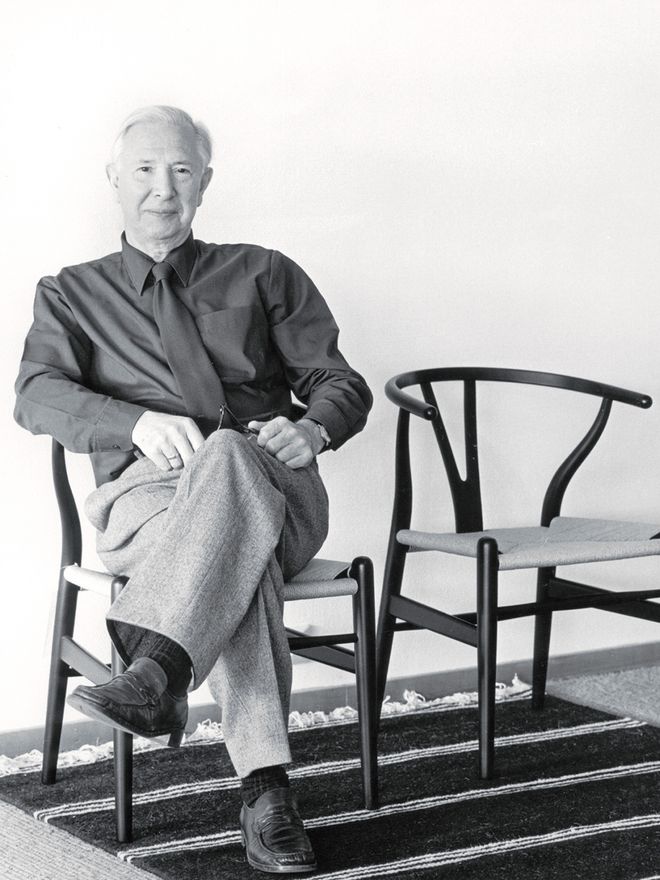
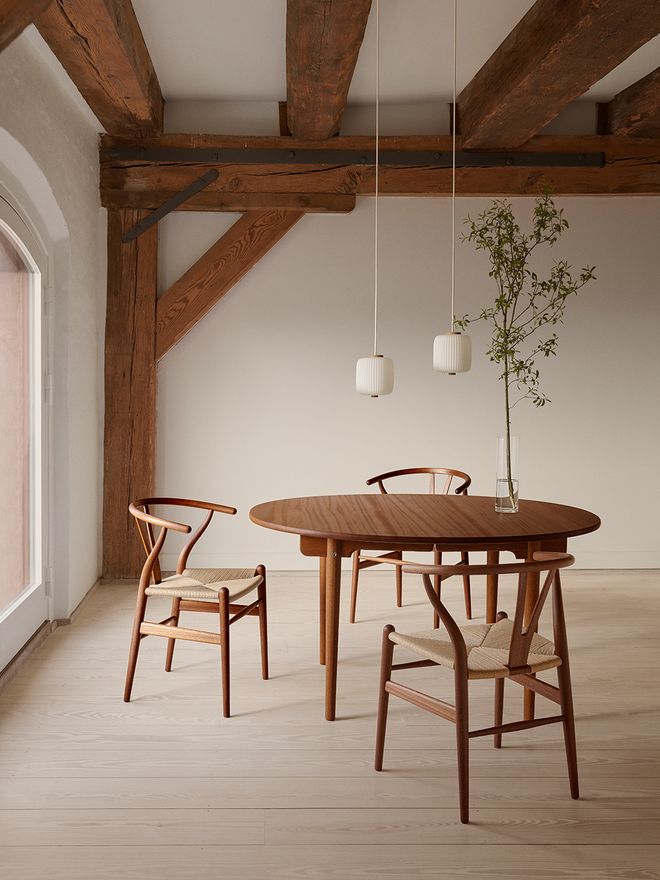
Wishbone or Y Chair is Wegner’s most well-known and popular chair. Its formal language was rooted in a traditional Chinese chair.
Carl Hansen & Søn added the CH24 chair – better known as the Wishbone or Y Chair – to its collection in 1950. It wasn’t easy to produce: the chair was made from 14 separate parts and required about a hundred steps to assemble. The seat alone was crafted entirely by hand, using roughly 120 meters of paper cord.
Despite its complexity, the Wishbone Chair went into production and Carl Hansen & Søn has never regretted the decision. It became one of the most iconic pieces of Nordic design, a true success story that has remained in continuous production since 1950. To this day, it is still the best-selling piece among Wegner’s designs.
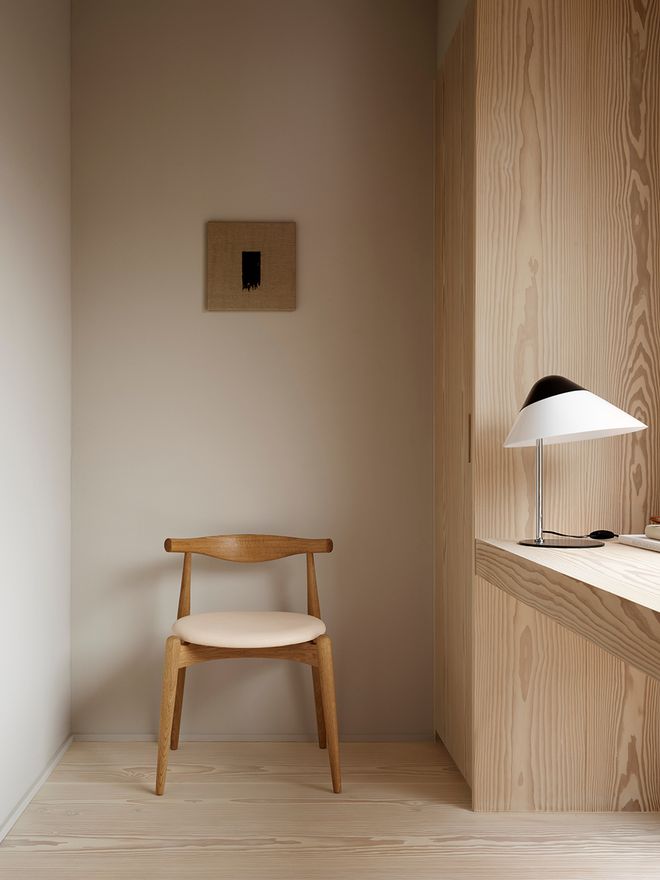
Hans J. Wegner designed the Elbow Chair as early as 1956, but it remained hidden in the archives for decades. In 2005, the chair finally entered production at Carl Hansen & Søn.
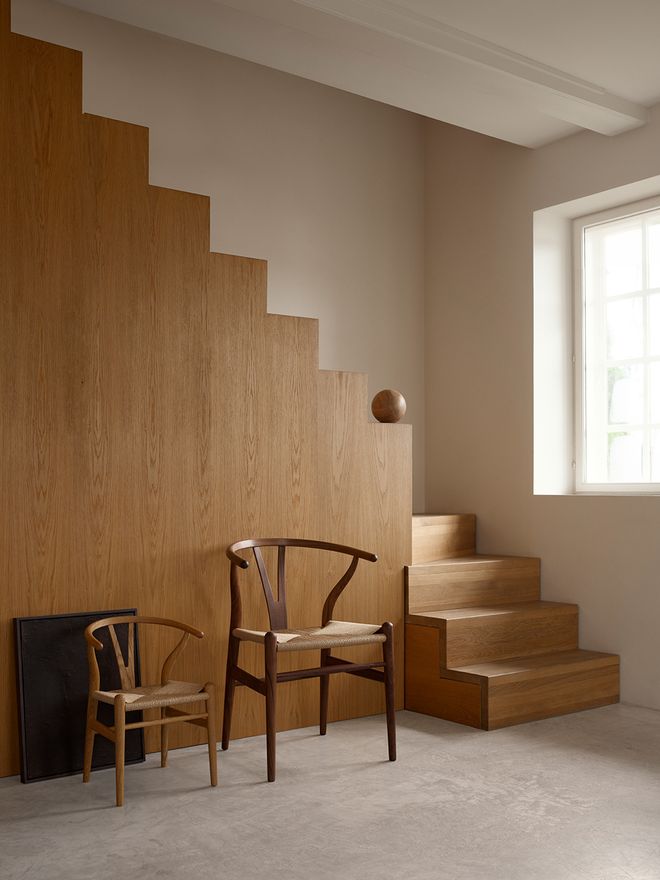
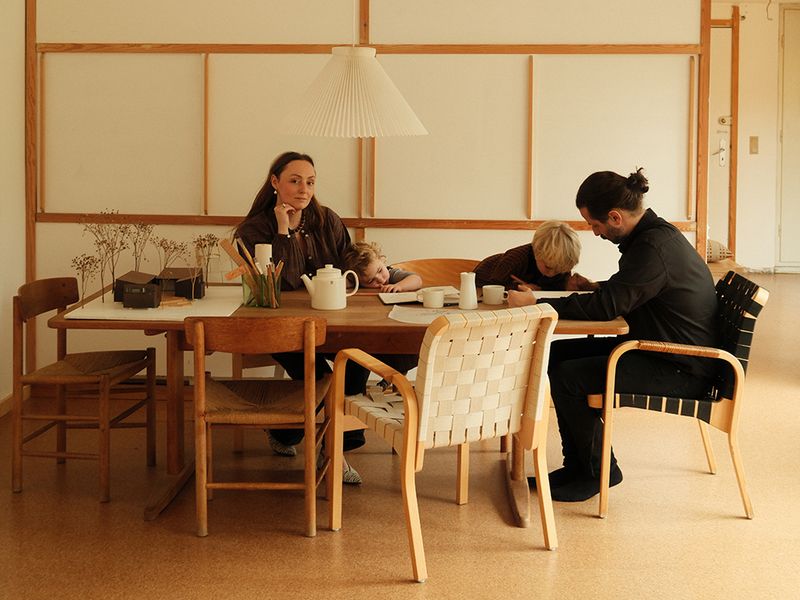
Wegner’s signature is most refined in his wooden furniture.
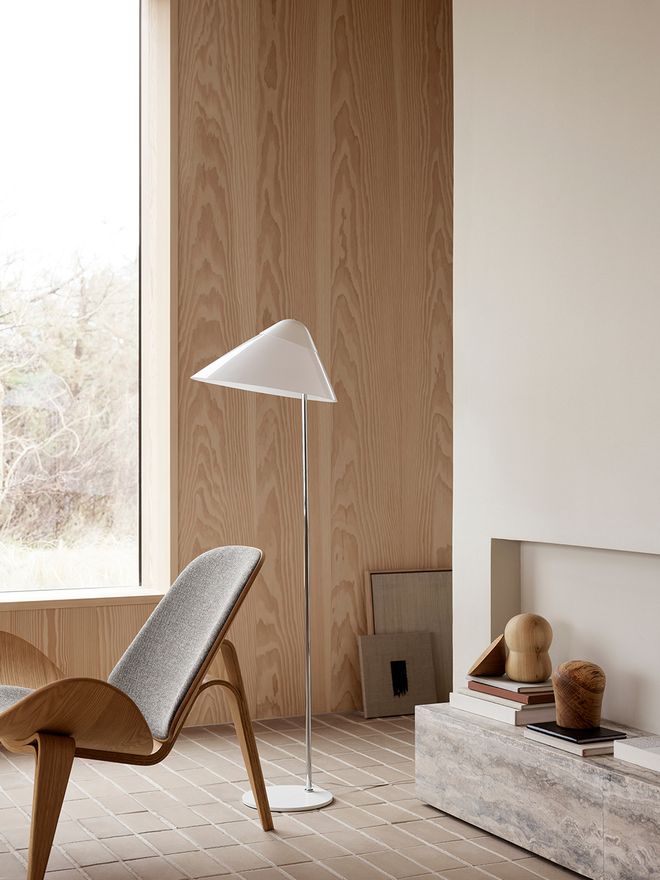
Wegner also designed lighting. The Opala Midi floor lamp was part of the Opala collection planned in the 1970s for Copenhagen’s Hotel Scandinavia.
THE DESIGNER behind the chair, Hans J. Wegner, was born in 1914 and grew up in a family of craftsmen in the town of Tønder, in Denmark’s southernmost region. Showing early talent for drawing and woodworking, he began an apprenticeship at age 14 with local cabinetmaker H. F. Sahlberg. For three years, Wegner immersed himself in traditional carpentry techniques. These formative years left him with a deep understanding of wood and construction methods, knowledge that would define his entire career as a designer.
At 18, during his military service near Copenhagen, Wegner had the opportunity to visit the annual Cabinetmakers’ Guild Exhibition for the first time. By then, the exhibition had become the most important showcase for Danish furniture design and craftsmanship. The experience made him realize that he wanted to pursue further studies in furniture design.
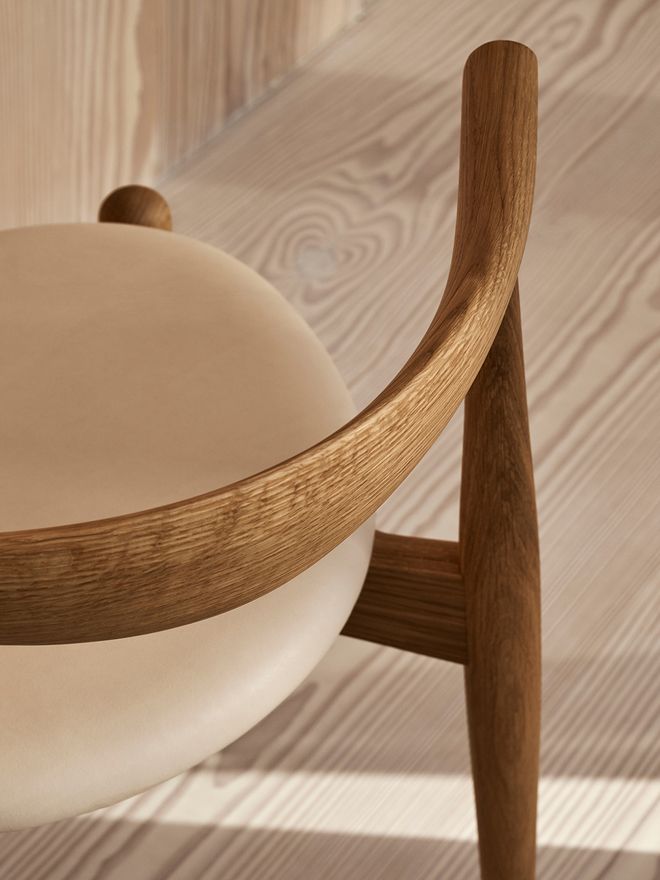
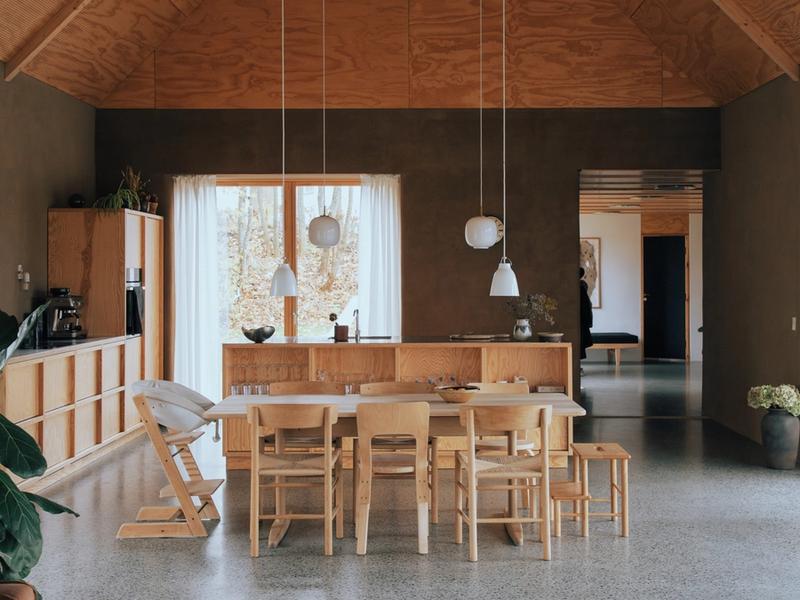
The chair shapes are sculptural, and every wood part and its joint is crafted with exacting precision.
From 1936 to 1938, Wegner studied at the Copenhagen School of Arts and Crafts. After two years, he left his studies to work for two promising young architects, Arne Jacobsen and Erik Møller, who were then designing the Aarhus City Hall.
Wegner was tasked with designing furniture for the building. Through the project, he established valuable connections with furniture manufacturers and realized he could develop his own designs independently. In 1943, he opened his own design studio.
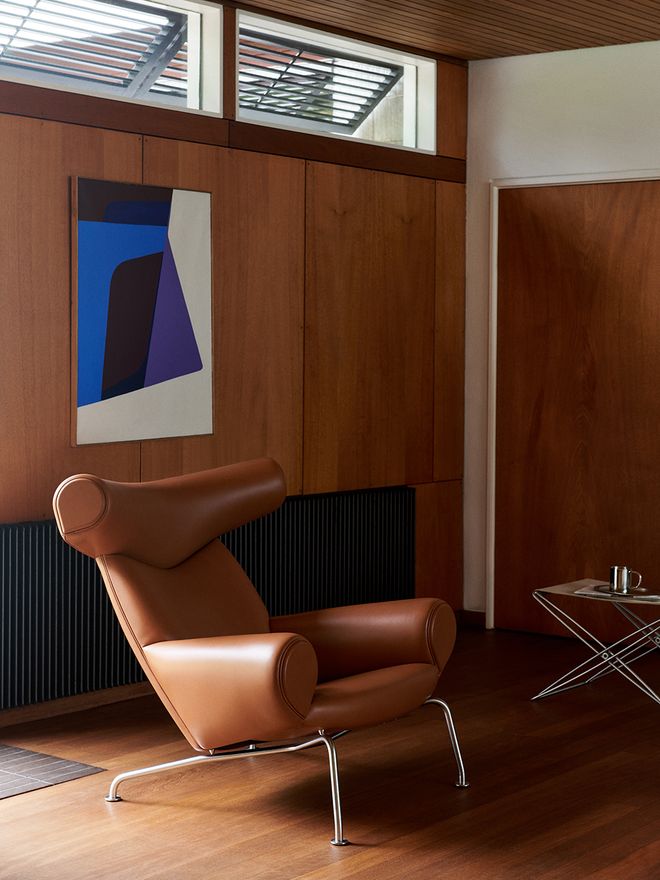
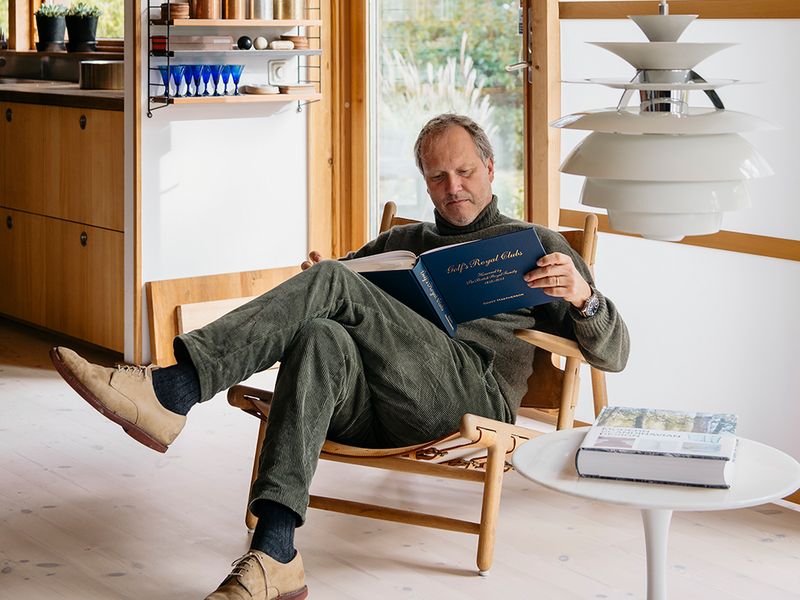
Wood remained Wegner’s primary material throughout his career, but alongside it he also designed furniture with plywood or metal frames and upholstered pieces. Shown here: Fredericia’s Ox chair.
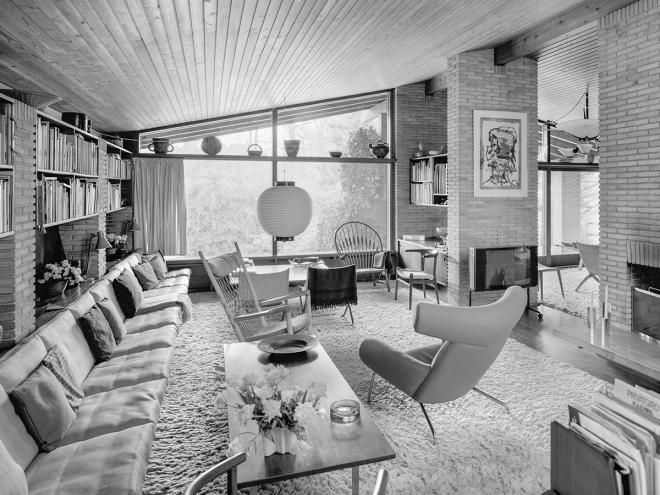
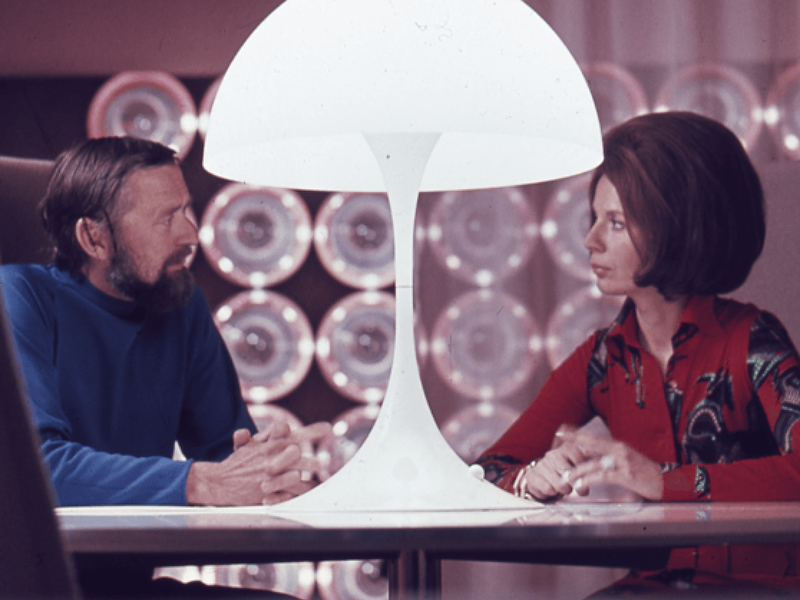
Wegner’s home was in Hellerup in Copenhagen’s suburb area. The archive photo shows the living room of his home.
WHEN DESIGNING furniture, Hans J. Wegner often began with a historical chair model, refining and simplifying its structure to create a more modern form. He was particularly inspired by English Windsor chairs with spindle backs and traditional Chinese seating, which he reinterpreted into fresh, contemporary versions. Throughout his career, he kept returning to these themes, developing new variations time and again.
Wegner’s career was both prolific and successful, earning him a place among the foremost figures in Nordic furniture design. Over the course of his working life, he designed around 500 different chair models. It’s no surprise, then, that he became known as “the master of chairs.” His designs are celebrated for their balance of form, flawless craftsmanship, and subtle detailing – and above all, for being exceptionally comfortable to sit in.
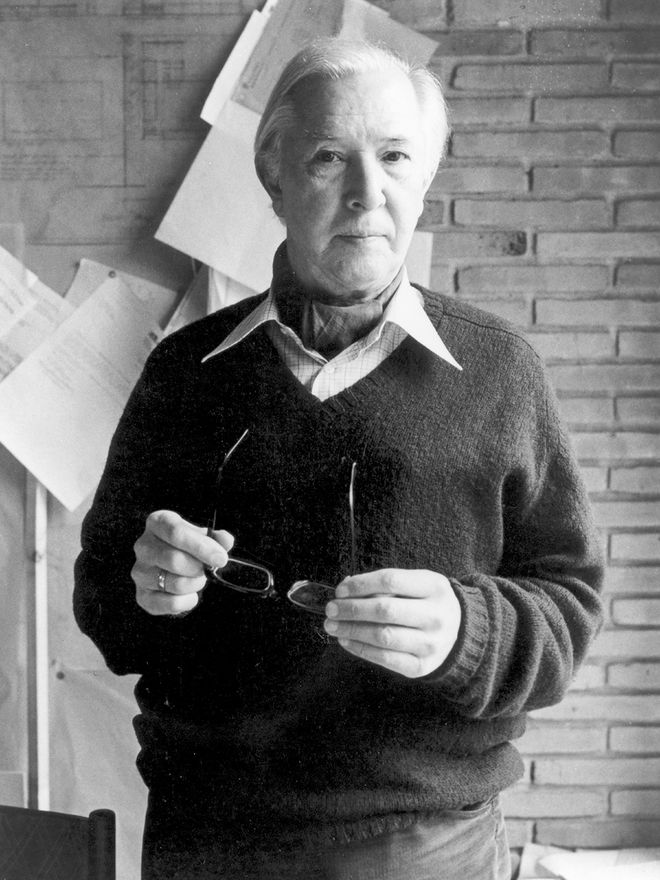
Wegner believed in simplicity and the quality of craftsmanship, encapsulating his philosophy in the statement: ‘A chair is to have no backside. It should be beautiful from all sides and angles.’
Who: Hans J. Wegner
Born in 1914 in Denmark, Hans J. Wegner passed away in 2007 at the age of 92. He began his career as a carpenter’s apprentice at just 14 years old.
He graduated from the Copenhagen School of Arts and Crafts in 1938 and later worked with architects Arne Jacobsen and Erik Møller.
Wegner founded his own studio in 1943 and went on to design more than 500 chairs over the course of his career.
His most famous creation, the Wishbone Chair (CH24), has been in continuous production since 1950.
Today, Wegner’s furniture designs are produced by Carl Hansen & Søn, Fredericia, PP Møbler, Erik Jørgensen, and Getama.
See also:
• CH24 Wishbone chair >
• More designs by Hans J. Wegner >
Text: Anna-Kaisa Huusko Images: Carl Hansen & Søn, Fredericia
Published on 15 Oct, 2025