At Helsinki’s Boreal, the north sets the rhythm
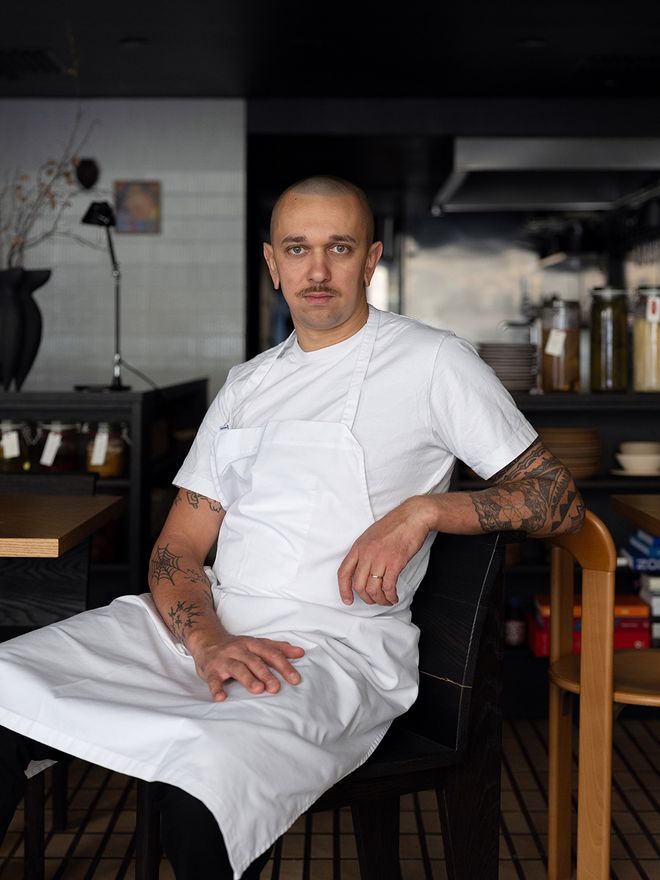
Pasha Demin runs Boreal, located on Uudenmaankatu in Helsinki.
IT’S EASY TO PICTURE a certain kind of person behind a Michelin-starred restaurant: busy, a little on edge. Pasha Demin is not that person. He sits at the long table in the dining room, listens, and takes his time with his answers. The star was never really the goal. Maybe that explains the calm.
The room slowly comes to life. Pasha nods to a colleague arriving for the day. Someone puts on coffee. Evening service is still hours away, but the prep is already underway. At Boreal, on Helsinki’s Uudenmaankatu, the work isn’t hidden behind the scenes.
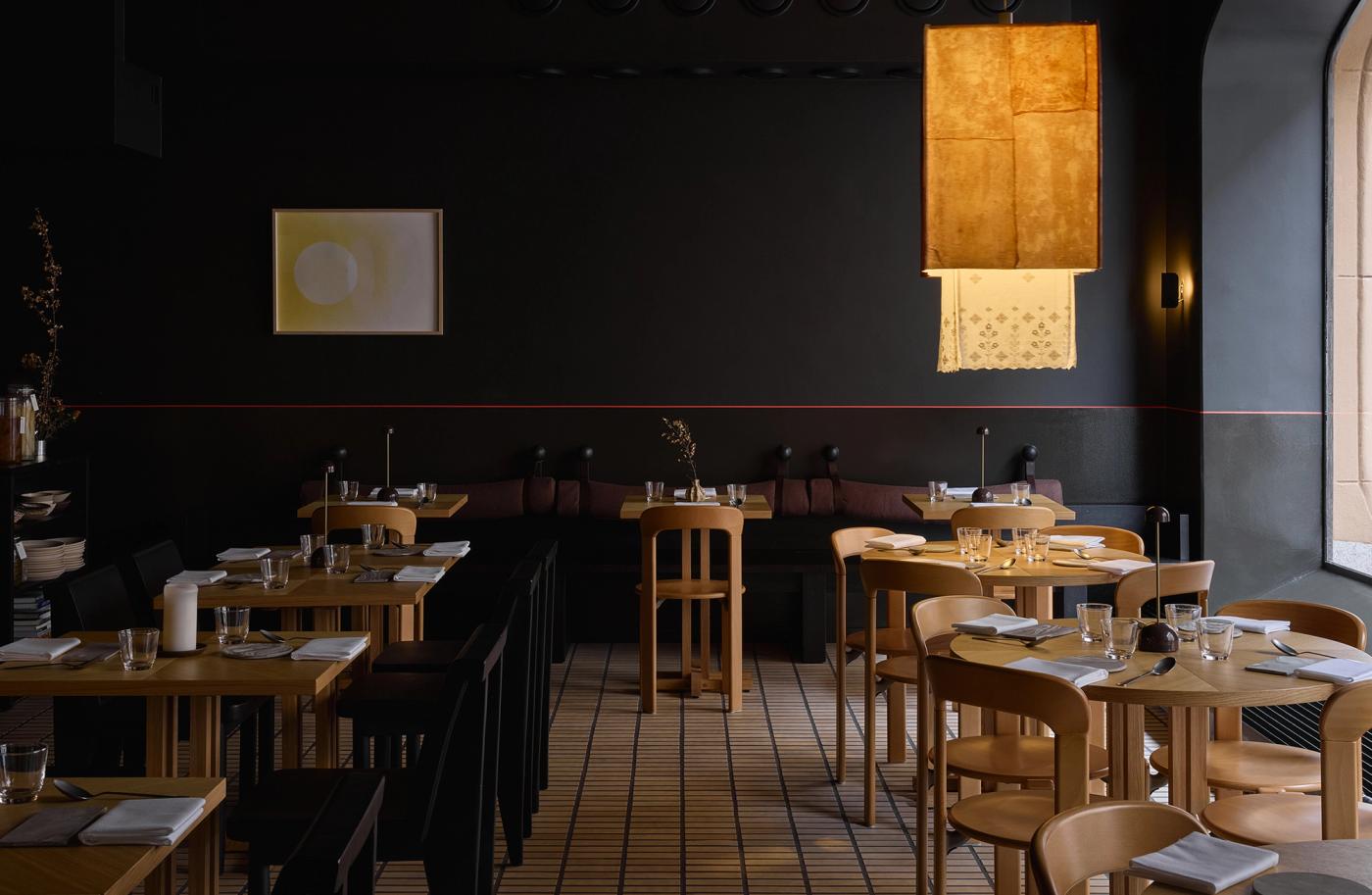
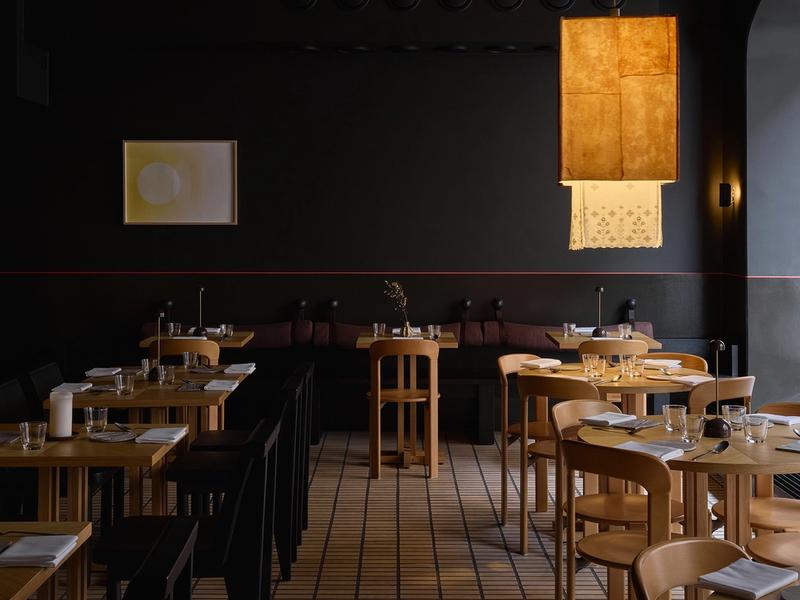
A French bistro, Japanese and Slavic aesthetics, and yet none of them outright. At Boreal, atmosphere comes first.
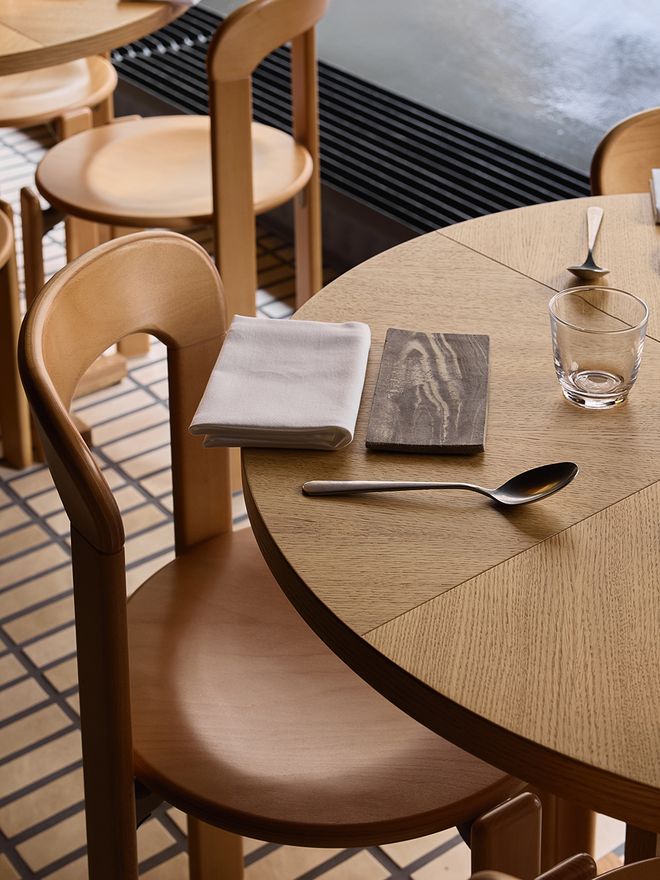
Every table has a view into the kitchen. Guests aren’t seated in a separate dining room, but in the middle of the process.
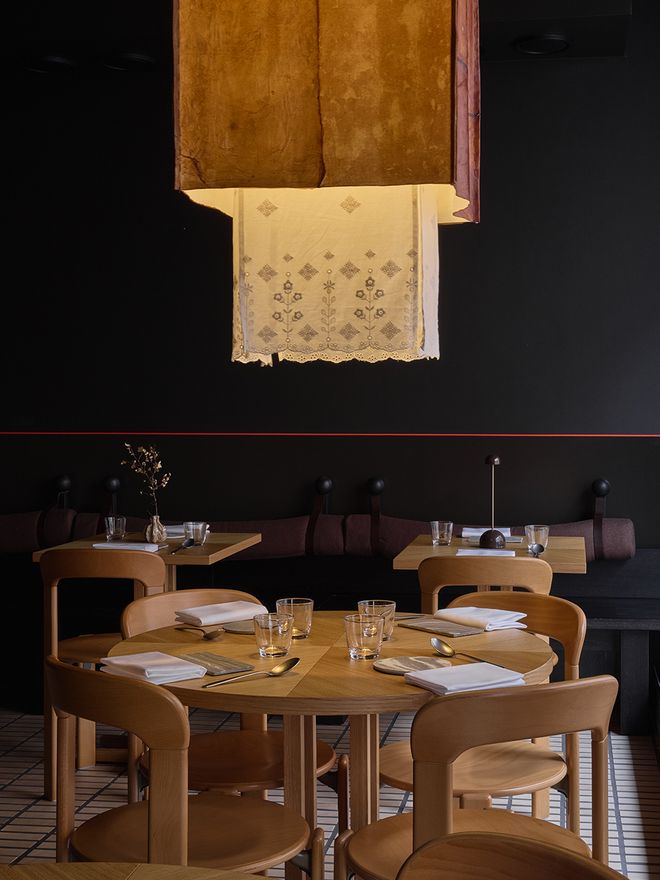
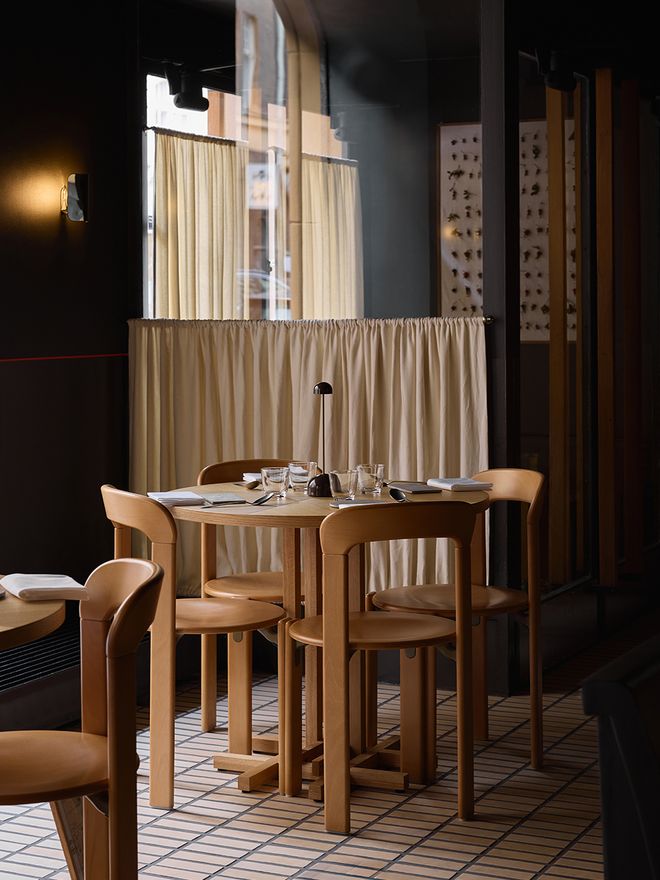
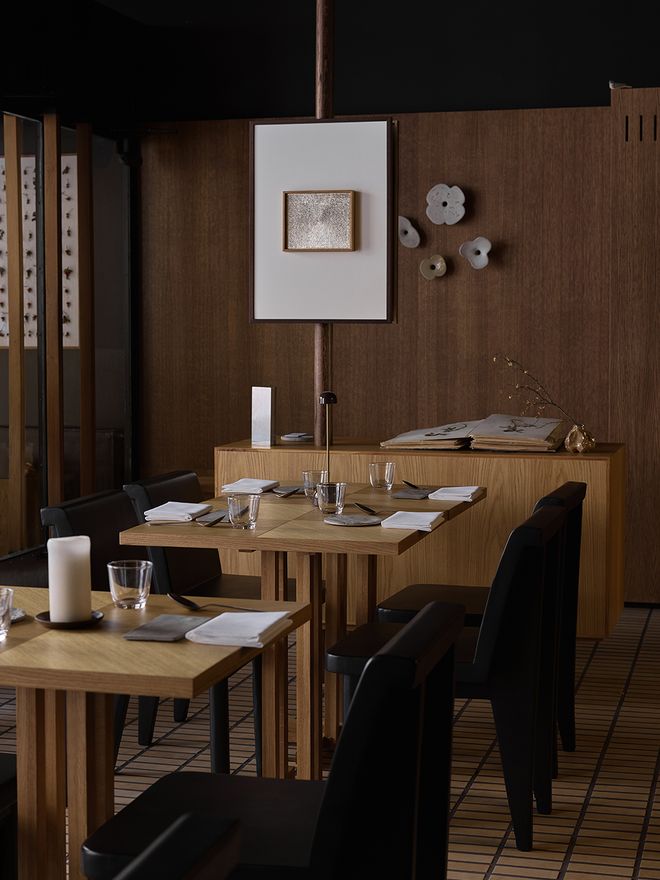
Soft lighting and layered textures make the space feel warm without committing to any one style.
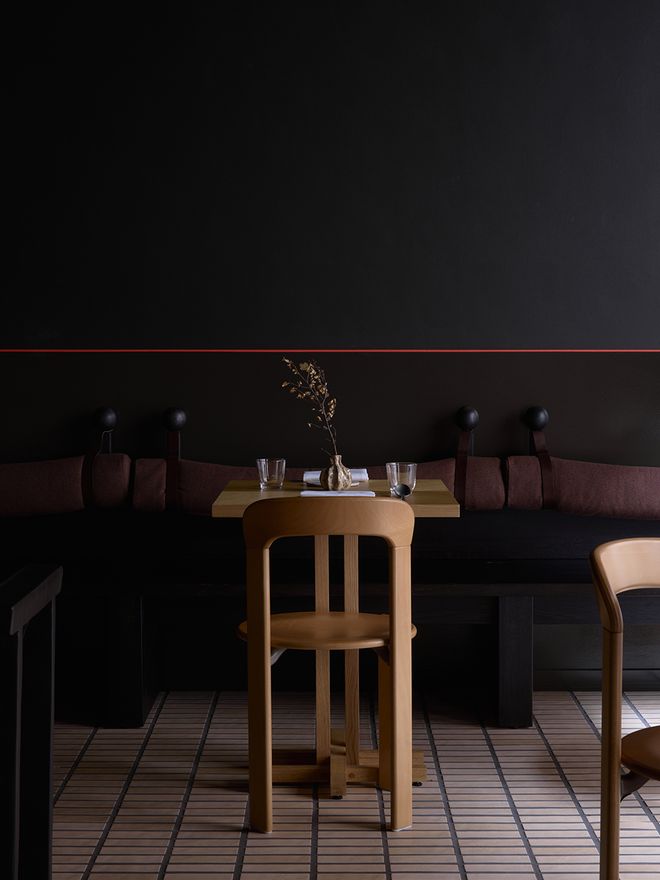
The restaurant’s Rey chairs are by HAY, supplied by Finnish Design Shop’s Trade & Contract Sales.
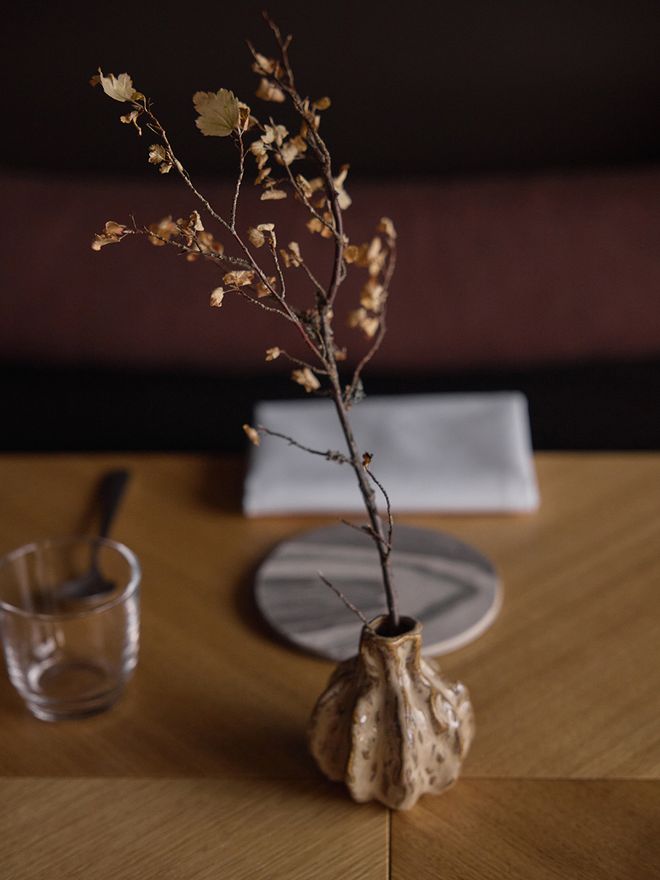
The food isn’t the only thing considered down to the smallest detail. So is every element of the interior.
On his own terms
Pasha has seen what happens when a restaurant project has, well, too many cooks.
“Things often go wrong when the chef has one idea, the manager another, and the owner a third. Then it isn’t one coherent project,” he sums up.
Opening a place of his own was a given, because only in your own restaurant do you get to decide everything yourself. When every choice comes from the same vision, the whole thing holds together.
Pasha has worked as a chef since the age of 17, now for nearly two decades. He opened his own restaurant in Russia in 2018, but his attention gradually turned abroad. He gathered experience at Azurmendi in the Basque Country and at Noma in Copenhagen.
The Nordics had always drawn him in, especially their pared-back aesthetic and the balance they keep between work and life. In 2022 he moved to Helsinki to work at 305 and Kuurna restaurants. After that, it was time to do something of his own.
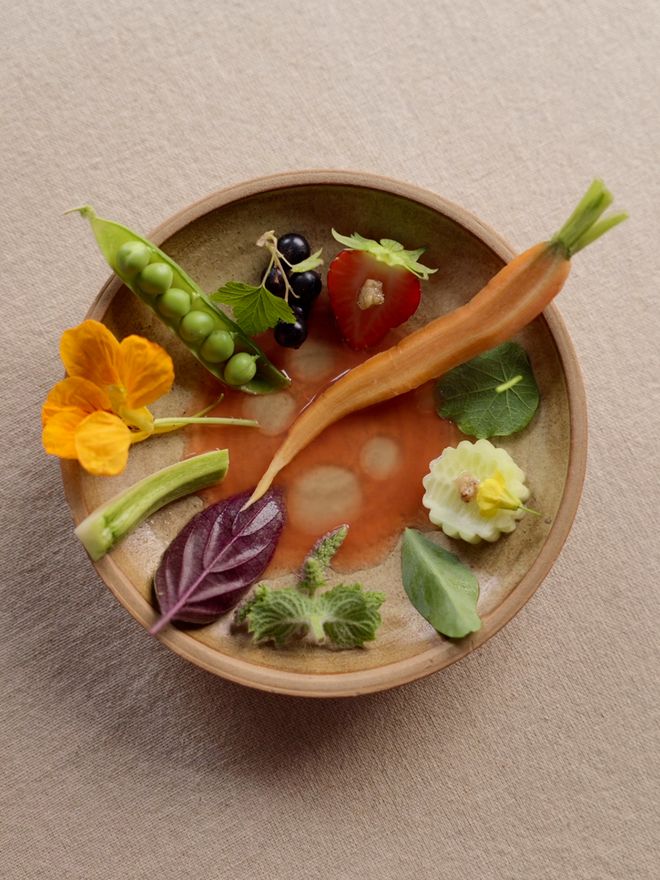
The growing season is short in the north, so Boreal knows how to plan ahead.
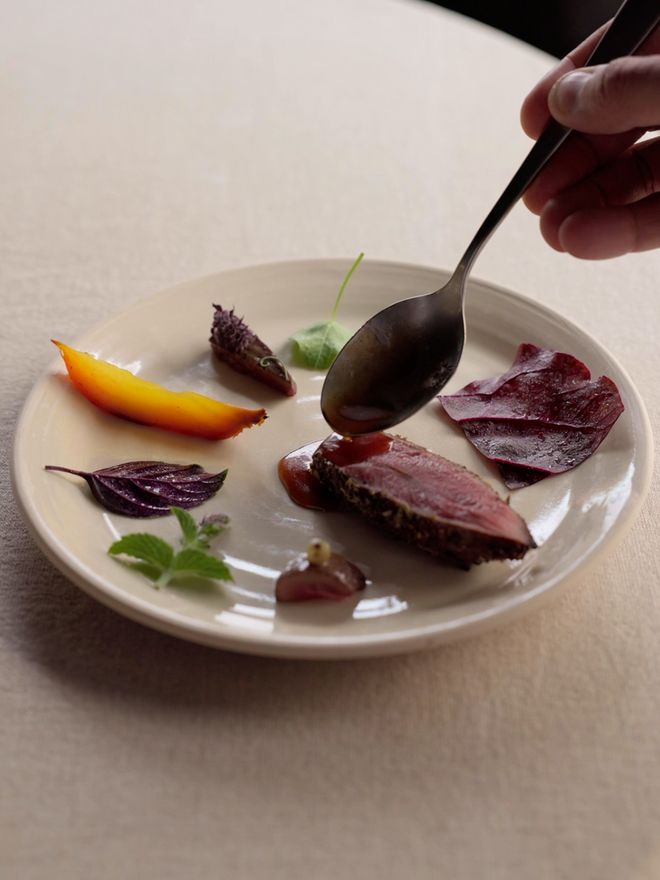
Come fall, fermenting and preserving carry the flavors of summer onto the winter table.
The season, preserved
Boreal begins with nature. Drawing on nature is hardly a new idea, but here it feels less like decoration applied on top and more like a journey into what nature actually is. The theme is personal for Pasha. On forest walks in Jollas, Helsinki, he settles and finds his way back to creativity.
“Nature is in balance: stones, moss, trees, water, all of it perfect,” he describes. Out there, nothing demands attention or asks to be changed, and that is exactly where the appeal lies. Nature is already complete, and still always changing.
The name Boreal refers to the northern reaches of the planet, and the rhythms of northern nature guide how the restaurant works.
The turning of the year shows up on the menu. The growing season is short up north, which is why Boreal preserves, ferments, and anticipates.
Through the winter now beginning, the restaurant lives off the bounty of the summer and fall just past. Meat is treated just as practically. The whole animal is used, including the cuts most kitchens would rather skip. A chef’s skill really shows when there is more than tenderloin on the cutting board.
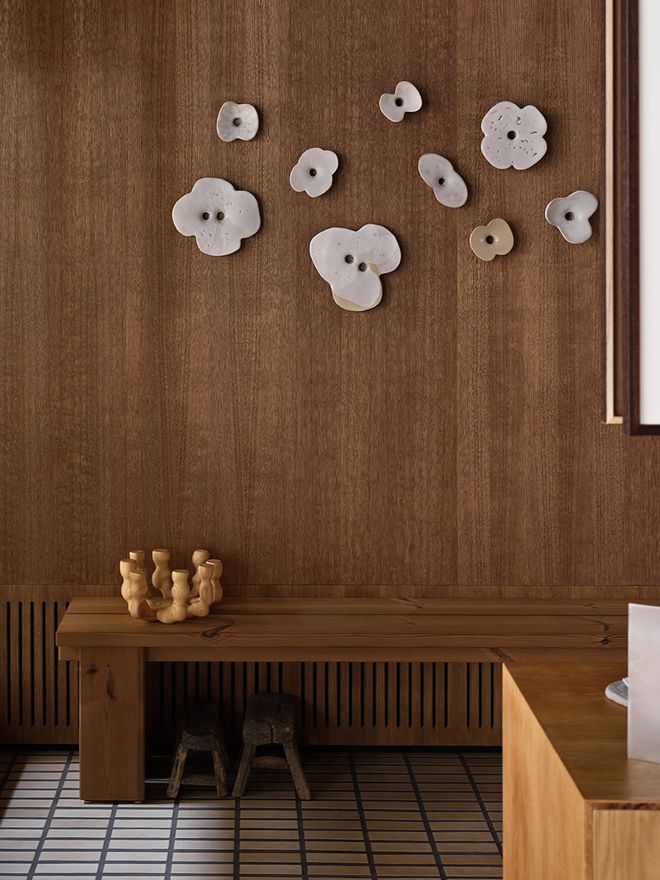
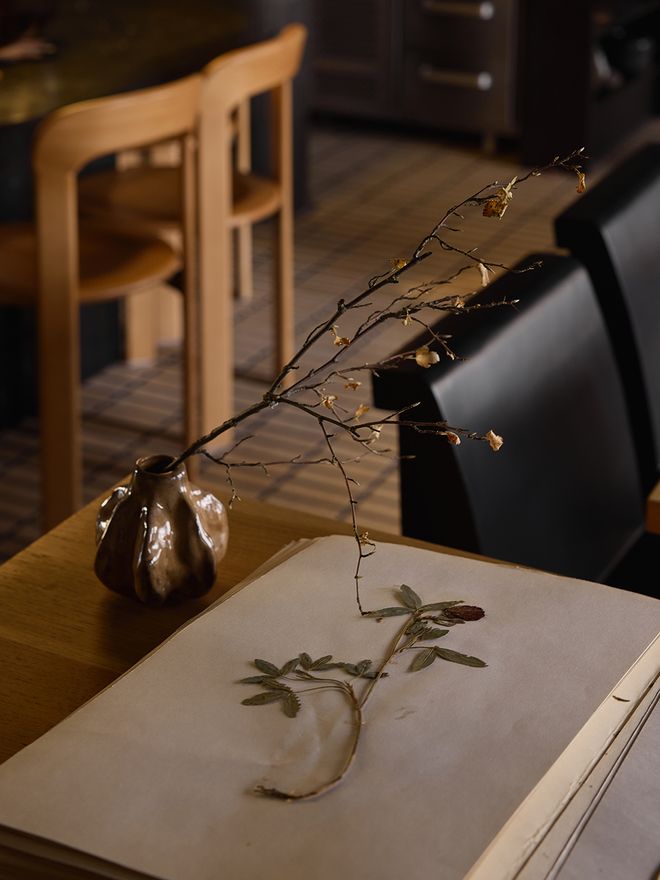
Finnish nature shows up in the interior in many ways.
The restaurant seats 40.
A Michelin star now sits by Boreal’s door.
Well-earned attention already brings half of the guests from abroad.
Atmosphere before style
There is warmth in the space. You can read hints of a French bistro in it, of Japanese and Slavic aesthetics, and still it is none of them. More than an aesthetic rule or a reference point, Boreal is a feeling. It comes from shapes, colors, and scents that layer and texture the room the way they do in nature.
Pasha says the aesthetic was never actually named. With the team, they talked a lot about what felt like their own and what didn’t. They also tried to steer clear of the obvious choices, the ones often considered typical of a Nordic restaurant.
“A lot of restaurants resemble one another, and these days it can be hard not to repeat the same styles,” Pasha reflects.
Every table in the restaurant has a direct line of sight into the kitchen, which is essentially one room with the dining area. The idea was to keep the space as open as possible, so guests aren’t tucked into a separate dining room but invited into the middle of the process.
Quiet music plays under the service, and plates arrive at the table silently, almost gliding, as Pasha puts it.
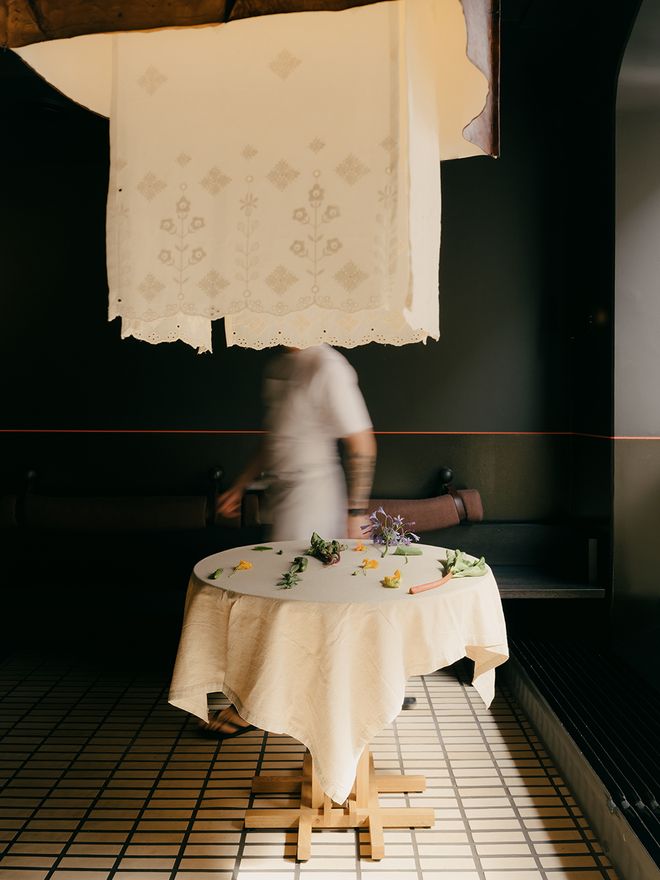
Pasha Demin wants every decision to grow from the same vision. Photo: Henri Vogt
Guests from far away
Boreal had been open for just six months when a Michelin star appeared by its door. That is not exactly typical. Chasing stars was never the point of the project, but for Pasha the recognition confirms that the direction has been right.
The change the star brought shows in the reservation book. Guests used to be almost entirely local. Now about half come from abroad, and every so often someone travels to Helsinki for Boreal alone.
A few weeks ago a chef from Japan came in as a guest, and the team decided to invite him into the kitchen to work the next day. They had no language in common, but the language of food was enough. Now Pasha hopes to return the visit, as a guest in someone else’s kitchen.
When he travels, he says, he represents Helsinki.
“Everyone knows Copenhagen and Paris, but few people have been here. Helsinki has so much to offer, not just the food but the nature and the rest of the culture,” he notes. “The only thing we’re missing is recognition.”
See also:
• Tableware at Finnish Design Shop >
• Finnish Design Shop’s Trade & Contract Sales >
Published on 3 Nov, 2026