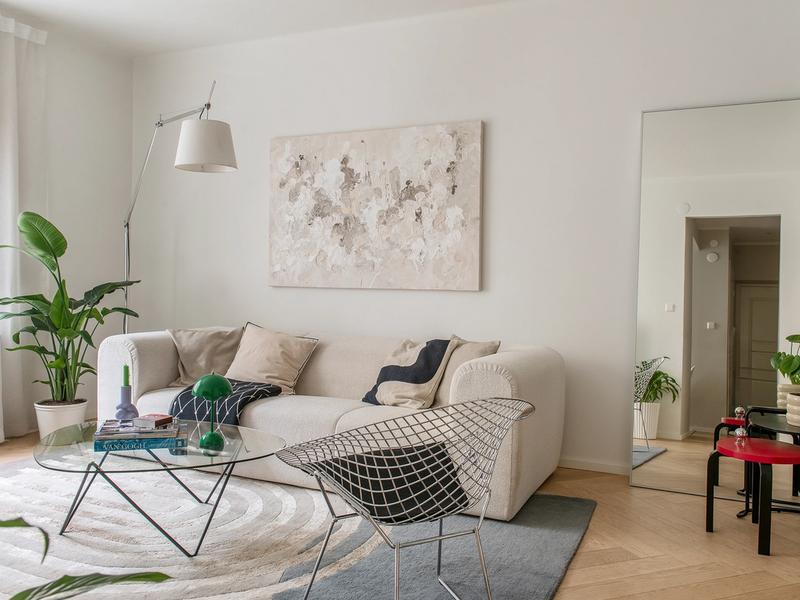
The H.C. Andersen House, designed by Kengo Kuma, is a magical combination of fairytales and reality
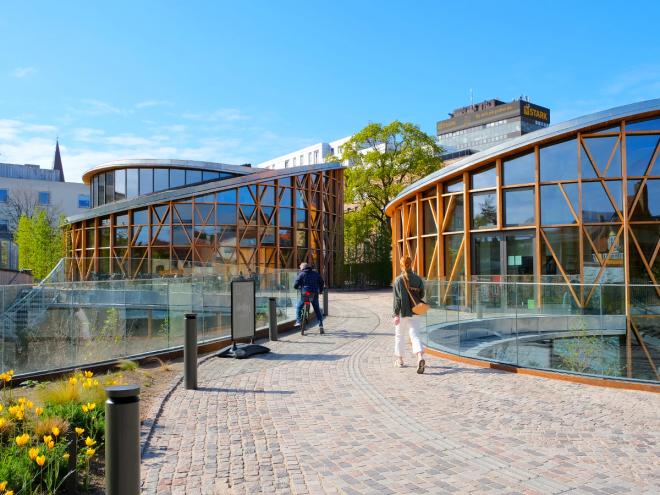
The H.C. Andersen House in Odense, Denmark was opened to the public in the summer of 2021. The museum was designed by renowned Japanese architect Kengo Kuma and his office Kengo Kuma & Associates.
HANS CHRISTIAN ANDERSEN's fairytales have captivated both children and adults alike around the world for decades. Located in Odense, Denmark, the H.C. Andersen House introduces a new perspective on the magnificent mind of the ingenious artist and his fantastical universe through multimedia art and surprising architecture.
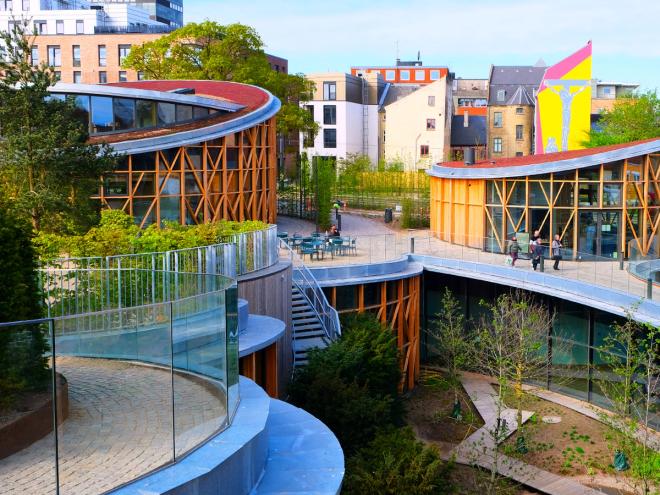
The circular lines and multiple levels underline the dreamlike feel of the building.
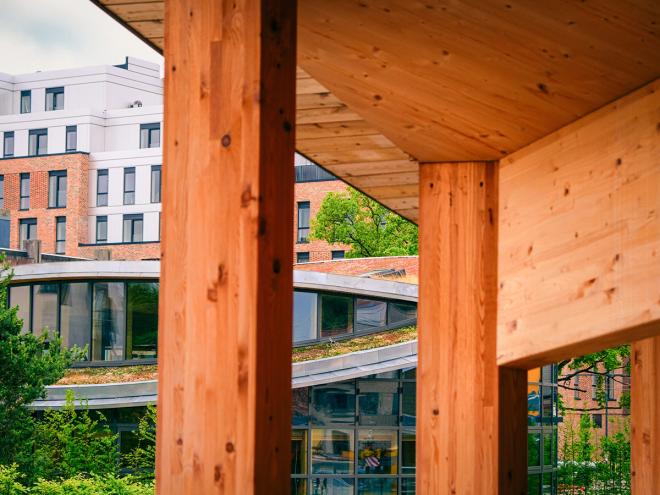
The choices of materials support the seamless integration of the H.C. Andersen House into its environment.
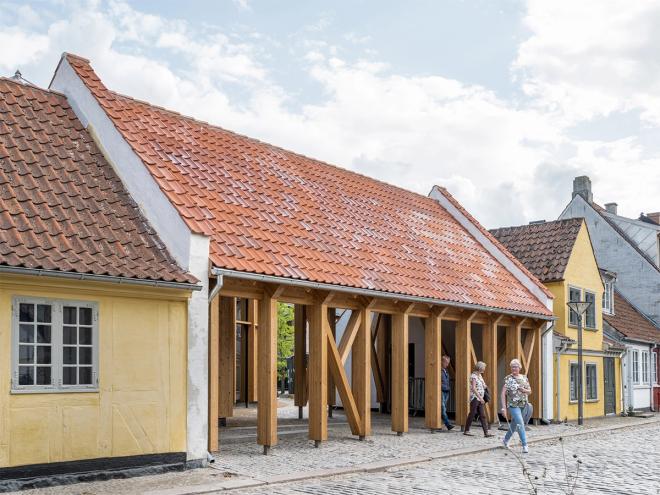
H.C. Andersen House can be perceived as a link between the old and new districts of Odense, paying homage to both.
The museum was designed by renowned Japanese architect Kengo Kuma and his office, Kengo Kuma & Associates. Covering a whopping 5,600 square feet, two-thirds of the museum is located underground.
The magical space intertwines with a labyrinthine garden that also serves as a public park for the residents of Odense. The landscaping was created by Danish MASU planning.
“Literature and architecture have a lot in common: they both have to provide people with dreams.”
The design language of the buildings is dominated by circular, curved lines and the fascinating humility of natural materials. Functional, Nordic materials such as wood, stone, concrete and glass anchor the dreamlike building in everyday realism and its surroundings – yet there is still magic in every detail.
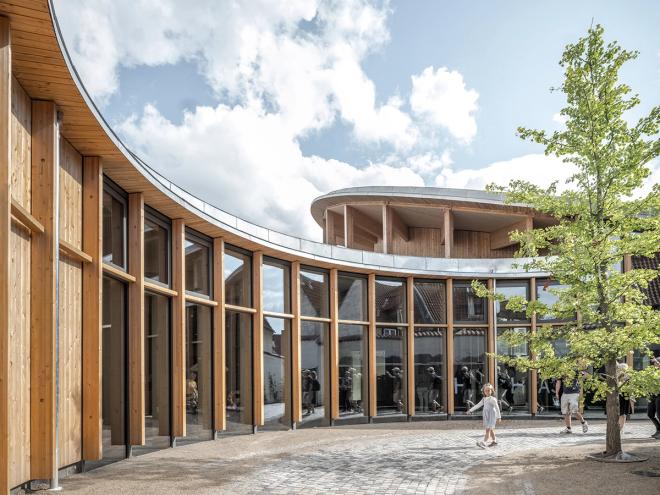
The façades and frames of the pavilions are made of pine. “Hans Christian Andersen’s message to us is that dreams come from everyday life. That is why it was also important for us that the magic of this project was created entirely from ordinary materials,” says Kuma.
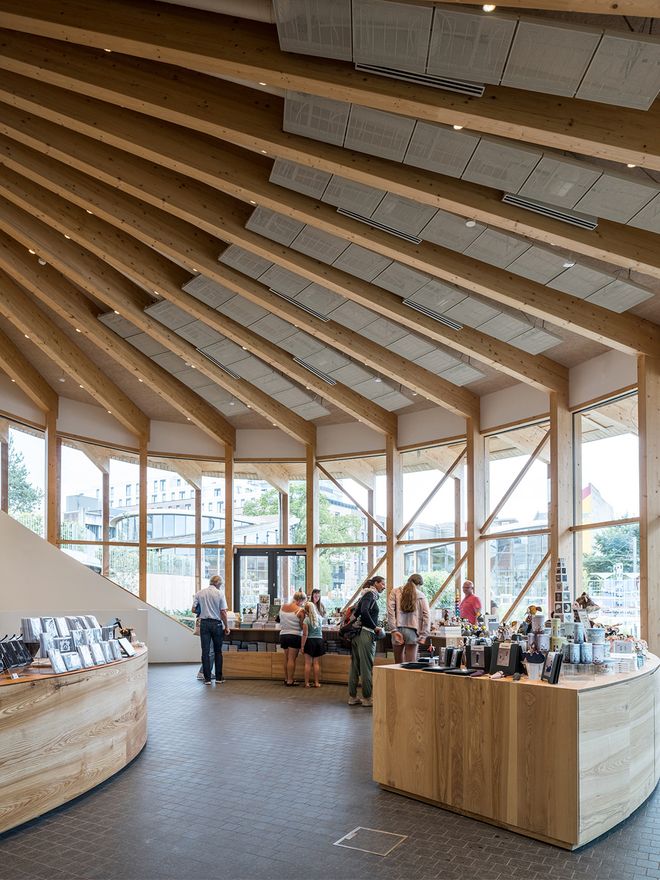
The harmonious, organic mood of different types of wood brings warmth and comfort to the vast space.
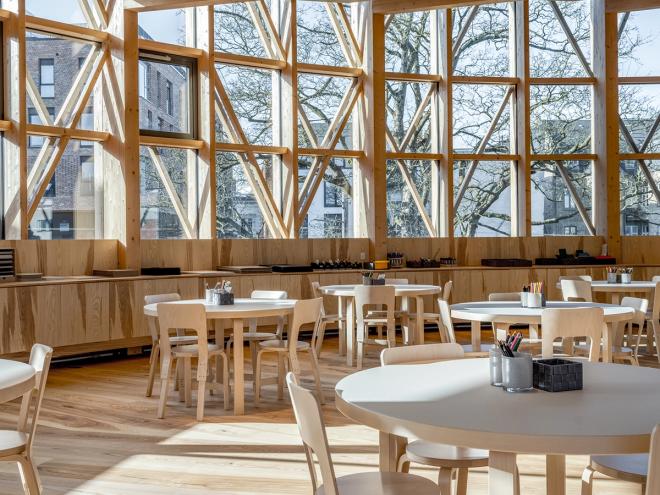
One of the above-ground buildings houses a space designed especially for children, Ville Vau, which provides a setting for both imaginative play and creative crafts. Table 91 and chair 66 were designed by Alvar Aalto and are part of Artek's range.
H.C. Andersen House’s above-ground pavilions carry subtle references to Andersen’s Tinderbox story, where a hollow tree trunk serves as a gateway to a magical underground world. The façade and frame of the round buildings are made of pine, while inside the exposed larch beams and beech floors catch the eye.
Concrete was chosen as the main material for the spaces below ground level, and its cool, minimalist feel serves as the perfect backdrop for the exceptional exhibition. The multimedia exhibition consists of writing, installations, sound and visual art, and has been created by 12 carefully curated artists from around the world.
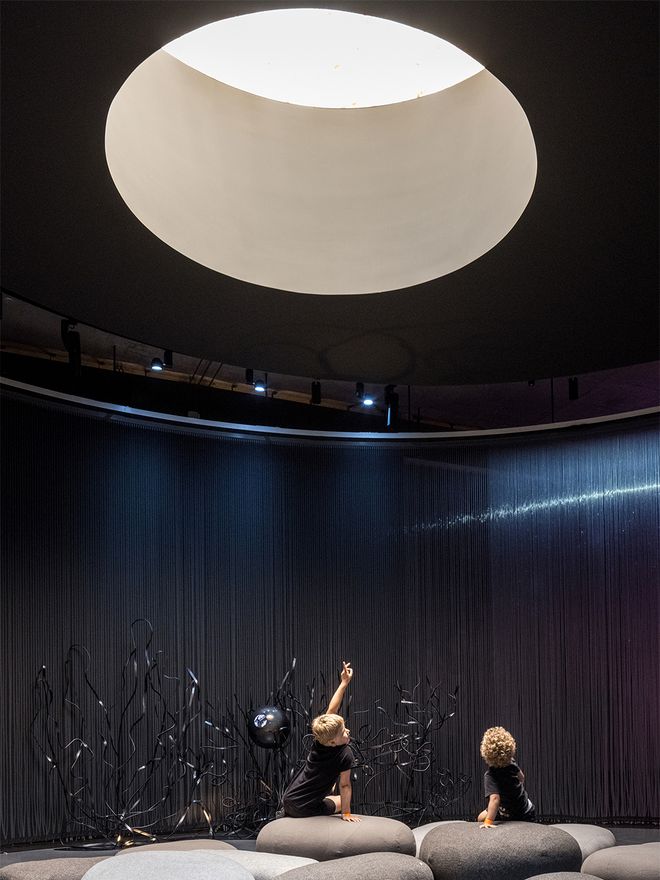
In addition to natural materials, light also plays an important role in the architecture of the H.C. Andersen House. “We wanted to bring light into the space that is soft and warm. Light gives life to the material,” describes Kuma.
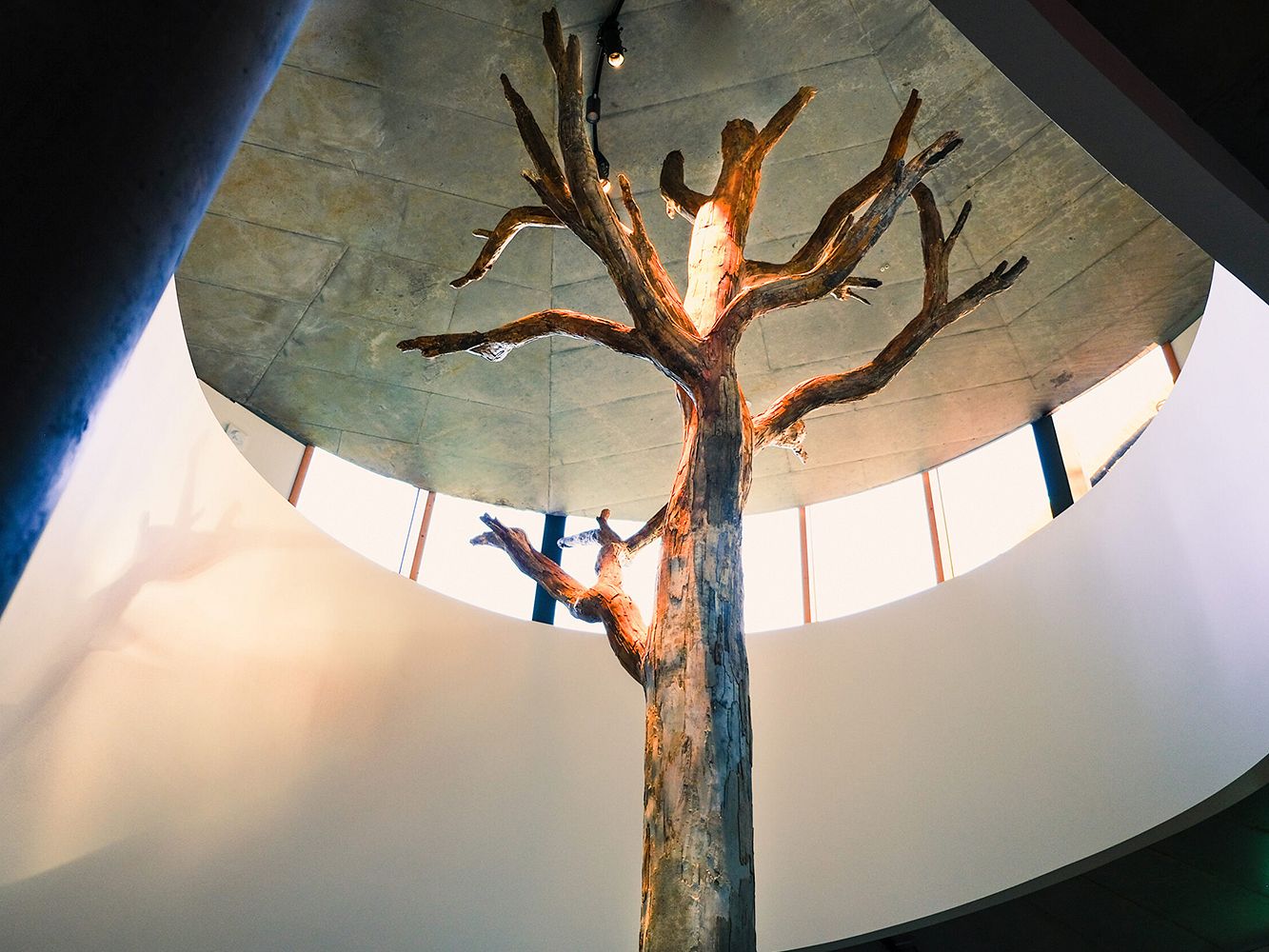
The main material of the exhibition spaces below ground is concrete. The wooden sculpture by Brazilian artist Henrique Oliveira creates an interesting contrast between the natural and the unnatural.
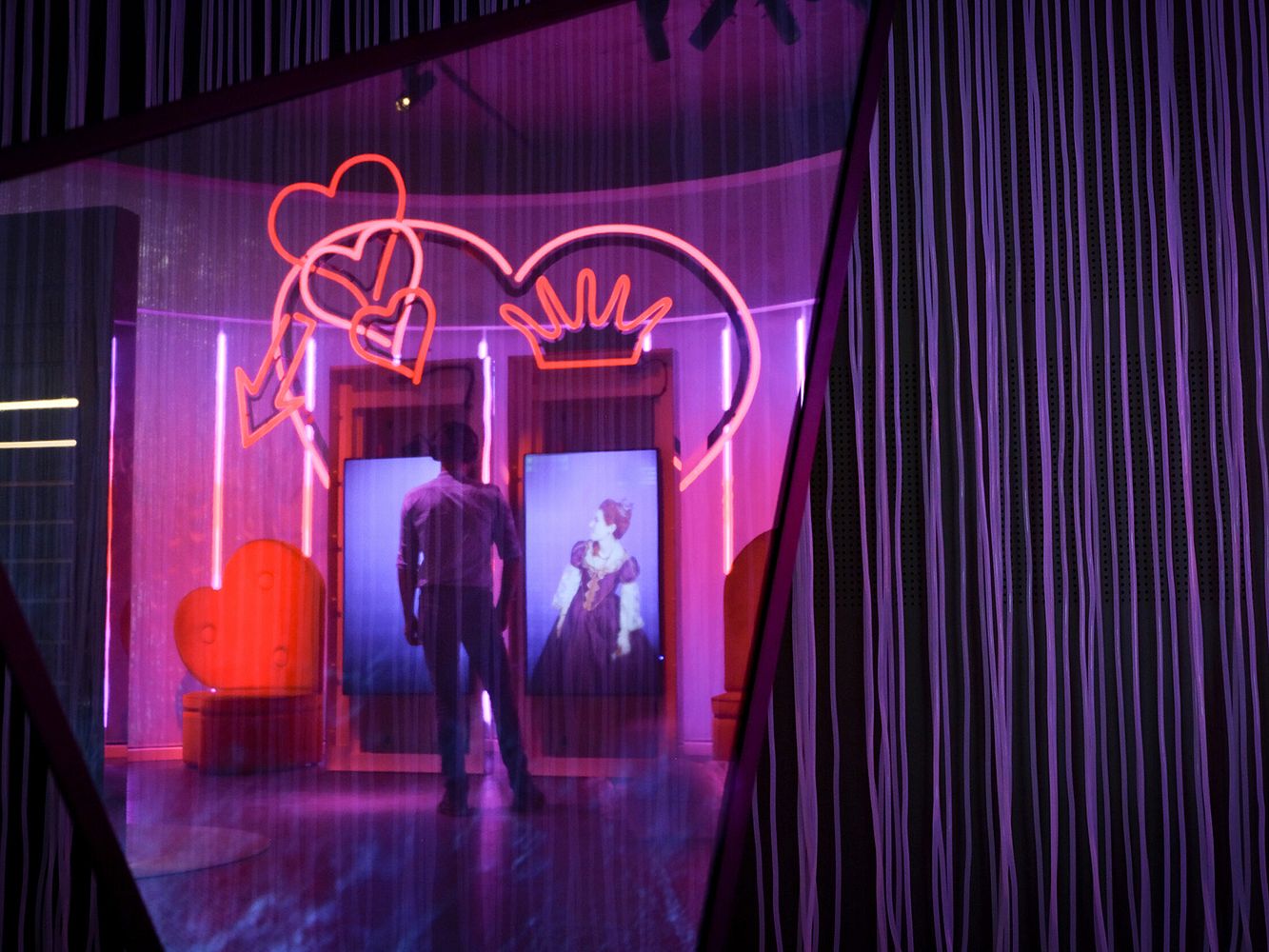
H.C. Andersen House’s interactive exhibition invites you to experience the fairytales of the beloved author from a whole new perspective.
Architect Kengo Kuma drew inspiration for the project from both Andersen’s fairy tales and his modest birthplace, which is located just a few blocks from the H.C. Andersen House and also serves as a museum. Kuma sees Andersen's greatest talent – and his gift to the public – in the fact that he was able to create dreams in the middle of everyday life.
“Literature and architecture have a lot in common: they both have to provide people with dreams. Hans Christian Andersen's message to us is that dreams come from everyday life. That is why it was also important for us that the magic of this project was created entirely from ordinary materials,” Kuma elaborates.
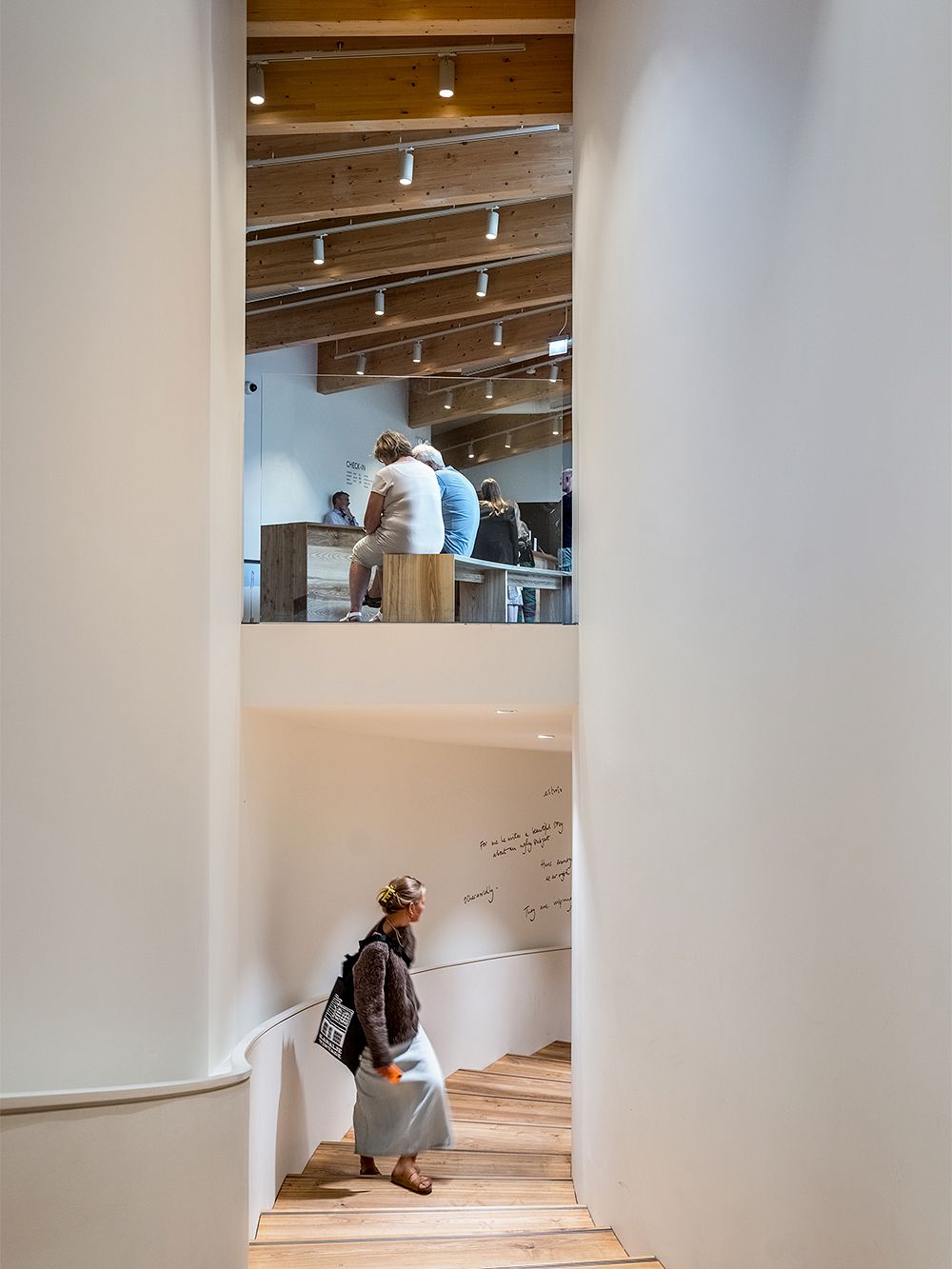
H.C. Andersen House covers an area of 5,600 square meters, two-thirds of which are located underground.
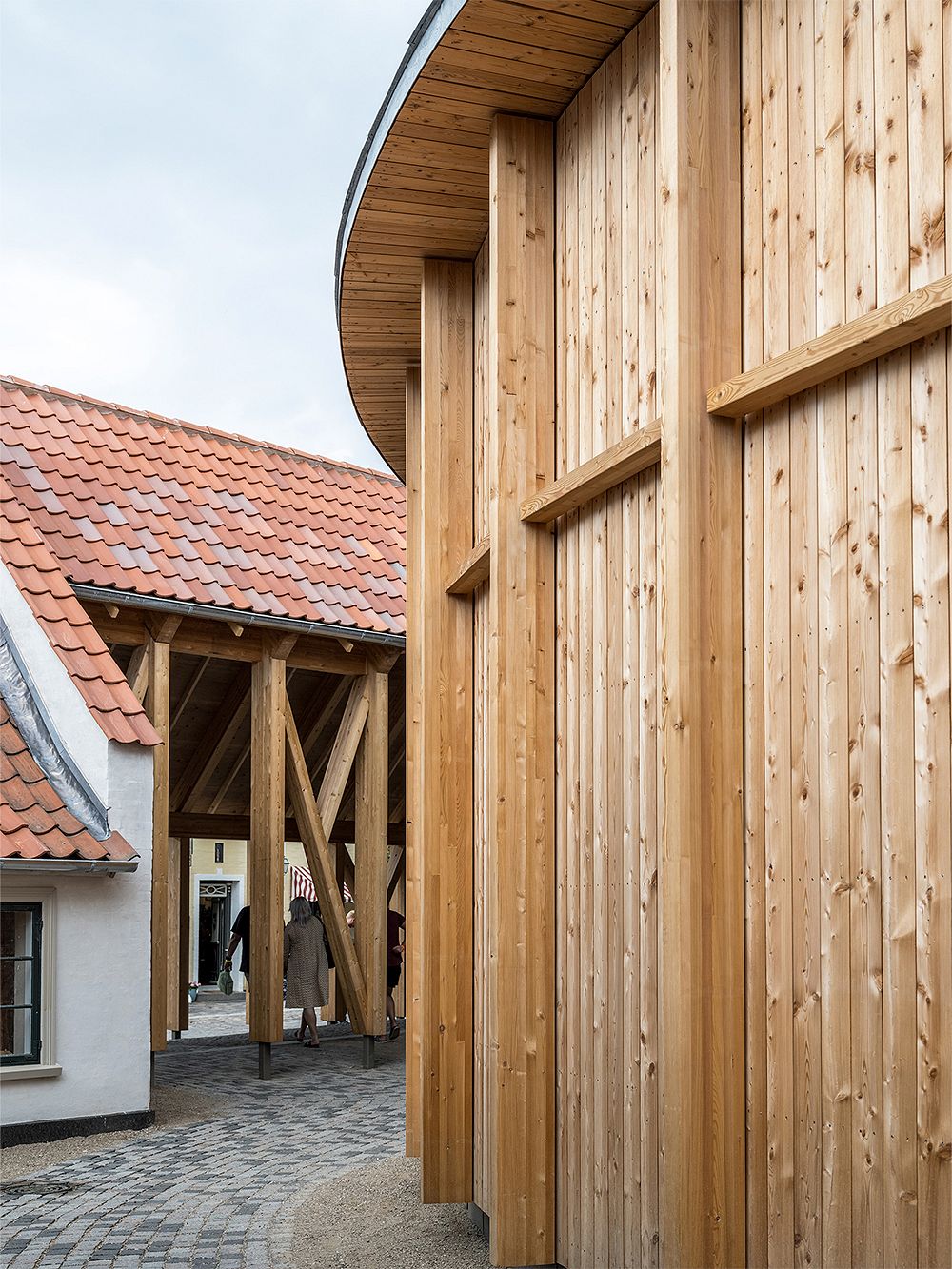
“H.C. Andersen House is a space where the usual becomes unusual. The chain of spaces creates a unique feeling of disorientation – getting lost in the co-existing worlds”, describes Yuki Ikeguchi, one of the project’s leading architects.
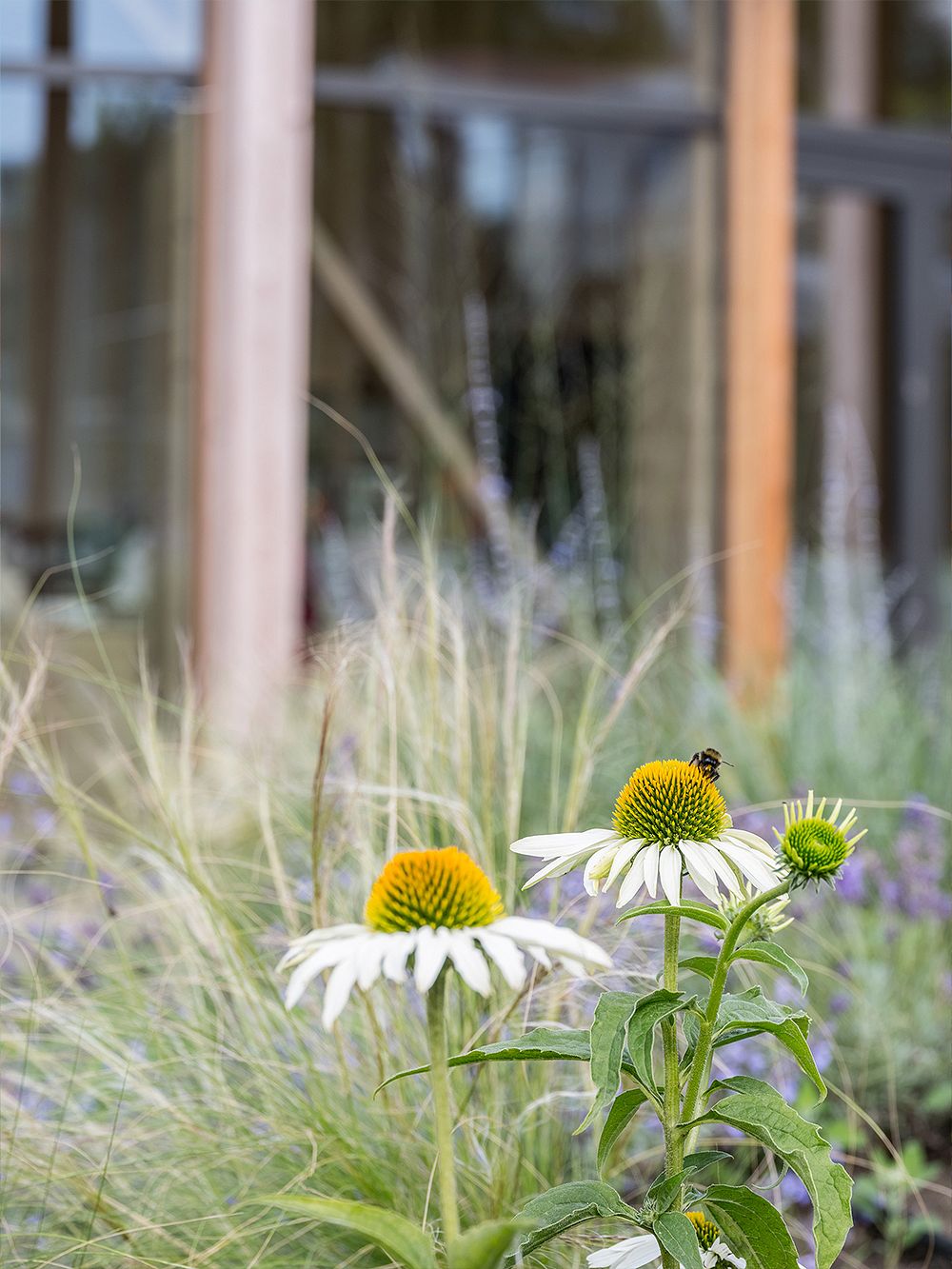
The garden plays a big part in the experiential nature of the museum. The indoor and outdoor spaces are designed to merge in a magical way.
The intertwined indoor and outdoor spaces – as well as the above-ground and underground worlds – blur the hierarchy of the spaces and create a strong experience of detachment and disorientation. The circular lines and the significant height differences in the milieu underline the dreamlike feel of the building and create an interesting, immersive whole.
The intertwined indoor and outdoor spaces – as well as the above-ground and underground worlds – blur the hierarchy of the spaces and create a strong experience of detachment and disorientation.
“The hedges represent the dualistic idea of the fairytale world and real-world co-existing back to back while stretching the concept of indoor spaces and outdoor spaces. We strongly believe that architecture should not be a detached monument, but should organically grow into the land that it stands on,” concludes architect Yuki Ikeguchi.
See also:
• Kengo Kuma: My Life as an Architect in Tokyo book at Finnish Design Shop
Text: Mira Ahola Images: Bjœrn Klausen, Lærke Beck Johansen and Rasmus Hjortshøj
Published on 16 Jun, 2022