This is a carousel of product images. Use the thumbnails or swipe to change the displayed image, and activate an image to open it full screen.
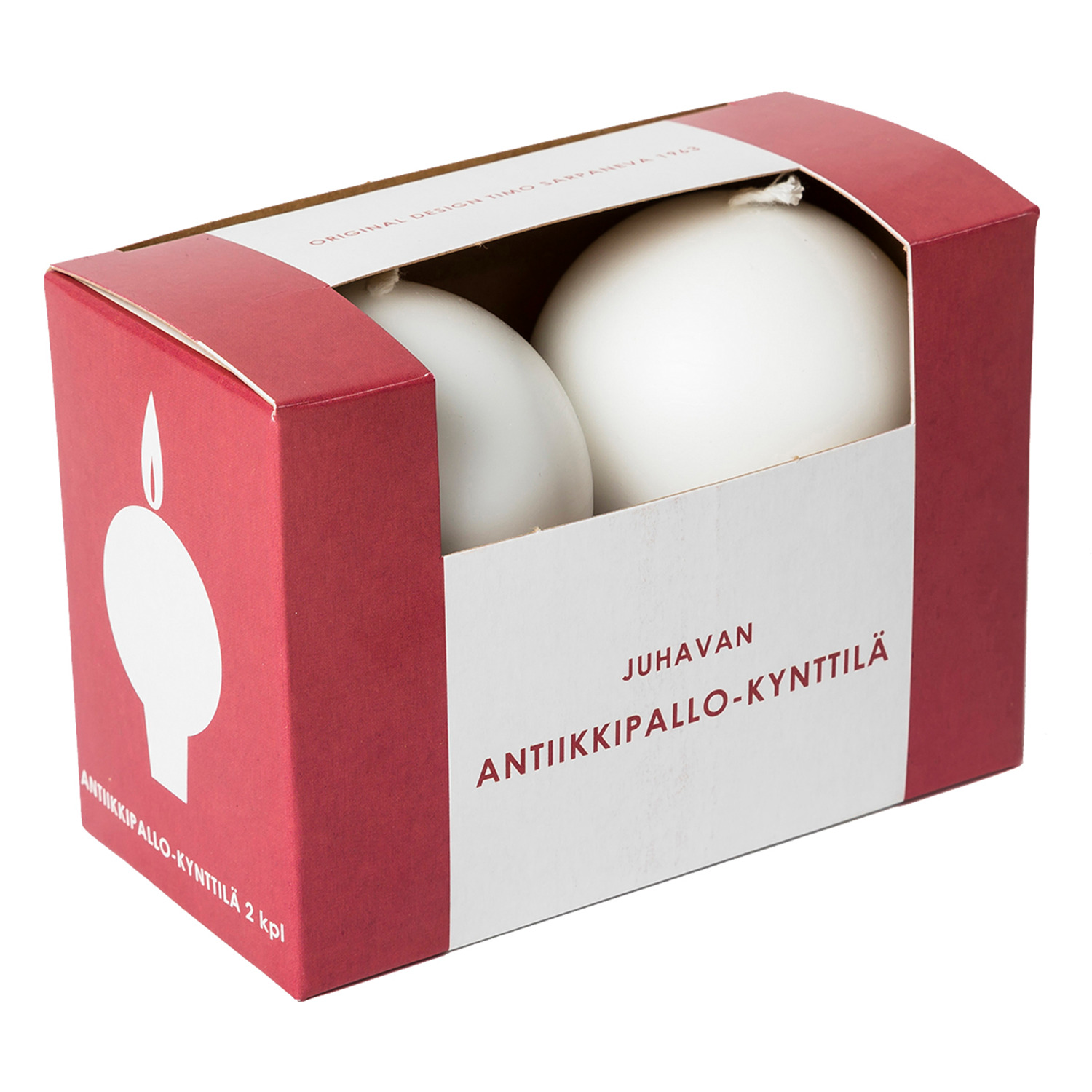
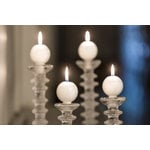
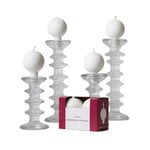
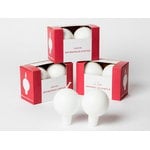
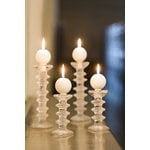
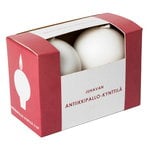
Antique ball candle, 2 pcs
Description
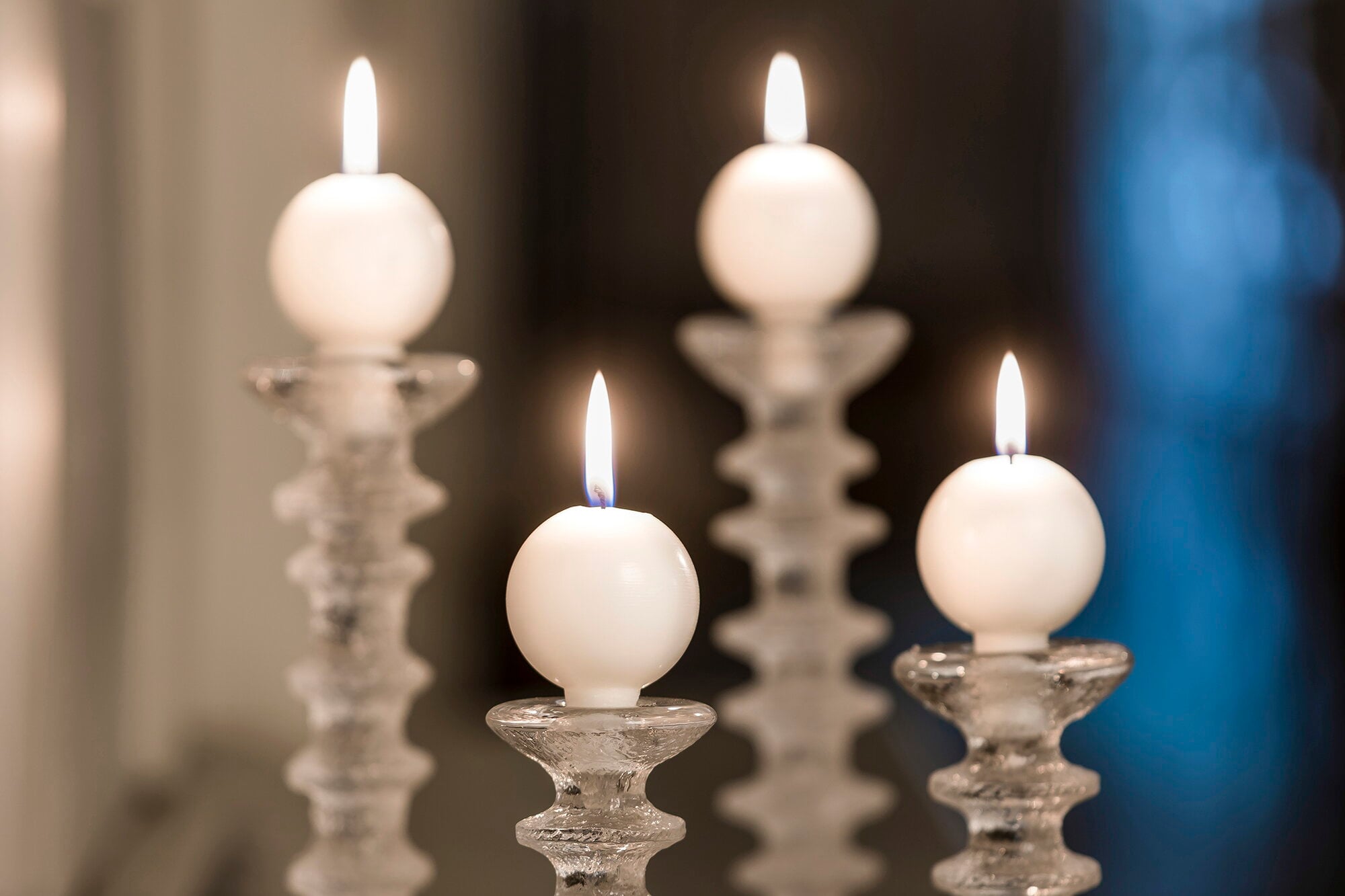
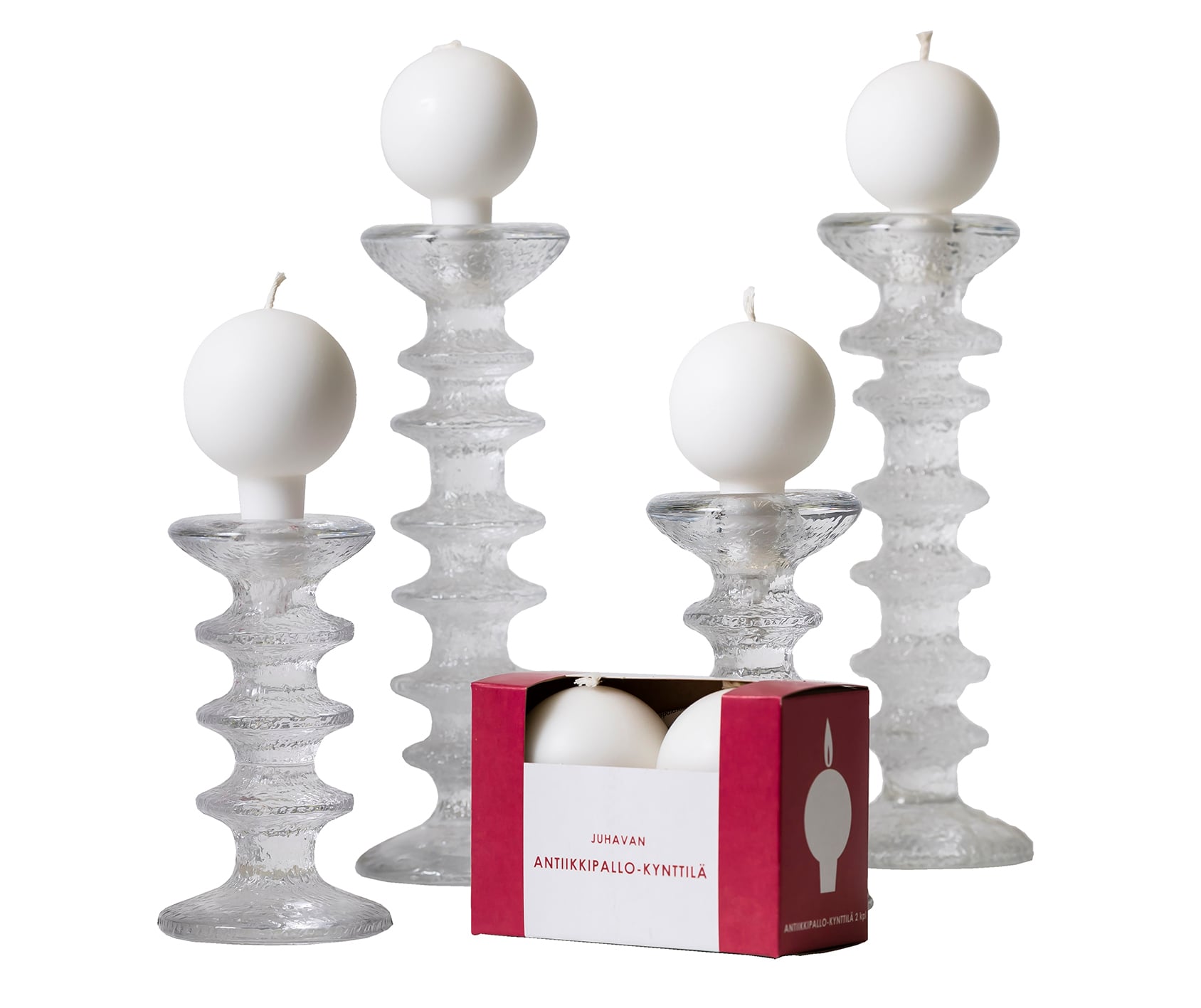
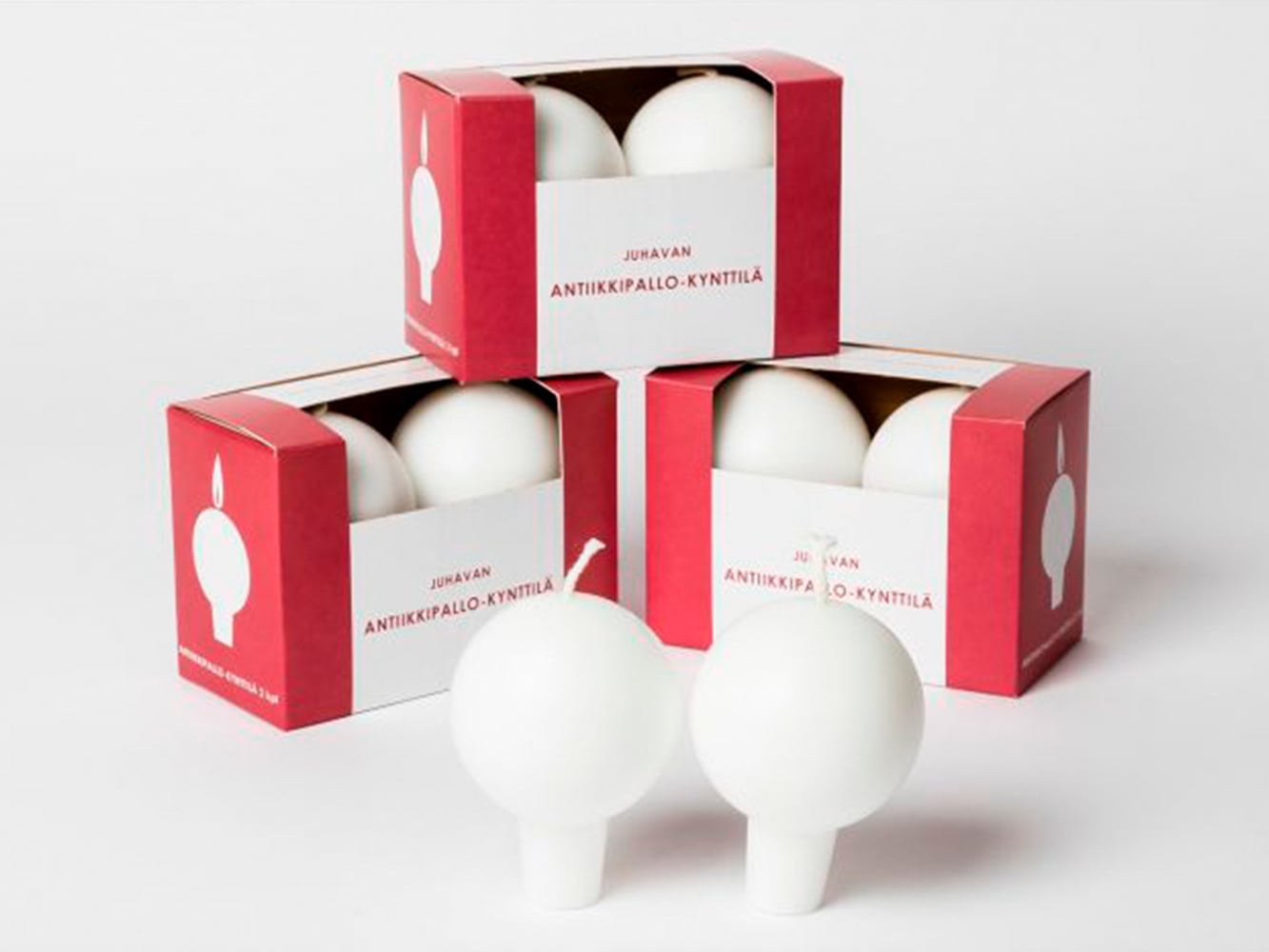
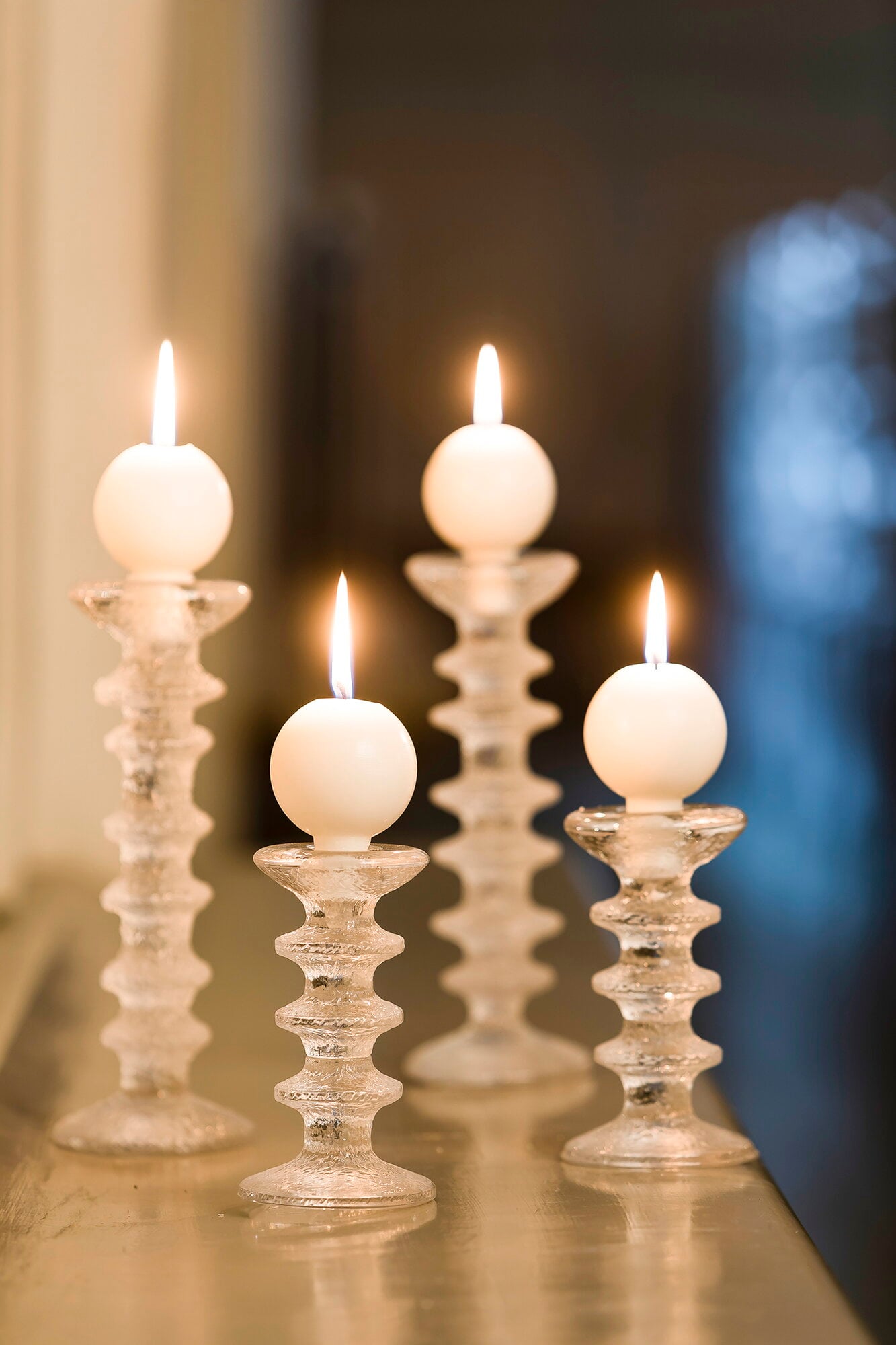
Juhava's antique ball candle is the original candle, designed by Timo Sarpaneva, for Iittala’s Festivo candleholders. The ball candle is equipped with a stem that holds it securely in place in the candleholder, be it Festivo or any other candleholder designed for taper candles.
Juhava’s candles are handmade in Finland from pure 100% stearin, and thus do not contain impurities that could cause yellowing or sooting. Due to their high oxygen content, the candles burn with a large, clear flame. The antique ball candles are sold in a set of two.
- Diameter: 2.36 in (6 cm)
- Material Stearin
- Colour White
- Burn time 10 h
- Product ID: SCR6430070990002

Timo Sarpaneva (1926–2006) was one of the central reformers of Finnish design and one of the designers who brought Finnish design to international awareness in the 1950s and 1960s. As a multidisciplinary designer and artist, he worked with metal, ceramics, textiles and graphics, among other things, but he is best known for his pioneering glass design.
Sarpaneva’s career was particularly strongly tied to Iittala, where he began as a designer in the early 1950s. The classic Festivo candleholders, Tsaikka glasses and Sarpaneva pot are still part of Iittala’s production.
Timo Sarpaneva – an international trendsetter of Finnish glass design
Timo Sarpaneva is one of the great names of Finnish design. Having graduated from the Institute of Industrial Arts in 1948, Sarpaneva trained as a graphic designer, but his career focused mainly on industrial design. He made Finnish design internationally known and worked for a long time with Iittala.
Sarpaneva also designed Iittala’s well-known letter i in 1956, which became one of the most recognizable symbols of Finnish design.
Classics of glass art
Sarpaneva’s design brings together a powerful artistic vision, an exceptional knowledge of materials and a desire to push the boundaries of industrial design towards a more sculptural expression.
As a glass designer, he was interested in how the surface, color, layering and reflection of light in glass could be used as a means of expression. In the Festivo candleholders made by Iittala, a rugged, ice-like surface meets a pared-back, architectural form, while the metal holders of the Tsaikka glasses were inspired by surplus sheets from a zip factory.
A master of many materials
Sarpaneva’s international breakthrough came in the 1950s, when Finnish design began to rise to worldwide visibility. The Milan Triennials played a central role in this development, and Sarpaneva was honored at them on several occasions. In addition, House Beautiful magazine chose his Orkidea art glass sculpture as the most beautiful object of 1954.
In addition to glass, Sarpaneva also designed textiles, porcelain, cast-iron objects and exhibition architecture, and collaborated with several Finnish and international manufacturers. The cast-iron pot Sarpaneva designed for Iittala is still one of the best-known classics of Finnish functional design.
Who: Timo Sarpaneva
- Finnish designer and professor (1926–2006).
- Worked with Iittala for almost 50 years and also designed the company’s iconic i logo.
- His design is characterized by material experiments, sculptural expression and a design language inspired by nature.
- Recognition: the Grand Prix at the Milan Triennale in 1954, the Lunning Prize in 1956, the Pro Finlandia Medal in 1958, the title of professor in 1976, and an honorary doctorate from the University of Art and Design Helsinki in 1993.
- Notable products: the Festivo candleholders, the Tsaikka glasses, the Sarpaneva pot and the Orkidea and Claritas art glass objects.
4.96

Based on 23 reviews
-
E
Eija W | Verified Customer
""

So happy to be able to actually find these fabulous candles again! Love them!
2 years ago
-
A
Anonymous | Verified Customer
Sweden
2 years ago
-
E
Elizabeth H | Verified Customer
Hilo, United States
2 years ago
The Product Sustainability Framework, our criteria of sustainable design, helps you find the most sustainable products in our selection. Read below which sustainability criteria this product has met.
-
 Equal opportunities for all employees
 -
Commitment to UN Global Compact, fair compensation for all employees
-
Corporate responsibility requirements defined and communicated for suppliers
-
Systematic work for improved inclusion and well-being in the workplace
-
Transparent supply chain
-
Suppliers' compliance to a code of conduct ensured
-
Direct suppliers audited and certified
-
Compliance to the UN Guiding Principles on Business and Human Rights ensured in the supply chain
-
Support for community involvement in the supply chain
-
Fair and resource-wise water-use in production
-
No incineration or landfilling of returned items
-
No use of endangered species as materials
-
No direct environmental emissions or waste (excl. GHGs) from production
-
The sustainability of direct suppliers' production is addressed and monitored
-
Production and material sourcing that respect biodiversity, animal rights, and natural ecosystems
-
Material-efficient and ecological packaging
-
No potentially harmful chemicals used in own production
-
Positive impact on nature’s well-being through operations that regenerate natural ecosystems
-
Company's direct greenhouse gas emissions identified and commitment to reduction
-
Product's carbon impact identified and commitment to reduction
-
Guidance on energy- and eco-efficient use of the product
-
Low-carbon or compensated transportation
-
Contribution to climate initiatives beyond the brand’s direct operations
-
Carbon footprint of the product calculated and goals set to reduce it
-
100 % renewable energy in own production and operations
-
Carbon neutral or carbon negative product
-
Sustainable and long-lasting material choices
-
No harmful or hazardous substances
-
Responsible raw material sourcing and production
-
Materials suited for circularity: monomaterials, recyclable finishings, renewable or recycled contents etc.
-
Ecological materials: natural, biodegradable, recyclable or recycled contents
-
Outstanding materials in terms of innovativeness, responsibility, sustainability and circularity: local production or sourcing, 100 % recycled content, C2C-certification etc.
-
High aesthetic quality promoting long-term use of the product
-
Technically durable product design and material choices
-
Design for enduring life-long quality
-
Design and support for product maintenance, repair and upgradability
-
Innovative circular design solutions: circular service system, resale platform, remanufacturing, collection of used products, etc.
Ideas and inspiration
This is a carousel. Use Next and Previous buttons to navigate.