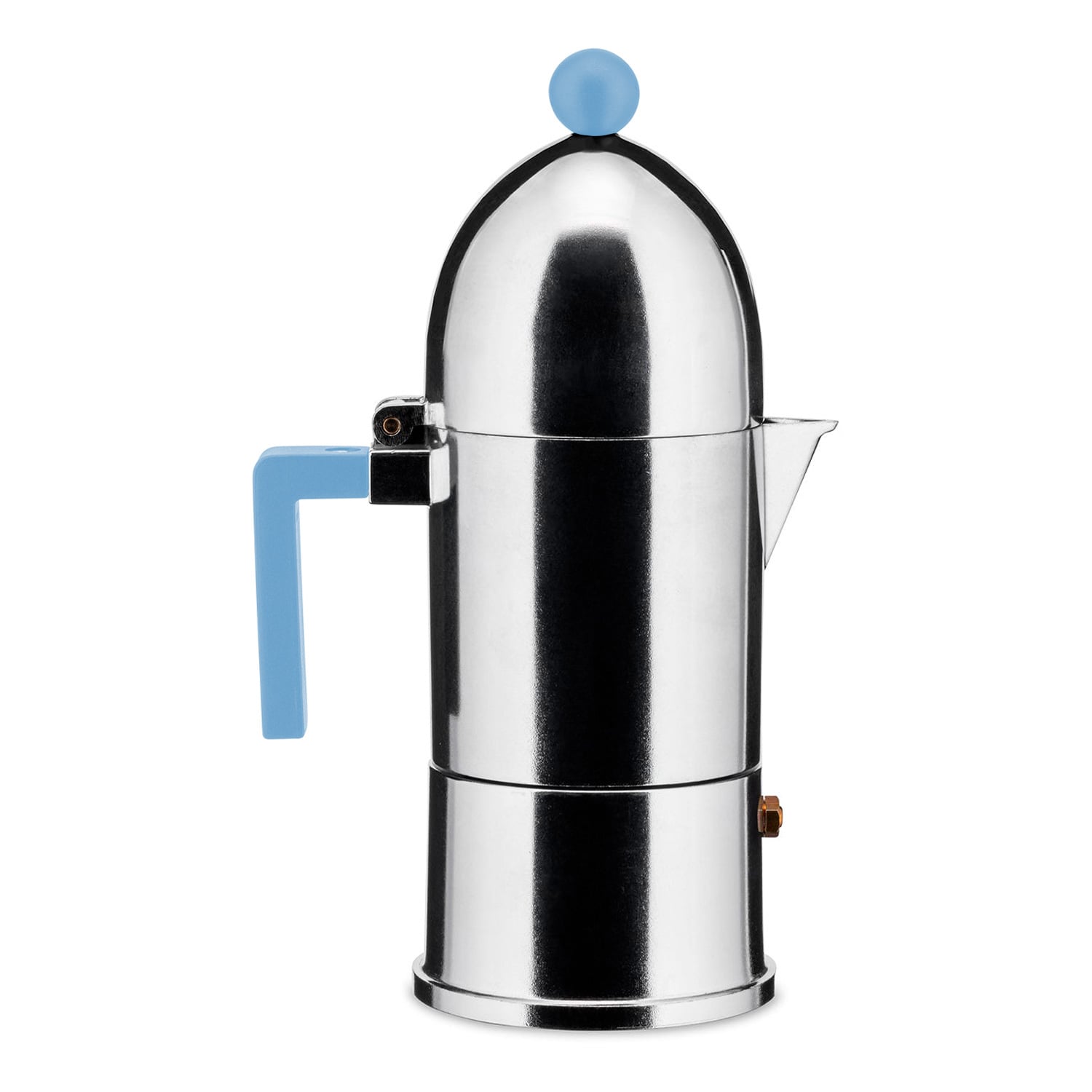
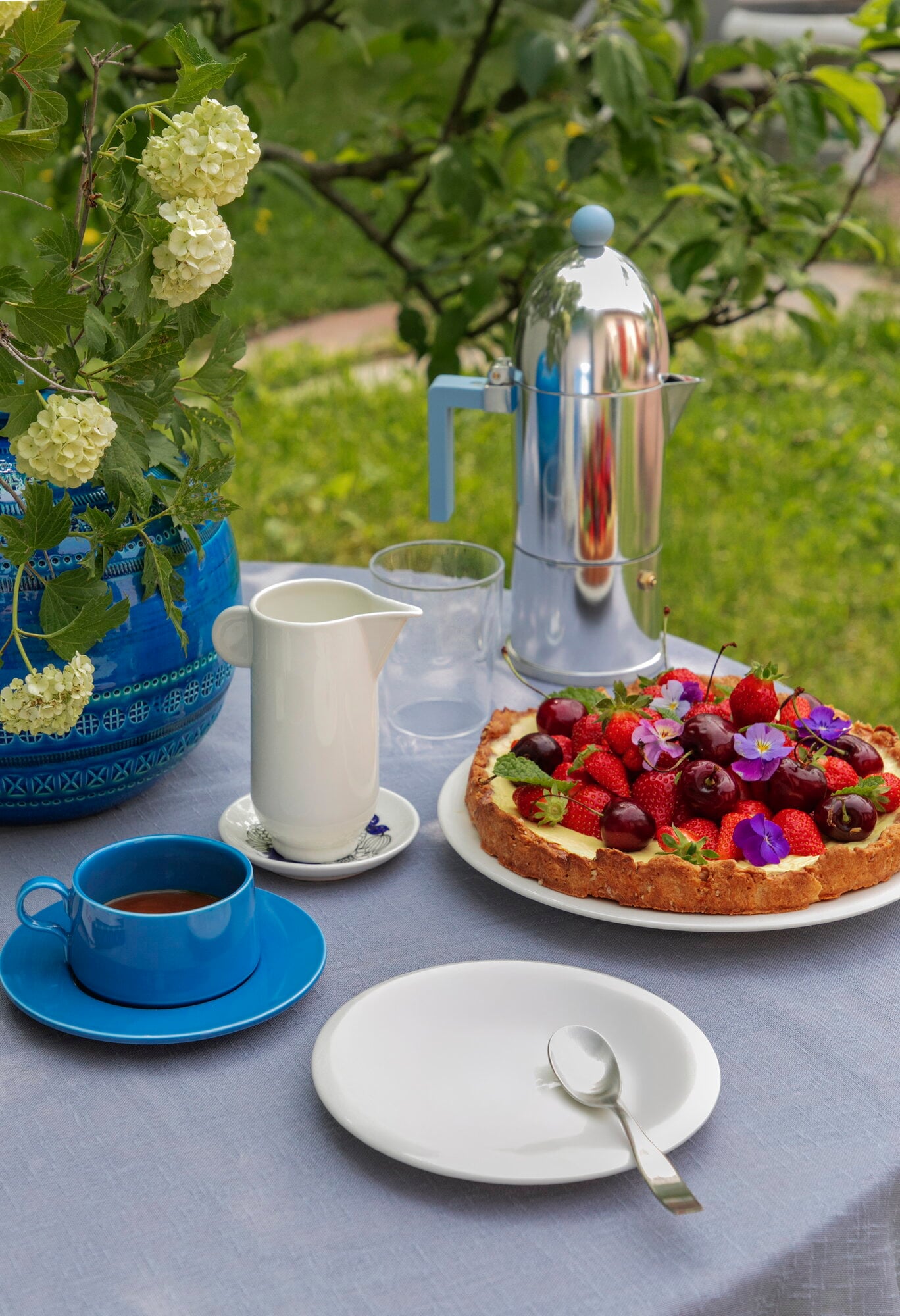
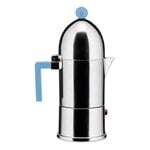
Designed by Italian architect Aldo Rossi in 1988, Alessi’s La Cupola espresso coffee maker brings a sculptural elegance to both kitchens and coffee tables. The iconic silhouette is formed by the harmonious fusion of three classic geometric shapes – the sphere, the cylinder and the dome. Made from aluminium, the characterful espresso maker brews up to three cups at a time and is also suitable for induction cooking.
This is a carousel. Use Next and Previous buttons to navigate, or select a thumbnail to jump to a slide.
La Cupola induction espresso coffee maker, 6 cups, aluminium - light blue
Alessi
Description
Designed by Italian architect Aldo Rossi in 1988, Alessi’s La Cupola espresso coffee maker brings a sculptural elegance to both kitchens and coffee tables. The iconic silhouette is formed by the harmonious fusion of three classic geometric shapes – the sphere, the cylinder and the dome. Made from aluminium, the characterful espresso maker brews up to three cups at a time and is also suitable for induction cooking.
- Height: 11.22 in (28.5 cm)
- Diameter: 3.94 in (10 cm)
- Capacity: 10.14 fl oz (30 cl)
- Measurement details: Capacity: 6 cups of espresso
- Material Aluminium, steel, polyamide
- Colour Aluminium, light blue
- Notes Magnetic steel bottom suitable for induction cooking.
- Care instructions Wash with hot running water and a non-abrasive cloth. Do not wash in the dishwasher.
- Product ID: AL9095-6AZFM

Aldo Rossi (1931–1997) is one of the most acclaimed Italian architects of the second half of the 20th century. One of his best-known works is the cemetery in Modena, Italy, which Rossi designed in 1971. The cemetery's buildings – like many of Rossi’s other works – exhibit the strong colours, clear geometry, and ironical historical references typical of postmodernism, but Rossi himself claimed he was not part of the movement. “I cannot be postmodern, as I have never been modern,” he is said to have said.
Born in Milan, Rossi graduated as an architect from the Politecnico di Milano in 1959. During his long career he became known not only as an architect, but also as an artist and theorist who toured the world teaching in Milan, Venice, and many U.S. top universities. Rossi was also the first Italian architect to be awarded the prestigious Pritzker Prize.
View all productsThe Product Sustainability Framework, our criteria of sustainable design, helps you find the most sustainable products in our selection. Read below which sustainability criteria this product has met.
-
Equal opportunities for all employees
-
Commitment to UN Global Compact, fair compensation for all employees
-
Corporate responsibility requirements defined and communicated for suppliers
-
Systematic work for improved inclusion and well-being in the workplace
-
Transparent supply chain
-
Suppliers' compliance to a code of conduct ensured
-
Direct suppliers audited and certified
-
Compliance to the UN Guiding Principles on Business and Human Rights ensured in the supply chain
-
Support for community involvement in the supply chain
-
Fair and resource-wise water-use in production
-
No incineration or landfilling of returned items
-
No use of endangered species as materials
-
No direct environmental emissions or waste (excl. GHGs) from production
-
The sustainability of direct suppliers' production is addressed and monitored
-
Production and material sourcing that respect biodiversity, animal rights, and natural ecosystems
-
Material-efficient and ecological packaging
-
Positive impact on nature’s well-being through operations that regenerate natural ecosystems
-
No potentially harmful chemicals used in own production
-
Company's direct greenhouse gas emissions identified and commitment to reduction
-
Product's carbon impact identified and commitment to reduction
-
Guidance on energy- and eco-efficient use of the product
-
Contribution to climate initiatives beyond the brand’s direct operations
-
Low-carbon or compensated transportation
-
Carbon footprint of the product calculated and goals set to reduce it
-
100 % renewable energy in own production and operations
-
Carbon neutral or carbon negative product
-
Sustainable and long-lasting material choices
-
No harmful or hazardous substances
-
Responsible raw material sourcing and production
-
Materials suited for circularity: monomaterials, recyclable finishings, renewable or recycled contents etc.
-
Ecological materials: natural, biodegradable, recyclable or recycled contents
-
Outstanding materials in terms of innovativeness, responsibility, sustainability and circularity: local production or sourcing, 100 % recycled content, C2C-certification etc.
-
High aesthetic quality promoting long-term use of the product
-
Technically durable product design and material choices
-
Design for enduring life-long quality
-
Design and support for product maintenance, repair and upgradability
-
Innovative circular design solutions: circular service system, resale platform, remanufacturing, collection of used products, etc.