In the footsteps of Alvar Aalto – An architectural tour of his hometown Jyväskylä
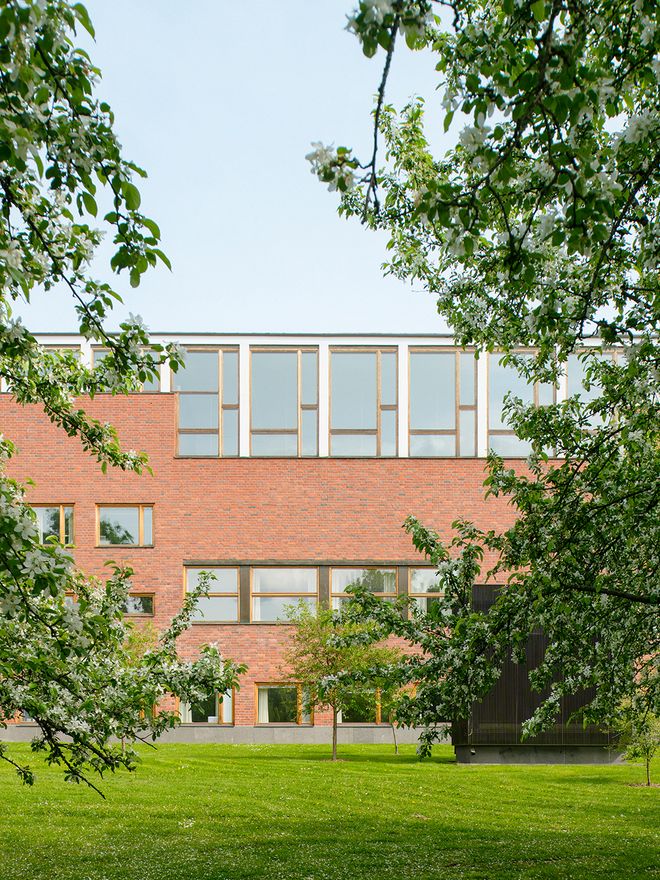
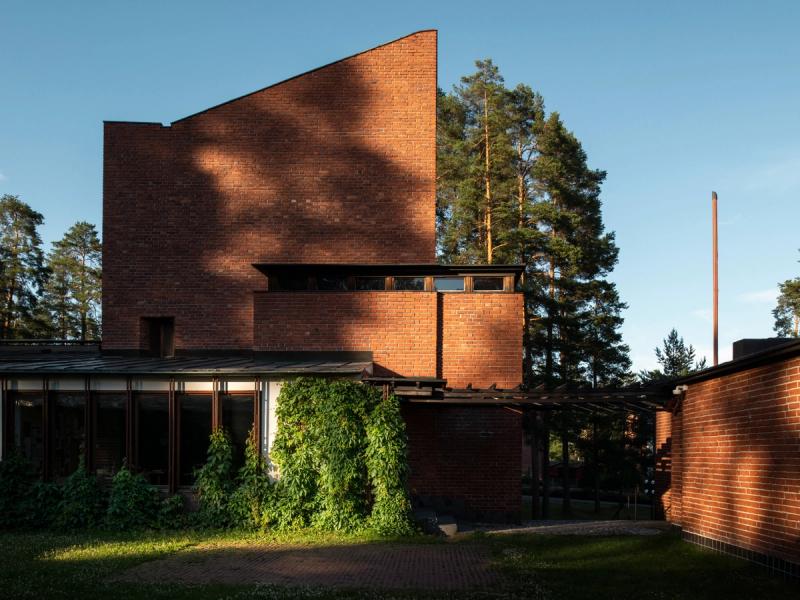
Alvar Aalto left his mark on many sites in Jyväskylä. He designed the red-brick main building of the University of Jyväskylä in the 1950s.
ALVAR AALTO’S CHILDHOOD FAMILY moved from Kuortane to Jyväskylä when he was just five years old. It was in Jyväskylä, located in Central Finland, that he spent his formative years and completed his schooling.
After studying architecture in Helsinki, Aalto returned to his hometown in 1923 and established his own architectural practice. Despite operating out of a single room, he gave his office a grand name: “Office of Architectural and Monumental Art, Alvar Aalto.” The following year, he hired architect Aino Marsio, and just six months later, the two were married. Their first child was also born during their years in Jyväskylä.
In 1927, the Aaltos moved to Turku, and a few years later, they relocated to Helsinki. Nevertheless, Aalto maintained a strong connection to Jyväskylä throughout his career. The city is home to a remarkable number of buildings designed by him, and in 1973, a museum dedicated to his work was opened there.
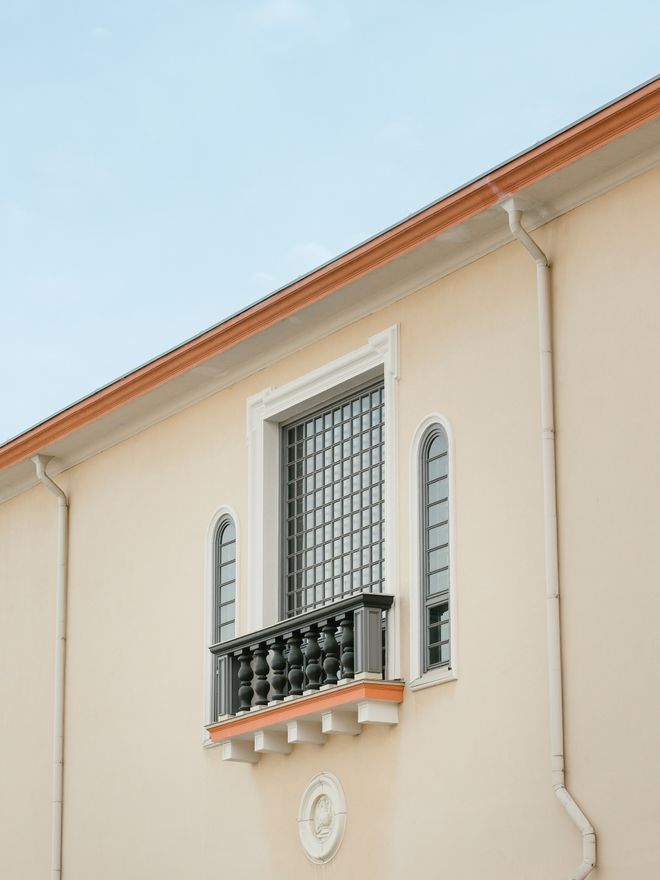
The refined details of the Jyväskylä Workers’ Club – from railings and downspouts to window shapes – hint at the influence of Italian Renaissance palaces.
Aalto’s early career was rooted in Nordic Classicism
The early 1920s were a difficult time for a young architect starting out, as Finland was going through a severe economic depression. Still, Alvar Aalto managed to secure design commissions in his hometown. In 1924, his first stone building was completed: the Jyväskylä Workers’ Club, whose design echoed the palazzos of the Italian Renaissance. The building housed a workers’ theater and orchestra and is considered his most significant work of the decade.
Another fine example of Aalto’s Nordic Classicist period is the Aira apartment building, completed in 1926. Built of brick, the three-story residence for railway workers was Aalto’s first multi-story housing project and the largest residential building in Jyväskylä at the time. His architectural signature is especially evident in the building’s carefully considered details.
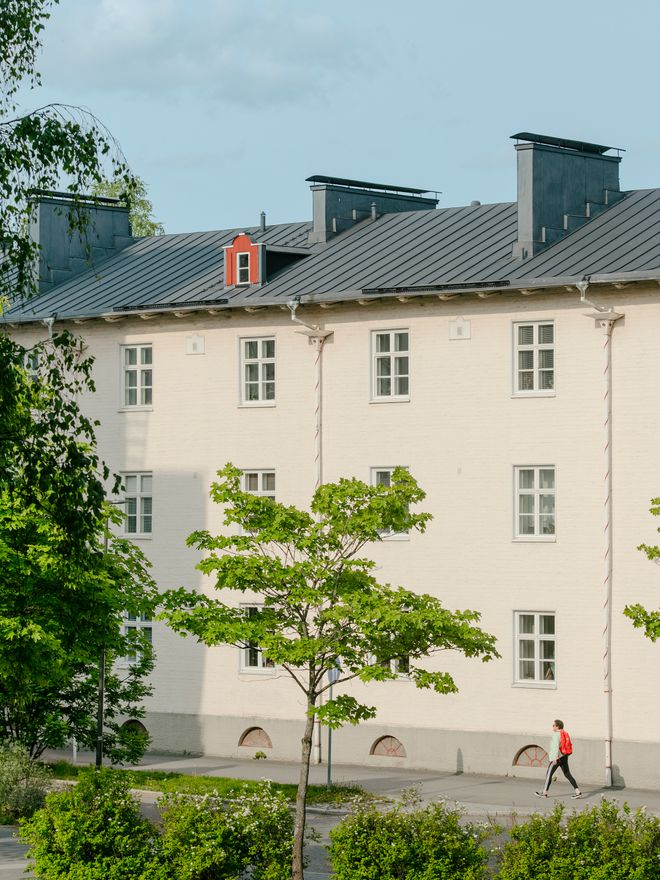
The Aira building reflects Aalto’s fascination with Italian architecture. He visited Italy for the first time with Aino Aalto during their honeymoon in 1924.
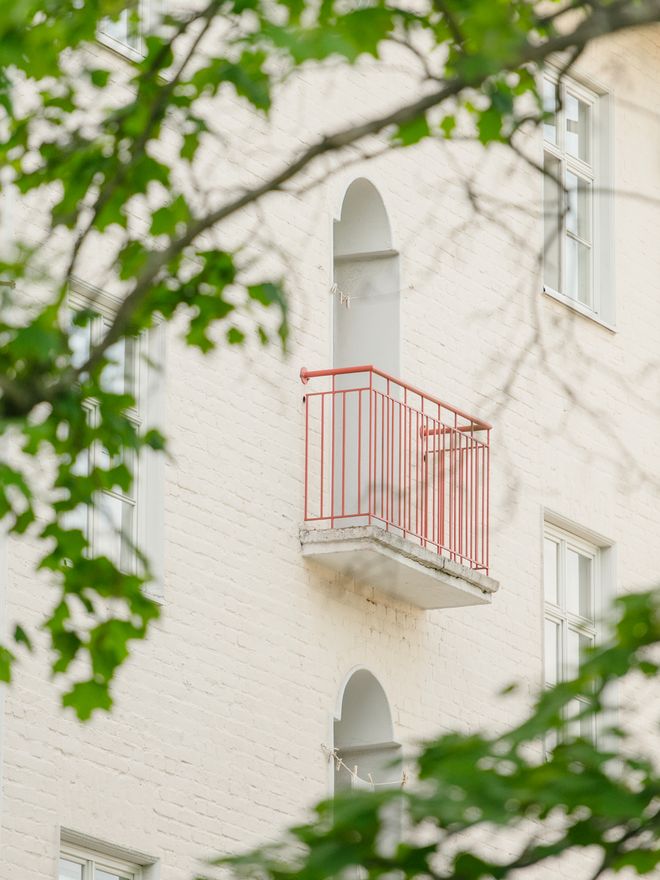
Aalto’s earliest buildings in Jyväskylä were designed in the clean-lined spirit of Nordic Classicism.
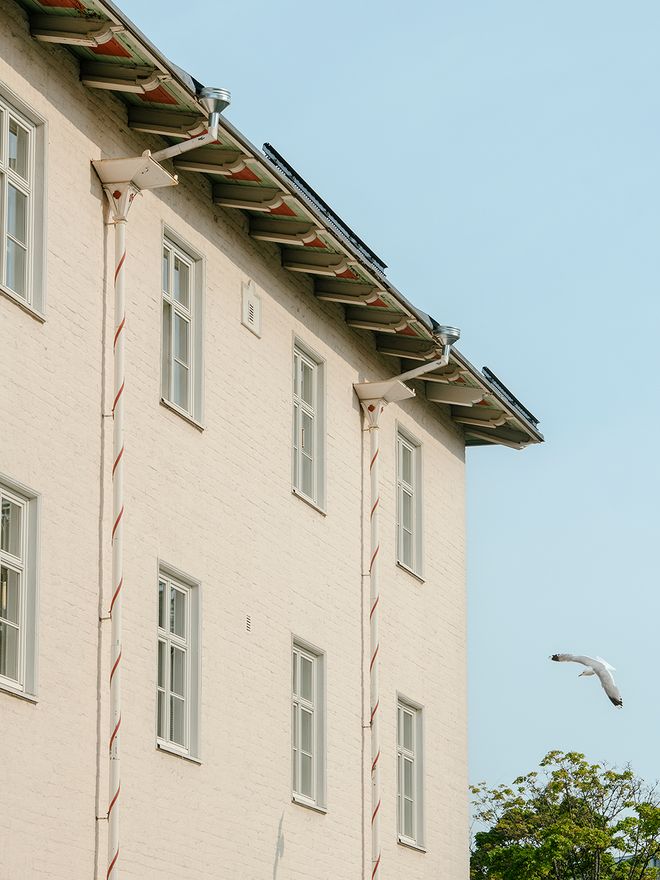
The street-facing façade of the Aira building.
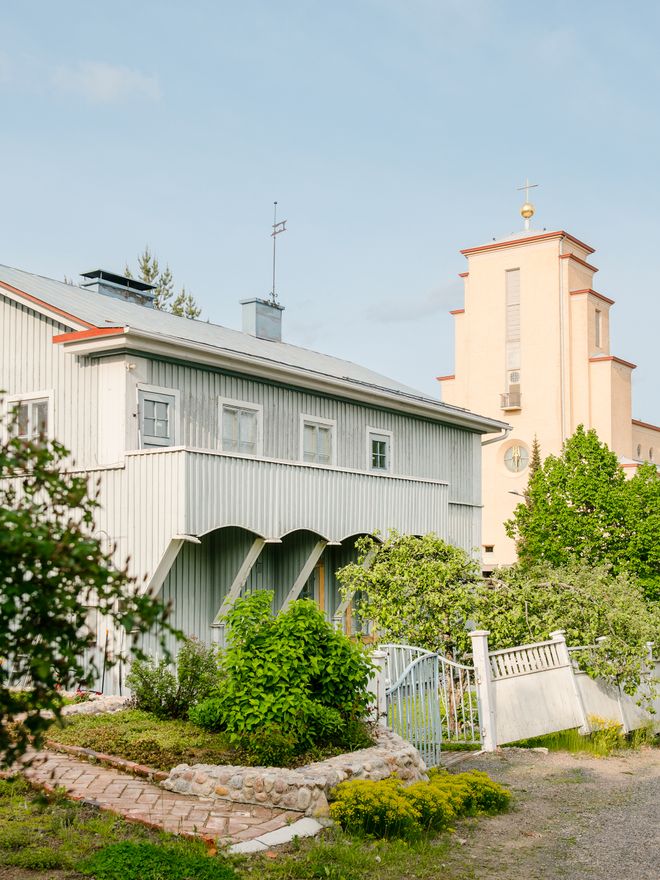
A smaller example of Aalto’s early work can be found in the Taulumäki district. Located at Hongikontie 9, the Nuora House features a balcony and other alterations designed by Aalto in 1923–1924.
Landmark works of Aalto’s red-brick period
During the 1950s, Alvar Aalto’s architecture took on a new level of complexity and richness. His work from this period is marked by the use of red brick, a human-centered design philosophy, and a sensitive integration of buildings with their natural surroundings.
Some of Aalto’s most internationally renowned works in the Jyväskylä region were completed during this time. These include the Säynätsalo Town Hall located just outside the city, the Experimental House in Muuratsalo built as the architect’s summer residence, and the main building and campus of the Jyväskylä College of Education – now known as the University of Jyväskylä.
Aalto was commissioned to design the extension of the college after winning an invited architectural competition in 1951. His red-brick buildings offered a modern counterpoint to the existing teacher training seminary – known locally as the “barracks of learning” – originally designed by Konstantin Kiseleff in the 1880s. Aalto arranged the new buildings in a flowing sequence around a central sports field.
Set in a lush, park-like landscape, the campus forms a cohesive and urban-feeling ensemble, while each structure still maintains its own architectural identity.
• Read also: Muuratsalo Experimental House was Alvar Aalto’s playground >
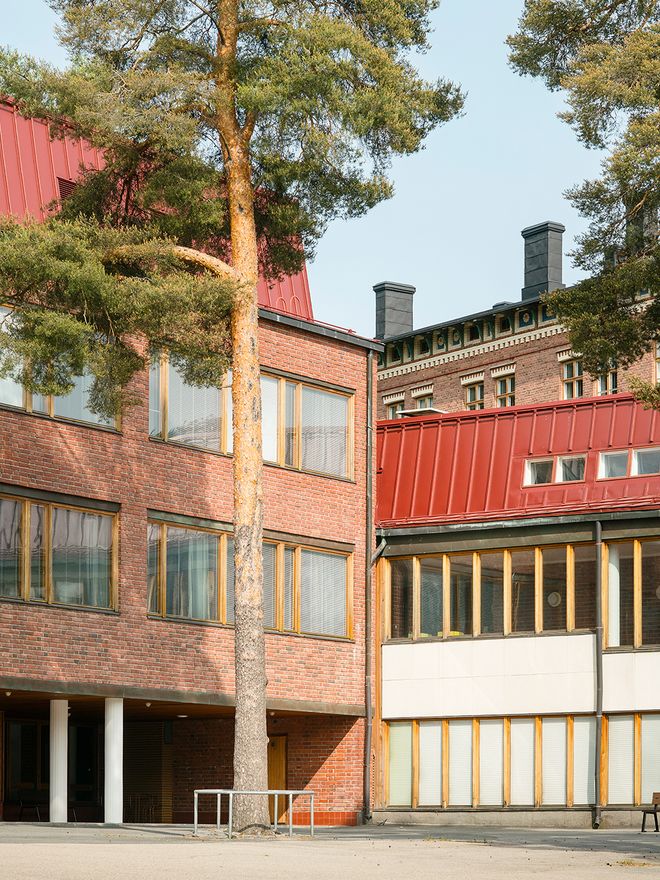
The campus buildings are unified by their flowing, varied forms and richly textured red-brick surfaces.
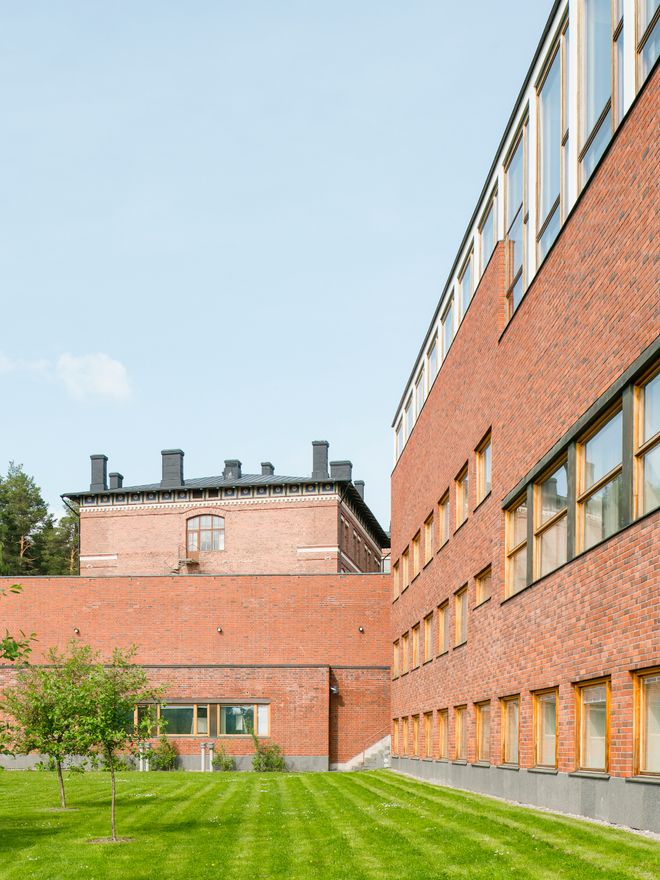
Aalto drew inspiration from American-style university campuses, which he had studied during his visits and teaching engagements in the United States.
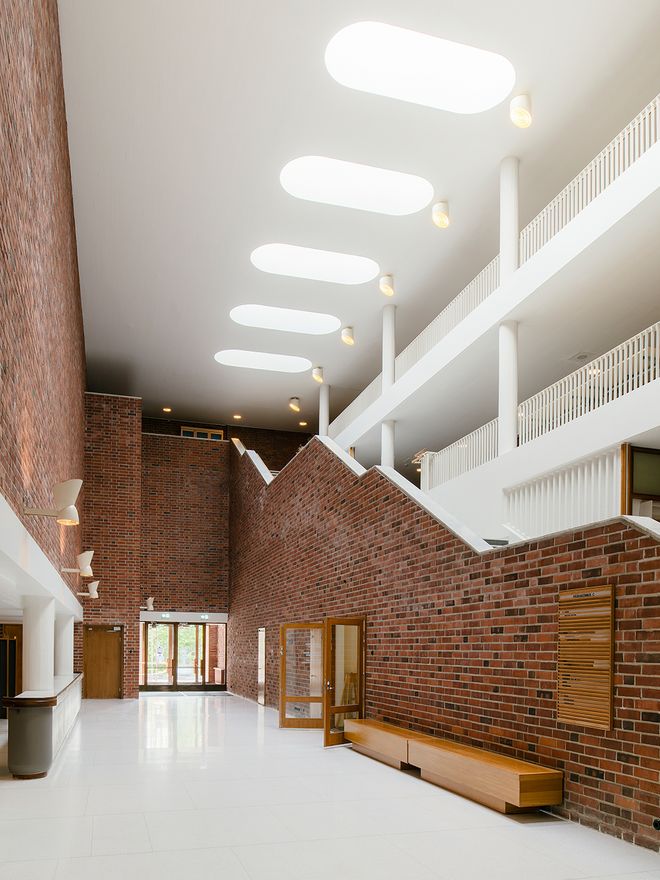
Lobby spaces in the university’s main building. Before designing the College of Education, Aalto had created the Baker House dormitory for the Massachusetts Institute of Technology (MIT) in the US.
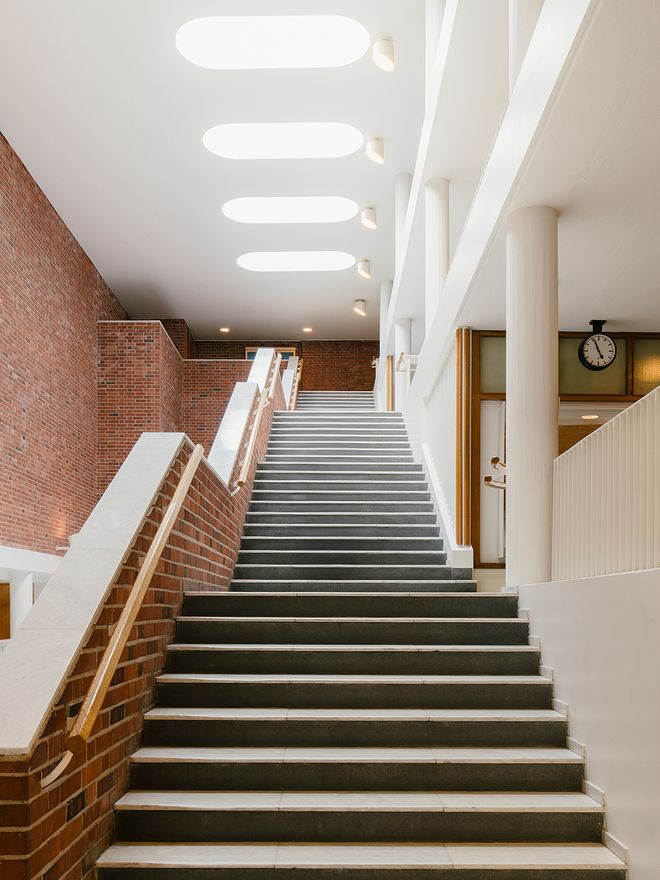
Soft natural light and red brick surfaces take center stage inside the campus buildings as well.
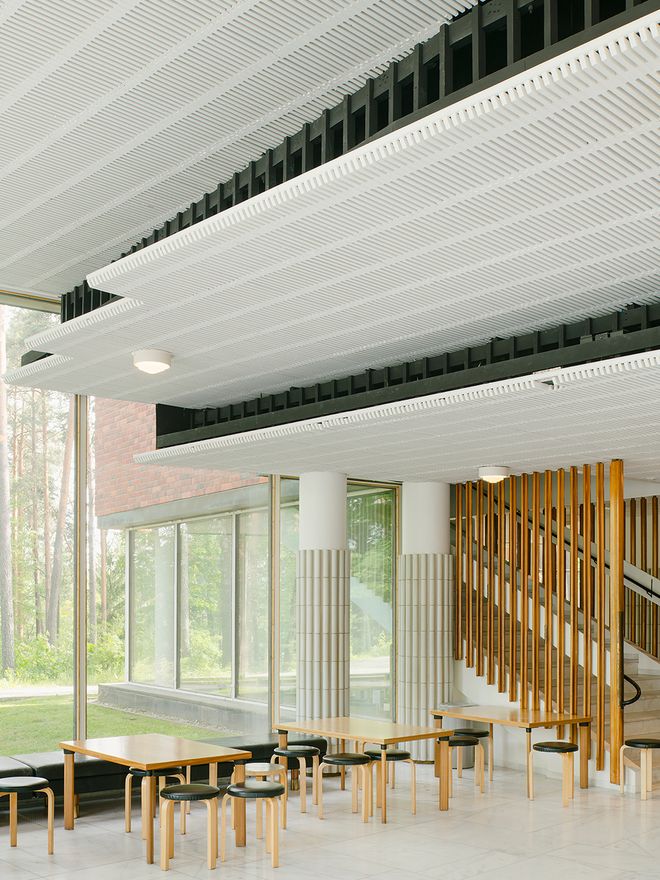
From the foyer of the main building’s assembly spaces, lush green views open toward the surrounding landscape.
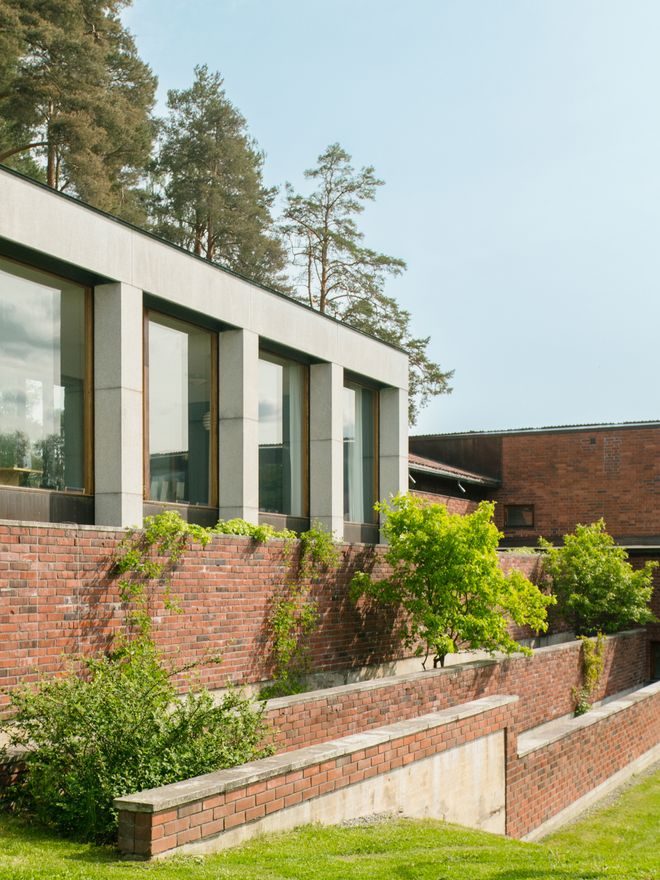
The white Lyhty building stands out among the campus’s red-brick architecture. Originally, it served as a dining hall and meeting space for university staff.
Step inside the museums
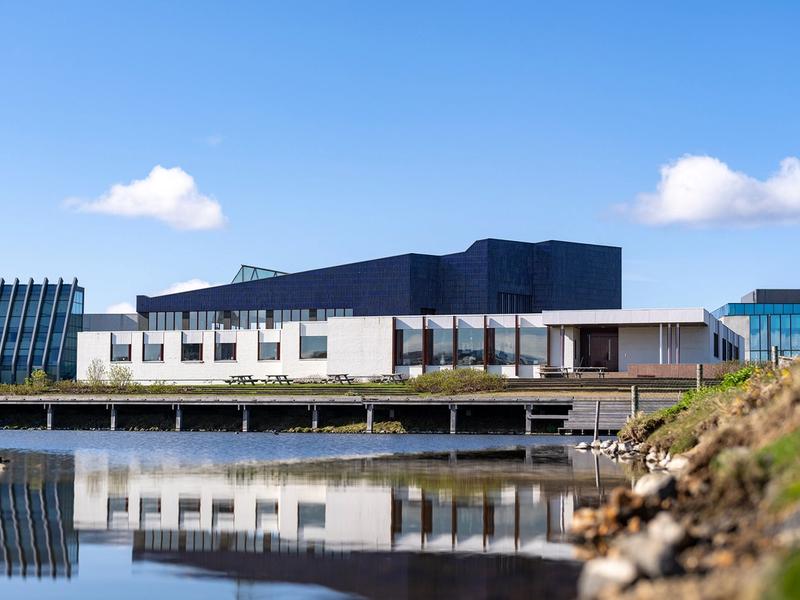
Next to the university campus stand two museum buildings designed by Alvar Aalto. The first, the Museum of Central Finland, was completed in 1961 and showcases the region’s cultural history in a clean-lined, modernist setting. In September 1973, a second, more sculptural museum building opened its doors: the Alvar Aalto Museum, dedicated to the master’s architecture and design.
Today, these two Aalto-designed museums are joined by a contemporary extension and together form the Aalto2 Museum Centre.
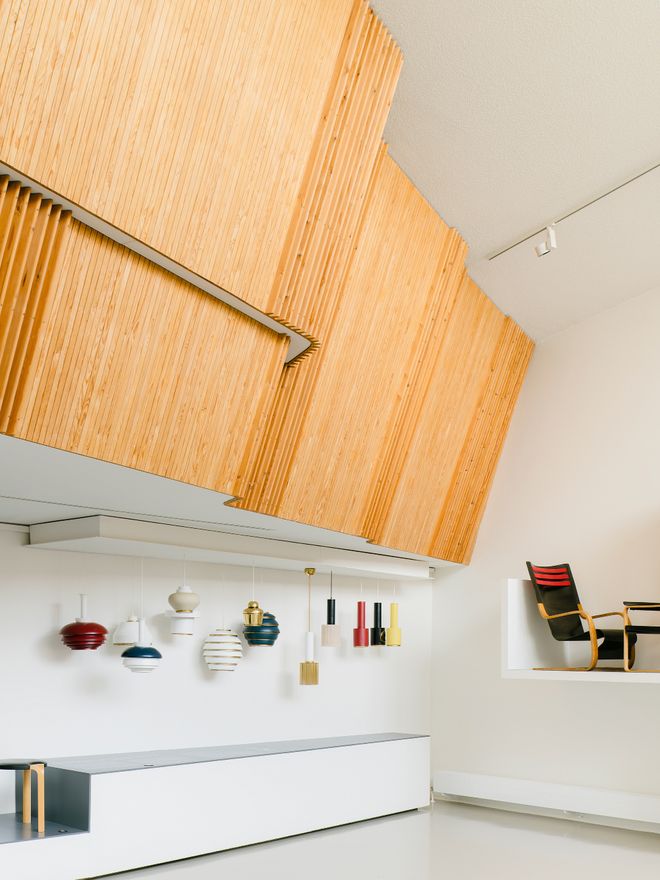
A striking interior detail of the Alvar Aalto Museum is the curved wooden slat wall, reminiscent of Aalto’s design for the Finnish Pavilion at the 1939 World’s Fair in New York. The museum was designed in 1971 and opened to the public in 1973.
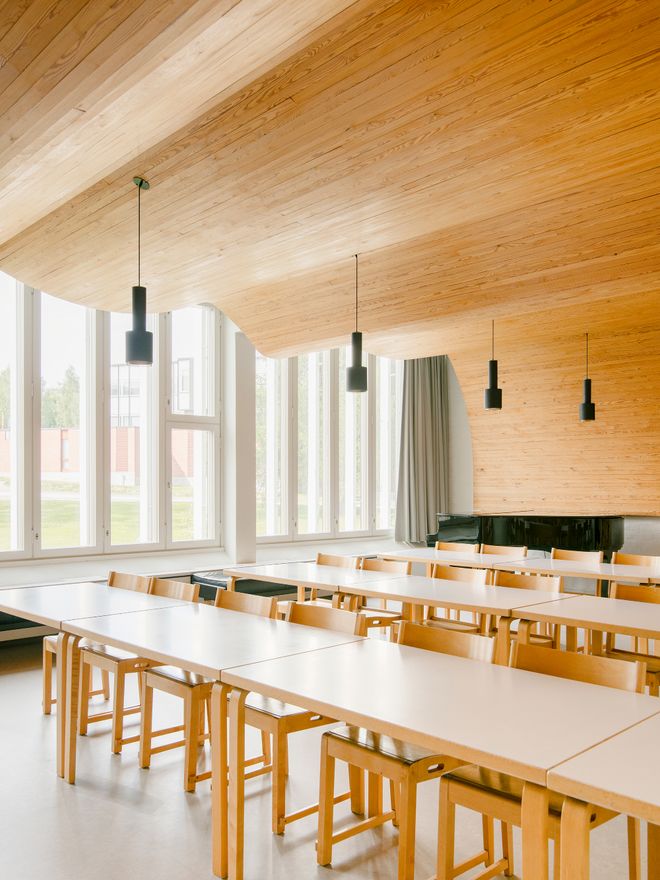
Inside the geometric, white Museum of Central Finland is a seminar room featuring a wave-like wooden ceiling that echoes Aalto’s celebrated library design in Vyborg (then part of Finland), completed in 1935.
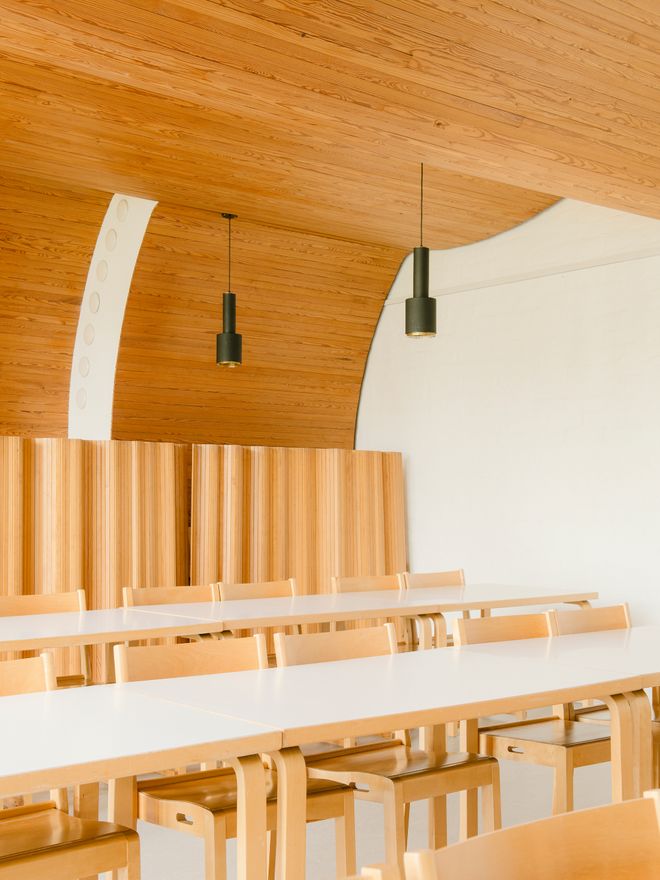
Naturally, the lecture hall ceiling is illuminated by Aalto’s own A110 pendant lights – better known by their nickname, the Hand Grenade.
A civic and cultural quarter in the city center
In the 1960s, Alvar Aalto envisioned a civic and cultural center for downtown Jyväskylä. The plan was to integrate the old town hall with four new public buildings. Ultimately, three of them were realized: the Police Station, completed in 1970; a government office building, constructed between 1975 and 1978; and the Jyväskylä City Theatre, which was finished posthumously in 1982 under the direction of Aalto’s second wife and architect partner, Elissa Aalto.
One element of the original plan remained unbuilt: an extension to the office building, which would have featured a striking city council chamber.
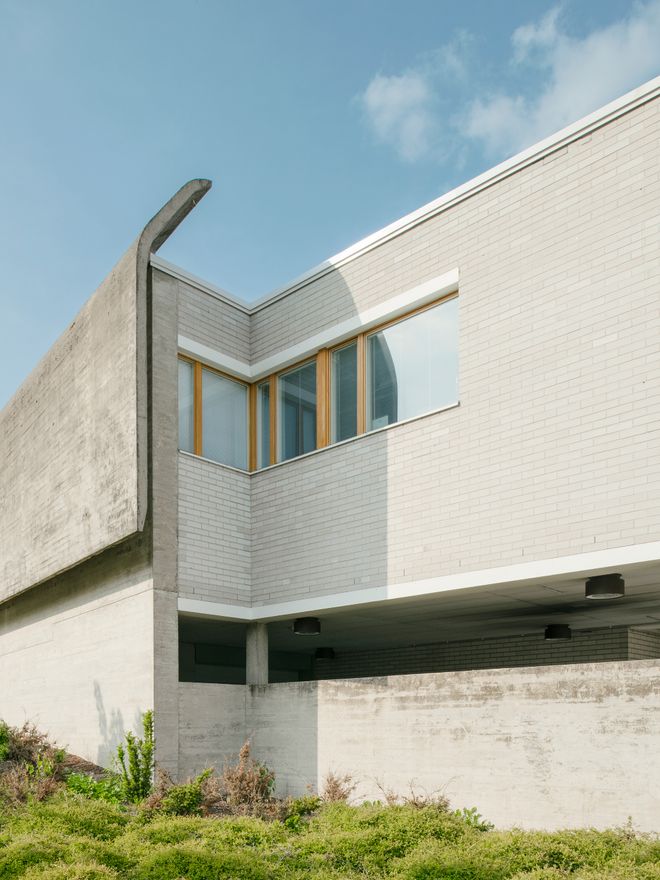
The most distinctive feature of the Police Station, designed in 1970, is its undulating concrete façade wall. Today, the building is known as Tietotalo and is located on Kilpisenkatu.
Aalto’s “fang”
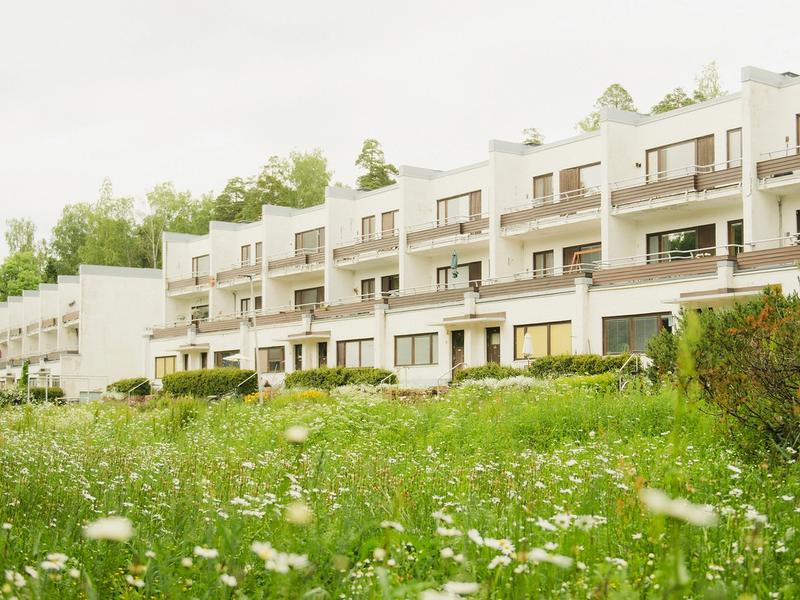
In the late 1950s and early 1960s, the Viitaniemi neighborhood was developed a couple of kilometers from the center of Jyväskylä, following the ideals of the garden city movement. The area is largely composed of low-rise row houses and three-story apartment blocks.
For the neighborhood’s landmark building, architect Alvar Aalto was invited to design the Viitatorni tower. Rising above all other structures in the area, the 13-story building was for many years the tallest in Jyväskylä. The white tower block is still affectionately known by its nickname, Torahammas – “the fang.”
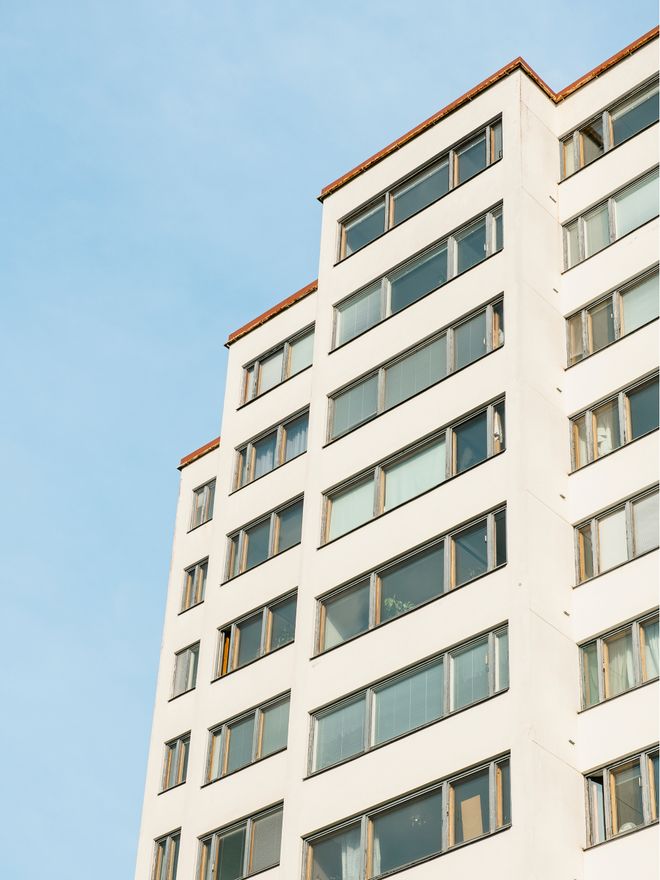
Viitatorni is a landmark in the leafy Viitaniemi district. Aalto brought a sense of lightness and rhythm to the 72-unit residential tower by staggering its northwestern façade.
Located about 270 kilometers (170 miles) north of Helsinki – or roughly a three-hour drive – Jyväskylä proudly calls itself the Capital of Alvar Aalto’s Architecture. With around 30 buildings designed by Aalto in the city and its surrounding areas, the title is well earned. At the Lutakko harbor near the city center, visitors can also see a wooden boat designed by Aalto himself – used by the architect and his second wife, Elissa Aalto, to travel to their summer home in Muuratsalo.
See also:
• More Alvar Aalto's designs >
• Alvar Aalto's Säynätsalon Town Hall >
Published on 31 Jul, 2025