How should you care for leather furniture? Here are an expert’s tips!
Leather upholstery needs occasional care. The "Well kept" article series highlights high-quality materials and how to maintain them.
HIGH-QUALITY LEATHER upholstery can last for decades when properly cared for. With a few expert tips, you can maintain your leather furniture so that its natural beauty and durability stand the test of time.
In this article, we’ll go through the basics of leather care and see how a pre-owned Pohjola armchair gains many extra years in the hands of a professional.
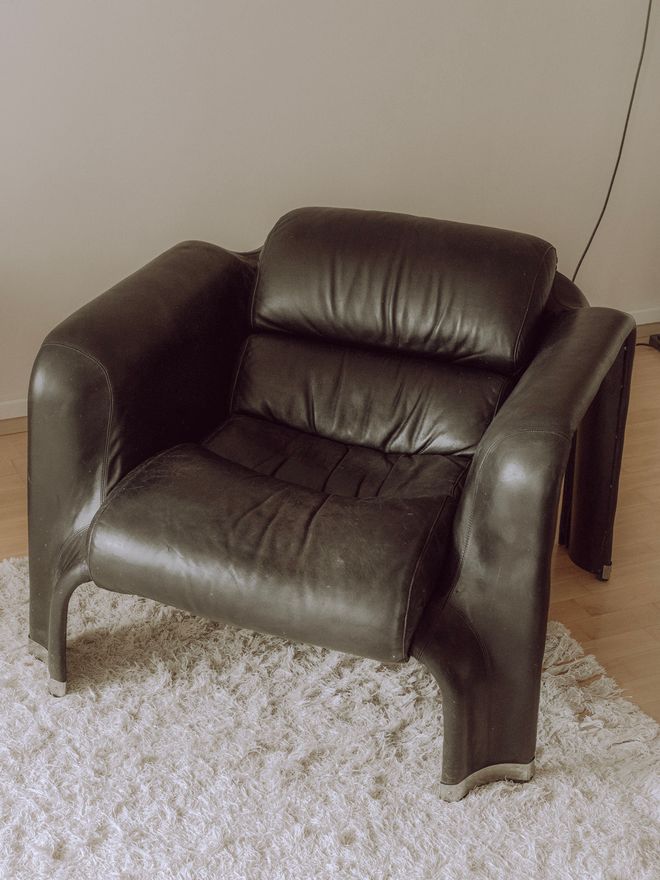
The Pohjola armchair by Pekka Perjo is a classic from 1965.
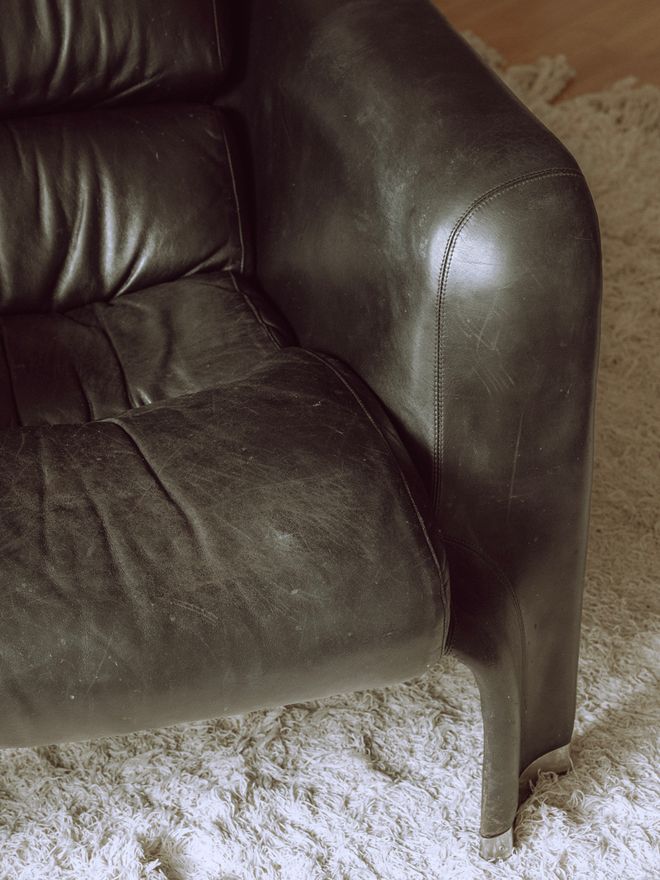
The leather upholstery showed small scratches and signs of wear, and the black color had faded in places.
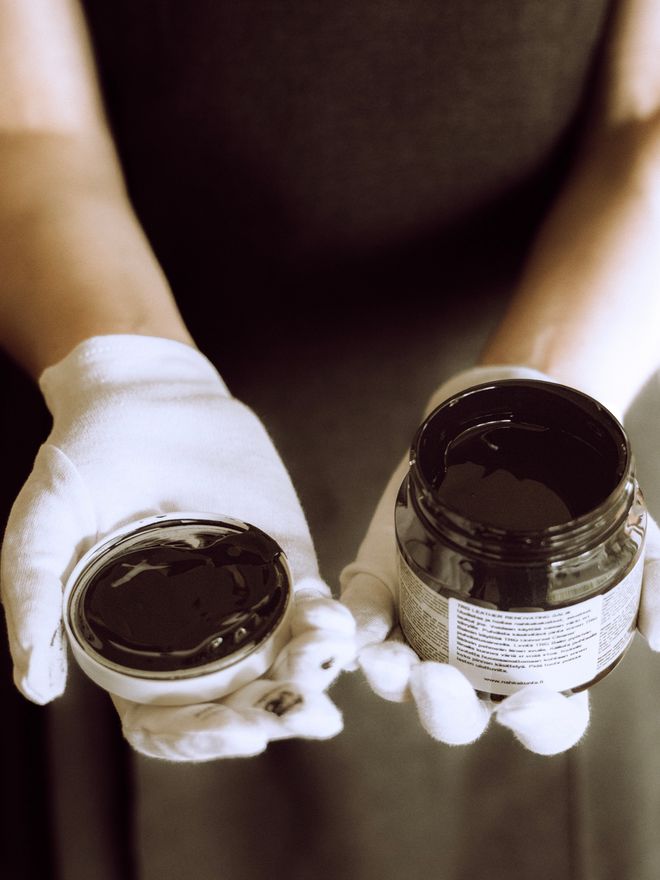
A black-tinted conditioner was used to treat the leather, though a clear product would work just as well.
Good to know before buying leather furniture
Leather is a natural material that reacts to its surroundings. For instance, sunlight can dry out leather and cause the surface of a sofa or armchair to crack over time, while natural oils help nourish and protect it.
However, leather upholstery doesn’t need excessive care. There are many types of leather, each finished and aged differently, so the same cleaning methods or products won’t suit every piece of furniture.
“When buying new leather furniture, it’s a good idea to ask for care instructions. Every manufacturer usually provides guidelines for their specific leather, and many offer their own care products at the time of purchase,” advises master upholsterer and harness maker Elina Parpala, who restores leather furniture professionally.
It’s also worth asking how the particular leather will behave and age over time. Some leathers darken with use, while others retain their original color. You can also check other users’ experiences – or even search for photos of the furniture secondhand – to make sure it fits your lifestyle and meets your expectations.
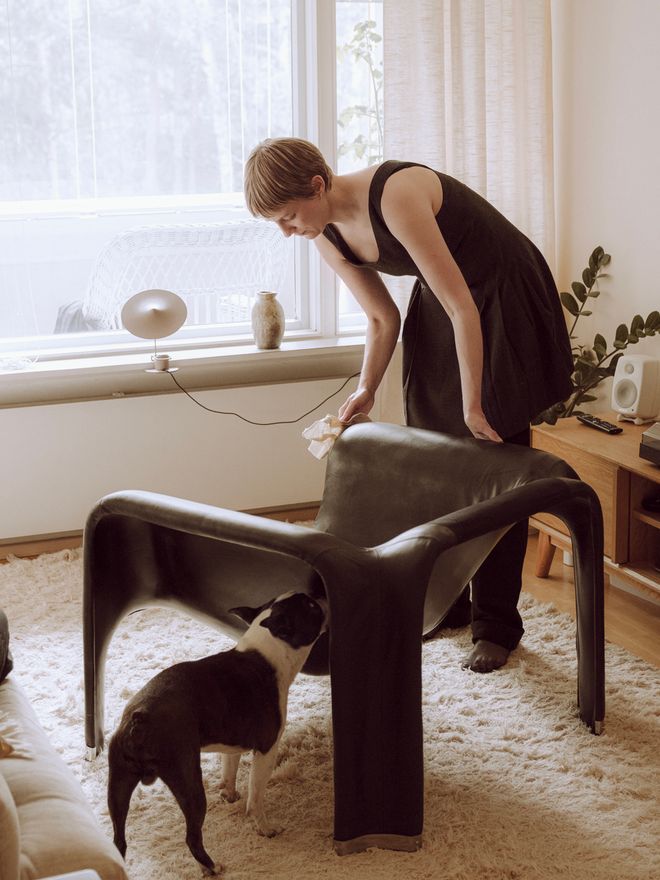
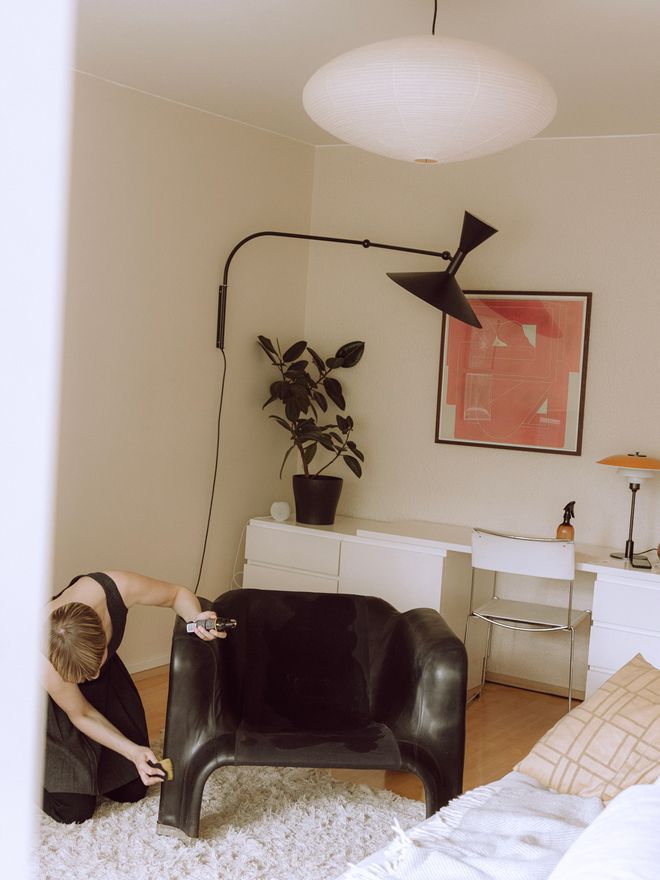
Design Stories contributor Jenna Kiuru took care of the pre-owned Pohjola armchair with her assistant, Terho the dog.
Caring for secondhand leather furniture
When it comes to pre-owned leather sofas and armchairs, it’s best to seek care advice from professionals such as upholsterers, cobblers, or restorers like Elina Parpala. Sometimes, an expert needs to inspect the surface in person to determine how the leather has been finished, how the furniture has been stored, what the surface feels like, and what kind of treatment it needs.
“For example, aniline leather behaves very differently from chrome-tanned leather from the 1960s,” Parpala explains, emphasizing that leather furniture thrives above all through regular use. Sitting on a leather chair or sofa provides warmth, moisture, and natural oils from the skin – all of which help keep the leather in good condition. Furniture stored in a cold warehouse, on the other hand, tends to dry out and deteriorate much faster.
“Aniline leather behaves very differently from chrome-tanned leather from the 1960s.”
Avoid placing leather furniture in direct sunlight or too close to fireplaces or other heat sources, as heat dries out the leather. A good rule of thumb is to leave at least thirty centimeters (about a foot) between the furniture and, for instance, a radiator.
What type of leather is it?
Aniline leather is porous and smooth, with no pigment or protective finish on the surface. It’s often called unfinished or natural leather. This type of leather is more sensitive to fading in sunlight and more prone to water and grease stains, which can easily soak into the surface.
Semi-aniline leather, by contrast, is slightly more durable thanks to a thin coating of finishing agents on the surface. Both aniline and semi-aniline leathers are dyed through.
Pigmented or coated leather is the most durable option, with multiple layers of finish that make it tougher and more resistant to wear.
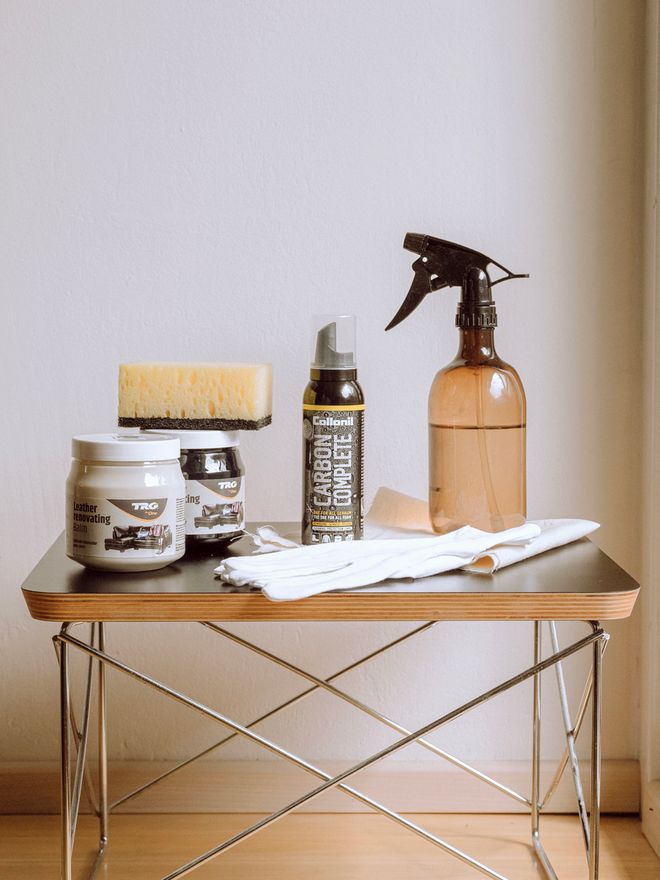
Different types of leather should always be considered when choosing care products.
Maintaining leather upholstery
It’s a good idea to check the condition of leather furniture a couple of times a year. Before carrying out any major maintenance, Elina Parpala recommends asking the manufacturer or an expert for care instructions specific to that type of leather.
“Most of the leathers used in furniture come from cattle. Thinner and more elastic hides, like deer leather, are rarely used for upholstery. When it comes to maintenance, the most important thing is to know how the leather has been finished and what kind of care it requires,” Parpala explains.
The general care guidelines below, provided by Elina Parpala, apply to most types of leather furniture. However, always test any products on an inconspicuous area first – especially if the leather is light-colored or particularly delicate.
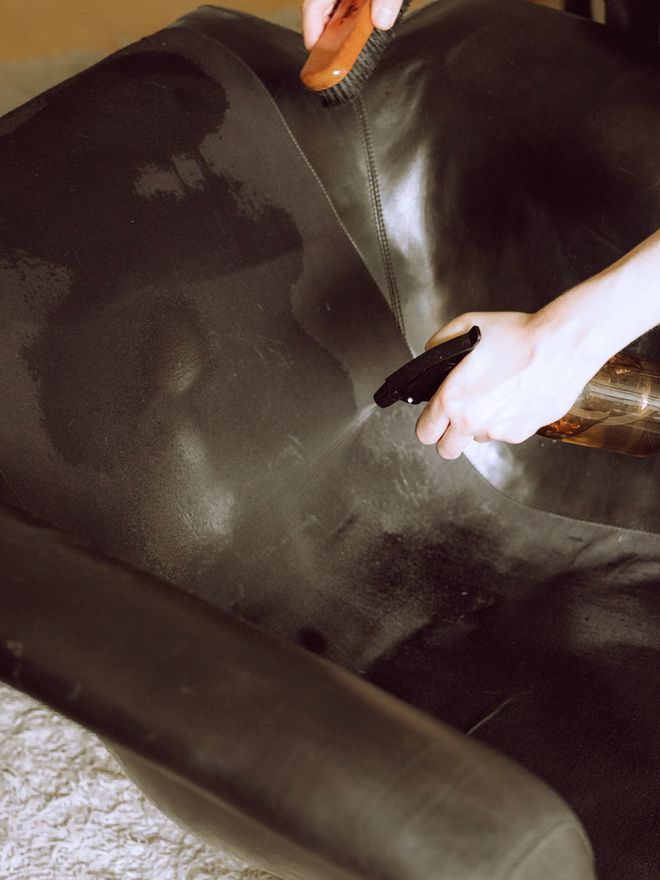
The textile parts beneath the seat cushions of the Pohjola chair were also cleaned.
Wiping and cleaning
Almost all leather furniture can be wiped with a damp or slightly moist cloth, but water should never be left sitting on the surface. In general, leather furniture doesn’t need frequent wiping, and dust can be removed by vacuuming or using a dry cloth. Avoid using household cleaning sprays or solvent-based products, as these can damage the surface of the leather. Keep in mind that unfinished leathers, such as light-colored aniline or nubuck, are particularly sensitive to moisture and may darken easily.
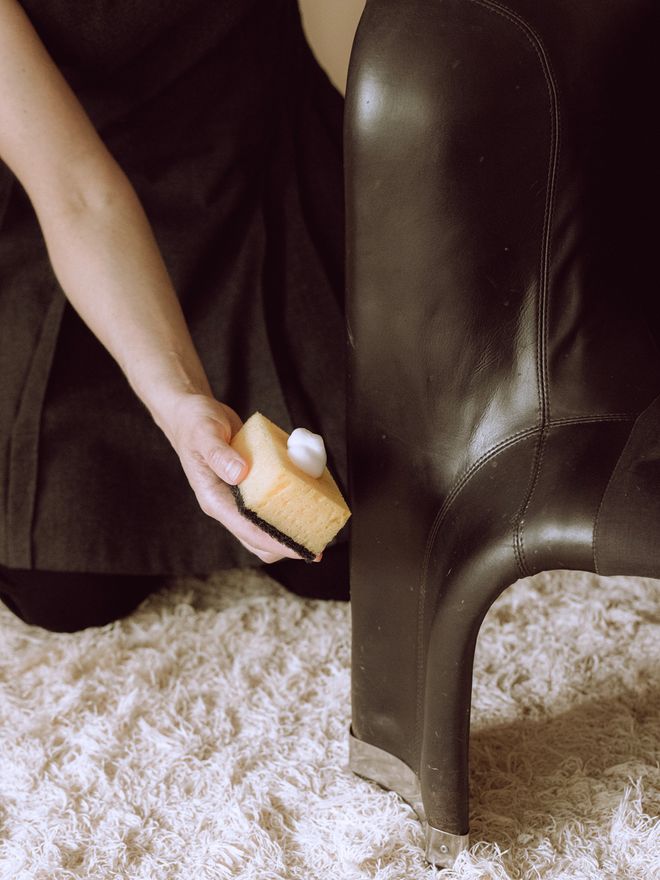
Always test cleaning and conditioning products on an inconspicuous area first.
Cleaning
Saddle soap and similar cleaning products often work well for thick, dark upholstery leathers. However, they may not be suitable for light, delicate, or porous types of leather.
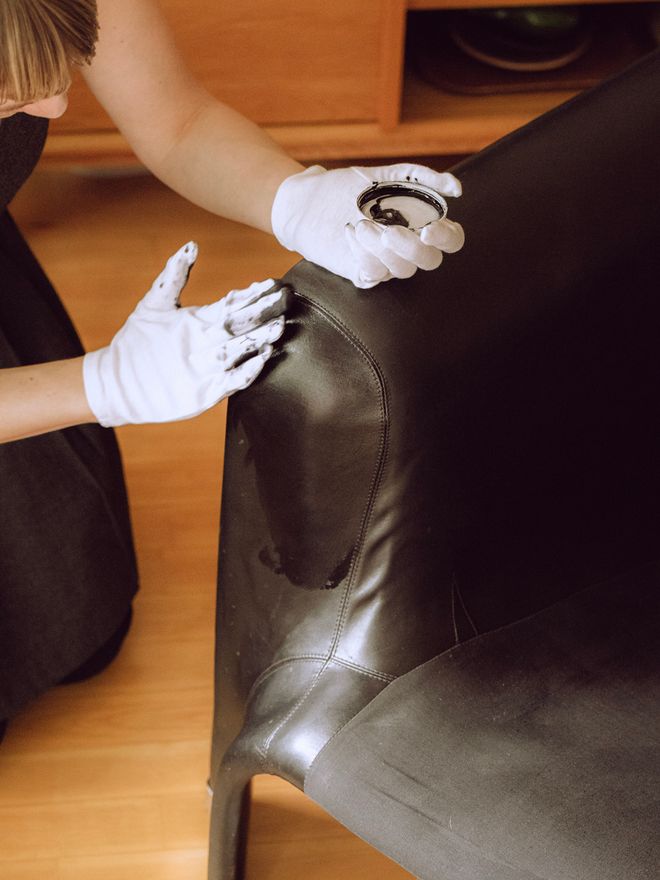
A tinted conditioner helps even out color variations caused by wear.
Using leather conditioner
If the leather feels dry and has small hairline cracks on the surface, it’s likely more porous and could benefit from a conditioner to restore moisture. Test the product first on an inconspicuous area, and apply sparingly with a clean cotton cloth or glove. After letting it absorb for the recommended time, wipe the surface with a clean, light-colored cloth to remove any excess and achieve a smooth finish.
If the leather has a hard, plastic-like coating, it won’t absorb anything – conditioner may remain on the surface and transfer to clothing.
Beeswax-based products are usually too greasy for furniture leather. They don’t absorb but form a sticky layer on top instead. On unfinished leather, however, wax can soak in too deeply and darken the surface significantly.
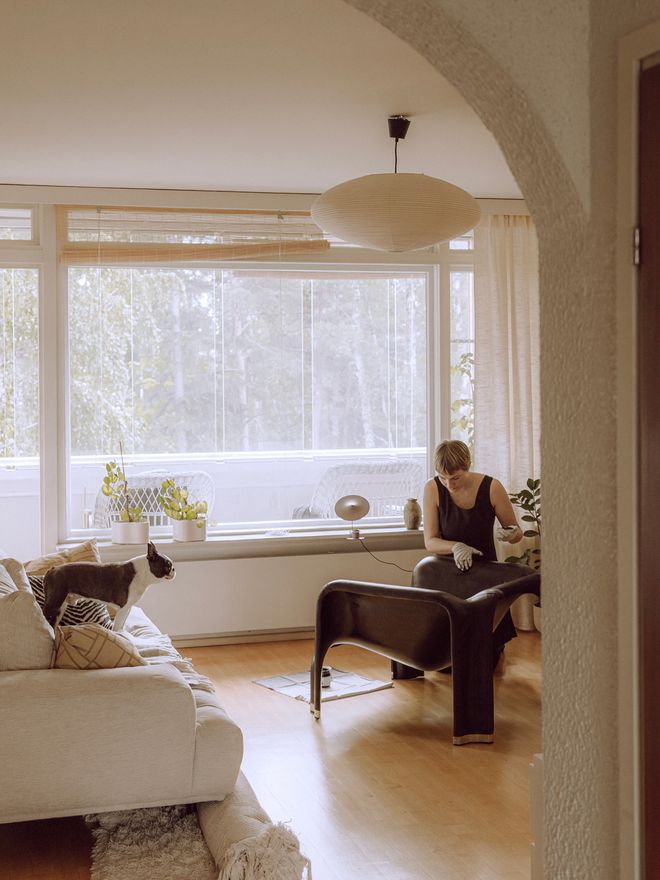
Conditioning products can provide much-needed moisture to dry, porous leather upholstery.
Small scratches
If the inner side of the leather is the same color as the surface, minor scratches can often be softened or blended in by gently rubbing the area with a small amount of conditioner using a cotton cloth.
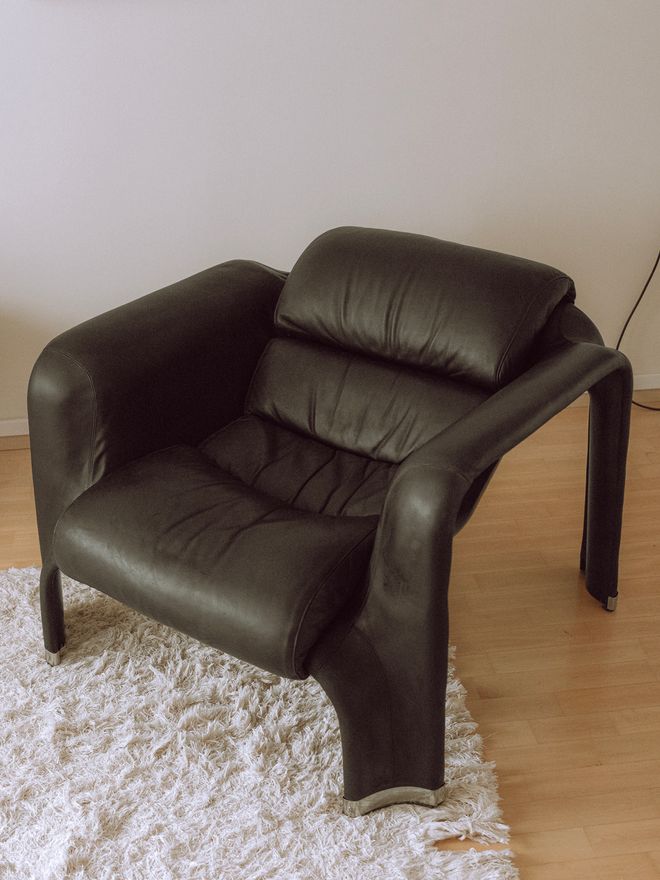
The conditioner can be left to absorb for up to 24 hours, after which the leather should be polished with a cotton cloth.
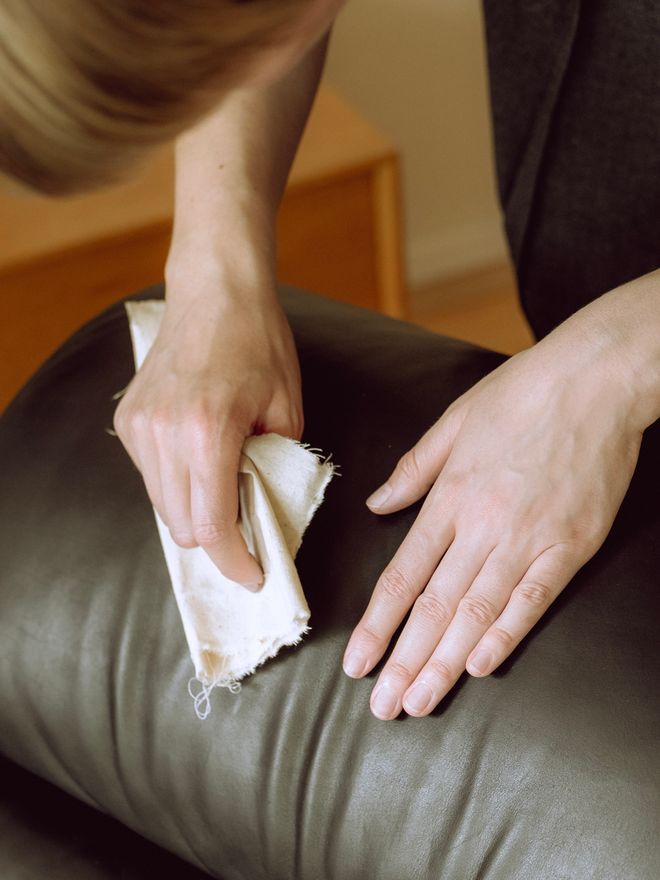
“The leather looks fantastic after the treatment – almost all the scratches disappeared,” says the chair’s owner.
The leather upholstery of the Pohjola armchair, designed by Pekka Perjo, had become worn, dry, and scratched after years of use. The chair had spent several years in a home with dogs, and while the patina was worth preserving, the pre-owned piece was in need of a little refresh.
The chair was first wiped clean of surface dust with a slightly damp cotton cloth. It was then cleaned section by section with a leather cleaner and allowed to dry for a short while. A tinted conditioner was applied with a clean cotton glove and left to absorb overnight. Finally, the surface was gently polished with a clean cloth.
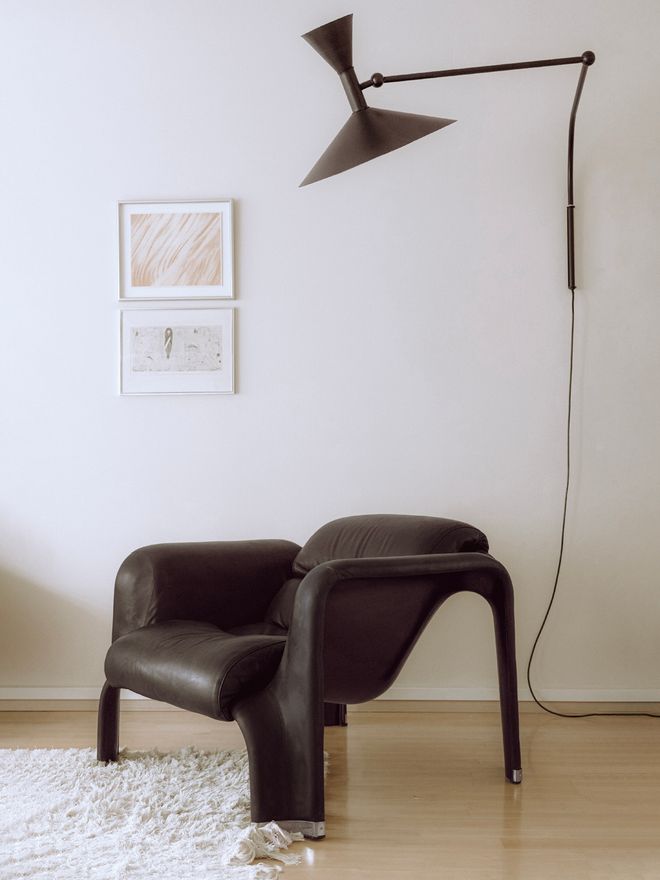
Freshly restored, the armchair is once again ready for everyday use. The Lampe de Marseille wall light is a classic design by Le Corbusier.
See also:
• All products for housekeeping >
• New arrivals at Finnish Design Shop >
Published on 8 Oct, 2025