“Fiskars LAB is our playground for creativity,” says Chief Design Officer Petteri Masalin
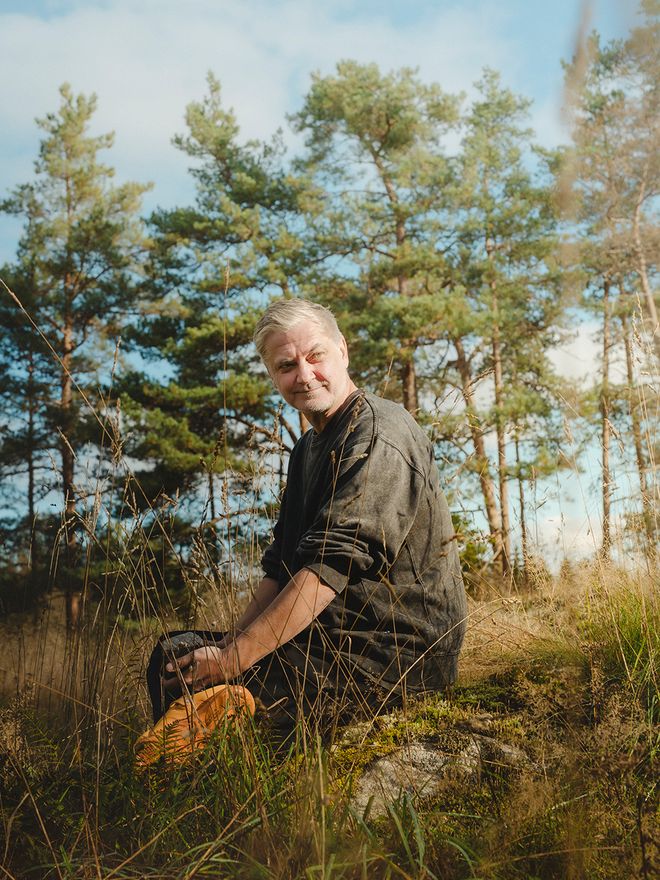
Petteri Masalin works as Chief Design Officer at Fiskars. His second home is located in the historic ironworks village of Fiskars in Western Uusimaa, Finland.
THE BLACK-WALLED sauna has a dim, almost mysterious atmosphere. Petteri Masalin, Chief Design Officer of the Fiskars brand, has placed a sauna bucket on the bench of his sauna in the Fiskars village. The simple steel bucket and its long-handled ladle are solidly made, with a weight and sturdiness that feel reassuring in the hand. They’re the kind of objects meant to stay in use for a long time, perhaps even for generations.
The sauna bucket is part of the Fiskars LAB collection, a line produced only in small, limited batches, sometimes just a few dozen or a few hundred pieces. The products are available only as long as stock lasts, and once a batch is gone, it isn’t made again. In other words, even within a large publicly listed company, there’s room to design experimental small-scale series. The now sold-out sauna set is a perfect example of exactly that.
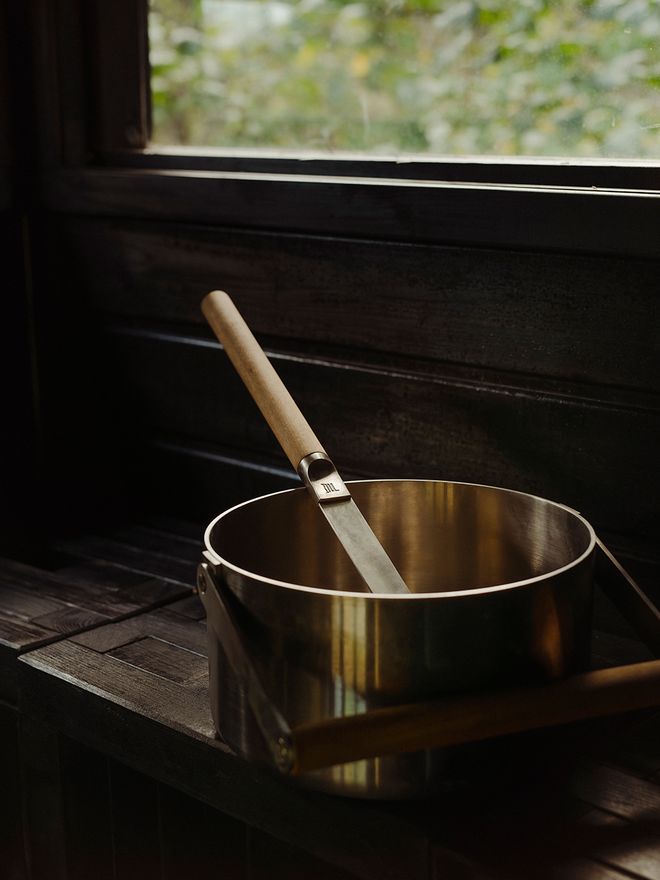
The Fiskars LAB sauna set captures the essence of Finnish sauna culture by skillfully combining nature, heritage, and craftsmanship. This particular set is no longer available in this form, but you'll find other Fiskars LAB products in our online shop — until those, too, sell out.
For Petteri Masalin, LAB is a welcome testing ground. When working on its products, Masalin – who trained as a metal artisan and industrial designer – gets to explore new ideas and push the boundaries of product design together with a small team of four to five people.
“For us, LAB is a playground for creativity. We don’t set the same strict parameters as we do for mass-produced products. Instead, we ask, why not? LAB’s products open up new paths for us. We test what resonates with people right now and where our brand is headed,” Masalin explains.
Fiskars LAB has indeed taken some unexpected turns. Previous projects have included a clothing collection with Maria Korkeila, bright orange shoes created with the Spanish footwear company Camper, a Japanese-inspired knife series made of Damascus steel, and wooden skis (which look uncannily like timber planks when leaning against the log wall inside Masalin’s red-and-white cottage). In other words, the team hasn’t exactly stayed within Fiskars’ traditional product segments.
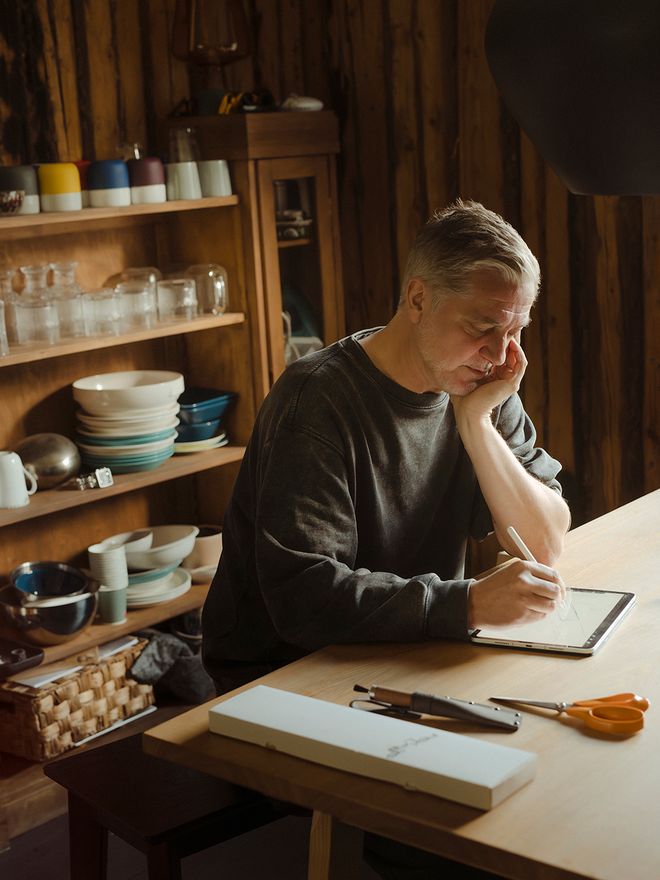
Masalin usually sketches new product ideas at the dining table of his second home. Drawing by hand is his natural way of developing ideas.
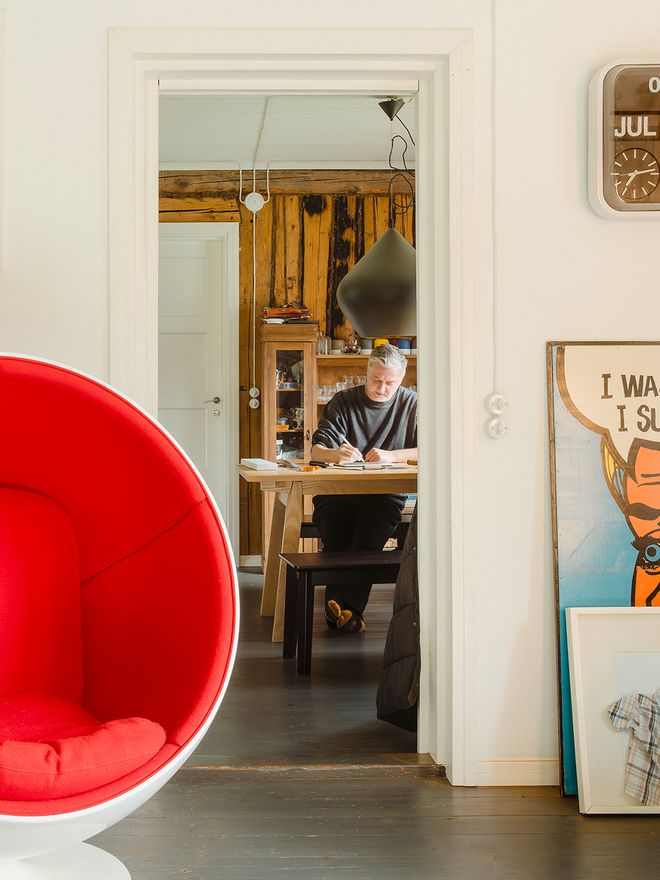
Masalin purchased his second home 14 years ago, and the log cabin has since been fully renovated. In the foreground sits a pre-owned Ball Chair by Eero Aarnio.
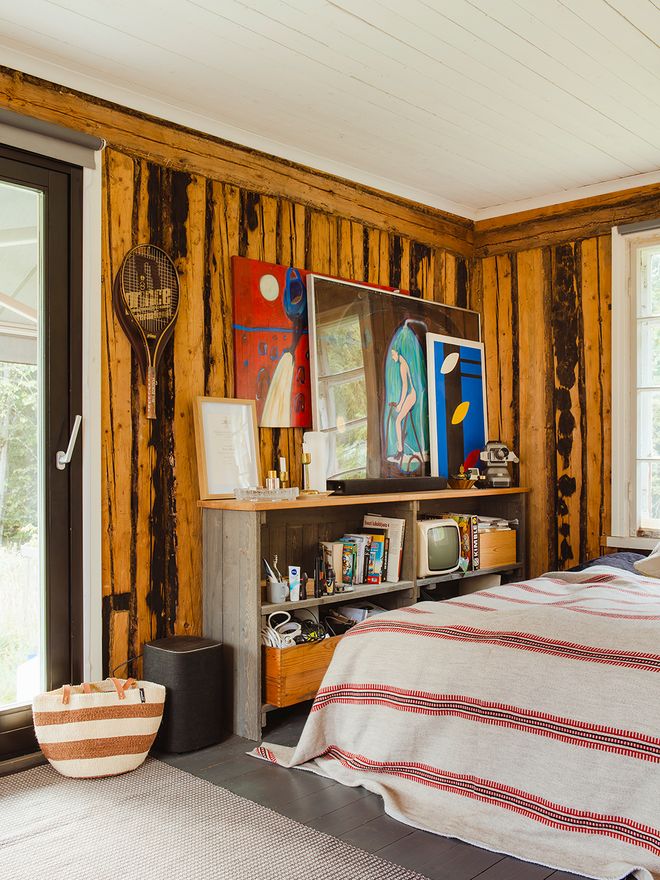
The roughly 40-square-meter cabin includes a living and sleeping area as well as a kitchen-living room. Nearby is another building, a former bakery, which offers additional sleeping space. The upright log walls have been left visible.
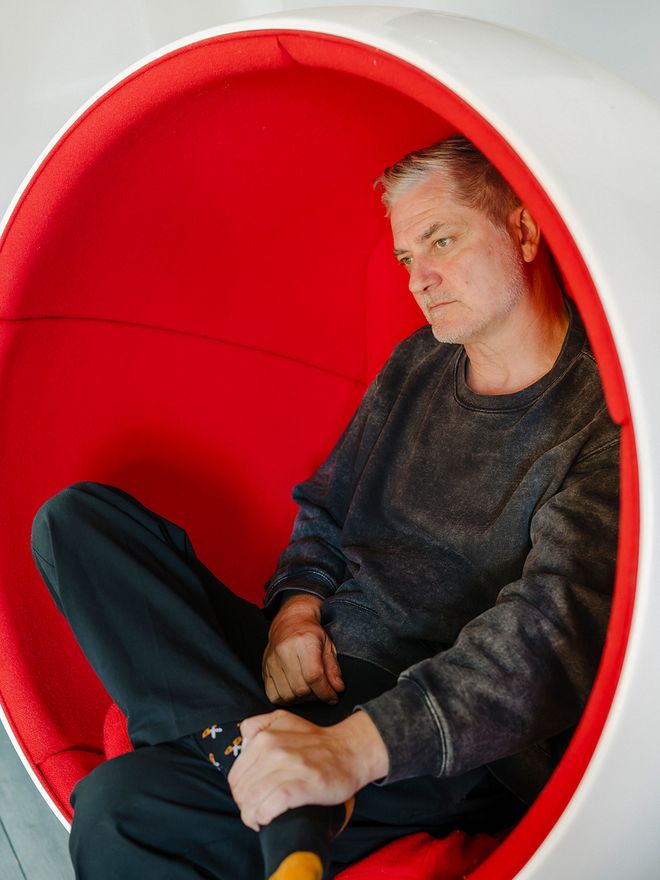
Masalin has worked in product development at Fiskars for around 15 years, focusing especially on product design in close collaboration with the R&D team. Functionality is the foundation of all design: “You must thoroughly understand how an object will be used before you can start designing it.”
FISKARS LAB PRODUCTS often have a more unpolished look than the brand’s industrially manufactured items – or “honest,” as Masalin likes to describe them. Their distinct character is highlighted in the details: the knife packaging, for example, is deliberately simple, and the logo is stamped onto the surface with an old-fashioned rubber stamp. Each product also comes with a short note that Masalin signs by hand.
A number of new product ideas are already in the works. “What sets LAB products apart is that they’re designed by a small team, and the journey from idea to finished item is fast. In the industrial side of the business, design processes typically take several years, often three to four,” Masalin says.
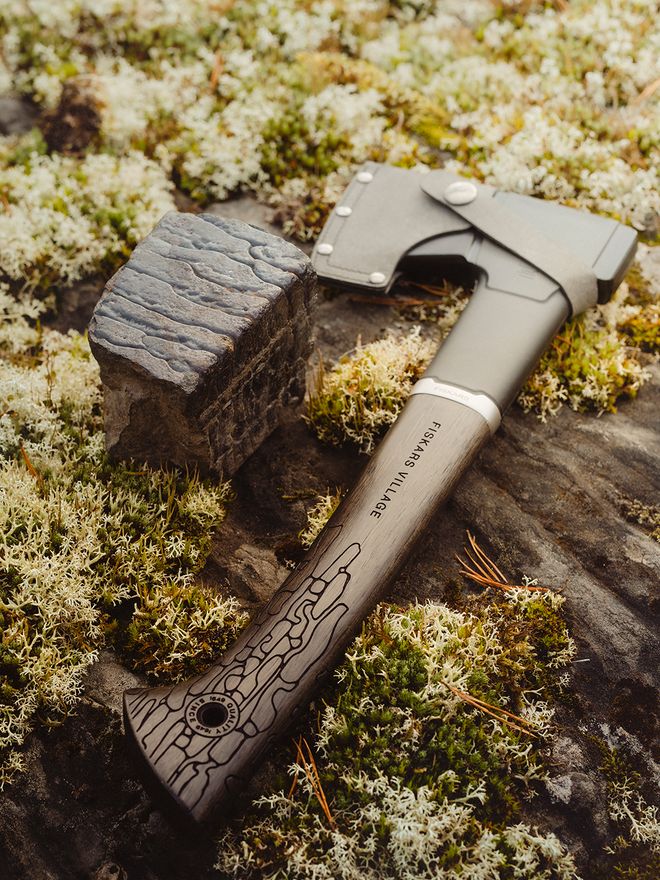
The hickory handle of the Fiskars Village general-purpose axe features a pattern inspired by the brick walls of the historic buildings in Fiskars Village.
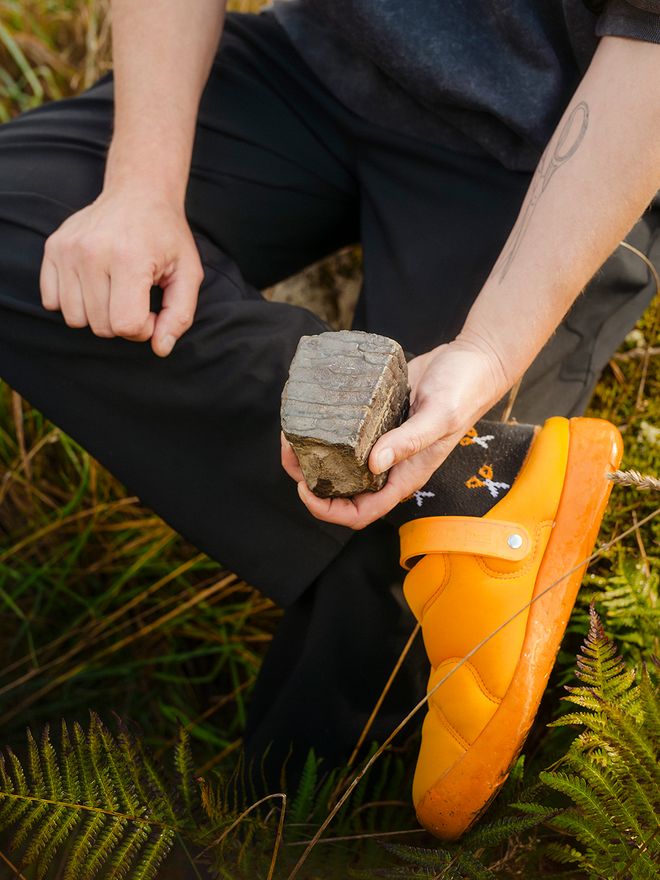
The bright orange clogs from the collaboration between Fiskars and the Spanish footwear brand Camper are suitable for both indoor use and gardening. In his hand, Masalin is holding a piece of blast furnace slag brick found in the soil of the old ironworks.
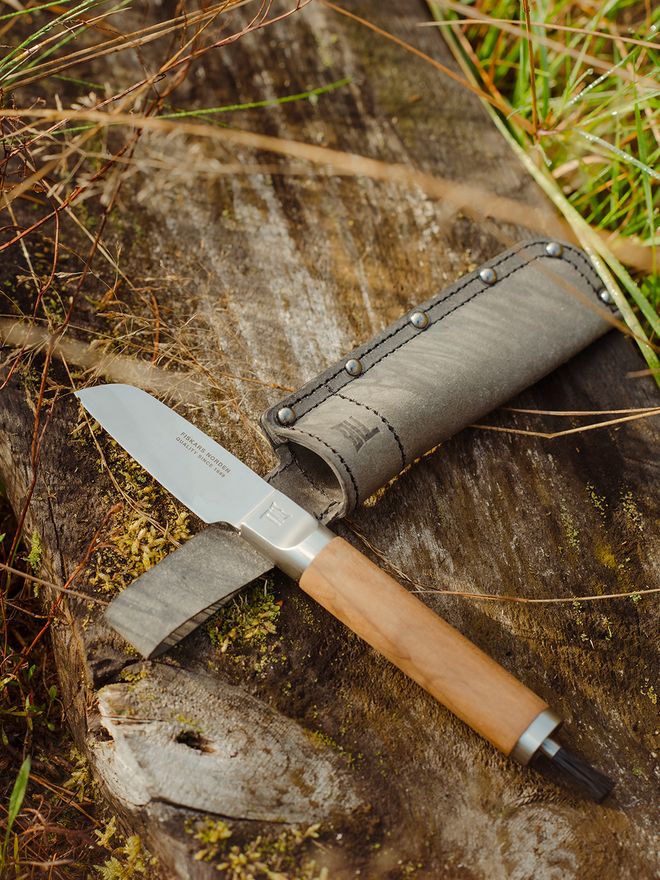
The handy Fiskars LAB mushroom knife comes with a birch handle and a small brush, making it easy to clean dirt and soil off mushrooms right there in the forest.
LAB IS JUST ONE thread in Masalin’s work. Since 2009, his main responsibility has been leading the design and product development of Fiskars’ offerings. Before joining the company, he worked on the B2B side designing heavy-duty equipment such as ships, forklifts, and welding machines. Today, the Chief Design Officer splits his time between three locations: Fiskars’ headquarters in Espoo, the factory in Billnäs, and Madison in the United States.
Over his 15 years at Fiskars, Masalin has introduced new processes to product development, built testing labs, and conceived an impressive range of new products, including several award-winning designs.
“When I started, our product development team had only five people. Now we’re more than ten times that size. Our approach to design is still very hands-on. We create a lot of prototypes because we want to move into real-world testing quickly. We also have a large test garden and a test kitchen where we work with professionals to trial and refine our products.”
Fiskars’ investment in design has become visible in its product range. Fifteen years ago, the company launched seven new products a year; next year, it’s preparing to introduce 156.
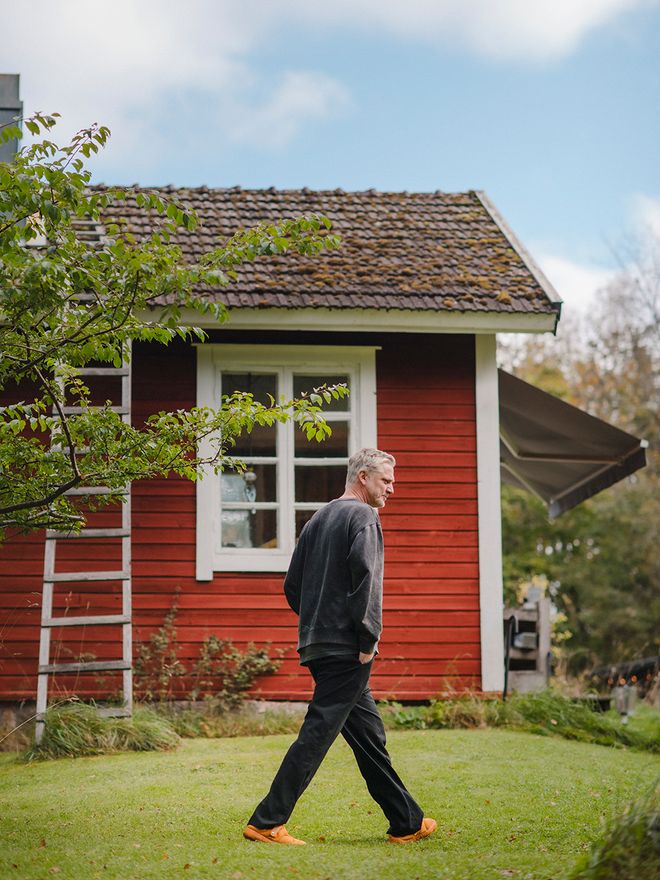
The roughly 120-year-old red-painted cabin once served as housing for workers of the Fiskars ironworks. At the time, the small building accommodated two families in apartments no larger than a single room with a stove.
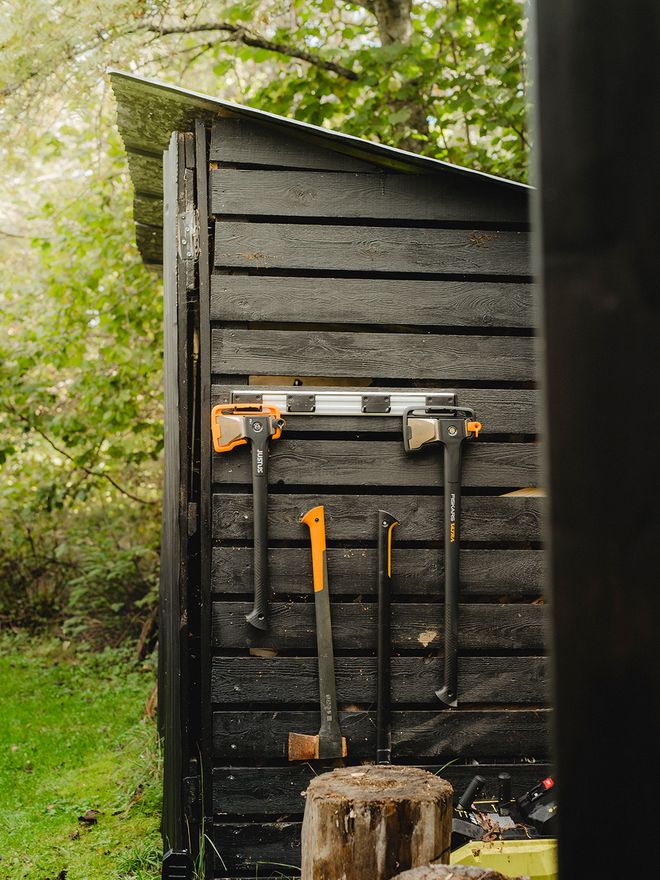
Fiskars axes and other yard tools are in frequent use on the property.
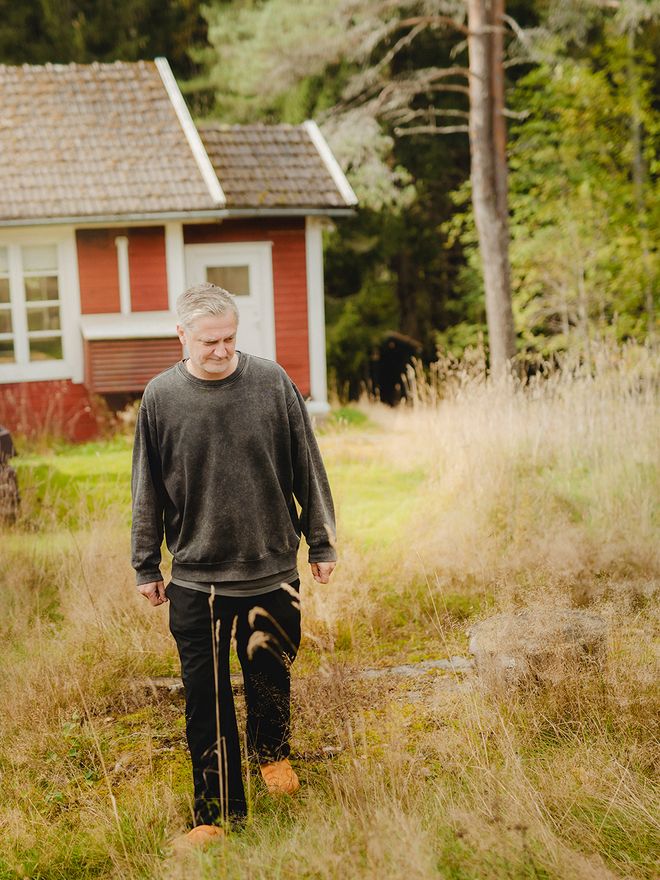
Masalin’s second home is located on the outskirts of the Fiskars ironworks village, in a peaceful spot at the edge of the forest and by a small lake. The yard is often visited by forest reindeer as well as lynx.
In addition to familiar Fiskars products like scissors, kitchen tools, and gardening equipment, the product development team is constantly exploring new areas where the brand could expand.
“When we start looking into a new category, we spend years researching and learning about the field before we even begin designing the first product,” Masalin says. One such long-term development project has been pet products. Masalin notes that he immersed himself in the topic so thoroughly that he ended up getting a dog of his own.
But that’s hardly surprising. Masalin’s design philosophy is rooted in the idea that a designer must fully understand how an object will be used, whether it’s in the kitchen, the garden, or by pets, before sketching a single concept. Functionality has always been a guiding force in Fiskars’ design work, and under Masalin’s leadership, it has remained the core of every product, even as the team explores experimental ideas through LAB.
See also:
• All products by Fiskars LAB >
• All products by Fiskars >
Published on 1 Dec, 2025