Respecting the past, living in the present: A thoughtful renovation story
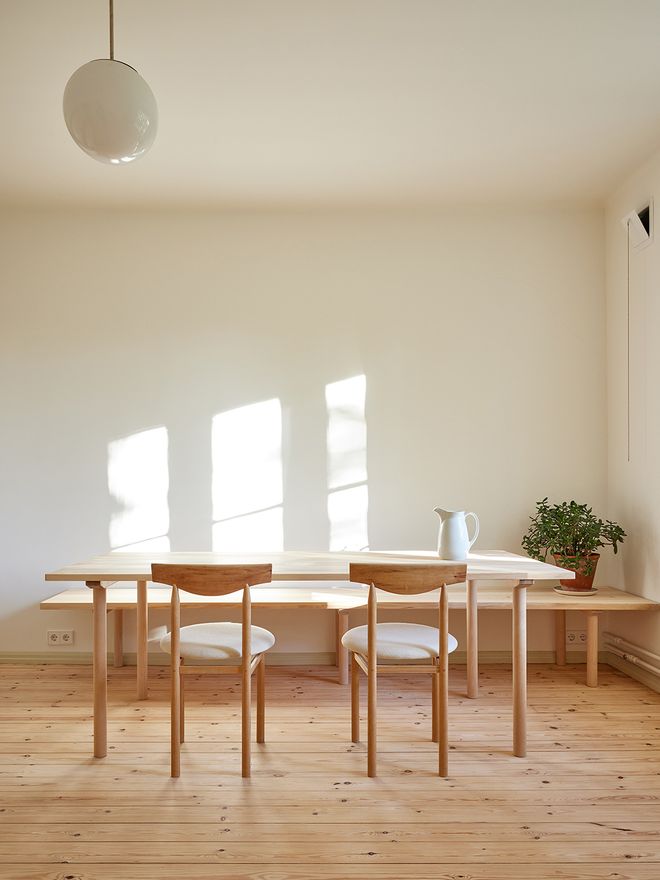
The home is furnished with pieces designed by Mattila & Merz. The top of the Puhde dining table is made of pine, a material familiar to Finns. The bench, designed by Laura and made by Mikko, is accompanied by dining chairs designed by Rudi Merz.
Residents:
Architect Laura Mattila, architect and cabinet maker Mikko Merz and children Laila and Tuula. The apartment is located in Vallila, Helsinki, in a building completed in 1925. The floorspace of the apartment is 51 m².
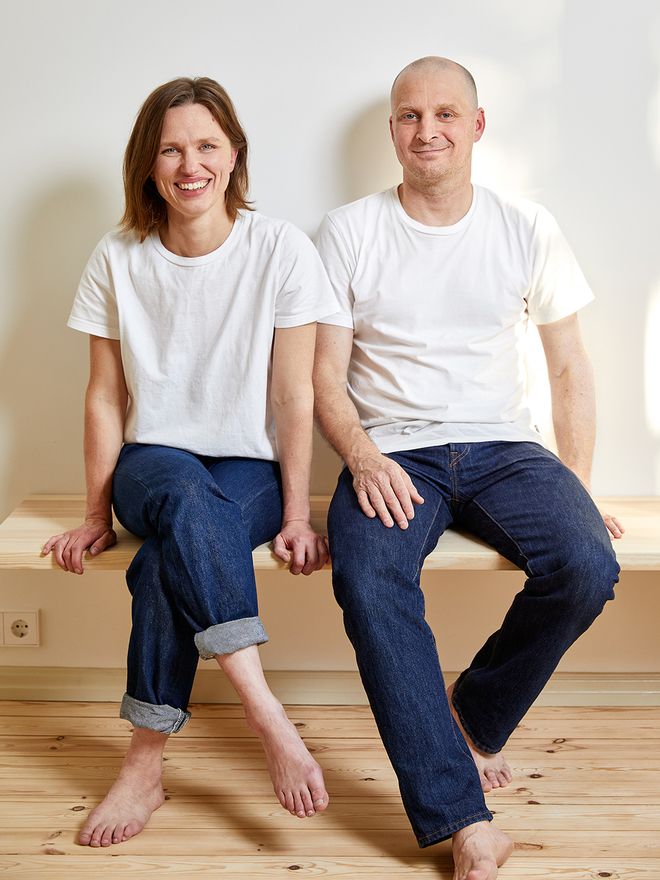
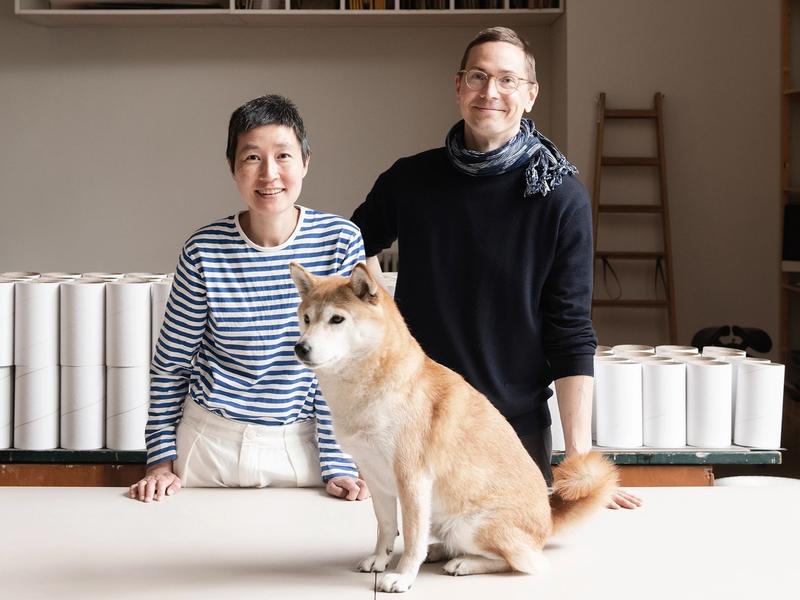
Laura Mattila and Mikko Merz lead Mattila & Merz, an architecture and design studio dedicated to crafting objects, furniture, and buildings from wood.
BEAUTIFUL, ELEGANT AND respectful of history. These words could be used to describe the renovated home of Laura Mattila and Mikko Merz, perfectly matching the style and atmosphere of the building dating back to the 1920s.
The work of architecture and design studio Mattila & Merz pays homage to history and traditional manufacturing methods, which is also reflected in the couple’s own home. Before and during the renovation, Laura and Mikko familiarized themselves with the apartment’s characteristics and original solutions with particular attention to detail. Even though the renovation was carried out with a restorative approach, it was also driven by the need to make the 51-square-meter apartment meet the needs of a modern family with children. Best of all, there were no strict deadlines to follow in the renovation of their own home.
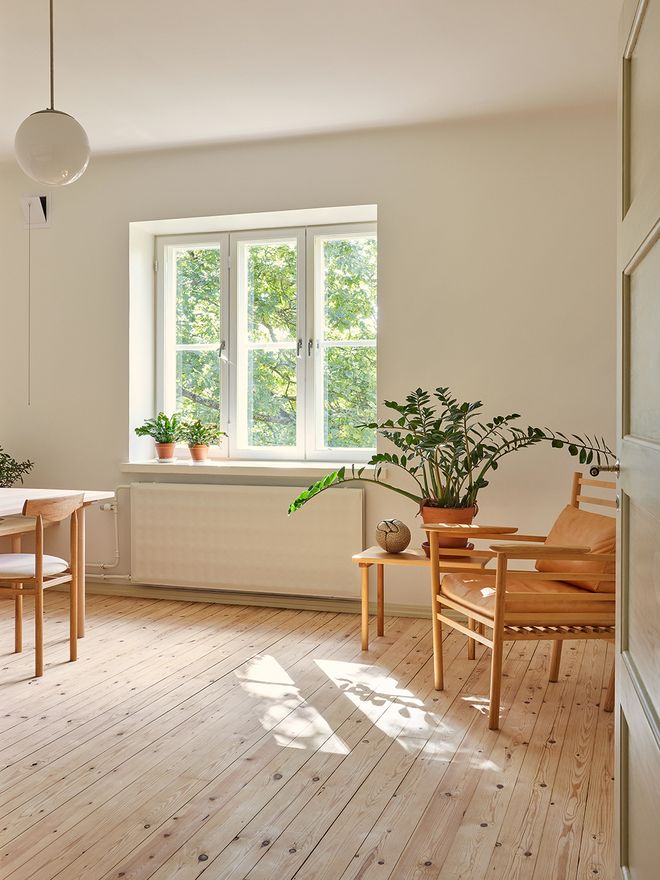
The Nikari Arte armchair was designed by Mikko’s father, carpenter Rudi Merz. The ceramic armadillo curled up on the corner of the table is made by Laura’s sister, sculptor Lotta Mattila. The filter of the air vent is modern, but the design of the vent is old.
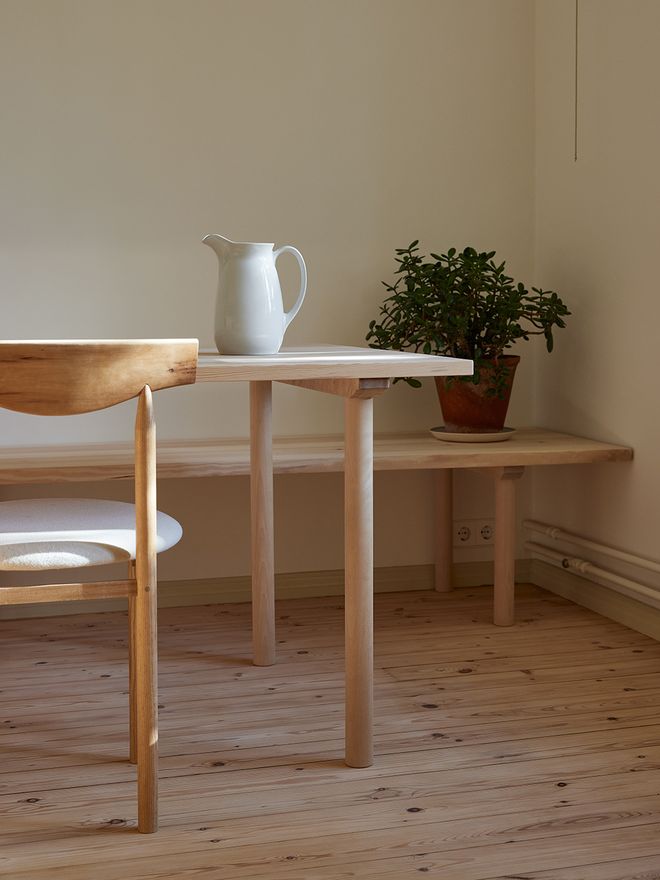
The use of untreated wood is typical of both the spatial and product design of Mattila & Merz. The soap-treated wooden floor is accompanied by greenish gray and soft white painted surfaces.
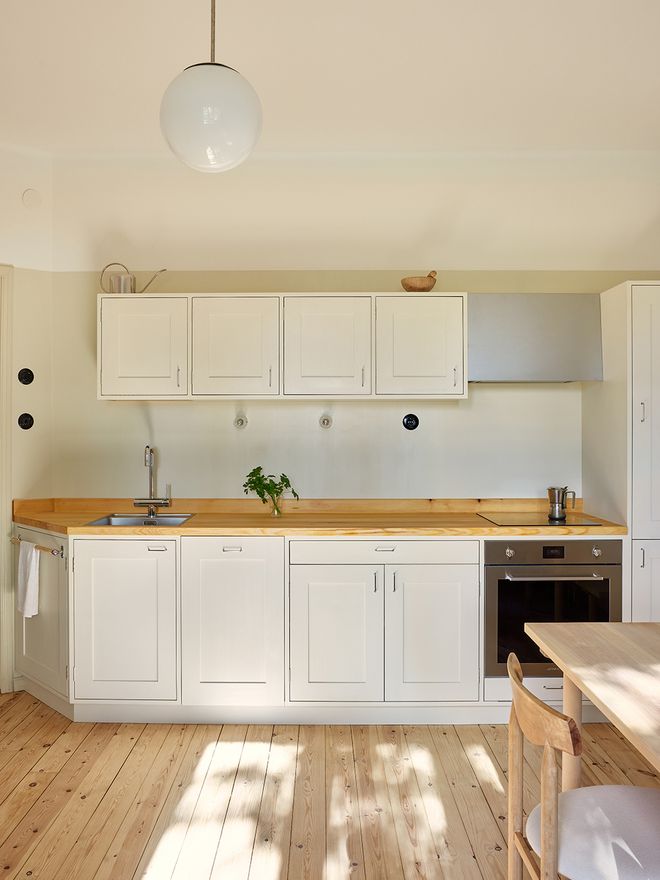
The space between the kitchen counter and cabinets was painted instead of tiled, and the countertop was made of wood to make the kitchen a seamless part of the lounge area. The traditional porcelain lamp bases are by Swedish Ifö.
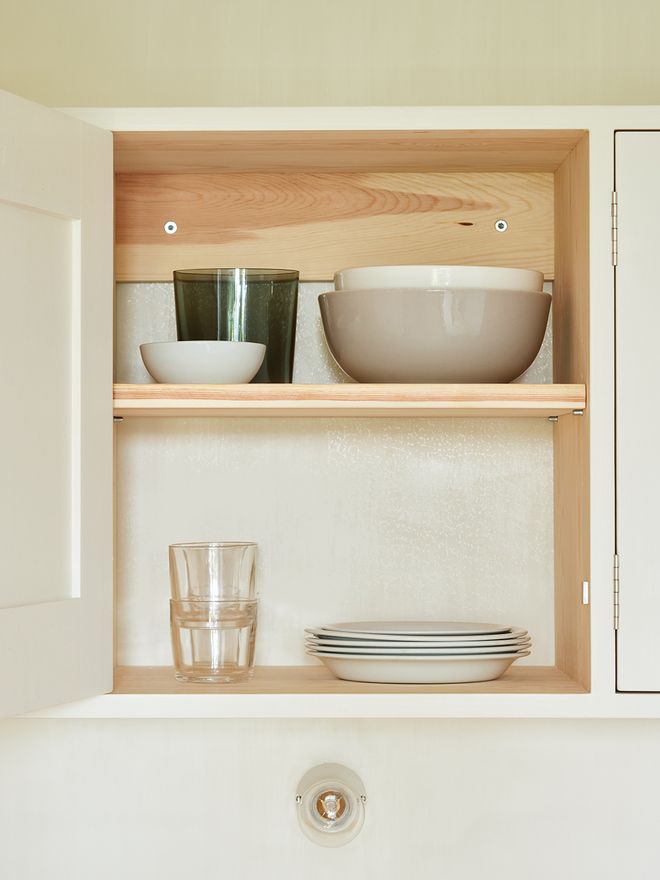
Laura and Mikko were able to trace the places of the original kitchen furniture based on marks left on the walls and the original fixtures in the other apartments. With them in mind, Laura designed and Mikko built the solid-wood kitchen.
The apartment building completed in 1925 in Vallila, Helsinki, is a textbook example of the decade’s social housing, designed to improve the living conditions of working people.
The home is proudly a former working-class residence, and the couple is not trying to make it more than it is.
“As a working-class dwelling, our home embodies the aesthetic of functionalism. I found the original building specification in the archives, and it said that the doors should be of the cheapest model and that the ceiling medallions in the largest rooms should be simple plaster medallions. The pigments, such as lampblack and yellow ochre, and skirting boards are also simpler and cheaper than in middle-class homes,” says Laura.
“The best way to honor the spirit of an old building is to choose materials that match the building’s architecture, meaning that there’s no point in trying to convert a working-class apartment from the 1920s into a bourgeois neo-Renaissance-style residence.”
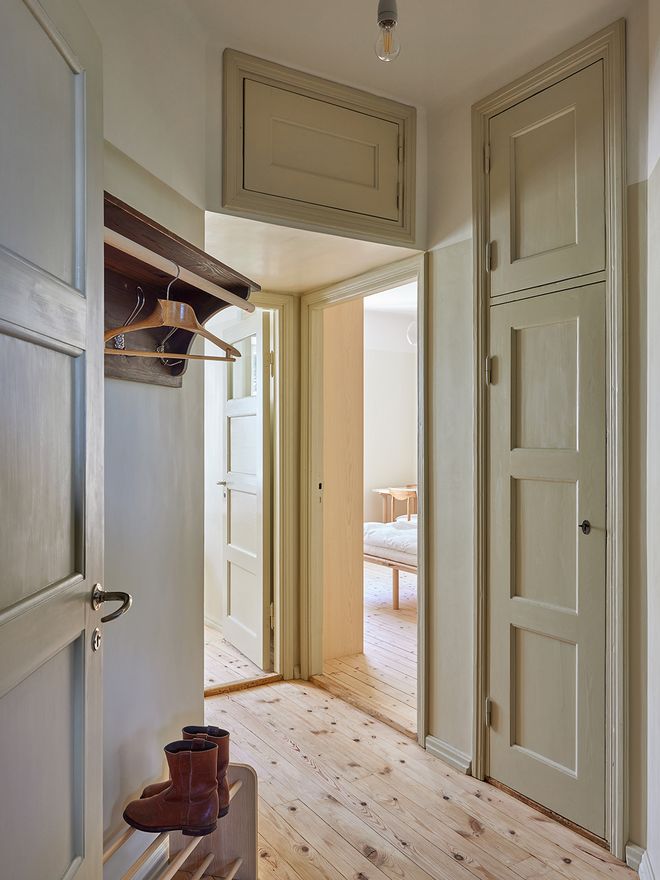
Originally, the floor had a dark, translucent reddish-brown finish. The wall coat rack in the hallway is original and continues to serve after refurbishment.
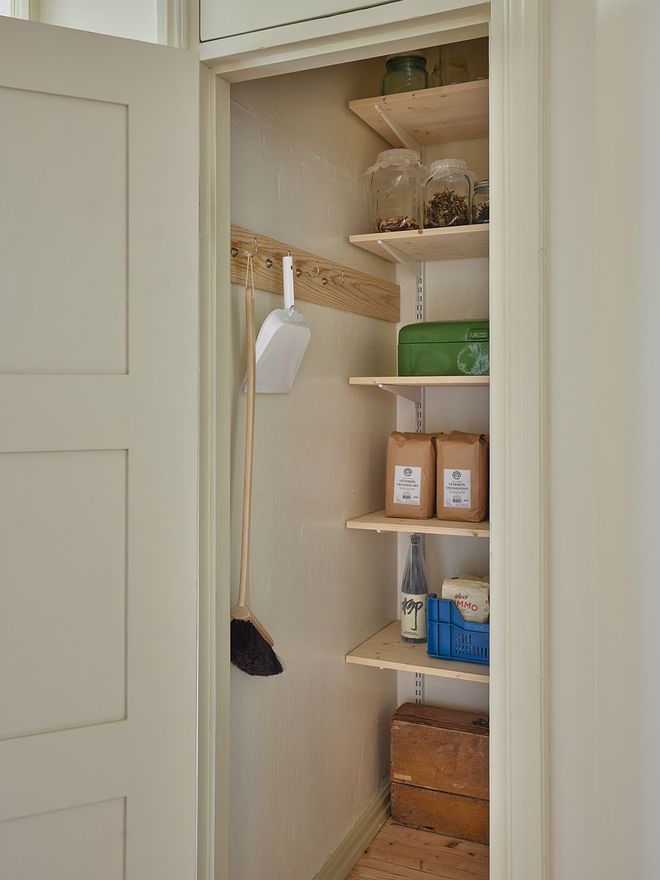
The hallway cupboard was turned into a pantry.
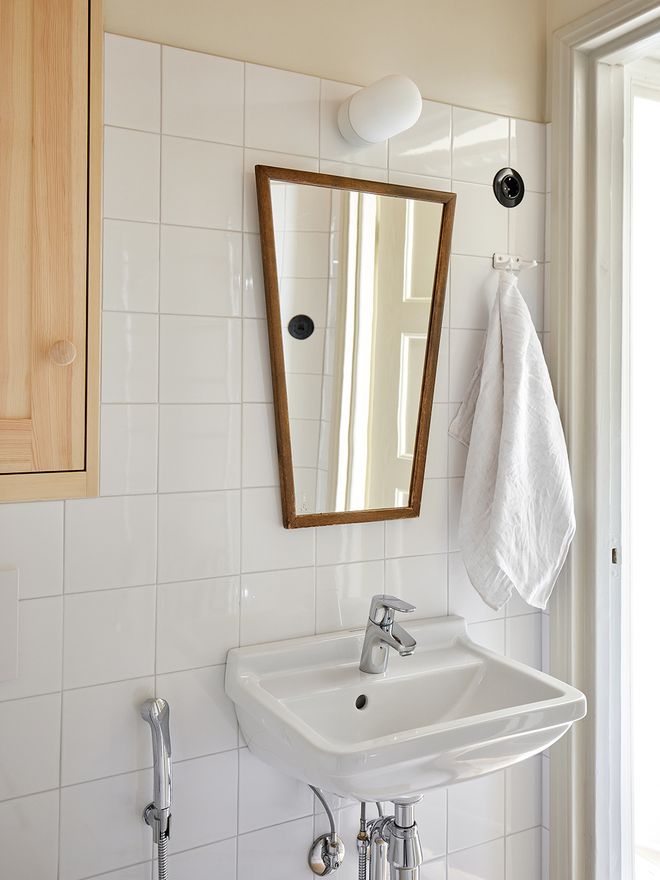
The bathroom tiles are by Pukkila. The glazed vitrified tiles on the walls with their rounded corner pieces are from the last batch of Pukkila tiles manufactured in Finland. The same kind of tiles were already in production when the apartment was constructed. The Ohm lamp was designed by Kauppi & Kauppi for Ifö.
Ever since she was a child, Laura has dreamed of living in a local-history museum where she could still sense something of what is no longer there. The charm of living in a century-old stone house is based on a similar experience.
“We enjoy the presence of history in this place. That someone has lived in these rooms before us, touched the same doorknobs and heard the floorboards creak underfoot,” describes Laura.
For Laura and Mikko, the restorative renovation was a journey into the history of the apartment.
“When we bought the apartment, all the surfaces were yellowed by nicotine. But below the dingy surface, there was still much of the original that just needed to be scraped, peeled and scratched out. For example, all the rooms have original wooden floors. However, unlike in many other buildings from the same era, the floors were wooden to begin with, meaning that the floorboards were not just a substrate for linoleum,” says Mikko.
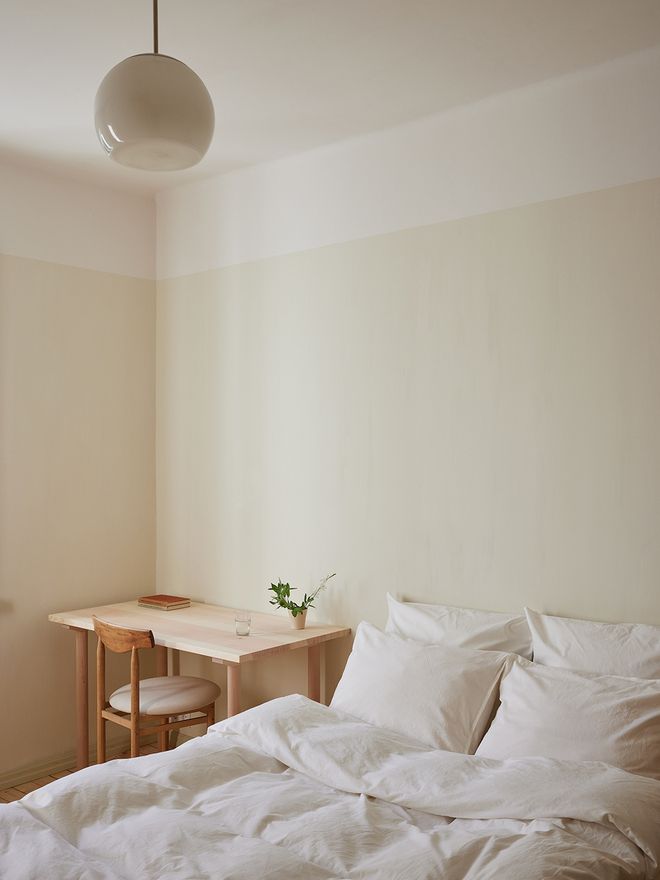
All the beds are made of untreated wood. This way, the sleeping environment is as clean and heathy as possible. The double bed is Peti by Mattila & Merz.
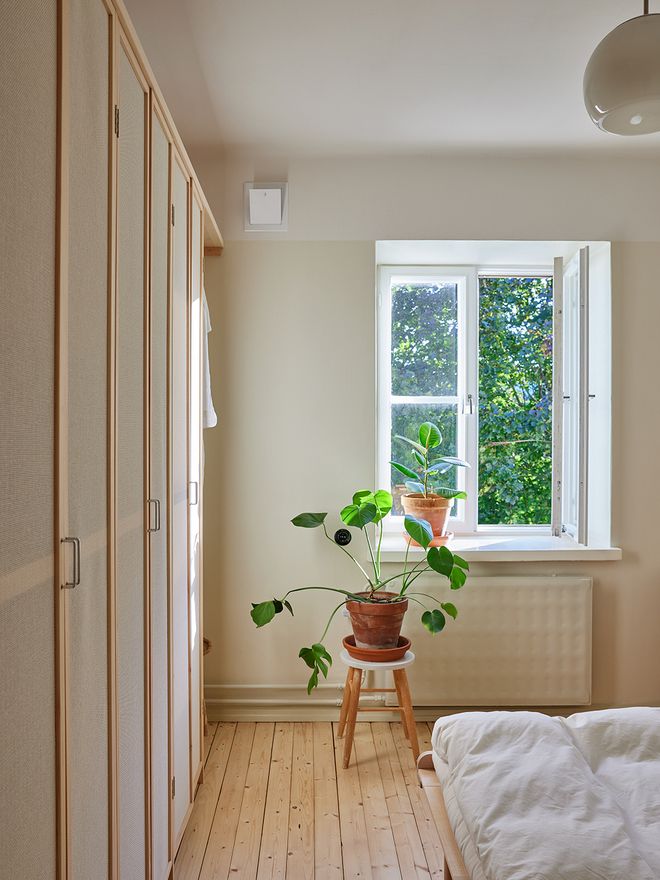
The sheet metal radiators date back to the 1950s when a transition was made from stove heating to central heating. The radiators were treated with linseed oil paint. Before that, they were submerged in a bath of lye to remove decades worth of paint layers.
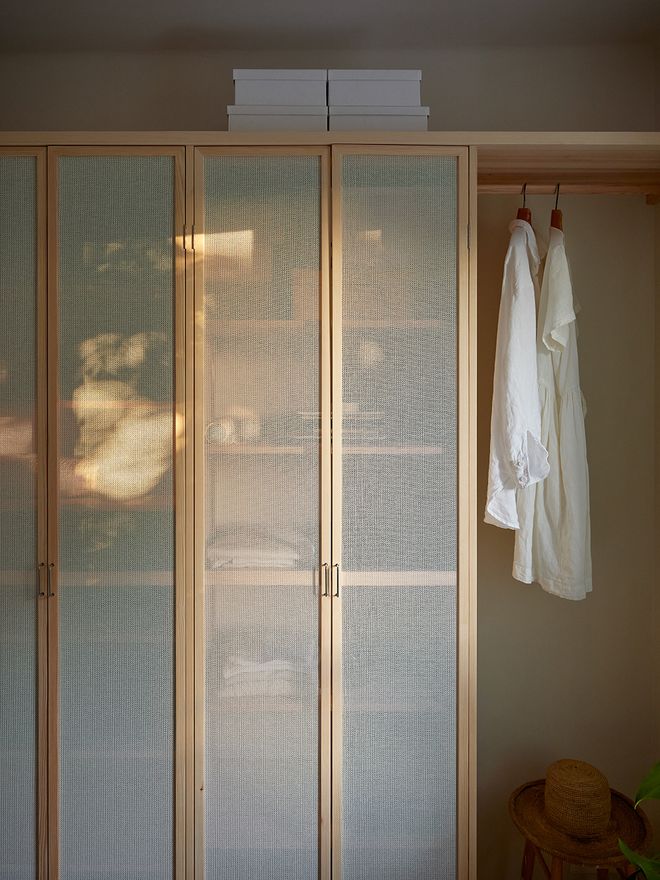
As so many other items in the apartment, the wardrobe in the parents’ bedroom is also designed and made by the couple. The doors feature paper-yarn fabric by Woodnotes.
Laura scraped the walls with a scalpel, revealing colors from different stages of the apartment’s history. It turned out that the walls in the kitchen had always been painted, whereas the walls in the other rooms had originally been wallpapered. The shade for the walls was picked based on the greenish gray originally used in the kitchen and mixed by Laura from pigments. The surfaces were masked along the original lines for painting. The finishes of the surfaces treated with traditional paints vary depending on the type of paint, affecting how each space feels.
The history of the apartment is reflected in the materials – both original and those used by Laura and Mikko.
Fortunately, the previous residents had not got rid of all the old elements in their enthusiasm to renovate. It was, for example, possible to restore the interior doors, which had been turned into flush doors in the 1950s, back to their original state. There original skirting boards and architraves had also been kept, although refurbishing them was a massive undertaking.
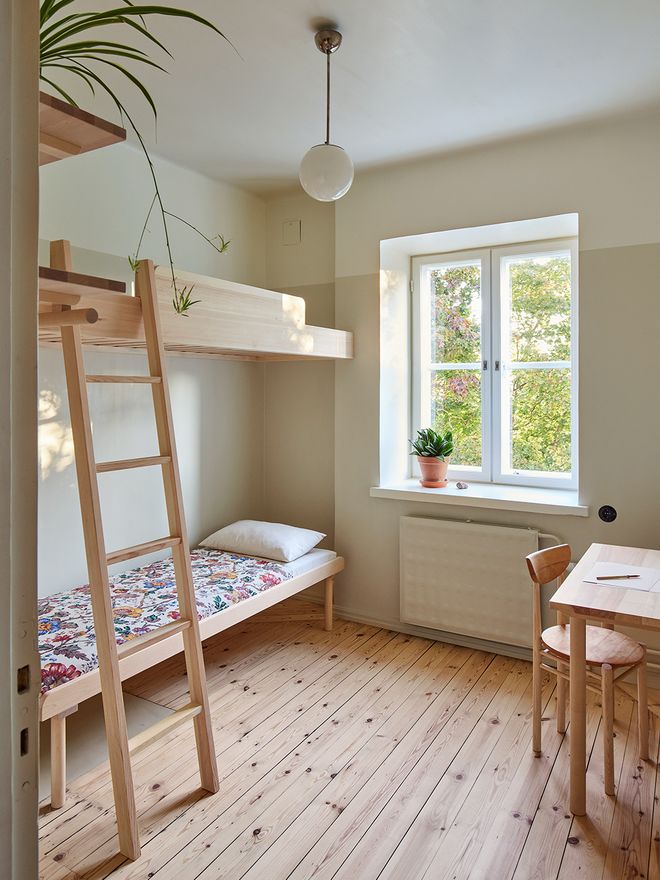
The former kitchen was turned into a room for the girls. However, the pipes were plugged and left in place under the floor. This way, the original layout can be restored with reasonable effort, if desired. There is a Peti Daybed under the loft bed.
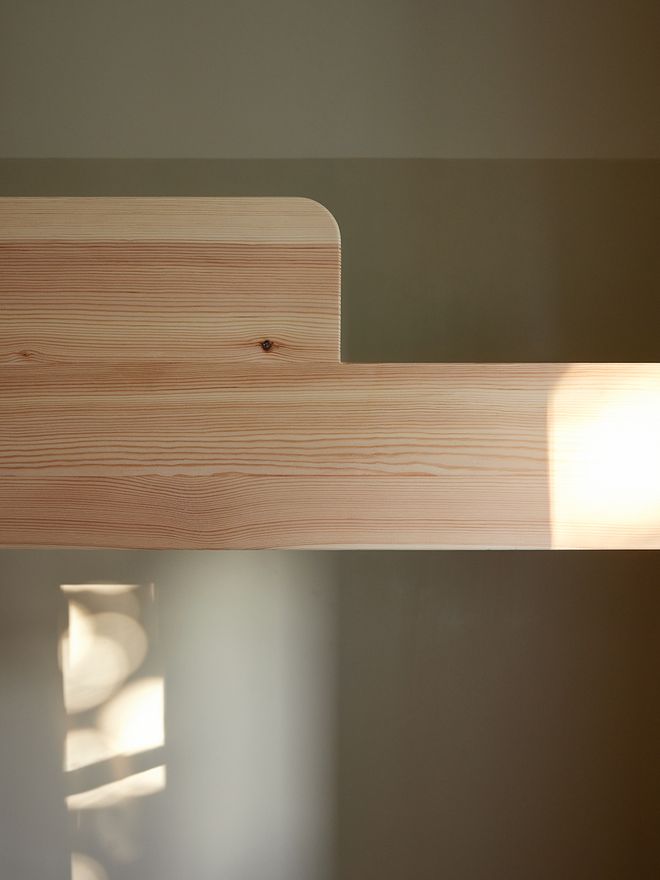
Untreated pine is Mattila & Merz’s favorite material. “Even though fresh wooden surfaces look great, we think that there’s no need to worry about the yellowing or reddening of wood. Wood gains the most beautiful patina when it’s allowed to age in a natural way.”
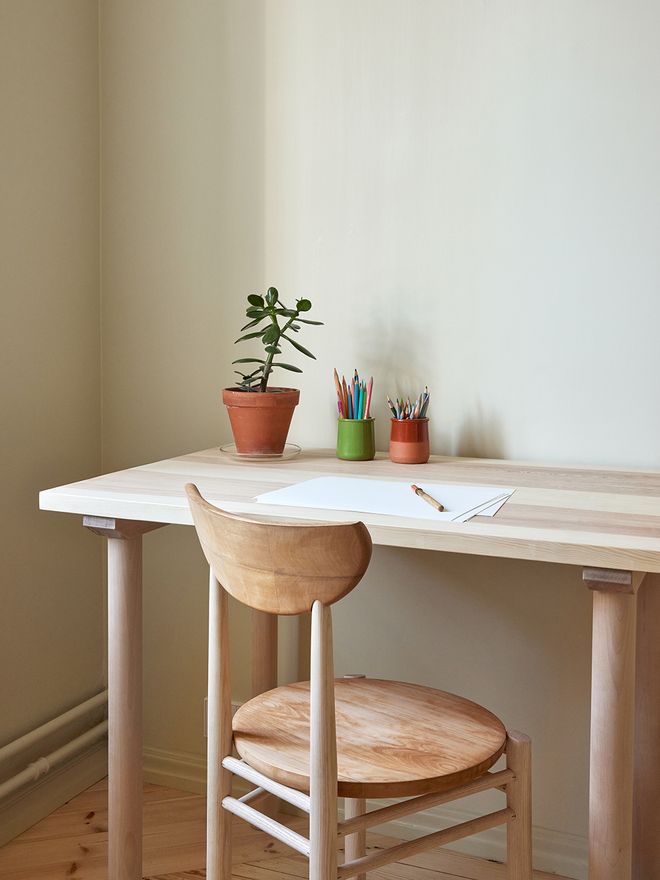
The furniture is part of Mattila & Merz’s collection. The chair is made by Rudi Merz.
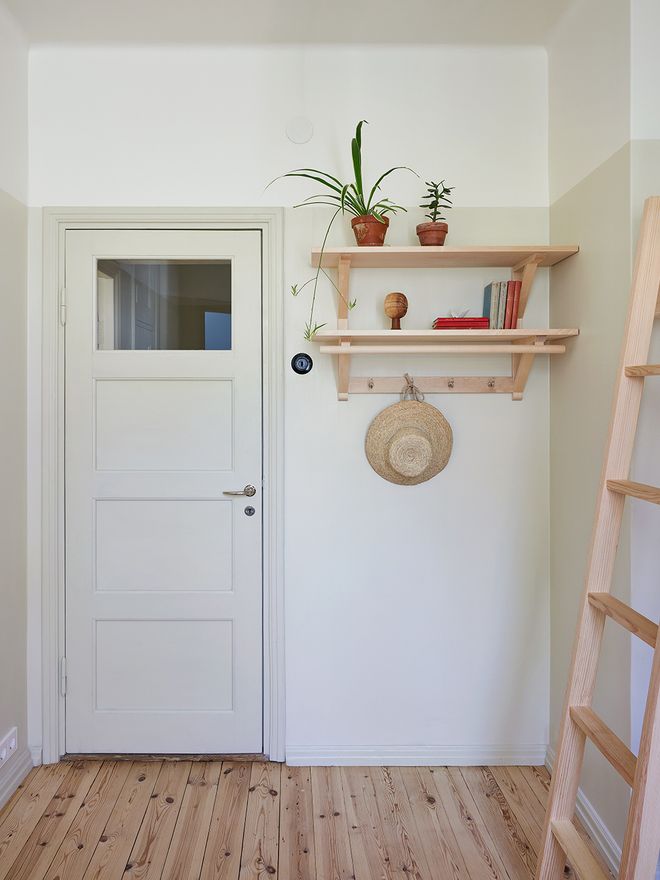
All the old surfaces, doors, skirting boards, architraves and other parts were cleaned and refurbished in the renovation. It was a lot of work, but it was worth it. Laura and Mikko recorded the work steps, and the videos are available on Mattila & Merz’s Instagram.
No walls were moved during the renovation. However, the kitchen was moved to the largest room of the apartment to meet the needs of the family of four. Located on the side of the morning sun, the old kitchen was turned into a room for Laila and Tuula. The color was discussed with the girls: Tuula wanted the walls to be painted in lilac and Laila in green.
However, Laura made the final decision based on the fact that the shade should be timeless and provide a beautiful setting for the life lived in the apartment. When the girls carry their dollhouse into the room with green walls and start playing, it is clear that the apartment has become a home.
See also:
• New arrivals at Finnish Design Shop >
• Mattila & Merz on Instagram: @mattilamerz
The story was previously published in Asun magazine 48.
Published on 25 Oct, 2024