Gabrielle Toledano’s calm, layered home above the Luxembourg Gardens
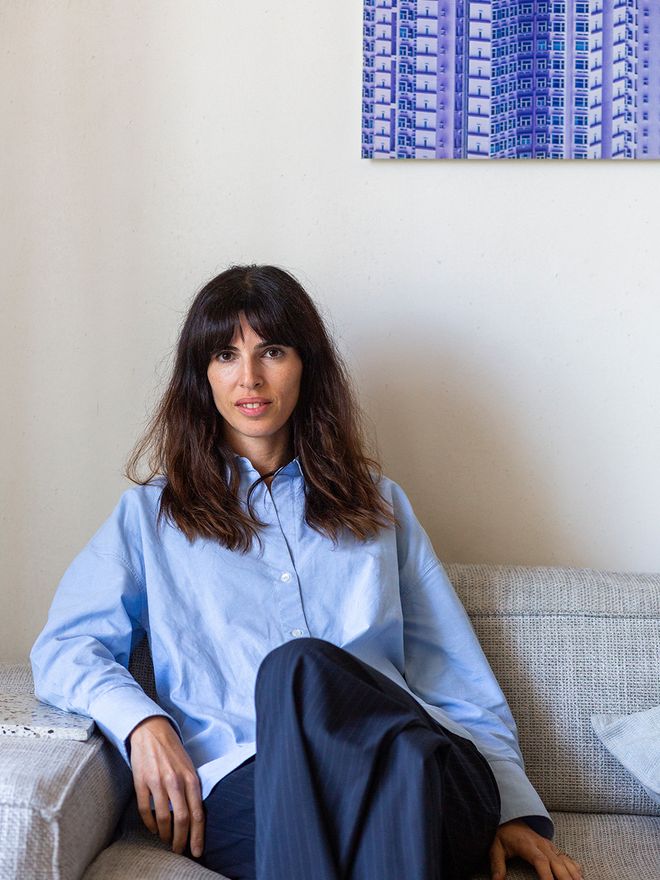
Paris-based architect Gabrielle Toledano founded toledano+architects in 2013. Originally from Buenos Aires, she lives in the French capital with her family.
HIGH ABOVE the Luxembourg Gardens in Paris’s Latin Quarter, architect Gabrielle Toledano has gently transformed a 19th-century apartment into a peaceful family home.
Rather than leaning on a single cultural reference point, the space speaks with a quiet, layered design language, one that mirrors Gabrielle’s own journey, with roots in Spain, a childhood in Argentina, and finally in Paris.
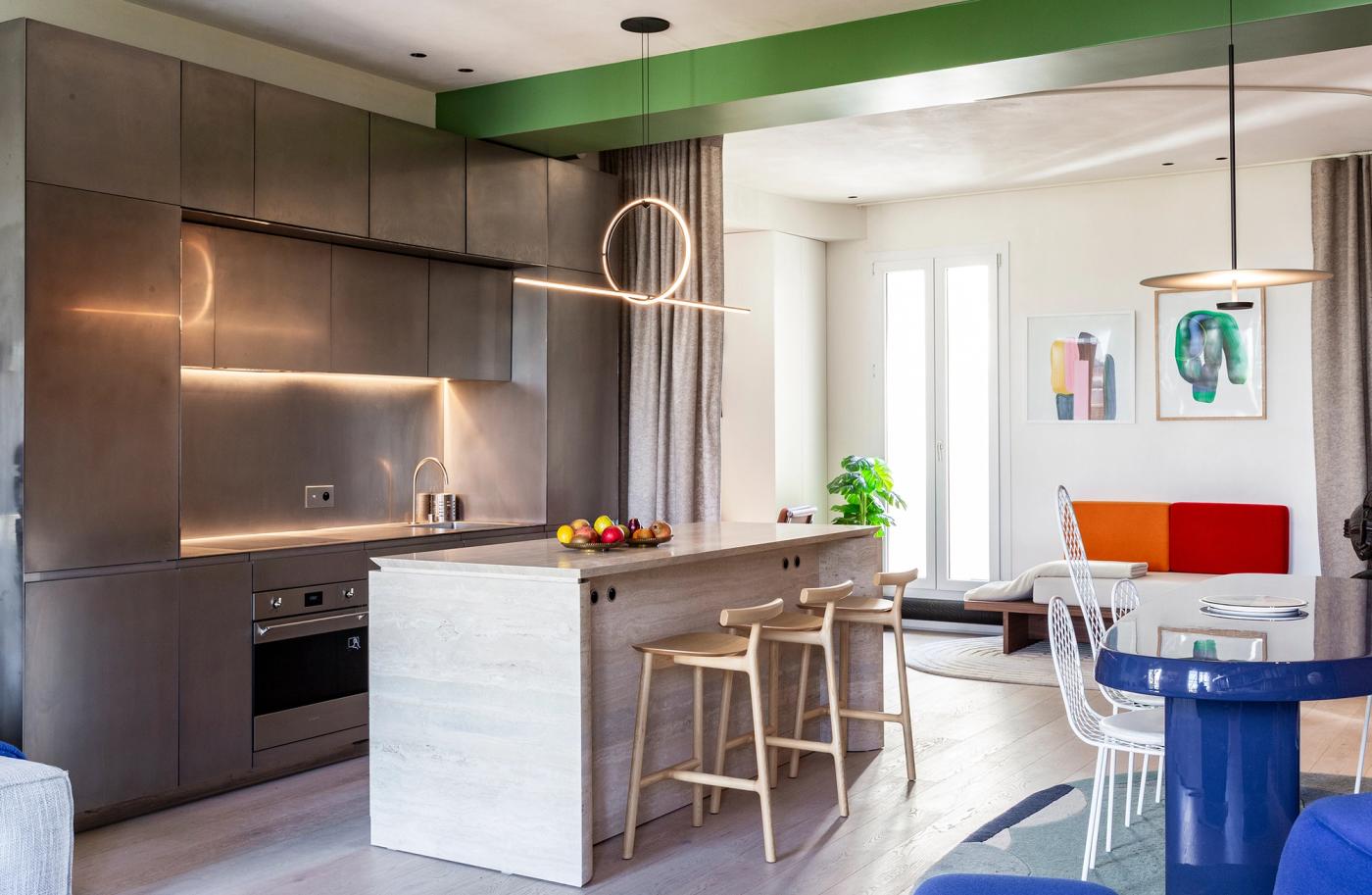
The kitchen is made of stainless steel and paired with a warmer island in travertine.
The apartment sits on the fifth floor of a classic Parisian building, reached by an elevator that could easily be described as charmingly tiny. Inside, generous daylight and far-reaching views shape everyday life.
Overlooking the Luxembourg Gardens, the presence of nature becomes a rare and precious asset in Paris, especially for a family with two young children. In the dense urban fabric of the city, both light and greenery are luxuries, and treated as such.
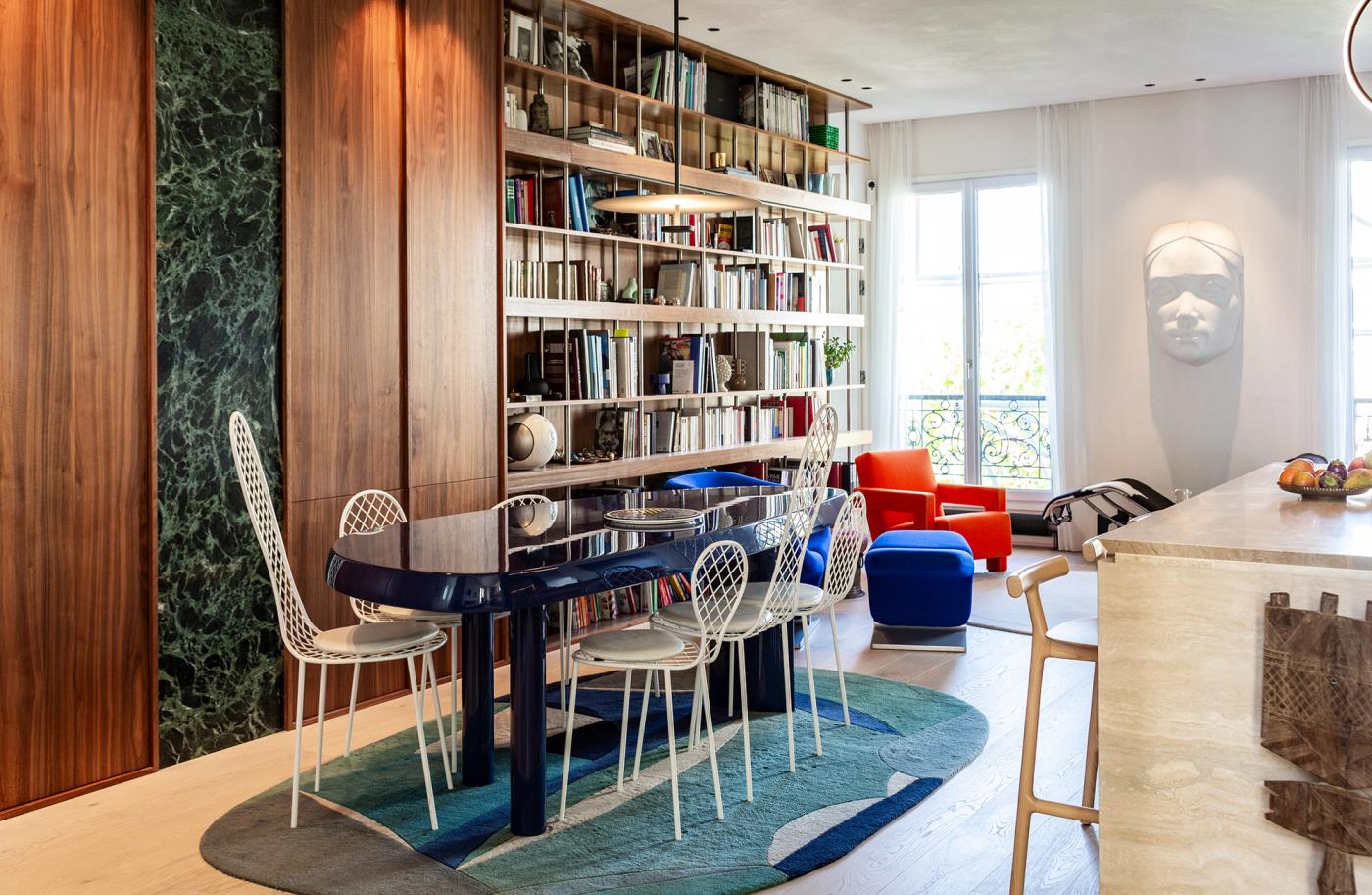
The dining chairs are designed by Junya Ishigami and are part of the Family Chair collection by Living Divani, while the night blue dining table, “Forme Libre,” was designed by Charlotte Perriand in 1959 and relaunched by Cassina in 2011.
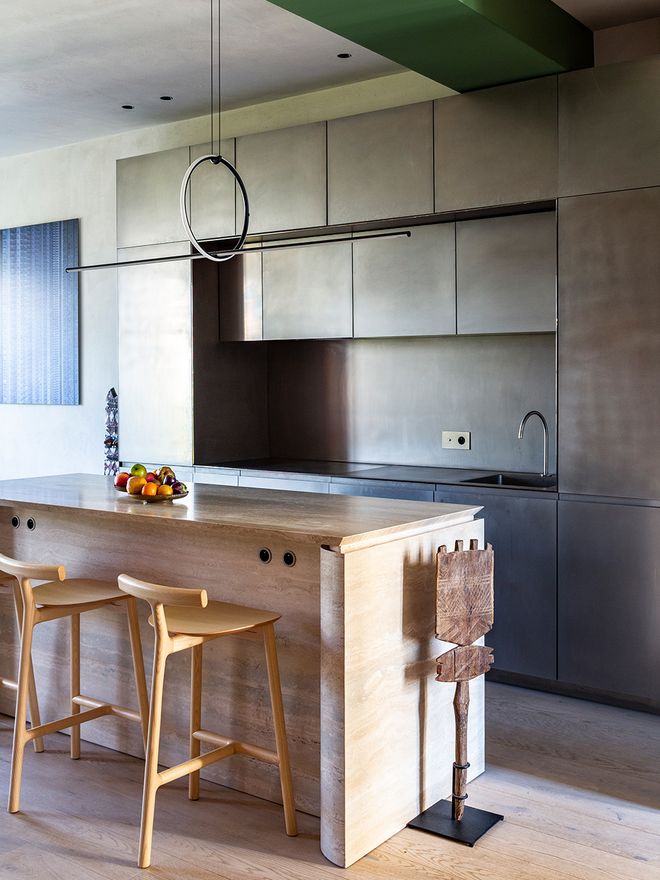
The Radice stools are by Mattiazzi, and the suspension light is by Michael Anastassiades for Flos.
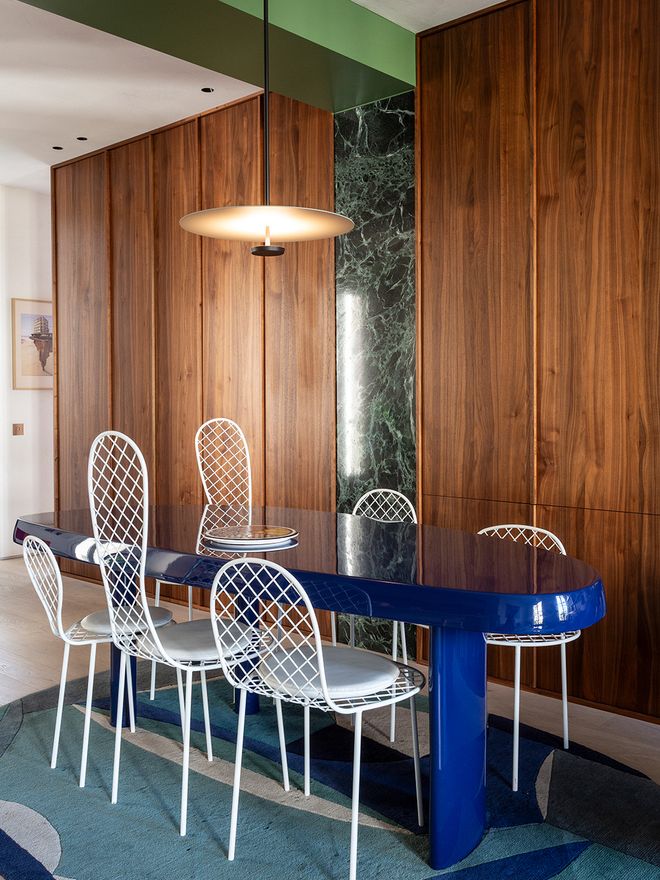
The Flat 5915 ceiling lamp is designed by Ichiro Iwasaki for Vibia.
For Gabrielle and her husband, also an architect, the renovation of the 97-square-meter apartment was a collaboration.
“This is the home of two architects, so it reflects both of us,” Gabrielle says. “We wanted a minimal interior, but one that still feels warm and welcoming. That feeling of softness, of life lived here, was essential.” The space embraces everyday life without ever feeling fussy.
Being overly radical when designing a home, she notes, is rarely productive.
“The process of designing for private clients is very different from designing public spaces,” Gabrielle Toledano says.
“A private home represents the client’s entire life. They think about it constantly, so the process can be very intense and intimate. In public projects, you’re often working with specialized professionals. And designing your own home is an entirely different story,” she adds with a laugh.
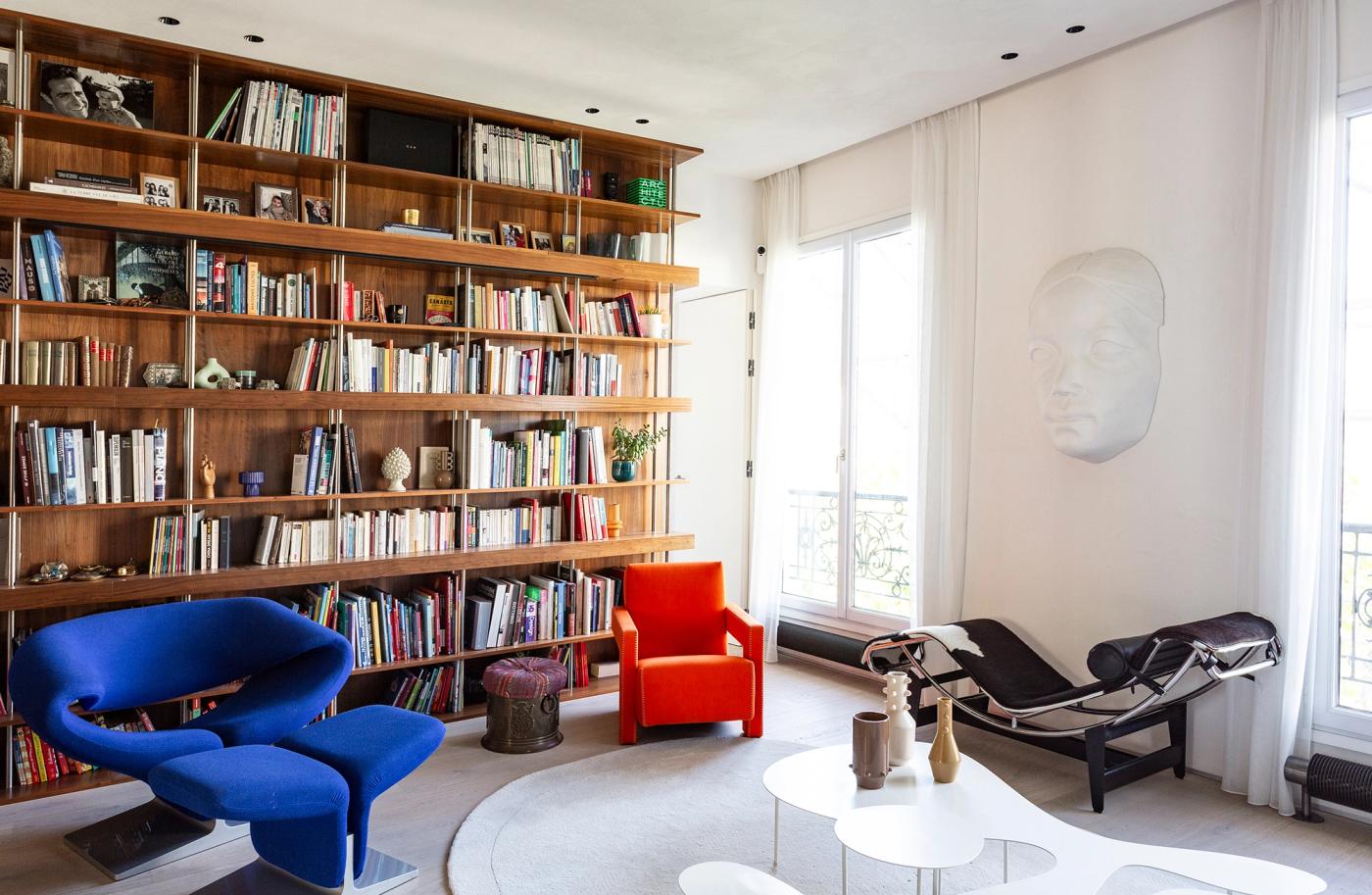
The living area derives its character from a selection of iconic furniture pieces: the Ribbon armchair in Klein blue by Pierre Paulin for Artifort, paired with the orange Utrecht armchair by Cassina.
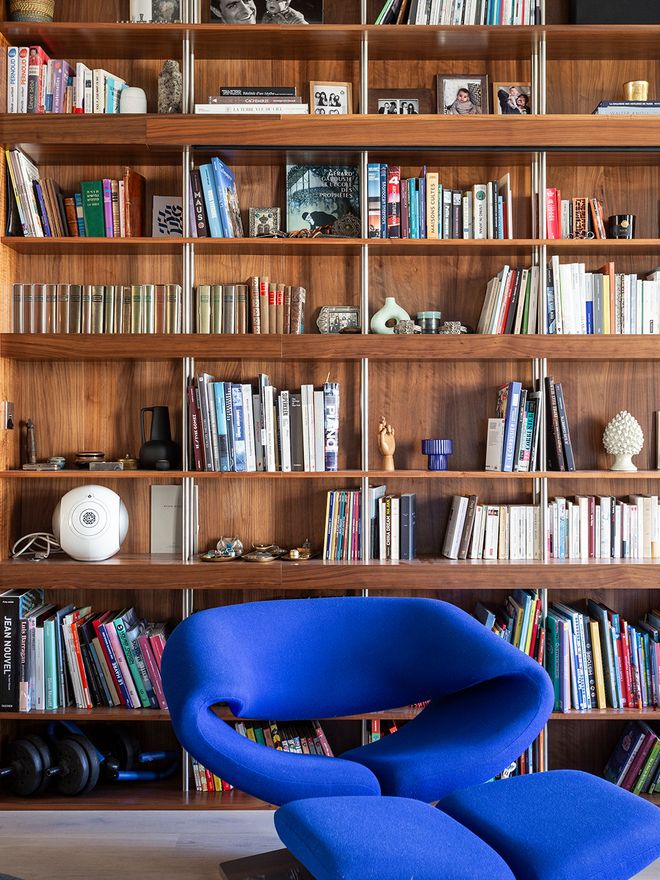
A bookcase that brings rhythm to the living room is filled with books, mementos, and photographs.
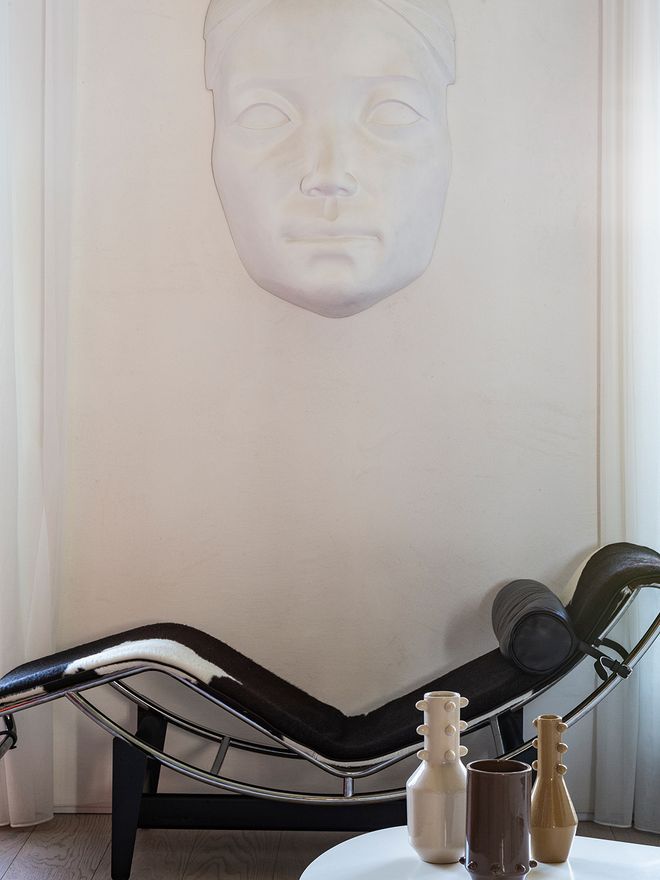
Between the two French windows stands a large head-shaped sculpture by French artist Prune Nourry. The iconic Chaise Longue is manufactured by Cassina.
The original apartment was typical of its era: small, enclosed rooms that blocked light and broke up what could otherwise have been a harmonious flow.
To open up the plan, a thick, load-bearing wall was removed and replaced with a subtle steel beam, softly painted in a gentle green that now runs as a thread through the apartment’s palette.
With the new layout, light moves freely from east to west, marking the passage of the day.
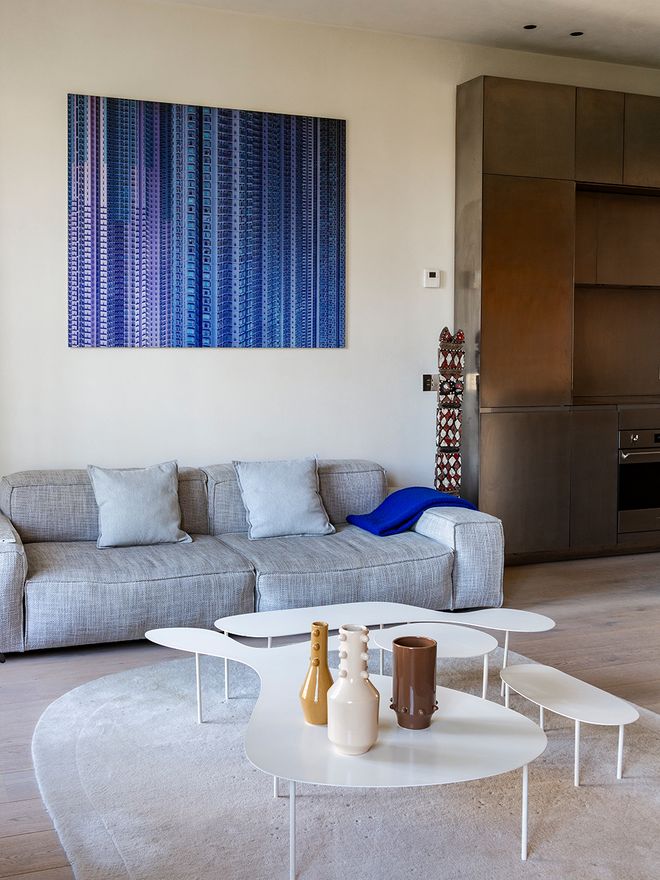
In front of the sofa, designed by Piero Lissoni for Missoni, are tables from the Rabbit & Tortoise collection by Studio Juju, produced by Living Divani. The blue artwork above the sofa is by Hong Kong–based photographer Michael Wolf.
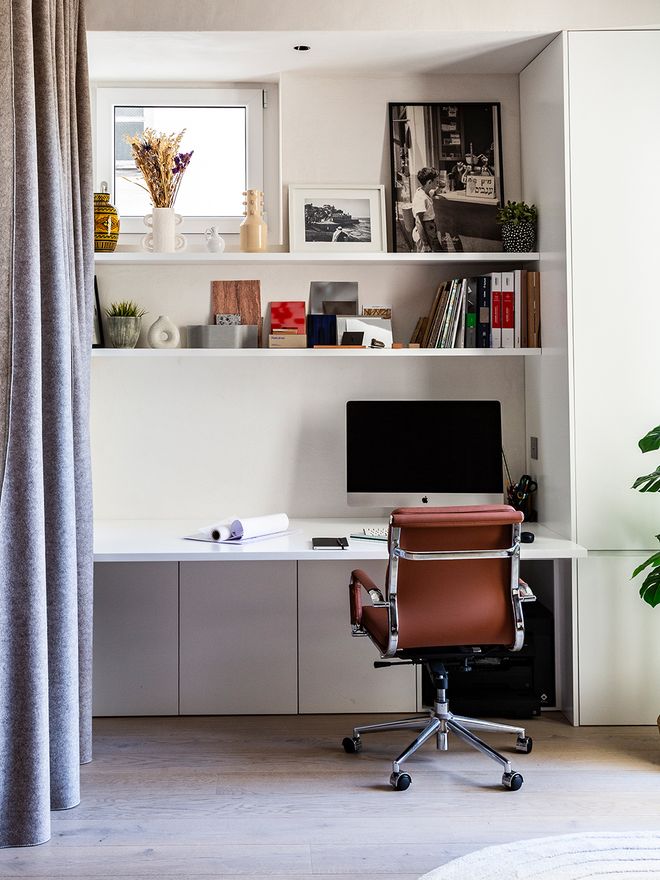
The home office can be transformed into a third bedroom using a circular felt curtain that provides acoustic separation.
TODAY, THE HOME is composed of three main zones: a generous living area, a parents’ suite, and a children’s room located at opposite sides of the apartment. Each bedroom has its own bathroom, emphasizing comfort and ease in daily routines.
A flexible space can serve as a home office or fold into a third bedroom with a circular felt curtain that also softens sound.
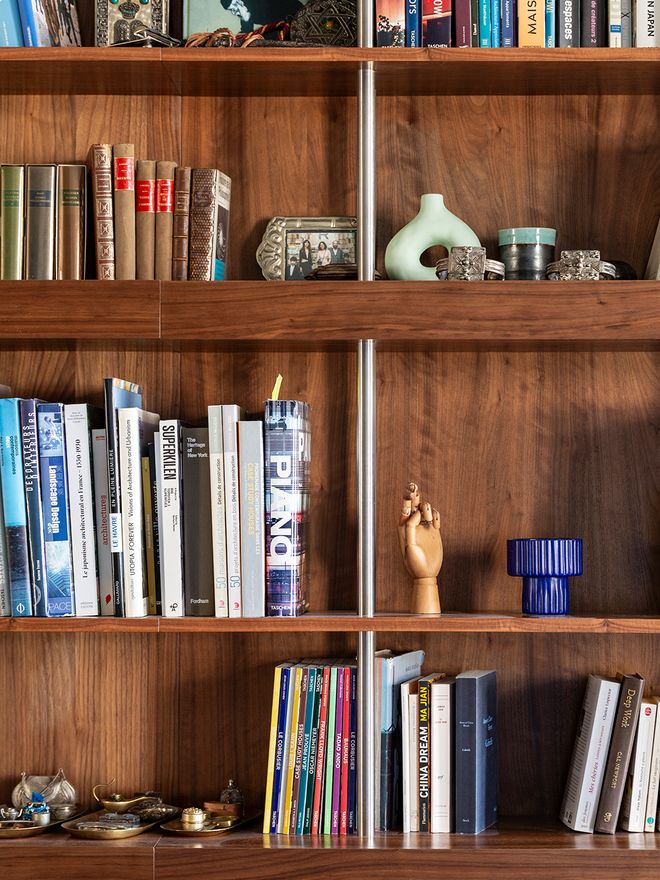
The bookcase holds a mix of professional literature and classic works.
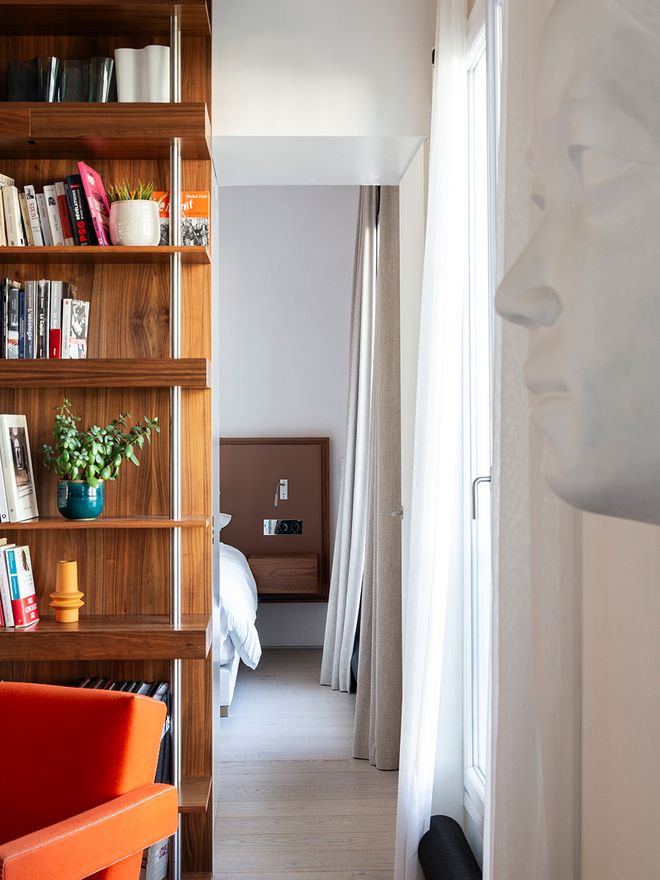
At the far end of the living room, a doorway leads to the parents’ bedroom.
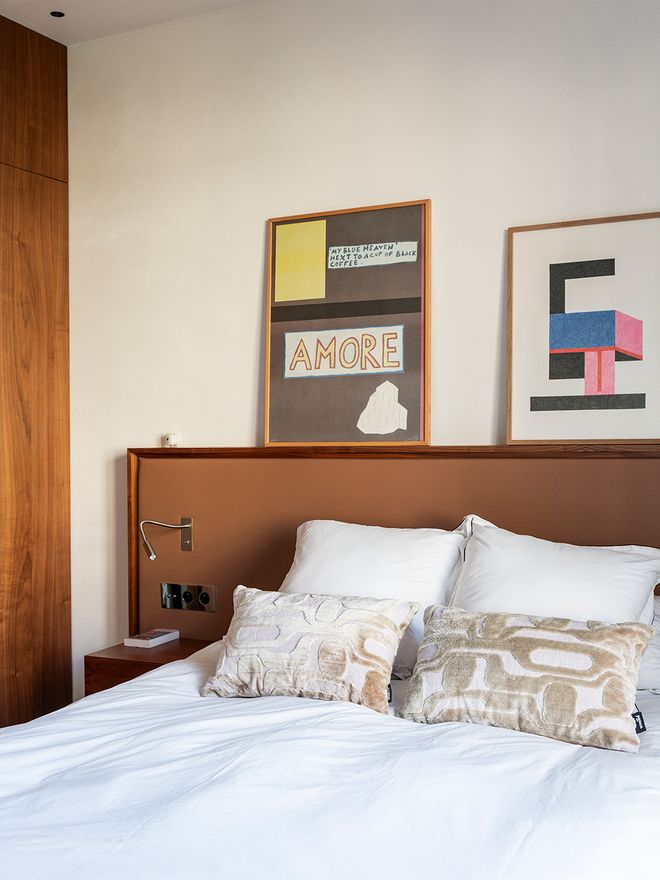
The parents’ bedroom features custom walnut wood wardrobes and a leather headboard. Artworks by Nathalie Du Pasquier.
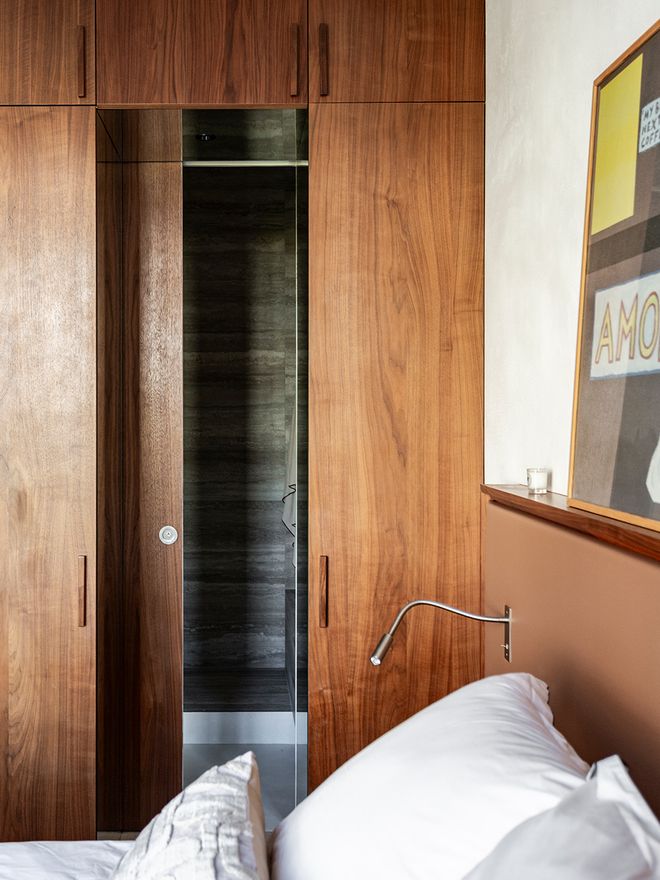
The en-suite bathroom includes a spacious shower with an integrated bench, all executed in Marazzi Travertino tiles.
Natural materials and honest finishes help shape the interior’s serene character. Wood plays a starring role: in the children’s room, plywood becomes bunk beds, wardrobes and toy storage, creating a playful yet calm atmosphere.
The walls are finished in natural lime plaster, a material chosen not only for its gentle texture but also for its contribution to air quality and insulation. The result is an interior that feels quietly warm and rooted in nature.
These choices hint at Nordic and Japanese design principles, yet the overall atmosphere is softened by Mediterranean ease and references to Portuguese architecture.
“I love wood,” Gabrielle says. “Curves in wood bring a sense of movement and soften the geometry of a space.”
Designing her own home also allowed Gabrielle to realize long-cherished ideas including a stainless-steel kitchen she had long dreamed about.
“Living with your design teaches you so much,” she reflects, noting that with time she might adjust some details. But such refinements are part of the living process here. The home continues to evolve with its inhabitants.
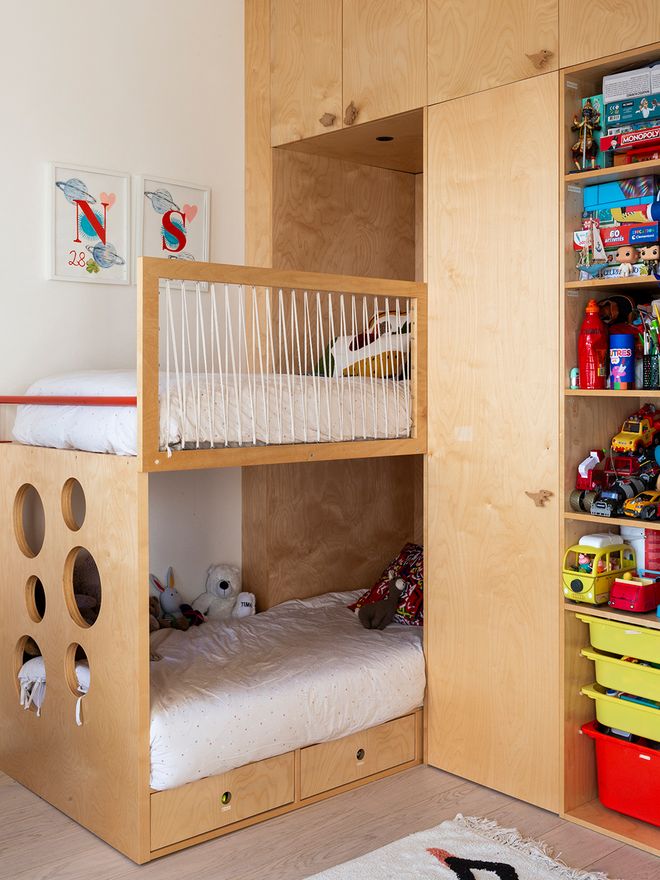
Plywood was chosen for the children’s bedroom to create a warm and playful environment, with dinosaur-shaped handles adding a whimsical touch.
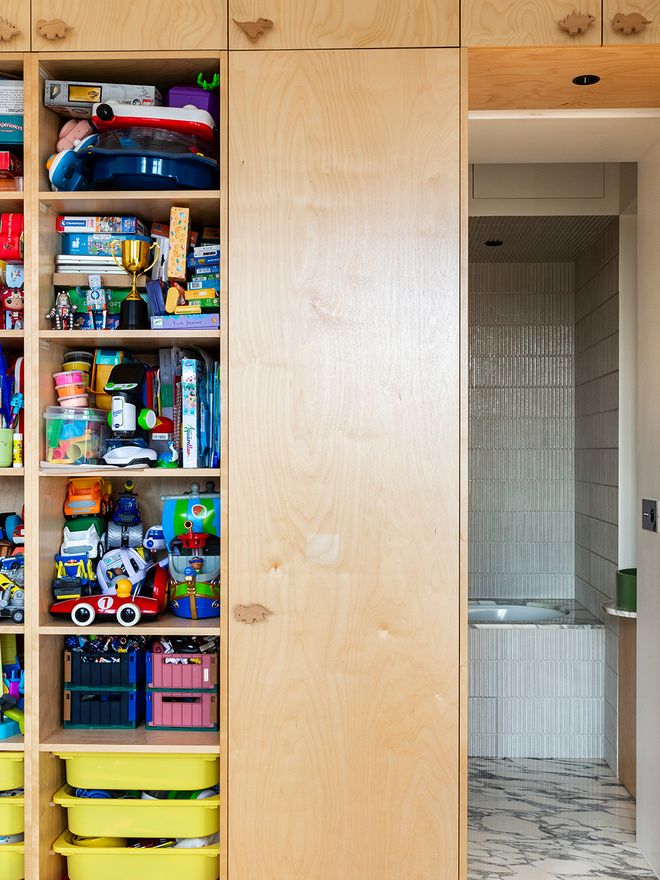
In the children’s en-suite bathroom, Arabesco Corchia stone is part of a layered material palette, with each space featuring its own stone.
DESPITE ITS restrained palette, the apartment is rich with narrative. Many objects trace back to Gabrielle’s Moroccan grandparents, each piece carrying personal stories.
Her childhood years in Argentina, followed by architectural studies in Paris and Jerusalem, have all left their mark. Yet it is the quiet clarity typical of Nordic architecture that ultimately defines the home’s calm atmosphere.
“I’m deeply inspired by Alvar Aalto,” Gabrielle says, “but also by Álvaro Siza Vieira, Eduardo Souto de Moura and Manuel Aires Mateus. Geometry, clarity and quiet presence guide my work.”
In this Paris apartment, those influences converge in a home where light, material and everyday life take precedence above labels. It’s a space shaped by experience and observation, grounded in a deep respect for design and architecture across cultures.
See also:
• New arrivals at Finnish Design Shop >
Published on 20 Mar, 2026