This is a carousel of product images. Use the thumbnails or swipe to change the displayed image, and activate an image to open it full screen.
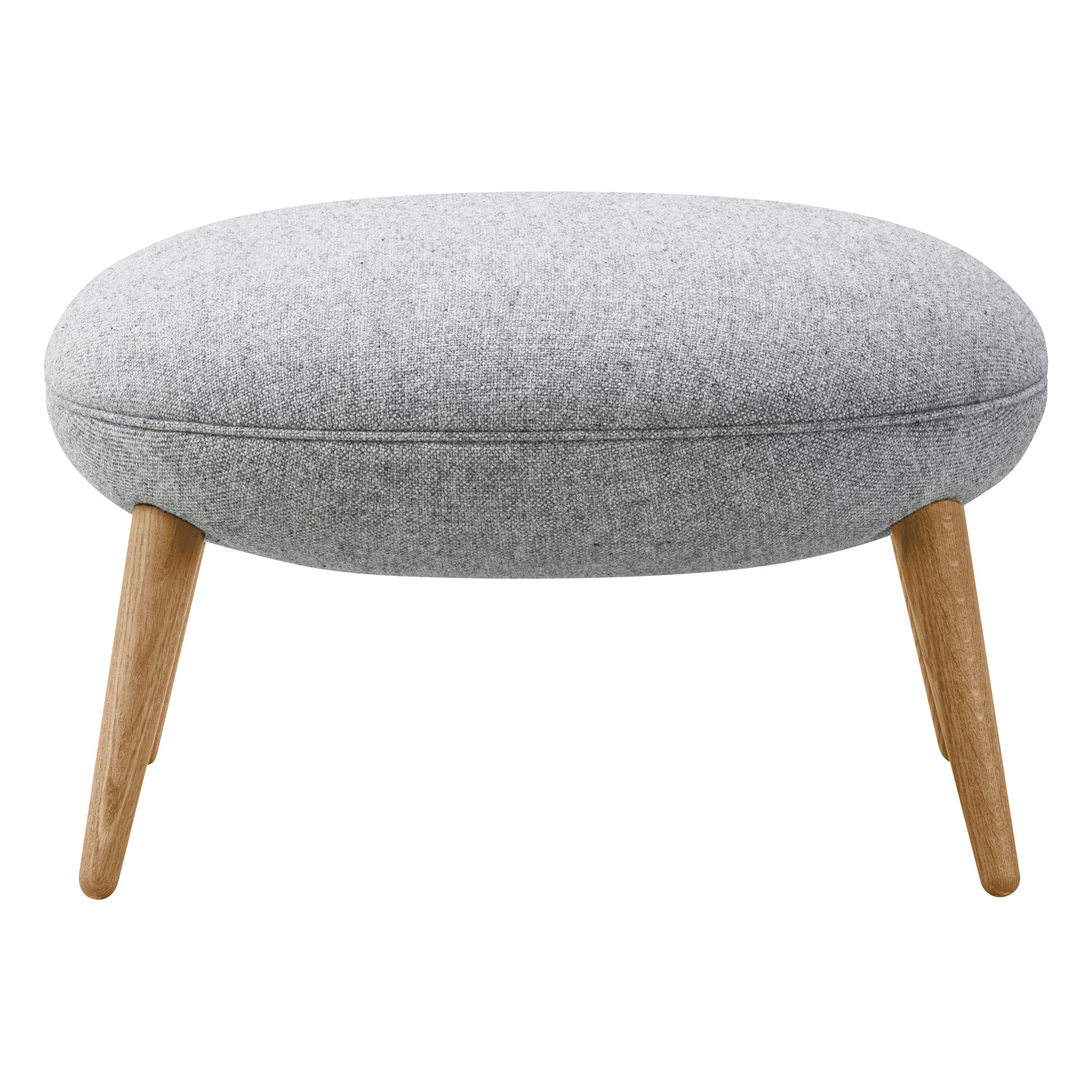
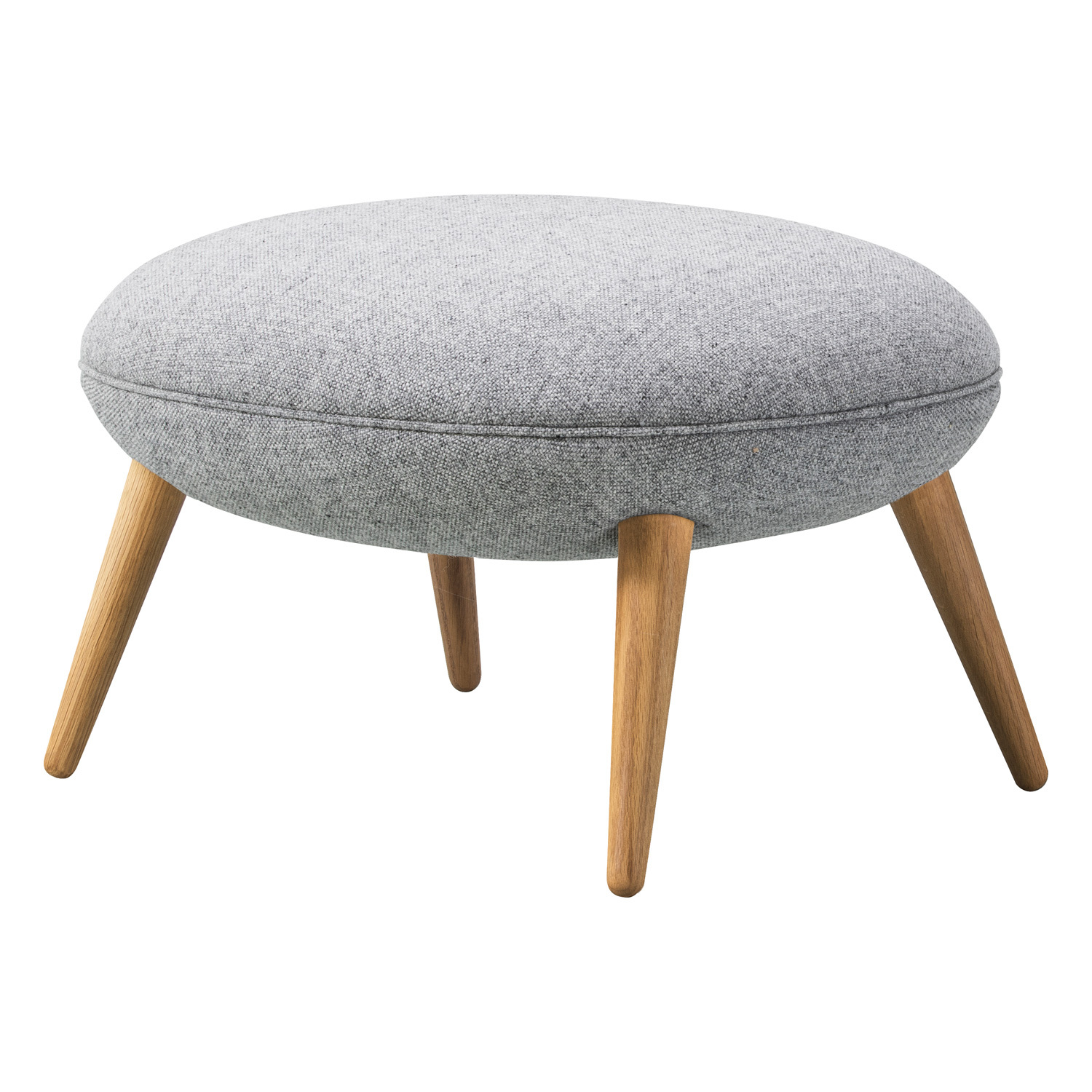
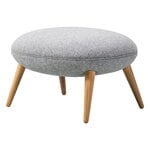
Swoon ottoman, Hallingdal 130 - oiled oak
Description
Designed by Space Copenhagen for Fredericia's Swoon ottoman is the companion of the armchair with the same name. Just as the Swoon armchair, also the ottoman features a soft, upholstered seat and beautiful wooden legs. The simple appearance of the ottoman will also complement other kinds of armchairs and sofas in private and public surroundings alike.
- Width: 24.8 in (63 cm)
- Depth: 20.67 in (52.5 cm)
- Height: 15.94 in (40.5 cm)
- Seat height: 16.34 in (41.5 cm)
- Colour Light grey, oiled oak
- Frame material Oak
- Upholstery fabric Kvadrat Hallingdal 65 130: 70% new wool, 30% viscose
- Abrasion resistance 100,000 Martindale
- Pilling 3
- Lightfastness 7
- Base material Oiled oak
- Weight 20.94 lbs (9.5 kg)
- Warranty 7 years
- Product ID: FRE1771-HALL130-OO

Space Copenhagen is a Danish design studio founded by Signe Bindslev Henriksen and Peter Bundgaard Rützou in 2005. The studio is known for its multidisciplinary work, which extends from interior architecture to furniture, lighting and art projects.
Space Copenhagen describes its approach to design with the concept of ”Poetic Modernism”, which refers to a balance between the classic and the modern, and between sculptural and minimalist aesthetics. The products they have designed can be found in the collections of &Tradition and Tameko, among others.
Space Copenhagen – poetic modernism and timeless spaces
Founded in 2005 by Signe Bindslev Henriksen and Peter Bundgaard Rützou, Space Copenhagen works widely across different areas of design: the studio’s projects include interior design for private homes, hotels and restaurants as well as furniture, lighting, art installations and object design.
A balance of opposites
Space Copenhagen describes its own design philosophy with the term ”Poetic Modernism”, at the heart of which is the combining of opposites: classic and modern, industrial and organic, sculptural and minimalist. The tension between these different elements creates spaces and objects that are at once alive in the present moment and timeless.
Space Copenhagen’s work also places emphasis on understanding human behaviour and experience – the design always starts from how spaces and objects are used.
Architecture, restaurants and design classics
Space Copenhagen has designed several internationally renowned interiors, such as the 11 Howard hotel in New York and the interiors of the Copenhagen restaurant Geranium and the first Noma restaurant.
In the field of product design, Space Copenhagen has collaborated with several Danish and international manufacturers – they have designed furniture, lighting and homeware for GUBI, &Tradition, Fredericia and Tameko, among others.
Who: Space Copenhagen
- Danish design studio, founded in 2005 in Copenhagen.
- Founders Signe Bindslev Henriksen and Peter Bundgaard Rützou studied at the School of Architecture of the Royal Danish Academy of Fine Arts.
- Works across interior architecture, furniture, lighting and art projects.
- Famous products: Gravity lamps (GUBI), Fly seating and Collect homeware (&Tradition), Swoon chairs (Fredericia).
Design Stories: Read more and find inspiration
View all products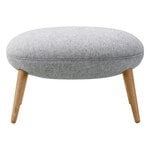
Ideas and inspiration
This is a carousel. Use Next and Previous buttons to navigate.