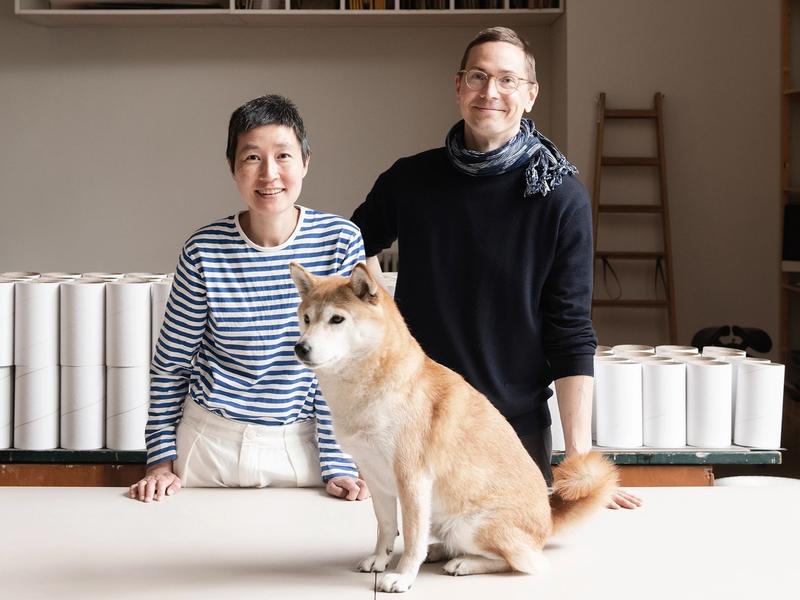
Howard Smith was a boundless creative experimenter
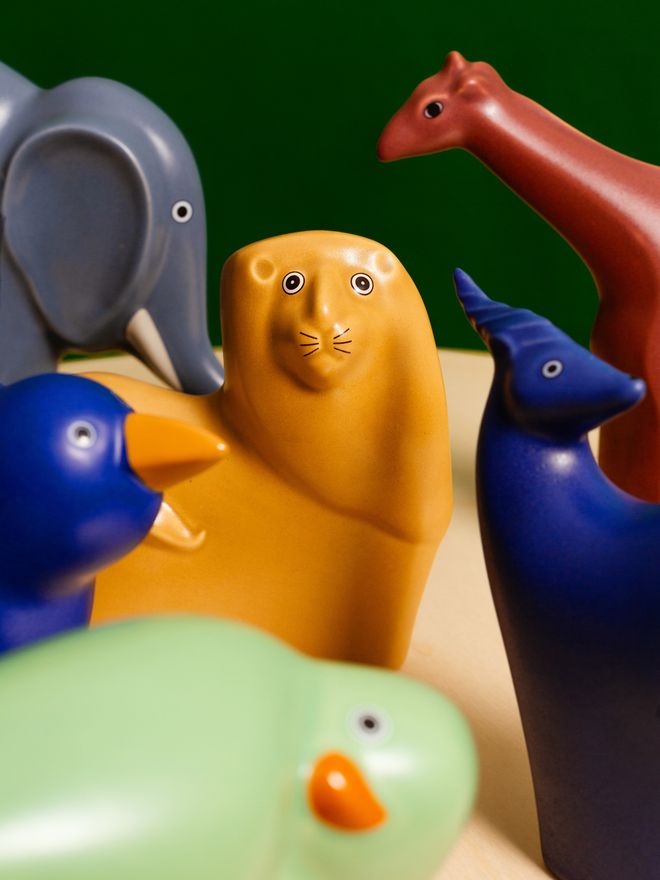
Howard Smith designed the animal-themed Runfree and Parvi (Flock) series for Arabia in the 1990s.
HOME DECOR ENTHUSIASTS remember Howard Smith (1928–2021) best for his playful ceramic animal figurines for the Finnish brand Arabia. However, Smith was a versatile artist who moved fluidly between different forms of expression and materials.
Passing away at the age of 92 in 2021, Smith created paintings, graphics, public sculptures and murals, architectural color schemes, industrial textile designs, scrap sculptures, unique and mass-produced ceramics – and much more. A common thread in all his work is the dynamic use of line and a fresh, vibrant color palette.
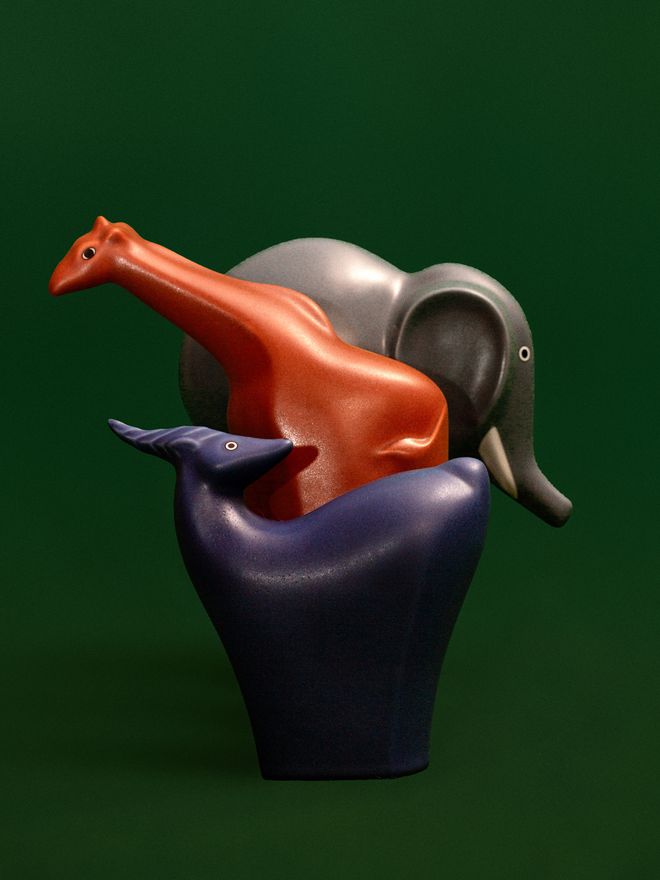
The animals in the Runfree series are named after American first names: the antelope Camilla, the rhinoceros Carmen, the small elephant Alex, the large elephant Selma, the giraffe Harry, and the lion Teo.
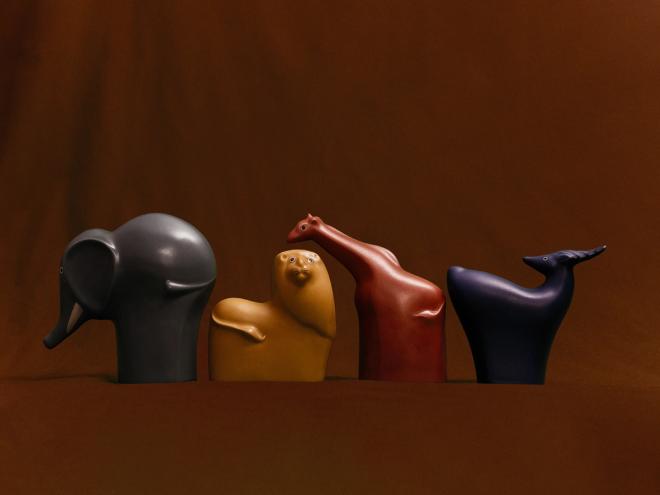
The ceramic finish and soft forms of Smith’s figurines delight both home decorators and ceramic collectors alike.
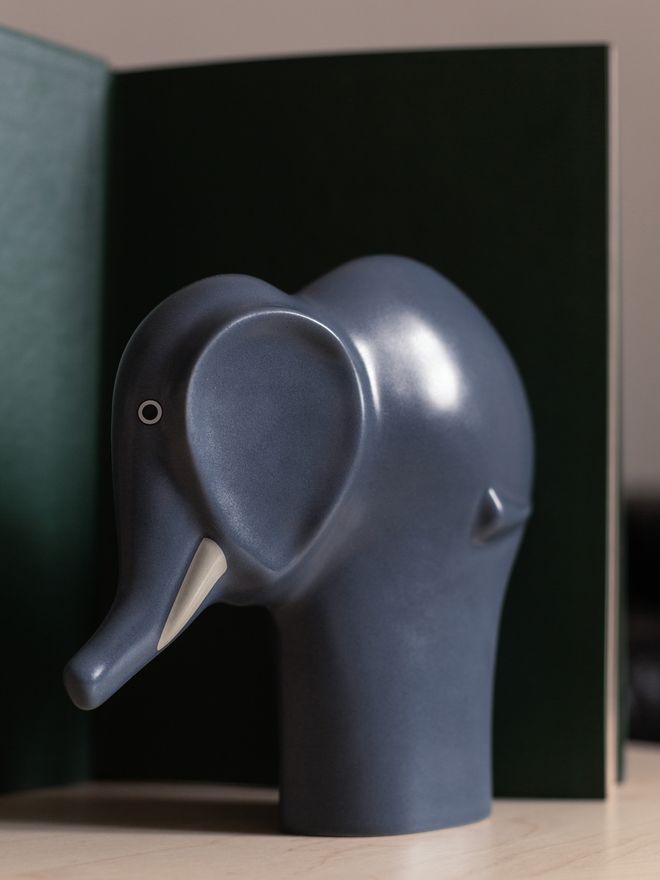
The charming big ceramic elephant is called Selma.
The American-born Smith built most of his career in Finland. He first arrived in the country during the Cold War in the early 1960s to take part in an international youth festival – unknowingly as a delegate sent by the CIA. What was meant to be a six-week trip turned into a 14-year stay when he was offered work.
Smith quickly integrated into Finland’s art and design circles, forming friendships that led to new creative opportunities. For Vallila, he designed large-scale printed textiles, the most famous of which is likely Makeba, a floral pattern from 1968 named after the singer and human rights activist Miriam Makeba.
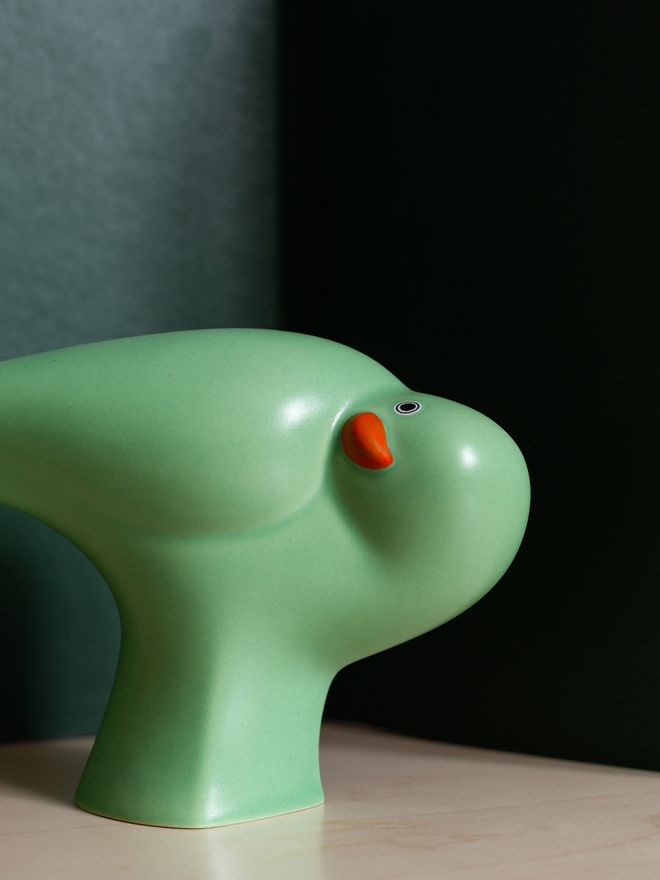
The playful Paavo bird is part of Arabia's Parvi series.
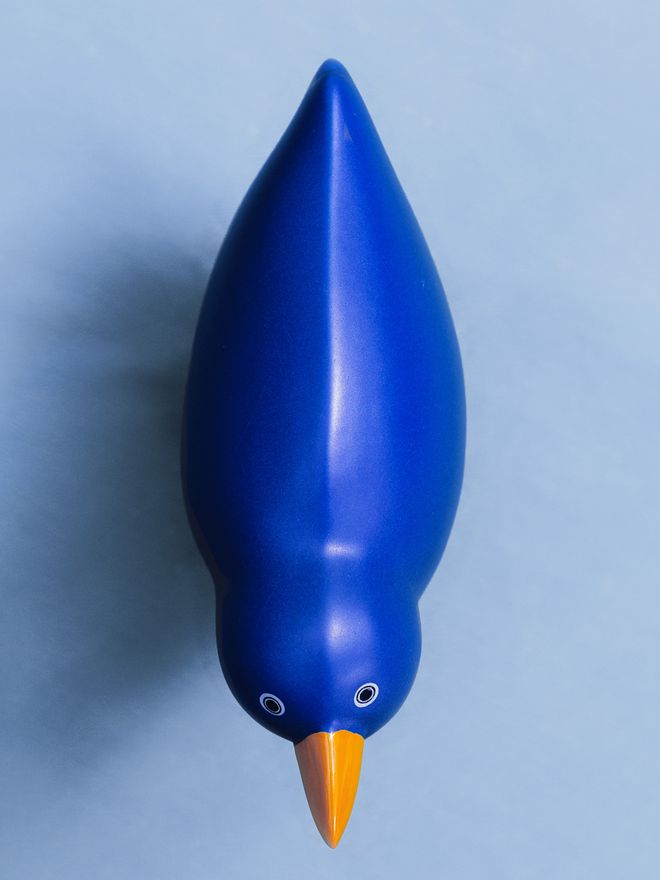
The charming bird figurines of the Parvi series were produced in green, white, black, and yellow, in addition to the blue Lisa bird.
In 1976, Smith returned to the United States and spent seven years working on the West Coast. He came back to Finland in 1984 when he was invited to lecture at the University of Art and Design Helsinki. This led to a position as a visiting artist at Arabia’s art department, where he also met his life partner, ceramic artist Erna Aaltonen.
In his later years, Smith lived and worked with Aaltonen in Fiskars, where the yard of their old apple storage building became home to dozens of scrap metal sculptures. Even after losing his sight, he continued creating art, making paper cutouts by touch.
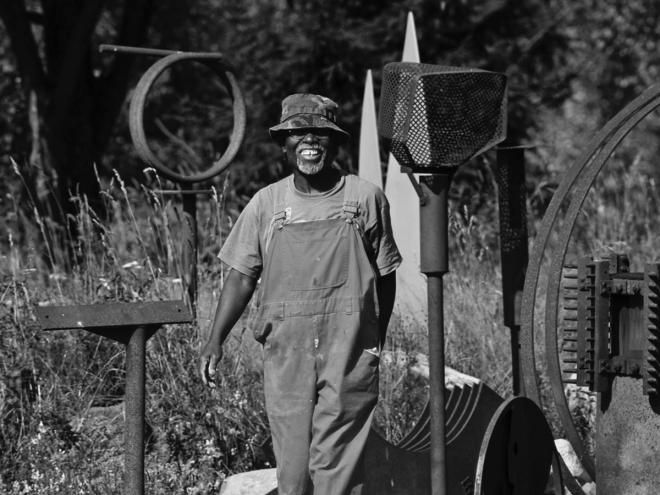
Howard Smith (1928–2021) in Fiskars in 2002. Photo: Gary Wornell.
Who: Howard Smith
Born in April 17, 1928, in Moorestown, New Jersey, USA. Passed away in February 4, 2021, in Fiskars, Finland
Most notable works include Arabia’s ceramic animal figurines, Vallila’s printed textiles (Makeba, 1968), Vekaranjärvi garrison murals (1973), and the public sculpture ensemble in Arabianranta (2007).
Smith’s works can be described as playful, energetic, and timeless, yet they also demonstrate a carefully considered form language and technical mastery.
Awards: Finnish State Prize for Design (2001) and State Artist’s Pension (2003).
Howard Smith’s first retrospective exhibition in the United States will open at the Palm Springs Art Museum in May 2025. The exhibition is produced in collaboration with EMMA – Espoo Museum of Modern Art.
See also:
• Howard Smith's designs at Franckly >
Text: Anna-Kaisa Huusko Images: Jose Jompero
The article was previously published in Avotakka magazine.
Published on 4 Feb, 2025