Finn Juhl’s House is an embodiment of Danish style and cozy atmosphere – with discreet splashes of color
Finn Juhl’s House is located about 12 kilometers from the center of Copenhagen and is open to the public on weekends. The house is part of the adjacent Ordrupgaard art museum.
FINN JUHL’S (1912–1989) home on the verdant Kratvænget in Ordrup, Copenhagen, looks simple yet welcoming. The L-shaped house features a white, plastered facade, a low-pitch roof and a few colorful details.
Even though the exterior of the detached house, completed in 1942, does not scream for attention, it is evident that the proportions and details are the result of careful deliberation.
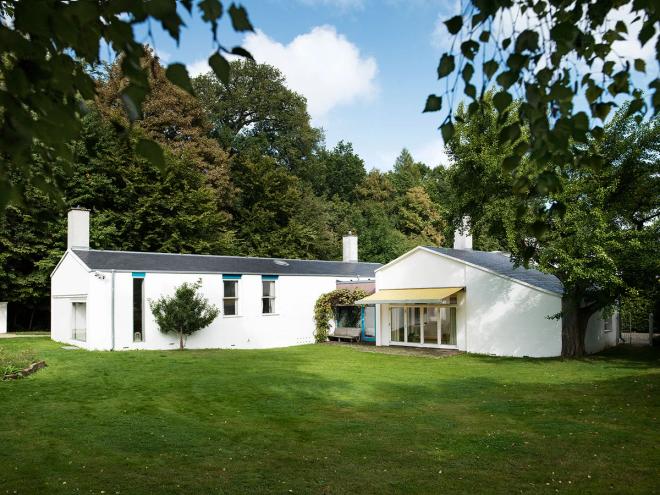
The windows of the Finn Juhl House offer a view of the surrounding garden.
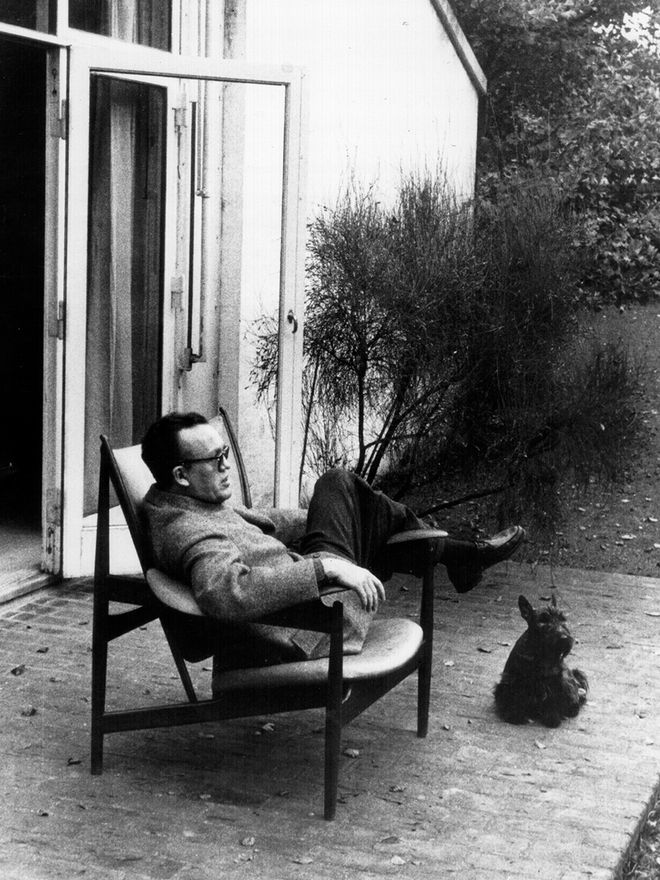
Danish architect and designer Finn Juhl (1912–1989) and the famous Chieftain Chair on the terrace of his family home.
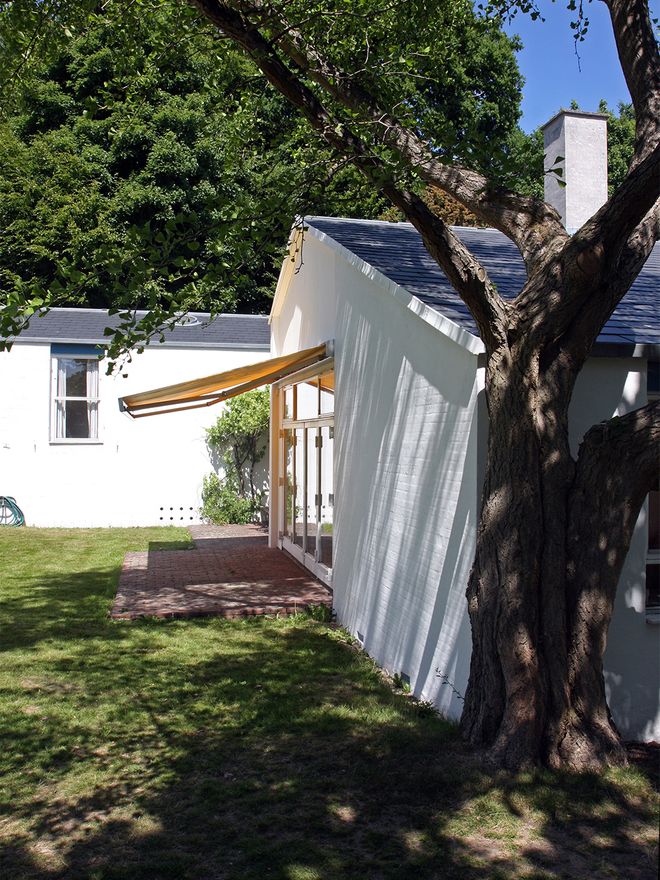
The white-rendered brick walls of Juhl's family home are punctuated by vibrant details, such as a yellow awning and turquoise upper parts of the windows.
With an inheritance from his father, Juhl designed and built the house at the age of thirty in the tumult of World War II. Danes were living under Nazi occupation and the times were uncertain and marked by material scarcity, which undoubtedly impacted the design of the house, making it simpler and more functionalist.
Finn Juhl wanted his house to be a mixture of summerhouse and a bit of legitimate elegance.
Juhl has said that he wanted his house to be a “mixture of summerhouse and a bit of legitimate elegance”. And that is exactly what it seems to be – refined yet relaxed.
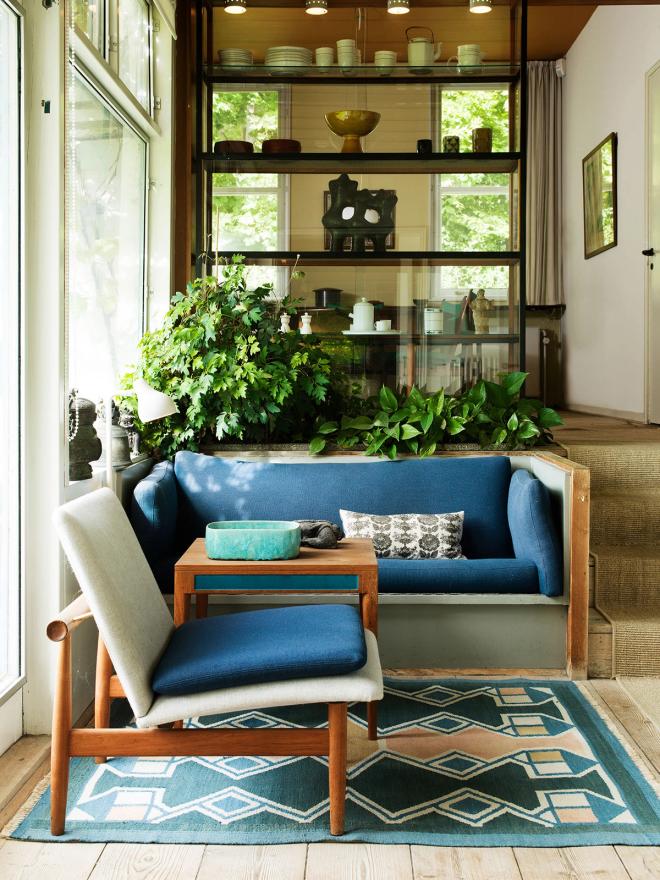
Natural light floods in through the large windows of the house. The Japan armchair dates back to 1957.
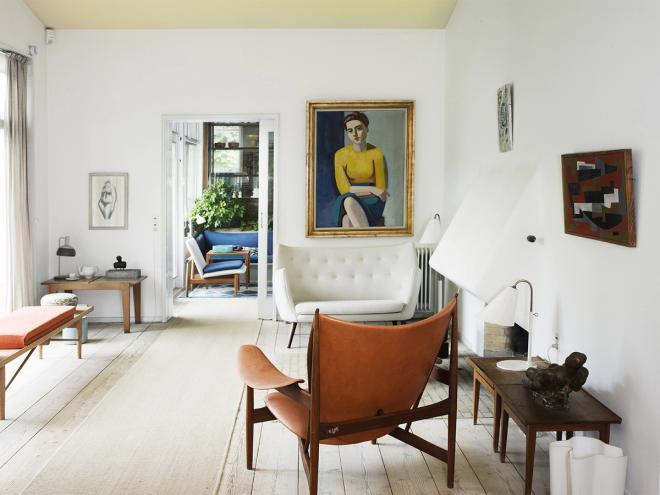
In the living room of Finn Juhl House, there is an open fireplace. The Poet sofa is one of Juhl's most renowned pieces of furniture.
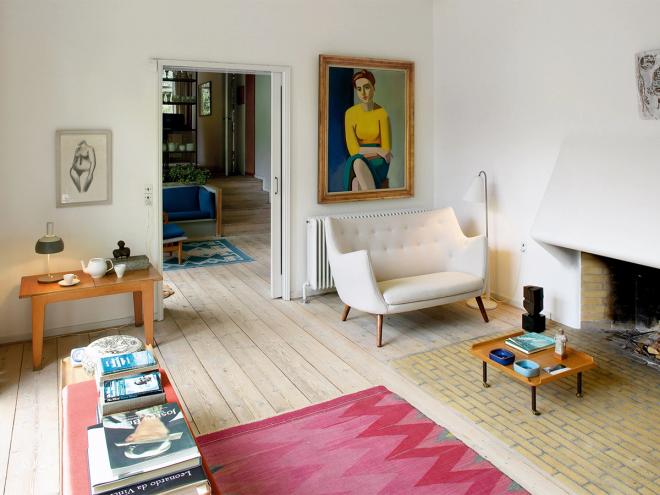
On the wall hangs a portrait of Finn Juhl's wife, Hanne Wilhelm Hansen, painted by Danish artist Vilhelm Lundstrøm in 1946.
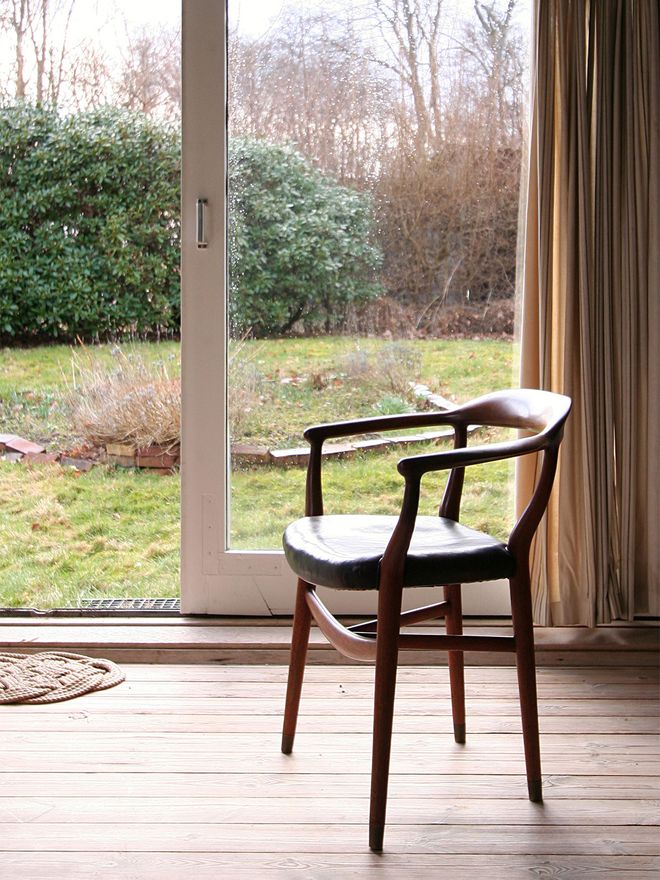
The Danish brand House of Finn Juhl manufactures Finn Juhl's furniture. The 44 Chair, also known as The Bone Chair, pictured here, originally dates back to 1944.
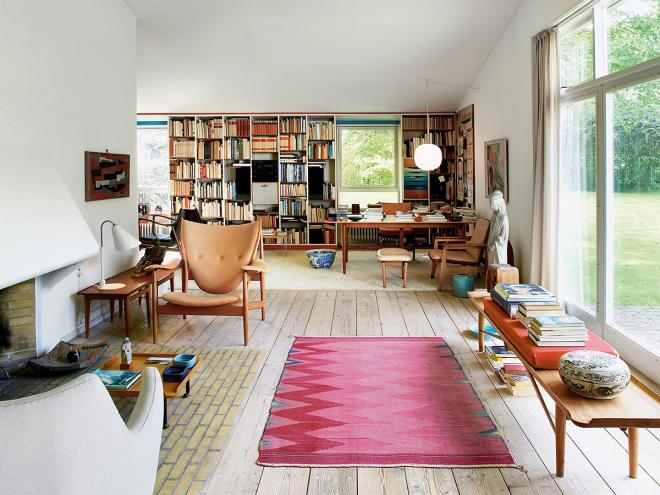
ON THE INSIDE, the Finn Juhl House is bright and spacious. And no wonder, as it was one of the first houses in Denmark to have an open-plan layout. The few high-ceiling spaces, open views from room to room and light colors create a sense of space.
The solutions used in the house clearly show that Juhl belonged to the generation of Nordic architects and designers who adopted the principles of functionalist design already during their studies in the late 1920s and early 1930s. Even though the spaces are minimalist and functional, Juhl did not abide by the cold, futuristic ideals of early functionalism when designing them.
Wooden furniture, plank floors, and brick surfaces add warmth to the interior decor.
In addition to colors, genuine materials add warmth to the interior in the form of wooden floors, brick surfaces and, of course, wooden furniture designed by Juhl, inspired by natural shapes.
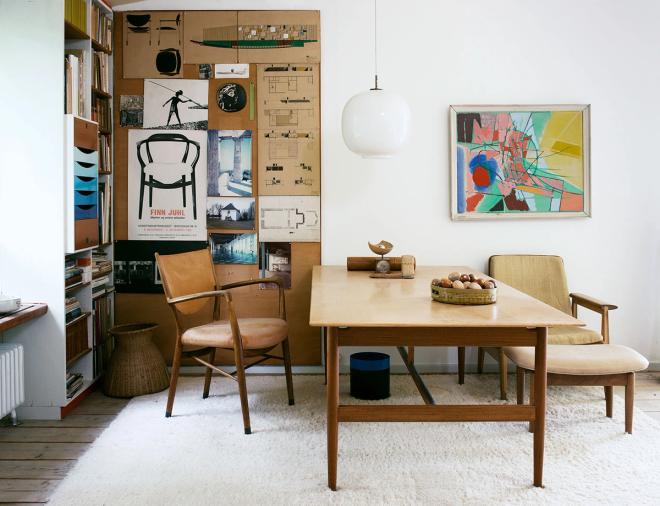
At the back of the spacious living room, there is one of the workspaces in the house.
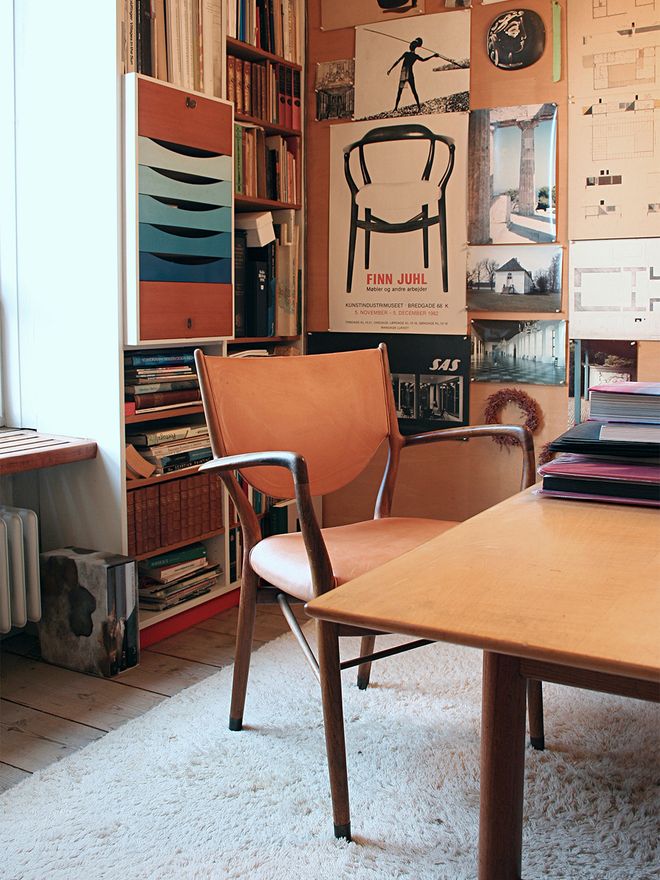
The wooden furniture designed by Finn Juhl has been skillfully crafted.
FINN JUHL furnished the house almost exclusively with furniture of his own design, so the house also mirrors his career as a furniture designer. The furniture on display at the house includes iconic, world-famous items from the 1940s and 1950s, combining clean modern lines, sculptural shapes and high-quality Danish carpentry.
Finn Juhl's furniture combines sculptural shapes with high-quality craftsmanship.
The place where Juhl’s design really comes to its own is the spacious living room furnished with his best-known classics, such as the Poet Sofa and Chieftain Chair, as well as the modern multi-purpose item, the table/bench from 1951.
The dining room in the Finn Juhl House features a large, oval Silver dining table with a teak top adorned with sterling silver inlays. The story goes that they were crafted by the silversmith and craftsman Kay Bojesen (who has since become known for his wooden animals).
However, there also is furniture that Juhl designed later in his career, such as a bed from the 1980s.
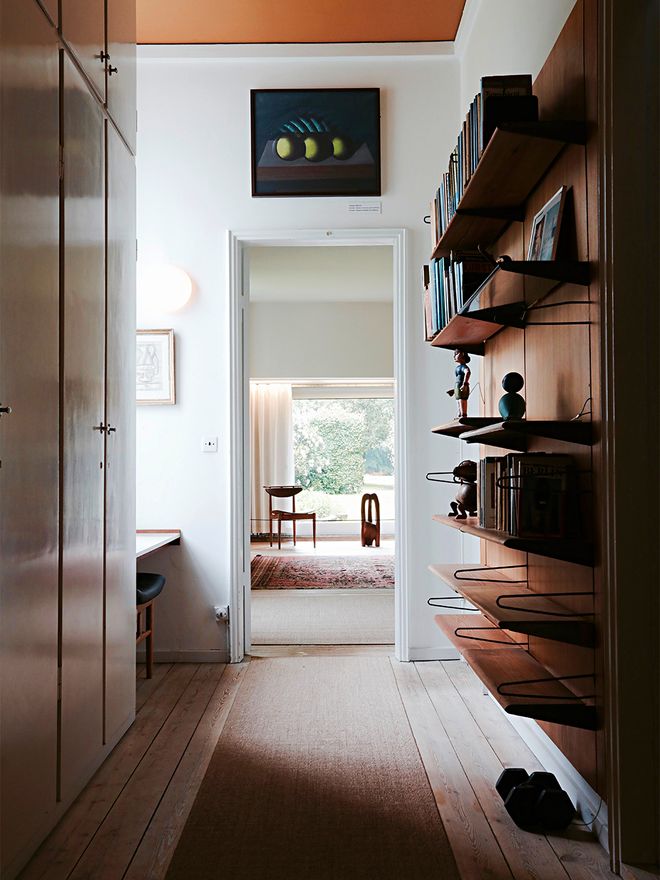
Wooden floors add warmth to the atmosphere. The house's large windows open up to the surrounding garden.
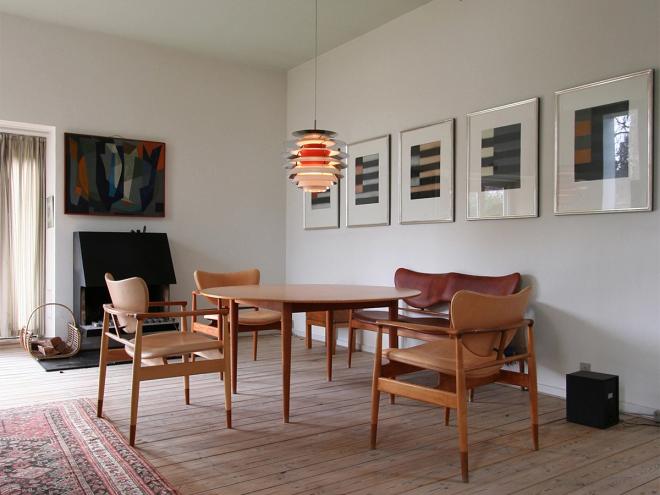
Chair 48 (from 1948) is one of Juhl's most renowned seating designs. Its sculptural form and numerous details continue to captivate year after year.
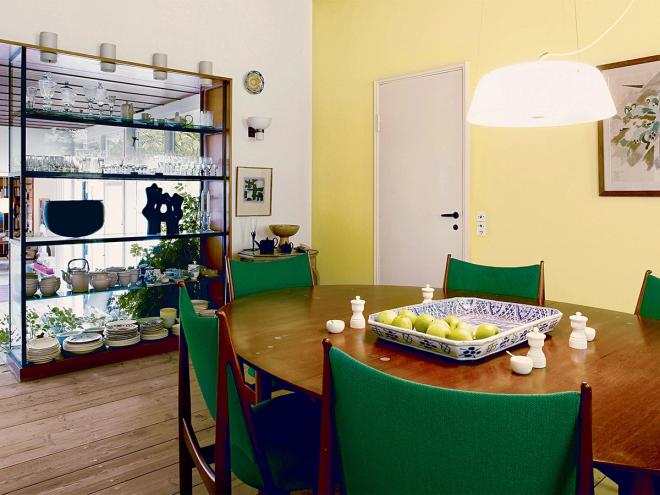
The surface of the Silver Table features sterling silver inlays that mark the seating positions.
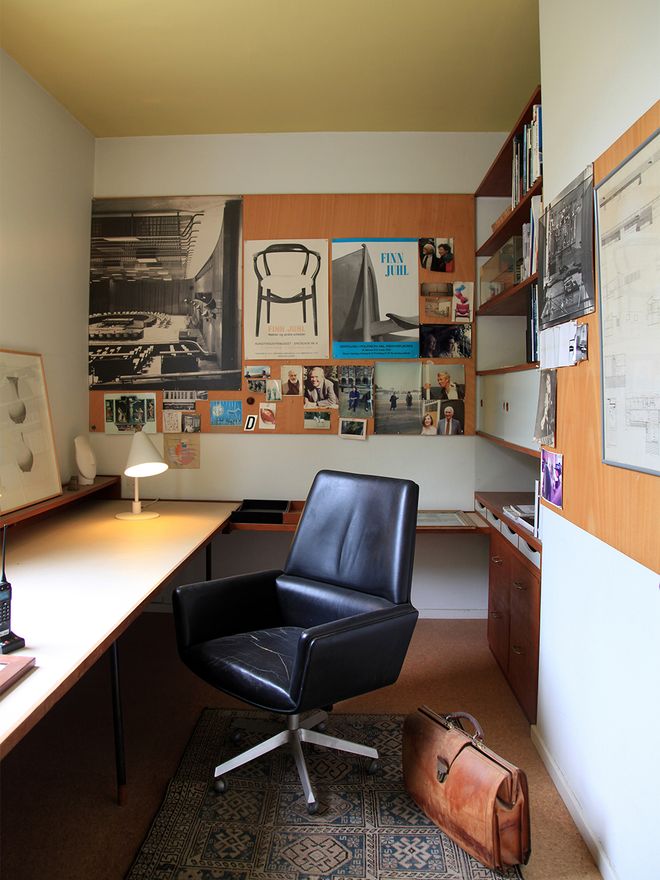
In the spacious family home, there are also more private areas, such as this workspace nook.
ONE THING that certainly stands out in the interior is the use of color. Despite the fact that at first glance, the interior seems light-colored, few of the walls are actually painted in pure white. Juhl has skillfully paired the light walls with blocks of color, both on the walls and the ceiling, subtly changing the atmosphere of each space.
In addition to the large blocks of color, Juhl has played with small, colorful details in the interior. For example, the light-colored bookcase in the living room has an orange top and bottom molding, and some of the windows feature a narrow, turquoise cornice board. The abundant works of art in the house also add color and character to the interior.
Juhl’s House is, in fact, a great example of how functional solutions, inventiveness and small details can be used to create a welcoming interior exuding warmth and comfort.
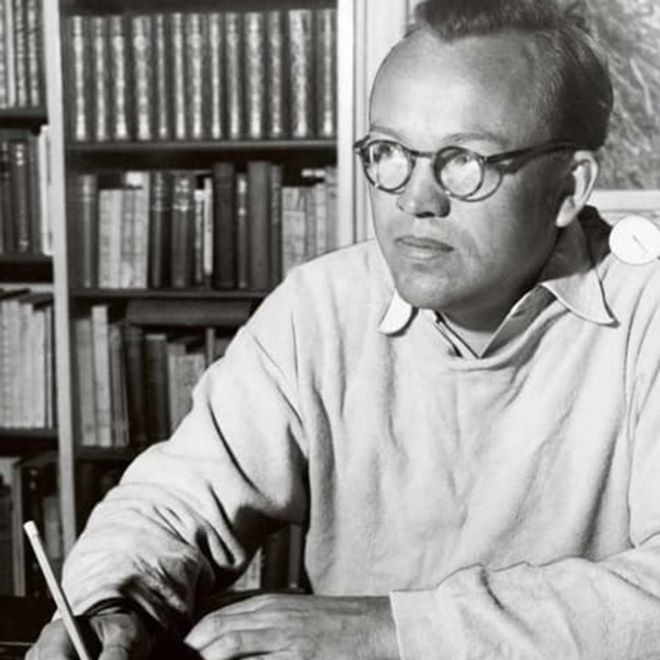
Finn Juhl (1912–1989) was a Danish architect and designer.
Who: Finn Juhl
Finn Juhl was a Danish architect and designer. He was born on January 30, 1912 in Denmark and passed away on May 17, 1989.
Juhl is particularly known for his wooden furniture, such as the Chieftain chair and the Poet sofa, which embody natural forms and sculptural aesthetics.
His work is characterized by a focus on practicality and a deep appreciation for craftsmanship. Finn Juhl's contributions have significantly influenced modern Scandinavian design.
Throughout his career, he not only designed furniture but also worked on ceramics, glassware, and interiors, including the conference room at the United Nations headquarters in New York.
Finn Juhl's former home has been turned into a museum. The Finn Juhl House is part of the Ordrupgaard Art Museum.
See also:
Archive photos: House of Finn Juhl
Published on 4 Jan, 2024