Beneath the concrete skin of Hawthorn House beats a warm heart full of life
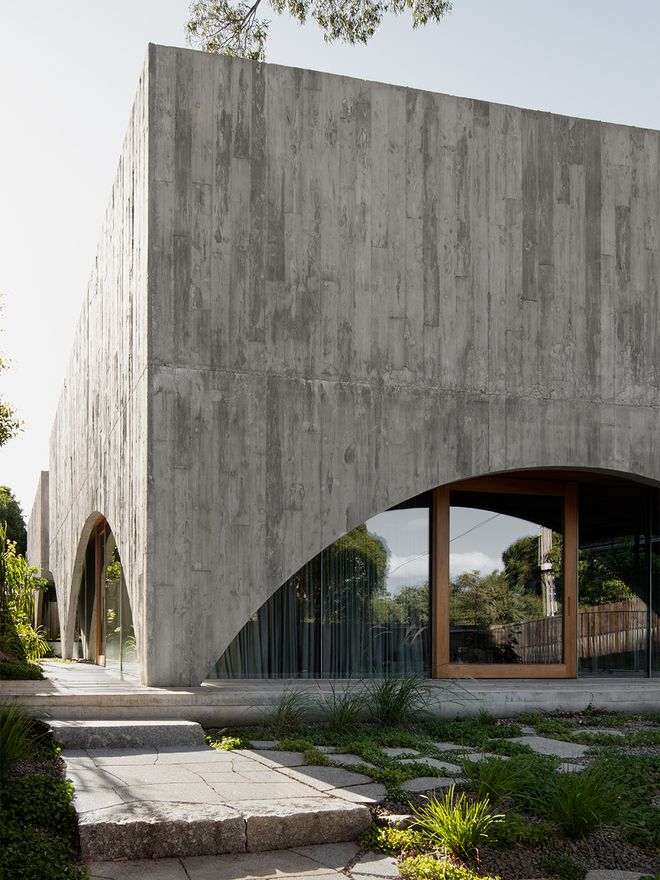
Hawthorn House, designed by Edition Office and completed in 2019, has already won several awards – most recently the Grand Designs Australian House of the Year 2022 award.
Design: Edition Office
Location: Hawthorn, Victoria, Australia
Completed: 2019
Gross area: 680m2
Architects: Kim Bridgland, Aaron Roberts, Jonathan Brener
AN ABSTRACTION MATERIALIZED in the middle of an urban neighborhood, Hawthorn House gets part of its unique impressiveness from the synergy of contradictions: the building is monolithic on the one hand, homely on the other, heavy in its design language and yet effortlessly light, closed and protected while completely open.
Located in the south-eastern part of Australia in Victoria, Hawthorn House serves a monumental dose of escapism, redefining the everyday routines and points-of-view: the inside space hidden inside the concrete husk forms a sheltered hideaway bathing in natural light, where you can enjoy nature and its tranquility in the middle of the suburbs.
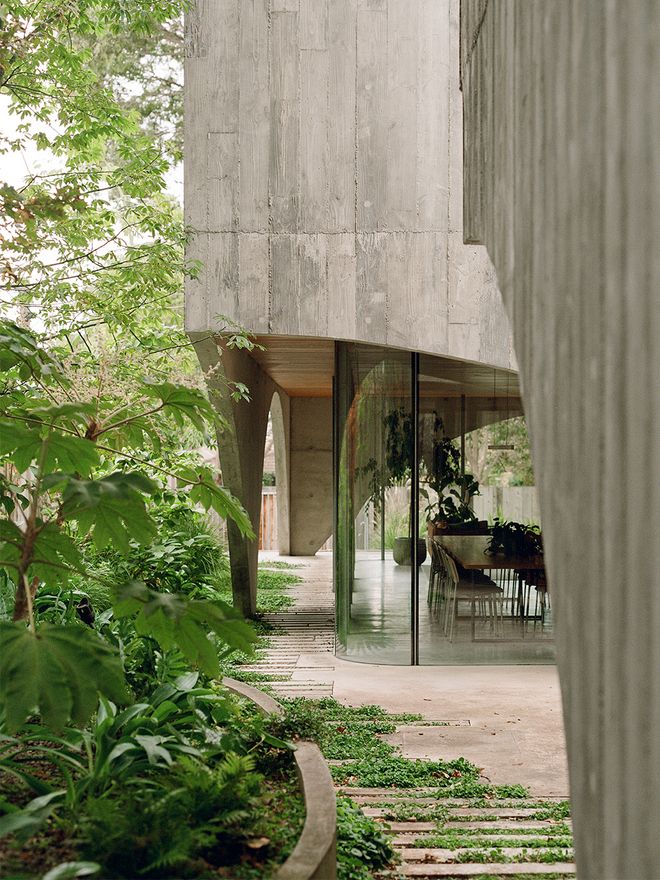
The concrete shell forms a passive space between the interior and exterior spaces, allowing natural light to flood through the glass walls into the interior spaces, but keeping the heat at bay.
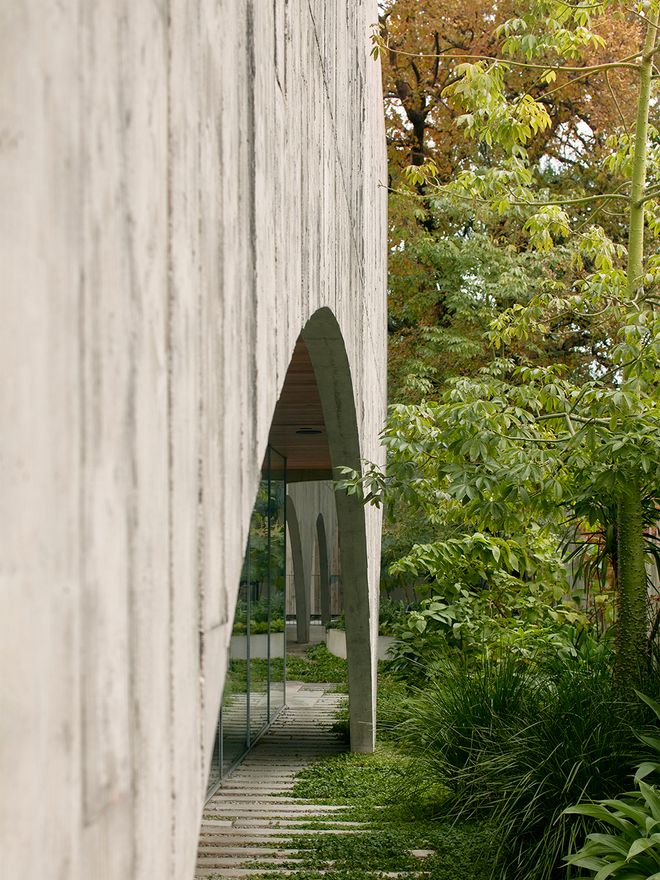
The curved lines effectively lighten the impenetrable look of concrete.
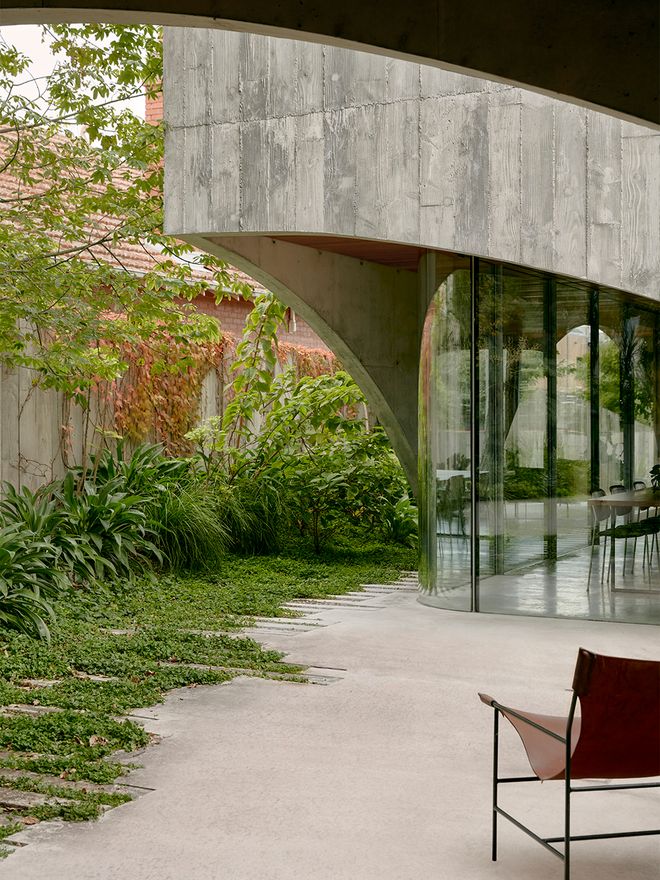
Large glass surfaces allow indoor and outdoor spaces to complement each other.
The most powerful element of Hawthorn House's design language is probably its brutalist concrete frame. The concrete shell protecting the two separate pavilions provides as the building's primary support structure, yet the impression is quite different: the textured concrete husk seems surprisingly light, resting gently on top of the house like a curtain or cloak.
Like a concrete curtain that surrounds the windowless building, opening and closing, the shrouds define the way the interior spaces relate to each other and to the surrounding environment.
The repeated arc motif of the facade is a visually pleasing detail, adding surprising lightness to the heavy look of concrete, but it is also deeply functional.
Like a concrete curtain that surrounds the windowless building, opening and closing, the shrouds define the way the interior spaces relate to each other and to the surrounding environment: they provide intimacy and a sense of sanctuary to the bathrooms and bedrooms, and suggests an open dialogue between the living areas and the garden.
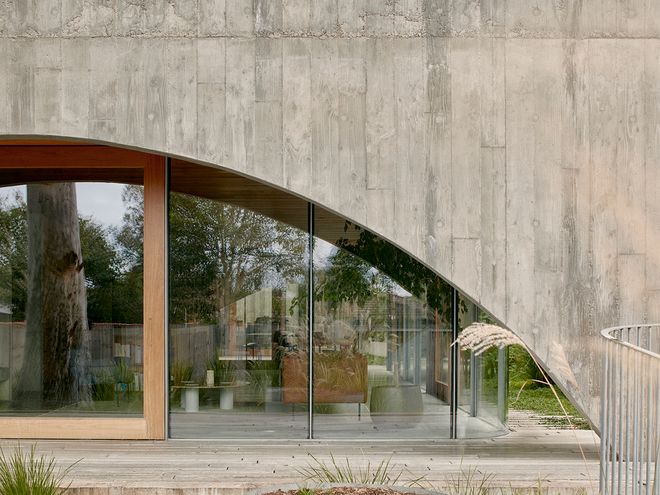
The one-of-a-kind concrete structure is simultaneously open and closed, heavy and airy.
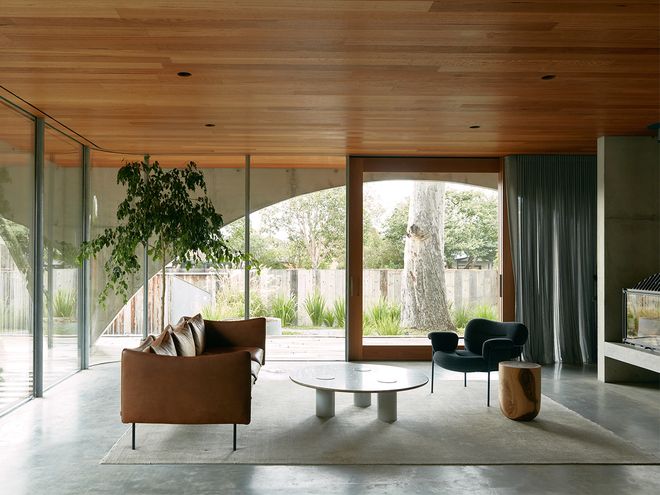
Inside the house, protected by the concrete shell, a serene and harmonious atmosphere awaits.
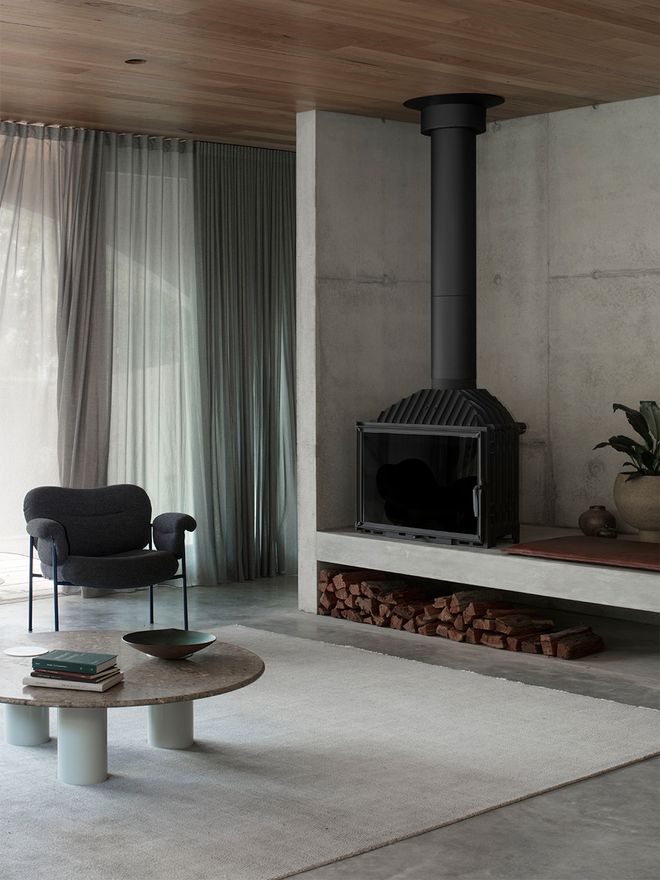
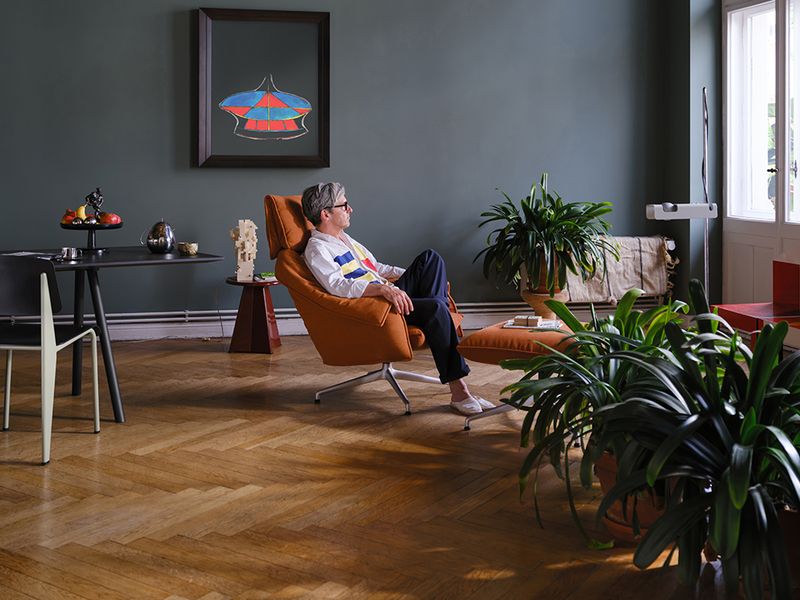
The living rooms carry a stripped-down mood, yet are still inviting and cozy. Fogia's Bollo lounge chair is designed by Andreas Engesvik.
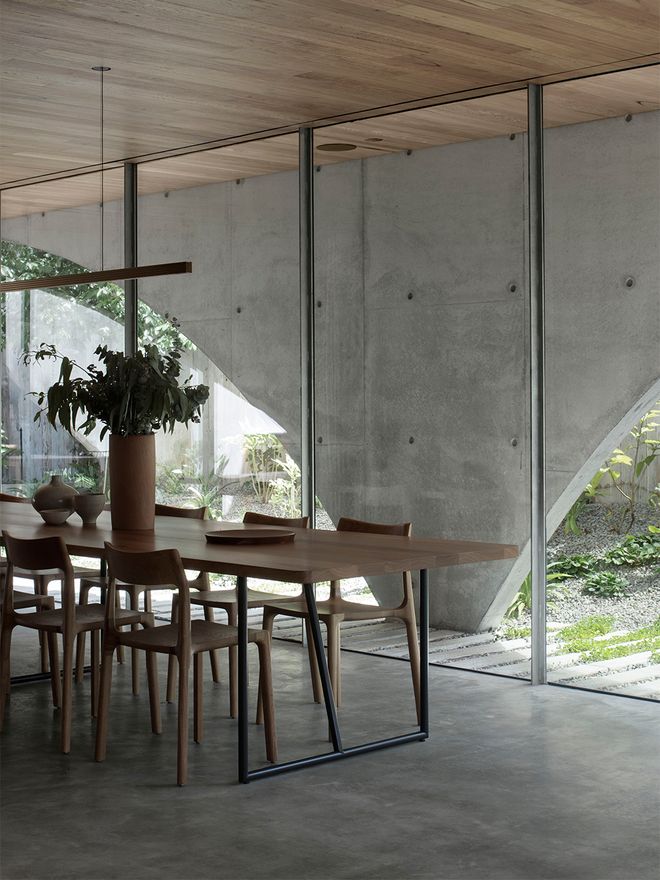
The union of wood, glass, and concrete is extraordinarily luxurious in all its simplicity.
In this project, the entire site was perceived from a completely new starting point. The traditional front yard backyard division was scrapped so that the plot could be used in a more dynamic and inventive way – the starting point of the project was to bind the entire site and the buildings into a singular unit, where the interior and exterior spaces complement each other.
The starting point of the project was to bind the entire site and the buildings into a singular unit, where the interior and exterior spaces complement each other.
The lounge areas and kitchen located at ground level spill into into the lush view opening to the north, while the washrooms and bedrooms enjoy intimately demarcated secret gardens. The rooms on the upper floor are bathed in light filtered through the canopy of surrounding trees.
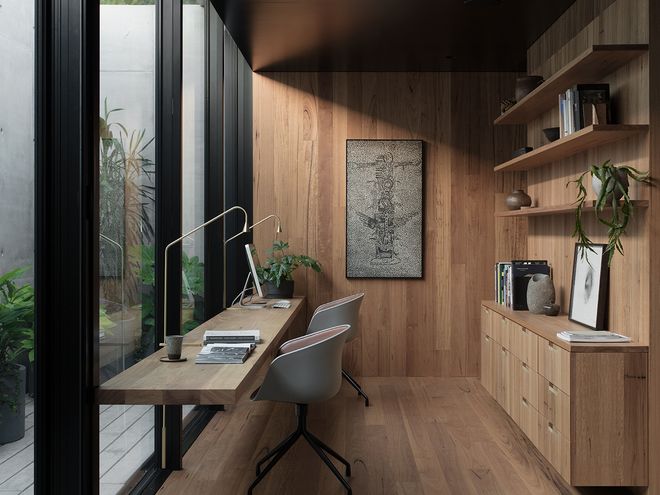
The intimate study opens onto an enclosed miniature garden.
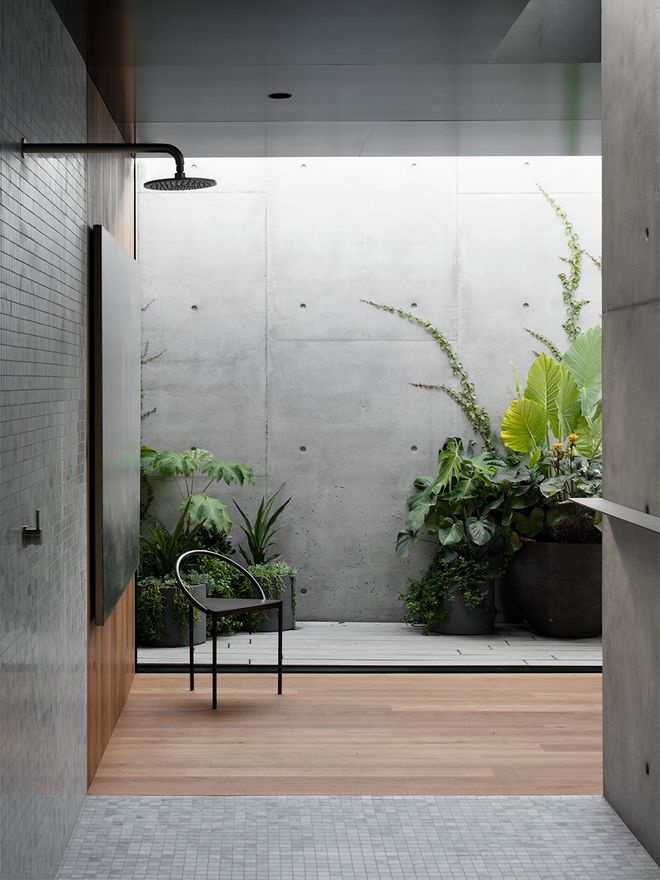
The warm-toned, organic wooden surfaces merge effortlessly with the concrete, creating a surprising element of sensitivity.
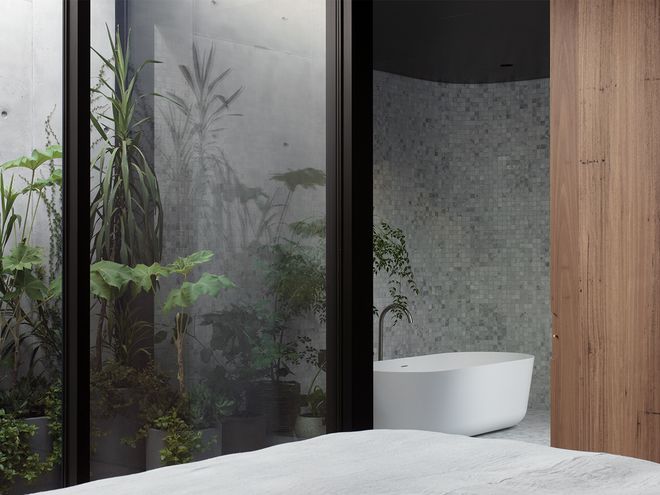
Potted green plants bridge together the closed-off bathroom and the surrounding garden landscape.
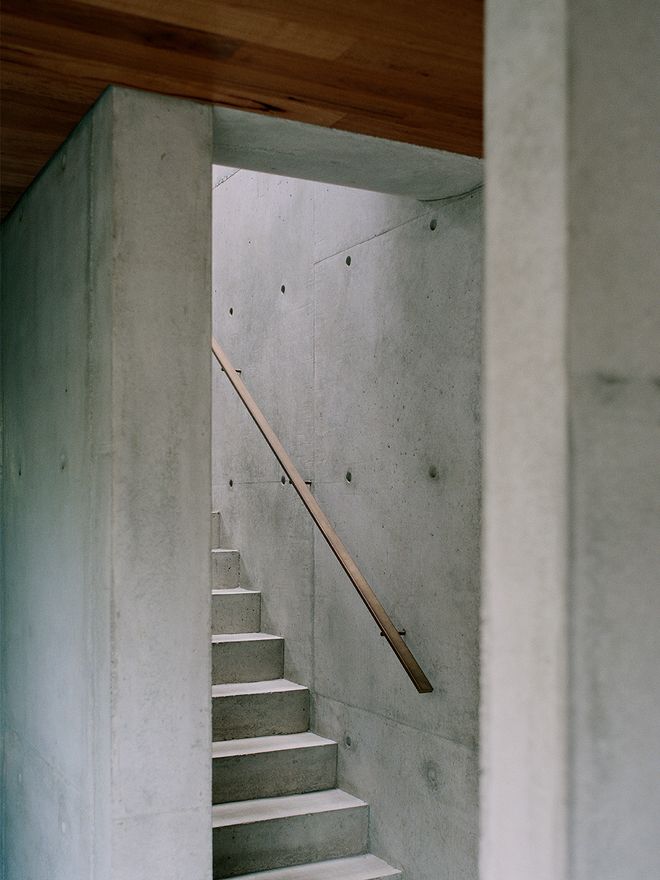
Hawthorn House lives together with its residents. Concrete surfaces and brass railings acquire an appealing patina over time.
The balanced look of the interior comes from the charismatic combination of carefully considered materials. The union of heavily textured concrete, wood and curved glass surfaces is at the same time almost ascetically bare in its simplicity, and on the other hand, overwhelmingly sensual and inviting. The warm-toned wooden surfaces combine with the concrete surfaces in an effortless way, similar to the building itself connecting to its organic surroundings.
Wood and concrete, as well as untreated brass details such as balustrades and door handles, acquire a unique patina over the years, carrying quite literally the imprint of the residents – a tactile connection to the human body is exposed in the materials of the building in a charming, poetic way.
See also:
• Edition Office on Instagram >
Text: Mira Ahola Images: Ben Hosking and Tom Ross
Published on 27 Jul, 2022