This is a carousel of product images. Use the thumbnails or swipe to change the displayed image, and activate an image to open it full screen.
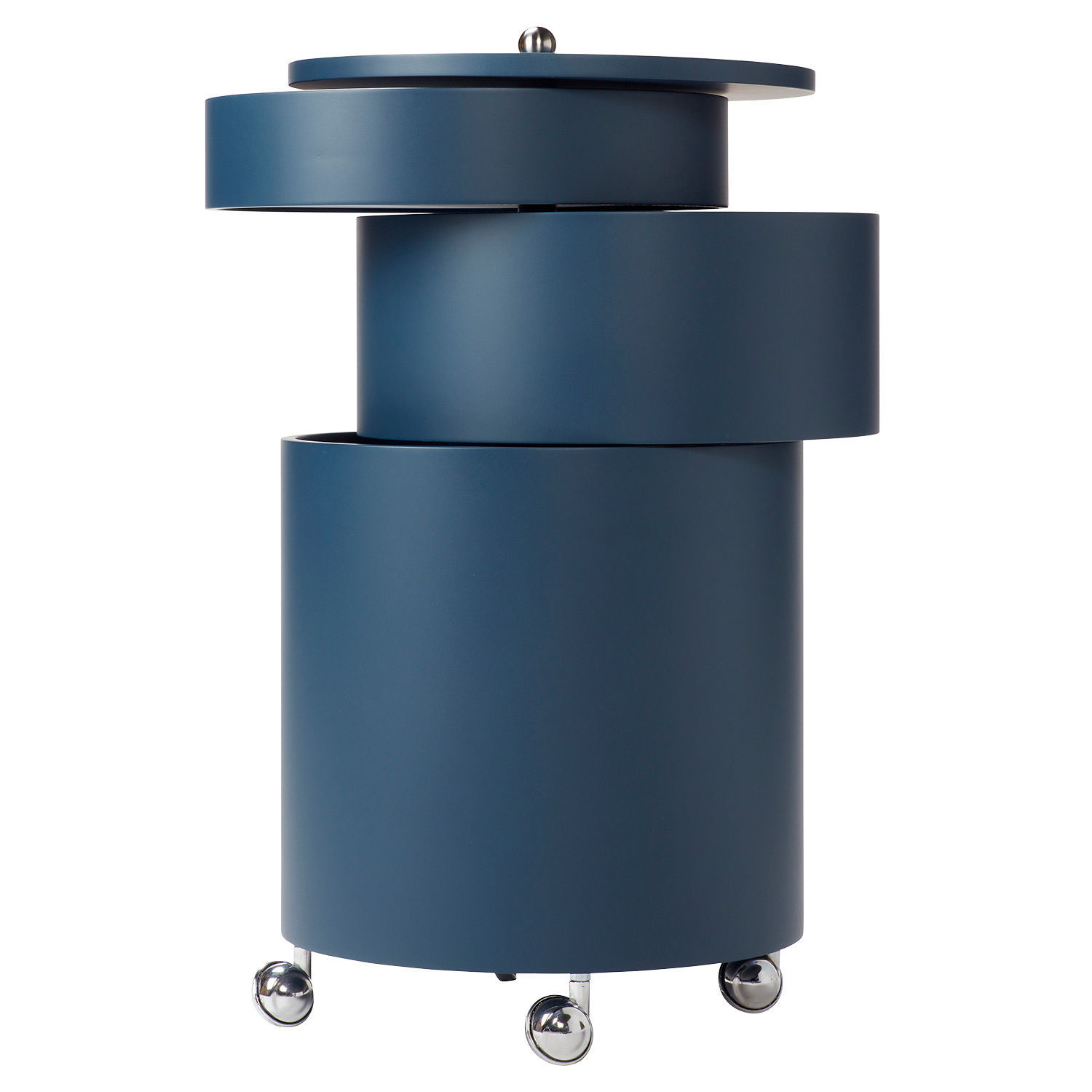
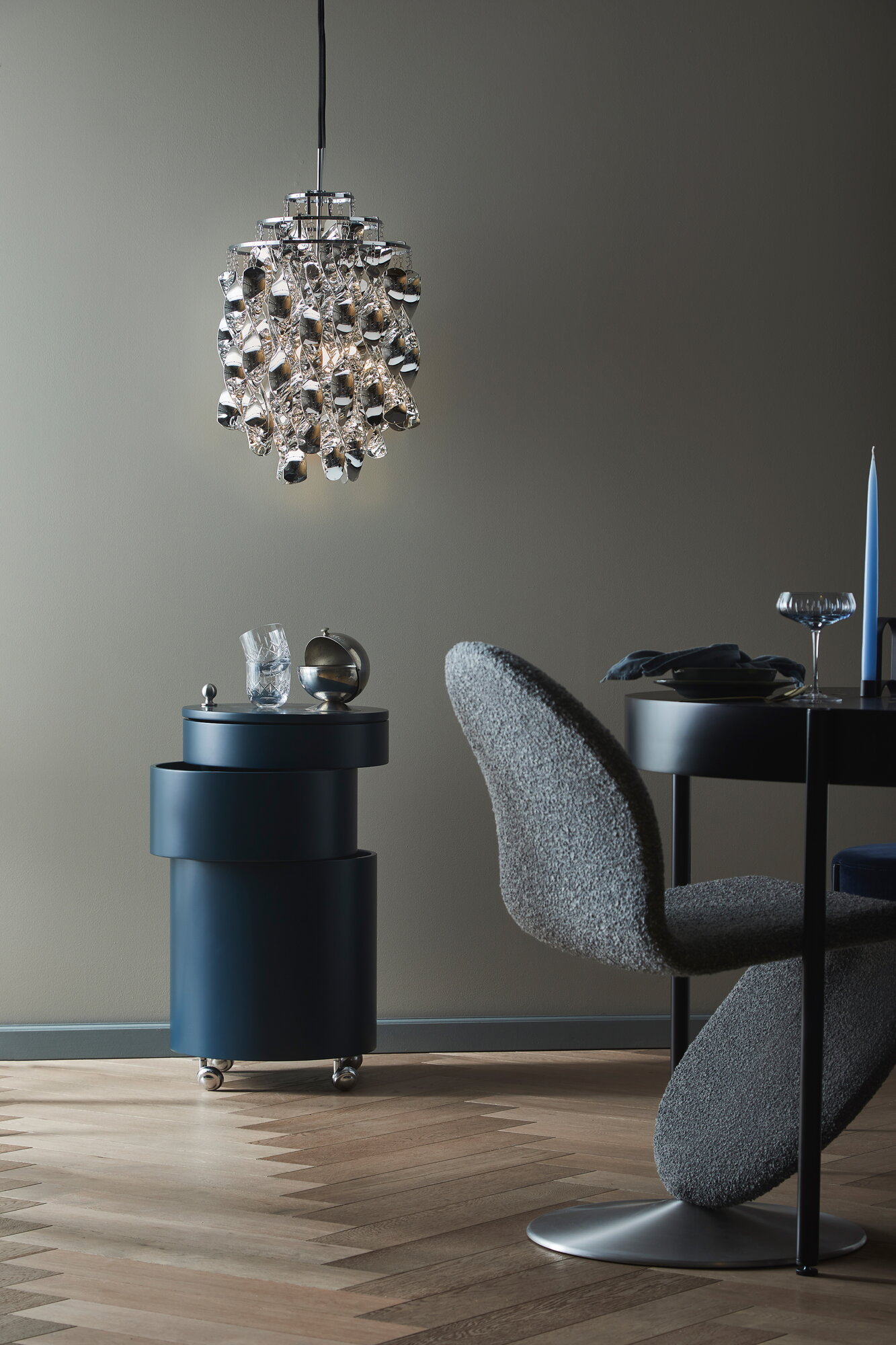
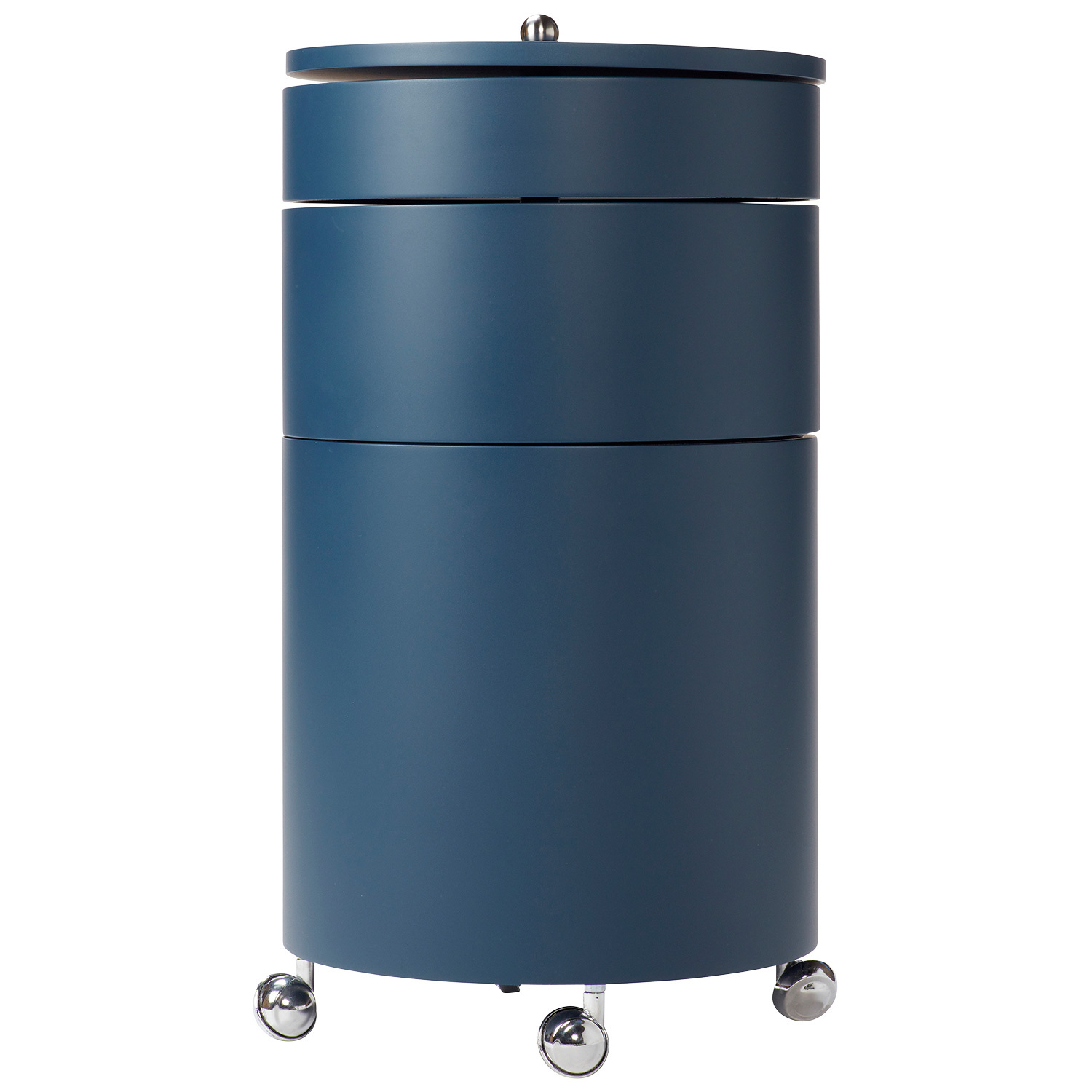
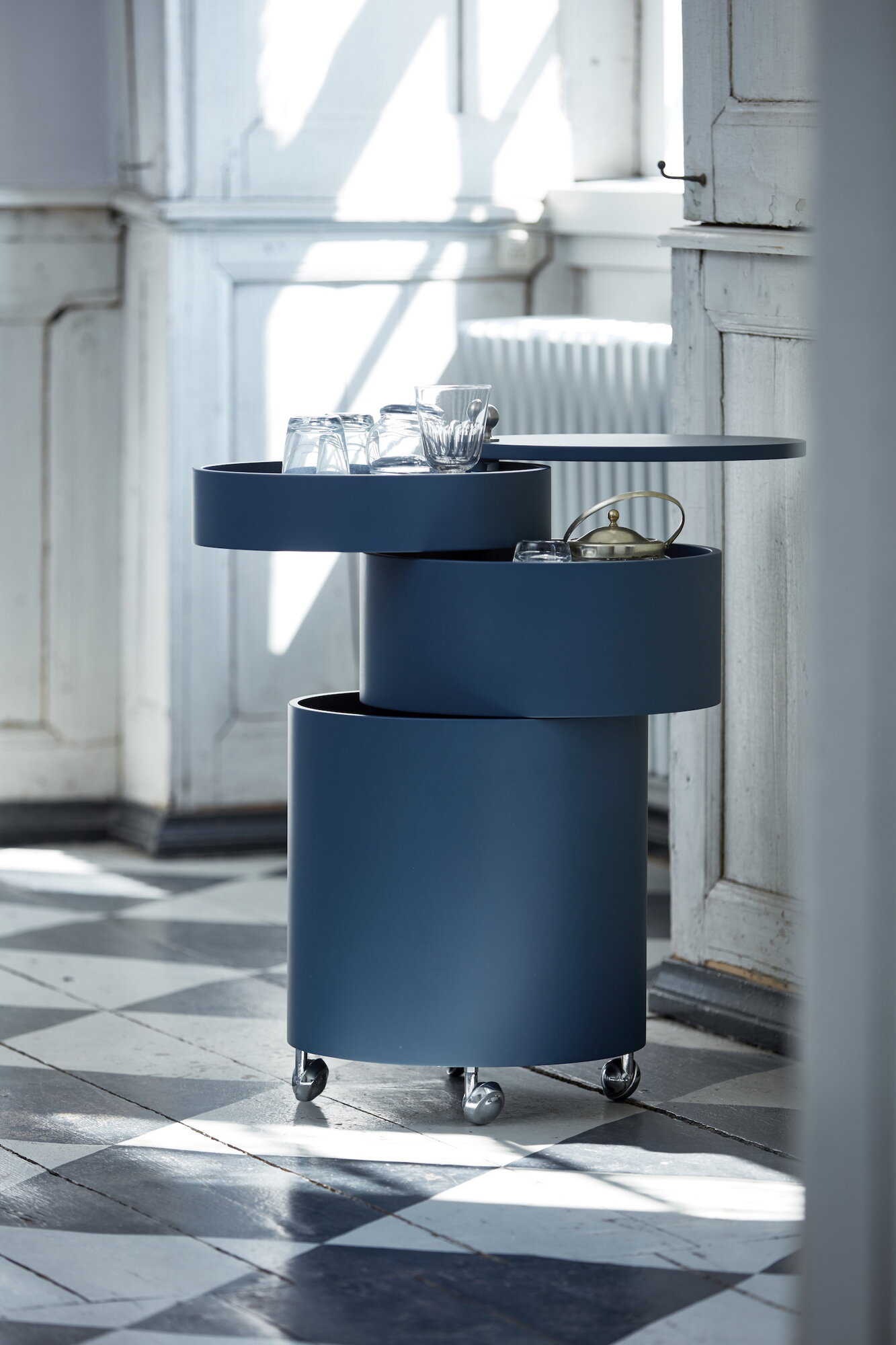
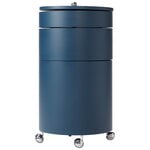
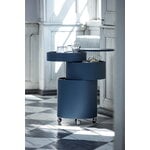
Barboy trolley, blue
Description
Verpan’s Barboy is a re-release of Verner Panton’s versatile bar trolley and mobile storage unit from 1963. Made of moulded wood, Barboy consists of four cylindrical elements, two of which swing out to the sides. When in bar use, you can place glasses and snacks on the top levels, and fill the lowest element with bottles and carafes. And besides a serving trolley, Barboy also makes an excellent nightstand, side table or convenient storage trolley for example in the hallway or office. Thanks to the chrome-plated castors, Barboy is easy to move from one room to another.
- Height: 72.5 cm
- Diameter: 38 cm
- Colour Blue
- Material Moulded, painted MDF
- Base material Chrome-plated castors
- Weight 20 kg
- Product ID: VE116926
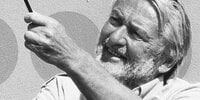
The architect Verner Panton (1926–1998) is regarded as one of the most significant Danish furniture and interior designers of the 20th century. Panton’s work is on display in numerous museums around the world, and he earned several major awards for it.
Panton’s sense of colour, form and space was second to none. He is remembered above all as a bold user of colour, a creator of futuristic forms and a designer of inventive plastic furniture. The objects and lamps Panton designed break the boundaries of traditional Scandinavian design and continue to inspire new generations.
Verner Panton – the irreverent visionary of Danish design
Verner Panton was a Danish designer and architect regarded as one of the most original and influential design names of the latter half of the 20th century. He studied architecture at the Royal Danish Academy of Fine Arts in Copenhagen and, in the early stages of his career, worked in Arne Jacobsen’s office before founding his own studio in 1955.
Panton is known above all for his bold use of colour, his futuristic forms and his way of bringing together furniture, lighting, textiles and interiors into complete environments. His work brought a new kind of experimentation, playfulness and visual power to Scandinavian design.
Plastic furniture and futuristic forms
Panton was interested in new materials and production techniques, plastic in particular. He designed several radical pieces of furniture whose organic forms and bright colours embodied the optimistic future aesthetic of the 1960s and 70s. He was especially fascinated by the potential of plastic to create cohesive, organic and technically ambitious forms – this thinking culminated in Vitra’s Panton chair, which became one of the most famous chairs of the 20th century.
Panton also designed several distinctive lamps that have retained their popularity over the decades. One of the best-known is the Panthella lamp, designed in 1971 and manufactured by Louis Poulsen.
A lover of colour
Panton is also remembered as a colourful and inspiring personality. He described his own work as follows:
”The main purpose of my work is to provoke people into using their imagination. Most people spend their lives in dreary, grey-beige conformity, mortally afraid of using colours. By experimenting with lighting, colours, textiles and furniture, I try to show new ways to use them. I hope that this will encourage people to use their imagination and make their surroundings more exciting.”
Many of Panton’s works are design classics today, and his work is on display in numerous museums around the world.
Who: Verner Panton
- Danish designer and architect (1926–1998).
- Studied at the Royal Danish Academy of Fine Arts in Copenhagen and, early in his career, worked in Arne Jacobsen’s office.
- Known above all for his bold use of colour, his futuristic forms and his all-encompassing interiors.
- Awards: the International Design Award (1963, 1968, 1981, 1986), the Poul Henningsen Prize (1967), the iF Design Prize (1971, 1972, 1992), Norway’s Design Prize (1992).
- Notable works: the Panton chair (Vitra), the Panthella lamps (Louis Poulsen), the Flowerpot lamp (&Tradition), the Pantop lamp (Verpan).
Design Stories: Read more and find inspiration
View all products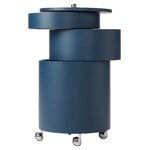
Ideas and inspiration
This is a carousel. Use Next and Previous buttons to navigate.