This is a carousel of product images. Use the thumbnails or swipe to change the displayed image, and activate an image to open it full screen.
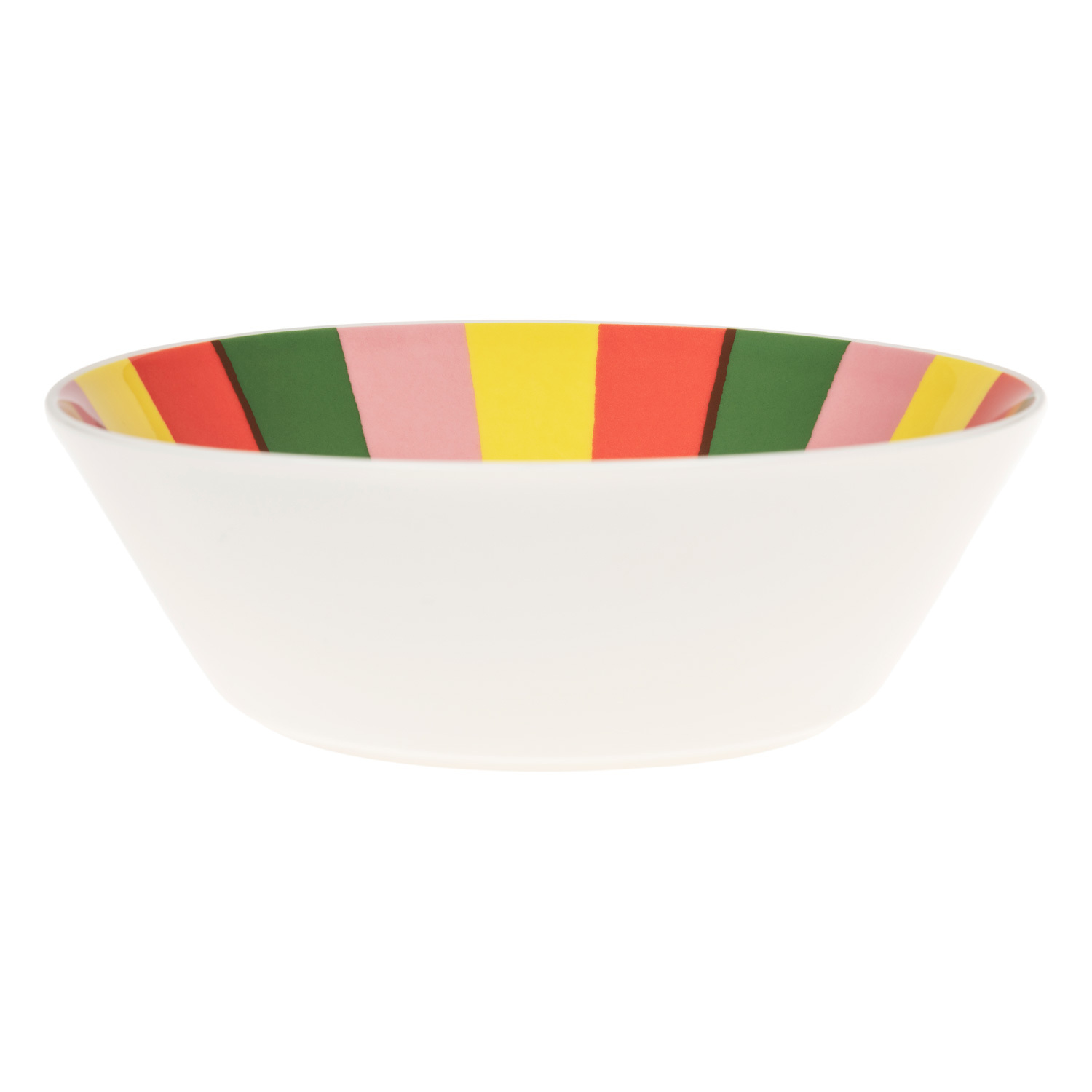
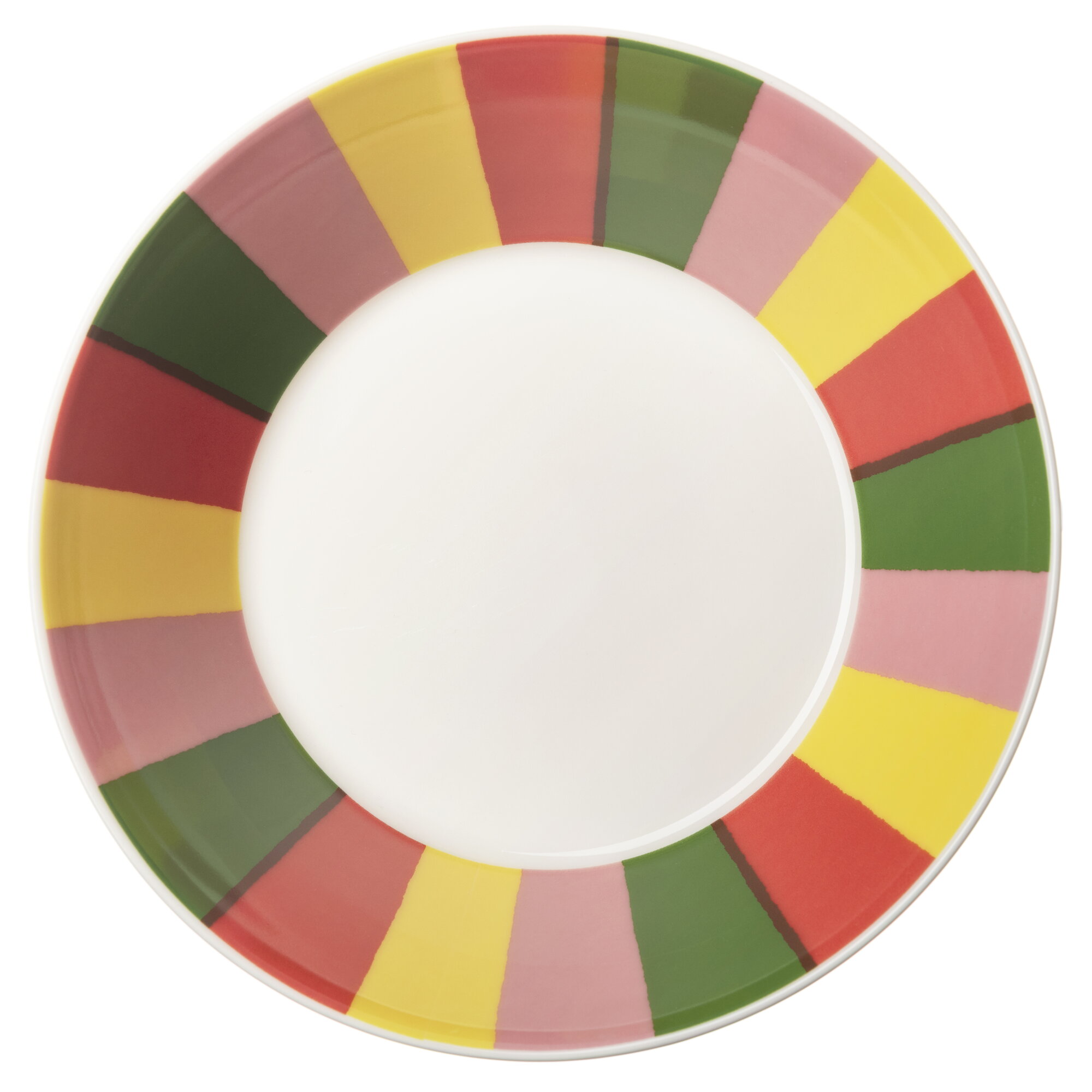
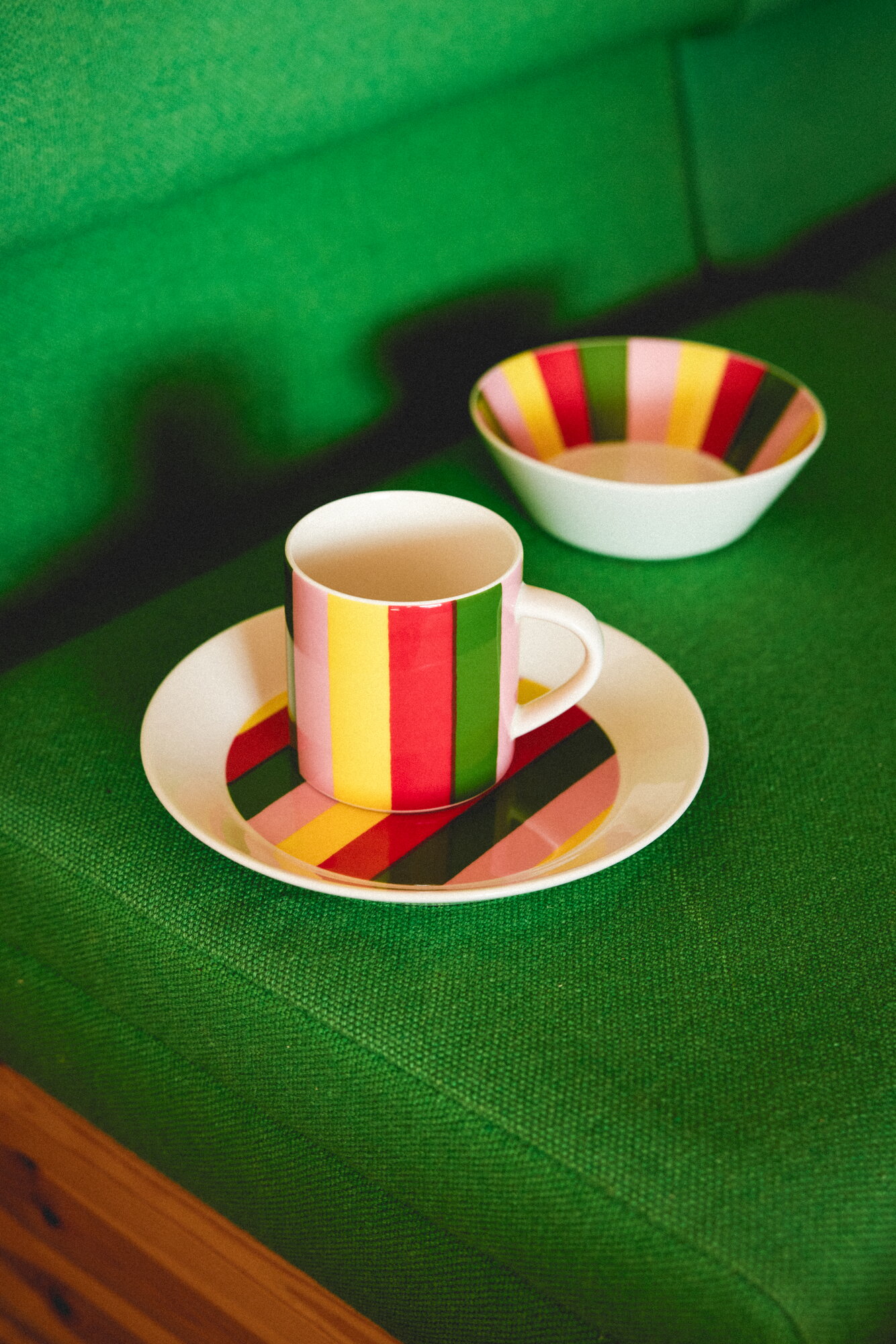
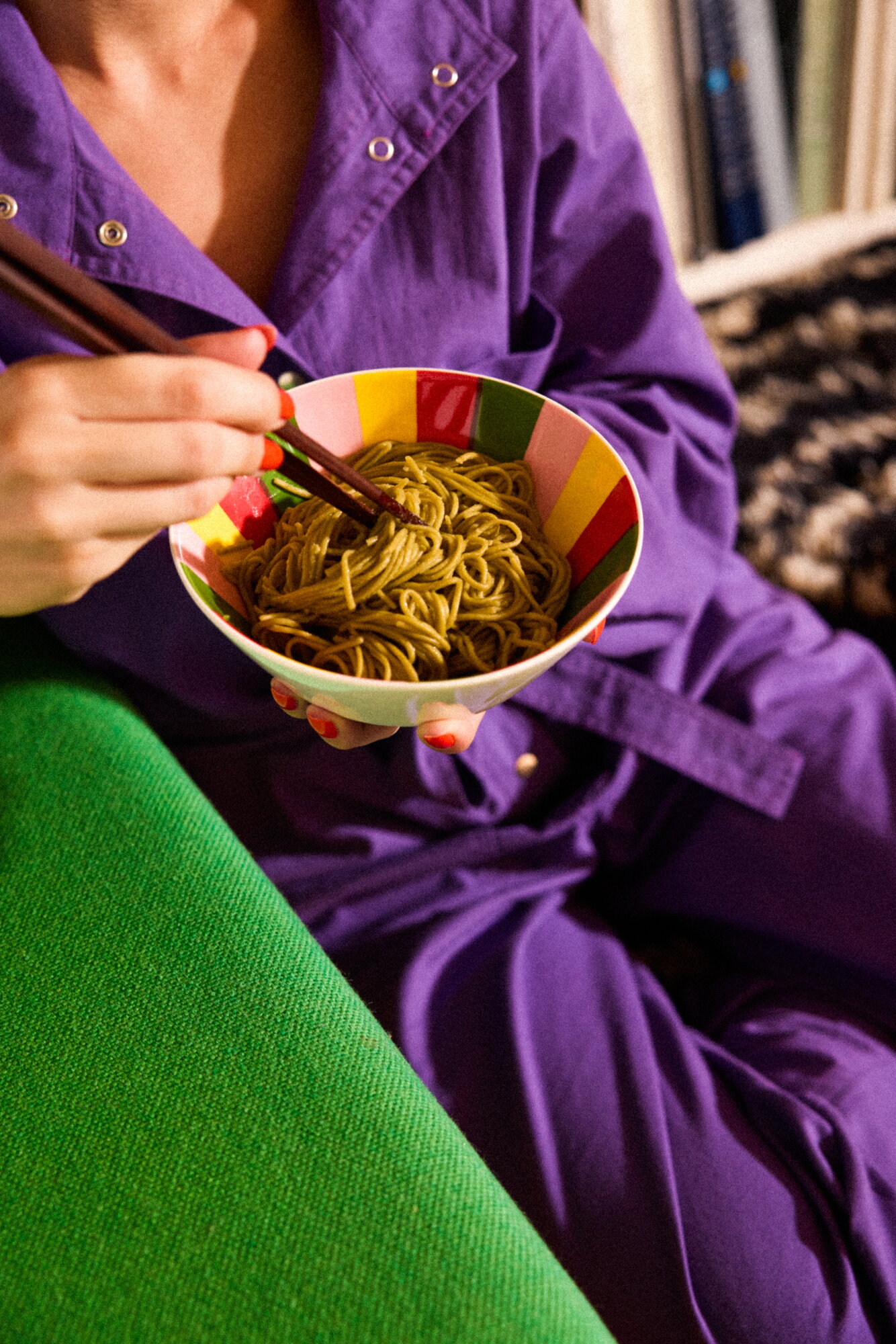
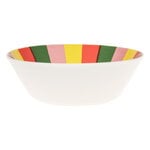

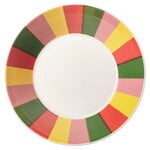

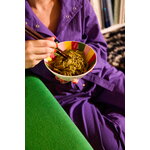
Vuokko bowl, 17 cm, Pieni 4-raita
Description
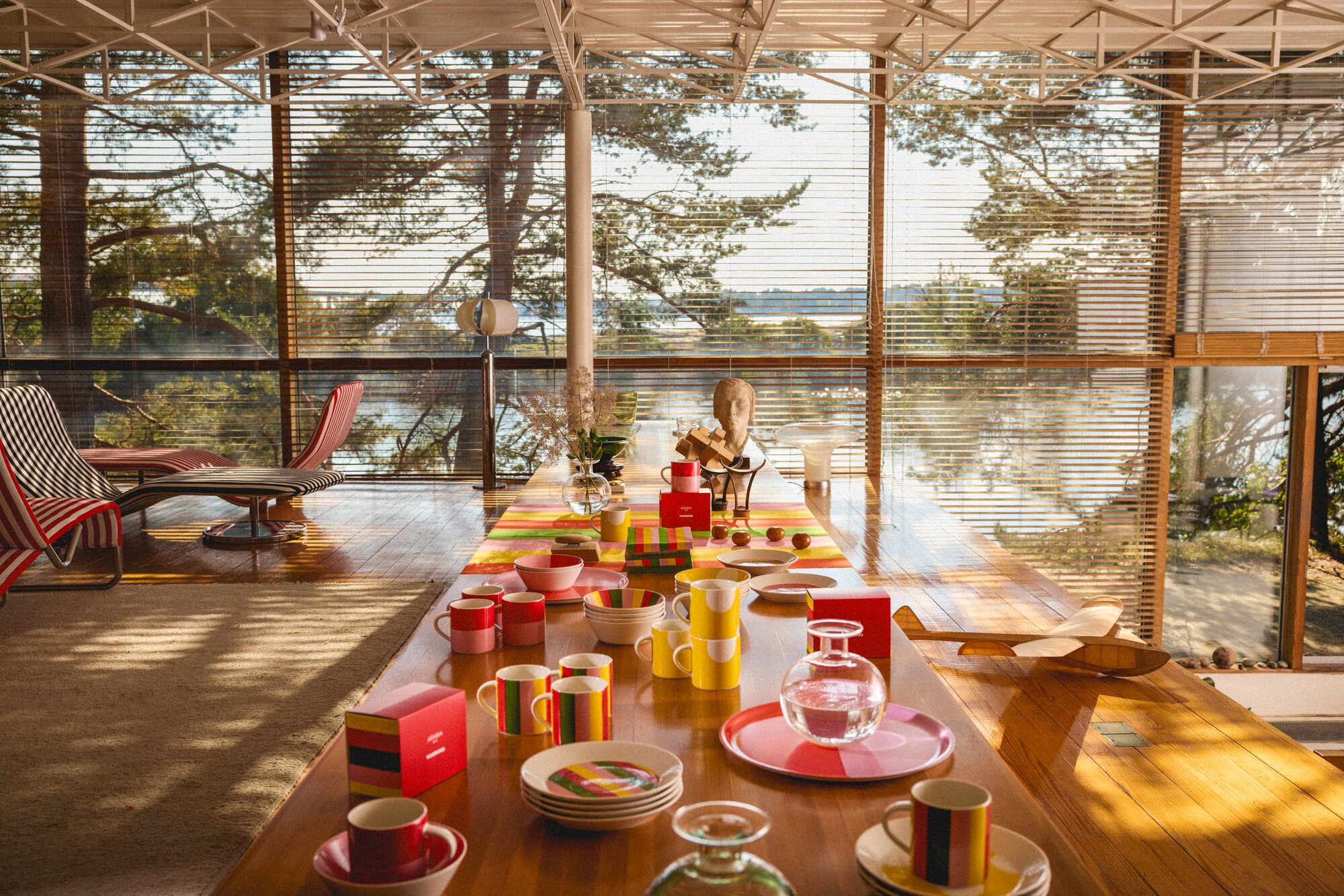
Arabia's Vuokko bowl features a striped pattern designed by Vuokko Nurmesniemi in 1973. True to its name, Pieni 4-raita – or "Small 4-stripe" – consists of four playful, differently coloured stripes and is one of Nurmesniemi’s most iconic designs.
- Width: 17.3 cm
- Height: 13.6 cm
- Diameter: 17.3 cm
- Material Vitroporcelain
- Colour Yellow, red, green, pink, white
- Weight 0.38 kg
- Care instructions Safe for dishwasher, oven, microwave and freezer
- Product ID: AR1077317

Vuokko Eskolin-Nurmesniemi (1930–2026) is a Finnish textile artist known for her strong graphic expression and her pared-back yet distinctive clothing collections. She graduated as a ceramic artist from the Institute of Industrial Arts in Helsinki in 1952 and initially worked at the Arabia and Nuutajärvi glassworks, but moved the very next year to become a designer at Marimekko. During the 1950s, Eskolin-Nurmesniemi created many iconic Marimekko classics, including the Jokapoika shirt, which appeared in 1956.
In 1964, Eskolin-Nurmesniemi founded her own eponymous brand, Vuokko, through which she developed timeless and distinctive clothing, focusing in particular on everyday wearable fashion.
Vuokko Eskolin-Nurmesniemi – a bold master of Finnish textile design
Vuokko Eskolin-Nurmesniemi was a Finnish designer and textile artist whose work has left a lasting mark on Finnish fashion and textile design. She rose to prominence in the 1950s and 60s by designing pared-back yet boldly distinctive clothing and textiles, dominated by clear forms, a graphic quality and strong colours.
Eskolin-Nurmesniemi’s design philosophy was rooted in timelessness, practicality and high-quality materials.
A career at Marimekko
In the early stages of her career, during the 1950s and 1960s, Eskolin-Nurmesniemi worked for Marimekko, where she created, among other things, the freehand-painted Piccolo stripe print – first introduced in 1953, the print now adorns numerous Marimekko products, including the beloved Jokapoika shirt.
The Marimekko prints she designed differed from the mainstream of the era: they were large-scale, powerful and often made use of black and white or clear colour contrasts.
An international pioneer
In 1964, Eskolin-Nurmesniemi founded her own fashion company, Vuokko. Above all, she designed clothing that departed from the conventions of the fashion world of its time: loose cuts, architectural lines and functionality served as the cornerstones of her aesthetic. She was also involved in taking Finnish textile design to international markets.
Over her long career, Eskolin-Nurmesniemi was honoured with many awards. She received the Lunning Prize in 1964, the Pro Finlandia Medal in 1969 and the Prince Eugen Medal in 1986. She was named Fashion Artist of the Year in 2001, and the honorary title of Academician of Art was conferred on her in 2007. Vuokko Eskolin-Nurmesniemi died on 19 April 2026 in Helsinki at the age of 96.
Who: Vuokko Eskolin-Nurmesniemi
- Finnish fashion and textile designer (1930–2026).
- Worked for Marimekko in the early stages of her career and later founded her own company, Vuokko.
- Her design centred on clear forms, a graphic quality, strong colours and everyday practicality.
- Had a significant influence on the internationalisation of Finnish textile design.
- Best known for Marimekko’s Piccolo stripe print, which adorns the Jokapoika shirt, among others.
Design Stories: Read more and find inspiration
View all products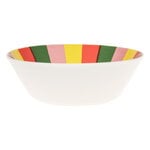
Ideas and inspiration
This is a carousel. Use Next and Previous buttons to navigate.