This is a carousel of product images. Use the thumbnails or swipe to change the displayed image, and activate an image to open it full screen.
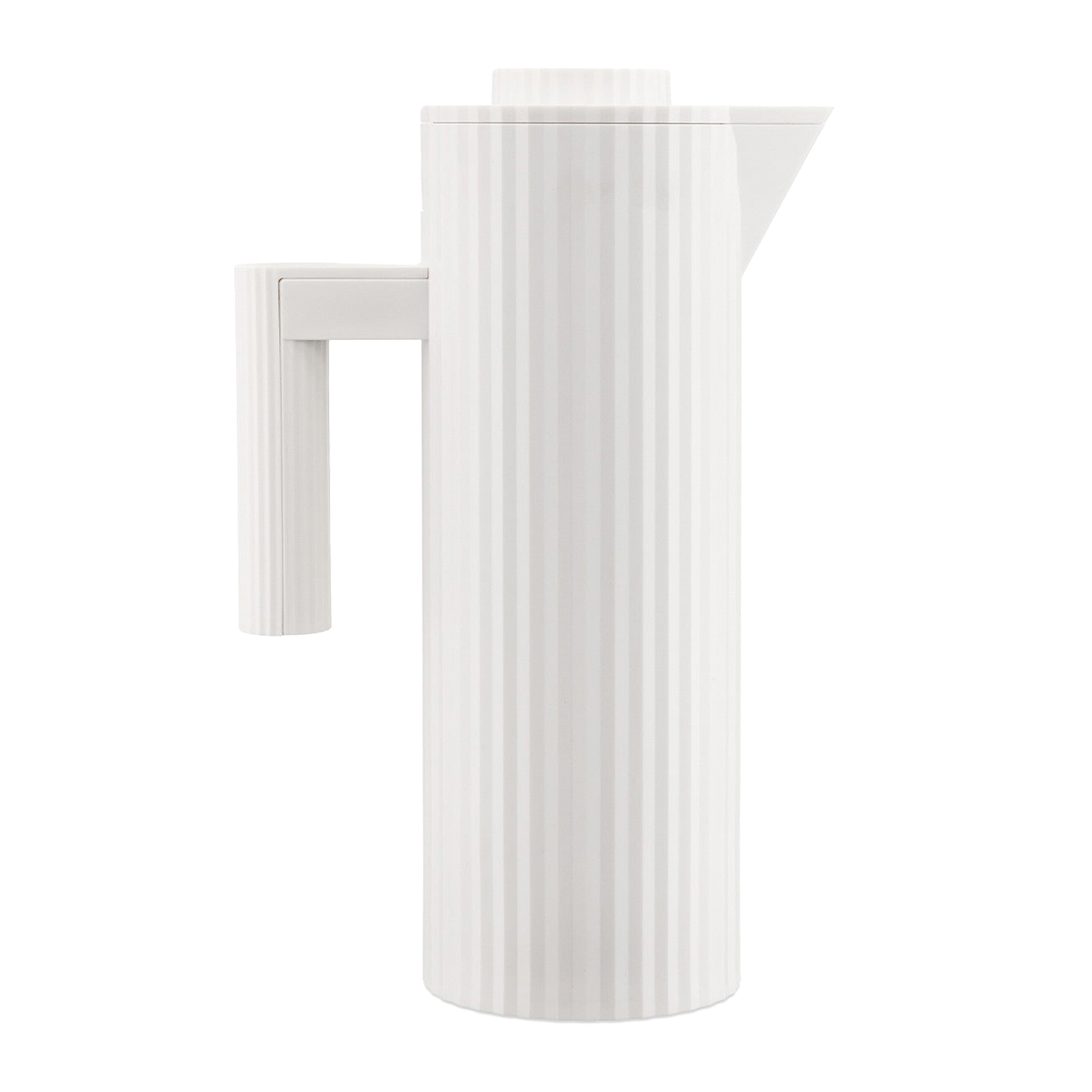
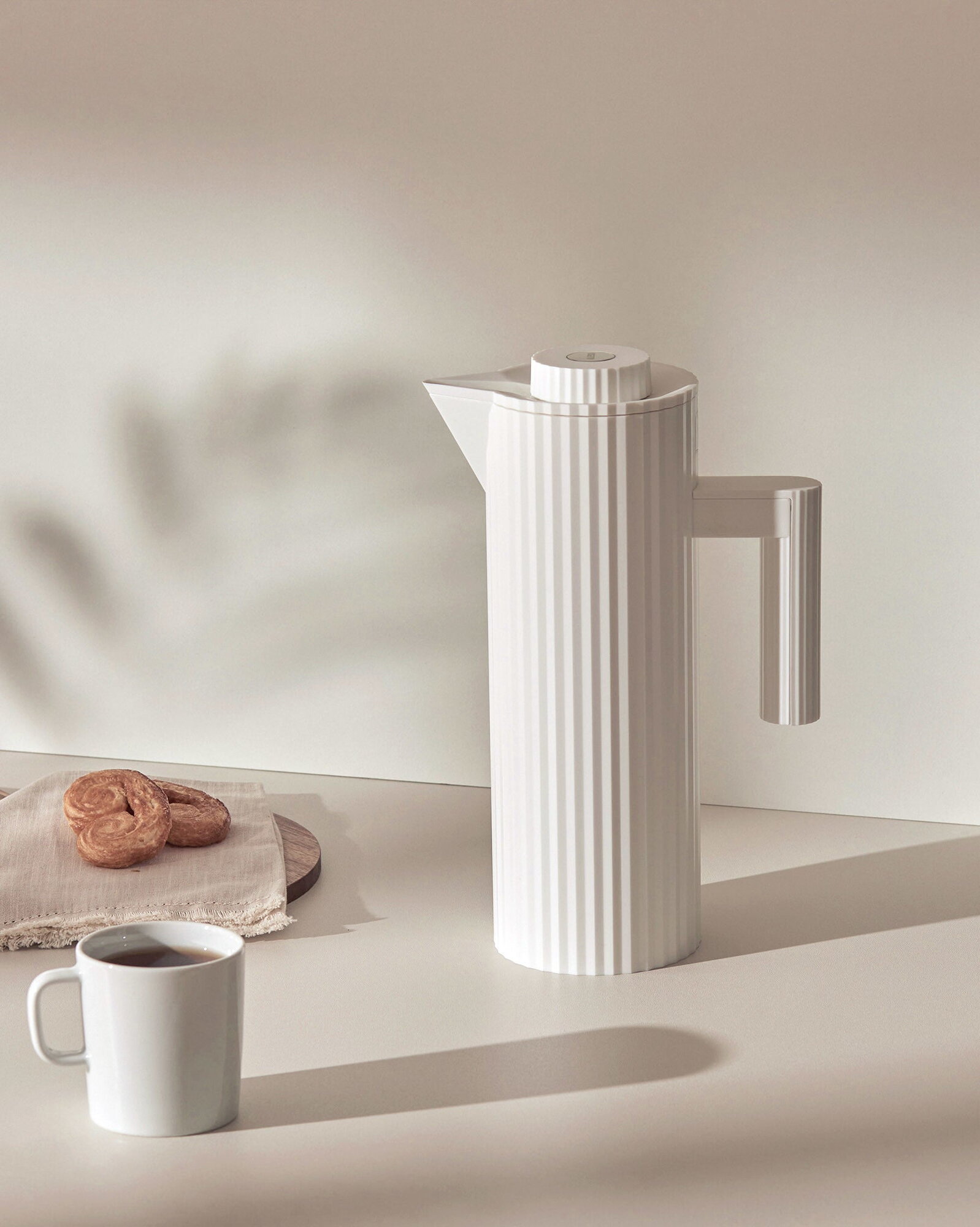
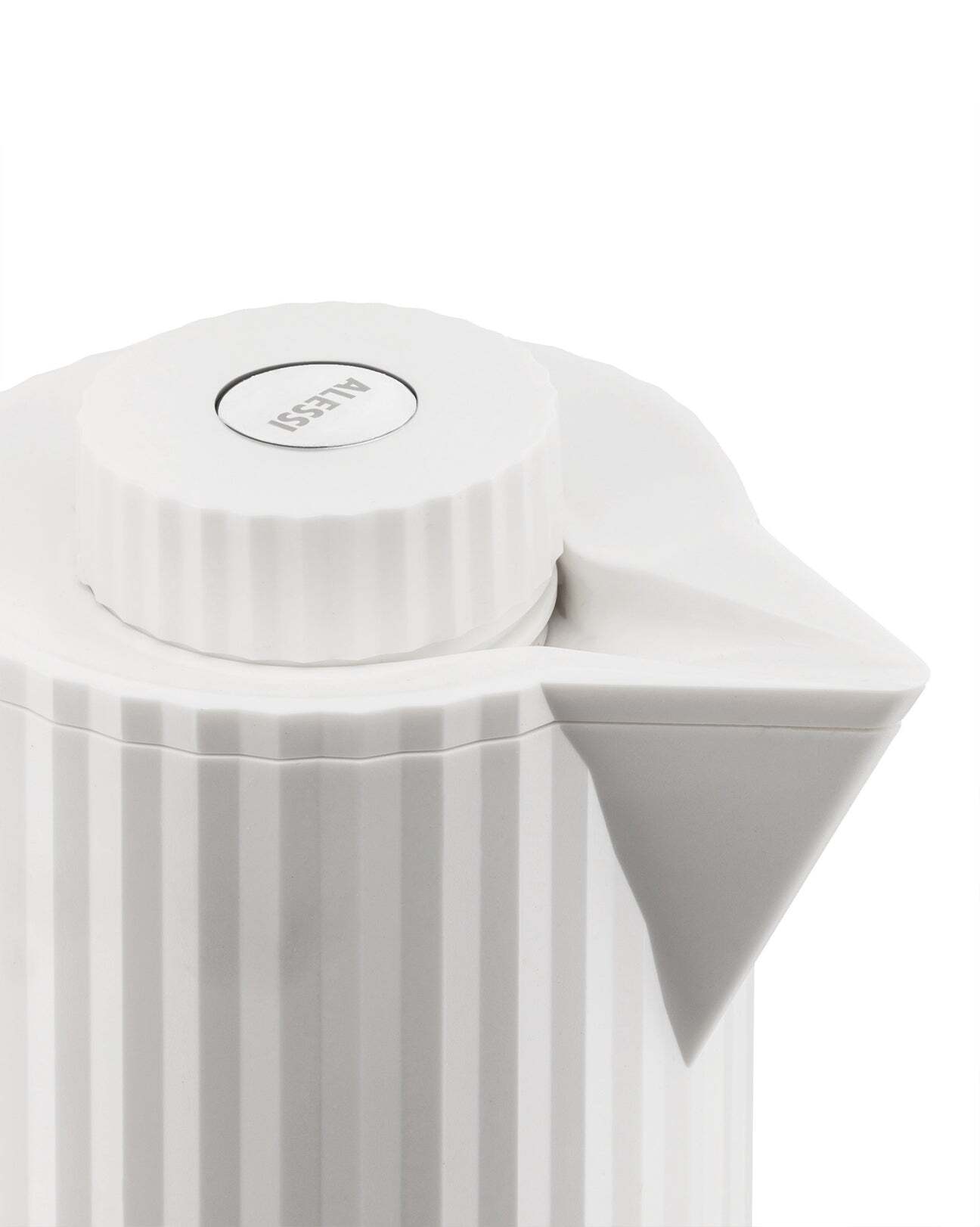
Plissé thermo insulated jug, white
Description
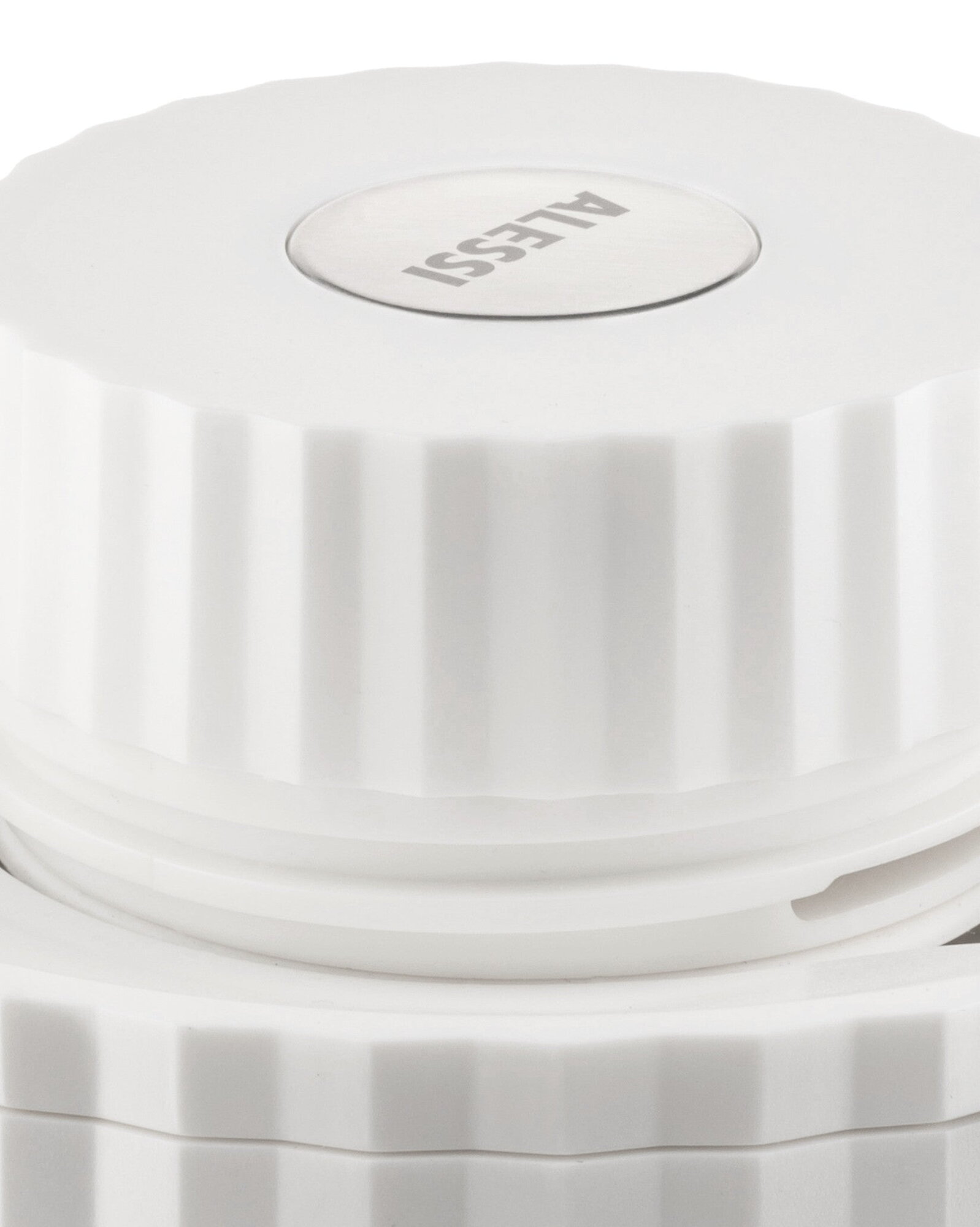
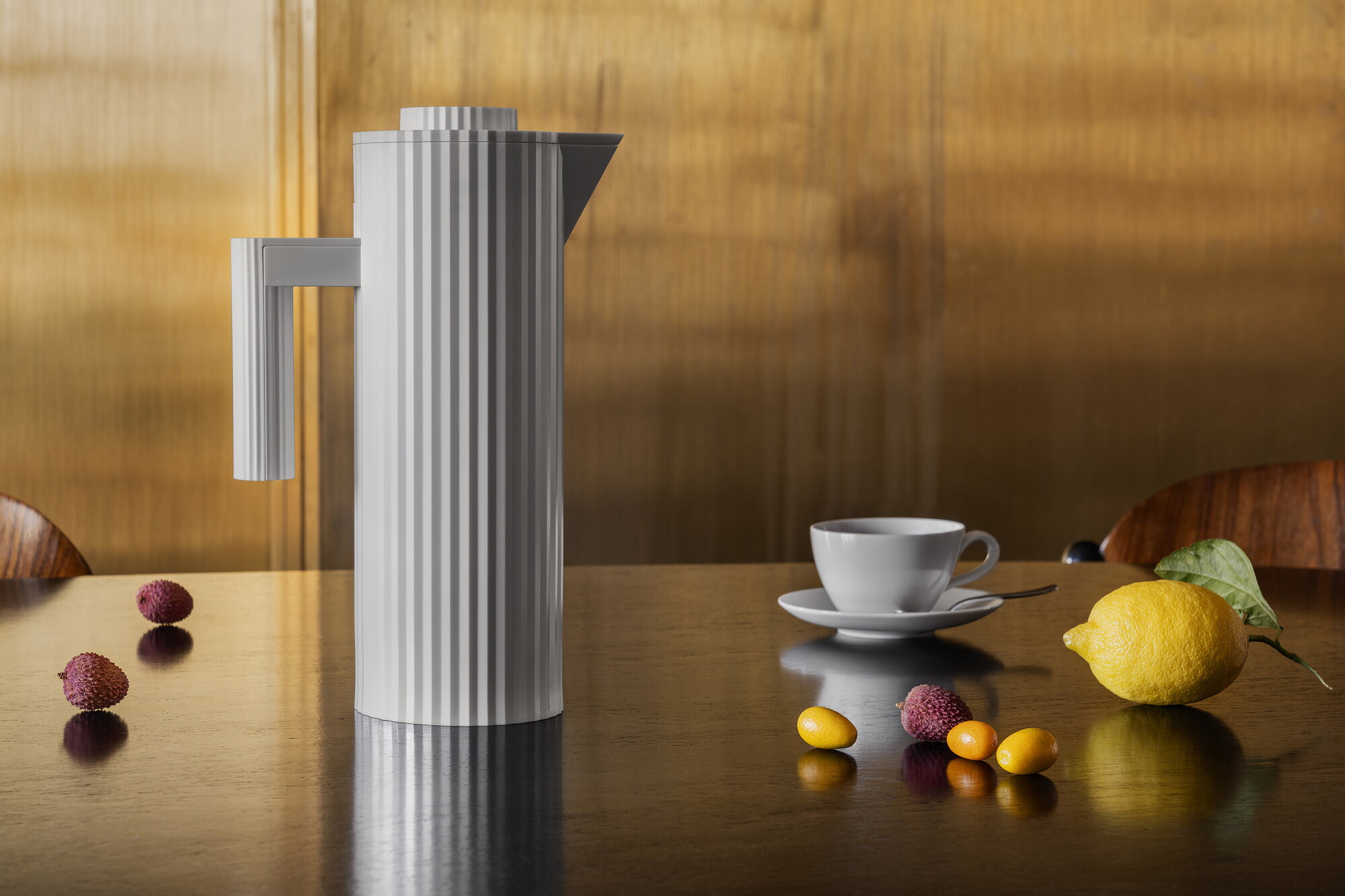
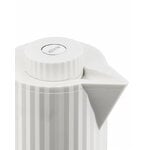
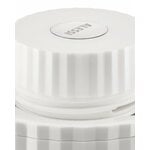
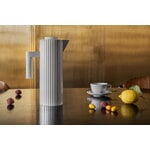
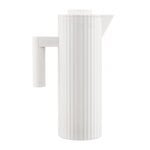
The Plissé thermo insulated jug by Alessi was inspired by the worlds of fashion and architecture. Its three-dimensional surface resembles pleated fabric, and it has a dynamic, sculptural silhouette. Designed by Michele De Lucchi, the Plissé thermo jug is well suited for serving coffee, tea as well as cold drinks, and its double-wall thermal glass inside helps to keep drinks at the desired temperature for longer.
- Length: 7.87 in (20 cm)
- Width: 4.33 in (11 cm)
- Height: 12.6 in (32 cm)
- Capacity: 1.06 qt (1 l)
- Material Thermoplastic resin, double wall thermal glass inside
- Colour White
- Care instructions Handwash
- Weight 2.89 lbs (1.31 kg)
- Product ID: ALMDL12-W

Michele De Lucchi was born in 1951 in Ferrara, Italy. He studied architecture in Florence. After his graduation De Lucchi was a part of anti-design movement called Radical.
De Lucchi has designed lamps and furnishings for the most renewed Italian and European companies. He has received a Compasso D'oro design award together with Giancarlo Fassina for their well-known Tolomeo series of lamps.
View all products5

Based on 1 reviews
-
A
Anonyymi | Verified Customer
Lohja, Finland

1 year ago
The Product Sustainability Framework, our criteria of sustainable design, helps you find the most sustainable products in our selection. Read below which sustainability criteria this product has met.
-
 Equal opportunities for all employees
 -
Commitment to UN Global Compact, fair compensation for all employees
-
Corporate responsibility requirements defined and communicated for suppliers
-
Systematic work for improved inclusion and well-being in the workplace
-
Transparent supply chain
-
Suppliers' compliance to a code of conduct ensured
-
Direct suppliers audited and certified
-
Compliance to the UN Guiding Principles on Business and Human Rights ensured in the supply chain
-
Support for community involvement in the supply chain
-
Fair and resource-wise water-use in production
-
No incineration or landfilling of returned items
-
No use of endangered species as materials
-
No direct environmental emissions or waste (excl. GHGs) from production
-
The sustainability of direct suppliers' production is addressed and monitored
-
Production and material sourcing that respect biodiversity, animal rights, and natural ecosystems
-
Material-efficient and ecological packaging
-
Positive impact on nature’s well-being through operations that regenerate natural ecosystems
-
No potentially harmful chemicals used in own production
-
Company's direct greenhouse gas emissions identified and commitment to reduction
-
Product's carbon impact identified and commitment to reduction
-
Guidance on energy- and eco-efficient use of the product
-
Contribution to climate initiatives beyond the brand’s direct operations
-
Low-carbon or compensated transportation
-
Carbon footprint of the product calculated and goals set to reduce it
-
100 % renewable energy in own production and operations
-
Carbon neutral or carbon negative product
-
Sustainable and long-lasting material choices
-
No harmful or hazardous substances
-
Responsible raw material sourcing and production
-
Materials suited for circularity: monomaterials, recyclable finishings, renewable or recycled contents etc.
-
Ecological materials: natural, biodegradable, recyclable or recycled contents
-
Outstanding materials in terms of innovativeness, responsibility, sustainability and circularity: local production or sourcing, 100 % recycled content, C2C-certification etc.
-
High aesthetic quality promoting long-term use of the product
-
Technically durable product design and material choices
-
Design for enduring life-long quality
-
Design and support for product maintenance, repair and upgradability
-
Innovative circular design solutions: circular service system, resale platform, remanufacturing, collection of used products, etc.
Ideas and inspiration
This is a carousel. Use Next and Previous buttons to navigate.