This is a carousel of product images. Use the thumbnails or swipe to change the displayed image, and activate an image to open it full screen.
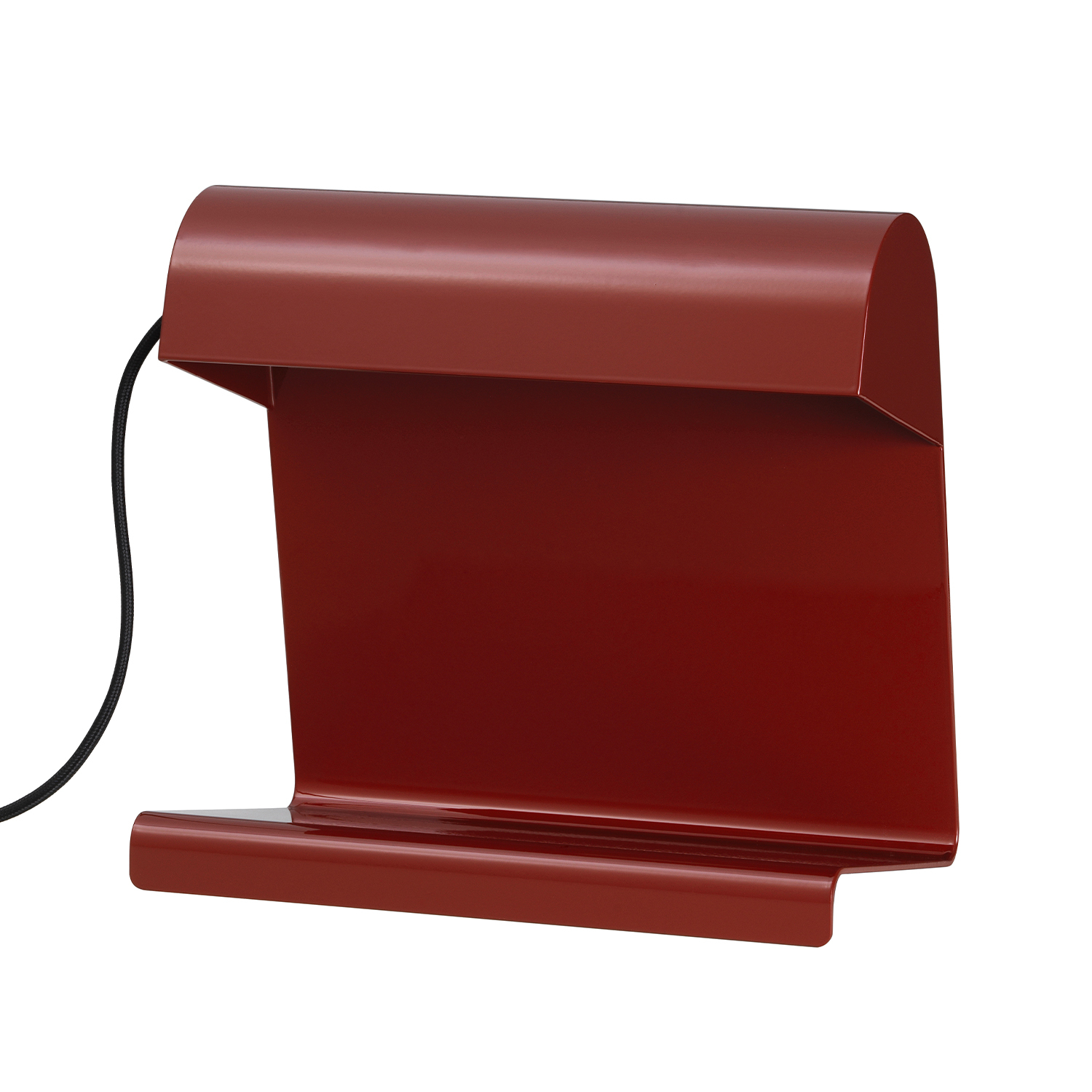
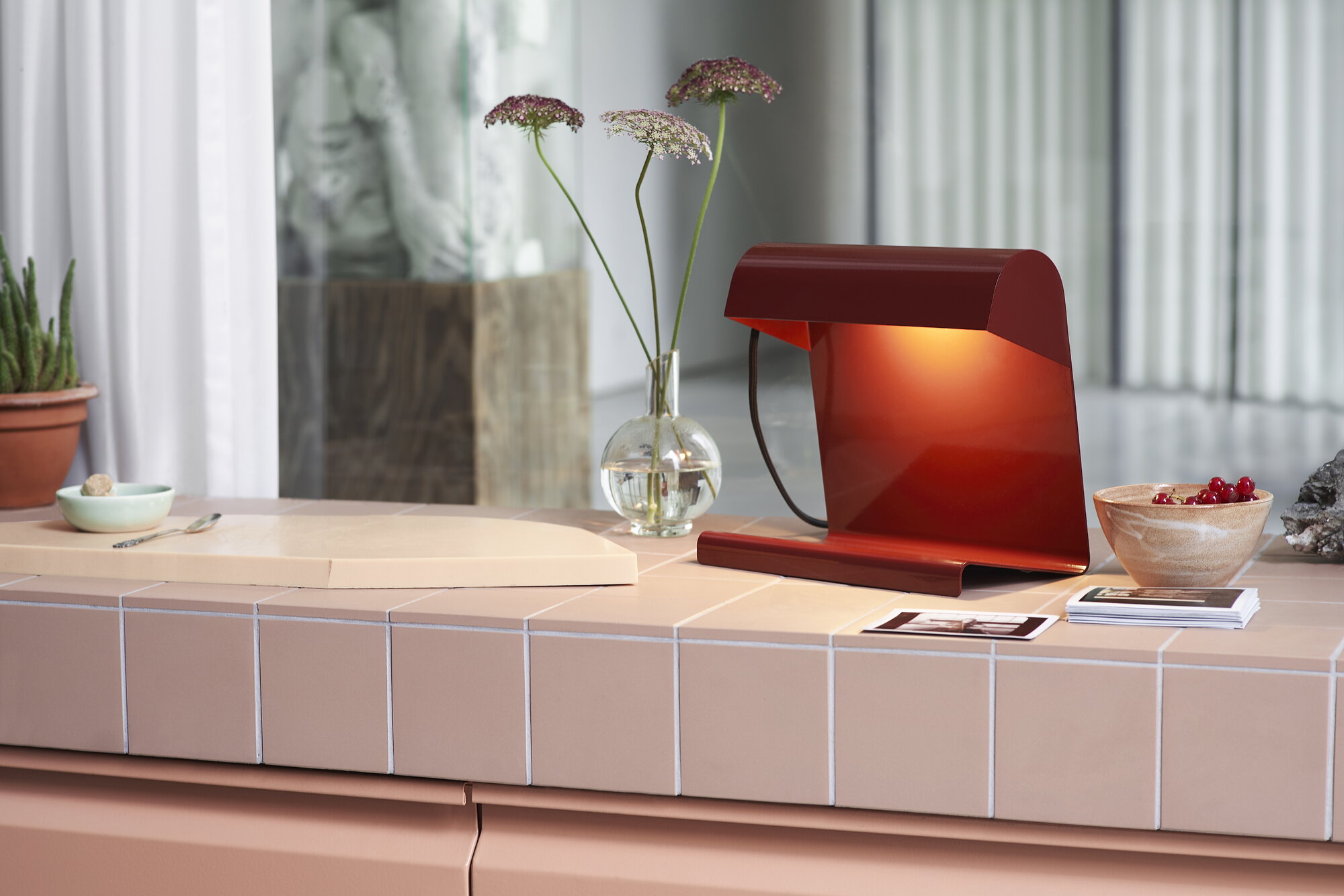
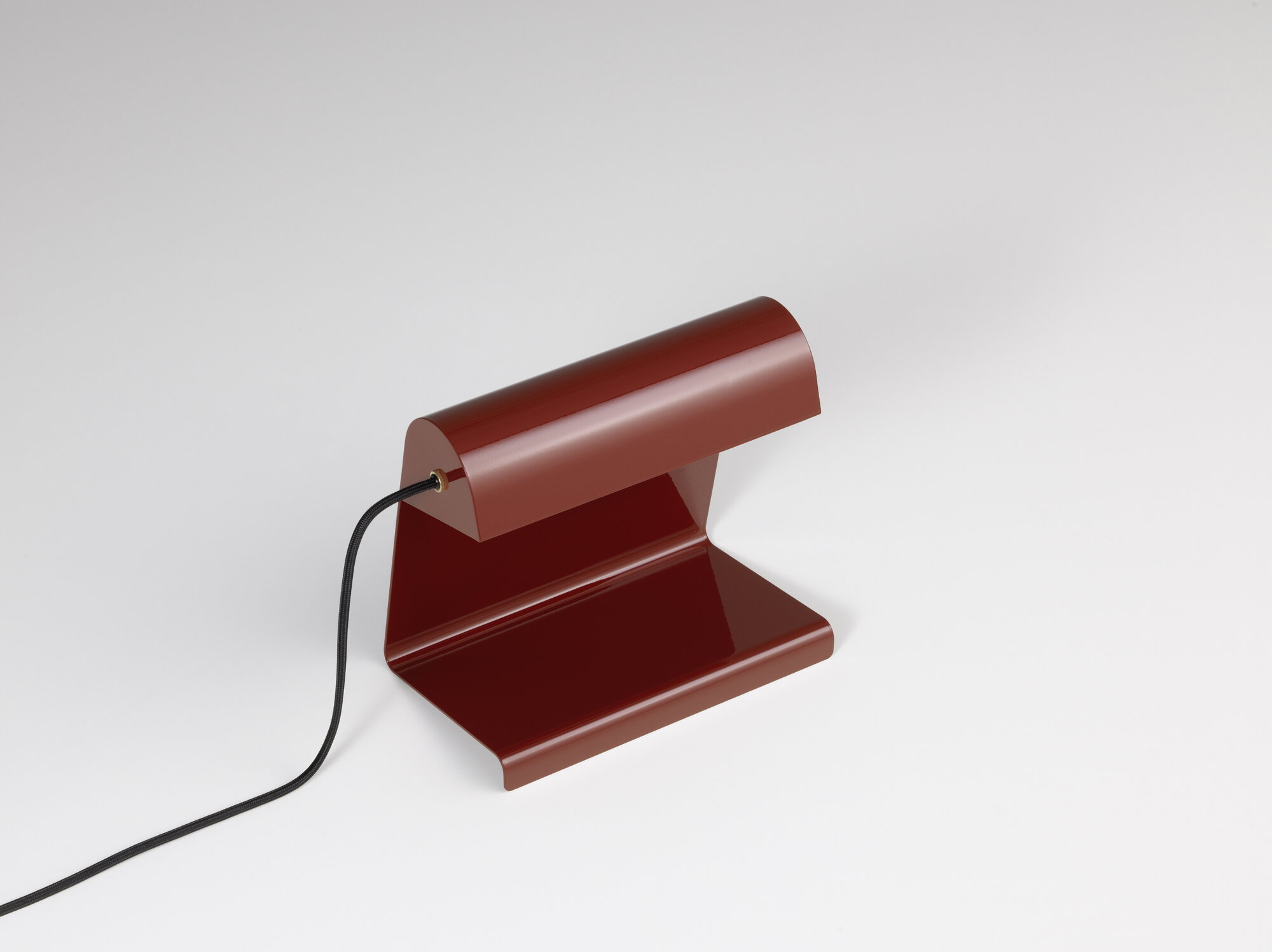
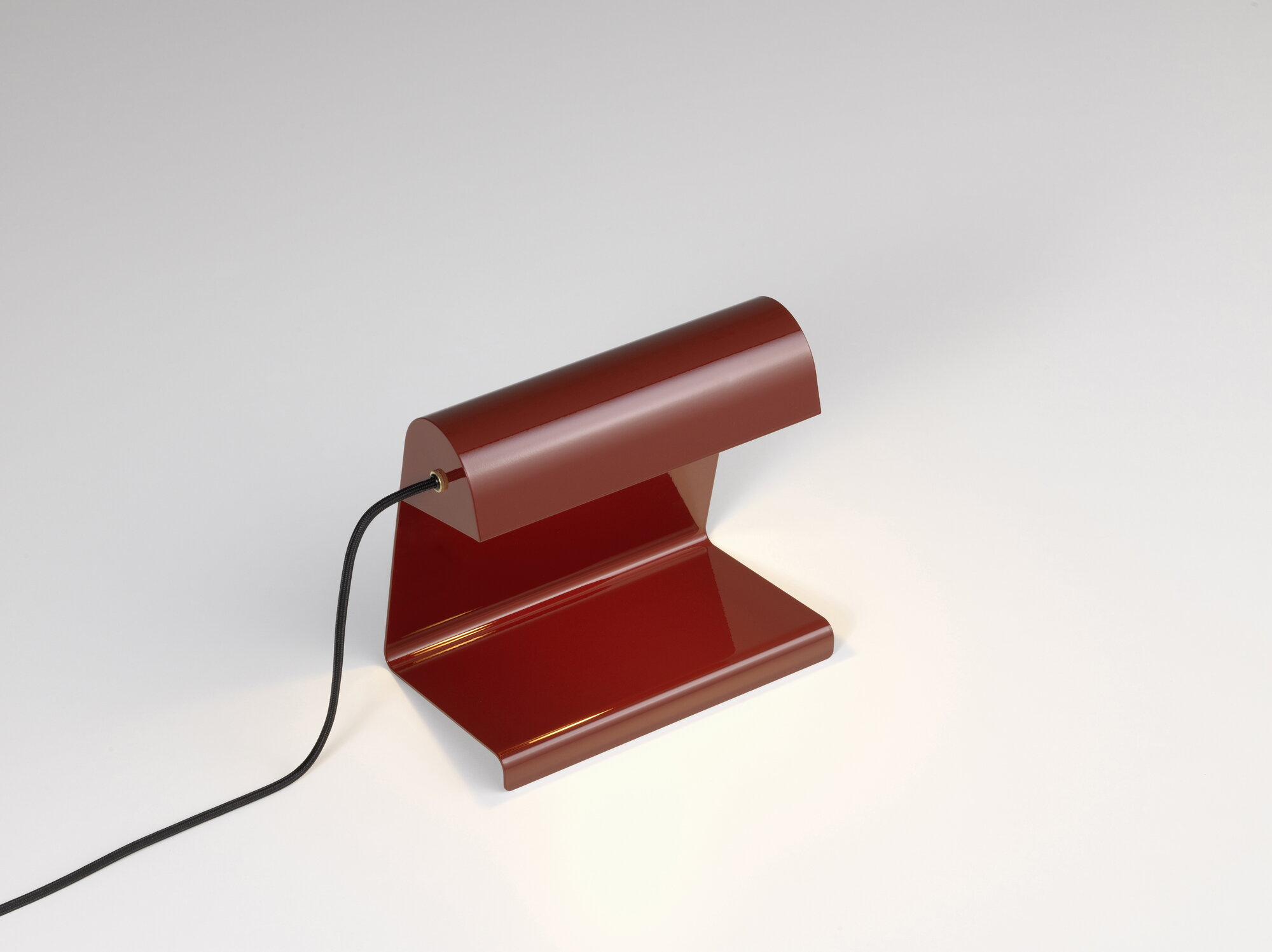
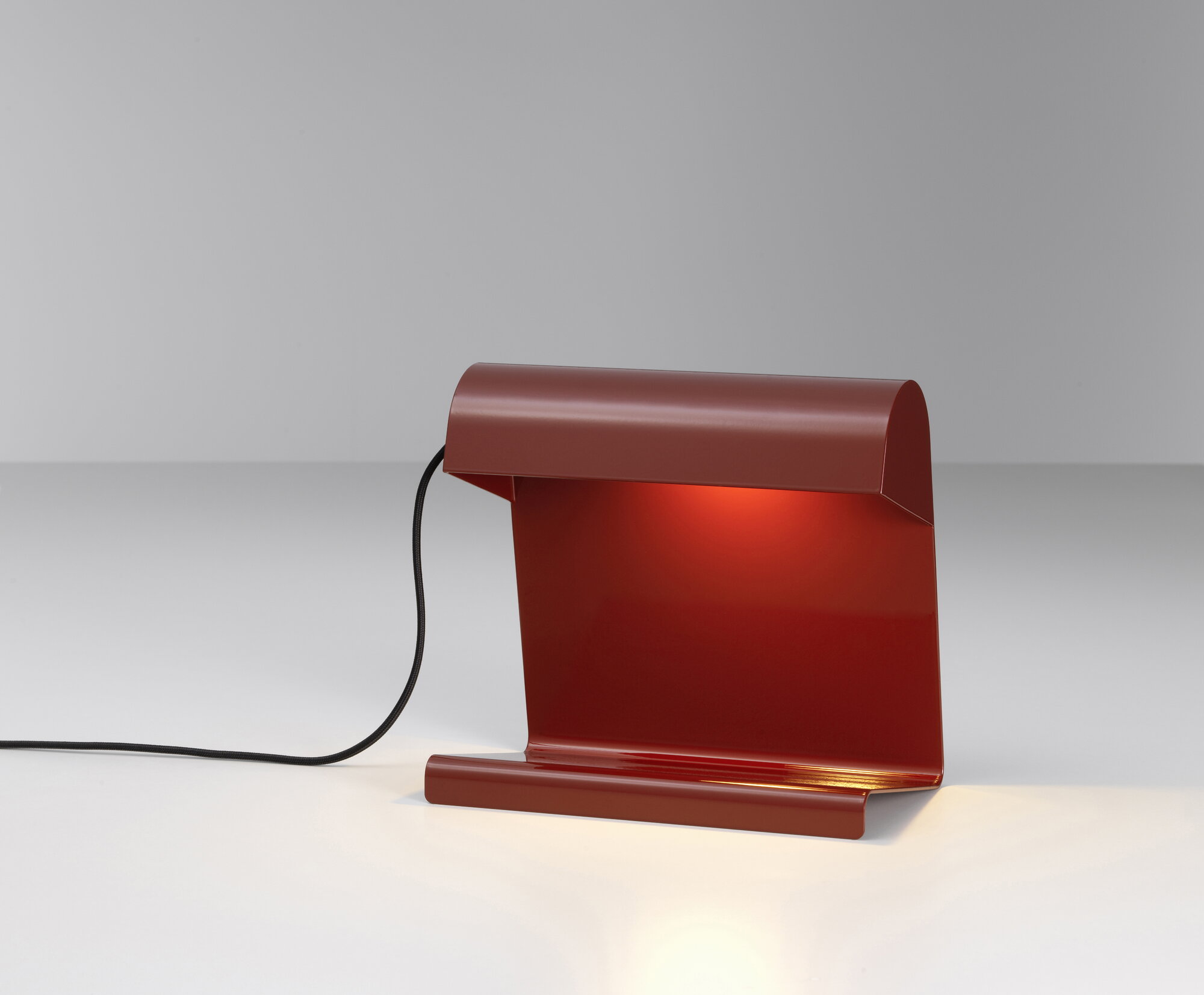
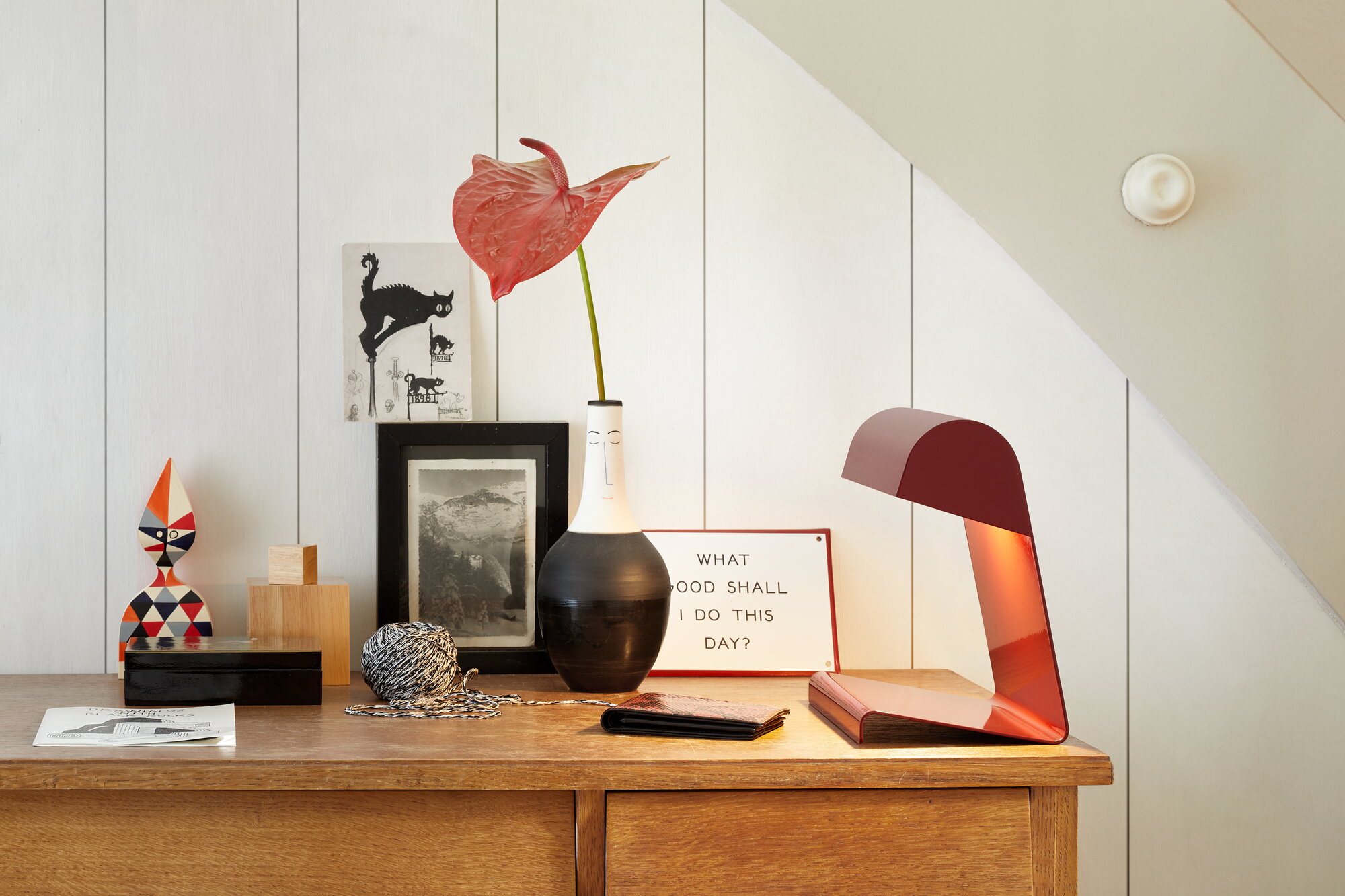
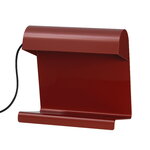
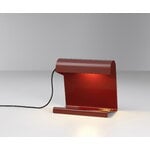
Lampe de Bureau table lamp, Japanese red
Description
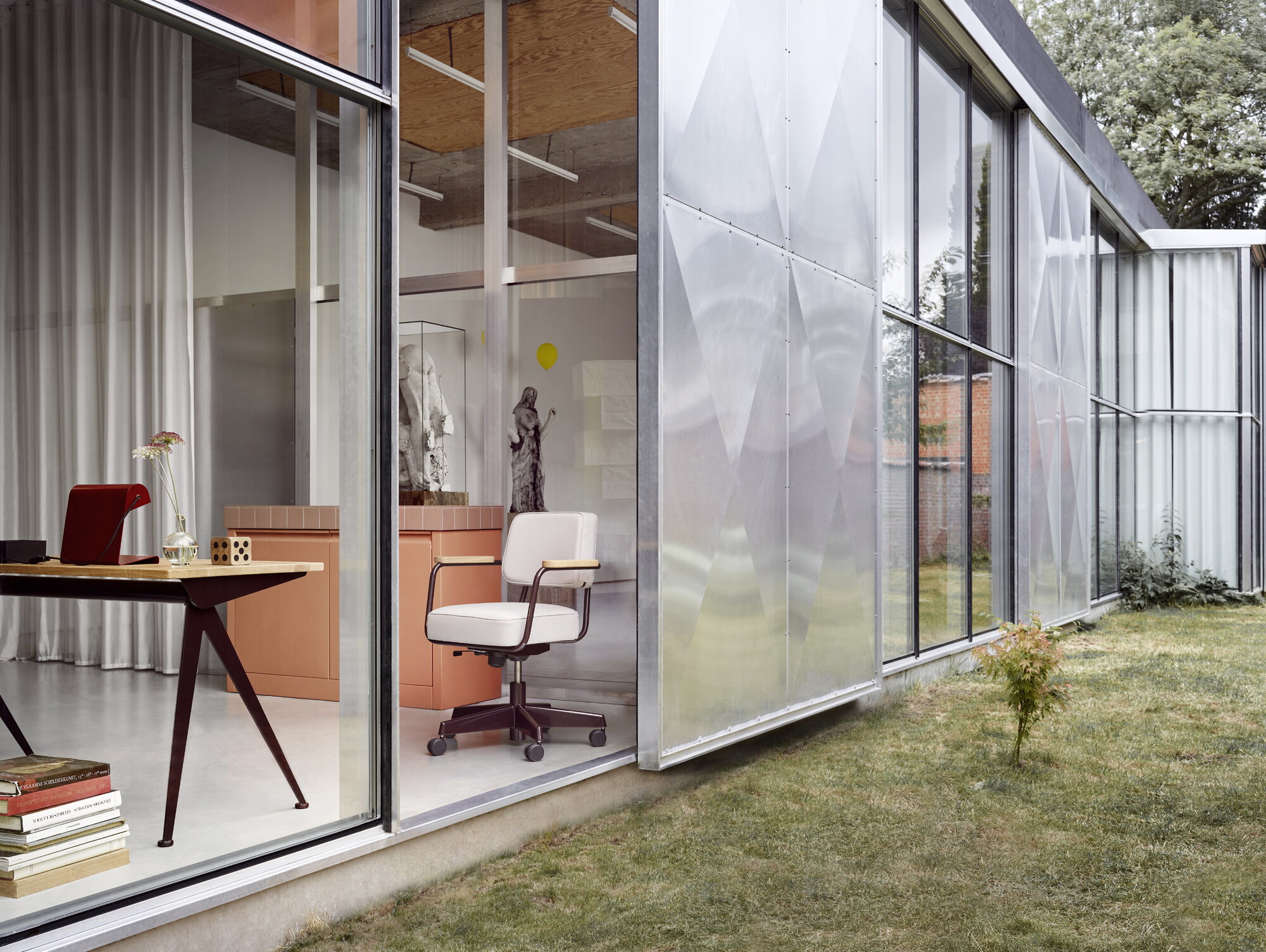
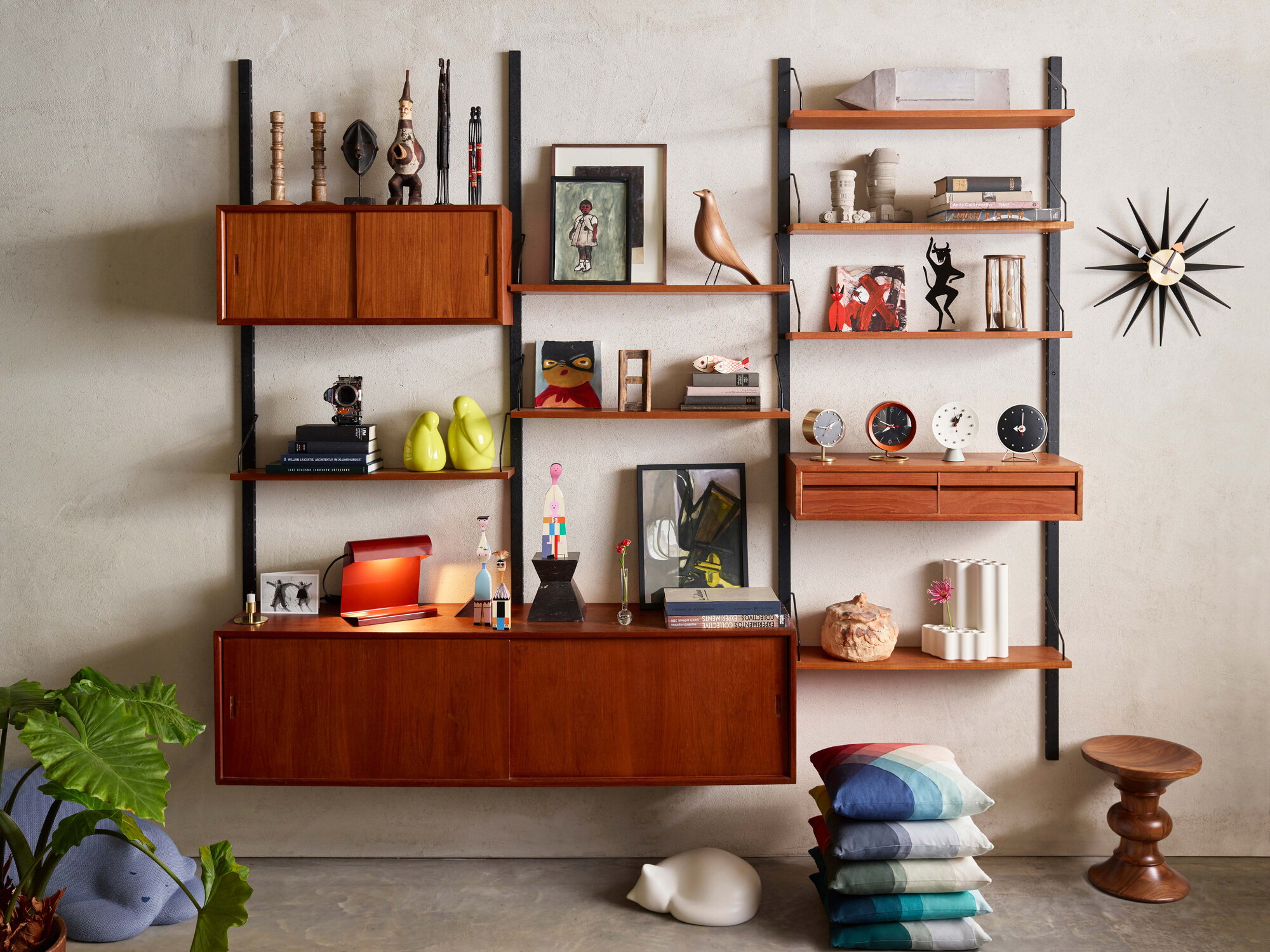
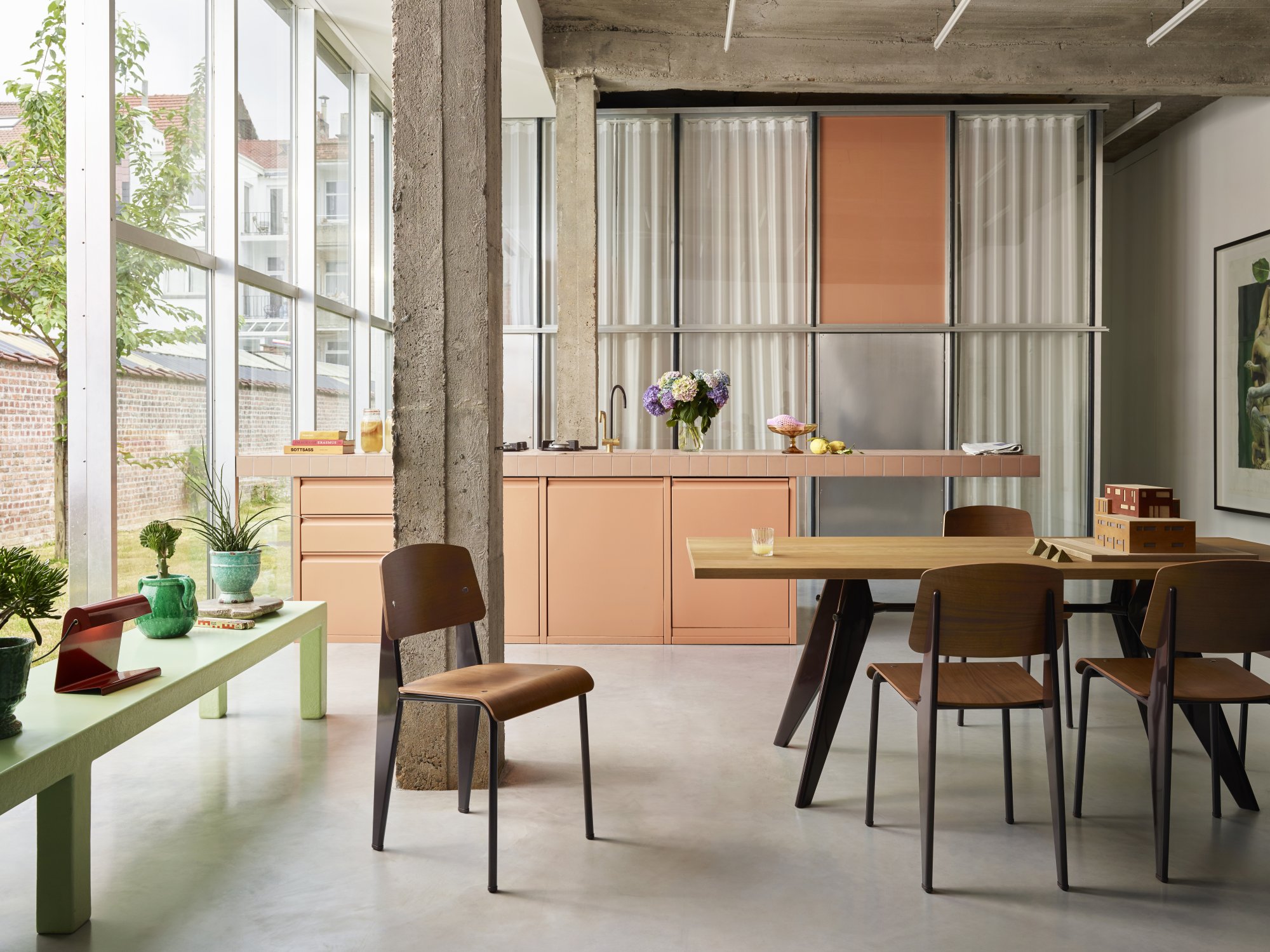
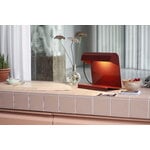
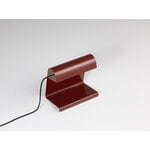
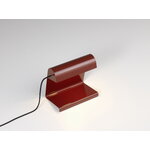
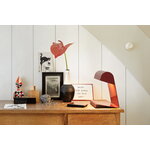
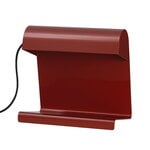
Vitra’s Lampe de Bureau is a classic French table lamp designed by Jean Prouvé in the 1930s. Prouvé designed Lampe de Bureau originally for the halls of residence at the Cité Universitaire in Nancy, France, and its clean, functional design is well suited also for modern interiors of today. Made of bent sheet steel, Lampe de Bureau reflects downward, glare-free light, and its lower level can be used for storing small items, such as pens or notes. Powder-coated with the original hues by Prouvé, Lampe de Bureau makes an excellent desk light both at home and the office.
- Width: 9.45 in (24 cm)
- Depth: 5.71 in (14.5 cm)
- Height: 8.86 in (22.5 cm)
- Cable length: 98.43 in (250 cm)
- Material Powder-coated sheet steel
- Colour Japanese red
- Bulb base E14
- Light source Max. 12W LED candle bulb (included)
- Colour temperature 2,700 K
- IP rating 20
- Voltage 220–240 V
- Nominal frequency 50–60 Hz
- Certifications and labels CE marked: tested and approved according to European standards
- Plug EU plug
- Cable colour Black
- Cable material Textile
- Integrated switch Yes
- Dimmable No
- Product ID: AK219586
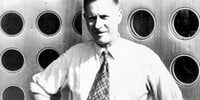
Jean Prouvé (1901–1984) was a French metalworker, engineer and self-taught architect and designer who played a pivotal role in shaping post-war European design and design philosophy. Social equality and accessible, high-quality design were central to Prouvé’s work, and he is especially celebrated as a pioneer of prefabricated architecture, modular furniture and industrial furniture production.
Prouvé’s background in metalwork and engineering is clearly reflected in his most iconic creations, including the Standard chair and EM Table, both now part of Vitra’s collection.
Jean Prouvé – a pioneer of industrial aesthetics
Trained as a blacksmith, French designer Jean Prouvé recognised the potential of metal in modern construction from an early stage. In 1924, Prouvé opened his own workshop in Nancy, France, which by the 1940s had grown into an industrial-scale furniture factory.
Throughout his career, Prouvé designed a wide range of furnishings for French public institutions, while his prefabricated Maison Tropicale houses were shipped to French colonies in Africa during the mid-20th century.
Structures in the spotlight
Prouvé’s thinking had a profound influence on post-war European design and the development of prefabricated architecture. To him, there was little difference between a piece of furniture and a house: both were structures that needed to be rational, durable and suitable for industrial production.
During his career, Prouvé collaborated closely with figures such as Le Corbusier and Charlotte Perriand. He was also a member of the Union des Artistes Modernes, a movement that sought to unite art, architecture and industrial production.
Prouvé furniture: forever modern
Folded steel sheets, exposed joints and bolted frames became defining features of Prouvé’s work, creating a clear and purposeful aesthetic visible in both his architecture and furniture designs.
Since 2002, Swiss manufacturer Vitra has reissued many of Prouvé’s furniture designs, reinforcing his status as a master of modern design. Among his most celebrated works are the Standard chairs and EM Table, where robust load-bearing metal structures are balanced by lighter elements.
Who: Jean Prouvé
- French designer and architect (1901–1984).
- Originally trained as a blacksmith and expert in metal structures.
- A key figure in post-war European modernism.
- Designed both furniture and prefabricated buildings, including the Maison Tropicale houses.
- Known for the Standard chairs, EM Table, Lampe de Bureau table lamp and Petite Potence wall lamp by Vitra.
Read more in Design Stories
View all productsThe Product Sustainability Framework, our criteria of sustainable design, helps you find the most sustainable products in our selection. Read below which sustainability criteria this product has met.
-
 Equal opportunities for all employees
 -
Commitment to UN Global Compact, fair compensation for all employees
-
Corporate responsibility requirements defined and communicated for suppliers
-
Systematic work for improved inclusion and well-being in the workplace
-
Transparent supply chain
-
Suppliers' compliance to a code of conduct ensured
-
Compliance to the UN Guiding Principles on Business and Human Rights ensured in the supply chain
-
Direct suppliers audited and certified
-
Support for community involvement in the supply chain
-
Fair and resource-wise water-use in production
-
No incineration or landfilling of returned items
-
No use of endangered species as materials
-
No direct environmental emissions or waste (excl. GHGs) from production
-
Production and material sourcing that respect biodiversity, animal rights, and natural ecosystems
-
Material-efficient and ecological packaging
-
No potentially harmful chemicals used in own production
-
The sustainability of direct suppliers' production is addressed and monitored
-
Positive impact on nature’s well-being through operations that regenerate natural ecosystems
-
Company's direct greenhouse gas emissions identified and commitment to reduction
-
Product's carbon impact identified and commitment to reduction
-
Guidance on energy- and eco-efficient use of the product
-
Contribution to climate initiatives beyond the brand’s direct operations
-
100 % renewable energy in own production and operations
-
Low-carbon or compensated transportation
-
Carbon footprint of the product calculated and goals set to reduce it
-
Carbon neutral or carbon negative product
-
Sustainable and long-lasting material choices
-
No harmful or hazardous substances
-
Responsible raw material sourcing and production
-
Materials suited for circularity: monomaterials, recyclable finishings, renewable or recycled contents etc.
-
Ecological materials: natural, biodegradable, recyclable or recycled contents
-
Outstanding materials in terms of innovativeness, responsibility, sustainability and circularity: local production or sourcing, 100 % recycled content, C2C-certification etc.
-
High aesthetic quality promoting long-term use of the product
-
Technically durable product design and material choices
-
Design for enduring life-long quality
-
Design and support for product maintenance, repair and upgradability
-
Innovative circular design solutions: circular service system, resale platform, remanufacturing, collection of used products, etc.
Ideas and inspiration
This is a carousel. Use Next and Previous buttons to navigate.