This is a carousel of product images. Use the thumbnails or swipe to change the displayed image, and activate an image to open it full screen.
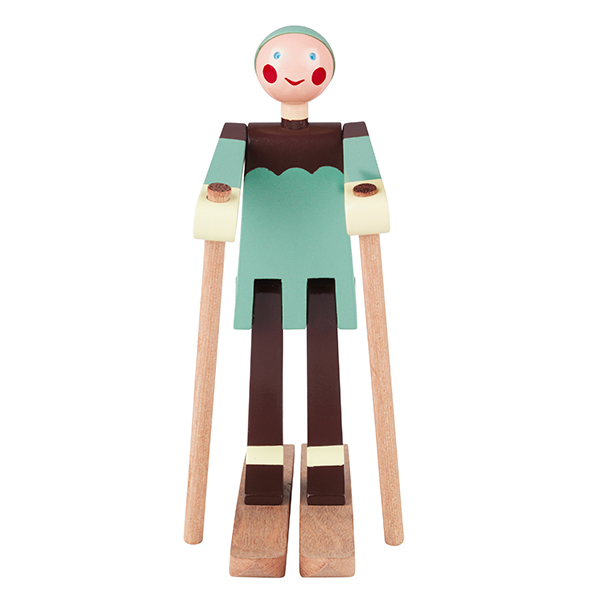
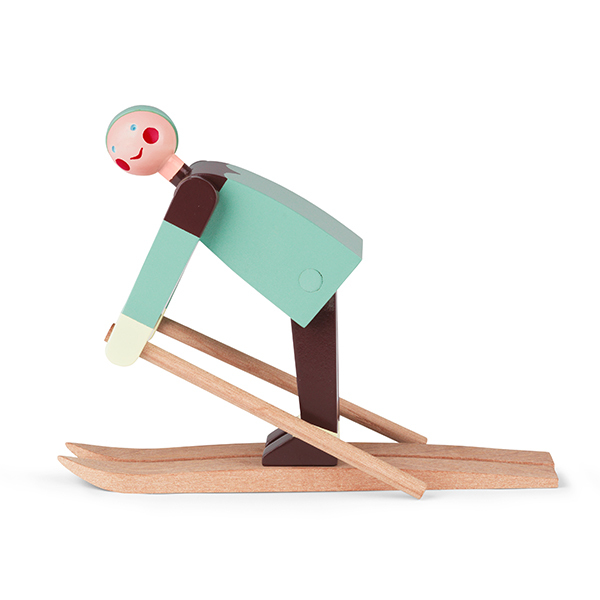

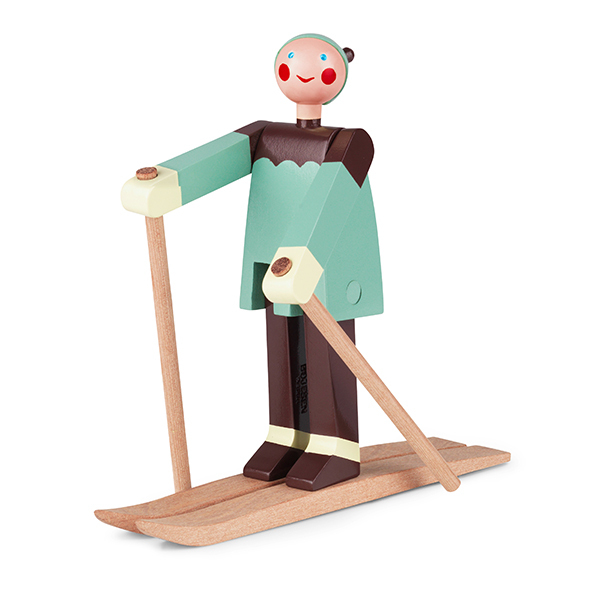
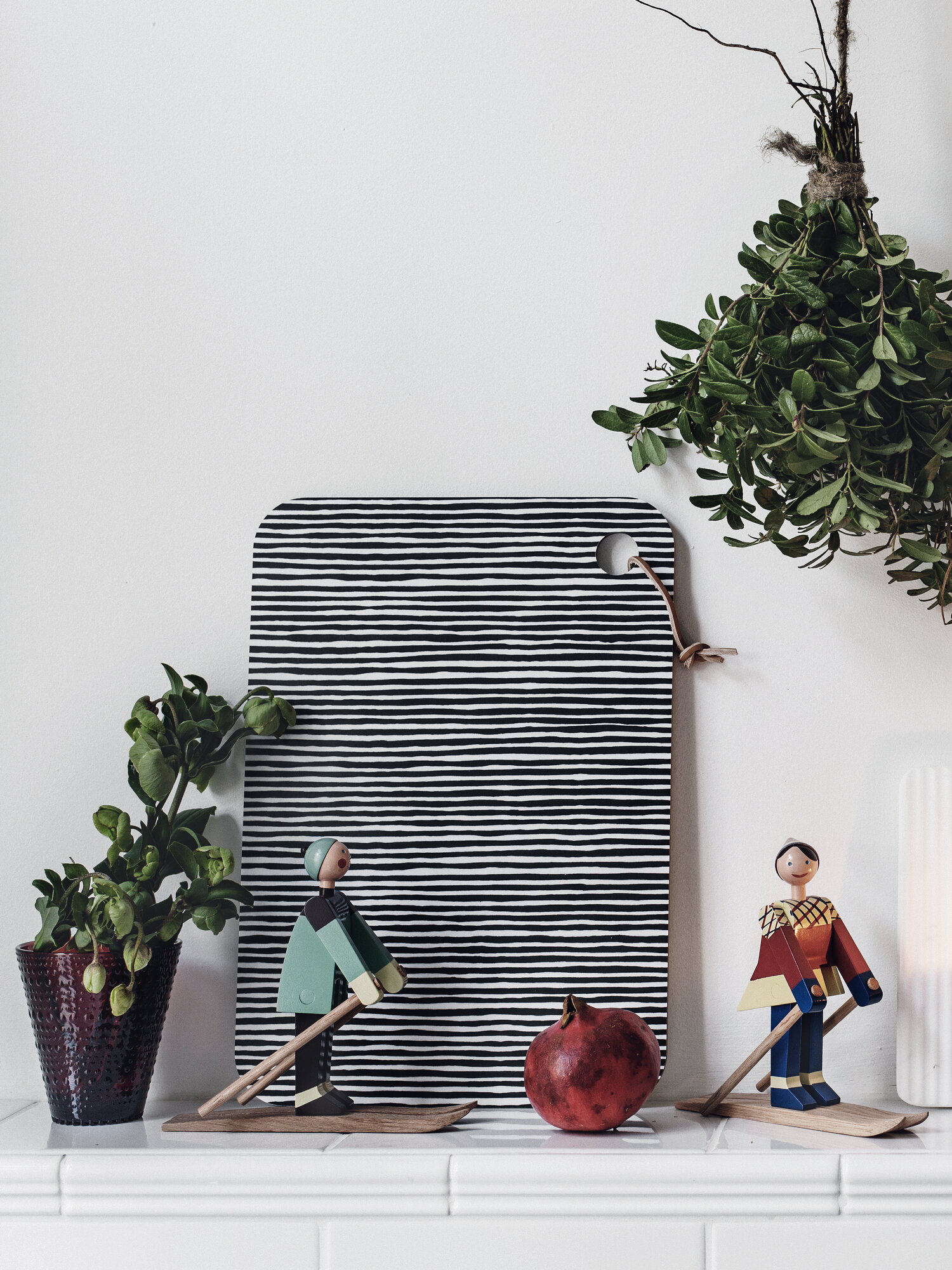
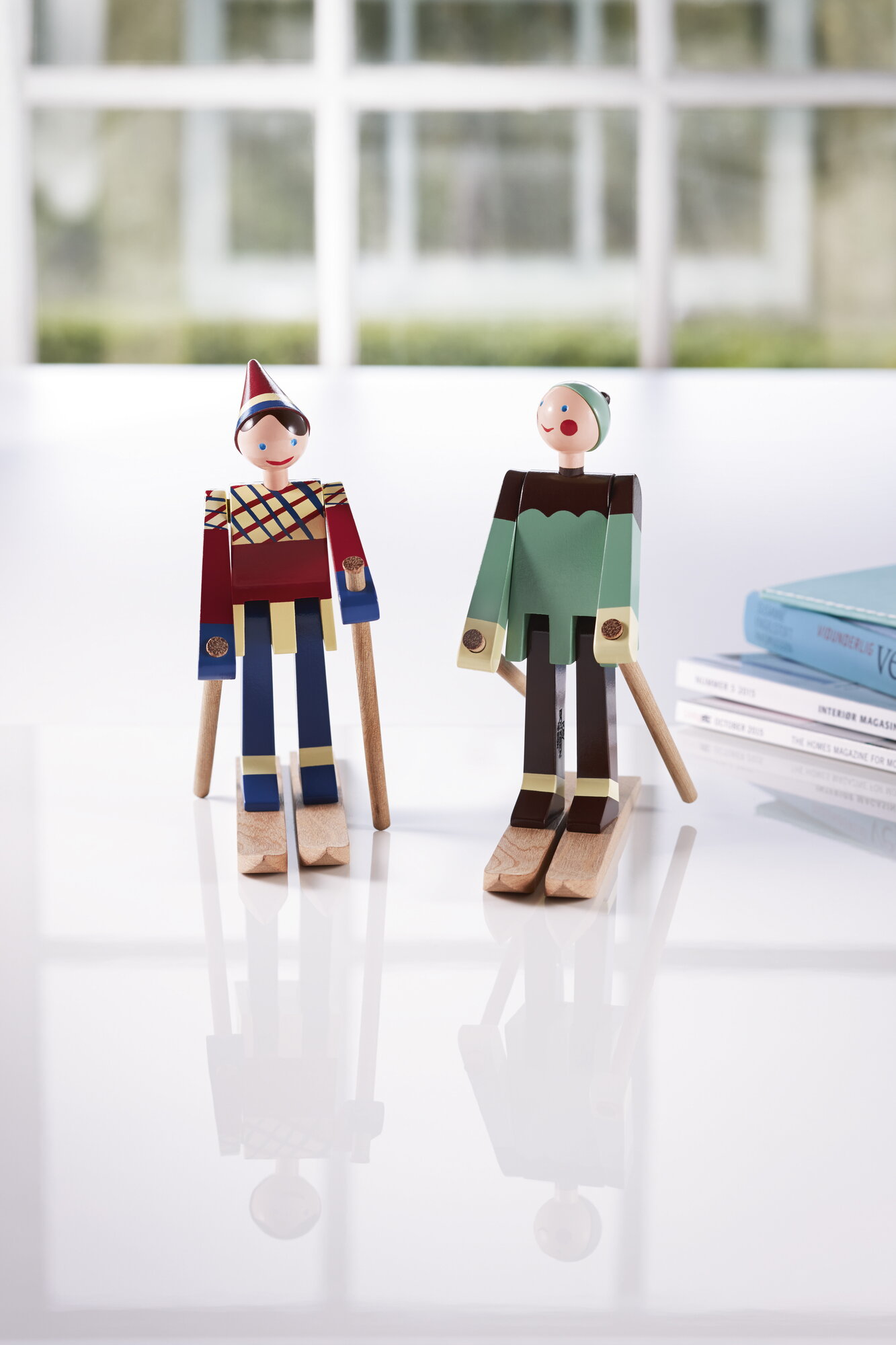

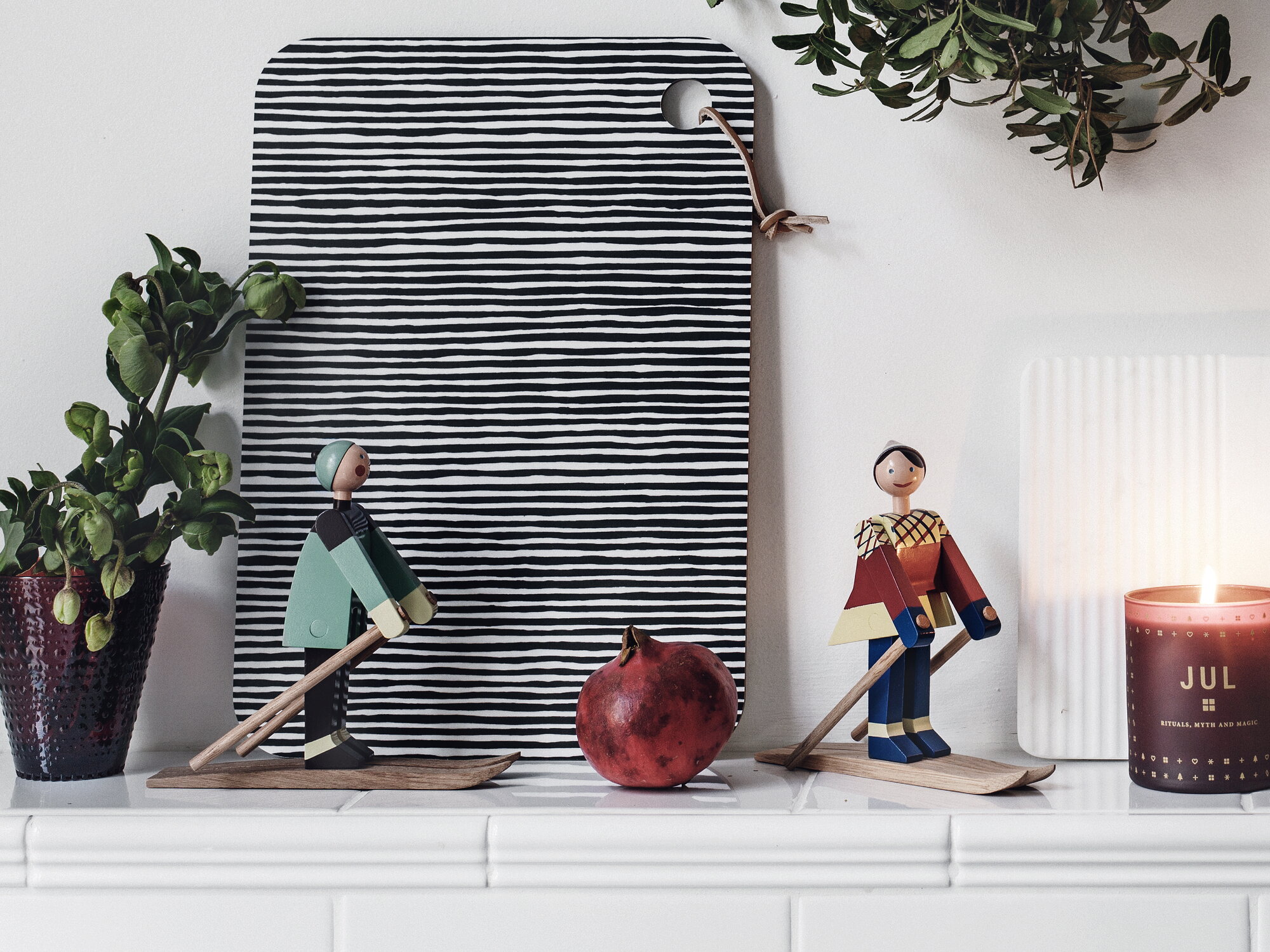
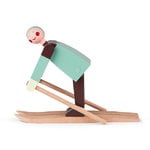




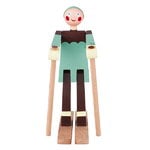
Boje the skier boy
Description
|
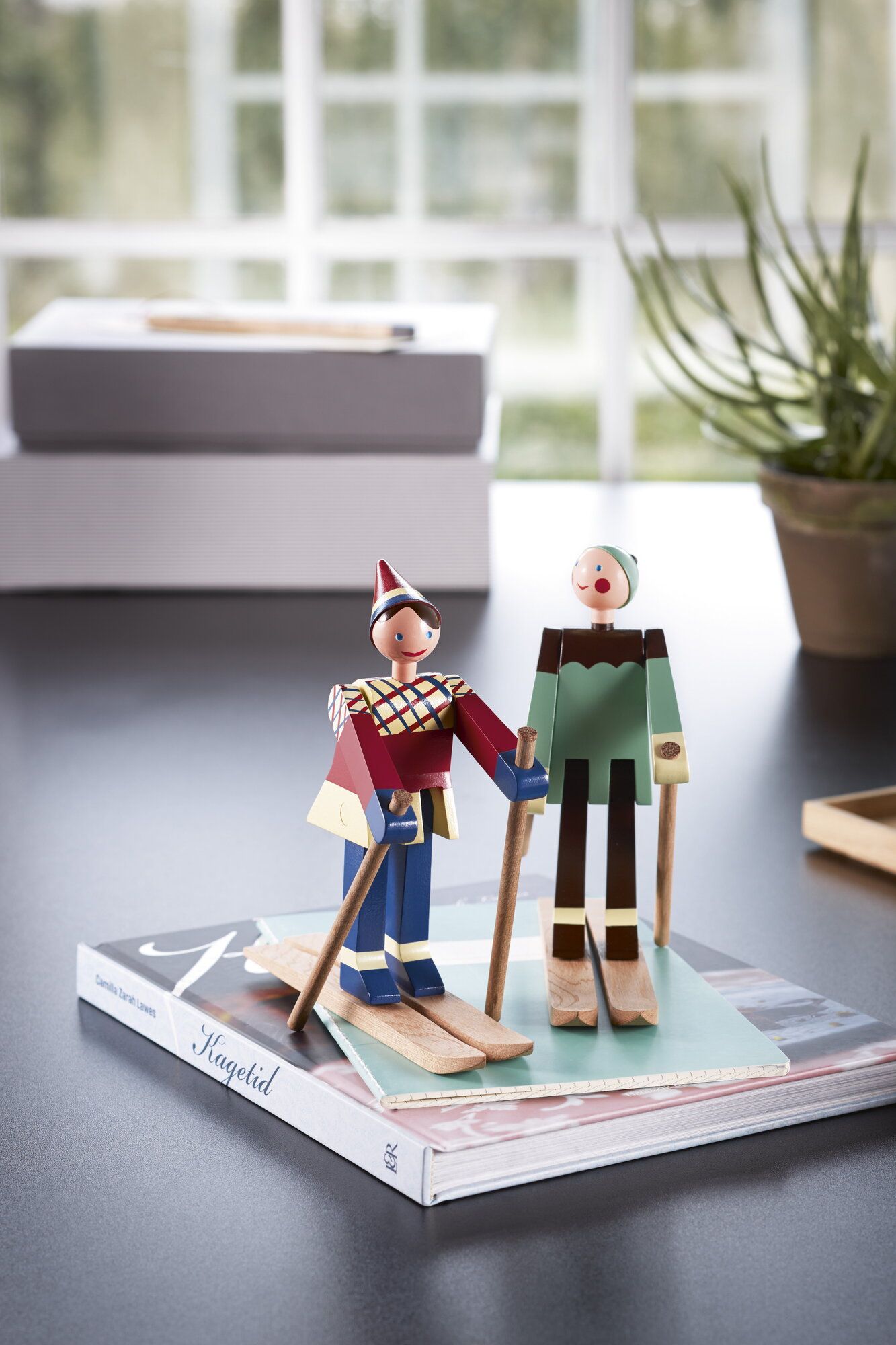
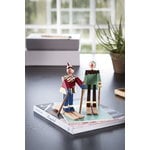
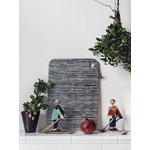
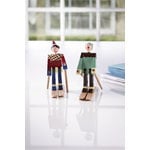
Datti and Boje are cheerful skiing wooden dolls that Kay Bojesen designed in the 1940’s. The red-cheeked characters were named after his family members – his son Otto was called Boje, and Datti was the nickname of his daughter-in-law Ruth. The dolls are made of beech and feature skis, skiing poles and outfits painted with vibrant colours. |
- Width: 6 cm
- Depth: 17 cm
- Height: 15.5 cm
- Material Painted beech
- Product ID: RD39410

Kay Bojesen (1886–1958) is one of the most important pioneers of modern Danish design. He trained as a silversmith under Georg Jensen and, during his time at Jensen, designed a wide range of silver objects, cutlery and serving pieces – including the celebrated Grand Prix flatware set.
Alongside silver, Bojesen worked with other materials too, and wood held a particular fascination for him. A perfect example is his series of wooden animals, designed in the 1950s, which have since become much-loved classics.
Kay Bojesen – the playful pioneer of Danish design
Kay Bojesen (1886–1958) was a Danish silversmith and designer who earned international acclaim for his hand-carved wooden animal figures. He began his career as a silversmith, training under the likes of Georg Jensen, before opening his own shop in Copenhagen.
The beloved wooden animals
From the 1930s onwards, wood became Bojesen's material of choice – and the one most closely tied to his legacy. He is perhaps best known for his endearing wooden monkeys and other animal figures, cherished by children and adults alike. His wooden monkey, designed in 1951, even found its way into the permanent collection of the Victoria and Albert Museum in London.
Awards and legacy
While Bojesen is best remembered for his wooden figures, his work extended to a wide range of everyday objects in silver and steel. He was also a committed champion of Danish craft traditions, and his designs reflect the broader shift in early 20th-century Danish design towards a modern Scandinavian aesthetic.
Over the course of his career, Bojesen received numerous prestigious design awards, including the Grand Prix at the Milan Triennale. He also held the title of Royal Silversmith to the King of Denmark.
Who: Kay Bojesen
- Danish silversmith and designer (1886–1958).
- Trained as a silversmith and worked at Georg Jensen's workshop.
- Philosophy: playfulness and craftsmanship combined with functional design.
- Grand Prix award at the Milan Triennale.
- Notable works: Wooden monkey (1951) and other wooden animal figures, silver cutlery.
Read more in Design Stories
View all products5

Based on 4 reviews
-
F
Fiona B | Verified Customer
Auckland, New Zealand

Very cute! A great little winter decoration! Very well made and carefully wrapped for it's trip to New Zealand!
2 years ago
-
T
Tami L | Verified Customer
Madison, United States
I love it. Instant family heirloom. Quality and design are couldn’t be better.
2 years ago
-
A
Anonymous | Verified Customer
Novo Mesto, Slovenia
Great remember on skiing days and wibter
2 years ago
The Product Sustainability Framework, our criteria of sustainable design, helps you find the most sustainable products in our selection. Read below which sustainability criteria this product has met.
-
 Equal opportunities for all employees
 -
Commitment to UN Global Compact, fair compensation for all employees
-
Corporate responsibility requirements defined and communicated for suppliers
-
Systematic work for improved inclusion and well-being in the workplace
-
Transparent supply chain
-
Suppliers' compliance to a code of conduct ensured
-
Direct suppliers audited and certified
-
Compliance to the UN Guiding Principles on Business and Human Rights ensured in the supply chain
-
Support for community involvement in the supply chain
-
Fair and resource-wise water-use in production
-
No incineration or landfilling of returned items
-
No use of endangered species as materials
-
No direct environmental emissions or waste (excl. GHGs) from production
-
Material-efficient and ecological packaging
-
No potentially harmful chemicals used in own production
-
The sustainability of direct suppliers' production is addressed and monitored
-
Production and material sourcing that respect biodiversity, animal rights, and natural ecosystems
-
Positive impact on nature’s well-being through operations that regenerate natural ecosystems
-
Company's direct greenhouse gas emissions identified and commitment to reduction
-
Product's carbon impact identified and commitment to reduction
-
Guidance on energy- and eco-efficient use of the product
-
Low-carbon or compensated transportation
-
100 % renewable energy in own production and operations
-
Contribution to climate initiatives beyond the brand’s direct operations
-
Carbon footprint of the product calculated and goals set to reduce it
-
Carbon neutral or carbon negative product
-
Sustainable and long-lasting material choices
-
No harmful or hazardous substances
-
Responsible raw material sourcing and production
-
Materials suited for circularity: monomaterials, recyclable finishings, renewable or recycled contents etc.
-
Ecological materials: natural, biodegradable, recyclable or recycled contents
-
Outstanding materials in terms of innovativeness, responsibility, sustainability and circularity: local production or sourcing, 100 % recycled content, C2C-certification etc.
-
High aesthetic quality promoting long-term use of the product
-
Technically durable product design and material choices
-
Design for enduring life-long quality
-
Design and support for product maintenance, repair and upgradability
-
Innovative circular design solutions: circular service system, resale platform, remanufacturing, collection of used products, etc.
Ideas and inspiration
This is a carousel. Use Next and Previous buttons to navigate.