Restored Villa Lante: Contemporary Finnish design in a 16th-century Roman villa
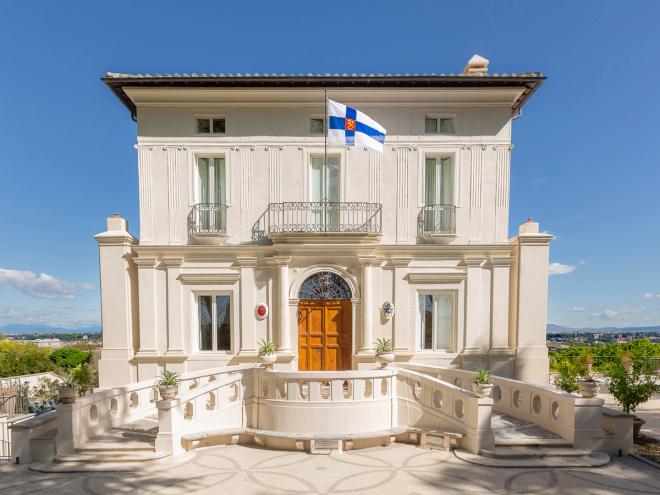
Completed in 1531, Villa Lante has been owned by the Finnish state since 1950.
IN THE HEART OF ROME stands an unexpectedly grand slice of Finland. Perched on the Gianicolo hill, the Renaissance villa known as Villa Lante is today home to Institutum Romanum Finlandiae, also known as the Finnish Institute in Rome. Its renewed interiors bring together Finnish and Italian design from various eras in an elegant, harmonious blend.
The villa was completed in 1531 as the summer residence of Baldassarre Turini, a Papal official serving Pope Leo X. The architect was Giulio Romano, a pupil of Raphael, and the frescoes – designed as part of a unified work of art in the spirit of antiquity – were painted by other artists from Raphael’s circle. The villa later received its name from the Lante family, who became its owners in 1551.
Over the centuries, the villa has served in uses such as as a convent and a cultural salon before it was acquired by the state of Finland in 1950 through a donation from Finnish cultural patron Amos Andersson. Today, Villa Lante is considered one of Rome’s best-preserved Renaissance villas, holding a significant cultural value.
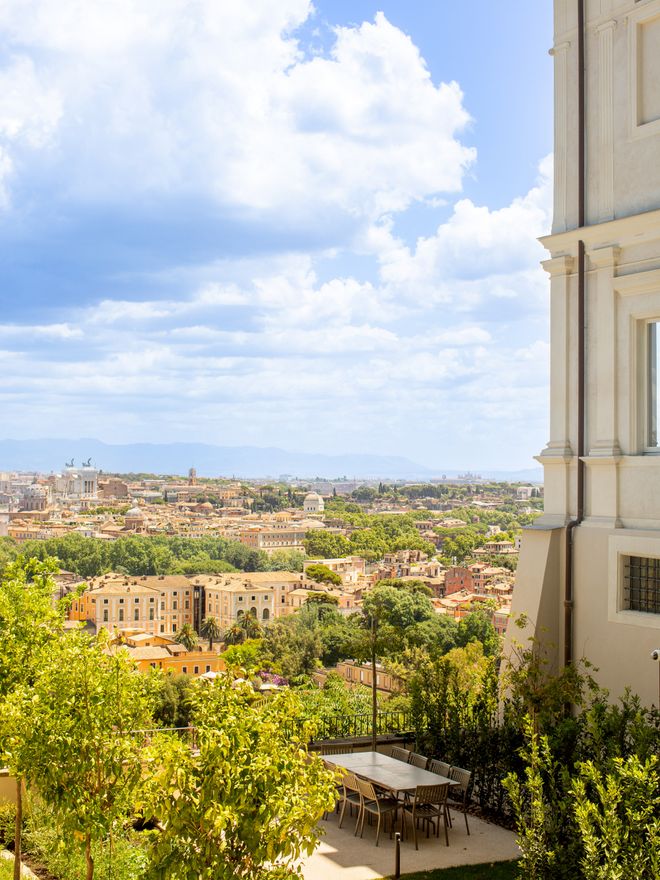
Villa Lante was originally built as a summer home, as the air on the Gianicolo hill – back then located outside the city – was cooler than in the sun-soaked centre.
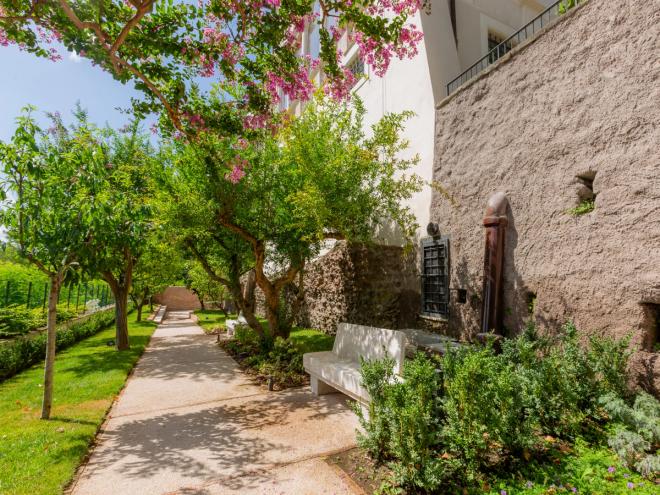
A lush, cooling garden still surrounds the villa.
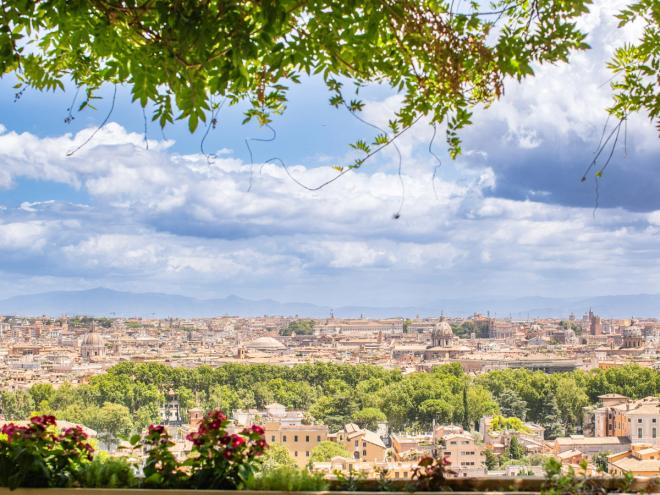
From the villa’s terraces, the view opens directly onto Rome’s historic centre.
Villa Lante’s renovation, carried out between 2023 and 2025, included a complete renewal of the building’s technical systems, a restoration of the garden, and a thorough update of the interior. The façade was returned to its original color scheme, and the historic frescoes in the main building were cleaned. Architectural and main renovation planning was led by ALA Architects, while interior architecture was designed by KOKO3.
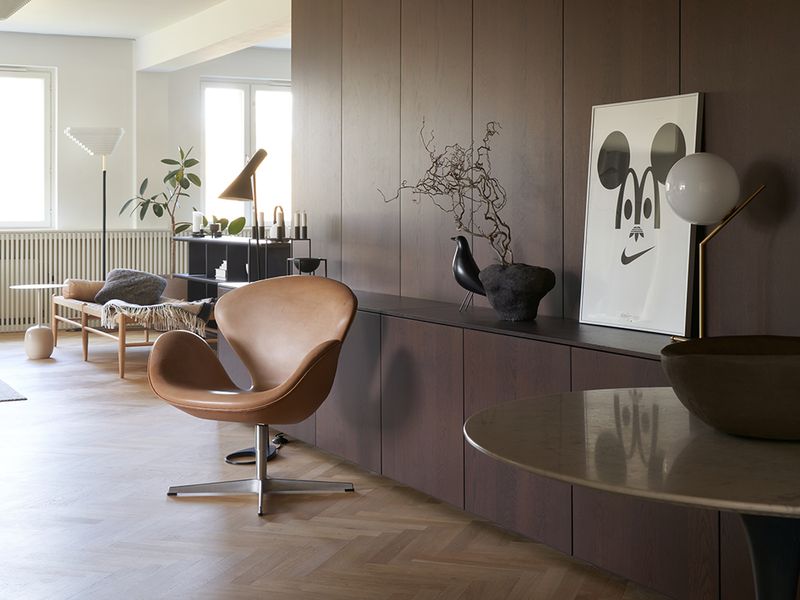
The renewed interior draws inspiration from the architecture of the villa, the tones of the ceiling frescoes, and the 19th-century antique furniture originally acquired for the institute when it was founded.
The teams responsible for Villa Lante’s refurbishment were selected through a public tender. Finnish Design Shop’s Contract Sales team had the honour of supplying outdoor furniture for the villa’s expansive garden and terrace areas.
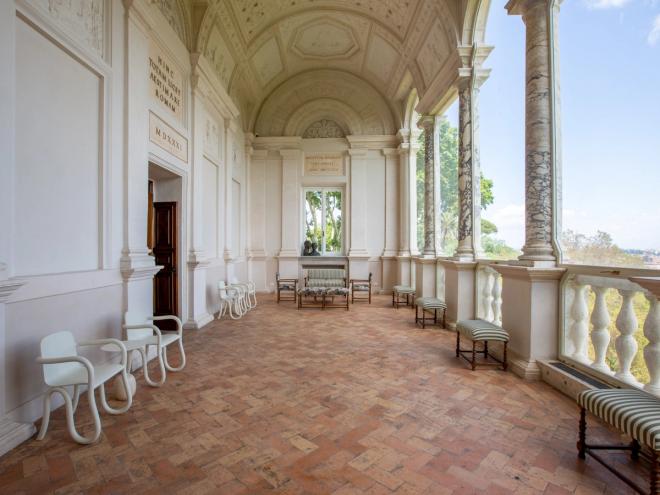
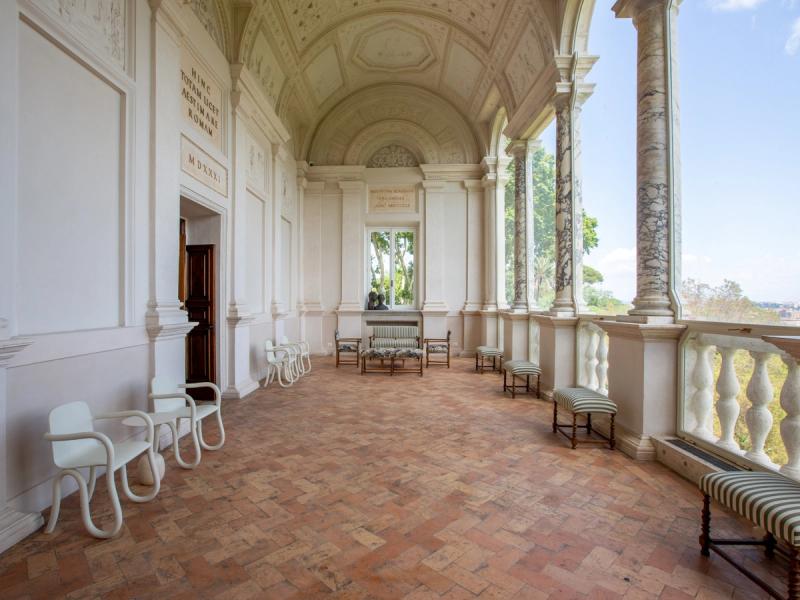
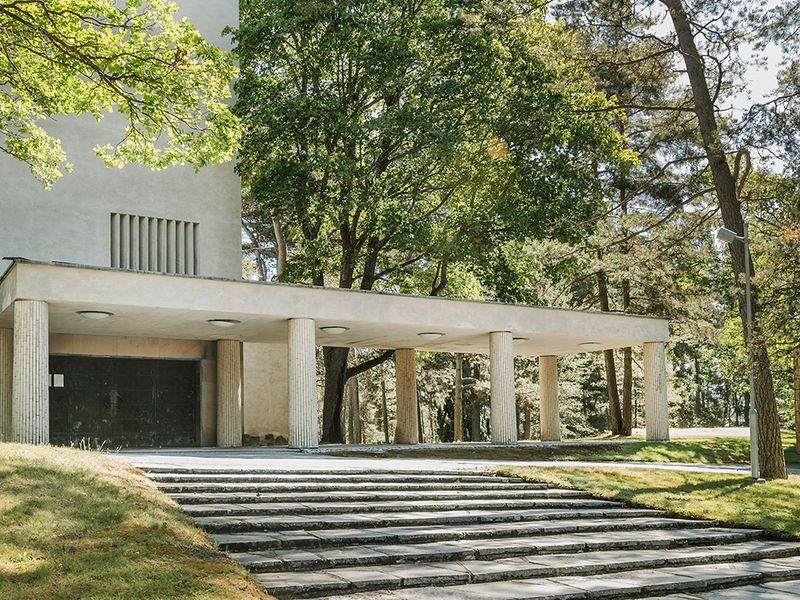
The loggia, a semi-outdoor colonnaded passage, is furnished with Made by Choice’s Kolho chairs. Earlier restorations of the villa under Finnish ownership took place in the 1950s, 1970s, and 1990s.
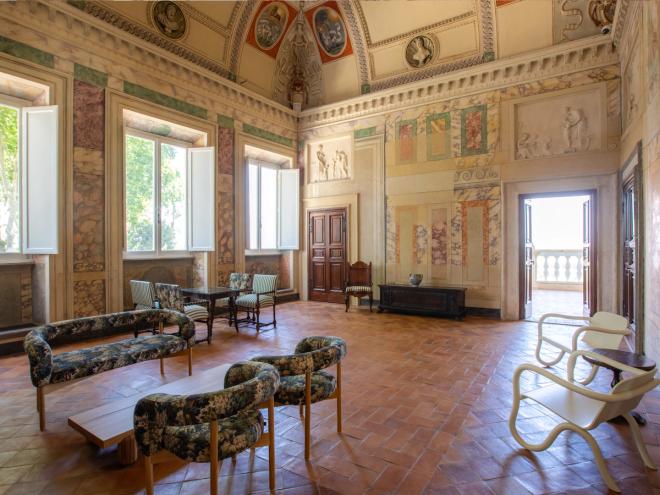
The heart of Villa Lante is the frescoed Salone, furnished with custom-upholstered pieces such as the Boa lounge chairs and sofas by Lepo Product.
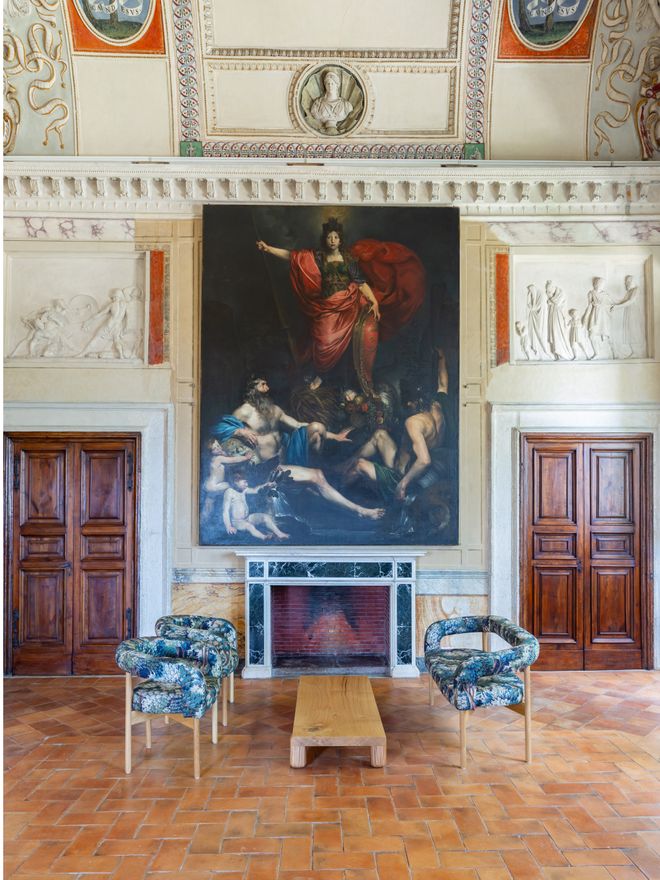
Valentin de Boulogne’s monumental oil painting Allegoria d’Italia was created in 1628–1629. The minimalist Centenniale coffee table is by the Finnish brand Nikari.
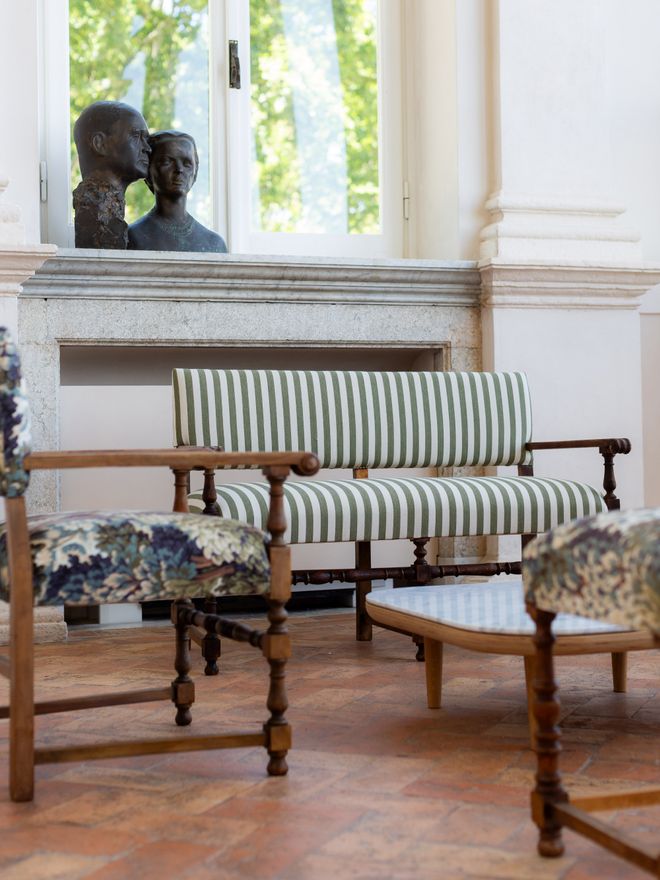
The upholstery choices for the restored antique furniture nod to both the richness of Baroque art and the clarity of Finnish minimalism. The Fly coffee table is by &Tradition.
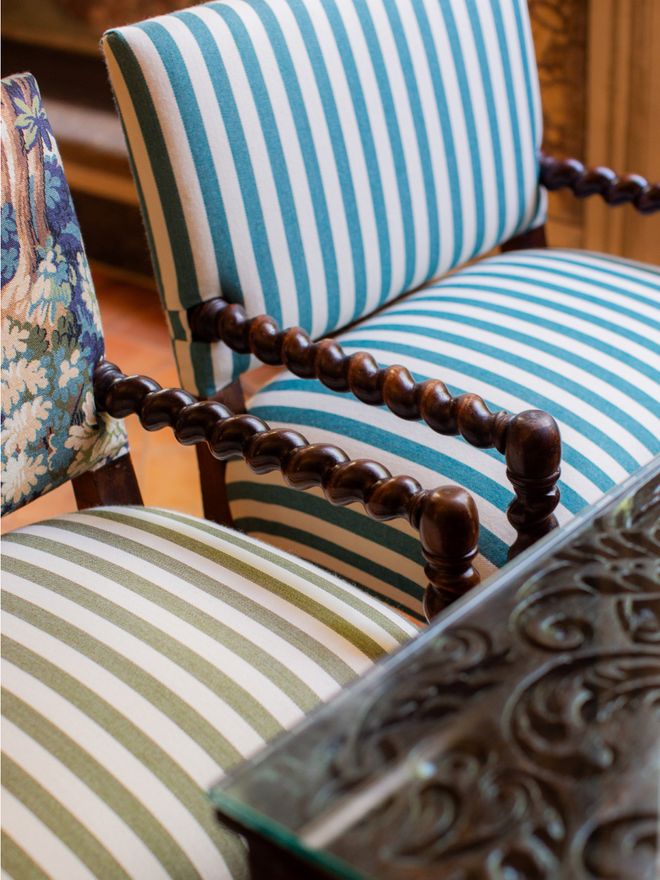
The textile palette was chosen to complement the building and its frescoes. The striped fabric was custom-woven for Villa Lante at the Annala mill in Finland.
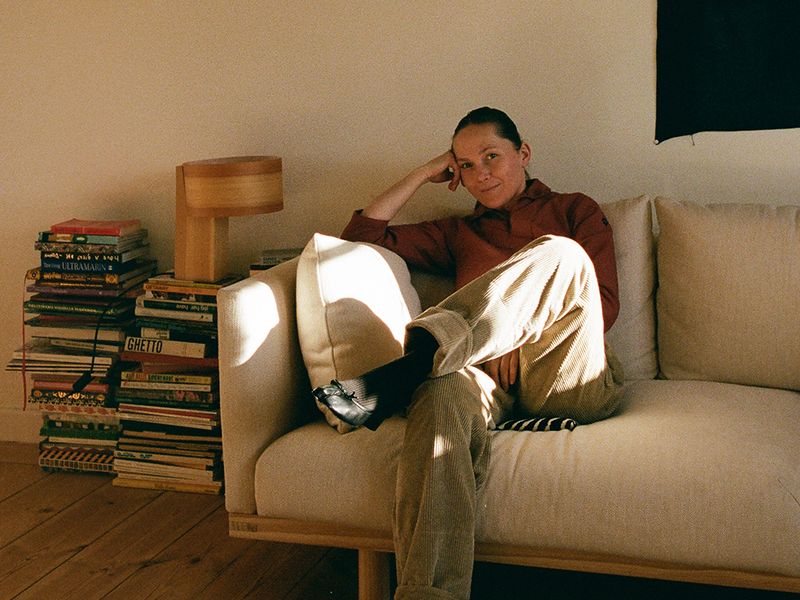
Architect and interior architect Helka Parkkinen from KOKO3, could you tell us about KOKO3’s role in Villa Lante’s renovation?
“We were responsible for the interior design carried out as part of the renovation project, and we also assisted the client in the procurement process for the furnishings.
We created an interior concept based on the building’s architecture, materials, and colors. One of the key themes is Finland meets Italy, which is reflected, for example, in the choice of loose furniture – some of the pieces are Finnish and some Italian.”
Finnish Design Shop supplied the outdoor furniture for the project. Could you tell us more about the choices for the exterior spaces?
“The patio furniture at Villa Lante was completely renewed. The specified pieces represent both modern and more classical interpretations of Italian-style outdoor furniture. They suit the setting of the building and add color and comfort to the outdoor areas and the garden.”
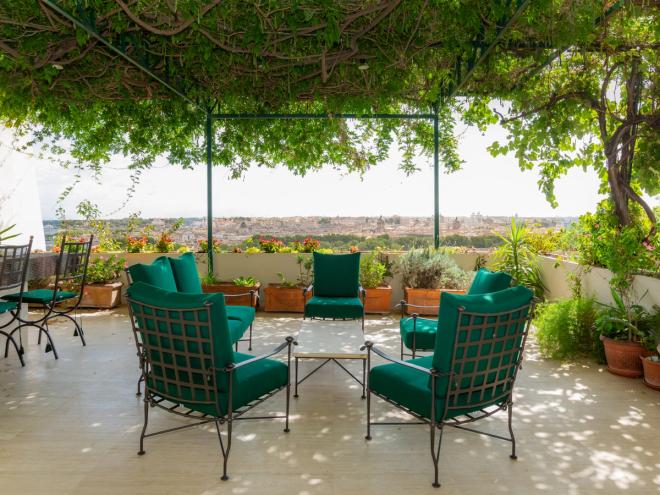
As part of the renovation, all of the villa’s outdoor furniture was replaced. The metal-framed lounge set is from the Italian brand Gaia Ferro Forgiato.
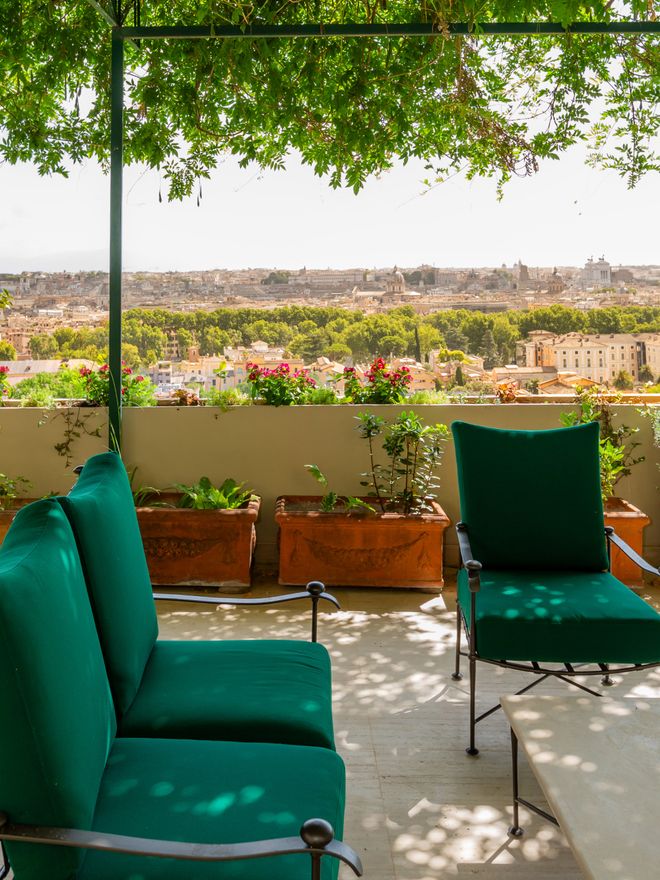
Finnish Design Shop’s Contract Sales supplied the outdoor furniture for Villa Lante.
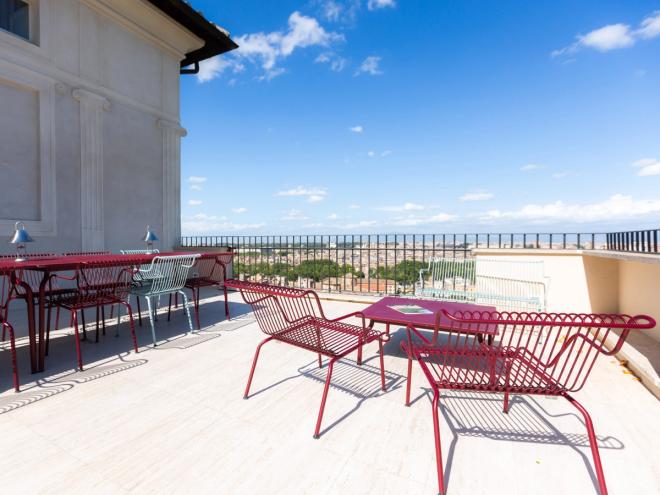
The colorful South chairs and tables are made by the Italian brand Magis.
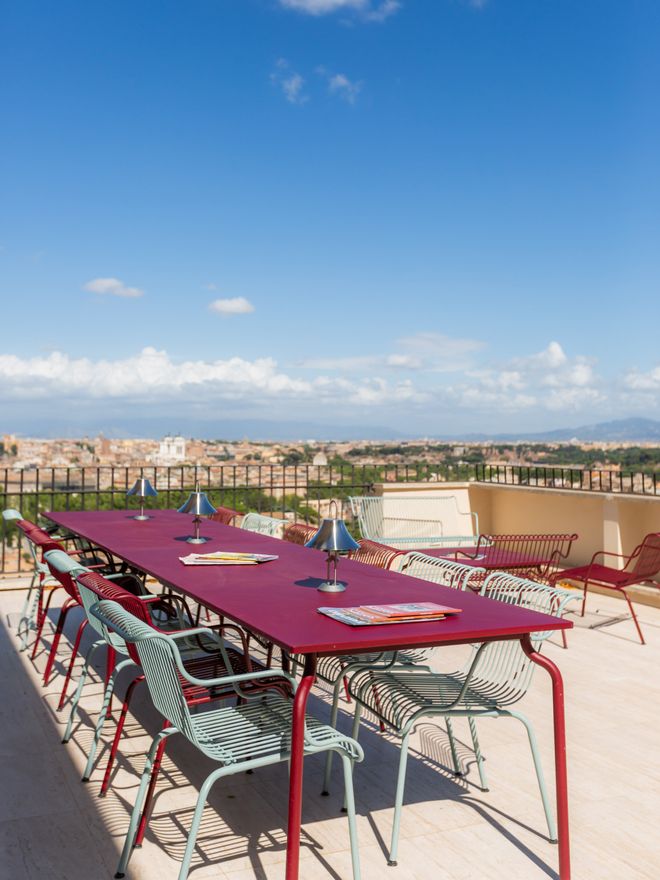
The light, airy metal furniture works well in Rome’s blazing summer heat.
How did you select the furniture and textiles used in the project?
“The new furniture was chosen to represent contemporary Finnish design – the idea was to highlight future classics. When choosing the pieces, we focused on their visual impact as well as how well they suited each room and furniture grouping.
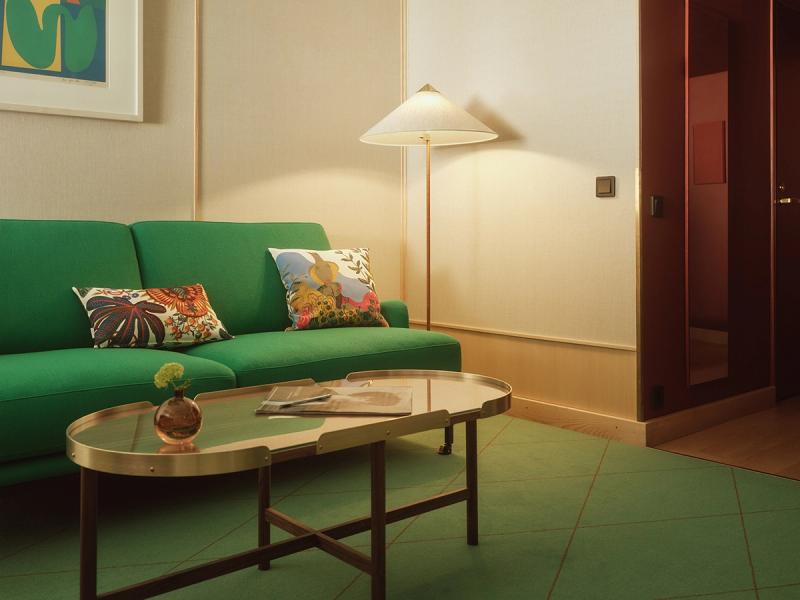
In the interior concept, upholstery fabrics play a key role – they visually link the new, modern furniture to the antique pieces. The colors of the textiles and furniture are drawn from the tones of the ceiling frescoes and the building’s materials.
“With the contrasting fabric choices, we wanted to refresh the overall look and merge the old and the new into a single whole.”
Two contrasting upholstery fabrics are used side by side: a tapestry-like forest motif that echoes the art of the villa’s early years, and a custom-made modern Finnish striped fabric woven at the Annala mill in the town of Lapua. With the contrasting fabric choices, we wanted to refresh the overall look and merge the old and the new into a single whole.”
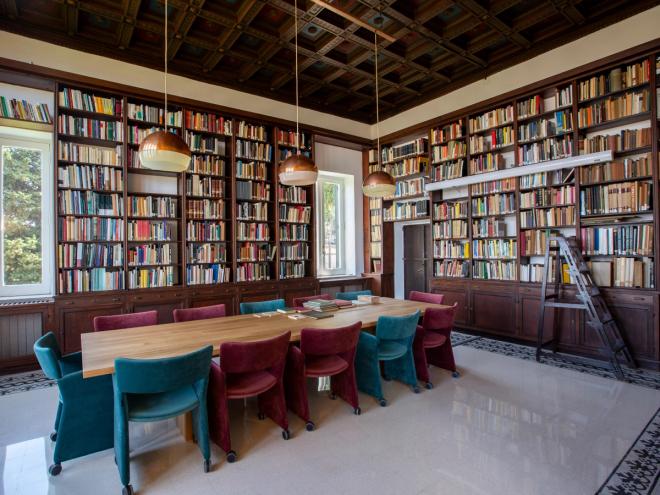
The Finnish Institute in Rome focuses on humanistic research related to Italy and the legacy of ancient Rome. The building houses several library and archive spaces. The upholstered armchairs are part of Massproductions’ Crown collection.
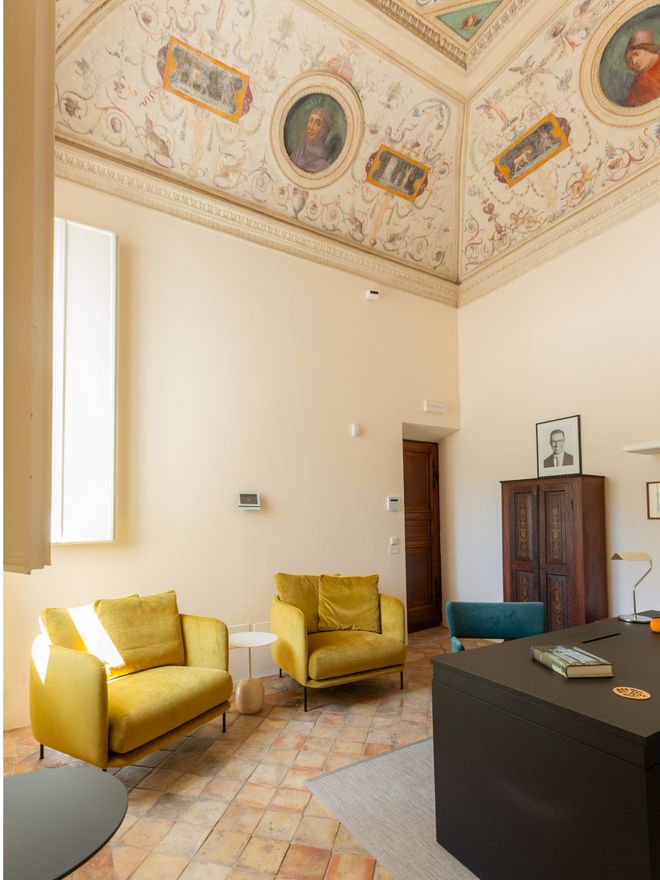
The institute’s activities include research projects, residencies for researchers and artists, grant programmes, and its own academic publication series.
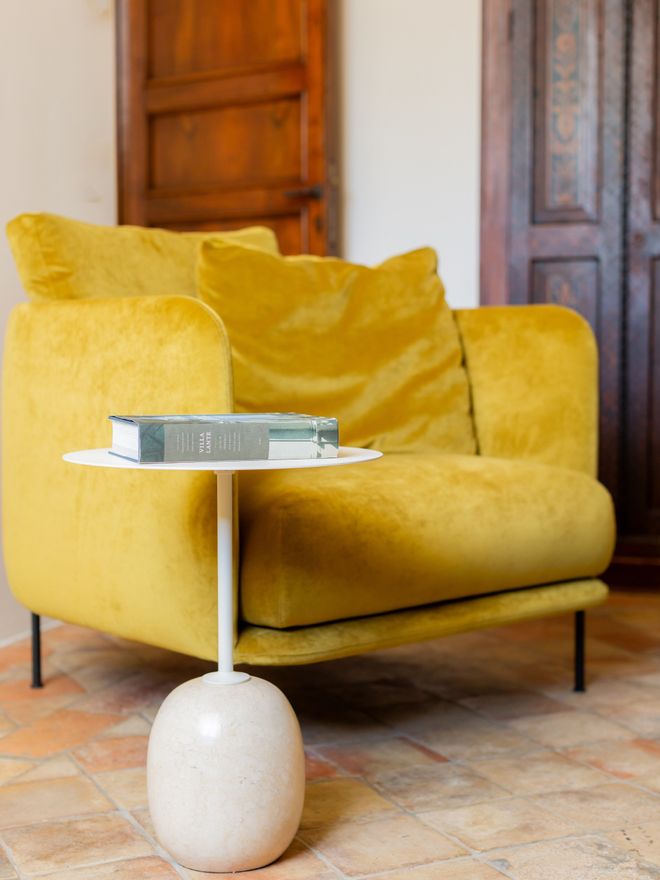
The marble-based Lato side table is by &Tradition, and the Bonnet lounge chair by Adea.
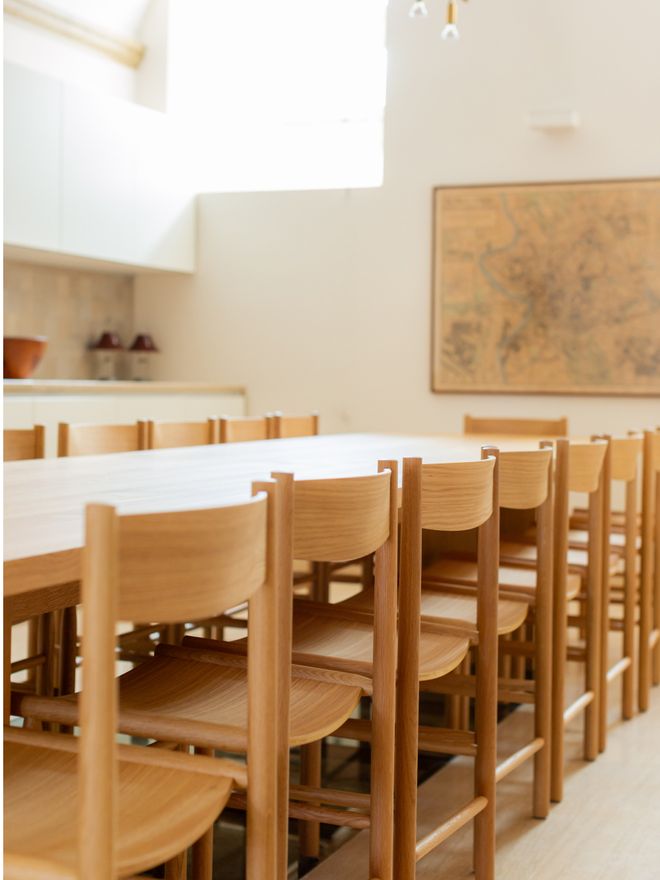
Nikari’s wooden Akademia chairs were chosen for the residents’ kitchen and dining room.
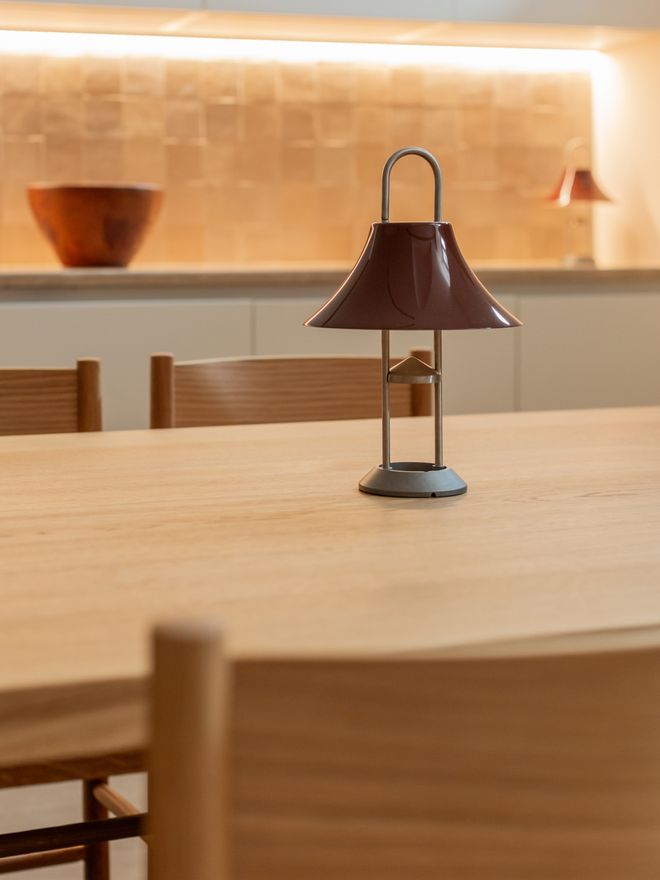
The rechargeable Mousqueton table lamps are from HAY’s collection.
What wishes did the client have regarding the interior?
“They wanted to improve the functionality of the spaces through interior design – for example, the aim was to make the accommodation areas more comfortable.
The idea from the outset was to keep a large proportion of the existing furniture as part of the renewed interior so that the spaces would continue to express the building’s history and the layering of different eras. Most of the old furniture consisted of Italian antiques. At the same time, the public areas were to feature more Finnish design.”
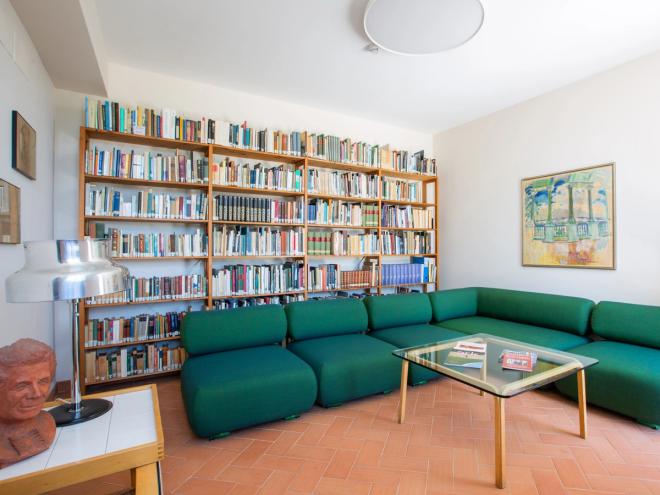
Researchers staying at the institute explore topics such as the history of antiquity and the Middle Ages, classical philology, archaeology, and art history.
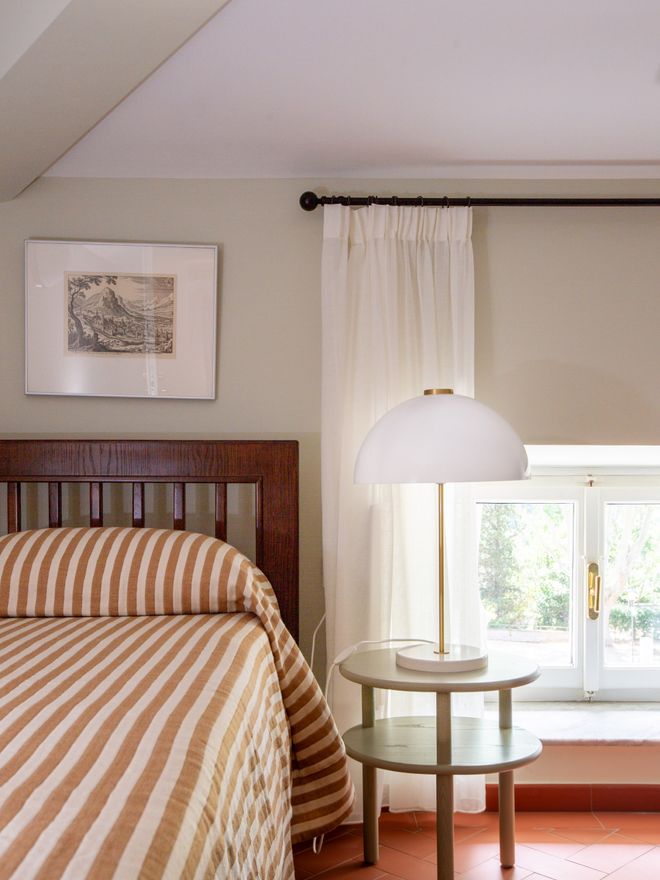
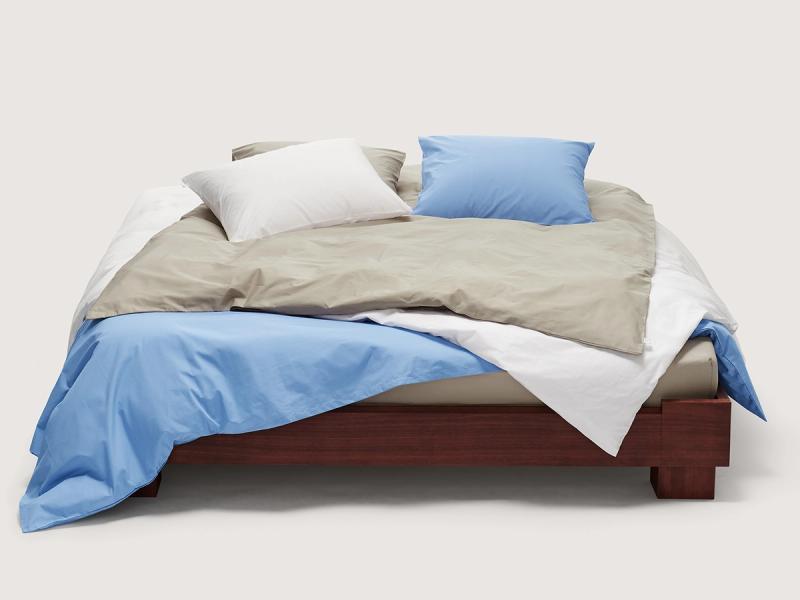
The residential floors upstairs contain a total of 11 guest rooms. The bedside table is a sage-colored Lempi by the Finnish brand Matri.
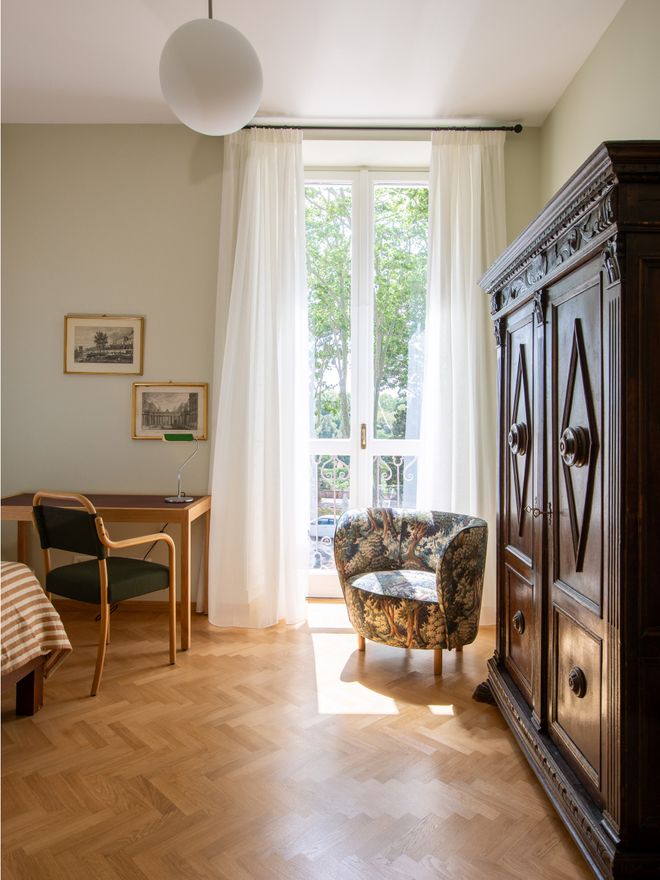
The interplay of striped fabrics and forest-themed tapestry continues in the guest rooms as well.
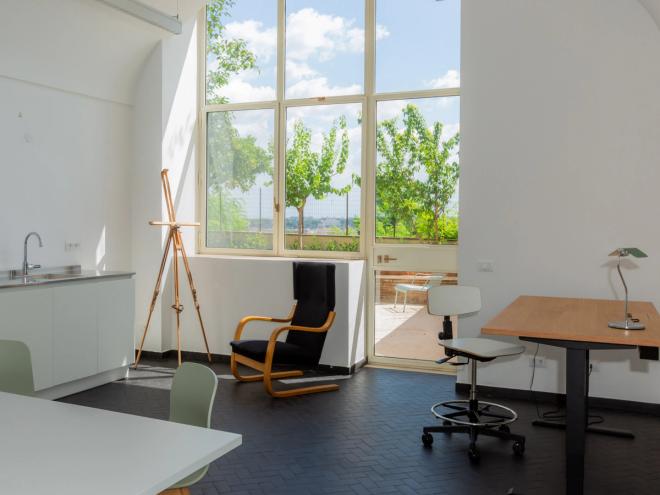
The villa also includes a studio and apartment reserved for visual artists. The Aalto armchair 401 is by Artek, and the Apex desk lamp by HAY.
A 16th-century Renaissance villa is hardly your everyday project. How did it feel to work on such a special site, and what kind of demands did it set?
“The project began for us with a site visit, where we immersed ourselves in the atmosphere of the villa and inventoried the existing furniture. After that, the building was closed for the duration of the renovation. We only returned to the site at the very end, to finalise the interiors once construction was almost complete and the new furniture had arrived. That was exciting, as usually we get to follow a project’s progress more closely.
It was essential to approach the building and its value with sensitivity and respect. Good collaboration between all the partners involved in the project is especially important in a place like this. Villa Lante was a very special project for us.”
Visit Villa Lante
Villa Lante is open to visitors on weekdays from 9 a.m. to 12 noon, with no admission fee. Visitors can explore the main floor’s Salone and the Loggia colonnade.
See also:
• Products by KOKO3 >
• Finnish Design Shop’s Contract Sales >
Text: Nora Uotila Images: Flaminia Lera / IRF 2025
Published on 19 Nov, 2025