This is a carousel of product images. Use the thumbnails or swipe to change the displayed image, and activate an image to open it full screen.
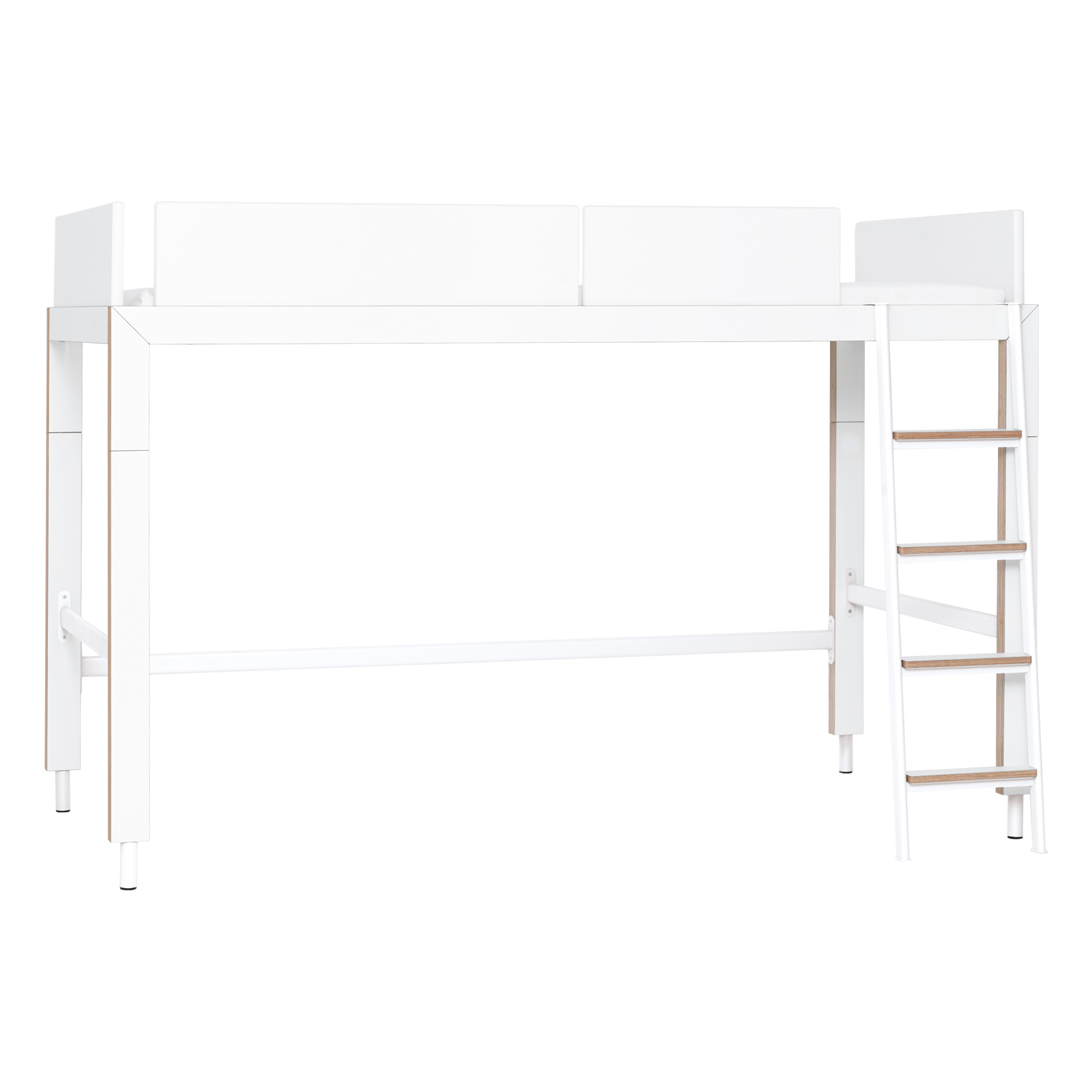
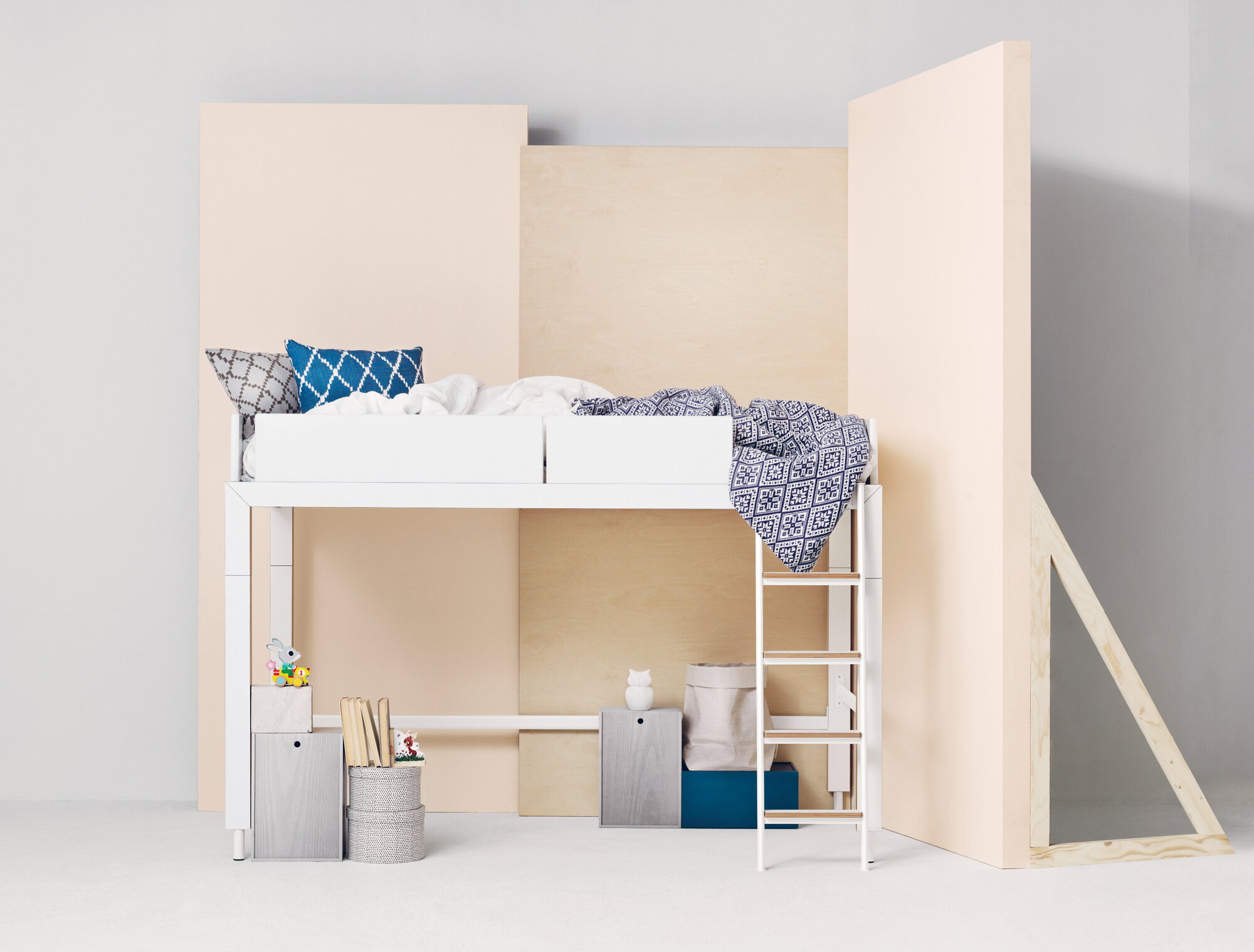
Lofty loft bed, low
Description
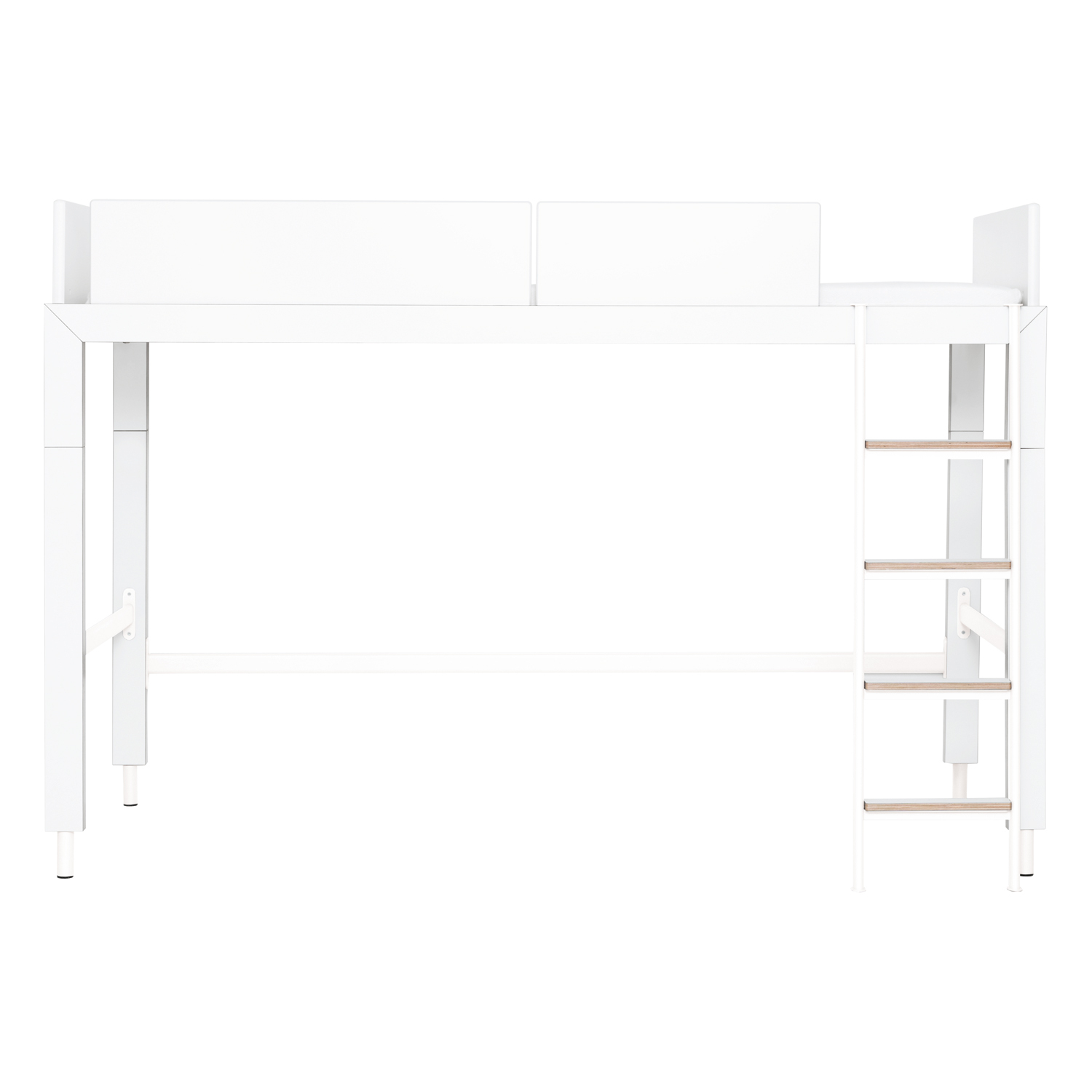
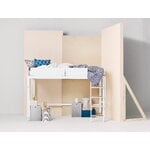
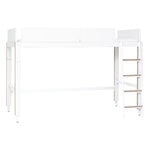
Lundia’s low Lofty loft bed charms with its fresh, robust and adaptable design. The extra space below the bed can be used as a storage or playing area, and the bed can easily be transformed later into a higher loft bed, bunk bed or low, regular bed. Made of white-laminated Finnish birch, the bed fits 90 x 200 cm mattresses and is suitable for both adults and kids. Lundia’s Lofty collection was designed by Tapio Anttila who was awarded Furniture Designer of the year at the Finnish Designer Awards 2012. The collection is manufactured in Finland.
- Length: 209.5 cm
- Width: 102.5 cm
- Height: 143 cm
- Measurement details: Length between legs: 192.5 cm, width between legs: 94 cm, from floor to the bed's bottom: 113 cm
- Colour White, wood
- Material Laminated birch
- Weight 77.5 kg
- Notes Comes flat packed. The mattress is sold separately. Ladder and security rails are included in the package.
- Product ID: LUD12

Tapio Anttila (b. 1962) is an award-winning Finnish interior architect and furniture designer whose timeless, unassuming style is deeply rooted in Finnish design tradition, yet with a modern, boundary-pushing approach.
Having graduated as an interior architect in 1994, Anttila worked as an in-house designer for the Finnish Isku Interior before founding his own design agency, Tapio Anttila Design, in 2005. Anttila has designed furniture and products for clients such as Lundia, Showroom Finland, and Maze. In 2016, he founded his own furniture brand, Tapio Anttila Collection.
Designer Tapio Anttila is inspired by Finnish wood
Tapio Anttila is best known for his wooden furniture, and wood remains his favourite material – especially when it’s Finnish.
In his design work, he explores a wide range of techniques and applications, from solid wood and bent veneer to even birch bark. For Anttila, wood reflects Nordic heritage and a close connection to nature, while also offering a sustainable, environmentally responsible choice – a value at the core of his design philosophy.
Timeless, award-winning pieces
Some of Anttila’s best-known works include the popular Day&Night sofa bed, the Aski storage system, and the Piena chair collection, all from his own brand, Tapio Anttila Collection. He is also the designer behind the popular Mixrack series, produced by Maze.
Anttila has received several prestigious awards, including the Kaj Franck Design Prize in 2018 and multiple international Good Design Awards. He was also named Finnish Furniture Designer of the Year in 2012 and received the international Top Designer Award in 2017.
Who: Tapio Anttila
- Born in 1962 and graduated as an interior architect from the University of Art and Design Helsinki.
- Has designed products for several Finnish manufacturers, including Lundia, Showroom Finland and Maze.
- Founded his own furniture brand, Tapio Anttila Collection, in 2016.
- Known for his appreciation of natural materials, especially Finnish wood.
- Focuses on ecological production methods and timeless design.
Design Stories: Interview with Tapio Anttila
• Furniture designer Tapio Anttila: “I always have my antennae up” >
View all productsThe Product Sustainability Framework, our criteria of sustainable design, helps you find the most sustainable products in our selection. Read below which sustainability criteria this product has met.
-
 Equal opportunities for all employees
 -
Commitment to UN Global Compact, fair compensation for all employees
-
Corporate responsibility requirements defined and communicated for suppliers
-
Systematic work for improved inclusion and well-being in the workplace
-
Transparent supply chain
-
Suppliers' compliance to a code of conduct ensured
-
Direct suppliers audited and certified
-
Compliance to the UN Guiding Principles on Business and Human Rights ensured in the supply chain
-
Support for community involvement in the supply chain
-
Fair and resource-wise water-use in production
-
No incineration or landfilling of returned items
-
No use of endangered species as materials
-
No direct environmental emissions or waste (excl. GHGs) from production
-
The sustainability of direct suppliers' production is addressed and monitored
-
Production and material sourcing that respect biodiversity, animal rights, and natural ecosystems
-
Material-efficient and ecological packaging
-
Positive impact on nature’s well-being through operations that regenerate natural ecosystems
-
No potentially harmful chemicals used in own production
-
Company's direct greenhouse gas emissions identified and commitment to reduction
-
Product's carbon impact identified and commitment to reduction
-
Guidance on energy- and eco-efficient use of the product
-
Contribution to climate initiatives beyond the brand’s direct operations
-
Low-carbon or compensated transportation
-
Carbon footprint of the product calculated and goals set to reduce it
-
100 % renewable energy in own production and operations
-
Carbon neutral or carbon negative product
-
Sustainable and long-lasting material choices
-
No harmful or hazardous substances
-
Responsible raw material sourcing and production
-
Materials suited for circularity: monomaterials, recyclable finishings, renewable or recycled contents etc.
-
Ecological materials: natural, biodegradable, recyclable or recycled contents
-
Outstanding materials in terms of innovativeness, responsibility, sustainability and circularity: local production or sourcing, 100 % recycled content, C2C-certification etc.
-
High aesthetic quality promoting long-term use of the product
-
Technically durable product design and material choices
-
Design for enduring life-long quality
-
Design and support for product maintenance, repair and upgradability
-
Innovative circular design solutions: circular service system, resale platform, remanufacturing, collection of used products, etc.
Ideas and inspiration
This is a carousel. Use Next and Previous buttons to navigate.