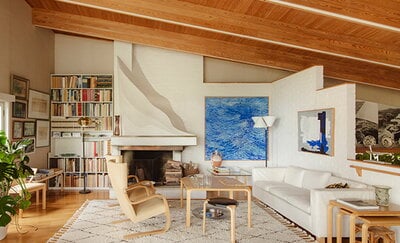
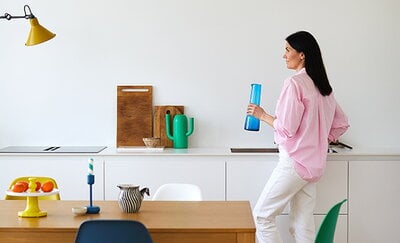
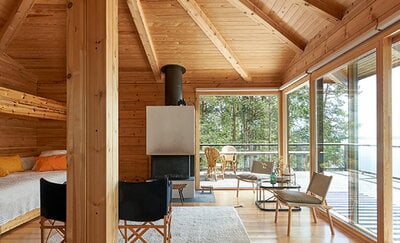
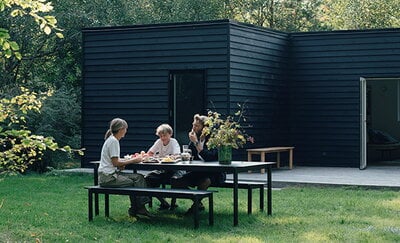
This is a carousel of product images. Use the thumbnails or swipe to change the displayed image, and activate an image to open it full screen.
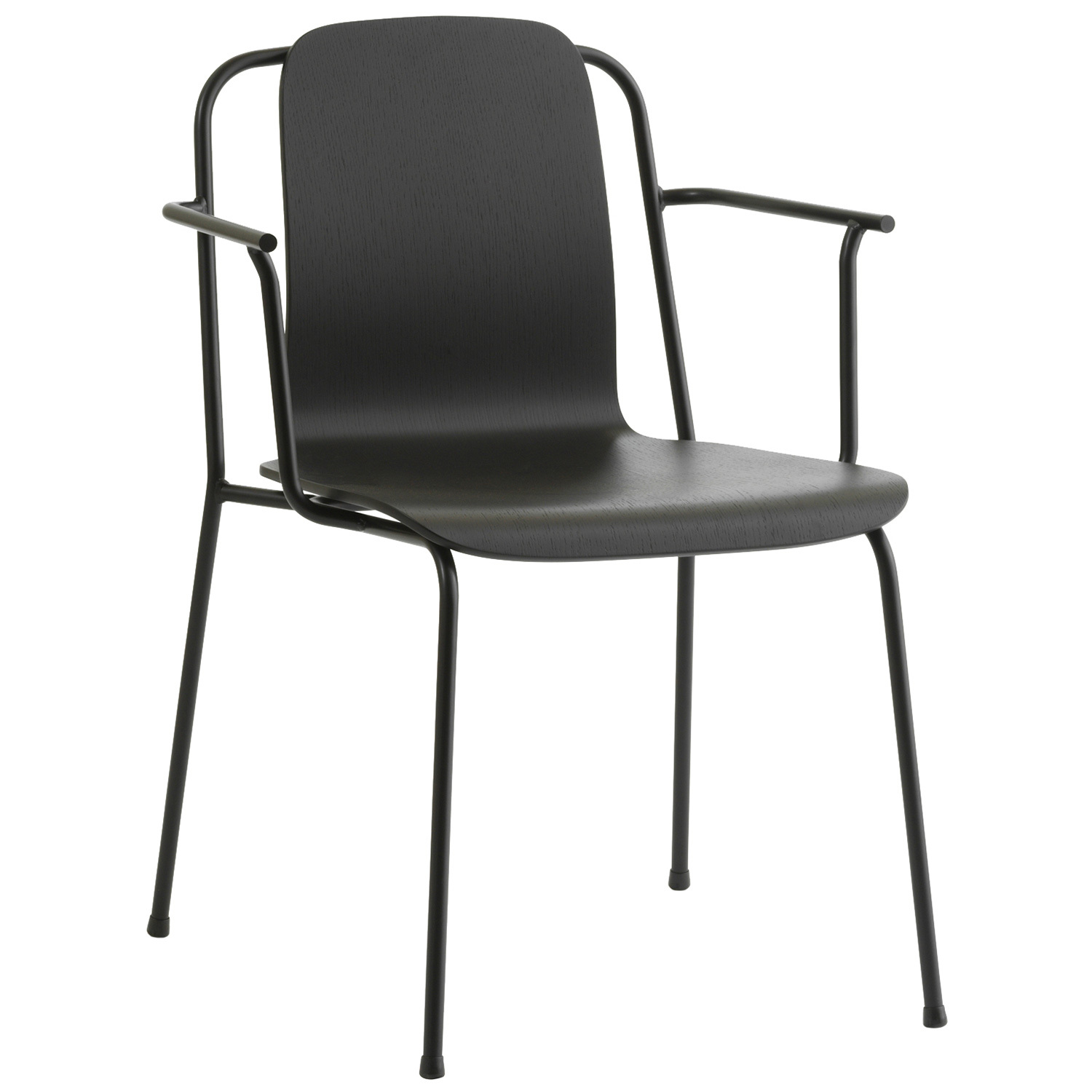
Studio armchair, black
Description
The Studio armchair by Normann Copenhagen truly embodies the stripped-down style of its designer, Simon Legald. The armchair has an almost industrial feel with its slender steel frame and refined seat and back molded of oak veneer. The back of the Studio armchair has been slightly lifted from the steel frame, highlighting the bare and simple design and giving it an additional touch of airiness. The Studio armchair is stackable, making it a practical choice for homes as well as bar or restaurant use.
- Width: 60 cm
- Depth: 57.5 cm
- Height: 81 cm
- Seat height: 44 cm
- Colour Black
- Seat material Painted and lacquered oak veneer
- Base material Powder coated steel
- Notes Stackable
- Care instructions Clean with damp cloth
- Product ID: NC601790

Simon Legald (b. 1986) is a Danish designer and the head designer of Normann Copenhagen. Having graduated from the Royal Danish Academy of Fine Arts in 2012, Legald began his long and prolific collaboration with Normann Copenhagen soon after graduating. In Legald’s work, craft traditions meet industrial processes, and his style is marked by a modern simplicity in which function and visual aesthetics are kept in careful balance.
One of Legald’s best-known works is the Form chair collection, which was honoured with the iF Design Award in 2016.
Simon Legald – clear forms and honest materials
The Danish designer Simon Legald is known for his clear, purposeful design language and his use of genuine, honest materials.
Legald graduated from the Royal Danish Academy of Fine Arts in 2012 and rose quickly to international renown through his collaboration with Normann Copenhagen. Today, he works as the company’s Head of Design.
At the meeting point of craft and industrial production
For Legald, design is not primarily self-expression but a way to solve practical needs in a clear and aesthetically pleasing way. His design shows a strong interest in the properties of materials and in how the structure of a product can be part of its visual appearance.
In Legald’s work, the meeting point of craft and industrial manufacture is a central starting point: structural solutions are not hidden away but brought in as part of the product’s appearance.
Furniture and objects for modern everyday life
Legald has designed everything from small everyday objects to extensive furniture collections, but regardless of scale, the same idea of clarity and balance recurs throughout his work.
Among his best-known works, the Form chair series was honoured in 2016 with the iF Design Award and a Special Mention in the German Design Award competition.
Who: Simon Legald
- Danish designer (b. 1986).
- Graduated from the Royal Danish Academy of Fine Arts in 2012.
- Known especially for his collaboration with Normann Copenhagen.
- Designs furniture, lighting and homeware.
- Notable products: Form chairs, Amp lamps, Bit stools, Block serving trolleys.
Design Stories: Read more and find inspiration
View all productsThe Product Sustainability Framework, our criteria of sustainable design, helps you find the most sustainable products in our selection. Read below which sustainability criteria this product has met.
-
 Equal opportunities for all employees
 -
Commitment to UN Global Compact, fair compensation for all employees
-
Corporate responsibility requirements defined and communicated for suppliers
-
Systematic work for improved inclusion and well-being in the workplace
-
Transparent supply chain
-
Suppliers' compliance to a code of conduct ensured
-
Compliance to the UN Guiding Principles on Business and Human Rights ensured in the supply chain
-
Direct suppliers audited and certified
-
Support for community involvement in the supply chain
-
Fair and resource-wise water-use in production
-
No incineration or landfilling of returned items
-
No use of endangered species as materials
-
No direct environmental emissions or waste (excl. GHGs) from production
-
Material-efficient and ecological packaging
-
No potentially harmful chemicals used in own production
-
The sustainability of direct suppliers' production is addressed and monitored
-
Production and material sourcing that respect biodiversity, animal rights, and natural ecosystems
-
Positive impact on nature’s well-being through operations that regenerate natural ecosystems
-
Company's direct greenhouse gas emissions identified and commitment to reduction
-
Product's carbon impact identified and commitment to reduction
-
Guidance on energy- and eco-efficient use of the product
-
Contribution to climate initiatives beyond the brand’s direct operations
-
Low-carbon or compensated transportation
-
Carbon footprint of the product calculated and goals set to reduce it
-
100 % renewable energy in own production and operations
-
Carbon neutral or carbon negative product
-
Sustainable and long-lasting material choices
-
No harmful or hazardous substances
-
Responsible raw material sourcing and production
-
Materials suited for circularity: monomaterials, recyclable finishings, renewable or recycled contents etc.
-
Ecological materials: natural, biodegradable, recyclable or recycled contents
-
Outstanding materials in terms of innovativeness, responsibility, sustainability and circularity: local production or sourcing, 100 % recycled content, C2C-certification etc.
-
High aesthetic quality promoting long-term use of the product
-
Technically durable product design and material choices
-
Design for enduring life-long quality
-
Design and support for product maintenance, repair and upgradability
-
Innovative circular design solutions: circular service system, resale platform, remanufacturing, collection of used products, etc.
Ideas and inspiration
This is a carousel. Use Next and Previous buttons to navigate.