This is a carousel of product images. Use the thumbnails or swipe to change the displayed image, and activate an image to open it full screen.
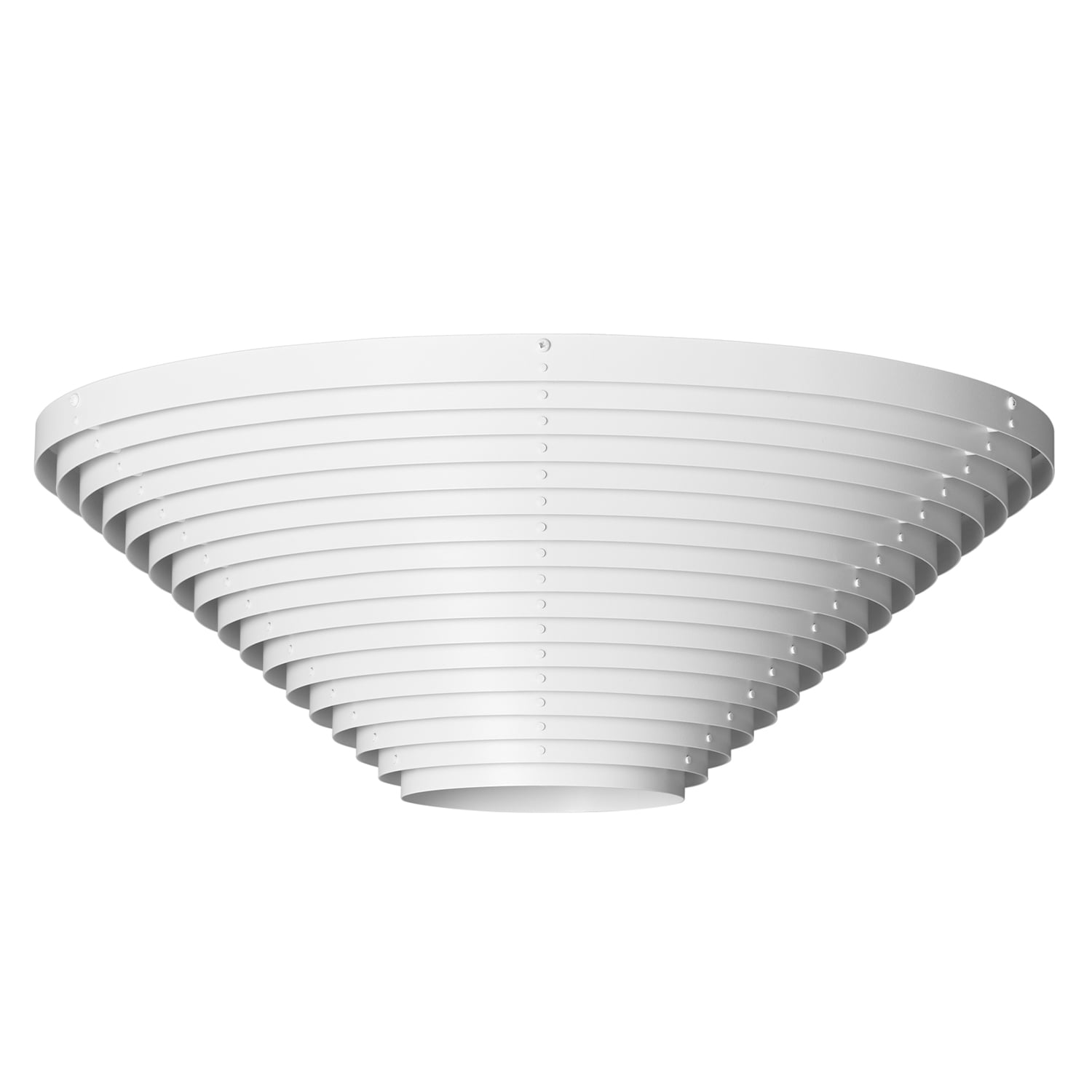
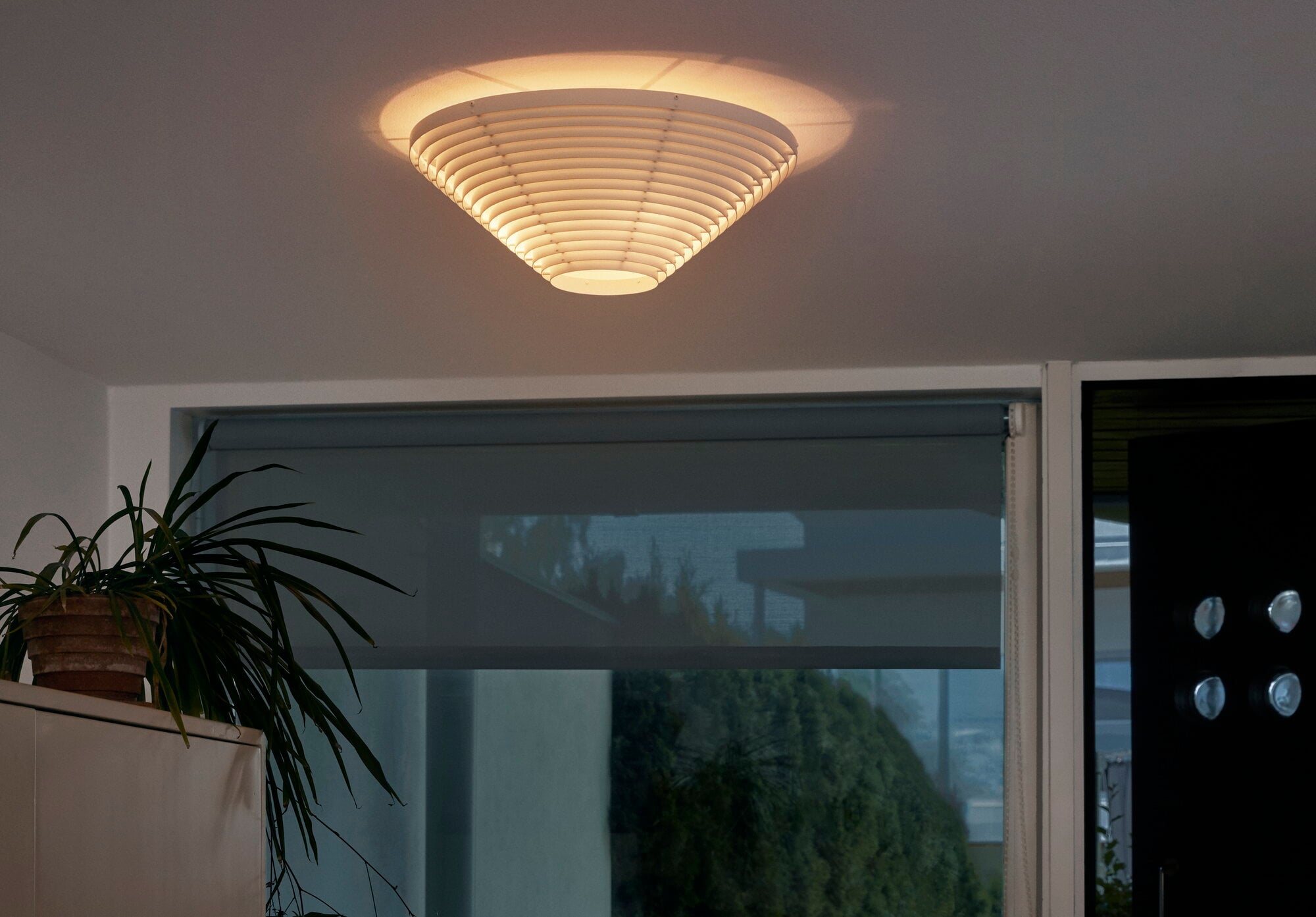
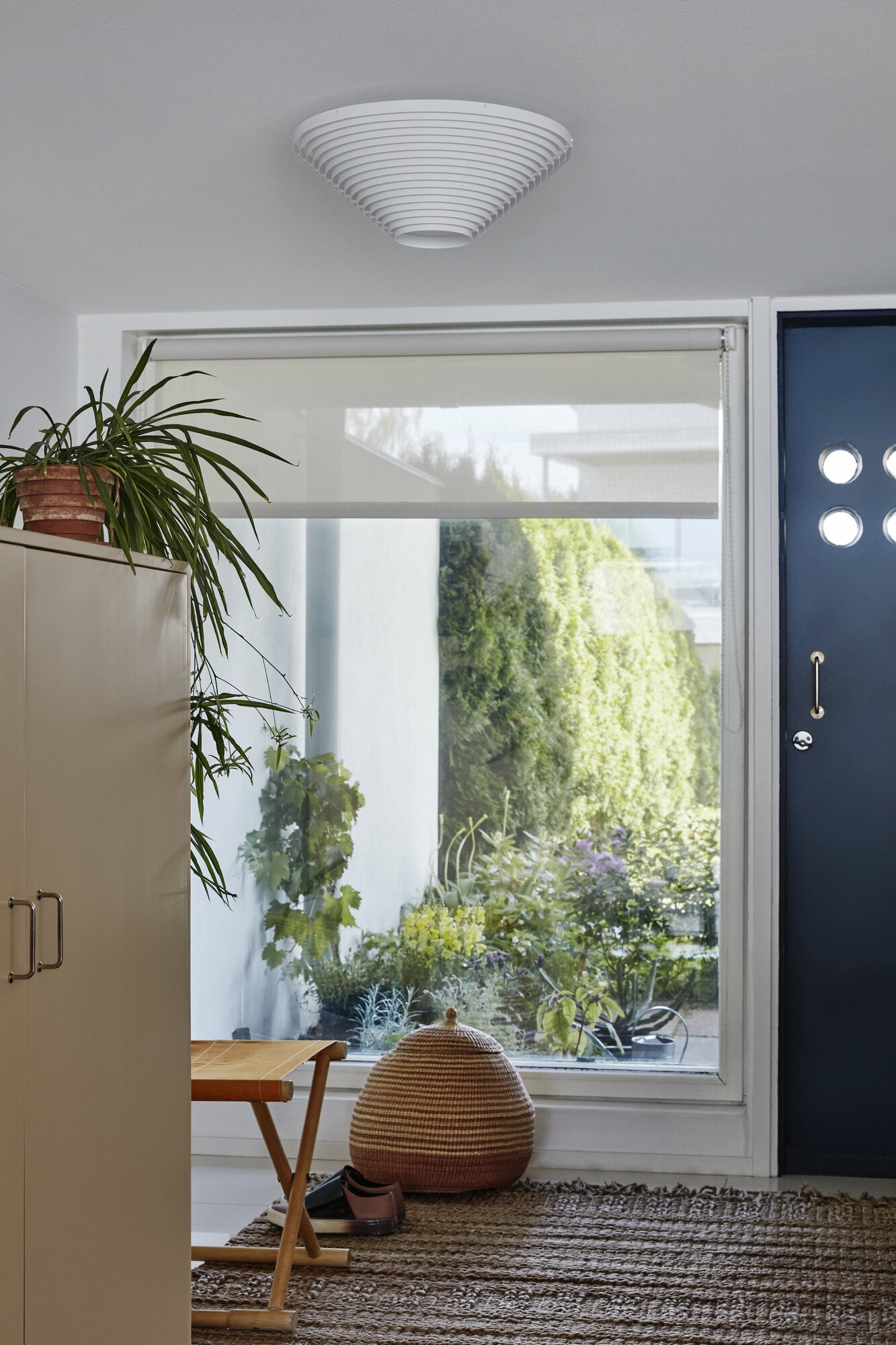
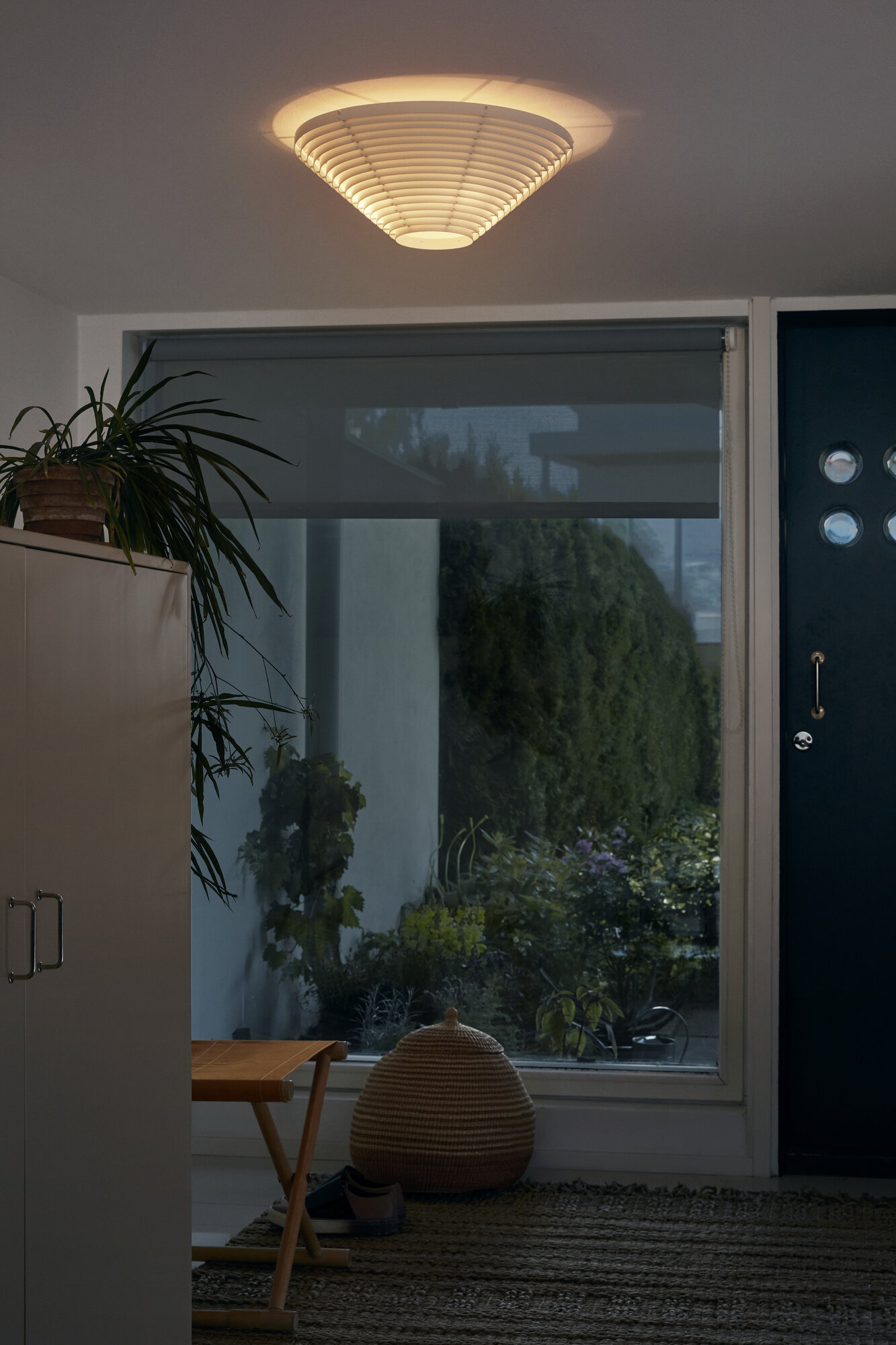
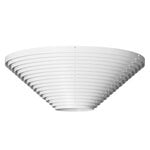
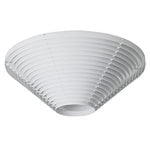
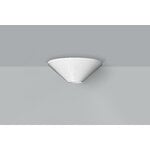
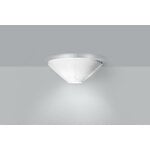
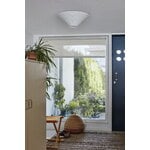
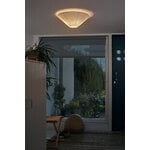
Aalto ceiling lamp A622B
Description
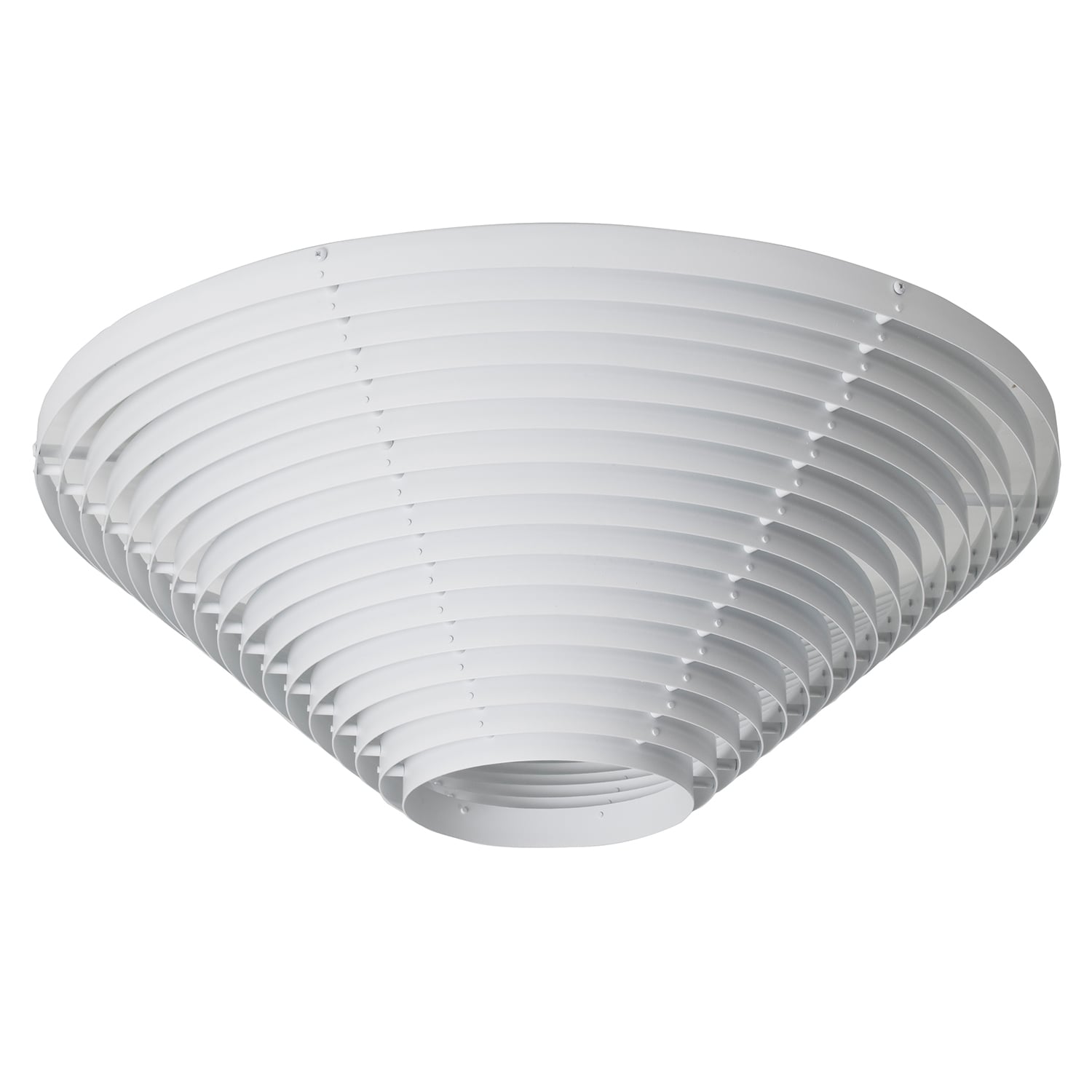
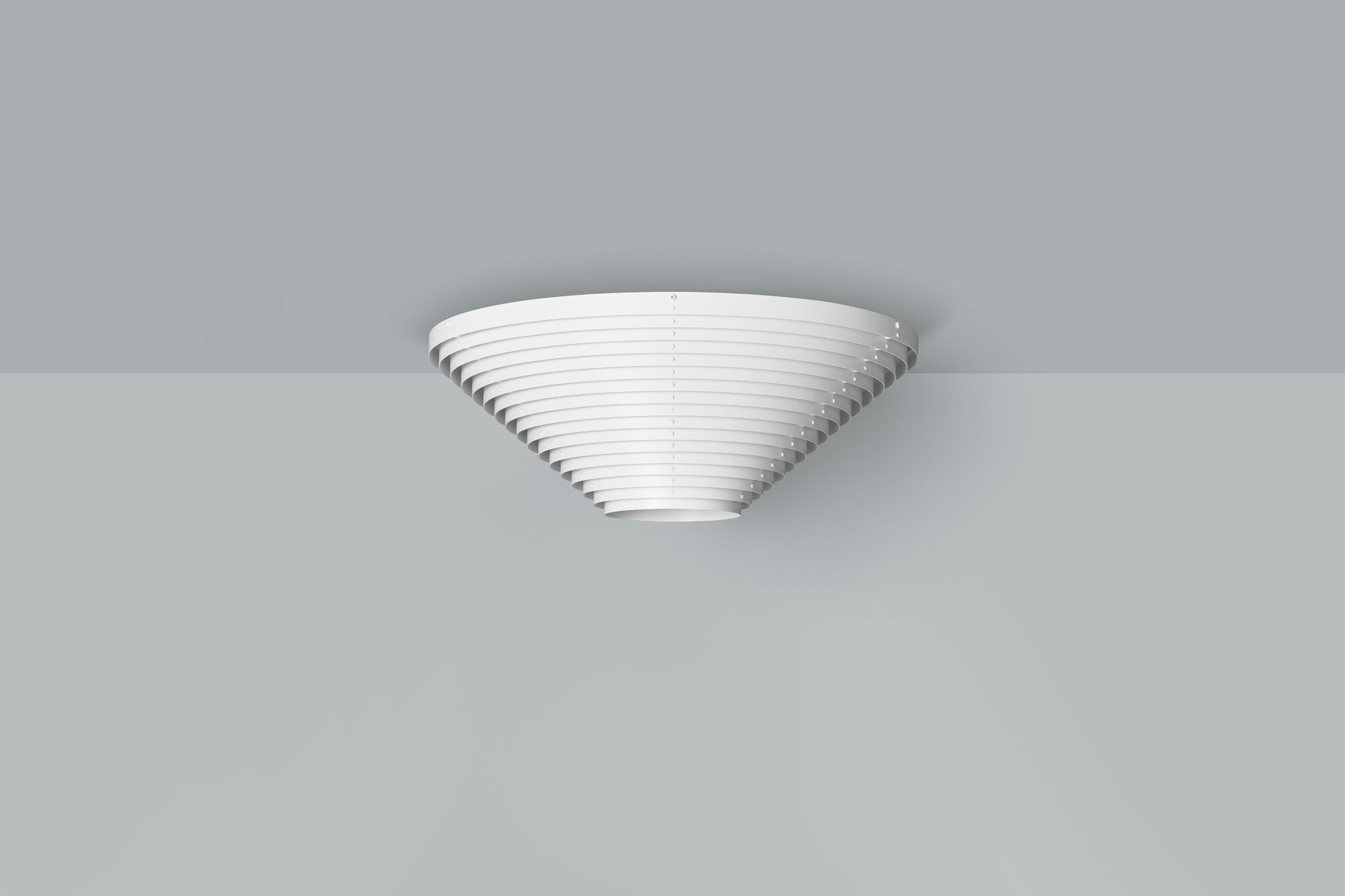
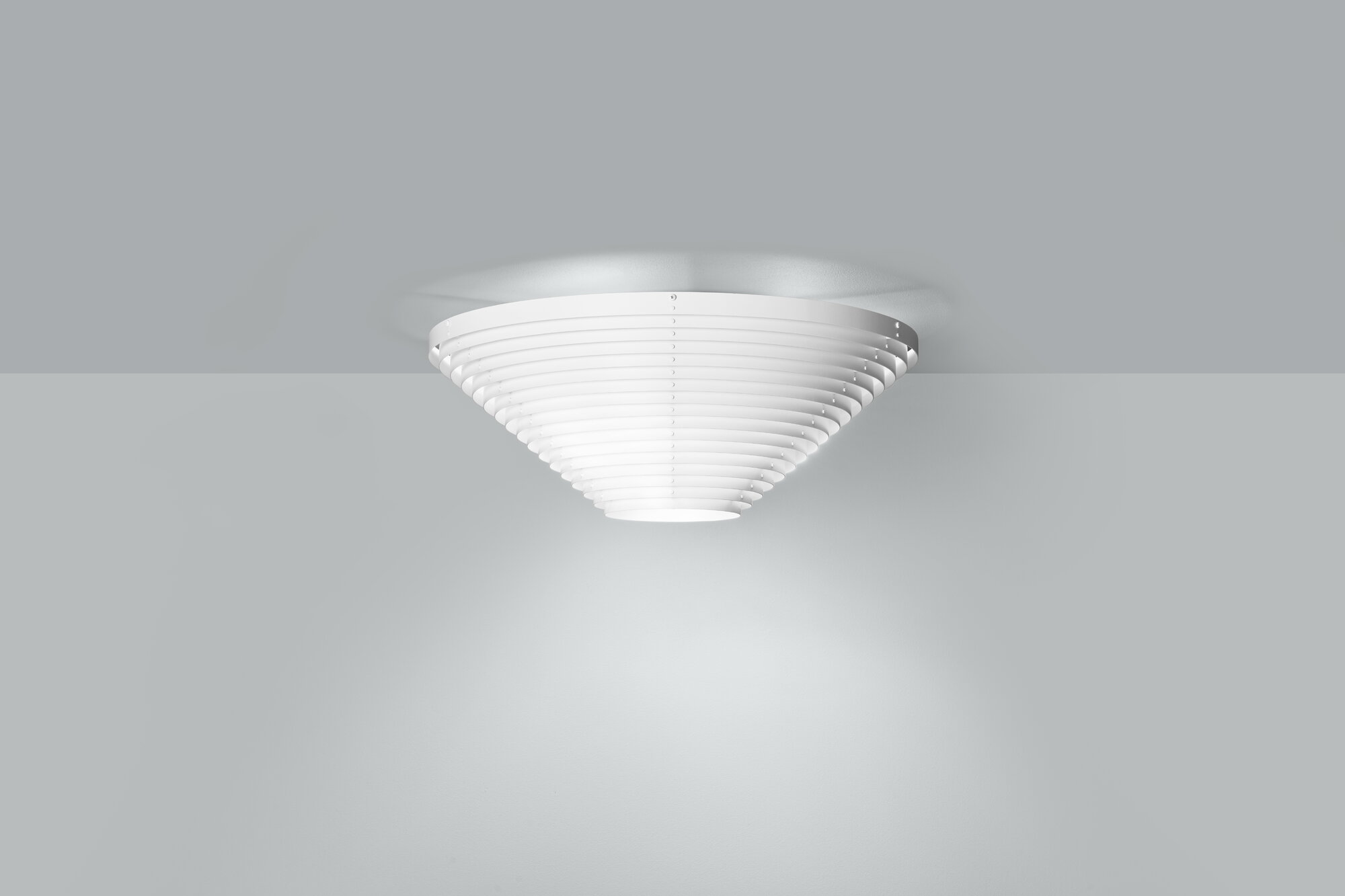
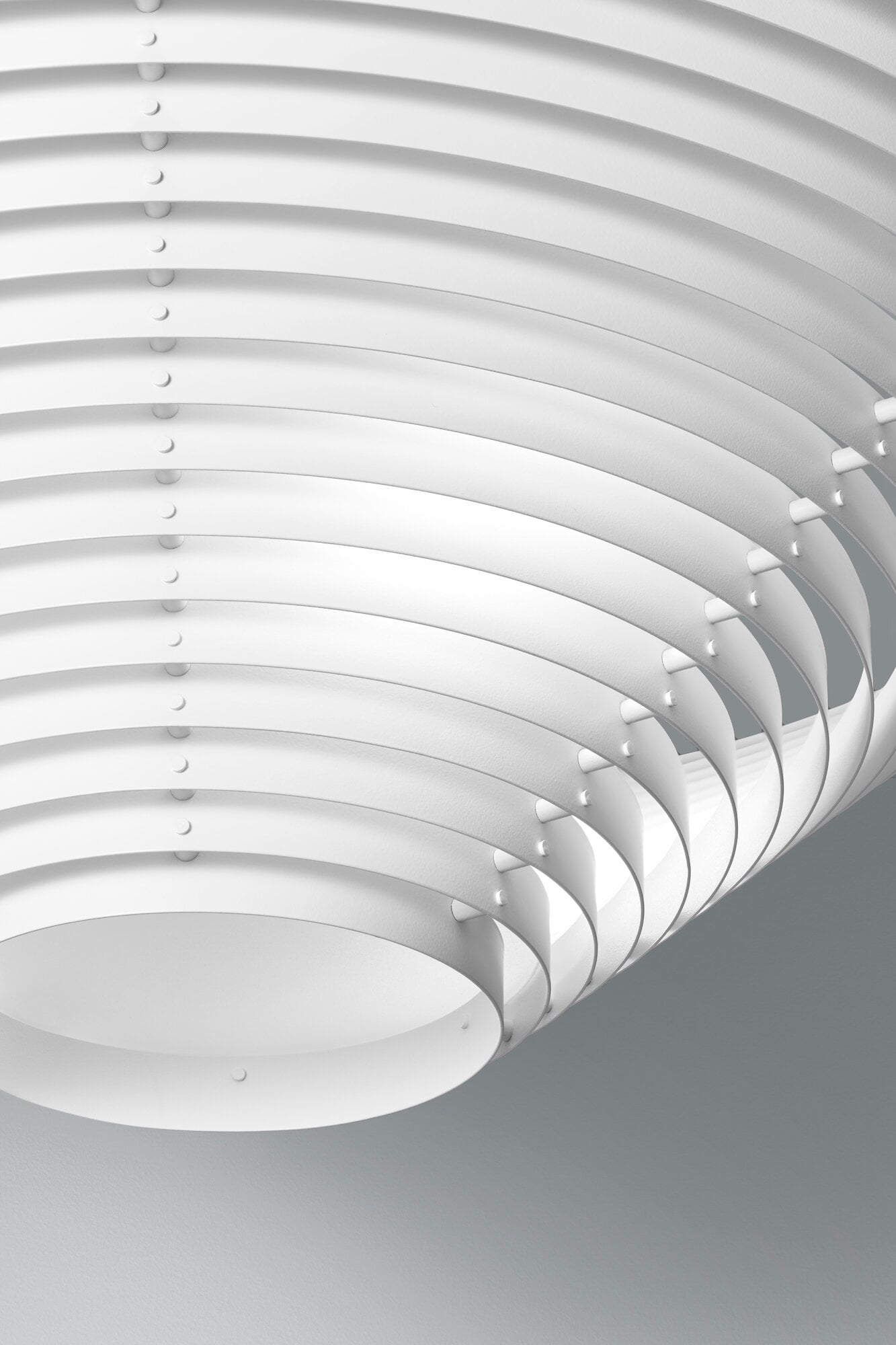
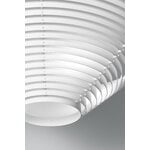
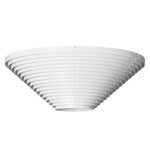
Artek’s A622B ceiling lamp provides a soft, bright light filtered by thin layers of white-coated, hand-rivaled steel strips. The simple, cone-shaped lamp looks beautiful alone or in pairs, and in larger spaces it also settles into groups of several fixtures. Alvar Aalto designed the A622B lamp in 1953 for the National Pensions Institute of Helsinki, and its timeless elegance will easily complement modern homes and public spaces, too.
- Width: 46.5 cm
- Diameter: 46.5 cm
- Height: 18.5 cm
- Material Hand-riveted louvered steel
- Colour White
- Bulb base E27
- Light source 3 x 7-9W LED (not included)
- IP rating 20
- Protection class I
- Certifications and labels CE marked: tested and approved according to European standards
- Nominal frequency 50 Hz
- Ceiling plug No
- Notes Hardwired installation, no lamp plug included.
- Product ID: AK410004

Alvar Aalto (1898–1976) was a celebrated Finnish architect and designer whose work shaped the very essence of modern Finnish design on an international scale. As a designer, he is especially renowned for his nature-inspired forms, human-centred approach and remarkably wide-ranging body of work, spanning architecture, furniture and lighting. Aalto’s legacy continues to live on in the collection of Artek, founded in 1935.
Alvar Aalto: The master of humane modernism
Alvar Aalto is without question the most internationally renowned Finnish architect and designer of all time. He graduated as an architect in 1921 and quickly rose to become one of the key reformers of modern architecture. Alongside clear-cut functionalism, Aalto developed a softer, more humane expression that emphasised human scale, natural materials, light and the experiential quality of space. His buildings and objects often form holistic environments in which architecture and design work in harmony to support one another.
One of Aalto’s most celebrated architectural works is the Paimio Sanatorium, completed in 1933 and designed as a hospital for tuberculosis patients. Created in close collaboration with his wife Aino Aalto, the project was designed down to the smallest details, including furniture and lighting. Paimio also marked the beginning of Aalto’s career as a furniture designer. Other iconic architectural works include the Viipuri Library, Villa Mairea in Noormarkku, Finlandia Hall in Helsinki, Säynätsalo Town Hall, and La Maison Carré in France.
Aalto’s Artek furniture changed everyday life
In 1935, Alvar Aalto founded Artek together with Aino Aalto, Maire Gullichsen and Nils-Gustav Hahl. Today, Artek is one of Finland’s most influential design companies. The company was established primarily to produce and sell furniture designed by the Aaltos, which still form the backbone of Artek’s collection.
One of Aalto’s most ingenious innovations is the so-called L-leg, patented in 1933. Aalto himself considered this bent wooden leg one of his greatest achievements – a technical and aesthetic breakthrough that had a far-reaching impact on furniture design well beyond Finland. Thanks to the L-leg, table, chair and stool legs could be attached directly to the frame, forming the structural foundation of many of Aalto’s Artek designs.
Light, glass and organic forms
Freely flowing lines and the fusion of craftsmanship with industrial production are recurring themes in many of Aalto’s lighting designs, including iconic pieces such as the Beehive (A331) and Golden Bell lamps.
Aalto’s glass design has likewise achieved a timeless status. Most notably, the undulating Aalto vase – now produced by Iittala – has become one of the most recognisable international symbols of Finnish design.
Who: Alvar Aalto
- The most famous Finnish architect and designer of all time (1898–1976).
- A key developer of modern, human-centred design and co-founder of Artek.
- Known for his architecture, furniture, lighting and glass design.
- Iconic designs include the E60 stool, pendant lamp A331 “Beehive” and armchair 400 “Tank” for Artek, and the Aalto vases for Iittala.
Read more in Design Stories
- Artek’s classics are the foundation of Finnish design – introducing 7 timeless gems by Alvar Aalto >
- Humane from design to finish – Alvar Aalto’s armchairs are hand-made in Finland >
- Alvar Aalto’s Finlandia Hall enters a new era >
Would you like to read more about Alvar Aalto and his work? Discover our books:
- Alvar Aalto Homes
- Alvar Aalto Libraries
- Alvar Aalto – The Mark of the Hand
- Alvar Aalto – A Gentler Structure for Life
- Alvar Aalto Architect vol. 18
- Iittala
- Atlas of Mid-Century Modern Houses
- Mid-Century Modern Design
The Product Sustainability Framework, our criteria of sustainable design, helps you find the most sustainable products in our selection. Read below which sustainability criteria this product has met.
-
 Equal opportunities for all employees
 -
Commitment to UN Global Compact, fair compensation for all employees
-
Corporate responsibility requirements defined and communicated for suppliers
-
Systematic work for improved inclusion and well-being in the workplace
-
Transparent supply chain
-
Suppliers' compliance to a code of conduct ensured
-
Compliance to the UN Guiding Principles on Business and Human Rights ensured in the supply chain
-
Direct suppliers audited and certified
-
Support for community involvement in the supply chain
-
Fair and resource-wise water-use in production
-
No incineration or landfilling of returned items
-
No use of endangered species as materials
-
No direct environmental emissions or waste (excl. GHGs) from production
-
Production and material sourcing that respect biodiversity, animal rights, and natural ecosystems
-
Material-efficient and ecological packaging
-
No potentially harmful chemicals used in own production
-
The sustainability of direct suppliers' production is addressed and monitored
-
Positive impact on nature’s well-being through operations that regenerate natural ecosystems
-
Company's direct greenhouse gas emissions identified and commitment to reduction
-
Product's carbon impact identified and commitment to reduction
-
Guidance on energy- and eco-efficient use of the product
-
Contribution to climate initiatives beyond the brand’s direct operations
-
100 % renewable energy in own production and operations
-
Low-carbon or compensated transportation
-
Carbon footprint of the product calculated and goals set to reduce it
-
Carbon neutral or carbon negative product
-
Sustainable and long-lasting material choices
-
No harmful or hazardous substances
-
Responsible raw material sourcing and production
-
Materials suited for circularity: monomaterials, recyclable finishings, renewable or recycled contents etc.
-
Ecological materials: natural, biodegradable, recyclable or recycled contents
-
Outstanding materials in terms of innovativeness, responsibility, sustainability and circularity: local production or sourcing, 100 % recycled content, C2C-certification etc.
-
High aesthetic quality promoting long-term use of the product
-
Technically durable product design and material choices
-
Design for enduring life-long quality
-
Design and support for product maintenance, repair and upgradability
-
Innovative circular design solutions: circular service system, resale platform, remanufacturing, collection of used products, etc.
Ideas and inspiration
This is a carousel. Use Next and Previous buttons to navigate.