This is a carousel of product images. Use the thumbnails or swipe to change the displayed image, and activate an image to open it full screen.
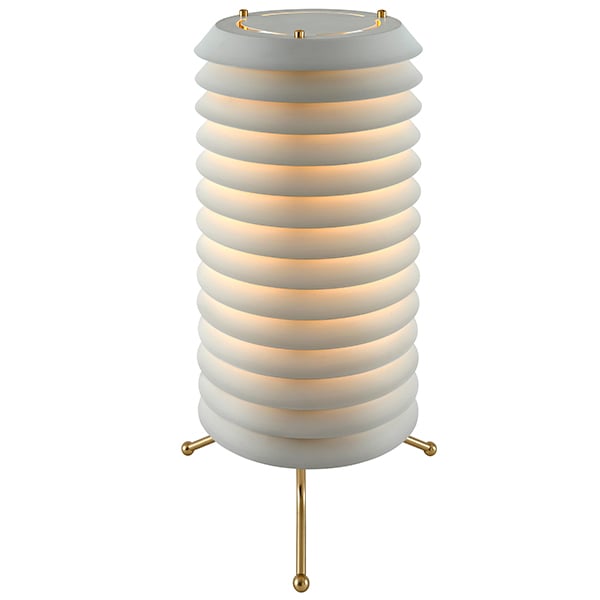

Maija 30 floor lamp, white
Description
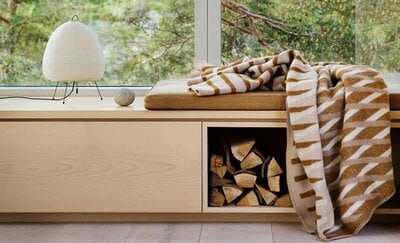
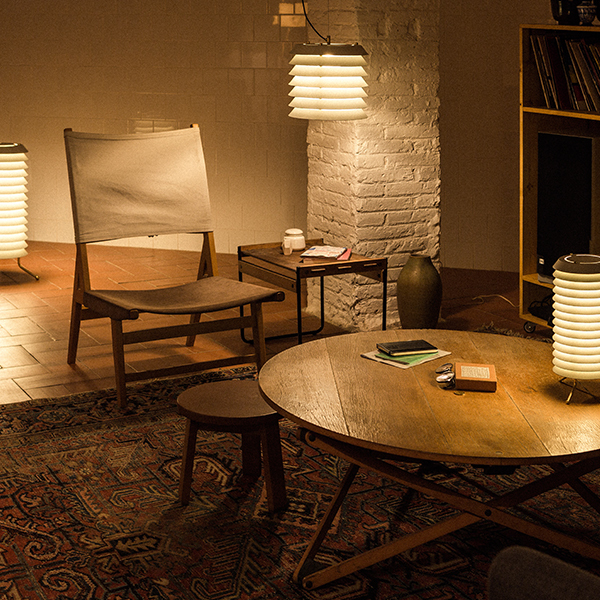
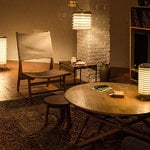
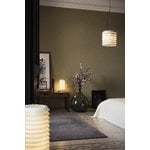
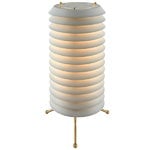
Santa & Cole has launched a re-edition of the timeless Maija Mehiläinen lamps, designed by Ilmari Tapiovaara in 1955. The Finnish designer drew his inspiration for the table, pendant and floor lights from Waldermar Bonsels’ children’s book Maya the Bee (Maija Mehiläinen in Finnish), which is evident in the distinct, beehive-like form. Composed of superimposed metal discs that filter light beautifully, the lamps provide a pleasant ambience. The Maija lights are part of the Spanish brand’s Design Classics collection and available in white and the original nude rose hue.
- Width: 36 cm
- Diameter: 36 cm
- Height: 67 cm
- Cable length: 300 cm
- Material Matte finished metal shade, brass legs
- Colour White, brass
- Light source Integrated dimmable 24W LED
- Colour temperature 2,700 K
- Luminous flux 820 lm
- Lifetime 40,000 h
- IP rating 20
- Protection class II
- Voltage 100–230 V
- Nominal frequency 50–60 Hz
- Certifications and labels CE marked: tested and approved according to European standards
- Plug EU plug
- Weight 5.1 kg
- Dimmable Yes
- Product ID: SCMAI21L

Ilmari Tapiovaara (1914–1999) was a renowned Finnish interior architect and designer. He aimed to create humane, well-lit and welcoming environments, along with furniture that complemented them – for Tapiovaara, furniture was always part of a cohesive whole, with architecture serving as the foundation for his furniture design.
Tapiovaara also worked as a lecturer in interior design at the Helsinki University of Technology, where he sought to modernise the curriculum by steering it towards industrial product design, drawing inspiration from international examples.
Ilmari Tapiovaara – a pioneer of Finnish functionalism
Ilmari Tapiovaara was one of the most influential Finnish interior architects and designers of the 20th century. Often described as a designer who captured the essence of Finnish identity, his work distilled clarity, practicality and a close connection to nature into timeless forms.
Tapiovaara graduated from the furniture design programme at the Central School of Applied Arts in 1937. After graduating, he visited the Paris World Expo and, while staying in Paris, spent six months working in the studio of legendary architect Le Corbusier. Upon returning to Finland, Tapiovaara joined furniture manufacturer Asko, where he worked as both designer and artistic director for several years. Over the course of his career, he created dozens of iconic furniture pieces that have remained beloved classics from one generation to the next.
Wood, functionalism and equality
Wood was the defining element of Tapiovaara’s design language. He greatly admired Alvar Aalto and sought to carry Aalto’s ideals and philosophy into his own work. This can be seen in the strong functionalist spirit of his furniture: Tapiovaara paid close attention to manufacturability and believed deeply in democratic design. For him, functionalism and equality went hand in hand, and all design ultimately began with architecture.
With the curiosity of a researcher and the soul of a craftsman, Tapiovaara constantly searched for new ways to improve everyday objects. In addition to designing dozens of chair models and other furniture pieces – primarily for public spaces – he also created interiors for banks, offices, hotels and shops.
An internationally celebrated master of chairs
Throughout his long career, Tapiovaara frequently crossed the boundaries of traditional furniture design. His diverse body of work included wooden sculptures, film posters, sauna stoves, cutlery and even a portable grill. Still, he is best known for his iconic chair designs, including the Domus, Mademoiselle, Lukki and Aslak chairs, all produced by Artek.
Tapiovaara received a total of six gold medals at the Milan Triennales during the 1950s and 1960s. His many accolades also include the Good Design Award in Chicago in 1951, the Pro Finlandia Medal in 1959, the Finnish State Design Award in 1971 and the Furniture Prize of the Finnish Association of Interior Architects in 1990. These international honours cemented his place as one of the key figures in Finnish design history.
Who: Ilmari Tapiovaara
- Finnish interior architect and designer (1914–1999).
- Graduated from the Central School of Applied Arts in 1937.
- A passionate advocate of functionalism and democratic design.
- Awarded six gold medals at the Milan Triennale.
- Well-known products: Domus, Mademoiselle, Lukki and Aslak chairs by Artek.
Read more in Design Stories
View all productsThe Product Sustainability Framework, our criteria of sustainable design, helps you find the most sustainable products in our selection. Read below which sustainability criteria this product has met.
-
 Equal opportunities for all employees
 -
Commitment to UN Global Compact, fair compensation for all employees
-
Corporate responsibility requirements defined and communicated for suppliers
-
Systematic work for improved inclusion and well-being in the workplace
-
Transparent supply chain
-
Suppliers' compliance to a code of conduct ensured
-
Direct suppliers audited and certified
-
Compliance to the UN Guiding Principles on Business and Human Rights ensured in the supply chain
-
Support for community involvement in the supply chain
-
Fair and resource-wise water-use in production
-
No incineration or landfilling of returned items
-
No use of endangered species as materials
-
No direct environmental emissions or waste (excl. GHGs) from production
-
The sustainability of direct suppliers' production is addressed and monitored
-
Production and material sourcing that respect biodiversity, animal rights, and natural ecosystems
-
Material-efficient and ecological packaging
-
Positive impact on nature’s well-being through operations that regenerate natural ecosystems
-
No potentially harmful chemicals used in own production
-
Company's direct greenhouse gas emissions identified and commitment to reduction
-
Product's carbon impact identified and commitment to reduction
-
Guidance on energy- and eco-efficient use of the product
-
Contribution to climate initiatives beyond the brand’s direct operations
-
Low-carbon or compensated transportation
-
Carbon footprint of the product calculated and goals set to reduce it
-
Carbon neutral or carbon negative product
-
100 % renewable energy in own production and operations
-
Sustainable and long-lasting material choices
-
No harmful or hazardous substances
-
Responsible raw material sourcing and production
-
Materials suited for circularity: monomaterials, recyclable finishings, renewable or recycled contents etc.
-
Ecological materials: natural, biodegradable, recyclable or recycled contents
-
Outstanding materials in terms of innovativeness, responsibility, sustainability and circularity: local production or sourcing, 100 % recycled content, C2C-certification etc.
-
High aesthetic quality promoting long-term use of the product
-
Technically durable product design and material choices
-
Design for enduring life-long quality
-
Design and support for product maintenance, repair and upgradability
-
Innovative circular design solutions: circular service system, resale platform, remanufacturing, collection of used products, etc.
Ideas and inspiration
This is a carousel. Use Next and Previous buttons to navigate.